
When your cat’s litter box becomes a minefield of loose, watery stool, every meal feels like a gamble. Diarrhea in cats strips essential nutrients and hydration, leaving them lethargic and your home frustrated — the right food is the fastest path back to solid ground, but picking through hydrolyzed proteins, prebiotic blends, and veterinary diets without guidance can extend the misery.
I’m Mo Mahin — the founder and writer behind Furric. I’ve spent years cross-referencing veterinary nutritional data, digging into hydrolyzed protein molecular weights, prebiotic fiber inclusion rates, and stool-quality clinical studies across dozens of brands to separate marketing fluff from actual digestion science.
After analyzing ingredient panels, fiber profiles, and owner-reported outcomes for five leading formulas, I’ve built a clear hierarchy of what works. Whether your cat has a chronic inflammatory condition or a transient upset, this guide to the best cat food for cats with diarrhea will help you match the right therapeutic diet to your cat’s specific root cause.
How To Choose The Best Cat Food For Cats With Diarrhea
Not all loose-stool formulas work the same way. A cat with chronic IBD needs a fundamentally different approach than one with a single-episode stress response. Here are the critical nutritional levers that separate a food that firms stool from one that keeps the cycle going.
Hydrolyzed Protein vs. Novel Protein
If your cat has chronic diarrhea tied to food sensitivities, the immune system is reacting to intact protein molecules. Hydrolyzed protein (broken into fragments too small to trigger the immune response) is the gold standard for eliminating dietary triggers. Novel protein sources like rabbit or venison can also work, but cross-species reactivity is more common — hydrolyzed is the safer bet for severe cases.
Prebiotic Fiber Profile
Fiber is not a single ingredient. Psyllium husk, beet pulp, inulin, and fructooligosaccharides each behave differently in the colon. For diarrhea, the goal is a blend of soluble prebiotic fibers that feed beneficial gut bacteria without adding fermentable bulk that can worsen gas or loose stool. Products that publish “prebiotic fiber grams per serving” give you a quantitative handle on digestive load.
Kibble Geometry and Eating Speed
A cat that inhales food and regurgitates will never keep enough nutrition down to form solid stool. Specialty-shaped kibble — rings, triangles, or large ovals — forces deliberate chewing and slows intake. This mechanical intervention is especially valuable for cats who vomit alongside diarrhea, as rapid gastric emptying compounds dehydration.
Veterinary Prescription vs. Over-the-Counter
Over-the-counter sensitive stomach foods can help mild, intermittent diarrhea. But for persistent loose stool lasting more than 48 hours, or for cats with diagnosed IBD, pancreatitis, or food allergies, a veterinary therapeutic diet is medically necessary. These formulas undergo feeding trials and stool-quality scoring that OTC brands do not.
Quick Comparison
On smaller screens, swipe sideways to see the full table.
| Model | Category | Best For | Key Spec | Amazon |
|---|---|---|---|---|
| Hill’s Prescription Diet z/d | Veterinary Hydrolyzed | Chronic food sensitivities | Hydrolyzed chicken protein | Amazon |
| Hill’s Prescription Diet GI Biome | Veterinary Fiber Care | Stress & IBD-related diarrhea | ActivBiome+ prebiotic blend | Amazon |
| Royal Canin Digestive Care | Veterinary Digestive | Slow eating & sensitive stomachs | Ring-shaped kibble design | Amazon |
| Purina Pro Plan Sensitive Stomach Wet | Wet Pate OTC | Hydration & mild sensitivity | Prebiotic fiber in pate | Amazon |
| Purina Cat Chow Gentle | Dry OTC Value | Mild intermittent loose stool | Omega-6 & 25 nutrients | Amazon |
In‑Depth Reviews
1. Hill’s Prescription Diet z/d Skin/Food Sensitivities Dry Cat Food

This is the closest thing to a diagnostic tool in a bag. The chicken protein is broken down into fragments averaging less than 12 kilodaltons — small enough that the feline immune system cannot recognize them as foreign, which shuts down the allergic cascade causing chronic loose stool. If your cat has been on a novel protein diet without resolution, this hydrolyzed approach is the next logical escalation.
Hill’s ActivBiome+ prebiotic fiber blend specifically targets the gut microbiome to support stool formation and reduce the recurrence risk. Owners of cats that vomited multiple times per week report dropping to one or two episodes per month after switching. The 4-pound bag is a small investment to confirm whether food sensitivity is the root cause before moving to long-term management.
It requires a veterinary prescription, so you will need a vet authorization before ordering. Some shipments have arrived with greasy residue on the bag exterior — the kibble itself remains unaffected, but the packaging care is inconsistent. For a cat with diagnosed food allergies or chronic idiopathic diarrhea, this formula offers the highest success rate per dollar spent.
Why we love it
- Hydrolyzed protein eliminates immune triggers for chronic diarrhea
- ActivBiome+ prebiotic fiber rapidly improves stool quality
- High omega-3 fatty acid content supports skin health alongside digestion
Good to know
- Requires veterinary prescription to purchase
- Premium price point per pound compared to hydrolyzed alternatives
- Occasional packaging damage reported during shipping
2. Hill’s Prescription Diet Gastrointestinal Biome Stress Digestive/Fiber Care Dry Cat Food

Where the z/d formula attacks the immune-trigger angle, this GI Biome formula attacks the stool-consistency problem directly. The ActivBiome+ technology is a proprietary blend of prebiotic fibers clinically shown to activate beneficial gut bacteria within 24 hours — not days. For cats with stress-induced diarrhea (new pet, moving, boarding) or mild IBD, this rapid onset is a practical advantage over slower-acting fiber supplements.
The addition of hydrolyzed casein and L-tryptophan adds a calming mechanism that directly addresses the cortisol-driven gut permeability many stressed cats experience. Owners of sphynx cats and Persians with chronic loose stool report this formula resolved diarrhea that had persisted for months, with some cats showing improved demeanor within a week. The kibble shape is also flatter and wider than standard pellets, which helps brachycephalic breeds like Persians pick it up more easily.
The cost is significant — expect a 4-pound bag to last about two weeks for a 10-pound cat — but the efficiency of the stool-firming response means less waste, fewer vet visits, and less cleanup. If your cat’s diarrhea seems tied to environmental stress or has not responded to OTC sensitive stomach foods, this prescription formula is the logical next step before moving to hydrolyzed proteins.
Why we love it
- Clinical stool improvement in as little as 24 hours
- Stress-reducing ingredients (hydrolyzed casein, L-tryptophan) address root cause
- Broad flat kibble shape works well for flat-faced cat breeds
Good to know
- Veterinary prescription required for purchase
- High cost per pound compared to OTC sensitive stomach formulas
- Chicken-based protein may not suit cats with confirmed chicken allergy
3. Royal Canin Feline Care Nutrition Digestive Care Adult Dry Cat Food

The ring-shaped kibble is not a gimmick — it is a mechanical intervention for the cat that vomits shortly after eating, then develops diarrhea from the disrupted digestive cycle. The central hole forces the cat to manipulate the kibble with its tongue and chew more deliberately, slowing intake by roughly 30% compared to standard pellet shapes. This reduction in ingestion speed directly correlates to fewer regurgitation events.
Royal Canin’s internal study showed over 95% healthy stool quality after 10 days on this diet, supported by an optimized blend of prebiotics and dietary fiber. The highly digestible protein source reduces the undigested matter reaching the colon, minimizing osmotic diarrhea. Owners of senior cats that had been vomiting daily for months report complete cessation of regurgitation within a week of switching.
One structural quirk to watch: the ring shape can be small enough that a cat’s canine tooth can catch inside the hole, causing a moments hesitation while eating. Most cats self-correct, but if your cat seems to paw at its mouth after eating, you may need to wet the kibble slightly to soften the ring edges. This formula is an excellent bridge between an OTC sensitive stomach food and a full prescription hydrolyzed diet, particularly for cats whose diarrhea is secondary to eating too fast.
Why we love it
- Ring-shaped kibble slows eating significantly to reduce regurgitation
- Clinically proven over 95% healthy stool quality at 10 days
- High digestibility protein minimizes undigested matter in the colon
Good to know
- Requires veterinary prescription to purchase
- Ring shape can occasionally catch on canine teeth
- Lower caloric density may require slight portion increase for active cats
4. Purina Pro Plan Sensitive Skin and Stomach Wet Pate Arctic Char Entree
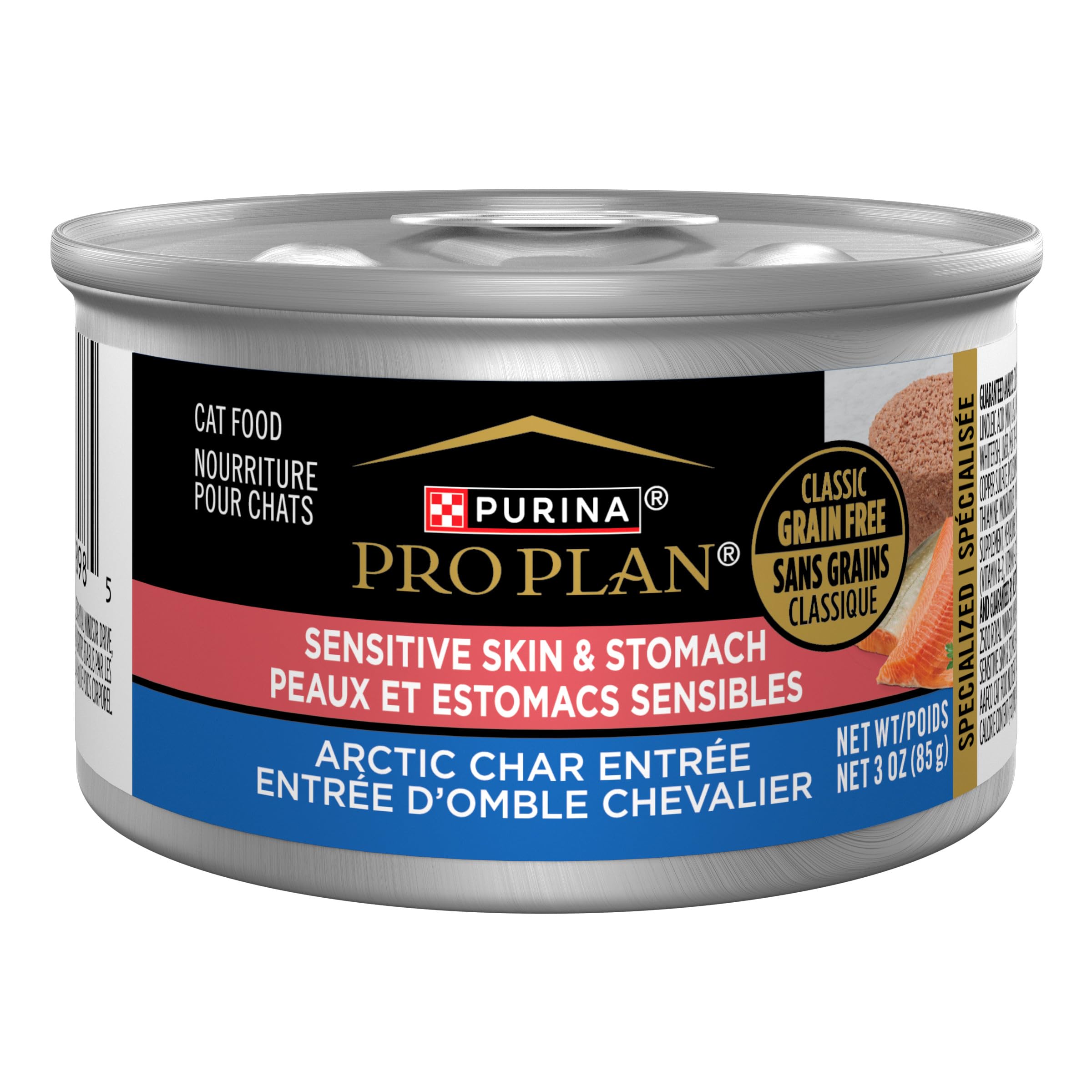
This wet pate formula uses Arctic char — a fatty fish with a high omega-3 profile — as its single animal protein, reducing the odds of triggering a sensitivity compared to chicken or beef-based wet foods. The smooth pate texture is ideal for senior cats with missing teeth or for cats recovering from a diarrhea episode who need easily digestible nutrition without requiring chewing effort.
The prebiotic fiber source here is less aggressive than the prescription blends — think maintenance rather than intervention. It pairs naturally with the Purina Pro Plan Sensitive Stomach dry kibble if you want to maintain hydration while building stool consistency. Owners of cats with chronic soft stool between normal days report this wet food eliminated litter box accidents when served as the primary wet meal and paired with a sensitive stomach dry food.
The 24-pack of 3-ounce cans offers good portion control for small cats or multi-cat households that eat wet food twice daily. Because it is an over-the-counter product, you can purchase it without a vet authorization, making it the fastest option to try if your cat has mild intermittent diarrhea and you need a clean protein source that avoids common allergens like chicken.
Why we love it
- Single novel protein (Arctic char) reduces sensitivity triggers
- Pate texture is easy for toothless or recovering cats to digest
- No prescription needed — immediate availability
Good to know
- Lower fiber content than prescription digestive care diets
- Some cats may not consider char a palatable novel protein
- Cannot mix with other wet foods if you need strict single-protein elimination
5. Purina Cat Chow Gentle Sensitive Stomach and Skin Dry Cat Food
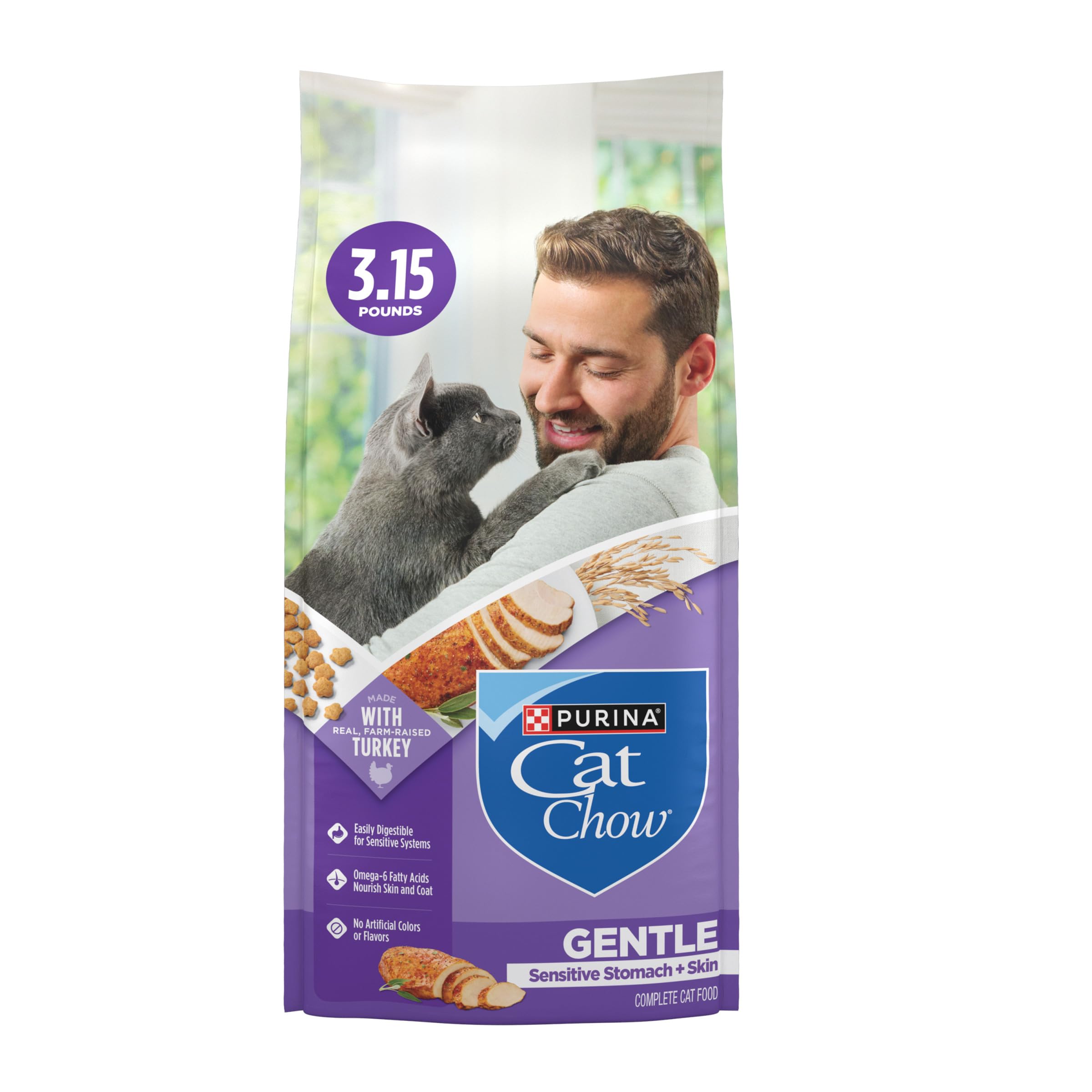
This is the entry-level solution for the cat whose diarrhea is occasional and mild — the cat that has two or three loose stools a month, likely tied to dietary indiscretion or minor stress. The turkey protein is lean and less allergenic than chicken or beef, and the inclusion of omega-6 fatty acids supports the skin barrier that often breaks down alongside digestive upset.
The 29 vitamins and minerals in this formula create a broad nutritional safety net, but the prebiotic fiber content is lower than the prescription competitors. It works best as a maintenance food after a diarrhea episode has resolved, or as a gentle transition food for a cat switching from a generic grocery brand. Owners of cats that vomited daily on standard indoor formulas report this stopped the vomiting and improved stool formation.
The pack of four 3.15-pound bags allows you to open one, then vacuum-seal the rest for freshness — useful since the kibble loses palatability after about 3 weeks of exposure. It is an over-the-counter food, so there is no vet barrier, but if your cat has chronic diarrhea lasting more than 48 hours, this formula will not provide enough fiber or highly digestible protein to resolve it. Consider it a solid first step before escalating to veterinary diets.
Why we love it
- Mild turkey protein suitable for cats with chicken sensitivity
- Four-bag pack allows extended freshness with proper storage
- No veterinary prescription needed for purchase
Good to know
- Lower fiber content insufficient for chronic or severe diarrhea
- Not a complete elimination diet for suspected food allergies
- Some cats may not tolerate the corn/wheat carbohydrate base
FAQ
Can I use over-the-counter sensitive stomach food for chronic diarrhea?
How long does it take for a hydrolyzed protein diet to firm up stool?
Is ring-shaped kibble better for cats that vomit after eating?
Should I add pumpkin or probiotics to my cat’s diarrhea diet?
Final Thoughts: The Verdict
For most cats with chronic diarrhea linked to food sensitivities, the cat food for cats with diarrhea winner is the Hill’s Prescription Diet z/d because hydrolyzed protein eliminates the most common root cause — adverse food reactions — before you ever need to guess which ingredient is the trigger. If your cat’s diarrhea is tied to environmental stress or inflammatory bowel disease, grab the Hill’s Prescription Diet GI Biome for its 24-hour stool response and stress-reducing hydrolyzed casein. And for a budget-conscious entry point or a cat that vomits before the diarrhea starts, the Royal Canin Digestive Care offers the best mechanical solution with its slow-eating kibble design.