
Finding a dry kibble or wet pate that doesn’t trigger vomiting, diarrhea, or abdominal pain in a cat with Irritable Bowel Syndrome is a constant guessing game. One wrong ingredient — a common poultry protein, a grain filler, or an artificial binder — can undo days of careful feeding and send your cat back to the litter box in distress.
I’m Mo Mahin — the founder and writer behind Furric. I’ve spent years analyzing veterinary nutrition protocols, cross-referencing ingredient panels, and studying owner-reported outcomes to identify which formulations actually stabilize a compromised feline digestive tract and which ones simply market the word “sensitive.”
After reviewing dozens of formulas against the specific needs of IBS management — highly hydrolyzed proteins, limited ingredient decks, and proven prebiotic fiber blends — I’ve narrowed the field to the five best options that deliver real symptom relief. This is your complete guide to the best cat food for cats with ibs.
How To Choose The Best Cat Food For Cats With IBS
IBS in cats is a chronic condition where the intestinal lining becomes hypersensitive to specific proteins, additives, or fiber levels. The right food reduces inflammation and stabilizes bowel movements by removing the trigger and adding gentle, digestible nutrition. Here are the three factors that matter most when selecting a formula.
Protein Source — Hydrolyzed vs. Novel
For IBS, the protein source is the single most important decision. Hydrolyzed proteins are broken down into fragments so small the immune system cannot recognize them, which eliminates the allergic cascade that drives IBS symptoms. Novel proteins — such as duck, rabbit, or venison — are proteins the cat has never eaten, reducing the likelihood of a pre-existing sensitivity. A veterinary prescription diet with hydrolyzed chicken is the gold standard for severe cases, while a limited-ingredient novel protein formula works well for moderate sensitivity.
Fiber Profile — Prebiotics and Soluble Fiber
Cats with IBS often have abnormal gut motility, and the right fiber can normalize it. Soluble prebiotic fibers like inulin (chicory root) and psyllium feed beneficial gut bacteria, which reduces inflammation over time and improves stool quality. Look for formulas that list a specific prebiotic fiber source rather than vague “fiber blend” ingredients. Too much insoluble fiber — like cellulose or beet pulp at high levels — can aggravate cramping, so moderation is key.
Ingredient Deck — Minimalist and Grain-Free
Every additional ingredient is a potential new trigger for a cat with IBS. Limited ingredient diets (LID) typically contain a single protein, a single carbohydrate, and a vitamin/mineral premix. Grain-free formulations remove wheat, corn, and soy, which are common but not universal IBS triggers. Avoid formulas with carrageenan, guar gum, or artificial preservatives — these thickening agents have been linked to intestinal inflammation in sensitive cats and can undo the benefit of an otherwise clean recipe.
Quick Comparison
On smaller screens, swipe sideways to see the full table.
| Model | Category | Best For | Key Spec | Amazon |
|---|---|---|---|---|
| Hill’s Prescription Diet z/d | Veterinary Prescription | Severe food sensitivities & chronic vomiting | Hydrolyzed chicken protein | Amazon |
| Purina Pro Plan Sensitive Skin & Stomach (Duck) | Wet Food / Novel Protein | Cats who refuse dry kibble & need hydration | Duck as novel protein | Amazon |
| Royal Canin Digestive Care | Over-the-Counter Dry | Mild IBS with slow eating issues | Ring-shaped kibble slows eating | Amazon |
| Blue Buffalo Basics Turkey & Potato | Limited Ingredient Dry | Chicken allergy & grain sensitivity | Single novel protein: turkey | Amazon |
| Purina Pro Plan Sensitive Skin & Stomach (Turkey) | Over-the-Counter Dry | Budget-friendly daily maintenance | Rice & oat meal as digestible carbs | Amazon |
In‑Depth Reviews
1. Hill’s Prescription Diet z/d Skin/Food Sensitivities Dry Cat Food

Hill’s z/d is the most clinically validated option for cats whose IBS is driven by adverse food reactions. The hydrolyzed chicken protein is fragmented at a molecular level to evade immune detection, which eliminates the underlying inflammatory response that causes vomiting, soft stool, and itching. This is not a “sensitive stomach” marketing label — it is a veterinary prescription diet backed by Hill’s internal studies showing reduced scratching and normalized digestion within weeks.
The formula incorporates ActivBiome+, a proprietary blend of prebiotic fibers designed to rapidly shift the gut microbiome toward a healthier profile. Owner reports consistently mention cats that had vomited daily for years stopping completely within the first bag. The kibble texture is unremarkable — small and uniform — but the nutritional engineering is the real story here. It is also rich in Omega-6 and Omega-3 fatty acids to repair the skin barrier, which often suffers alongside gut inflammation.
The main friction points are the prescription requirement and the cost. You will need a vet’s approval, and the price per pound is significantly higher than any over-the-counter option. However, for a cat that has failed multiple other foods, this single switch can eliminate the root cause of the suffering, making it a cost-effective solution long-term.
Why we love it
- Hydrolyzed protein is undetectable to the immune system, stopping food allergies at the root
- ActivBiome+ prebiotic blend rapidly improves stool quality
- #1 US Vet-Recommended therapeutic food brand
Good to know
- Requires a veterinary prescription to purchase
- Premium price point compared to OTC sensitive stomach formulas
2. Purina Pro Plan Sensitive Skin and Stomach Wet Cat Food Duck Entree (Pack of 24)
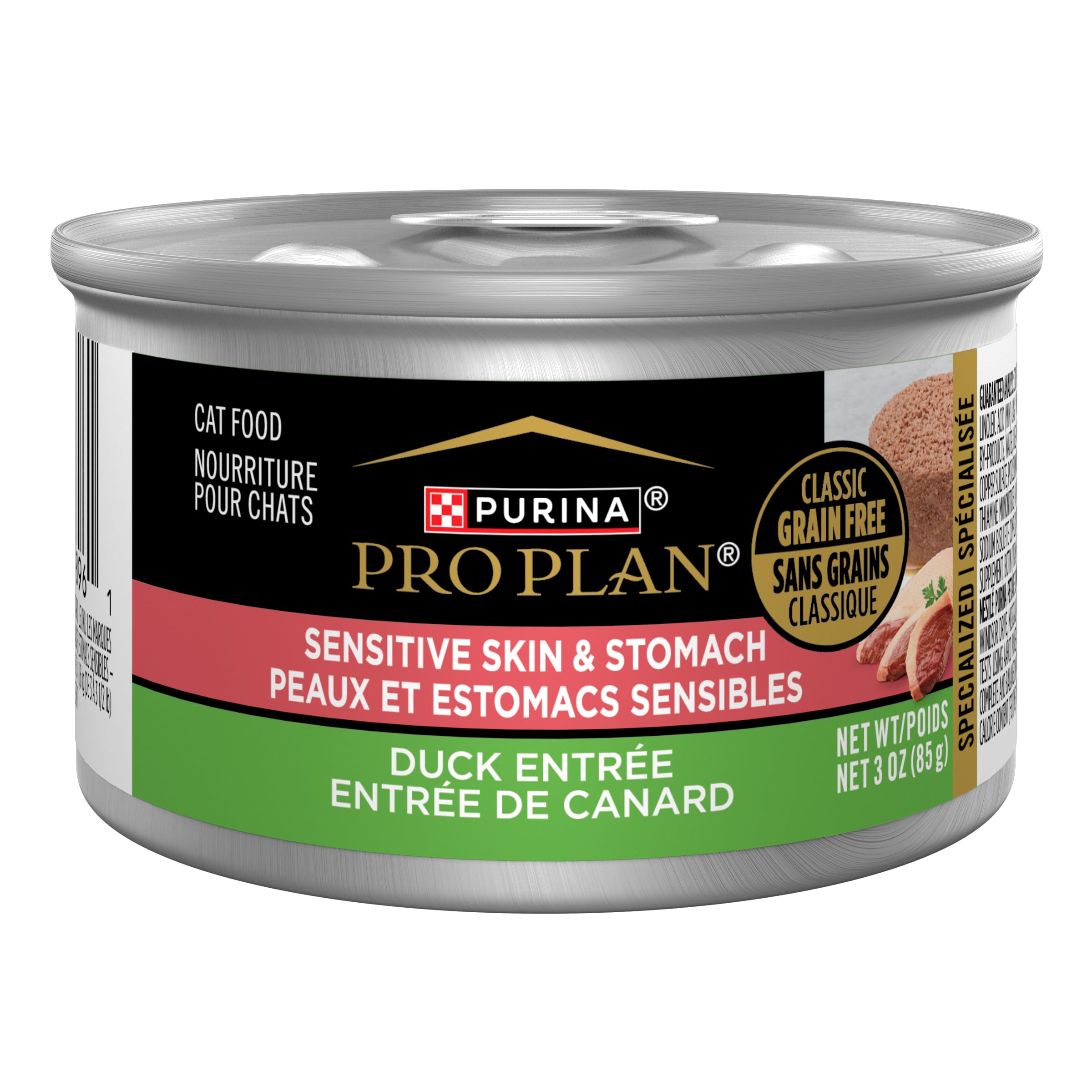
For cats with IBS that also struggle with hydration or refuse dry kibble, this wet pate from Purina Pro Plan is the strongest contender. Duck serves as a novel protein — a meat the cat’s immune system has likely never encountered — which dramatically lowers the chance of triggering an IBS flare. The pate texture is soft and easy to mash, making it ideal for senior cats with dental issues or picky eaters who need their moisture intake increased.
The formulation includes natural prebiotic fiber to support digestive health and is completely free of corn, wheat, soy, and artificial preservatives. Owner feedback highlights that cats with chronic diarrhea stabilize after just a few servings on this entree. Each 3-ounce pull-top can provides 25 essential vitamins and minerals along with taurine for vision and heart health. The 24-pack ensures a consistent supply, which is critical when you have finally found a food that works.
The price is elevated for a wet food, especially when feeding multiple meals per day. Some cats may eventually develop a sensitivity to duck if it is fed exclusively for years, but for moderate-to-mild IBS, this is a reliable rotation staple. The lack of a prescription requirement makes it accessible, though some owners note that local stores rarely stock the duck flavor, making the Amazon subscription a practical necessity.
Why we love it
- Novel duck protein is unlikely to trigger existing IBS sensitivities
- Soft pate ideal for senior or picky cats needing hydration
- Prebiotic fiber helps normalize stool in cats with chronic diarrhea
Good to know
- Higher cost per serving compared to dry kibble options
- May require rotation with other novel proteins to prevent long-term sensitivity
3. Royal Canin Feline Care Nutrition Digestive Care Adult Dry Cat Food

Royal Canin takes a mechanical approach to IBS alongside its nutritional one. The kibble is shaped into an exclusive ring design that physically slows down eating speed, which reduces air swallowing and gastric distension — two common aggravators of IBS symptoms. This is especially valuable for cats that inhale their food and vomit shortly after, as the slower intake allows the stomach to process the meal more gently.
Digestively, the formula combines a precise blend of prebiotics and dietary fiber that Royal Canin’s internal testing showed achieves over 95% healthy stool quality after 10 days. The protein source is highly digestible, which reduces the fermentable load reaching the colon and minimizes gas and cramping. It is an over-the-counter product, so no prescription is needed, but it is formulated to a veterinary-grade standard.
Some cats with severe IBS may still react to the protein base, as it is not hydrolyzed or a single novel source. The 3-pound bag size is relatively small for the price, which can make it feel expensive per feeding compared to larger bags of similar-priced food. It works best as a first-line approach for mild-to-moderate IBS where eating speed is part of the problem.
Why we love it
- Ring-shaped kibble design forces slower eating, reducing vomiting
- Over 95% healthy stool quality in 10 days per Royal Canin study
- No prescription required for purchase
Good to know
- Protein source is not hydrolyzed, may not suit severe sensitivities
- Smaller bag size results in higher per-pound cost
4. Blue Buffalo Basics Grain-Free Dry Cat Food Turkey & Potato Recipe

Blue Buffalo Basics is a limited-ingredient diet designed specifically for cats with known chicken allergies — a common underlying trigger for IBS. This turkey and potato recipe uses a single novel protein (turkey) and a single carbohydrate (potato), avoiding chicken by-products, corn, wheat, soy, dairy, and eggs. For a cat that has been vomiting or itching on chicken-based foods, this straightforward ingredient deck often provides immediate relief.
The formula includes LifeSource Bits, a cold-processed blend of antioxidants that support immune function, and Omega-3 and Omega-6 fatty acids for skin and coat repair. Owner reviews consistently report that cats who vomited with other premium brands stopped after switching to this recipe. The kibble is tiny and hard, which picky cats seem to prefer, and the 5-pound bag provides a reasonable trial window without a huge commitment.
This is not a hydrolyzed or veterinary prescription diet, so cats with extreme protein sensitivity may still react to the turkey. The “senior” label on the bag indicates a lower phosphorus level, which is fine for most adults but may not be ideal for young, active cats requiring higher protein density. It occupies a strong middle ground for chicken-sensitive cats with mild-to-moderate IBS.
Why we love it
- Single novel turkey protein eliminates chicken-related IBS triggers
- LifeSource Bits support immune system and antioxidant intake
- Grain-free and free of corn, wheat, soy, and dairy
Good to know
- Not suitable for severe protein sensitivities that require hydrolyzed diets
- Formulated for senior cats, may need protein supplementation for kittens
5. Purina Pro Plan Sensitive Skin and Stomach Dry Cat Food Turkey and Oat Meal Formula
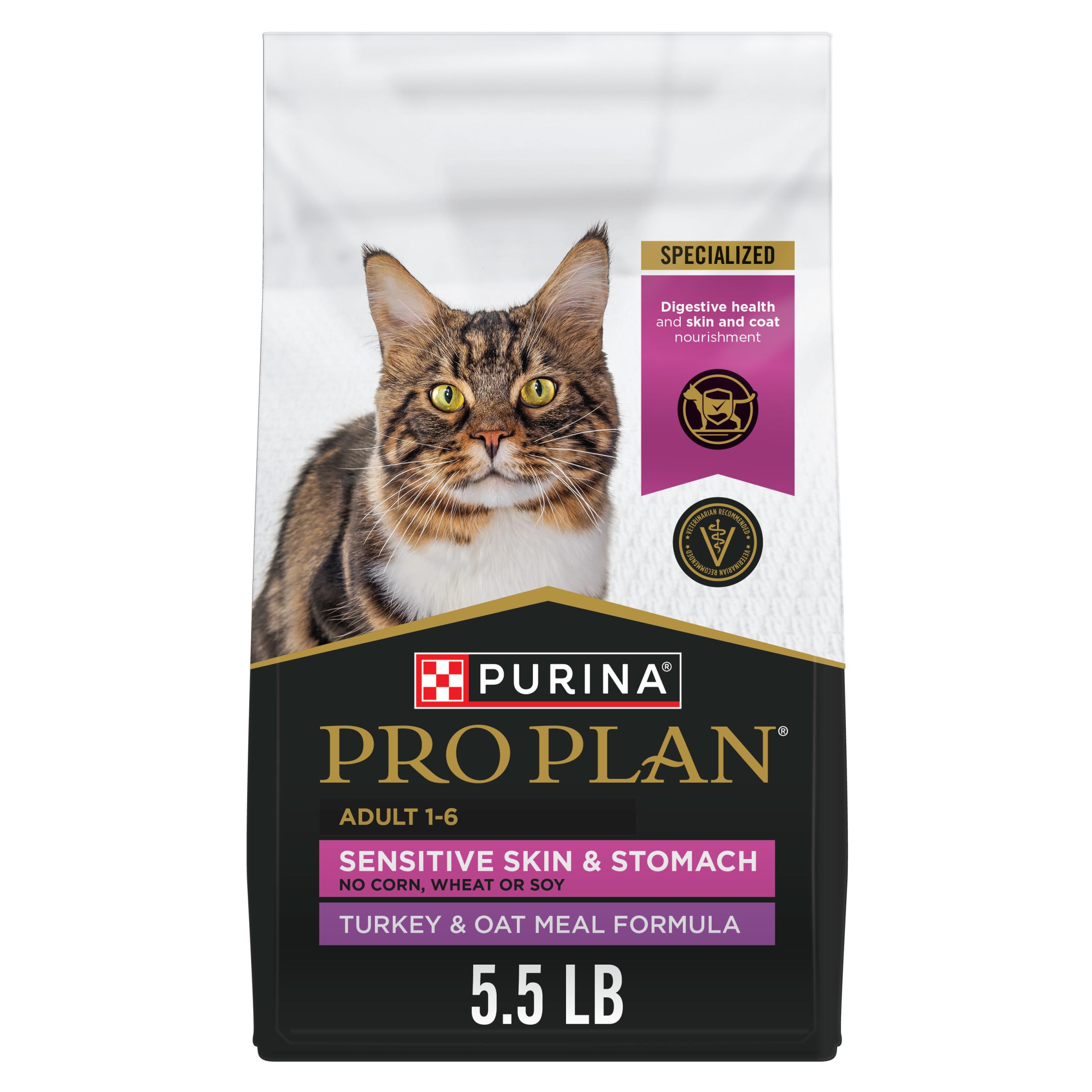
This entry-level dry formula from Purina Pro Plan uses rice and oat meal as carbohydrate sources, both of which are highly digestible and gentle on the stomach. Real turkey is the first ingredient, providing a high-protein base, and the kibble is fortified with guaranteed live probiotics to support digestive and immune health. It is the most accessible option on this list for owners who want a solid sensitive-stomach formula without stepping up to a veterinary prescription or limited-ingredient price tier.
The formula includes Omega-6 fatty acids and vitamin A for skin and coat health, addressing the superficial symptoms that often accompany IBS. It is made in Purina-owned US facilities and contains no artificial colors or flavors. The 5.5-pound bag is a practical size for a trial period, and many owners find their cats tolerate this food well when chicken and grain-heavy diets failed.
The trade-offs are significant for IBS management. The protein is not hydrolyzed, and the ingredient deck is not limited — there are multiple protein sources and additives that a severely sensitive cat may still react to. It works best as a maintenance food for cats with very mild, intermittent IBS symptoms rather than as a therapeutic diet for chronic disease.
Why we love it
- Rice and oat meal are easily digestible carbohydrates for sensitive stomachs
- Guaranteed live probiotics support ongoing digestive health
- Budget-friendly entry point for testing sensitive stomach formulas
Good to know
- Not a limited ingredient diet; multiple protein sources may trigger sensitivity
- Best suited for mild IBS rather than chronic or severe cases
FAQ
Can I feed my cat with IBS both wet and dry food?
Is grain-free cat food better for IBS than grain-inclusive food?
How long does it take for a new IBS-friendly cat food to show results?
Final Thoughts: The Verdict
For most cats with IBS, the best cat food for cats with ibs is the Hill’s Prescription Diet z/d because its hydrolyzed chicken protein eliminates the immune reaction at the molecular level, which is the root cause of IBS-driven vomiting and diarrhea. If you need a wet food option that combines novel duck protein with high moisture for hydration, grab the Purina Pro Plan Duck Entree. And for a budget-friendly maintenance diet for mild IBS, nothing beats the value of the Purina Pro Plan Turkey and Oat Meal Formula.