
Feeding a feral colony means balancing nutrition against a hard budget, where every pound of kibble must deliver calories without breaking weekly limits. The wrong bag leads to digestive upset, waste from refusal, or empty bowls that send wary cats back to scavenging.
I’m Mo Mahin — the founder and writer behind Furric. I focus on comparing kibble density, protein sources, and bag volumes across hundreds of entries to find which recipes actually hold up for outdoor colony feeding without driving up your per-serving cost.
After crunching the numbers on protein percentages, fiber levels for hairball control, and total weight per dollar, I narrowed the field to the five best performers. This is your data-driven guide to the best cat food for feral cats this season.
How To Choose The Best Cat Food For Feral Cats
Feral cats face different metabolic demands than indoor pets. More roaming, colder exposure, and irregular feeding windows mean the kibble you choose must supply dense energy without upsetting sensitive stomachs.
Protein Source and Percentage
Look for a named meat like chicken, turkey, or fish as the first ingredient. Feral cats need a minimum of 30% crude protein to maintain lean muscle. By-products and unnamed meals often drop that number while offering lower digestibility.
Kibble Shape and Size
Small, disc-shaped kibble breaks down faster and is easier for older ferals with dental wear. Large chunks may be ignored or gulped without chewing, leading to regurgitation. The best feral food uses a consistent small pellet across the whole bag.
Fiber for Hairball Control
Outdoor cats groom frequently and swallow more hair. A fiber blend with beet pulp or miscanthus grass helps move hair through the digestive tract. Too much fiber, though, can cause loose stools — stick to 3-5% crude fiber for balanced elimination.
Bag Weight and Value Density
Colony feeding demands volume. A 22-lb bag will outlast four smaller bags while reducing per-meal cost. Compare the cost per pound mentally: premium 4-lb bags are great for picky indoor seniors, but bulk sacks stretch the budget for multiple ferals.
Quick Comparison
On smaller screens, swipe sideways to see the full table.
| Model | Category | Best For | Key Spec | Amazon |
|---|---|---|---|---|
| Purina Fancy Feast Chicken & Turkey | Premium Dry | Small colonies & picky eaters | Four 16-oz bags per pack | Amazon |
| Meow Mix Original Choice | Bulk Value | Large colony feeding | 22-lb bag, 30% protein | Amazon |
| Nulo FreeStyle Senior Alaska Pollock | Grain-Free Senior | Older ferals & chicken-sensitive cats | 78% animal protein, small disc kibble | Amazon |
| Blue Buffalo Tastefuls Multi-Protein | Natural Ingredient | Health-focused feeding | 7-lb bag, no by-products or corn | Amazon |
| IAMS Proactive Health Indoor Weight & Hairball | Hairball Formula | Indoor/feral transition cats | 22-lb bag, beet pulp fiber blend | Amazon |
In‑Depth Reviews
1. Purina Fancy Feast Dry Cat Food with Savory Farm-Raised Chicken and Turkey – (Pack of 4) 16 oz. Bags

The Purina Fancy Feast pack splits premium chicken and turkey kibble into four separate 16-ounce bags — a smart design for colony feeders who want to rotate freshness across multiple feeding stations. Real chicken and turkey lead the ingredient list, delivering 100 percent complete nutrition without artificial preservatives. Each bag stays sealed until opened, which prevents moisture and pests from spoiling the batch.
Customer feedback consistently reports that cats of all ages, from kittens to elderly ferals, accept this food readily. The kibble measures small enough for tooth-recovery cases and senior cats. While the 4-lb total weight is lighter than bulk options, the portion control means less waste if the colony size is small or feeding schedules vary.
Reviewers note that the formula has not changed in over a decade, so feral cats familiar with the taste will not reject a sudden switch. The main drawback is the per-pound cost compared to a 22-lb sack, but for colony managers prioritizing ingredient transparency and easy rotation, this is a reliable choice.
Why we love it
- Four sealed bags lock in freshness for outdoor storage
- Small, crunchy kibble works for tooth-sensitive ferals
- Consistent formula avoids refusal from flavor changes
Good to know
- Higher per-pound cost than 22-lb bulk bags
- Chicken and turkey only — no fish protein option
2. Meow Mix Original Choice Dry Cat Food, 22 Pound Bag
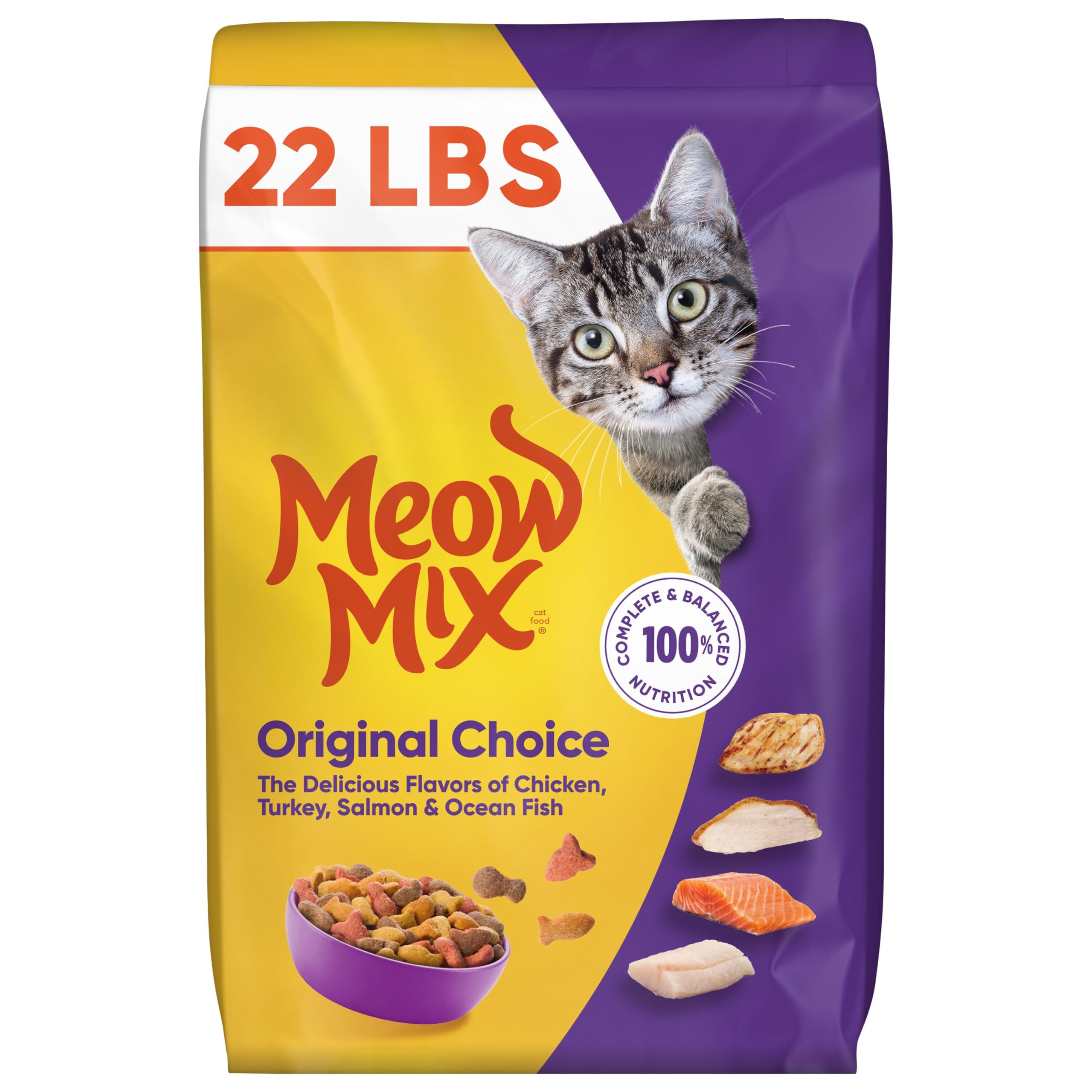
When the colony spans five or more cats, the Meow Mix Original Choice 22-lb bag becomes the most cost-efficient solution on this list. The chunk-style kibble delivers a protein-rich chicken and turkey blend that cats recognize immediately. Multiple verified buyers specifically mention using this food for street or feral colonies, reporting that neighborhood cats flock to feeding spots as soon as the bag is opened.
Produced in the U.S.A. from globally sourced ingredients, this formula meets AAFCO adult maintenance standards. The crude protein sits around 30%, which supports muscle health in roaming ferals. The bag reseals reasonably well with a clip, though storing the full 22 lbs in a weatherproof container is recommended for outdoor feeding stations.
The most frequent praise centers on acceptance: even finicky cats who reject other flavors eat the Original Choice. The tradeoff is that the formula includes corn and wheat, which some managers prefer to avoid for cats with grain sensitivities. For pure colony cost management, though, this is the volume leader.
Why we love it
- Strong colony acceptance — verified by multiple feral feeders
- 22-lb sack extends refill intervals for large groups
- Consistent 30% protein supports active outdoor cats
Good to know
- Contains corn and wheat — not grain-free
- Large chunk kibble may be tough for older cats
3. Nulo FreeStyle Senior Dry Cat Food – Alaska Pollock & Sweet Potato, 4lb Bag
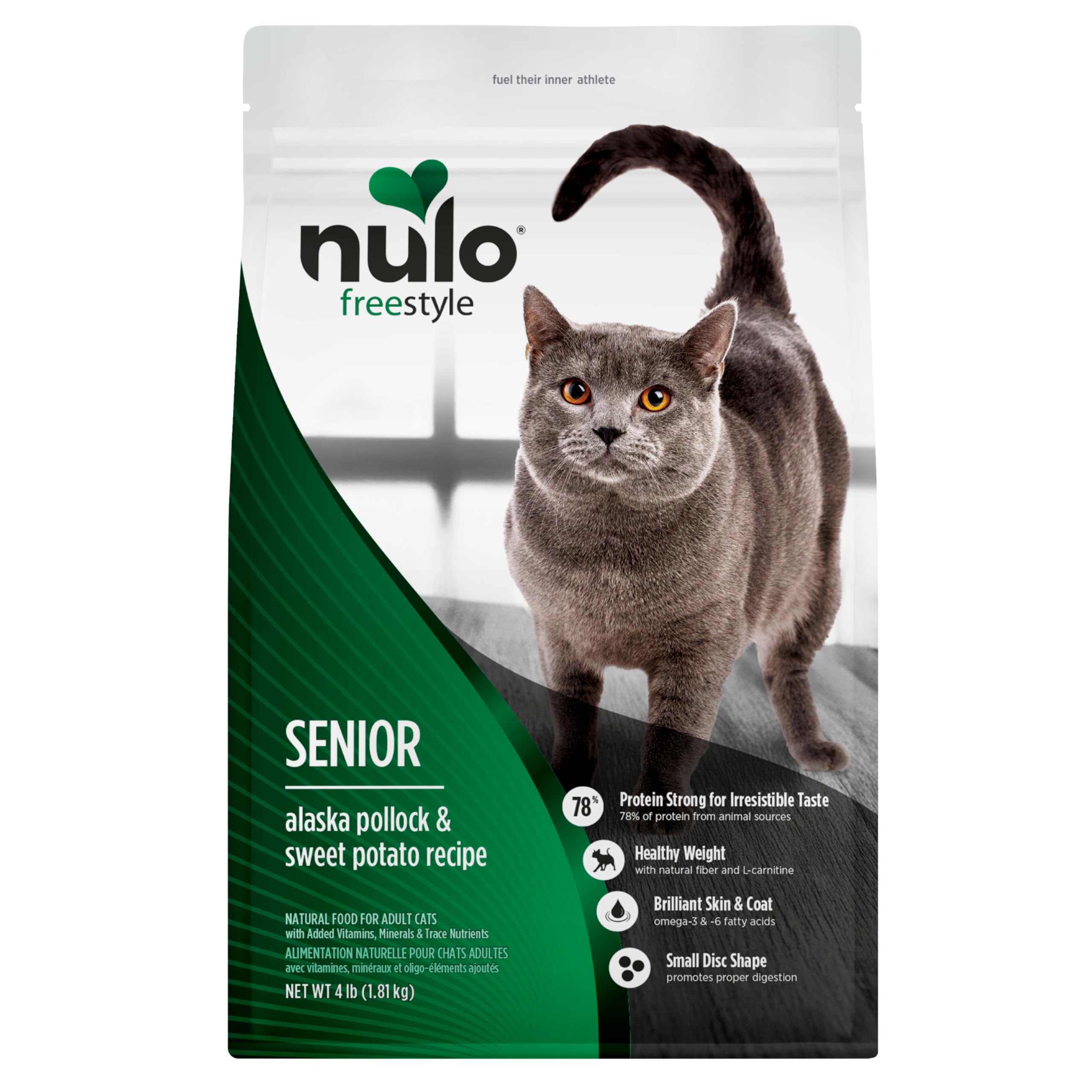
For older ferals who struggle with chicken-based diets or need extra metabolic support, the Nulo FreeStyle Senior recipe offers a unique Alaska pollock and sweet potato formula. The small disc-shaped kibble encourages proper chewing, which slows down fast eaters and improves digestion. With 78% of the protein coming from animal sources, this is the highest protein density in the list, helping senior cats preserve lean muscle despite reduced appetite.
The inclusion of L-carnitine supports fat metabolism, important for outdoor cats whose activity drops in winter. Probiotics from BC30 strains aid gut balance, reducing the vomiting and hairball issues common in aging felines. Multiple reviewers with older cats noted reduced regurgitation and shinier coats after switching to this grain-free option.
The bag size is limited to 4 lbs, making this more suitable as a targeted supplement for one or two senior ferals rather than a colony-wide staple. The per-pound cost reflects the premium ingredients. Still, for a cat that needs the chicken-free, high-animal-protein profile, Nulo delivers without fillers like corn or soy.
Why we love it
- Chicken-free formula solves allergy/ sensitivity issues
- Small disc kibble reduces choking risk in older cats
- L-carnitine and probiotics support senior metabolism
Good to know
- 4-lb bag is expensive per pound for colony feeding
- Some picky seniors refused after first serving
4. Blue Buffalo Tastefuls Adult Cat Dry Food, Multi-Protein Chicken & Turkey Recipe, 7-lb. Bag
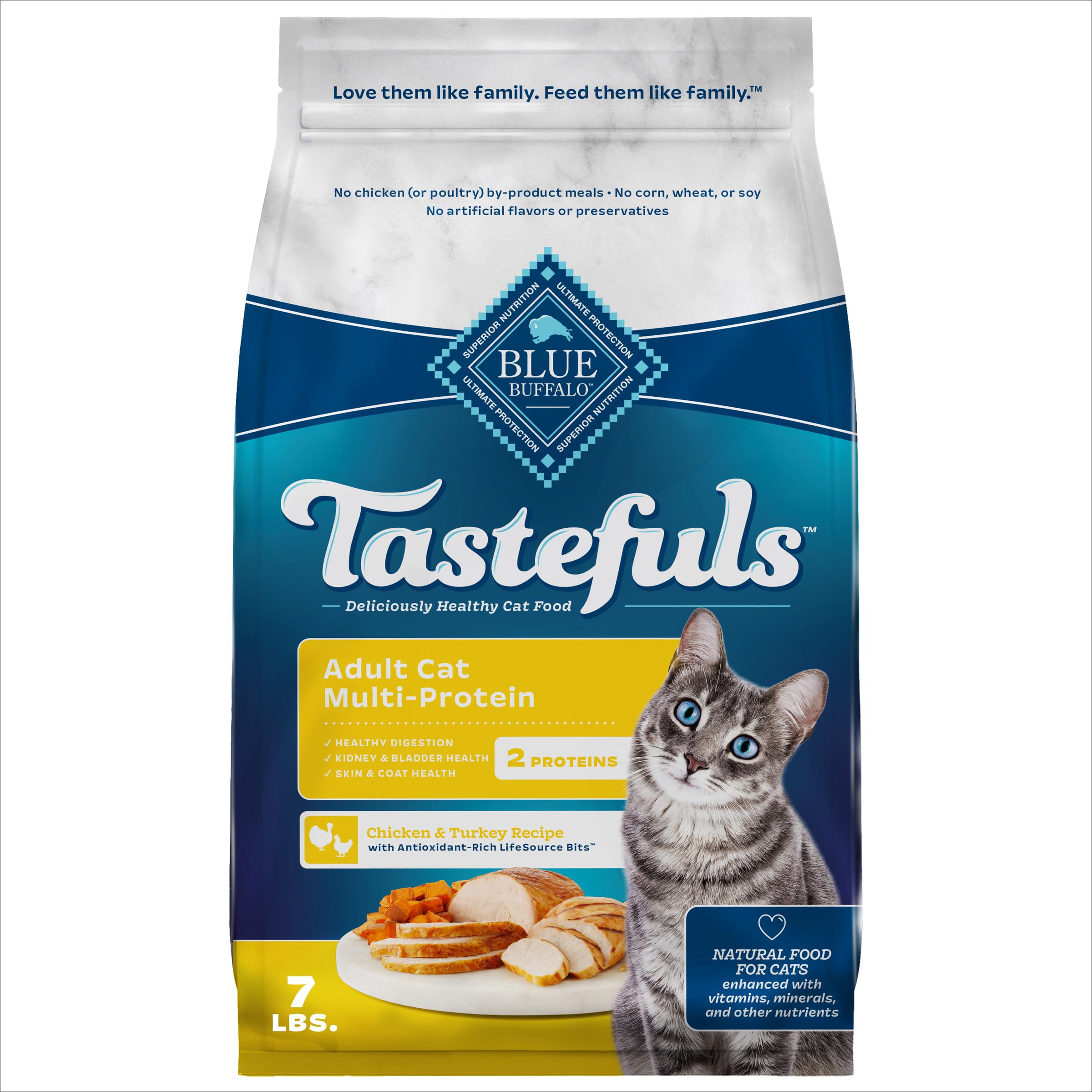
Blue Buffalo Tastefuls Multi-Protein combines chicken and turkey without any poultry by-product meals, corn, wheat, or soy. For colony managers who want cleaner ingredient decks, this 7-lb bag balances natural sourcing with a moderate price point. The recipe adds omega 3 and 6 fatty acids for skin and coat health, plus taurine for heart and eye support — useful for ferals who get less veterinary attention.
Customer reviews emphasize that cats across age groups love the taste, often preferring it over wet food options. The controlled mineral levels promote kidney and bladder health, which is a real concern for outdoor cats with variable water access. The kibble size is similar to the Purina Fancy Feast but slightly denser, holding up better in outdoor feeders during damp weather.
The main limitation is the 7-lb bag size, which is fine for small colonies of two to four cats but requires frequent reordering for larger groups. Compared to the 22-lb IAMS bag, this one costs more per pound. For someone seeking a premium natural recipe without the bulk commitment, however, Blue Buffalo is a strong middle ground.
Why we love it
- No chicken by-products, corn, or artificial preservatives
- Omega fatty acids support skin health for outdoor cats
- High acceptability across multiple cat ages
Good to know
- 7-lb bag requires more frequent restocking
- Higher per-pound cost than bulk grain-inclusive options
5. IAMS Proactive Health Dry Cat Food, Indoor Weight and Hairball Care, 22 lb. Bag
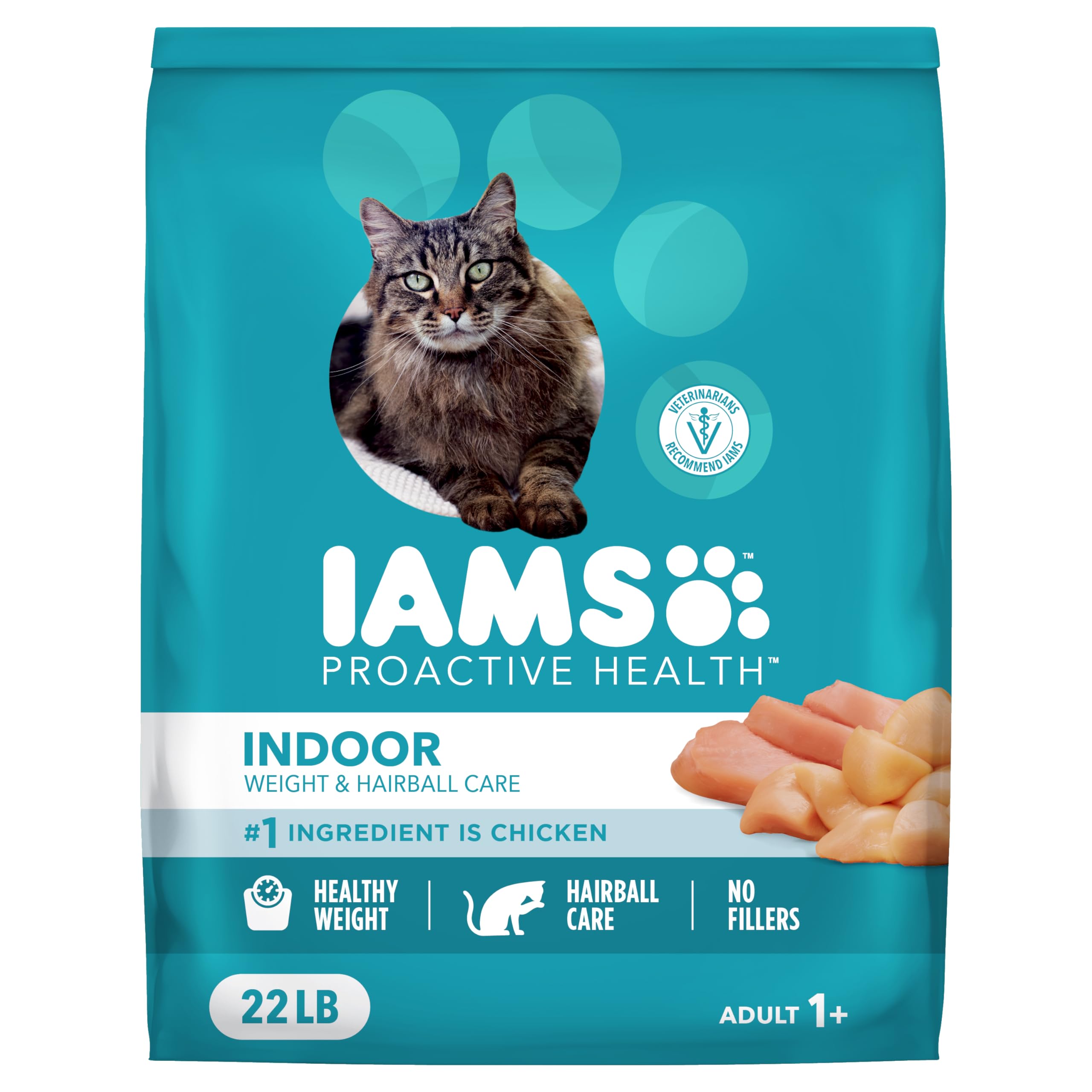
IAMS Proactive Health Indoor Weight and Hairball Care delivers the largest single-bag volume at 22 lbs, with a proprietary fiber blend featuring beet pulp to reduce hairball formation before it starts. Outdoor cats that groom heavily during shedding seasons benefit from the fiber system that pushes hair through the digestive tract instead of letting it accumulate. The first ingredient is real chicken, providing a high-quality protein base.
The formula also targets weight management with L-carnitine, which matters for ferals that transition between active roaming and sedentary winter periods. Reviews consistently report drastically fewer hairballs in cats that switch to this recipe. Customers with multiple cats note that one 22-lb bag lasts two to three months, making it the most efficient bulk option for colony managers concerned about digestive health.
On the downside, the kibble can become slimy if exposed to moisture, so it must be kept dry in sealed feeders. Some cats may resist the formula initially, though most adapt within a few days. For a colony prone to hairball blockages or weight gain, this is the most targeted solution at the lowest per-pound cost among the premium-tier options.
Why we love it
- Beet pulp fiber blend reduces hairballs effectively
- 22-lb bag offers best bulk value for colony needs
- Real chicken first ingredient with L-carnitine
Good to know
- Kibble turns slimy when exposed to moisture
- May need a transition period for picky eaters
FAQ
How much dry food does a feral cat need per day?
Is grain-free kibble better for feral colonies?
Can I mix wet food with dry kibble for ferals?
Final Thoughts: The Verdict
For most colony feeders, the best cat food for feral cats winner is the Meow Mix Original Choice 22-lb bag because it delivers the lowest per-pound cost with proven colony acceptance across multiple verified feeders. If you want a premium natural ingredient deck, grab the Blue Buffalo Tastefuls 7-lb bag. And for an older feral that needs senior-targeted protein and probiotics, nothing beats the Nulo FreeStyle Senior Alaska Pollock.