
Obligate carnivores with a digestive tract designed for meat, not corn, wheat, or carbohydrates — that is the biological reality of a ferret. The wrong diet leads to insulinoma, poor coat quality, and that distinct musky odor many owners try to mask. Choosing a cat food for ferrets means selecting a formula that delivers high animal-based protein (36-40%+), moderate fat (18-22%), and minimal starch, because a ferret’s metabolism burns through calories in roughly three hours.
I’m Mo Mahin — the founder and writer behind Furric. I’ve spent years comparing pet nutrition labels, studying AAFCO nutrient profiles for exotic carnivores, and cross-referencing owner-reported health outcomes across dozens of ferret food formulas to separate what truly works from what markets well.
The most common mistake ferret owners make is feeding a general cat or kitten kibble with fillers — the real best cat food for ferrets must prioritize meat meal as the first ingredient, keep crude protein above 35%, and avoid grains and starches that a ferret’s short digestive tract cannot process.
How To Choose The Best Cat Food For Ferrets
Ferrets are strict carnivores with a gut transit time of roughly three hours — shorter than a cat’s, much shorter than a dog’s. This means every ingredient must deliver bioavailable nutrition quickly. Here is what to scan on the guaranteed analysis panel before you buy.
Protein Percentage & Animal Source
Look for a minimum of 36% crude protein, ideally 40% or higher. The first ingredient should be a named meat meal (chicken meal, turkey meal, salmon meal) — not a vague “poultry meal” or “meat by-products.” Whole meats are fine, but meal forms provide concentrated protein without excess water weight that dilutes nutrition.
Fat Content & Omega Ratios
Ferrets require 18-22% crude fat for energy. Omega-3 and Omega-6 fatty acids from fish oil or flaxseed support a glossy coat and reduce the musky odor many owners complain about. Avoid formulas with fat sourced primarily from generic vegetable oils — they lack the species-appropriate fatty acid profile.
Starch & Carbohydrate Ceiling
Starch is the hidden villain in ferret diets. The pancreas of a ferret is not built for regular carbohydrate spikes, which can lead to insulinoma — a common pancreatic tumor in captive ferrets. Aim for formulas with less than 15% starch. Grain-free is a start, but also check for potato, tapioca, and pea starch content.
Kibble Shape & Palatability
Ferrets use their incisors to grip and their molars to crunch. Small disc-shaped or triangular kibbles (roughly 6-8mm across) work best. Large, round kibbles often get rejected or stored. If your ferret is a picky eater, look for high-palatability extrusion processes and natural flavor coatings like animal digest.
Quick Comparison
On smaller screens, swipe sideways to see the full table.
| Model | Category | Best For | Key Spec | Amazon |
|---|---|---|---|---|
| ZuPreem Premium Daily Ferret Diet | Dry Kibble | Balanced all-life-stages nutrition | 40% Protein / 20% Fat | Amazon |
| Mazuri Ferret Diet | Pellet | Low-starch carnivore formula | <15% Starch / 5 lb bag | Amazon |
| Wysong Ferret Archetype | Freeze-Dried Raw | Minimally processed raw nutrition | Unheated Above 118°F | Amazon |
| Earthborn Holistic Primitive Feline | Grain-Free Dry | Multiple meat protein sources | 5 Protein Meal Types | Amazon |
| Nulo FreeStyle Senior Cat Food | Senior Formula | Small kibble for older ferrets | 78% Animal-Based Protein | Amazon |
In‑Depth Reviews
1. ZuPreem Premium Daily Ferret Diet

ZuPreem hits the exact macro targets ferret owners need: 40% crude protein and 20% crude fat from real chicken and egg protein. The guaranteed analysis aligns perfectly with what veterinary ferret specialists recommend for maintaining lean muscle mass and steady energy levels throughout a ferret’s high-metabolism day. The inclusion of taurine supports cardiac health, while yucca schidigera extract naturally binds ammonia to reduce urine odor — one of the most common owner pain points.
Customer reports consistently describe a noticeable reduction in the typical musky ferret smell within two to three weeks of switching. The kibble size is small enough for ferrets to grip easily, and the extrusion process produces a texture that holds up well in a bowl without turning to dust. It is formulated for all life stages, meaning a single bag works for both a bouncing kit and a senior ferret with slower digestion.
Some owners note that the bag does not include a resealable zipper — a minor inconvenience for a 4 lb bag that a single-ferret household will use over several weeks. An airtight container solves this easily. Overall, this is the most straightforward “one-and-done” solution for a balanced ferret-maintenance diet without needing to mix or supplement constantly.
Why we love it
- Exact 40/20 protein-to-fat ratio ideal for ferret metabolism.
- Yucca extract and probiotics reduce musky odor effectively.
- All life stages — no need to switch formulas as ferret ages.
Good to know
- Bag lacks a resealable closure; transfer to airtight bin recommended.
- Some picky ferrets may need a gradual 7-10 day transition.
2. Mazuri Ferret Diet

Mazuri is formulated by Purina Animal Nutrition with a specific focus on the carnivore’s need for low starch — under 15%, which is significantly lower than most cat foods labeled “grain-free.” The multiple animal-derived proteins (chicken meal, fish meal, egg product) provide a broad amino acid profile that mimics the variety a wild ferret would encounter. The high-density extrusion means your ferret gets more nutrition per bite, which translates to noticeably smaller, firmer stool volume — a benefit every cage-cleaner will appreciate.
Owner reports highlight how ferrets that were losing weight and suffering from poor coat quality on other brands rebounded quickly on Mazuri. The addition of fish oil delivers Omega-3 fatty acids that improve coat sheen within weeks, and the probiotics in the formula contribute to gut health and further odor reduction. The kibble is a small pellet shape, roughly 6mm, which ferrets accept readily without needing to be moistened or crushed.
The bag size (5 lb) is generous for the price point, making it a cost-effective option for multi-ferret households. One potential consideration is that the formula is unflavored — some ferrets accustomed to heavily flavored or coated kibbles may need a slow introduction. Once adjusted, it works as a standalone diet or as a base for mixing with freeze-dried raw or commercial ferret supplements.
Why we love it
- Low starch (<15%) reduces insulinoma risk in ferrets.
- High density means less food waste and smaller stool volume.
- Omega-3 from fish oil visibly improves coat health.
Good to know
- Unflavored; some ferrets prefer more aromatic food.
- Gradual transition recommended to avoid initial rejection.
3. Wysong Ferret Archetype Chicken Formula

Wysong Ferret Archetype is a true non-thermal freeze-dried raw product — it never exceeds 118°F during processing, preserving enzymes and amino acids that heat-based extrusion destroys. This is a starch-free, meat-based formula, meaning it contributes zero carbohydrate load to the ferret’s diet. For owners concerned about insulinoma and the long-term effects of carb-heavy kibble, this is the biologically closest option to a whole-prey diet without sourcing whole animals.
The texture is crumbly and powdery; you can serve the larger chunks as treats and rehydrate the powdered portion with warm water to create a “soup” that most ferrets find irresistible. Reports of ferrets living past ten years on this diet (versus a typical five-to-six-year lifespan on commercial kibble) are common in owner communities. The high moisture content when rehydrated also supports urinary tract health — a plus for male ferrets prone to blockages.
The 7.5-ounce pouch is small. A single ferret consuming it as a daily supplement with kibble will go through a pouch in roughly one to two weeks. As a standalone diet, expect to buy multiple pouches per month. The price per ounce is higher than standard kibble, but owners who view it as a health investment for their ferret’s longevity consider it justified. Freeze it in portions to extend shelf life after opening.
Why we love it
- 100% starch-free, mimicking a natural carnivore diet.
- Low-heat processing preserves natural enzymes and nutrients.
- Can be served dry as treats or rehydrated as a nutrient-dense soup.
Good to know
- Very small bag size; multi-pouch purchases needed for long-term feeding.
- Higher per-ounce cost compared to standard dry kibble diets.
4. Earthborn Holistic Primitive Feline Grain-Free Dry Cat Food
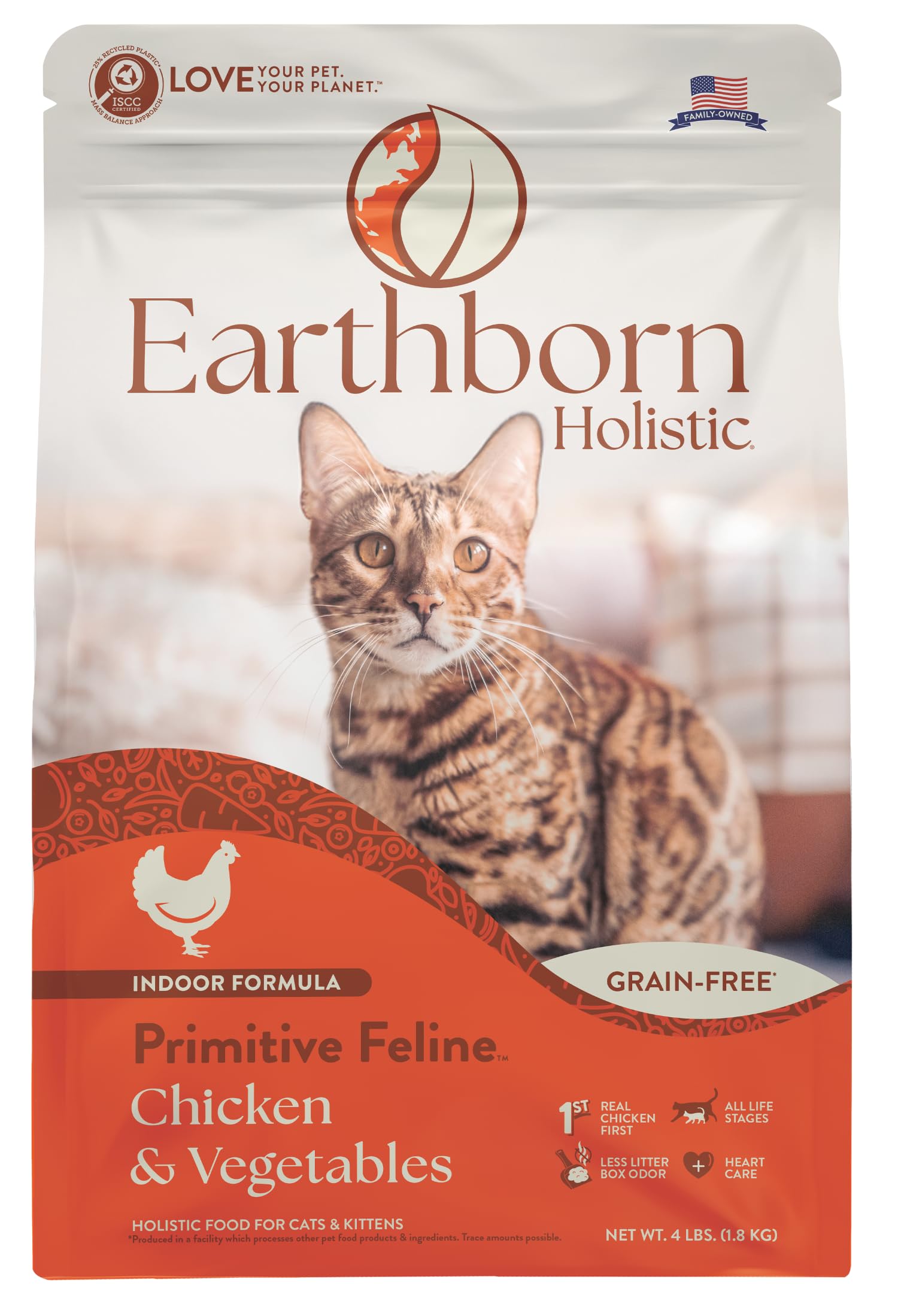
Earthborn Holistic Primitive Feline stands out for its blend of five distinct protein meals: turkey meal, chicken meal, herring meal, salmon meal, and whitefish meal. This variety provides a broad amino acid spectrum that supports muscle maintenance and immune function in ferrets. The grain-free and gluten-free formulation eliminates the fillers that contribute to loose stool and poor nutrient absorption in short-gut carnivores like ferrets.
The inclusion of blueberries, cranberries, carrots, and spinach provides natural antioxidant support, which is particularly useful for older ferrets or those with a history of inflammatory issues. Omega-6 and Omega-3 fatty acids from the fish meals promote a shiny coat and reduce dry skin — a common problem in ferrets housed in low-humidity indoor environments. The kibble size is moderate, comparable to a small cat kibble, which works for most ferrets but may be slightly large for very young kits.
Some ferrets accustomed to chicken-only formulas may take a few days to adjust to the fish-forward flavor profile. The resealable BPA-free bag is a practical touch for maintaining freshness between feedings. This formula is marketed as a cat food, so verify that your ferret accepts the taste before committing to a large bag — it works best as a rotation option alongside a dedicated ferret formula.
Why we love it
- Five distinct animal protein sources for diverse amino acid intake.
- Grain and gluten free with added antioxidant fruits and vegetables.
- Resealable BPA-free bag for long-term freshness.
Good to know
- Fish-forward flavor may not suit ferrets accustomed to poultry-only diets.
- Kibble size is slightly larger than ideal for very young ferrets.
5. Nulo FreeStyle Senior Dry Cat Food
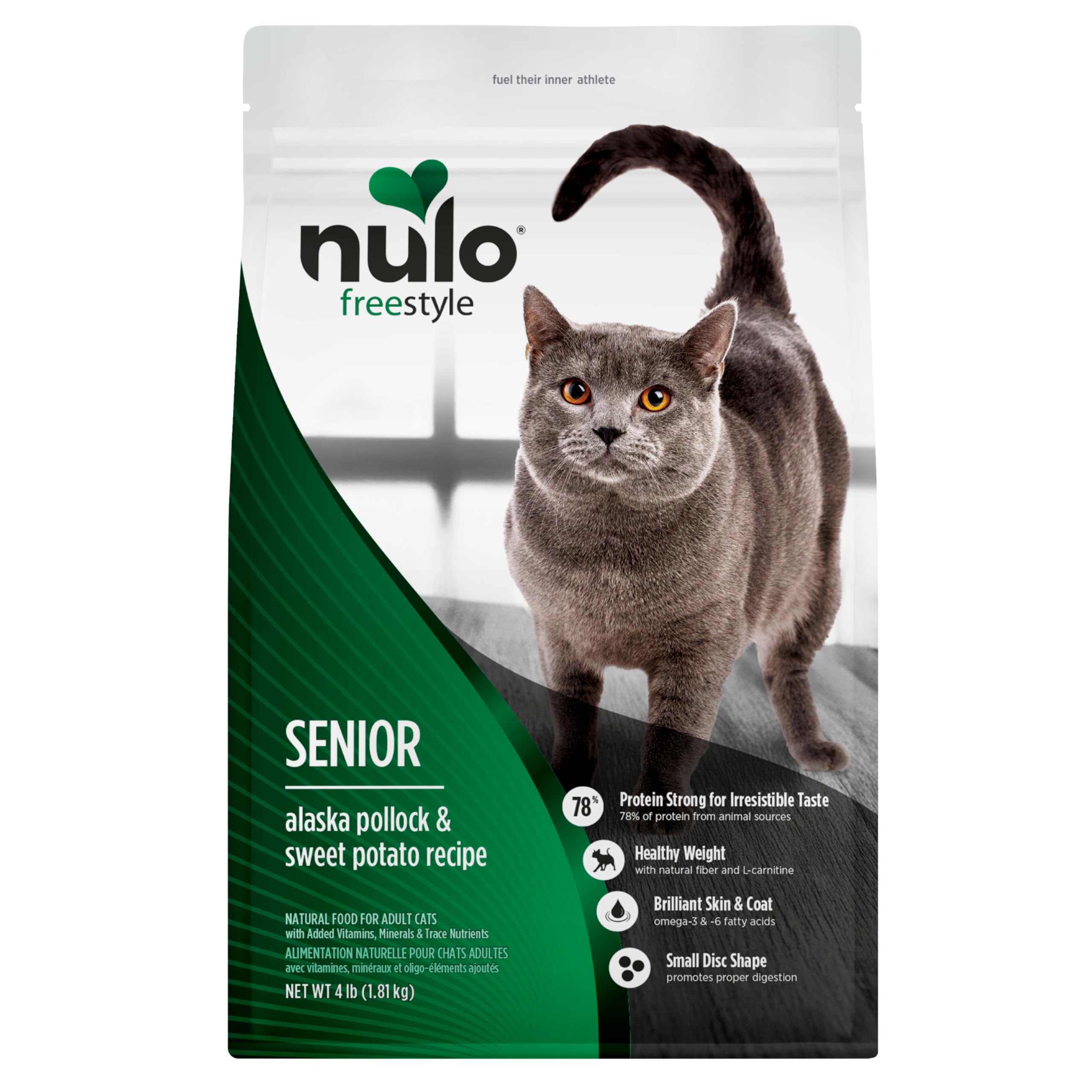
Nulo FreeStyle Senior is formulated for older cats, but its composition — 78% animal-based protein from Alaska pollock, small disc-shaped kibble, and added L-carnitine for weight management — makes it a surprisingly good fit for senior ferrets or ferrets with dental sensitivity. The small kibble size (roughly 6mm discs) encourages proper chewing, which is particularly important for ferrets over four years old that may have reduced jaw strength or missing teeth.
The inclusion of BC30 probiotics (Bacillus coagulans) and prebiotic fibers supports digestive regularity in aging ferrets, which often struggle with intermittent soft stool or hairball accumulation. L-carnitine aids fat metabolism, helping senior ferrets maintain a lean body condition without losing muscle mass. The Omega-3 and Omega-6 fatty acids from salmon oil support kidney and heart function — both organs that require extra support in older animals.
As a cat food label, this formula does not carry a ferret-specific guaranteed analysis. The protein and fat levels (approximately 36% protein and 16% fat) are slightly lower than an ideal ferret diet, so it works best as a component in a mixed feeding regimen — combine it with a higher-protein kibble or supplement with raw meat. Owners report that the small disc shape reduces vomiting in ferrets prone to regurgitating larger kibble.
Why we love it
- Small disc-shaped kibble ideal for senior ferrets with dental issues.
- BC30 probiotics improve digestive health and stool consistency.
- Alaska pollock provides a novel protein for rotation feeding.
Good to know
- Protein and fat levels are lower than dedicated ferret formulas.
- Best used as part of a mixed diet, not a standalone ferret food.
FAQ
Can I feed my ferret regular cat food as a primary diet?
Why does my ferret’s food need to be low in starch?
How do I reduce the strong musky smell from my ferret?
Is freeze-dried raw food safe for ferrets?
How much should I feed a ferret per day?
Final Thoughts: The Verdict
For most ferret owners, the best cat food for ferrets is the ZuPreem Premium Daily Ferret Diet because it delivers the exact 40% protein and 20% fat targets ferrets need, plus yucca and probiotics for odor control, all in one straightforward bag. If you want the lowest starch option for long-term pancreatic health, grab the Mazuri Ferret Diet. And for owners pursuing a raw, enzyme-preserved diet without the hassle of preparing whole prey, nothing beats the Wysong Ferret Archetype for biological appropriateness.