
Managing chronic kidney disease in cats means walking a tightrope between strict nutritional control and a feline’s notoriously picky palate. The wrong food can accelerate the disease, while the right one can buy your cat years of comfortable, quality life — if they will actually eat it.
I’m Mo Mahin — the founder and writer behind Furric. I spend my days comparing veterinary nutritional data, analyzing phosphorus and protein ratios across dozens of renal diets, and synthesizing patterns from thousands of verified owner experiences to find what actually works for cats with compromised kidneys.
This guide breaks down the specific formulations, palatability profiles, and nutritional strategies behind each top contender so you can confidently choose the right cat food for kidney failure for your feline companion.
How To Choose The Best Cat Food For Kidney Failure
Selecting a renal diet requires understanding a few non-negotiable nutritional principles specific to feline kidney disease. Focusing on the wrong metrics can worsen the condition.
Prioritize Strict Phosphorus Restriction
A damaged kidney cannot efficiently excrete phosphorus. Elevated serum phosphorus accelerates kidney tissue damage and drives the disease forward. Therapeutic renal diets limit phosphorus to well below AAFCO maintenance minimums. Look for foods explicitly labeled as restricted phosphorus, and verify the percentage. Some non-prescription brands like Weruva Wx Phos Focused achieve this without resorting to low-quality fillers.
Protein Quality Over Quantity
Older advice pushed severe protein restriction to reduce kidney workload, but this can backfire. Cat kidneys are adapted to a high-protein metabolism; restricting protein too aggressively leads to muscle wasting and malnutrition. Modern veterinary thinking emphasizes highly bioavailable proteins that minimize metabolic waste products while maintaining lean muscle mass. The goal is efficient, not necessarily minimal, protein.
Addressing the Palatability Problem
Uremia from kidney failure causes nausea, oral ulcers, and altered taste perception. A cat with stage 3 or 4 CKD often refuses food entirely, which triggers hepatic lipidosis and rapid decline. That is why palatability enhancers like Hill’s Enhanced Appetite Trigger (E.A.T.) and multiple wet food texture options (pate, chunks in gravy, stew, shreds) are decisive factors. A nutritionally perfect diet your cat refuses to eat is useless.
Quick Comparison
On smaller screens, swipe sideways to see the full table.
| Model | Category | Best For | Key Spec | Amazon |
|---|---|---|---|---|
| Weruva Wx Phos Focused Variety Pack | Non-Prescription Wet | Picky cats who reject prescription diets | Up to 50% less phosphorus than AAFCO minimum | Amazon |
| Nutramax Naraquin Phosphate Binder | Supplement | Adding renal support to current diet | Triple phosphate binder blend + omega-3s | Amazon |
| Purina Pro Plan NF Advanced Care Dry | Prescription Dry | Cats that prefer kibble over wet food | Restricted phosphorus + omega-3 fatty acids | Amazon |
| Hill’s Prescription Diet k/d Dry Ocean Fish | Prescription Dry | Activating appetite with proven technology | ActivBiome+ Kidney Defense + E.A.T. trigger | Amazon |
| Blue Buffalo K+M Kidney + Mobility Dry | Prescription Dry | Combined kidney and joint support | Controlled protein + glucosamine/chondroitin | Amazon |
| Hill’s Prescription Diet k/d Wet Chicken Stew | Prescription Wet | Wet food with extra hydration | Reduced phosphorus/sodium + ActivBiome+ | Amazon |
| Purina Pro Plan NF Early Care Wet Pate | Prescription Wet | Early-stage kidney management in pate form | Moderate protein + restricted phosphorus + prebiotic | Amazon |
In‑Depth Reviews
1. Weruva Wx Phos Focused Chicken Formulas Variety Pack
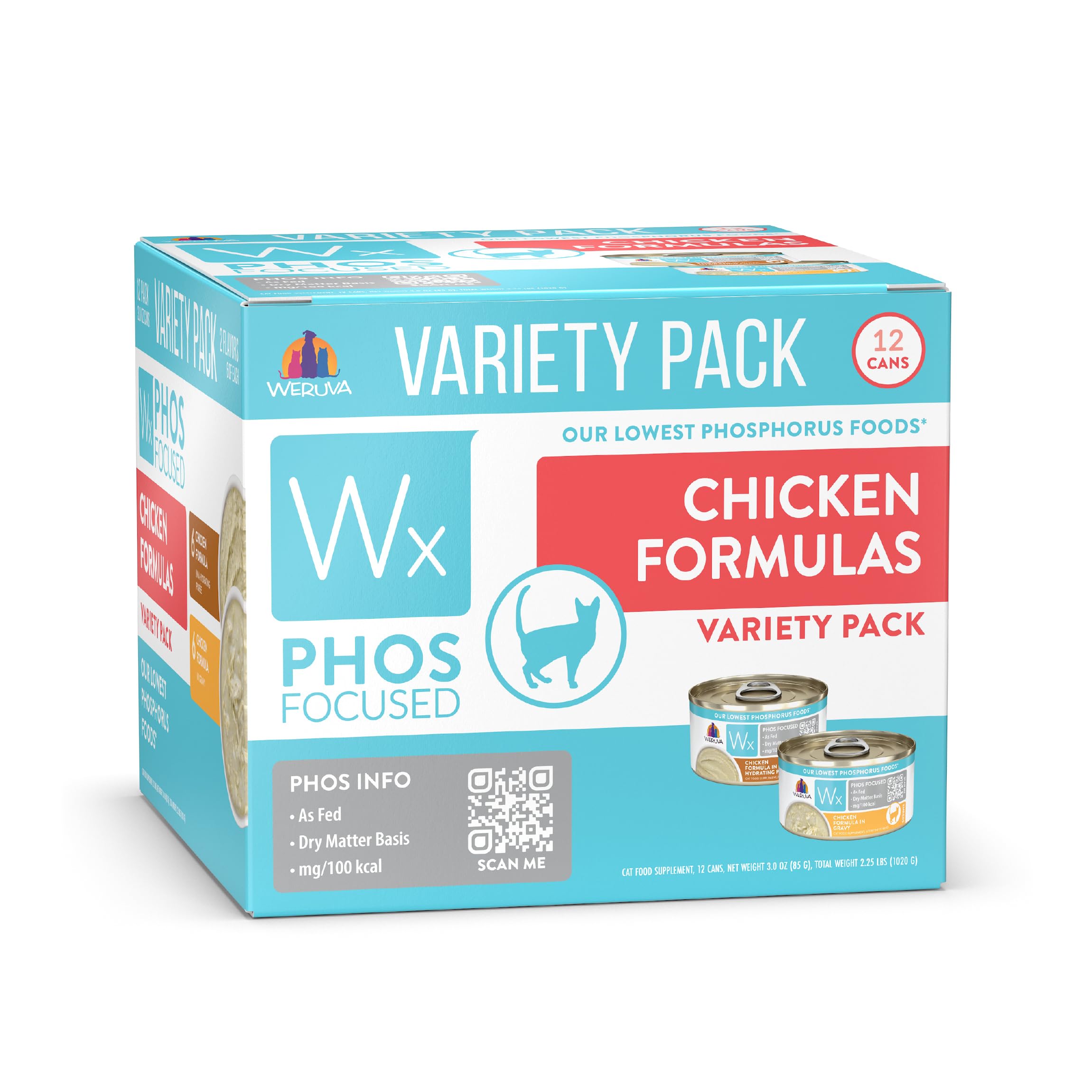
The standout feature here is the nutritional commitment to true low-phosphorus without cheap fillers. Weruva achieves up to 50% less phosphorus than the AAFCO minimum using highly bioavailable muscle meat proteins, not powdered cellulose or cornstarch. That means your cat gets real chicken or chicken shreds in gravy — ingredients you can recognize — that support kidney function without triggering the inflammation many owners report with mainstream prescription lines.
Owner reports consistently show this food lowering kidney markers. One reviewer documented a drop from 2.4 to 1.6 in kidney values over a year of feeding this variety pack alongside a low-phosphorus kibble. The pack includes both puree and shredded textures, giving you a chance to discover which consistency your cat accepts. Many cats with advanced CKD who rejected phosphate binders and prescription foods accepted this line eagerly.
The 3-ounce can size is ideal for single meals with minimal waste, but the variety format means you may end up with textures your cat refuses if they are ultra-picky about mouthfeel. The chunks-in-gravy texture was less popular with some cats who preferred the smoother pate. Still, this is the strongest non-prescription option available for renal diets and a legitimate alternative for cats who hate veterinary brands.
Why we love it
- Genuinely low phosphorus with real meat proteins, not filler tricks
- Multiple textures in one pack help you find what your cat accepts
- Documented by owners to measurably lower kidney values
Good to know
- Some cats reject the shredded chunks and only eat the puree
- Not a veterinary diet — consult your vet to confirm it meets your cat’s specific stage needs
2. Nutramax Laboratories Naraquin Dietary Phosphate Binder

Naraquin is a strategic add-on rather than a standalone diet. It uses a proprietary triple blend of phosphate binders — ferric citrate, calcium acetate, and chitosan — that bind to dietary phosphorus in the gastrointestinal tract before it enters the bloodstream. This allows you to feed a wider range of foods while still managing phosphorus levels, which is invaluable for the cat who refuses every renal diet on the market.
The sprinkle capsule format makes dosing straightforward: open the capsule, mix the powder into wet food at each meal. Owners report measurable improvements in kidney values after 60 to 90 days of consistent use, with one reviewer noting their cat’s values improved on just half a capsule twice daily. The inclusion of omega-3 fatty acids and beta-glucan adds a secondary layer of support by modulating oxidative stress on renal tissue.
The powder has a strong odor that can put off sensitive cats if not mixed thoroughly. Some owners found it necessary to mix the powder with broth or a strongly flavored topper to mask the scent. It is not a food replacement — it works alongside whatever diet your cat will eat — and you should check with your vet before starting any phosphate binder to confirm dosing and compatibility.
Why we love it
- Triple-action binding mechanism covers more dietary phosphorus than single-ingredient binders
- Easy sprinkle format lets you keep feeding the food your cat accepts
- Additional omega-3s and beta-glucan support overall kidney health
Good to know
- Strong smell can make picky cats refuse the food if not masked
- Requires vet guidance for correct dosing and monitoring
3. Pro Plan Veterinary Diets Purina NF Advanced Care Dry Cat Food

This formula takes a different approach than some competitors by using reduced but high-quality protein rather than aggressively restricting it. The idea is to give the kidneys less metabolic waste to filter while still providing enough usable amino acids to prevent muscle breakdown. Combined with restricted phosphorus and omega-3 fatty acids EPA and DHA, it targets the three pillars of renal nutrition: workload reduction, mineral management, and anti-inflammatory support.
Owner feedback is notable for how readily cats accepted this kibble compared to other prescription dry foods. One 18-year-old cat with only 10% kidney function and high blood pressure improved to 25% function after two months on this food paired with its wet counterpart. Another 17.5-year-old cat switched in a single day and started showing improved coat quality, energy, and appetite within weeks. The kibble form is helpful for cats who are accustomed to dry food and resist wet-based renal diets.
The 3.15-pound bag size is modest and will require frequent reordering for multi-cat households or cats with larger appetites. This formula is designed for advanced care — cats with later-stage kidney disease — which means it is more restrictive in protein than the companion Early Care line, so stage-appropriate selection with your vet matters.
Why we love it
- High acceptance rate among cats who refused other prescription kibbles
- Documented kidney value improvement even in advanced stage 4 cases
- Omega-3s (EPA/DHA) provide anti-inflammatory benefit to renal tissue
Good to know
- Small bag size means more frequent purchases
- Protein restriction is more aggressive than Early Care line — use only for later stages
4. Hill’s Prescription Diet k/d Kidney Care Dry Cat Food, Ocean Fish

Hill’s k/d has been the standard against which other renal diets are measured for decades, and this ocean fish formula shows why. The ActivBiome+ Kidney Defense is a proprietary prebiotic blend that works through the gut-kidney axis — supporting the microbiome to reduce uremic toxin production and protect kidney function from the digestive side. The Enhanced Appetite Trigger (E.A.T.) technology is a specific response to the reality that many CKD cats simply stop eating, and it works: the kibble has a mild fish scent and small, easy-to-chew pellets that many nauseous cats accept when they refuse other brands.
Cat owners consistently report that even their pickiest seniors with stage 4 kidney disease will eat this food willingly. The kibble is noticeably smaller and softer than standard dry foods, which helps cats with oral discomfort from uremic ulcers or dental pain. One owner of a stage 4 cat praised the small pellet size and mild smell for enabling feeding where other brands failed. The 4-pound bag is larger than Purina’s 3.15-pound offering, giving slightly better value between orders.
The ocean fish flavor may be a hit-or-miss proposition depending on your cat’s established preferences. Some cats who love chicken-based foods refused this fish version on first contact, though the same food is available in chicken flavor as well. A few owners reported initial acceptance followed by a sudden refusal after a few weeks, requiring flavor rotation to maintain interest.
Why we love it
- Proven E.A.T. technology helps cats with uremic nausea eat enough
- ActivBiome+ prebiotics target the gut-kidney axis
- Small, soft kibble accommodates cats with mouth pain
Good to know
- Some cats refuse after initial acceptance and need flavor rotation
- Ocean fish flavor may not work for cats set on poultry profiles
5. Blue Buffalo Natural Veterinary Diet K+M Kidney + Mobility Dry Cat Food
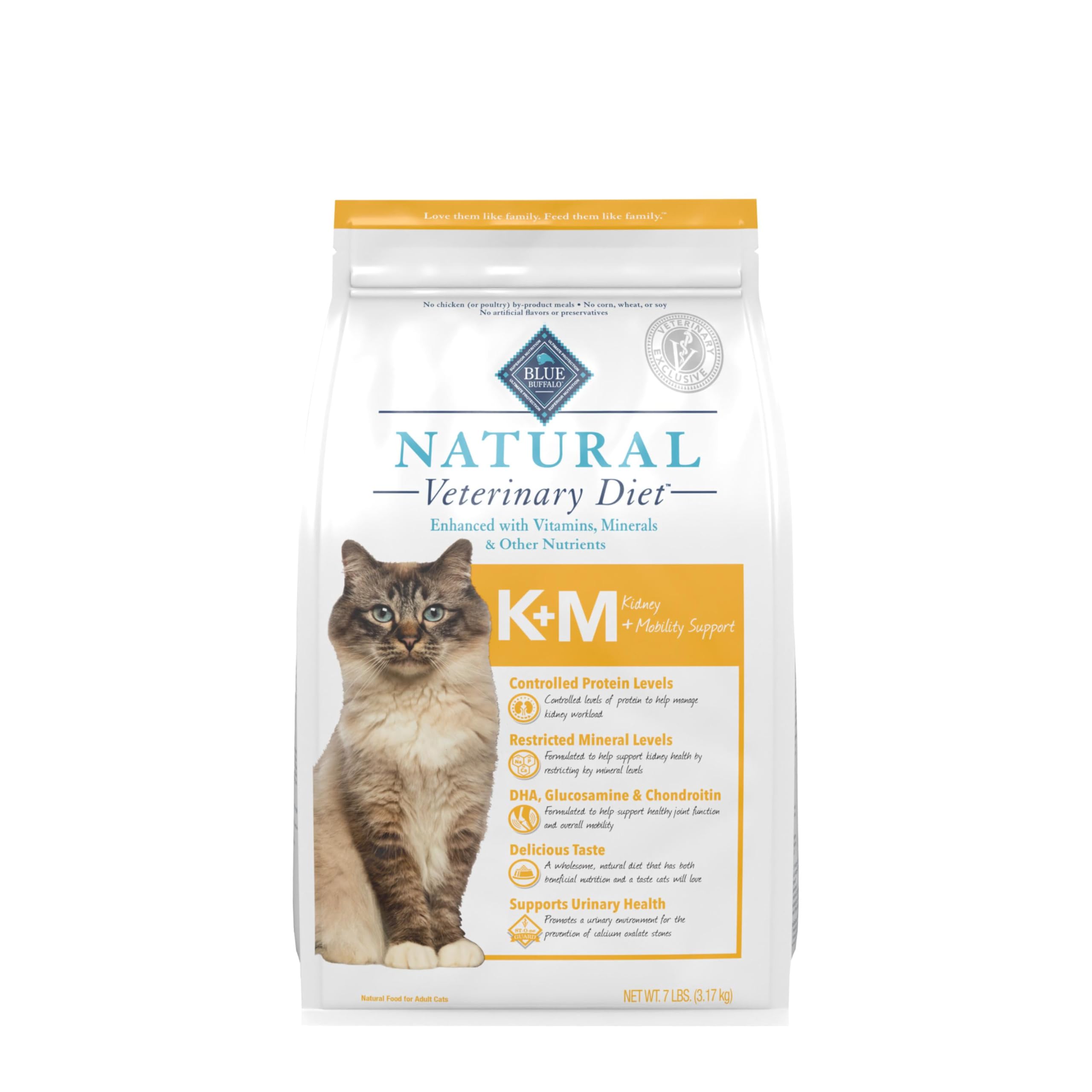
Blue Buffalo’s K+M formula addresses a common comorbidity: kidney disease and arthritis often appear together in senior cats. The formula controls protein levels to manage kidney workload while adding glucosamine and chondroitin to support joint cartilage and mobility. It uses real chicken as the first ingredient, avoiding poultry by-product meals, corn, wheat, and soy that some owners consider inflammatory triggers for their cats.
Owner reports highlight remarkable outcomes in cats who had stopped eating other kidney diets. One 16-year-old cat given a two-year prognosis revived after switching to this food, passing that milestone and continuing to thrive. The kibble size is noticeably smaller than standard maintenance foods, which helps cats with sensitive mouths or dental issues eat comfortably. Many cats who refused canned prescription foods accepted this dry formula without hesitation.
The dual kidney-plus-joint focus means this food may not be as tightly restricted in phosphorus as a dedicated renal-only formula. Cats with stage 3 or 4 kidney disease who need maximal phosphorus restriction may benefit more from a targeted renal diet plus a separate joint supplement. The 7-pound bag is substantially larger than competing prescription bags, delivering more food per purchase.
Why we love it
- Combined kidney and joint support in one bag — ideal for senior cats
- Small kibble size works well for cats with mouth sensitivity
- No poultry by-products, corn, wheat, or soy in the ingredient list
Good to know
- Phosphorus restriction may not be aggressive enough for advanced-stage CKD
- Joint supplements add calories and ingredients some cats may not need
6. Hill’s Prescription Diet k/d Kidney Care Wet Cat Food, Chicken & Vegetable Stew

The wet stew format delivers the same ActivBiome+ Kidney Defense and reduced phosphorus/sodium profile as the dry version but with a critical advantage: moisture. CKD cats are at high risk for dehydration because damaged kidneys cannot concentrate urine efficiently, and increased water intake from wet food helps flush toxins and reduce kidney workload. The bite-sized chunks in gravy are designed to mimic a meal cats find instinctively appealing.
Cat owners consistently report this food improving clinical signs. One reviewer’s cat had high BUN and creatinine levels that normalized after switching, with no kidney-related flare-ups since starting. Another owner noted their picky elderly cat went from 4.2 pounds up to 5 pounds and stopped vomiting frequently after transitioning to this stew. The 2.9-ounce can size is perfect for a single serving, though some owners split it across two meals for smaller cats.
Palatability is not universal. Some reviewers reported their cats would skip meals or leave the gravy and reject the chunks, requiring mixing with warm water or a preferred topper. The stew format is more aromatic than pate, which can be a positive or negative depending on your cat’s olfactory sensitivity. The 24-pack price point represents a significant monthly investment for cats who eat primarily wet food.
Why we love it
- High moisture content supports hydration critical for CKD cats
- Chunks-in-gravy texture appeals to many cats who reject pate
- Clinically proven to lower BUN/creatinine and improve quality of life
Good to know
- Some cats selectively eat only the gravy and leave the chunks
- Higher cost per serving than dry food alternatives
7. Purina Pro Plan Veterinary Diets NF Kidney Function Early Care Wet Pate
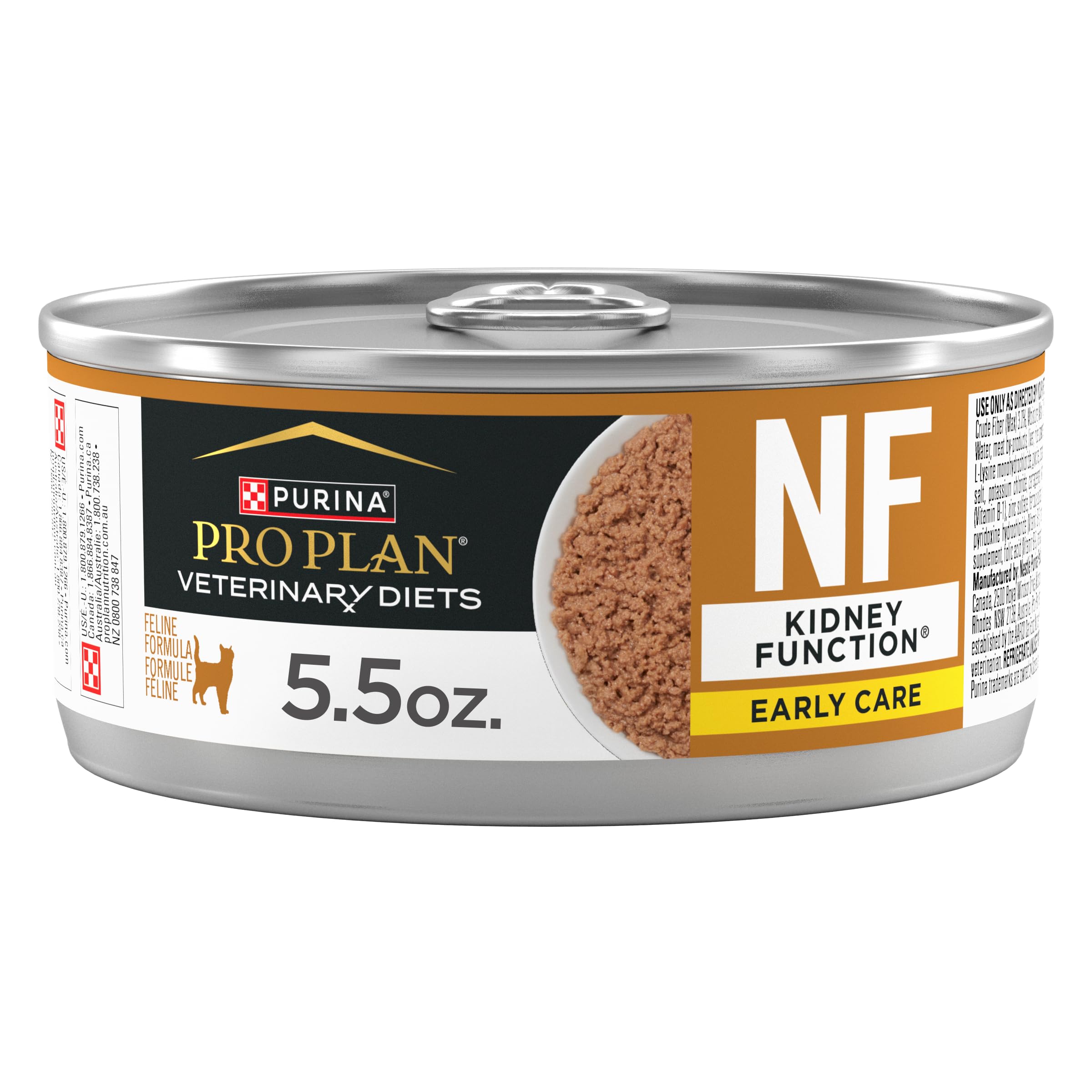
Purina positions this Early Care formula for cats in the earlier stages of kidney disease — when moderate protein restriction and restricted phosphorus can slow progression without the more aggressive constraints of the Advanced Care line. Each 5.5-ounce can delivers a ground pate texture with a moderate amount of high-quality protein, added antioxidants, and a prebiotic fiber to support gastrointestinal health in a stressed system.
Veterinarians often recommend this as a first-line wet food for cats with elevated kidney markers who are not yet in crisis. Owners report improved kidney values and stable appetites, though palatability is the most variable factor. One reviewer’s cat loved the flavor and her values improved significantly; another’s stage 4 cat refused it entirely and required mixing with Hydra Care and prior wet food to accept it. A third owner found success mixing a small amount of summer squash baby food to make it palatable.
The 24-pack of 5.5-ounce cans offers substantial volume per purchase, making it one of the more economical prescription wet food options. The pate texture is smooth and can be easily mashed with water to increase moisture intake or mixed with supplements like Naraquin. Some cats who are accustomed to chunk or stew textures reject the uniform pate consistency, so texture preference should guide your choice between this and the Hill’s stew format.
Why we love it
- Large 5.5-ounce cans offer good value and multiple servings per can
- Smooth pate mixes easily with water, binders, or supplements
- Formulated specifically for early-stage kidney management
Good to know
- Pate texture is rejected by some cats who prefer chunks or shreds
- May require flavor masking with baby food for extremely picky eaters
FAQ
Can I feed a non-prescription low-phosphorus food instead of a veterinary diet?
Some non-prescription foods like Weruva Wx Phos Focused offer genuinely low phosphorus levels using high-quality ingredients, and they can be effective for some cats. However, veterinary prescription diets are formulated with precise phosphorus, protein, sodium, and omega-3 ratios that have been clinically tested in CKD populations. They also often include proprietary technologies like Hill’s ActivBiome+ or Purina’s antioxidant blend. Always consult your veterinarian before choosing a non-prescription diet for a cat with diagnosed kidney disease.
How do phosphate binders work and when should I use them?
Phosphate binders like Nutramax Naraquin contain compounds (ferric citrate, calcium acetate, chitosan) that bind to phosphorus in the gastrointestinal tract during digestion, preventing it from being absorbed into the bloodstream. They are typically used when a cat’s blood phosphorus levels remain elevated despite dietary restriction, or when a cat refuses to eat a restricted-phosphorus diet and you need to feed a higher-phosphorus food they will accept. They should always be used under veterinary supervision with regular bloodwork monitoring.
Why is wet food often recommended over dry food for CKD cats?
Wet food contains roughly 75–85% moisture compared to dry food’s 6–10%. CKD cats lose excessive water through dilute urine and are at high risk for dehydration, which further stresses the kidneys and can cause dangerous electrolyte imbalances. Wet food helps maintain hydration status naturally, supports toxin dilution, and can improve appetite through stronger aromatics. However, some cats will only eat dry food, and a high-quality prescription dry food is far better than a cat who refuses to eat anything.
How do I know what stage of kidney disease my cat has?
Chronic kidney disease in cats is staged by the International Renal Interest Society (IRIS) based on blood creatinine and SDMA (symmetric dimethylarginine) levels, combined with urine protein and blood pressure measurements. Stage 1 is early disease with normal creatinine but elevated SDMA; Stage 4 is advanced disease with creatinine above 5.0 mg/dL. Your veterinarian will perform blood work, urinalysis, and blood pressure checks to determine the stage and recommend a diet appropriate for that severity level.
Final Thoughts: The Verdict
For most cat owners managing kidney disease, the best cat food for kidney failure starts with the Weruva Wx Phos Focused Variety Pack because it delivers genuinely low phosphorus in a clean, filler-free formula that many dialysis-averse cats actually eat. If your cat needs prescription-grade precision with hydration support, the Hill’s Prescription Diet k/d Chicken & Vegetable Stew provides clinically proven kidney defense in a moisture-rich wet format. And for a cat who needs additional phosphorus management without switching foods entirely, the Nutramax Naraquin phosphate binder is the most effective sprinkle-on solution available.