
Managing a cat with chronic kidney disease (CKD) means scrutinizing every single ingredient in their bowl. The wrong phosphorus or protein level can accelerate renal decline, while the right formula supports stable kidney values and a better quality of life. This is not a comfort-food decision — it is a clinical one that directly impacts longevity.
I’m Mo Mahin — the founder and writer behind Furric. I have spent years analyzing veterinary research, comparing renal-support nutrient profiles, and aggregating feedback from owners managing feline CKD to identify exactly which formulas deliver measurable kidney protection.
Every product on this list was evaluated for restricted phosphorus, controlled yet bioavailable protein, and omega-3 fatty acid content. Whether your veterinarian recommends dry kibble, wet stew, or a variety-pack rotation, finding the right cat food for kidney health is the single most impactful daily decision you can make for your feline companion’s renal function.
How To Choose The Best Cat Food For Kidney Health
Feline CKD management hinges on three nutritional levers: phosphorus restriction, protein source quality, and hydration support. A formula that fails on any one of these can undermine the entire renal care plan. Here is what to check before buying.
Phosphorus Restriction Is Non-Negotiable
Elevated serum phosphorus accelerates kidney damage. The International Renal Interest Society (IRIS) recommends a dietary phosphorus level below 1.0% dry matter for early-stage CKD and below 0.5% for advanced stages. Many formulas claiming “low phosphorus” still hover near AAFCO minimums — check the guaranteed analysis and look for numbers at least 50% below those thresholds. A veterinary therapeutic diet is the most reliable way to achieve this.
Bioavailable Protein Supports Muscle Without Overloading Kidneys
Restricting protein too aggressively can cause muscle wasting in cats, who are obligate carnivores. The goal is not low protein — it is controlled, highly digestible protein from sources like chicken, ocean fish, or egg whites. Look for formulas that tout “highly bioavailable” or “bone free proteins” in their description, which reduce the metabolic waste that kidneys must filter.
Hydration Through Wet Food vs. Dry Kibble
Cats with CKD are prone to dehydration, which further concentrates toxins in the blood. Wet canned foods (chunks in gravy, pate, or stew) provide 70-80% moisture and are strongly preferred for renal patients. Dry kibble can still be used for mixed feeding if the cat refuses wet food, but it should never be the sole source of nutrition for a CKD cat. Prioritize formulas that explicitly mention hydration support.
Quick Comparison
On smaller screens, swipe sideways to see the full table.
| Model | Category | Best For | Key Spec | Amazon |
|---|---|---|---|---|
| Hill’s k/d Stew Wet Food | Veterinary Wet | Advanced CKD requiring high moisture | ActivBiome+ Kidney Defense prebiotics | Amazon |
| Weruva Wx Phos Focused | Low-Phos Wet | All life stages, early kidney support | 50% less phosphorus than AAFCO minimum | Amazon |
| Pro Plan NF Early Care Dry | Veterinary Dry | Early-stage CKD dry-food preference | Controlled phosphorus + EPA/DHA | Amazon |
| Hill’s k/d Ocean Fish Dry | Veterinary Dry | Picky eaters with kidney disease | Enhanced Appetite Trigger (E.A.T.) tech | Amazon |
| BLUE K+M Dry | Veterinary Dry | Combined kidney + joint support | Glucosamine & chondroitin added | Amazon |
| Royal Canin Urinary Wet | Maintenance Wet | Healthy urinary tract maintenance | Regulates mineral balance in healthy cats | Amazon |
| Purina Pro Plan Urinary Pate | Maintenance Wet | Low magnesium urinary maintenance | Reduces urinary pH | Amazon |
In‑Depth Reviews
1. Hill’s Prescription Diet k/d Kidney Care Wet Cat Food, Chicken & Vegetable Stew, 2.9 oz. Cans, 24-Pack

Hill’s Prescription Diet k/d wet stew delivers clinically proven renal support in a form that maximizes hydration. At 2.9 ounces per can, each serving provides reduced phosphorus and sodium alongside the proprietary ActivBiome+ Kidney Defense prebiotic blend, which activates the gut microbiome to protect kidney function. The chicken & vegetable stew texture appeals to cats who dislike pate, offering bite-sized chunks in gravy that encourage voluntary water intake.
Laboratory trials behind this formula show improved and lengthened quality of life in CKD cats, specifically through higher essential amino acid levels that support lean muscle mass. The phosphorus content is dialed low enough for IRIS Stage 2-3 management, yet the protein remains controlled but not dangerously restricted. Cats with advanced CKD who struggle to maintain body condition respond well to this stew’s palatability.
The biggest practical consideration is the prescription requirement — this is a veterinary therapeutic diet, so expect to coordinate with your vet for authorization. At 4.35 pounds total weight across 24 cans, it is economical for daily feeding rotations. The stew format also works well for syringe-feeding cats who are reluctant eaters in later disease stages. This is the closest to a complete renal care solution in a single can.
Why we love it
- ActivBiome+ prebiotics directly target kidney-health microbiome pathways
- High moisture content supports hydration in CKD cats
- Vet-recommended with proven clinical longevity outcomes
Good to know
- Requires veterinarian prescription to purchase
- Stew texture may not suit cats who prefer pate
2. Weruva Wx Phos Focused, Chicken Formulas Variety Pack, 3oz Can (Pack of 12)
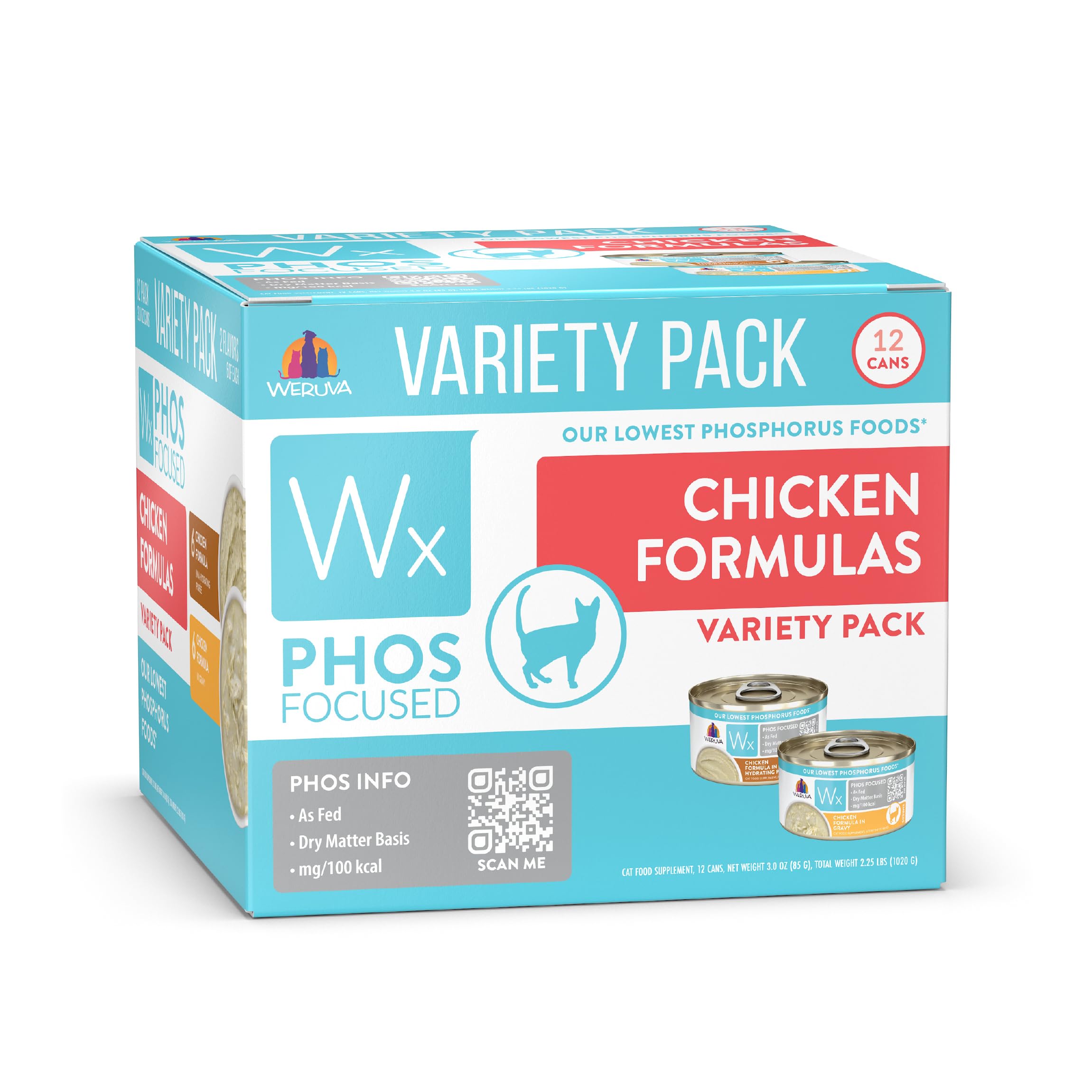
Weruva Wx Phos Focused is a non-prescription wet food that matches veterinary-grade phosphorus restriction through ingredient selection rather than synthetic manipulation. Each 3-ounce can delivers up to 50% less phosphorus than the AAFCO minimum, achieved by using bone-free chicken proteins that naturally reduce the phosphorus load. The chunks in gravy format provides the moisture density CKD cats need without relying on powdered cellulose or filler carbohydrates that artificially lower phosphorus percentages.
All 12 cans in this variety pack are formulated with highly bioavailable proteins that support lean muscle mass — critical for CKD cats who lose weight as kidney function declines. The ingredient profile is free of corn, gluten, grain, soy, wheat, artificial colors, and artificial flavors. Cats in all life stages, including kittens and seniors with early kidney concerns, can eat this as a maintenance diet without a prescription gateway.
Because this is not a veterinary therapeutic diet, owners of cats with IRIS Stage 2 or 3 CKD should still run the phosphorus percentage by their vet before switching fully. Some cats accustomed to high-phosphorus commercial diets may refuse the lower phosphate taste initially. The 12-can pack is slightly smaller than bulk options, so multi-cat households may need multiple purchases per month. For early intervention or owners seeking a non-prescription renal layer, this is a standout choice.
Why we love it
- Phosphorus dramatically reduced without sacrificing protein quality
- Chunks in gravy provides excellent hydration for renal cats
- No prescription required — accessible for early-stage management
Good to know
- Phosphorus level should be verified against specific CKD stage
- Some cats need transition time from higher-phosphate diets
3. Pro Plan Veterinary Diets Purina NF Kidney Function Early Care Feline Formula Adult Dry Kidney Care Cat Food

Purina Pro Plan Veterinary Diets NF Kidney Function Early Care is a dry kibble formulated specifically for cats in IRIS Stage 1-2 CKD who still tolerate dry food well. The 3.15-pound bag features controlled phosphorus to reduce renal workload, moderate protein levels to avoid excess nitrogenous waste, and added omega-3 fatty acids (EPA and DHA) that combat the systemic inflammation common in kidney disease. This is a veterinary diet backed by Purina’s internal research team, not a general wellness formula.
Antioxidants including vitamin E support immune health in cats whose CKD compromises their natural defenses. The kibble texture is standard crunch, and the unflavored profile means it relies on palatability enhancers rather than high-sodium flavors that could elevate blood pressure. Cats who habitually refuse wet food can use this as a primary diet without sacrificing renal protection — a critical feature for picky eaters.
Early-care designation means this is not appropriate for IRIS Stage 3-4 cats who need stricter phosphorus restriction or higher moisture intake. The 3.15-pound bag is smaller than standard kibble sizes, reflecting the lower calorie density needed to avoid obesity in renally compromised cats. Owners should pair this with wet toppers or wet meals if possible, but as a standalone early-CKD dry diet, it is one of the most scientifically grounded options available.
Why we love it
- Targeted early-stage CKD phosphorus control in a dry format
- EPA/DHA omega-3s support renal anti-inflammatory pathways
- Veterinary research backing with antioxidant immune support
Good to know
- Not suitable for advanced CKD stages requiring low phosphorus
- Dry kibble alone may not meet hydration needs of CKD cats
4. Hill’s Prescription Diet k/d Kidney Care Dry Cat Food, Ocean Fish, 4 lb. Bag

Hill’s Prescription Diet k/d in ocean fish flavor solves a common CKD care challenge: anorexia. Cats with kidney disease often lose their appetite due to nausea and uremic toxins, making it difficult to get them to eat any renal diet. Hill’s engineered Enhanced Appetite Trigger (E.A.T.) technology into this 4-pound bag of dry kibble — a clinically tested palatant that stimulates food intake even in reluctant eaters. The fish-forward flavor capitalizes on cats’ natural preference for seafood aromas.
Nutritionally, this kibble delivers the same ActivBiome+ Kidney Defense prebiotics found in the wet stew version, along with reduced phosphorus and sodium to protect residual kidney function. The dry matter analysis shows essential amino acid levels exceeding AAFCO minimums, supporting lean muscle preservation in cats who are losing body condition. The 4-pound bag is compact but nutrient-dense, so a little goes further than lower-calorie renal options.
The primary caveat is the fish allergen note — cats with fish sensitivities may develop gastrointestinal upset or skin reactions. This is a dry food, so owners should provide separate water sources or supplement with wet renal food to hit hydration targets. IRIS Stage 3-4 cats likely need the wet version instead due to moisture requirements. For early to mid-stage CKD cats who are refusing food, this kibble’s appetite-triggering technology is a game-changer.
Why we love it
- E.A.T. technology clinically shown to increase food intake in CKD cats
- ActivBiome+ prebiotics support kidney via gut microbiome
- Ocean fish flavor appeals to cats who reject chicken-based diets
Good to know
- Contains fish protein — allergen concern for sensitive cats
- Dry format requires careful hydration management
5. Blue Buffalo Natural Veterinary Diet K+M Kidney + Mobility Support Dry Cat Food, Chicken 7-Lb Bag
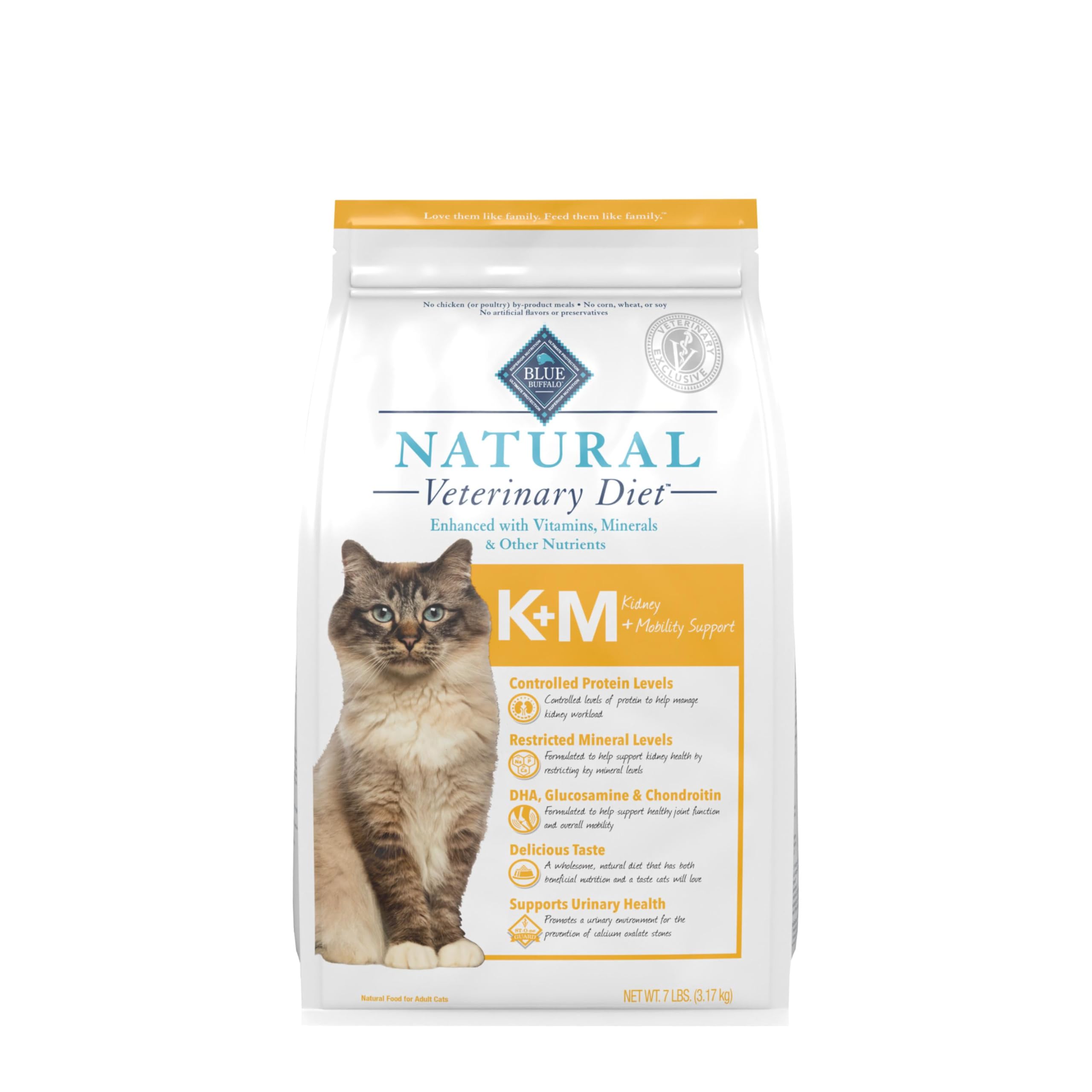
Blue Buffalo Natural Veterinary Diet K+M is a dual-purpose dry kibble that addresses kidney function and joint mobility simultaneously — relevant for older cats whose CKD often co-occurs with osteoarthritis. The 7-pound bag uses real chicken as the first ingredient, delivering controlled protein levels to manage kidney workload, while adding glucosamine and chondroitin to support synovial fluid and cartilage health. This eliminates the need to juggle two separate therapeutic diets.
The kidney side of the formula relies on controlled phosphorus and moderated protein, not the ultra-low phosphorus of advanced-stage renal diets. It is best suited for IRIS Stage 1-2 CKD cats who also show stiffness or reluctance to jump. Blue Buffalo avoids chicken by-product meals, corn, wheat, soy, and artificial preservatives — a more natural ingredient profile than many veterinary renal diets. The 7-pound bag size is generous, reducing monthly reorder frequency.
This is a veterinary prescription diet, so vet authorization is mandatory. Cats with IRIS Stage 3-4 CKD may need stricter phosphorus reduction than this formula provides. The dry texture lacks the hydration benefit of wet food, and some cats reject the chicken flavor after prolonged use. For the specific demographic of early-CKD, arthritic seniors, this combo formula offers streamlined care that few competitors match.
Why we love it
- Combined renal + joint support reduces separate supplement burden
- Real chicken first ingredient with no by-product meals
- Generous 7-pound bag size for value
Good to know
- Phosphorus restriction may be insufficient for advanced CKD
- Dry format requires supplemental moisture for renal cats
6. Royal Canin Feline Care Nutrition Urinary Care Adult Thin Slices in Gravy Cat Food, 3 oz (Pack of 24)

Royal Canin Feline Care Nutrition Urinary Care wet food is a maintenance diet for healthy adult cats, not a therapeutic renal formula, but it earns a mention for owners whose cats need urinary tract support without full CKD management. Each 3-ounce can delivers thin slices in gravy that encourage hydration through palatable moisture. The mineral balance is adjusted to help maintain a healthy urine concentration and reduce crystal formation risk in healthy cats.
The formula uses pork and poultry proteins rather than fish, avoiding the strong odors that some cats reject. The 24-can pack provides variety through a consistent texture that cats tend to accept readily. Royal Canin positions this as a complement to their Urinary Care dry formula, enabling a mixed feeding regimen that boosts total moisture intake. The nutrient profile includes taurine and adjusted magnesium levels, not reduced phosphorus.
This product is explicitly labeled for healthy adult cats — it should not replace a veterinary renal diet for a cat diagnosed with CKD. The phosphorus content is not therapeutically reduced, and the protein levels are standard adult maintenance. For CKD cats, use this only as a temporary topper for palatability, not as a primary diet. For owners wanting proactive urinary health in a cat without CKD, this is a well-balanced wet option.
Why we love it
- Gravy format encourages hydration in adult cats
- Mineral balance designed to maintain healthy urinary pH
- High palatability thin slices texture
Good to know
- Not a therapeutic renal diet — phosphorus not reduced for CKD
- Best used as maintenance, not treatment for diagnosed kidney disease
7. Purina Pro Plan Urinary Tract Health Pate Cat Food Variety Pack, Ocean Whitefish And With Salmon Entrees – (Pack of 24) 3 oz. Cans

Purina Pro Plan Urinary Tract Health Pate variety pack is a non-prescription wet food designed to support urinary tract maintenance in healthy adult cats. The 24-can pack alternates between ocean whitefish and salmon entrees in a smooth pate texture. The formulation reduces urinary pH and provides low dietary magnesium to discourage struvite crystal formation — a different mechanism from renal diets that restrict phosphorus for kidney function.
Each 3-ounce can contains 25 essential vitamins and minerals plus taurine, and is free from artificial colors and preservatives. The pate consistency is easy for cats to eat and for owners to measure portions. The variety format prevents flavor fatigue in cats who rotate proteins. All cans are manufactured at Purina-owned U.S. facilities, offering traceability that some imported brands lack.
This is a urinary maintenance diet, not a kidney disease treatment. Cats with diagnosed CKD need lower phosphorus and controlled protein, which this formula does not provide. The ocean whitefish and salmon base may also trigger allergies in sensitive cats. For owners seeking a budget-friendly, widely available wet food that supports urinary health in a cat without CKD, this variety pack delivers consistent quality at accessible value.
Why we love it
- Low magnesium and pH-reducing formula supports urinary tract maintenance
- Variety pack prevents flavor boredom in rotation feeding
- No artificial colors or preservatives at accessible value
Good to know
- Not designed for CKD — lacks therapeutic phosphorus restriction
- Fish-based proteins may cause sensitivities in some cats
FAQ
Can I feed my CKD cat non-prescription food if the phosphorus is low enough?
Is dry kibble acceptable for a cat with kidney disease?
Should my cat eat more or less protein on a kidney health diet?
How long does it take for a renal diet to improve bloodwork?
Can kittens eat kidney health cat food?
Final Thoughts: The Verdict
For most owners managing feline CKD, the cat food for kidney health winner is the Hill’s Prescription Diet k/d Chicken & Vegetable Stew Wet Food because it combines clinically proven ActivBiome+ prebiotics, strict phosphorus control, and high-moisture stew texture that CKD cats actually eat. If you want non-prescription early-stage renal support with excellent low phosphorus ratios, grab the Weruva Wx Phos Focused Variety Pack. And for combined kidney and joint care in an arthritic senior cat, nothing beats the Blue Buffalo Natural Veterinary Diet K+M Dry Food.