
Raising a kitten is a joy — until every meal turns into a race to the litter box. Loose stools, vomiting, and a kitten that looks uncomfortable after eating are clear signals that something in their food is not agreeing with them. The challenge is finding a recipe that delivers the high-calorie, nutrient-dense fuel a growing kitten needs while being gentle enough for a sensitive digestive system that rejects common triggers like chicken, corn, or dairy.
I’m Mo Mahin — the founder and writer behind Furric. My approach to this guide is rooted in deep market research, evaluating veterinary safety standards, and analyzing hundreds of real-world owner reviews to identify which formulas actually work for kittens with delicate stomachs without sacrificing growth-stage nutrition.
The key is finding a recipe with a single novel protein source, limited ingredients, and prebiotic fiber to support gut health. After comparing dozens of formulas, these are the cat food for kittens with sensitive stomachs that consistently deliver results without the tummy trouble.
How To Choose The Best Cat Food For Kittens With Sensitive Stomachs
Selecting a formula for a kitten with a delicate digestive system requires looking past flashy packaging and focusing on three core areas: the protein source, the ingredient count, and the inclusion of digestive aids. A mistake in any of these can trigger the very symptoms you are trying to avoid.
Prioritize a Single, Novel Protein Source
Chicken is the most common protein in cat food, but it is also one of the top allergens for sensitive kittens. Look for recipes that use a novel protein such as salmon, rabbit, or duck as the sole animal ingredient. This reduces the chance of an adverse reaction and makes it easier to pinpoint the source of any remaining digestive upset.
Consider Kibble Size and Shape
Kittens have small mouths and developing teeth. Oversized or irregular kibble can cause a kitten to gulp air while eating, leading to gas and bloating. A consistent, small kibble shape encourages slower eating and proper chewing, which is the first step in gentle digestion.
Look for Added Digestive Support
Prebiotic fibers like dried chicory root and inulin feed the good bacteria in the gut, while some premium formulas include live probiotics to help maintain a balanced microbiome. These ingredients help firm up loose stools and improve nutrient absorption, which is critical during the rapid growth phase of kittenhood.
Quick Comparison
On smaller screens, swipe sideways to see the full table.
| Model | Category | Best For | Key Spec | Amazon |
|---|---|---|---|---|
| Hill’s Science Diet Kitten Sensitive Stomach & Skin | Veterinary Diet | Overall Gentle Digestion | 3.5 lb bag / Prebiotic fiber & Omega-3s | Amazon |
| ORIJEN Wild Reserve Kitten Recipe | High Protein | Whole-Prey Nutrition | 3.5 lb bag / Free-run chicken & wild-caught fish | Amazon |
| Instinct Raw Meals Freeze-Dried Kitten Chicken | Raw | Minimally Processed Diet | 9.5 oz bag / 3x more real meat than kibble | Amazon |
| Go! Solutions Sensitivities Salmon | Limited Ingredient | Chicken Allergies | 3 lb bag / Salmon as #1 ingredient | Amazon |
| NutriSource Cat & Kitten Chicken & Rice | Grain Inclusive | Budget-Friendly Multi-Cat | 12 lb bag / Prebiotics & probiotics included | Amazon |
In‑Depth Reviews
1. Hill’s Science Diet Kitten Sensitive Stomach & Skin
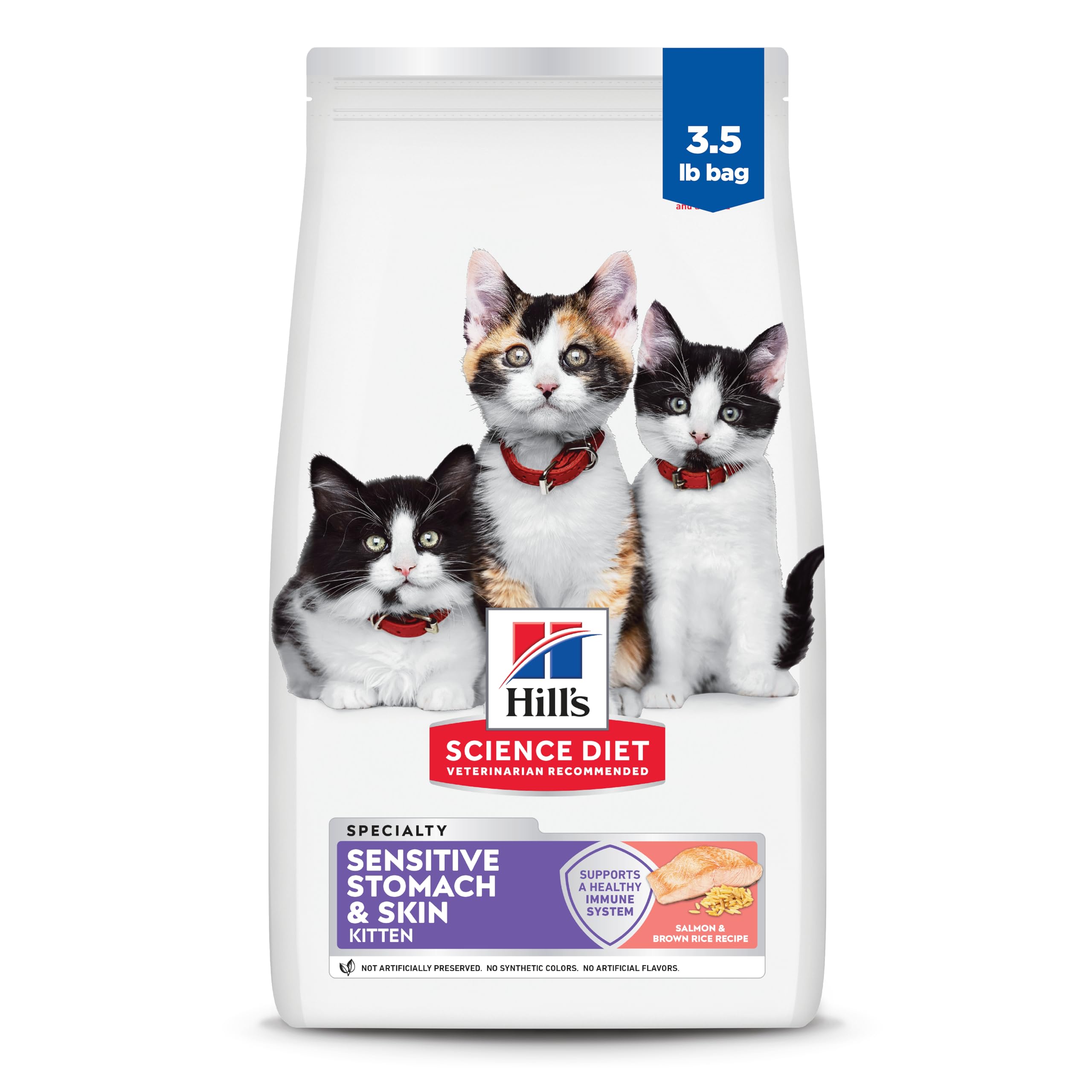
This formula is the number one recommended brand by US veterinarians for a reason. It uses a highly digestible salmon and brown rice base, which is naturally lower in fat than chicken-based recipes, making it easier for a young kitten’s digestive system to process. The inclusion of prebiotic fiber gently firms up stools, while Vitamin E and Omega-3 & 6 fatty acids support skin and coat health — a common secondary concern when the gut is inflamed.
You get DHA for brain development and a balanced protein-to-fat ratio that fuels growth without overwhelming the system. The kibble is small and consistent in shape, which encourages proper chewing and reduces the air-swallowing that can cause gas in sensitive kittens.
While this is a mid-range option, the 3.5-pound bag is a reasonable size for a single-kitten household. The only consideration is that it includes brown rice, so if your kitten requires a completely grain-free diet, you may want to look elsewhere. For most kittens with a sensitive stomach, however, this is the most reliable, science-backed choice.
Why we love it
- Veterinarian #1 recommended brand for sensitive stomachs
- Balanced DHA and Omega-3s support brain and coat health
- Small, uniform kibble slows down fast eaters
Good to know
- Contains brown rice, not suitable for grain-free diets
- Only a 3.5 lb bag size in this formula
- Chicken-free, but uses salmon as primary protein — not a novel protein if your cat has eaten salmon before
2. ORIJEN Wild Reserve Kitten Recipe
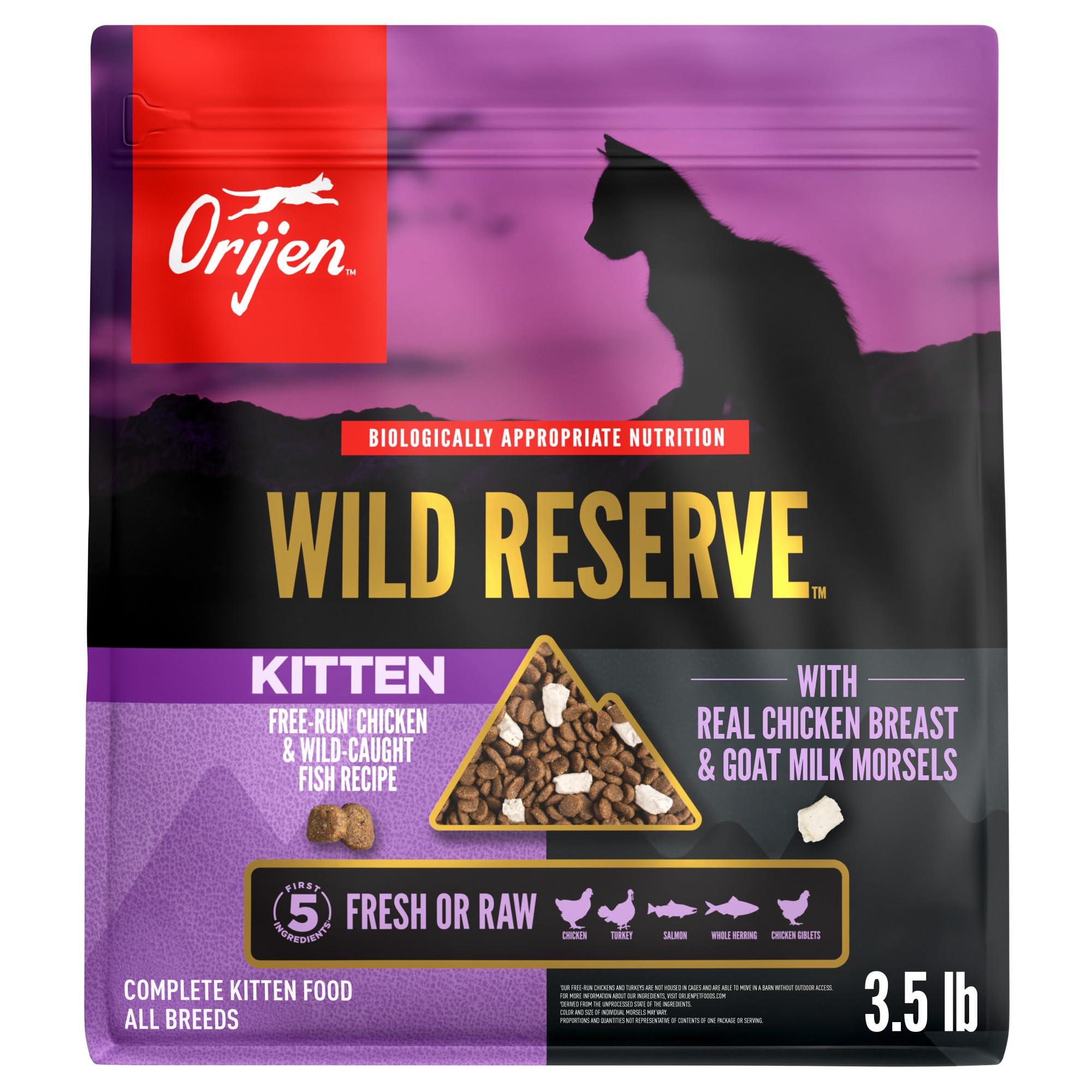
ORIJEN takes a whole-prey approach, meaning the first five ingredients are fresh or raw animal proteins — chicken, turkey, salmon, whole herring, and chicken giblets. This provides a spectrum of amino acids and nutrients that mirror what a kitten would naturally eat. The inclusion of bone, organs, and meat means calcium, phosphorus, and taurine are present in their most bioavailable forms, which is critical for rapid growth.
The kibble is freeze-dried coated with chicken breast and goat milk morsels, which makes it highly palatable even for picky kittens. However, the higher protein content can be a double-edged sword for sensitive stomachs. Kittens that are not used to rich food may need a gradual transition over 7–10 days to avoid loose stools.
This is a premium option, but you are paying for a biologically appropriate diet that supports digestive health, brain development, and muscle growth in one formula. The 3.5-pound bag is dense in calories, so it goes further than a typical 3-pound grain-inclusive bag.
Why we love it
- WholePrey ingredients mimic a natural feline diet
- Freeze-dried coating increases palatability for picky eaters
- No corn, wheat, soy, or artificial additives
Good to know
- High protein content may cause digestive upset if transitioning too quickly
- Premium price point is higher than standard kibble
- Not a limited-ingredient formula — multiple animal proteins present
3. Instinct Raw Meals Freeze-Dried Kitten Chicken

For kitten owners who want to introduce raw feeding without the hassle of handling raw meat, this freeze-dried option is an excellent middle ground. It contains 3x more real chicken and organs than standard kibble, all minimally processed to preserve enzyme integrity. The natural DHA in this formula directly supports brain and eye development, while the Omegas contribute to a healthy coat.
The freeze-drying process retains the original nutrient density of the raw ingredients, which can be a game-changer for kittens with a sensitive stomach who struggle to absorb nutrients from heavily processed kibble. You simply rehydrate the morsels with warm water, which also adds moisture to their diet — an important factor for urinary tract health.
This is a small 9.5-ounce bag, which is better suited as a topper or a transition food rather than a primary diet in a multi-cat household. It is also a raw product, so you must handle it with care to avoid cross-contamination. Work with your vet before making this a full meal replacement.
Why we love it
- Minimally processed preserves natural enzymes for digestion
- Easily rehydrates for added moisture intake
- High-quality animal protein for lean muscle development
Good to know
- Small bag size — not cost-effective as a sole diet
- Raw product requires careful handling and storage
- Some kittens may prefer the freeze-dried texture over rehydrated
4. Go! Solutions Sensitivities Limited Ingredient Salmon
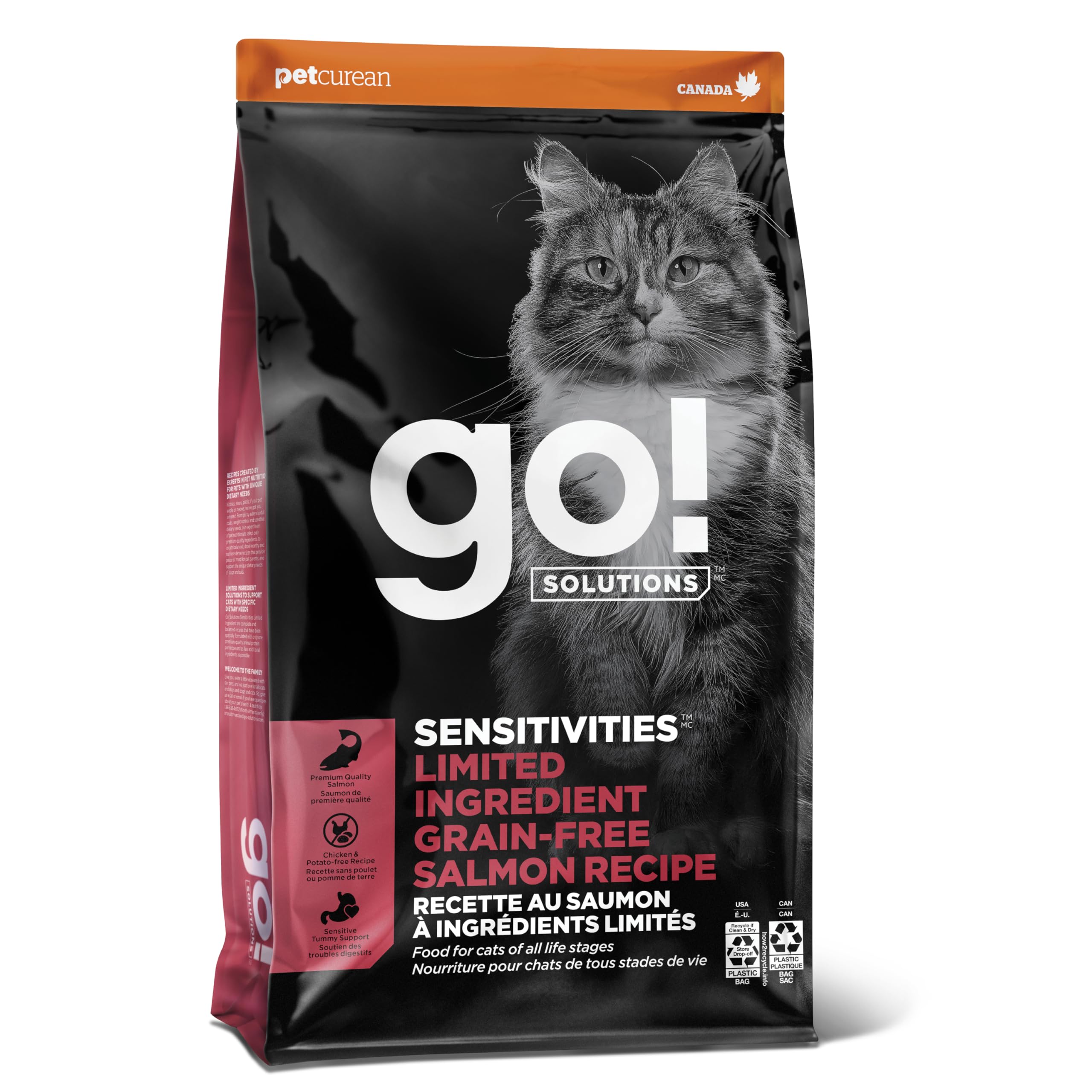
This formula is built specifically for cats with food allergies and sensitivities. Real salmon is the number one ingredient, and it is the sole source of animal protein, making it a true single-novel-protein recipe. It is completely free of chicken, corn, wheat, soy, gluten, and artificial preservatives — common triggers for digestive upset in kittens.
Pet nutrition experts formulated this recipe with dried chicory root for prebiotic fiber, which supports beneficial gut bacteria and helps regulate bowel movements. It is labeled for all life stages, meaning it meets the stringent AAFCO nutrient profiles for kitten growth, which is not always the case with limited-ingredient diets that sometimes cut corners on calcium or DHA levels.
The kibble size is smaller than many adult formulas, but it can still be a bit hard for very young kittens (under 12 weeks). You may want to soften the kibble with warm water for the first few weeks. This is a strong entry-level premium option at a mid-range price point.
Why we love it
- True single novel protein (salmon) reduces allergy risk
- Grain-free and gluten-free for maximum ingredient simplicity
- Prebiotic fiber supports healthy digestion and regular stools
Good to know
- Kibble may be too hard for kittens under 12 weeks
- Salmon smell may be strong for some owners
- Not suitable if your kitten has a known fish allergy
5. NutriSource Cat & Kitten Chicken & Rice

NutriSource offers the largest bag in this lineup at 12 pounds, making it the most economical choice for owners with multiple kittens or those who want to stock up. This is a grain-inclusive formula that includes gentle brown rice, which many sensitive stomachs tolerate better than high-legume grain-free recipes. It is formulated for all life stages, so it can grow with your cat.
The key feature here is the inclusion of BioPlex trace minerals from Alltech — specifically zinc, iron, copper, and manganese in a proteinated form that is more bioavailable. This supports the immune system and coat health. Prebiotics and probiotics are also listed, which is rare for a budget-friendly recipe and directly aids digestion.
The main trade-off is the use of chicken as the primary protein, which is a common allergen for sensitive kittens. If your kitten has not reacted to chicken in the past, this is an excellent value. The kibble shape is a standard round pellet, which is easy for most kittens to chew but does not offer the slower-eating shape of some premium options.
Why we love it
- 12-pound bag offers the best cost per serving
- Includes prebiotics and probiotics for digestive support
- Formulated for all life stages — one bag for the whole household
Good to know
- Chicken is the primary protein — not ideal for chicken allergies
- Contains grain, not suitable for grain-free diets
- Standard kibble shape does not slow down fast eaters
FAQ
What ingredients should I avoid for a kitten with a sensitive stomach?
Can I feed my sensitive-stomach kitten both wet and dry food?
How much should I feed my kitten with a sensitive stomach?
Final Thoughts: The Verdict
For most pet parents, the cat food for kittens with sensitive stomachs winner is the Hill’s Science Diet Kitten Sensitive Stomach & Skin because it is backed by veterinary research, delivers balanced nutrition for growth, and uses a highly digestible salmon and brown rice formula that works reliably without triggering food sensitivities. If you want a high-protein biologically appropriate option, grab the ORIJEN Wild Reserve Kitten Recipe. And for the most allergy-safe choice, nothing beats the Go! Solutions Sensitivities Salmon.