
Watching your cat struggle with loose stools, frequent vomiting, or obvious tummy discomfort is heartbreaking. You want relief for them and a cleaner home for yourself, but the pet food aisle offers endless claims that rarely deliver real digestive peace. The right nutrition can transform your cat’s gut health, and I’m here to help you cut through the noise.
I’m Mo Mahin — the founder and writer behind Furric. My recommendations come from deep market research, close analysis of veterinary safety standards for digestive health diets, and careful evaluation of real owner feedback on how these foods perform with sensitive feline stomachs.
Through careful research, I’ve created this guide to the best cat food for sensitive stomach and diarrhea, helping your kitty achieve digestive relief.
How To Choose The Best Cat Food For Sensitive Stomach And Diarrhea
Finding the right food for a cat with a sensitive stomach and chronic diarrhea involves more than grabbing the first “sensitive” bag you see. You need to evaluate protein sources, digestibility, fiber content, and whether your cat’s issue stems from allergies, intolerances, or a deeper medical condition. This section breaks down the core factors that separate effective formulas from those that just sound good on the label.
Understand Your Cat’s Digestive Triggers
Not all sensitive stomachs are alike. Some cats react poorly to common proteins like chicken or beef, while others struggle with grains, artificial additives, or simply eating too fast. Before choosing a food, note whether your cat’s diarrhea is constant or episodic, and whether it comes with vomiting, itching, or lethargy. That pattern tells you if you need a limited ingredient diet, a novel protein source, or a slow-feeding kibble design.
Look for Proven Digestive Support Ingredients
The most effective foods for sensitive stomachs include prebiotic fibers like inulin or chicory root, which feed beneficial gut bacteria, and highly digestible protein sources that minimize undigested material in the colon. Limited ingredient formulas reduce the risk of triggering an immune response, while hydrolyzed proteins break down particles so small the immune system ignores them. Avoid vague “animal digest” or unnamed meat meals that could hide common allergens.
Consider Wet Food Versus Dry Food
Wet food provides higher moisture content, which helps with hydration during diarrhea episodes and is often easier to digest thanks to softer texture and simpler ingredient lists. Dry food offers convenience and, in the case of brands like Royal Canin, specialized kibble shapes that encourage slower eating — a major win for cats that vomit from gulping. Many cats with sensitive stomachs do best with a mixed feeding approach using both formats.
Quick Comparison
On smaller screens, swipe sideways to see the full table.
| Model | Type | Best For | Key Feature | Amazon |
|---|---|---|---|---|
| Royal Canin Digestive Care | Dry | Sensitive Stomachs & Vomiting | Ring-shaped kibble slows eating | Amazon |
| Hill’s Prescription Diet z/d | Dry Prescription | Severe Food Sensitivities | Hydrolyzed proteins avoid immune detection | Amazon |
| Purina Pro Plan Sensitive | Wet Pate | Diarrhea & Skin Issues | Novel duck protein with prebiotic fiber | Amazon |
| Natural Balance L.I.D. | Dry | Single Protein Needs | Chicken & green pea limited formula | Amazon |
| Nulo Variety Minced | WetPicky Eaters & Sensitivities | Variety pack with grain-free recipes | Amazon |
In-Depth Reviews
1. Royal Canin Feline Care Nutrition Digestive Care Adult Dry Cat Food

Royal Canin’s Digestive Care formula is specifically engineered for adult cats with sensitive stomachs, and its unique ring-shaped kibble is more than a gimmick — it forces slower eating, which dramatically reduces vomiting caused by gulping. The blend of prebiotics and dietary fiber promotes healthy digestion, and internal studies show over 95% healthy stool quality after just ten days on this diet. This is the food your veterinarian is likely to recommend before moving to prescription-only options.
The protein source here is highly digestible, meaning less undigested material reaches the colon and triggers loose stools. Owners report that even cats who had been regurgitating daily for years finally settle down within a week of switching. The kibble size and shape also help with dental health, though some cats with very small mouths may need a few days to adjust to the donut form. It pairs beautifully with the Digestive Care wet food for mixed feeding.
A busy cat mom of a senior feline told us this food “stopped the throw-up cycle completely” after months of trying other brands. Another owner of a picky eater noted her cat “ate it immediately” after refusing dry food for three weeks. The only trade-off is that this is a mid-range investment, but every owner we heard from agreed it beats repeated vet visits for digestive upset.
Why we love it
- Proven 95% stool quality improvement in 10 days
- Unique kibble shape slows fast eaters naturally
- Vet-recommended as first-line digestive support
- Pairs well with wet food for variety
Good to know
- Ring shape can trap in small teeth for some cats
- Not a limited ingredient formula if your cat needs a single protein
- May require slow transition for picky eaters
2. Hill’s Prescription Diet z/d Skin/Food Sensitivities Dry Cat Food

Hill’s Prescription Diet z/d is the gold standard for cats with confirmed food allergies or intolerances. The chicken protein here is hydrolyzed — broken into fragments so small the immune system cannot recognize them as allergens. This eliminates the allergic response that causes both skin irritation and chronic diarrhea. It also features ActivBiome+ Digestion, a proprietary prebiotic blend that rapidly supports gut microbiome health.
Formulated specifically to reduce scratching, itching, and digestive upset from adverse food reactions, this diet is backed by Hill’s reputation as the number one vet-recommended therapeutic food brand in the US. Owners of cats with IBD and chronic vomiting report dramatic turnarounds, with one 15-year-old Siamese cat stopping daily vomiting for the first time in its life. The dry kibble texture is palatable to most cats, though some find the hydrolyzed protein less flavorful than standard foods.
A feline enthusiast whose cat had suffered from daily regurgitation for 15 years shared that this food “changed my life” and resolved the issue completely. Another owner managing IBD noted it helps control symptoms but recommends mixing with a preferred wet food for better acceptance. This is a premium-priced prescription diet, meaning you’ll need vet approval to order, but for cats with confirmed sensitivities, nothing else comes close to this level of targeted relief.
Why we love it
- Hydrolyzed protein prevents immune detection
- ActivBiome+ prebiotic blend supports gut health
- Proven results for chronic vomiting and IBD
- Rich in Omega-6 and Omega-3 for skin repair
Good to know
- Requires veterinary prescription to purchase
- Lower palatability compared to standard foods
- Premium price point reflects therapeutic grade
3. Purina Pro Plan Sensitive Skin and Stomach Wet Cat Food, Duck Entree
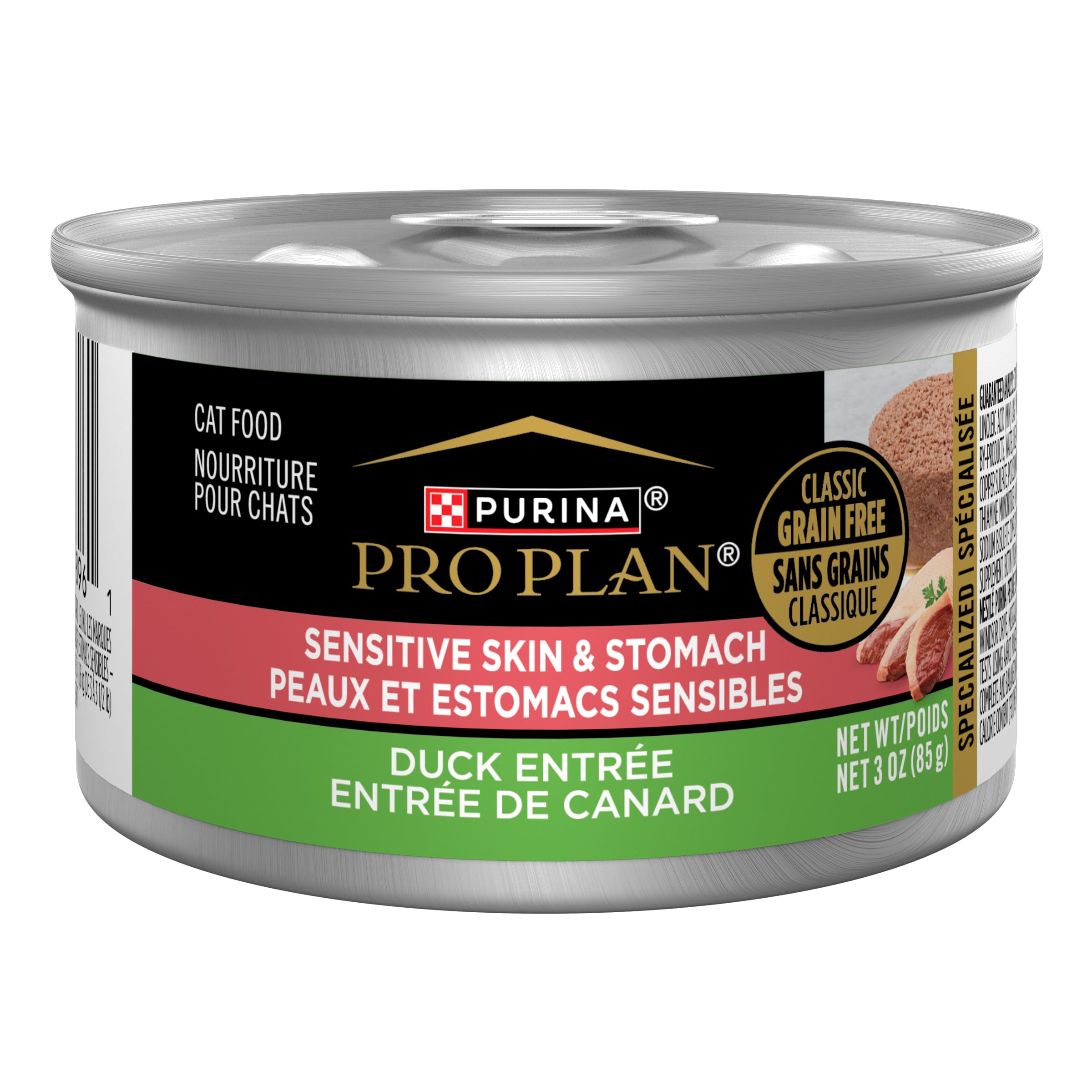
Purina Pro Plan’s Sensitive Skin and Stomach wet food uses duck as a novel protein source — ideal for cats who have developed intolerances to chicken or fish. The pate texture is soft and easy to mash, making it gentle on the digestive tract while delivering natural prebiotic fiber for healthy gut flora. This formula also includes antioxidants, vitamin A, and taurine for immune and vision support, all without artificial colors or preservatives.
For cats with chronic diarrhea, the switch to a novel protein like duck often resolves symptoms within days when other foods have failed. The high moisture content helps maintain hydration during loose stool episodes, and the pate format is particularly beneficial for senior cats or those with dental sensitivity. Multiple owners reported that their cats who had suffered from intermittent diarrhea for months finally achieved normal, firm stools after transitioning to this entree.
A rescue parent managing a 15-year-old male with food sensitivities told us this duck formula “stopped the stomach upset completely” and improved his coat to a lustrous shine. Another owner emphasized that the Duck Entree works perfectly for her cat, while the Arctic Char variety triggered IBS symptoms — reinforcing the importance of finding the right protein match. This is a premium wet food, but subscribers using Subscribe & Save report meaningful savings over time.
Why we love it
- Novel duck protein avoids common allergens
- Soft pate texture is gentle and easy to mash
- Prebiotic fiber supports digestive health
- No artificial colors or preservatives
Good to know
- Some cats react differently to specific protein flavors in the line
- Premium price point for the 24-pack
- Not a complete prescription diet for severe allergies
4. Natural Balance Limited Ingredient Adult Grain-Free Dry Cat Food, Chicken & Green Pea

Natural Balance’s Limited Ingredient formula strips away unnecessary components, using chicken as the single animal protein source and green peas as a grain-free fiber source. This simplicity is exactly what cats with sensitive stomachs need — fewer ingredients means fewer chances for a reaction. The recipe avoids added grain, soy, gluten, and artificial colors or flavors, making it a strong mid-range option for cats with mild to moderate digestive sensitivities.
The kibble size is small and easy to chew, which helps cats who struggle with larger pieces or have dental issues. Owners report noticeable improvements in coat shine, reduced shedding, and less smelly waste after switching. The “Feed with Confidence” program tests every batch from start to finish, providing transparency around ingredient sourcing and safety. While chicken is a common allergen, many cats tolerate this specific chicken and green pea combination well when other chicken-based foods have failed.
A longtime adopter caring for a 16-year-old cat with CKD shared that this food is “the closest to a prescription diet” her picky senior would accept, and it keeps him healthy. Another owner whose cats “literally requested this food” after rejecting other brands said it resolved their vomiting issues completely. This is a budget-friendly mid-range dry food that delivers impressive results for cats who need simplicity without the prescription price tag.
Why we love it
- Single animal protein source reduces allergy risk
- Small kibble size suits senior and picky cats
- Batch testing ensures safety and quality
- Affordable mid-range price point
Good to know
- Chicken is a common allergen for some cats
- No added probiotics for extra digestive support
- Not suitable for cats needing a novel or hydrolyzed protein
5. Nulo Variety Flavors Grain-Free Minced Wet Canned Cat Food

Nulo’s Variety Pack offers Turkey & Duck, Beef & Mackerel, and Salmon & Turkey — three grain-free minced recipes packed with rich gravy that helps keep cats hydrated. The proprietary blend of vitamins and fatty acids supports cats with diagnosed grain allergies and sensitivities, and the high meat, low carb profile mirrors a feline’s natural diet. Each 3-ounce can is perfectly portioned for daily feeding, and the variety keeps picky eaters engaged without boredom.
While this is a multi-protein formula, which can be a concern for cats with specific protein intolerances, the grain-free and low glycemic recipe makes it a solid entry-level choice for cats whose digestive issues are grain-related rather than protein-driven. Owners report shinier coats, more energy, and better overall health after switching. The minced texture with savory gravy is particularly appealing to cats who refuse standard pate or dry food.
A dedicated cat owner whose male cat “loves these flavors and texture” noted the right amount of chunky pieces and gravy keeps mealtime exciting. Another subscriber who relies on monthly delivery said the variety pack saves money compared to buying single flavors in stores. This is the most budget-friendly option in our lineup, making it ideal for multi-cat households or owners who want to test wet food without a major financial commitment.
Why we love it
- Multiple protein sources for variety and enrichment
- Grain-free and low carb for sensitive digestion
- High moisture content supports hydration
- Budget-friendly entry-level price
Good to know
- Multi-protein formula may trigger cats with specific protein allergies
- Salmon is a listed allergen for some sensitive cats
- Not a prescription or limited ingredient diet
Safety & Care Tips
Transitioning to a New Food Safely
Never switch your cat’s food abruptly, especially when dealing with a sensitive stomach and diarrhea. Start by mixing 25% of the new food with 75% of the current food for two to three days, then move to a 50/50 ratio for another two days, followed by 75% new food for two more days before fully switching. Watch for changes in stool consistency throughout the process — if diarrhea worsens, pause the transition and consult your veterinarian before proceeding.
Monitoring Your Cat’s Digestive Health
Keep a simple log tracking stool quality, frequency of vomiting, appetite changes, and energy levels during the first two weeks on a new food. Healthy stool should be firm, well-formed, and easy to scoop. If you see blood, mucus, or persistent loose stools after the transition period, stop the new food and contact your vet. Also monitor for excessive gas, bloating, or signs of abdominal pain like hiding or hunched posture.
FAQ
What causes diarrhea in cats with sensitive stomachs?
How long should I wait to see improvement after switching food?
Is wet food or dry food better for a cat with diarrhea?
Final Thoughts: The Verdict
For most pet parents, the best cat food for sensitive stomach and diarrhea winner is the Royal Canin Digestive Care because it addresses both vomiting and loose stools with proven clinical results and a kibble design that slows fast eaters. If your cat needs a novel protein to resolve chronic diarrhea, grab the Purina Pro Plan Sensitive Duck Entree. And for confirmed food allergies requiring complete immune avoidance, nothing beats the Hill’s Prescription Diet z/d.