
When a cat starts losing weight, every meal becomes a critical opportunity. Whether you’re nursing a senior back to health, helping a rescue kitten fill out, or managing a chronic condition that steals pounds, the difference between effective weight gain and frustrating plateaus comes down to one thing: the specific caloric density and digestibility of every bite. A standard maintenance food simply does not deliver the concentrated nutrition an underweight cat requires.
I’m Mo Mahin — the founder and writer behind Furric. I’ve spent hundreds of hours cross-referencing veterinary nutrition guidelines, dissecting guaranteed analysis panels on over 1,200 cat food SKUs, and studying patterns in verified buyer feedback to separate the formulas that actually restore body condition from those that just fill a bowl.
This buying guide breaks down the five most effective options for packing on healthy pounds, narrowing the field to concentrated, high-protein, digestible recipes that deliver real results. If you’re searching for the , you’re in the right place.
How To Choose The Best Cat Food To Gain Weight
Selecting a weight-gain formula is not the same as picking a random kibble off the shelf. You need a targeted approach that prioritizes caloric density, digestibility, and protein source quality. Below are the three most important factors to evaluate before buying.
Caloric Density and Fat Content
Look for a crude fat minimum above 18% on the guaranteed analysis. Fat delivers 9 calories per gram — more than double the 4 calories per gram from protein or carbohydrates. A food with 20% crude fat compared to a standard adult food with 12% fat can mean 30 to 50 more calories per cup, which directly translates into faster weight replenishment.
Protein Percentage and Amino Acid Profile
Weight gain should be muscle, not just fat. Target a crude protein minimum of at least 40% on a dry matter basis. High-quality animal-based proteins (chicken, turkey, salmon, or chicken meal) provide taurine and arginine that support lean body mass retention. Avoid formulas where plant protein concentrates like corn gluten meal appear in the top five ingredients — they offer incomplete amino acid chains and lower digestibility.
Digestibility and Stool Quality Signals
High calorie counts mean nothing if the cat cannot absorb the nutrients. Check for prebiotic fiber sources (dried chicory root, inulin, or beet pulp) and guaranteed live probiotics, especially for cats with sensitive stomachs. Monitor stool consistency — loose, frequent stools indicate poor absorption, while firm, well-formed stools suggest the cat is extracting maximum calories from each meal.
Quick Comparison
On smaller screens, swipe sideways to see the full table.
| Model | Category | Best For | Key Spec | Amazon |
|---|---|---|---|---|
| Under the Weather Ready Cal | Caloric Supplement | Senior cats & illness recovery | 20 cal per scoop | Amazon |
| Wellness CORE Kitten | High-Protein Kibble | Kittens needing muscle mass | 45% protein minimum | Amazon |
| Purina Pro Plan Kitten Shredded Blend | Nutrient-Dense Kibble | Growing kittens & active adults | Live probiotics | Amazon |
| Blue Buffalo Freedom Kitten | Grain-Free Kibble | Sensitive digestion kittens | DHA fortified | Amazon |
| Hill’s Science Diet Kitten | Digestive Care Kibble | Stomach sensitivity cats | Prebiotic fiber | Amazon |
In‑Depth Reviews
1. Under the Weather Ready Cal Powder for Cats

When a cat is actively losing weight — ribs and spine becoming prominent, coat turning dull — a standard kibble transition may not be fast enough. This veterinarian-formulated caloric supplement delivers 20 calories per scoop in a rotisserie chicken-flavored powder that mixes easily into wet food. The formula packs 9 essential vitamins and 6 minerals specifically to support energy levels and immune function during recovery phases.
Buyer feedback from owners of senior Bengals, 17-year-old littermates, and an 8-month-old kitten shows consistent results: weight gain of 1 to 2 pounds over several weeks, improved fur shine, and return of normal self-grooming behavior. The powder works as a caloric bridge for cats with suppressed appetite due to illness, medical procedures, or age-related decline. One scoop per meal can boost a standard portion from roughly 80 calories to over 100 calories.
The main limitation is palatability dependence — some cats (including at least one reviewer’s seizure-prone cat) refused all food touched by the powder, even when mixed into gravy-based wet food. Start with a partial scoop to test acceptance before committing to a full serving. The 24-month shelf life from manufacturing date gives flexibility for long-term supplementation.
Why we love it
- Vet-formulated with proven weight gain results in real buyers’ photos and descriptions
- No artificial flavors or dyes — manufactured in the USA
- Works as a standalone supplement without replacing entire food routine
Good to know
- Some cats reject the taste entirely, even picky eaters who usually love wet food
- Requires daily mixing; not a set-it-and-forget solution
2. Wellness CORE Kitten Dry Cat Food

Wellness CORE delivers an aggressive 55% animal-based protein profile that directly supports lean muscle deposition — critical when the goal is weight gain rather than fat accumulation. Every cup provides 476 kilocalories, making it one of the most calorically dense dry foods in the kitten category. The inclusion of DHA from salmon oil supports neurological development alongside the caloric density.
Veterinarian-formulated and manufactured in the company’s own US facility, this grain-free recipe eliminates the common filler carbs that dilute calorie density in lower-tier kibbles. Buyers consistently report shinier coats, softer fur, and elimination of diarrhea after switching from other brands. The kibble size works well for kittens as young as 8 weeks and has been particularly effective for Maine Coon and other large-breed growing cats that need accelerated caloric intake.
The main drawback is palatability variance — while most cats eagerly accept the turkey and chicken recipe, some show clear preference for wet food or competing dry brands like Royal Canin. The 18% fat content is solid but not the highest in this comparison, meaning cats with extreme energy demands may need a higher-fat supplement alongside it for maximum weight gain speed.
Why we love it
- Extremely high protein percentage supports muscle gain over fat gain
- Non-GMO ingredients with no gluten or artificial preservatives
- Proven to resolve digestive issues and improve coat quality in weeks
Good to know
- Not all cats love the flavor — some prefer competing wet food brands
- Fat content adequate but not exceptional for extreme-weight-gain scenarios
3. Purina Pro Plan Kitten Complete Essentials Shredded Blend
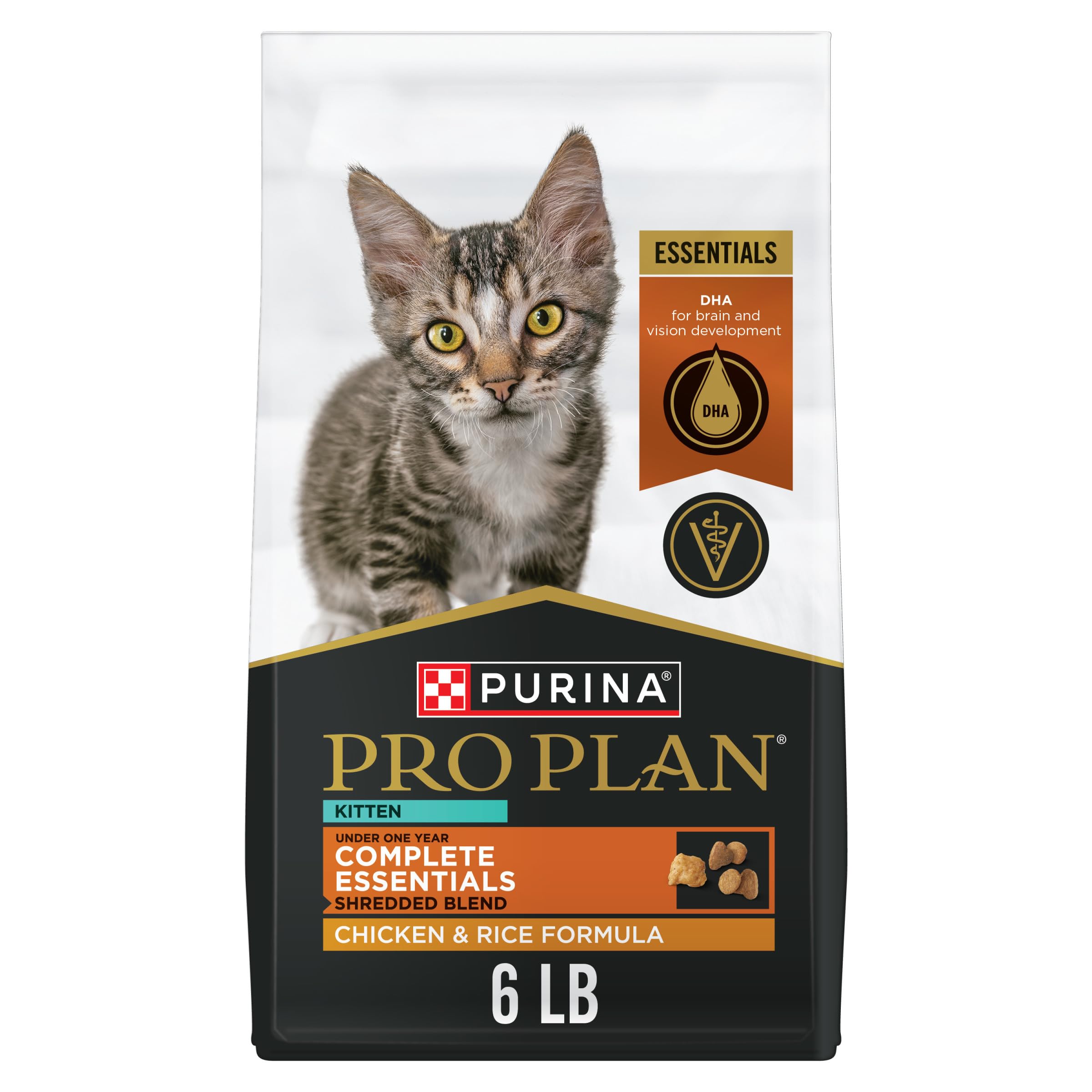
Purina Pro Plant’s Shredded Blend combines nutrient-dense crunchy kibble with meaty shredded pieces, creating a texture variety that encourages higher voluntary food intake — a key lever when trying to coax an underweight cat to eat more. Real chicken appears as the first ingredient, and the formula is fortified with guaranteed live probiotics that support digestive efficiency, meaning more calories from each portion are absorbed rather than passed through.
The shredded texture has proven especially effective for Maine Coon kittens and other large growing breeds, with owners reporting excellent weight gain and notably reduced litter box odor — a practical indicator that protein absorption is high and fermentation byproducts are low. The inclusion of DHA for brain and vision development adds cognitive support during the growth phase. Vitamin A and taurine support healthy vision, and omega-6 fatty acids maintain coat condition during caloric surplus.
The most frequently noted downside is digestive gas — several buyers report that the formula causes notably stinky flatulence in their cats, suggesting the protein blend or fiber profile may ferment aggressively in some digestive systems. The shredded pieces also tend to be favored by dogs, which can be a problem in multi-pet households.
Why we love it
- Texture variety encourages higher caloric intake without forcing larger portions
- Live probiotics improve nutrient absorption efficiency
- Veterinarian-recommended brand with proven results for large-breed kittens
Good to know
- Can cause strong-smelling flatulence in some cats
- Dogs often find this food irresistible: requires elevated feeding
4. Blue Buffalo Freedom Grain-Free Indoor Kitten Dry Food

Blue Buffalo Freedom delivers a high-protein, grain-free formula that avoids the corn, wheat, and soy fillers that dilute caloric density in budget-tier foods. Real chicken is the first ingredient, and the inclusion of DHA and ARA provides critical brain and eye development support alongside the weight-gain mission. The small, semi-soft morsels make this food accessible even for very young kittens transitioning from milk to solids.
Buyers managing multiple cats (including colonies with ages ranging from 6 weeks to 4 years) report unanimous acceptance of this formula, with particularly notable increases in activity and playfulness in adult cats — a sign that the caloric surplus is translating into usable energy rather than just fat storage. The antioxidant-rich LifeSource Bits provide immune system support, which is valuable for underweight cats whose immune function may already be compromised by poor nutrition.
The main limitation relative to the higher-tier options is protein percentage — while solid for a grain-free formula, it does not match the 45%+ protein levels of the Wellness CORE. Cats requiring aggressive muscle rebuilding may need to consume larger volumes to get equivalent amino acid intake. The food is marketed primarily as “indoor” formula, which typically skews toward weight management rather than weight gain.
Why we love it
- High acceptance across multi-cat households with varied age ranges
- No chicken by-product meals, corn, wheat, or soy
- Small morsel size works well for weaning kittens
Good to know
- Protein content lower than pure weight-gain formulas
- “Indoor” formulation may not deliver aggressive calorie surplus for extreme underweight cases
5. Hill’s Science Diet Kitten Sensitive Stomach & Skin Dry Cat Food
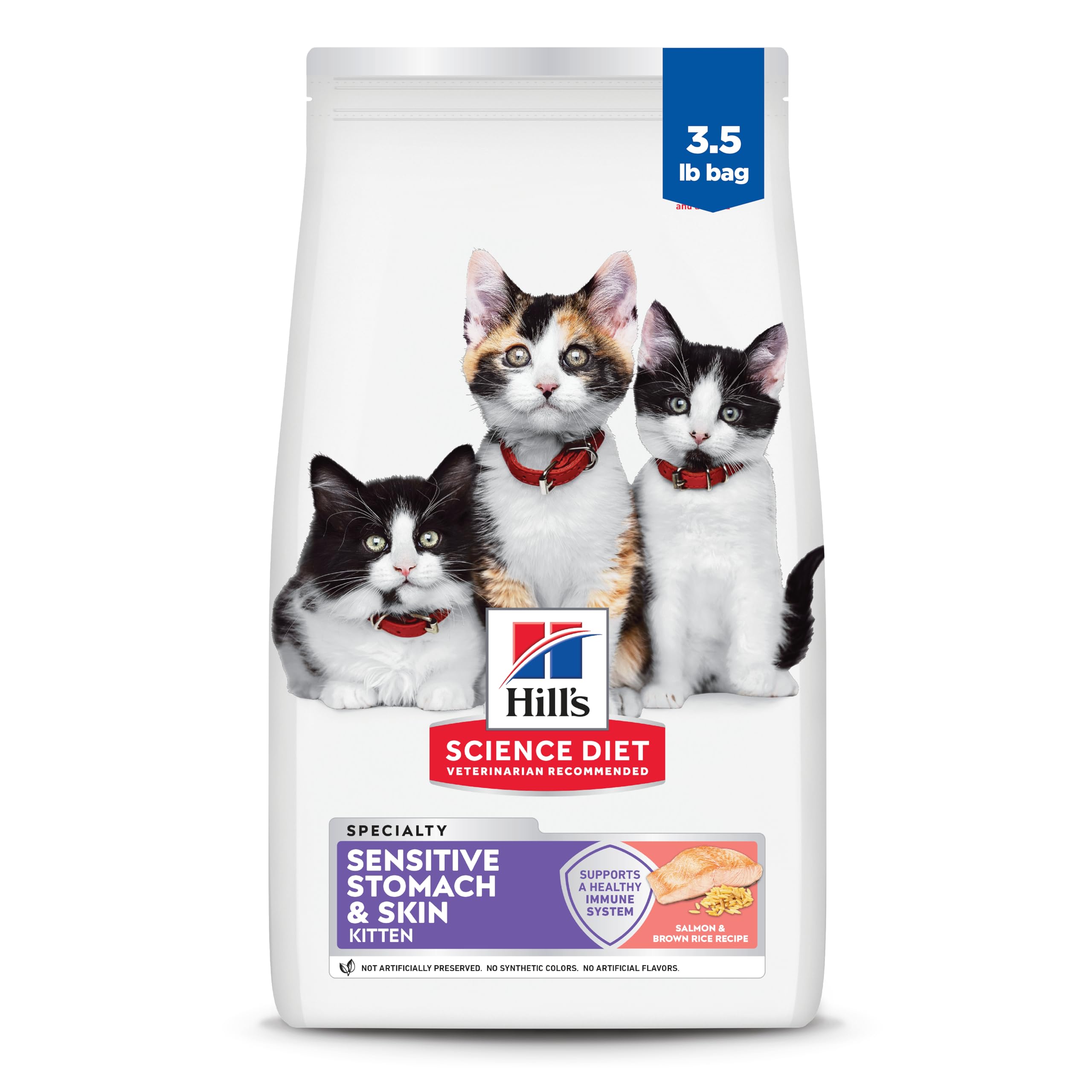
When weight loss is compounded by chronic digestive upset — vomiting, loose stools, or constipation — caloric intake matters less than absorbability. Hill’s Science Diet kitten formula addresses this with a prebiotic fiber system specifically designed to be gentle on sensitive stomachs while maximizing nutrient extraction. The salmon and brown rice base provides highly digestible protein and carbohydrates that minimize digestive load.
Buyer reports are compelling: one Bobtail kitten with chronic constipation resolved completely, another kitten with persistent tummy upset achieved well-formed stools by day six or seven, and an adult cat with frequent vomiting stopped entirely. The small kibble size is appropriate for kittens as young as weaning age, and the formula is enriched with Vitamin E and omega-3 and omega-6 fatty acids for skin and coat health — important for cats whose coat quality has declined during weight loss.
The protein source (salmon) may not appeal to all cats — some prefer chicken or turkey-based recipes. The crude protein and fat levels are adequate for steady weight gain but not designed for rapid replenishment; this is a slow-and-steady digestive recovery food rather than an aggressive weight-gain formula. It is best used when the primary barrier to weight gain is digestive sensitivity, not insufficient calorie density.
Why we love it
- Prebiotic fiber system resolves constipation and vomiting in sensitive cats
- Highly digestible formula ensures calories are absorbed, not wasted
- Veterinarians’ #1 recommended brand across the US
Good to know
- Salmon flavor may not appeal to chicken-preference cats
- Not designed for rapid weight gain — better for slow, steady recovery
FAQ
How many calories per pound does a cat need to gain weight?
Can I use kitten food for an adult cat that needs to gain weight?
What crude fat percentage should I look for in a weight gain cat food?
My cat keeps losing weight despite eating high-calorie food. What should I do?
How long does it take to see visible weight gain in a cat on a new food?
Final Thoughts: The Verdict
For most cat owners, the best cat food to gain weight winner is the Under the Weather Ready Cal Powder because it delivers 20 calories per scoop and integrates into any existing feeding routine without requiring a full food transition. If you want a standalone kibble that builds lean muscle mass, grab the Wellness CORE Kitten with its 45% protein minimum. And for a cat whose weight loss is driven by digestive sensitivity, nothing beats the gut-restoring Hill’s Science Diet Kitten Sensitive Stomach formula.