
Your cat evolved as an obligate carnivore, designed to extract nutrition from whole prey — not corn, wheat, or soy. Every time you pour a bowl of kibble, you are either supporting that biological reality or working against it. The difference between a glossy coat, consistent litter box visits, and steady energy levels versus dull fur and digestive upset often comes down to one decision: what is in the bag.
I’m Mo Mahin — the founder and writer behind Furric. I’ve spent countless hours cross-referencing AAFCO nutrient profiles, evaluating veterinary safety standards, and analyzing aggregated feedback from pet owners to separate the genuinely nutritious from the cleverly marketed.
This guide breaks down the top five contenders to help you find the best cat food that meets your cat’s specific needs, whether you’re managing a picky eater or supporting a growing kitten.
How To Choose The Best Cat Food
Not all cat food is created equal, and the differences go far beyond price. A bag that costs less per pound might save you money upfront but cost you more in vet bills later. Here are the three factors I prioritize over everything else.
Ingredient Quality and Sourcing
The best indicator of a quality cat food is the first ingredient. Look for a named meat source like chicken, turkey, salmon, or herring — not a vague “meat meal” or “poultry by-product.” Brands that lead with fresh or raw protein and specify the animal source tend to deliver higher digestibility and better amino acid profiles. Avoid foods where grains or starches appear in the first five ingredients unless your cat has a specific medical need for them.
Guaranteed Analysis and Caloric Density
Crude protein should be above 35% for dry food aimed at active adult cats, and closer to 40-45% for kittens. Fat content around 15-20% supports energy, while excessive carbohydrates (often hidden as starches) contribute nothing to feline health. A food with a higher caloric density per cup means your cat eats less volume to meet its needs, which is preferable for most cats.
Kibble Size and Texture
Kibble shape and size matter more than most owners realize. A tiny, irregular kibble encourages chewing and slows down gulping, which helps with digestion. For kittens, a smaller triangular or round kibble (around 7-9mm) is easier to pick up. For adult cats with dental sensitivities, a dual-texture kibble — crunchy outside with a soft center — provides both cleaning action and palatability.
Quick Comparison
On smaller screens, swipe sideways to see the full table.
| Model | Category | Best For | Key Spec | Amazon |
|---|---|---|---|---|
| ORIJEN Wild Reserve Kitten | Premium Dry | Kittens needing high protein | 85% animal ingredients | Amazon |
| ACANA First Feast Kitten | Premium Dry | Kittens and active adults | 70% animal ingredients | Amazon |
| IAMS Perfect Portions Wet | Premium Wet | Indoor adults, portion control | Twin-pack trays, grain-free | Amazon |
| Purina Fancy Feast Gravy Lovers | Wet Variety | Picky eaters, gravy lovers | 24 cans, 3 oz each | Amazon |
| Meow Mix Tender Centers | Budget Dry | Multiple cats, budget feeding | 20 lb bag, dual texture | Amazon |
In‑Depth Reviews
1. ORIJEN Wild Reserve Dry Cat Food Kitten Recipe
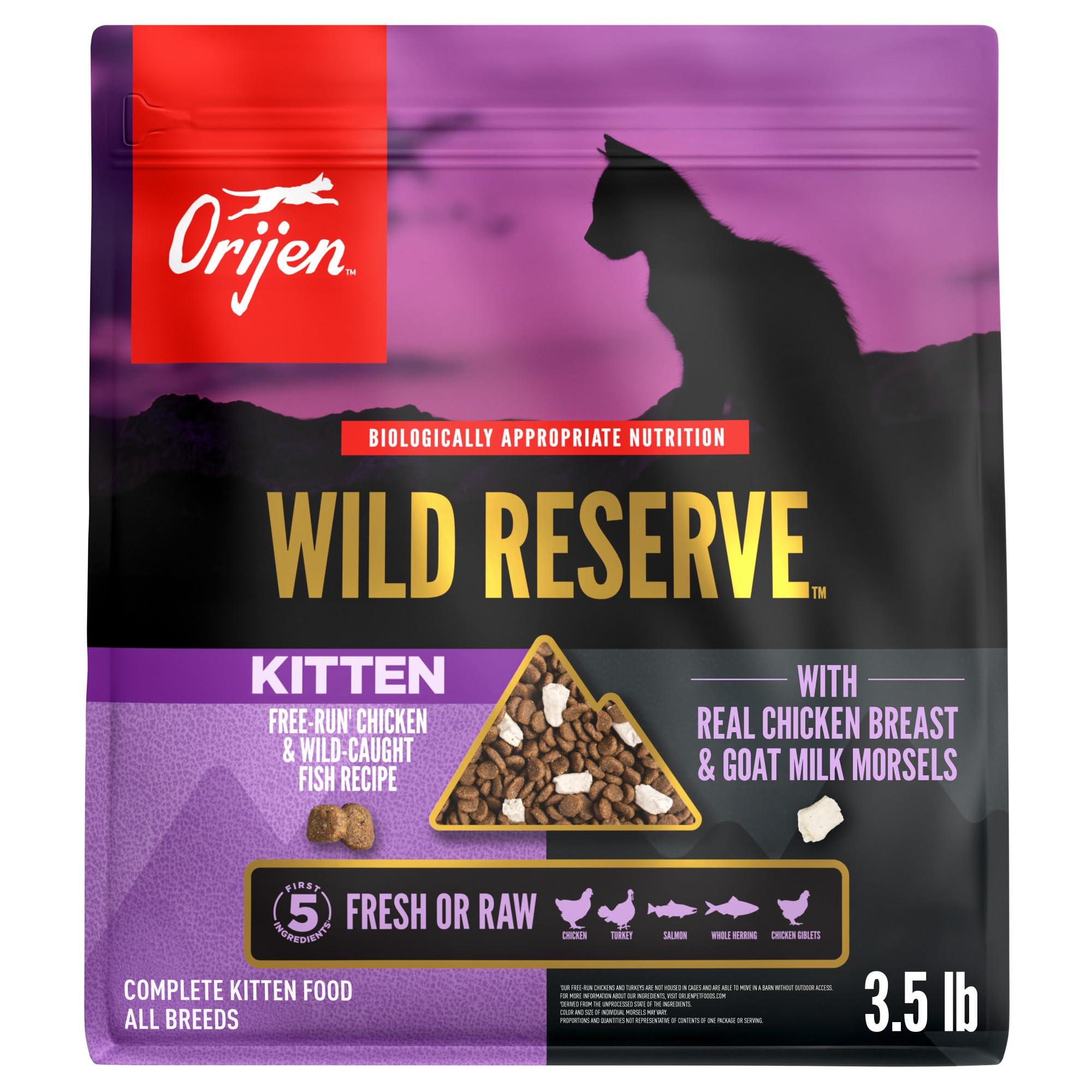
This is the benchmark for biologically appropriate kitten nutrition. The first five ingredients are fresh or raw chicken, turkey, salmon, whole herring, and chicken giblets — that is an animal-to-plant ratio of roughly 85% to 15%. The WholePrey approach includes meat, organs, and bone, mirroring what a feline would eat in the wild. For a growing kitten, that means every micronutrient — from taurine to zinc — arrives in its most bioavailable form.
The kibble shape is small enough for kitten mouths but dense enough to provide meaningful chewing resistance. The 3.5-pound bag size is practical for trial runs or smaller households. Owners report that even finicky kittens stop turning their noses up at mealtime, which is the single highest compliment for any kitten food.
The only real friction is the price per pound — this is undeniably a premium product. But when you stack the ingredient density against cheaper brands, the cost-per-serving is competitive because your kitten eats less volume to meet its nutritional requirements. This is a long-term investment in skeletal development and coat quality.
Why we love it
- High crude protein content ideal for rapid growth
- No corn, wheat, soy, or artificial additives
- Fresh and raw animal ingredients as first five items
Good to know
- Premium price per bag compared to grocery brands
- Rich formula may cause loose stools if transitioned too fast
2. ACANA Dry Cat Food for Kittens First Feast
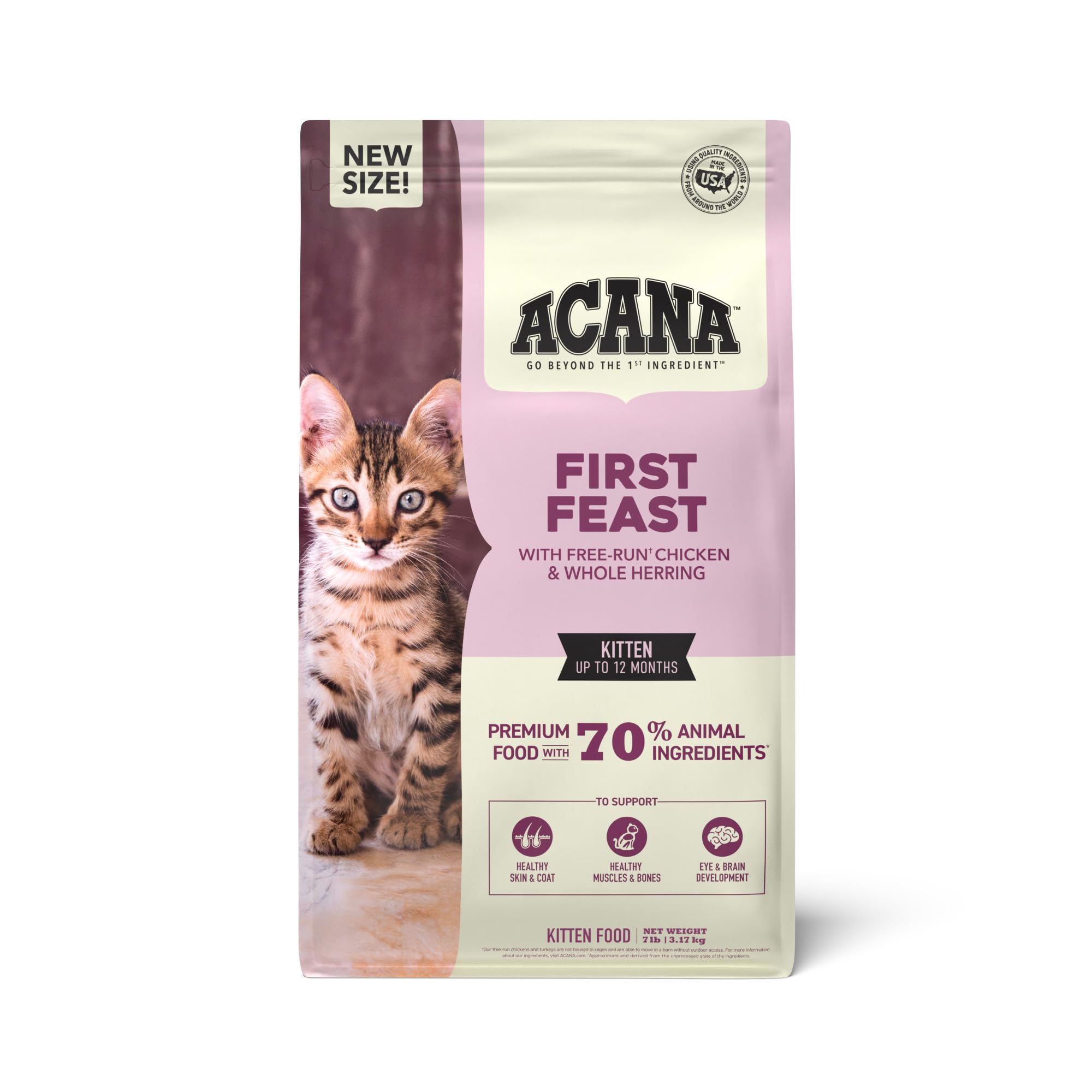
ACANA shares production lineage with ORIJEN but hits a slightly different price-value point that still prioritizes high-protein, grain-free nutrition. The 7-pound bag is the larger sibling to the 3.5-pound ORIJEN option, making it a better choice for multi-cat households or owners who prefer buying in bulk without sacrificing ingredient standards.
The formula features free-run chicken and whole herring as primary proteins, supplemented with omega-3 and omega-6 fatty acids for coat shine and brain development. The kibble is triangular at roughly 7.5×3.5mm — large enough to encourage chewing but small enough for kittens to manage. Customer feedback consistently highlights improved coat softness and better stool quality after switching from standard grocery brands.
One minor consideration is that some owners report their cats develop a strong preference for this flavor profile, making future transitions more challenging. If you plan to rotate proteins over your cat’s lifetime, introduce variety early. Overall, this is a top-tier choice for anyone wanting ORIJEN-level quality with a slightly more accessible price per pound.
Why we love it
- Balanced omega-3 and omega-6 for skin and coat health
- No artificial flavors, colors, or preservatives
- Larger bag size for better value per serving
Good to know
- Some cats become finicky about other brands after eating this
- Not suitable for cats with specific protein sensitivities
3. IAMS Perfect Portions Grain Free Wet Cat Food
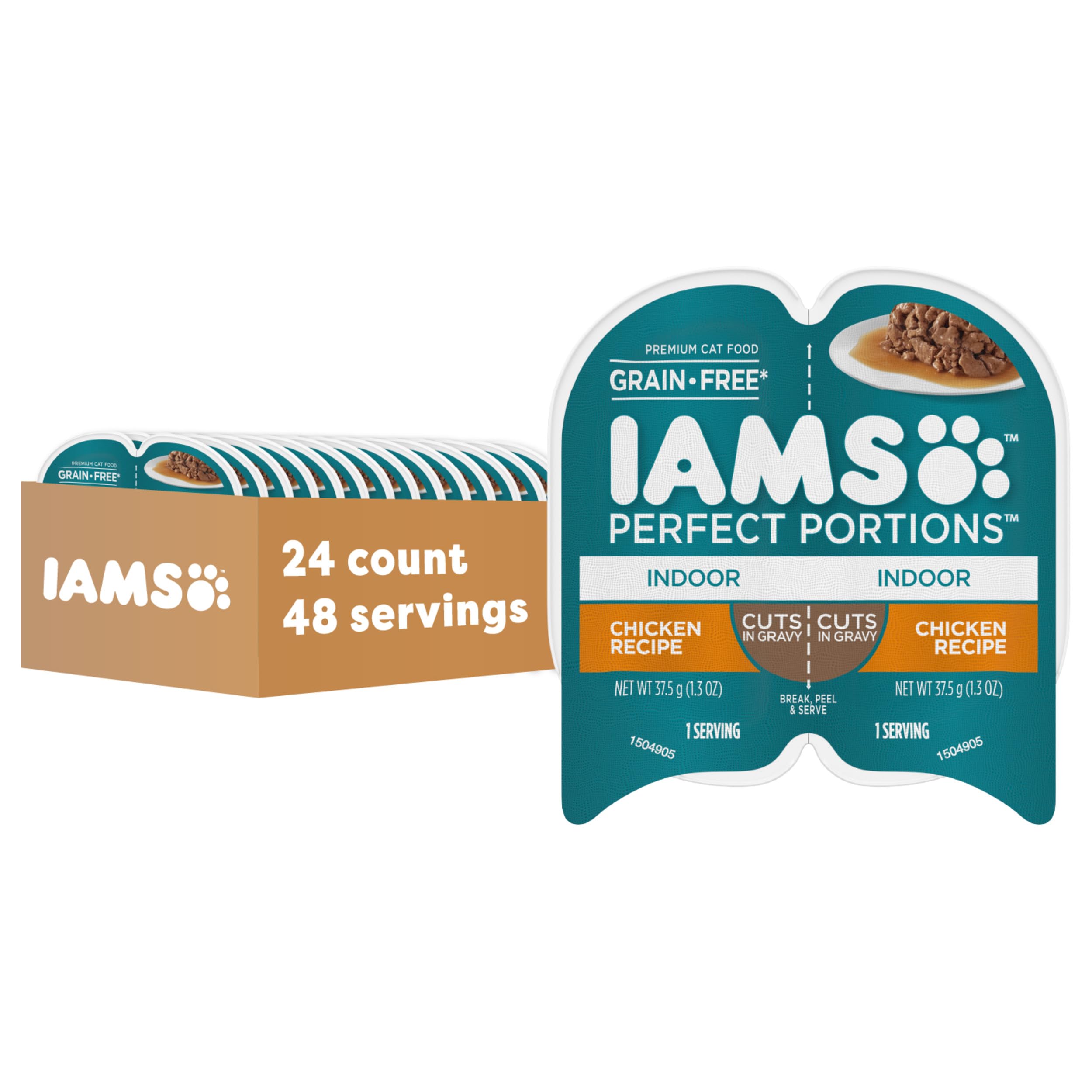
Wet food is a crucial component of any indoor cat’s diet, primarily for moisture content. This IAMS lineup comes in twin-pack trays designed for zero leftovers — simply snap, peel, and serve. The grain-free chicken recipe includes prebiotic fiber and antioxidant vitamin E to support immune function and digestion, two areas where indoor cats often struggle.
The 2.6-ounce portion size per tray is calibrated for a single meal for an average adult cat, which reduces food waste and keeps the refrigerator clean. The texture is cuts in gravy rather than pâté, making it appealing to cats who prefer a more textured eating experience. Owners of senior cats particularly appreciate the easy-to-chew consistency.
The only drawback is the packaging waste — each meal generates two plastic trays and a cardboard sleeve. While the convenience is undeniable, environmentally conscious buyers may want to recycle the materials or consider larger cans. That said, for portion control and freshness, this is hard to beat.
Why we love it
- Convenient twin-pack for fresh, portioned meals
- Contains prebiotic fiber for digestive health
- Grain-free recipe with no artificial flavors
Good to know
- Higher packaging waste per serving
- Not suitable as a complete diet for kittens without supplementation
4. Purina Fancy Feast Gravy Lovers Variety Pack

Some cats are simply gravy addicts. This variety pack delivers poultry and beef options in a light, savory sauce that even the most stubborn eaters find irresistible. Each 3-ounce can is 100% complete and balanced for adult cats, so you can serve it as a sole diet or as a topper for dry kibble to boost moisture intake.
The ingredient list is straightforward: real poultry or beef as the primary protein, no artificial colors or preservatives. The texture is tender grilled pieces swimming in gravy, which is easy on the teeth and encourages hydration. This is particularly useful for cats who drink too little water, a common issue that contributes to chronic kidney disease.
On the downside, the variety pack means you get a mix of flavors, and some cats will refuse certain selections entirely. If your cat is a picky eater, you might end up with wasted cans. Additionally, the fish-based options in the variety can be high in phosphorus, so cats with renal issues should stick to poultry-only recipes.
Why we love it
- High moisture content supports urinary tract health
- Real meat as first ingredient in each recipe
- No artificial colors or preservatives
Good to know
- Some flavor options may be refused by picky cats
- Fish varieties have higher phosphorus levels
5. Meow Mix Tender Centers Salmon & Chicken Dry Cat Food
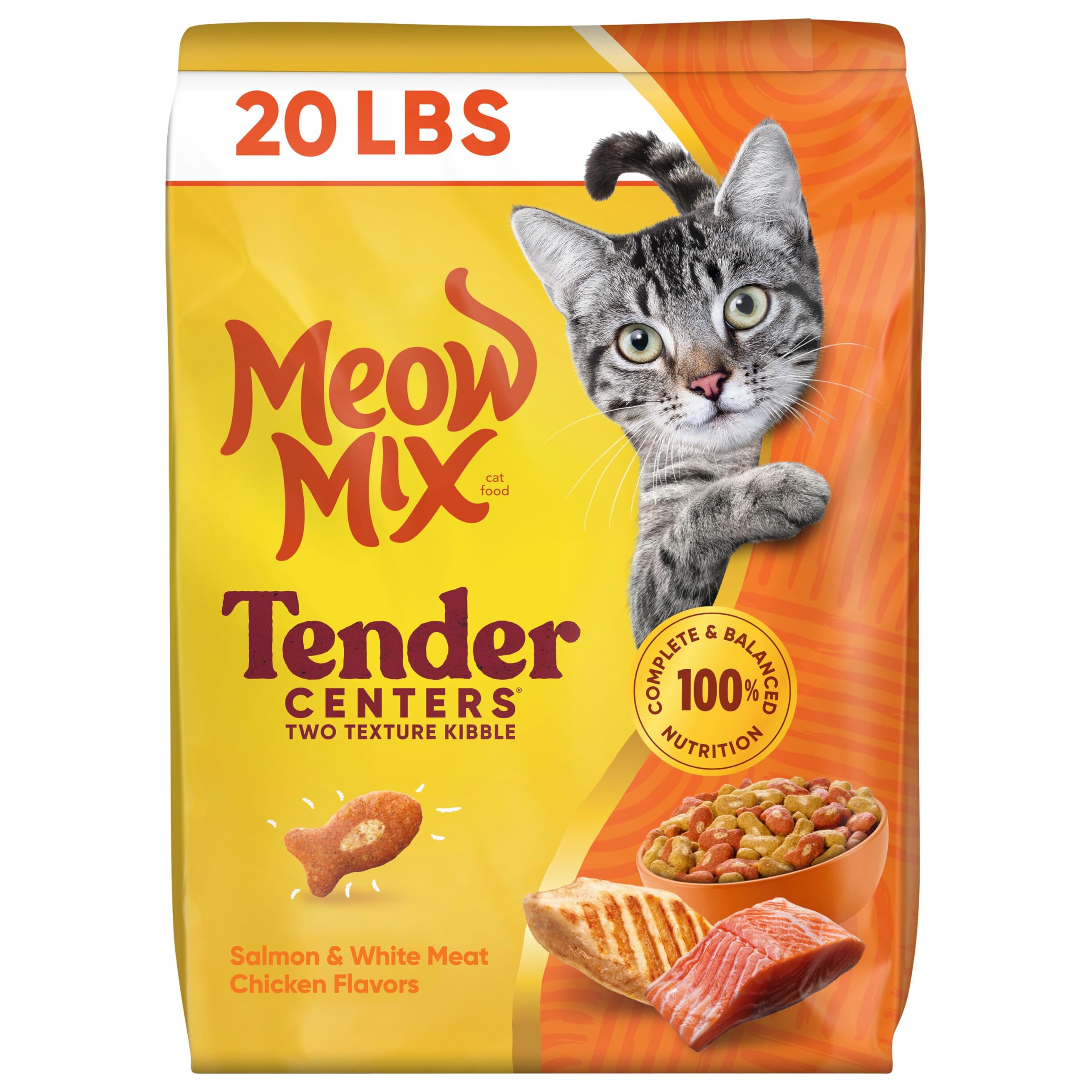
When budget is the primary concern but you still want a palatable, reasonably balanced option, this 20-pound bag delivers real volume. The dual-texture kibble features a crunchy outer shell with a soft, meaty center — an engineering trick that makes the food more interesting to eat and provides mild dental scrubbing action during chewing.
Owner feedback from rescue groups and multi-cat households is overwhelmingly positive: the bag lasts, the cats eat it consistently, and the ingredient list avoids the worst fillers. The salmon and white meat chicken flavor blend is universally appealing, and the kibble is large enough to slow down fast eaters. For the price, this is the most cost-effective way to feed multiple cats without resorting to low-quality generic brands.
The trade-off is that the crude protein content is lower than premium competitors, and the food relies on chicken liver meal as a concentrated protein source rather than whole meats. It also contains grains, which some owners prefer to avoid. For a healthy adult cat with no sensitivities, this is a perfectly adequate daily diet. For cats with specific health needs, lean toward the higher-tier options above.
Why we love it
- Excellent value per pound for multi-cat households
- Dual texture encourages chewing and dental health
- Highly palatable to most cats
Good to know
- Lower protein percentage than premium brands
- Contains grains which may not suit all cats
FAQ
Is grain-free cat food healthier for all cats?
How much wet food should I feed per day?
Final Thoughts: The Verdict
For most pet parents, the best cat food winner is the ORIJEN Wild Reserve Kitten Recipe because it delivers the highest animal ingredient content (85%) in a WholePrey ratio that mirrors a cat’s natural diet — supporting everything from coat condition to skeletal development. If you want the best balance of premium ingredients and bag size for multi-cat homes, grab the ACANA First Feast. And for budget-conscious feeders feeding multiple cats, nothing beats the value of the Meow Mix Tender Centers.