
Watching your cat scratch, bite, or overgroom because of a food allergy is heartbreaking. The good news? The right diet can turn that around completely — and you don’t need a dozen prescription bags to find it. What you need is a clear map through the ingredient labels, protein sources, and marketing claims.
I’m Mo Mahin — the founder and writer behind Furric. My approach combines deep market research with veterinary safety standards and real owner feedback to separate genuine solutions from clever packaging.
Through deep research into veterinary safety standards and real owner experiences, I’ve curated the definitive best cat foods for allergies for your sensitive feline companion.
How To Choose The Best Cat Foods For Allergies
Food allergies in cats usually show up as skin irritation, chronic ear infections, vomiting, or diarrhea. The most common culprits are chicken, beef, dairy, and fish — not grains, despite what many pet food ads suggest. A true elimination diet under veterinary guidance remains the gold standard for diagnosis, but choosing the right maintenance food afterward is just as critical.
Start With a Single Novel Protein
A novel protein is one your cat has never eaten before — duck, rabbit, venison, or turkey often work well. The fewer animal proteins in the food, the lower the chance of triggering a reaction. Limited-ingredient diets (LID) pair a single protein with a single carbohydrate source to minimize variables and make troubleshooting easier.
Consider Hydrolyzed Protein Diets
Hydrolyzed proteins are broken down into fragments too small for the immune system to recognize. These prescription diets are the most reliable option for cats with severe or multiple food sensitivities. They are not cheaper than over-the-counter options, but they offer the highest chance of symptom resolution when other foods have failed.
Look Beyond the “Grain-Free” Label
Many cat parents assume grain-free means allergy-friendly, but grains are rarely the actual trigger. What matters more is the quality of the protein, the absence of common allergens like chicken or beef, and the inclusion of gut-supporting ingredients like prebiotic fibers and omega fatty acids that help repair the skin barrier from the inside out.
Quick Comparison
On smaller screens, swipe sideways to see the full table.
| Model | Type | Best For | Key Feature | Amazon |
|---|---|---|---|---|
| Purina Pro Plan LiveClear | Dry | Allergen reduction for owners | Neutralizes Fel D1 in saliva | Amazon |
| Hill’s z/d Hydrolyzed | Vet Diet | Severe food sensitivities | Hydrolyzed chicken protein | Amazon |
| Farmina N&D Quinoa Duck | Vet Diet | Urinary + allergy support | Duck & quinoa limited formula | Amazon |
| ORIJEN Guardian 8 | Dry | High-protein ancestral diet | 90% animal ingredients | Amazon |
| Purina Pro Plan Sensitive Wet | Wet | Sensitive stomach + skin | Duck novel protein pate | Amazon |
| Nulo Freestyle Hairball | Dry | Hairball + allergy management | 83% animal protein, BC30 probiotic | Amazon |
| Blue Buffalo Basics | Dry | Budget-friendly limited diet | Turkey single protein, grain-free | Amazon |
In-Depth Reviews
1. Purina Pro Plan LiveClear Turkey and Oatmeal
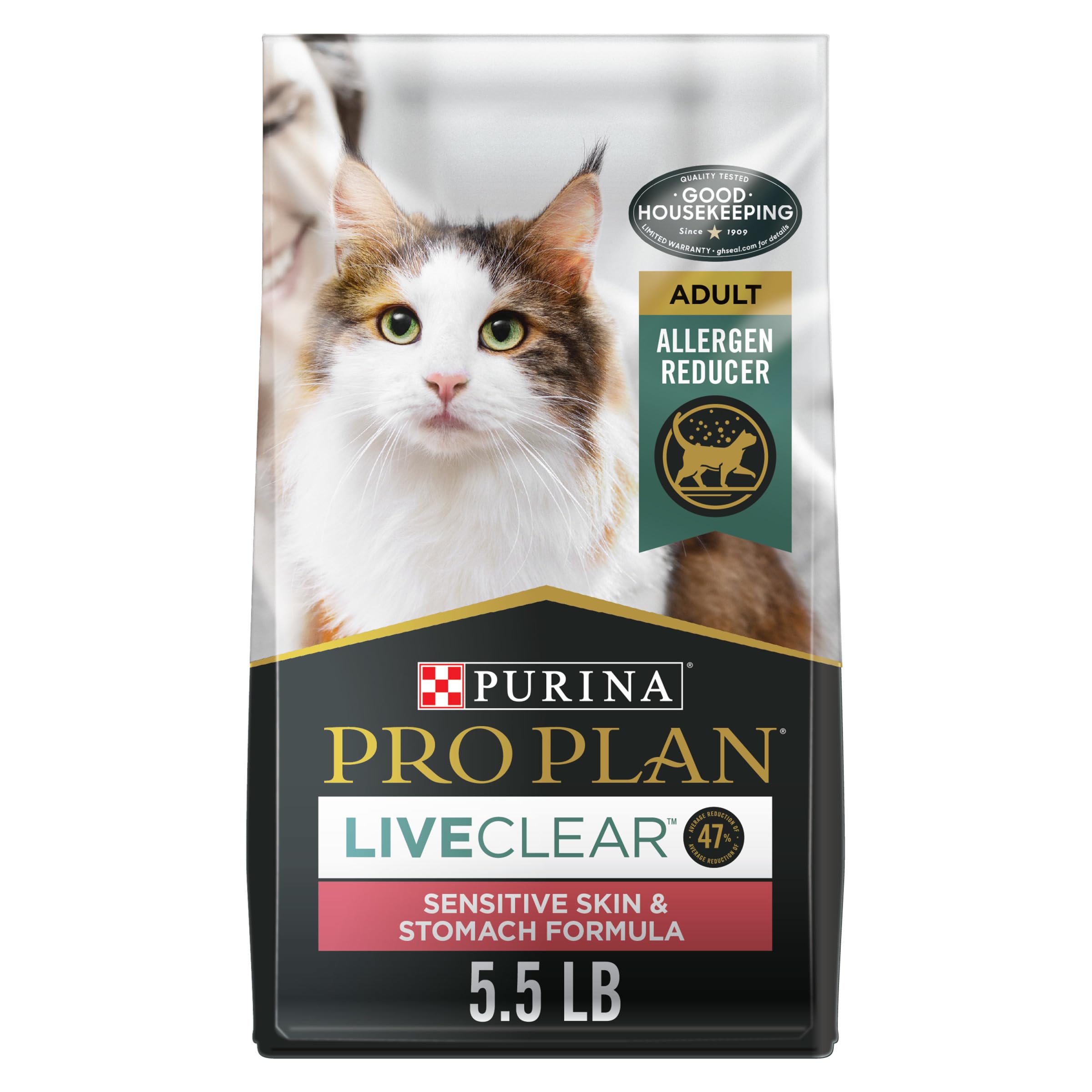
This is the only dry cat food on the market that actively reduces the major allergen (Fel D1) in cat saliva — a breakthrough backed by over a decade of research. The egg-based protein ingredient safely neutralizes the allergen, with studies showing an average reduction of 47 percent starting in the third week. For cat parents who struggle with their own allergies while wanting to keep their cat on a high-quality diet, this formula bridges that gap beautifully.
The turkey and oatmeal recipe is also formulated for sensitive skin and stomachs, with prebiotic fiber to support digestive health and omega-6 fatty acids for skin and coat condition. Cat owners report their pets becoming more energetic, regrowing fur lost from overgrooming, and showing dramatically reduced scratching. Multiple verified reviews highlight improvements in both the cat’s symptoms and the owner’s allergic reactions — a dual benefit that no other food in this category offers.
It is pricier than standard supermarket brands, but the combination of allergen reduction and digestive support makes it a strong value for households where both cat and human suffer from allergies. If you want one food that addresses the root cause of allergic reactions while supporting overall health, this is the clear first choice.
Why we love it
- Clinically proven to reduce Fel D1 allergen in cat hair and dander
- Supports sensitive stomachs with prebiotic fiber
- High-protein turkey formula with omega-6 for skin health
Good to know
- Higher price point than standard dry foods
- Results take about three weeks to become noticeable
2. Hill’s Prescription Diet z/d Hydrolyzed Chicken

When a cat has been through multiple food trials and continues to show symptoms, the hydrolyzed approach becomes the most reliable tool in the veterinary arsenal. Hill’s z/d uses chicken protein that has been broken down into particles so small the immune system cannot recognize them as allergens. This eliminates the food allergy reaction at its source without requiring a novel protein that your cat may eventually develop sensitivity to over time.
The formula includes ActivBiome+ Digestion, a proprietary blend of prebiotic fibers shown to rapidly support gut microbiome health, along with omega-3 and omega-6 fatty acids to repair the skin barrier. Real owner stories describe cats who had been vomiting daily for years finally keeping food down, gaining weight, and growing soft, healthy coats again. Even senior cats with IBD and chronic digestive issues have shown remarkable improvement on this diet.
It does require a veterinary prescription, and the kibble has a milder flavor that some cats find less appealing. Mixing it with a small amount of a palatable hydrolysate or transitioning slowly can help. For cats with confirmed or suspected multiple food allergies, this remains the gold standard — not the cheapest option, but often the one that finally works.
Why we love it
- Hydrolyzed protein prevents immune system recognition
- ActivBiome+ prebiotic blend supports gut health
- Rich in omega-3 and omega-6 for skin repair
Good to know
- Requires veterinary prescription to purchase
- Some cats find the flavor less palatable than standard foods
3. Farmina N&D Quinoa Urinary Duck Formula

Farmina’s N&D line stands out because it addresses two overlapping problems at once: food allergies and urinary tract health. The duck and quinoa formula provides a novel protein source while the low-glycemic, grain-free recipe supports urinary pH balance. This is especially valuable for cats who develop cystitis or struvite crystals alongside their allergy symptoms — a common comorbidity that many single-purpose diets ignore.
The cold-infusion technology used to prepare the ingredients preserves nutrient integrity, and quinoa adds a complete amino acid profile with a low glycemic index that helps maintain steady blood sugar. Cat owners with picky eaters and chronic urinary issues report their cats staying symptom-free for months at a time, with softer coats and no fur loss. One reviewer noted their cat went from having over 50 struvite crystals to being crystal-free after two months on this diet.
The bag size is smaller than typical dry food bags, and the price reflects the premium ingredient sourcing. Some cats may experience digestive sensitivity to the rich protein content over extended periods. For a cat with concurrent allergy and urinary concerns, this dual-targeted approach often eliminates the need for separate prescription diets.
Why we love it
- Novel duck protein with quinoa for complete nutrition
- Supports urinary tract health alongside allergy management
- Low-glycemic, grain-free formula with cold-infusion technology
Good to know
- Premium price point with smaller bag size
- Monitor for digestive sensitivity with extended feeding
4. ORIJEN Guardian 8 Dry Cat Food
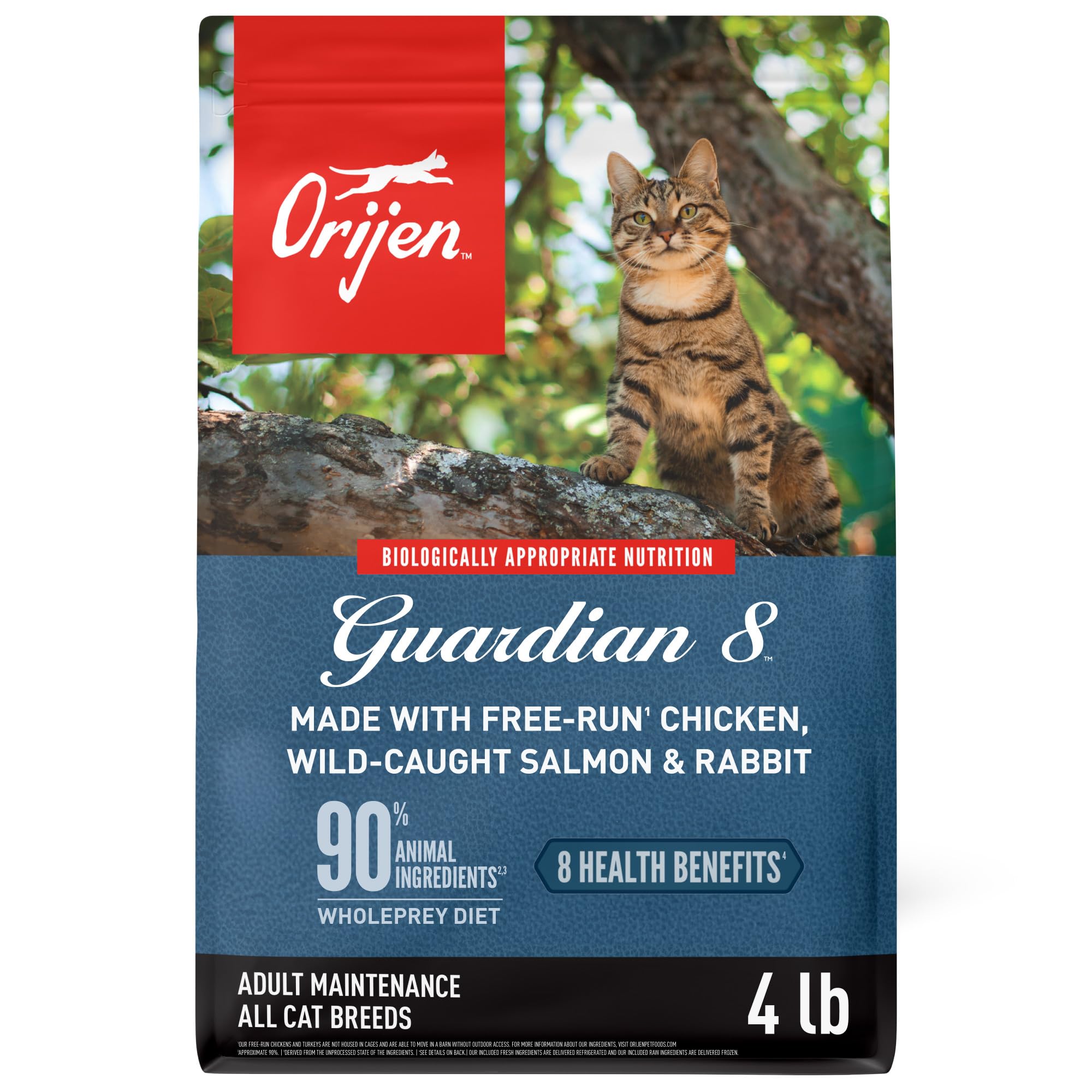
ORIJEN takes a whole-prey approach with 90 percent animal ingredients including chicken, wild-caught salmon, rabbit, and organ meats. This high-protein, grain-free formula is designed to mirror what cats would eat in the wild, and it shows in the results: owners consistently report shinier coats, better muscle tone, and more consistent energy levels. The first five ingredients are fresh or raw, and the freeze-dried liver coating adds a flavor punch that even picky eaters find hard to resist.
For allergy-prone cats, the key here is the ingredient diversity and quality rather than restriction. The formula includes eight different animal protein sources, which may not suit every cat with sensitivities. However, cats with mild environmental allergies or non-specific skin issues often thrive on the high omega-3 content from wild-caught salmon and pollock oil. Multiple owners with picky and sensitive cats confirm this is the one food their pets consistently eat without hesitation.
The bag zipper has been a recurring complaint, and storing this food properly in a cool, dark place is essential to preserve the fresh ingredients. It is also one of the more expensive options per pound. For cats who tolerate multiple proteins and need a nutrient-dense diet that supports skin and coat health from the inside, this is a top-tier choice.
Why we love it
- 90% animal ingredients with whole-prey ratios
- High omega-3 content from wild-caught fish
- Freeze-dried liver coating for superior palatability
Good to know
- Contains multiple protein sources — not ideal for single-protein trials
- Bag zipper seal is unreliable; use a clip or storage container
5. Purina Pro Plan Sensitive Skin & Stomach Duck Entree
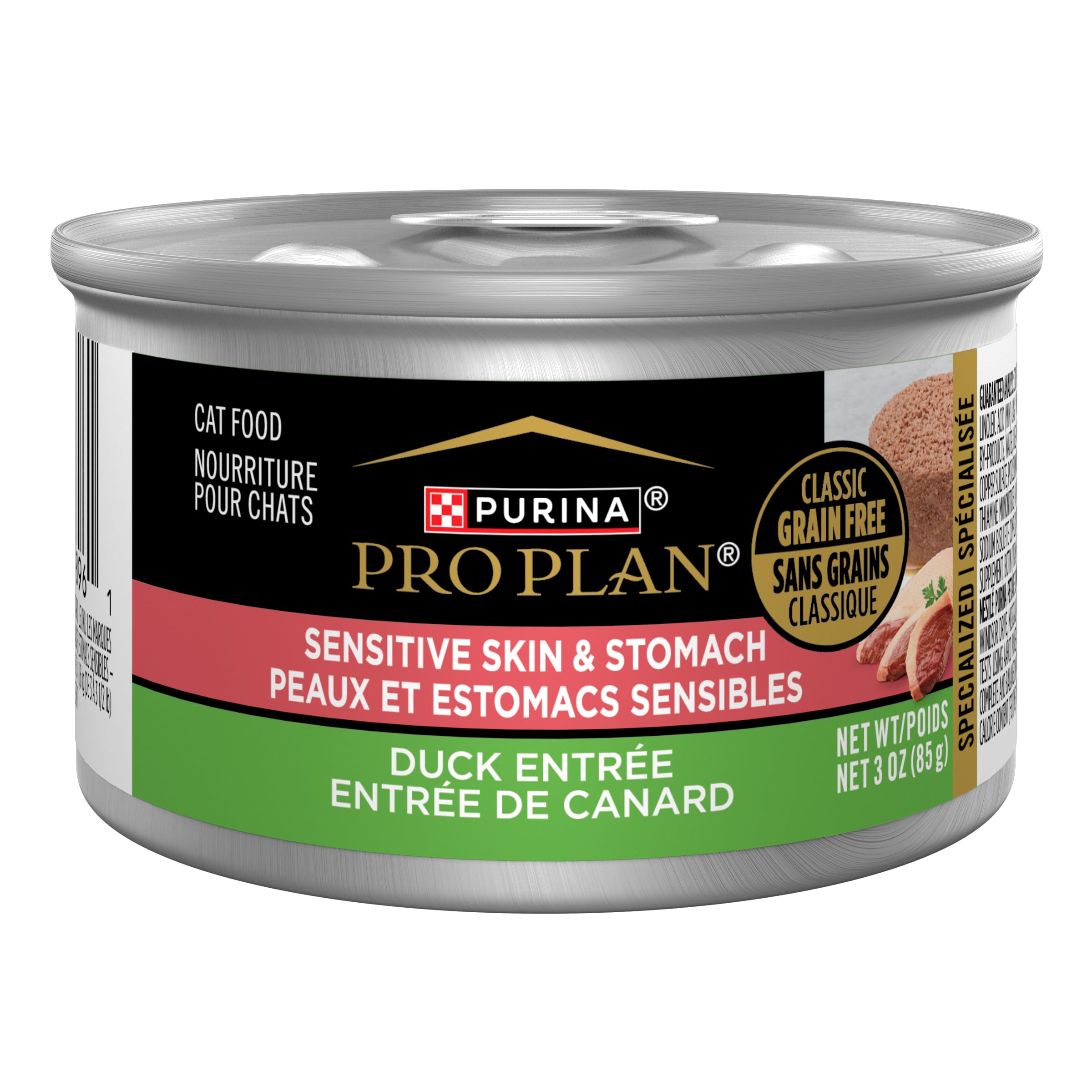
Wet food plays a critical role in allergy management because it provides hydration alongside a clean protein source, and this Purina Pro Plan formula uses duck as a novel protein that most cats have never encountered. The pate texture is soft and easy to mash, making it suitable for senior cats or those with dental sensitivities. Each 3-ounce can delivers high protein with no artificial colors or preservatives.
The sensitive skin and stomach formula includes natural prebiotic fiber to support digestive health and antioxidants for immune support. Multiple owners of cats with chronic diarrhea and food sensitivities report that this duck formula resolved months of digestive upset within days. Cats who had been through multiple prescription diets without success finally found consistent relief with this over-the-counter wet food. The 24-pack offers a practical supply for multi-cat households or dedicated daily feeding.
The price per case adds up quickly, and some cats may not tolerate every flavor in the sensitive stomach line — the Arctic Char variety has been noted to cause IBS symptoms in sensitive cats. Stick with the duck entree for best results. For cat parents who prefer wet food as the primary diet, this is the most reliable allergy-friendly option available without a prescription.
Why we love it
- Novel duck protein ideal for chicken-allergic cats
- Soft pate texture easy to eat and digest
- Prebiotic fiber supports digestive health
Good to know
- Higher cost per serving than dry food
- Not all flavors work equally well for sensitive cats — stick with duck
6. Nulo Freestyle Hairball Management Turkey & Cod
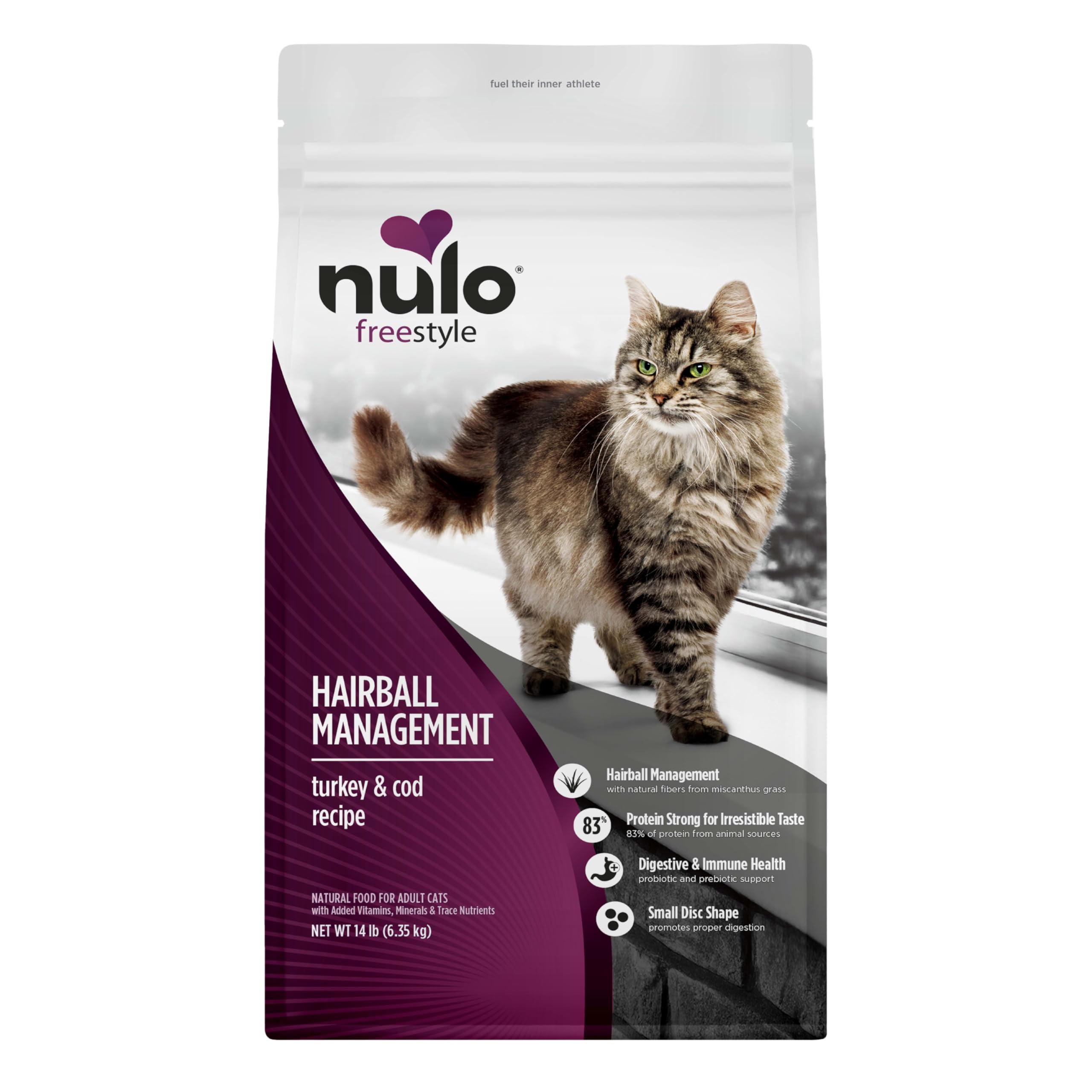
Hairballs are not always just a grooming issue — they can be a sign that a cat’s digestive system is struggling to process food properly, which is often linked to food allergies or sensitivities. Nulo’s Freestyle Hairball formula tackles this connection directly with 83 percent animal-based protein from turkey and cod, plus natural fibers from miscanthus grass that help move hair through the digestive tract. The BC30 probiotic supports gut health, making this a smart choice for cats with mild allergies that manifest as chronic hacking or vomiting.
The small-bite kibble is easy to chew, and the low-carb, low-glycemic recipe helps maintain healthy weight while keeping inflammation in check. Owners of picky eaters and multi-cat households report that cats eat this food consistently with no digestive upset. Several reviews highlight a dramatic reduction in both hairball frequency and foul-smelling gas — an underappreciated sign of improved gut health. The 14-pound bag offers solid value for the ingredient quality.
It is not a single-protein formula, so cats with confirmed allergies to turkey or cod would need to look elsewhere. Also, the hairball focus means it may not address skin-specific allergy symptoms as directly as other options. For cats whose allergic reactions show up primarily as digestive issues and hairballs, this is a well-formulated, mid-range solution that delivers noticeable results.
Why we love it
- 83% animal protein with BC30 probiotic for digestion
- Natural miscanthus grass fiber reduces hairballs
- Excellent value with the 14-pound bag size
Good to know
- Contains multiple protein sources — not suitable for strict elimination diets
- Hairball focus may not address skin-level allergy symptoms as thoroughly
7. Blue Buffalo Basics Turkey & Potato Senior

Blue Buffalo Basics is one of the most accessible limited-ingredient diets on the market, and the turkey and potato recipe offers a clean single-protein source at a price point that doesn’t require a second mortgage. Real deboned turkey is the first ingredient, with no chicken, beef, dairy, eggs, corn, wheat, or soy — making it a strong candidate for cats with common protein or grain sensitivities. The formula also includes omega-3 and omega-6 fatty acids for skin and coat health, plus LifeSource Bits for antioxidant support.
Owners of cats with chicken allergies consistently report this food resolves itching and skin irritation without breaking their budget. The kibble bits are tiny, which helps senior cats or those with dental issues eat comfortably. A long-time Blue Buffalo customer noted their cats thriving into their mid-20s on this brand, and multiple reviewers confirm that picky eaters accept the turkey flavor readily. The 5-pound bag is convenient for trial runs before committing to a larger size.
Some cats may selectively avoid the LifeSource Bits, though this does not appear to affect overall nutrition. The price per pound is slightly higher than standard supermarket brands, but it still ranks as the most affordable true limited-ingredient option in this lineup. If you need a reliable, chicken-free diet for a cat with mild to moderate allergies and you want to keep monthly costs manageable, this is your best starting point.
Why we love it
- Single turkey protein with no chicken, beef, or dairy
- Grain-free and corn-free for sensitive systems
- Most affordable limited-ingredient option in this guide
Good to know
- Some cats pick around the LifeSource Bits
- 5-pound bag is small for multi-cat households
Safety & Care Tips
Transition Slowly to Avoid Setbacks
Switching your cat’s food too quickly can cause vomiting or diarrhea even with the best allergy-friendly formula. Mix 25 percent new food with 75 percent old food for the first three days, then increase to 50/50 for days four through six. Finish with 75 percent new food for days seven through nine before offering 100 percent of the new diet. This gradual shift gives your cat’s digestive system time to adjust and helps you accurately assess whether symptoms improve.
Store Dry Food Properly
Omega fatty acids in allergy-supporting diets are prone to oxidation when exposed to heat, light, or air. Transfer dry food into an airtight container or keep it sealed in its original bag inside a cool, dark cabinet. Avoid storing food in garages or near humid areas — moisture can encourage mold growth and degrade the very nutrients that help manage your cat’s allergic reactions.
FAQ
How long does it take to see improvement after switching food?
Can I mix dry and wet food for my allergic cat?
What is the difference between limited ingredient and hydrolyzed diets?
Final Thoughts: The Verdict
For most pet parents, the cat foods for allergies winner is the Purina Pro Plan LiveClear because it uniquely addresses both the cat’s and the owner’s allergic reactions with proven egg-based technology. If you need a prescription-grade solution for severe food sensitivities, grab the Hill’s Prescription Diet z/d. And for a budget-friendly limited-ingredient start, nothing beats the Blue Buffalo Basics Turkey & Potato.