
Watching your cat paw through a cloud of dust is a visual cue that your indoor air quality just took a nosedive. For an asthmatic household — human or feline — that fine silica dust from conventional clay litter turns the simple chore of scooping into a respiratory trigger. The category has shifted beyond “just clumping” toward zero-dust, plant-based alternatives that lock ammonia without launching particulates into the breathing zone.
I’m Mo Mahin — the founder and writer behind Furric. My approach relies on cross-referencing ASTM-based dust particle claims against verified owner feedback across multiple chronic respiratory communities, identifying the specific material compositions that suppress airborne fines while still controlling odor at the box.
Whether you’re managing your own asthma or your cat’s chronic bronchial condition, the right substrate makes the difference between a clean room and an irritated airway. This guide breaks down the five most viable contenders to help you select the ideal cat litter for asthma.
How To Choose The Best Cat Litter For Asthma
The core difference between a standard litter and one suitable for asthma is the level of respirable particulates released during pouring, scooping, and cat digging. Traditional clay litters contain crystalline silica dust that hangs in the air for minutes after use. Plant-based options avoid silica entirely, but their own dust profiles vary by manufacturing method and pellet hardness.
Material Composition Is the First Filter
Clay litters, even “low-dust” formulations, still contain silica — a known respirable hazard when pulverized into fine powder. Natural wood pellet litters produce less airborne dust because the pellets are dense and fracture into larger sawdust chunks rather than fine particles. Pea husk and tofu-based litters fall between, offering near-zero dust when handled gently but can generate fines when the pellets crumble under heavy moisture. The most asthma-safe materials are large-grain plant fibers that do not break into powder during regular use.
Fragrance and Chemical Load
Asthma triggers often extend beyond dust to include volatile organic compounds from synthetic fragrances. “Fresh scent” in clay litters typically comes from a proprietary perfume blend that can irritate bronchial passages regardless of the dust level. Unscented formulations are non-negotiable for asthmatic households, but even “unscented” clay products sometimes use masking agents to neutralize ammonia odor. Plant-based litters that rely on the natural wood or plant smell for odor control eliminate this hidden source of airway irritation entirely.
Pellet Size, Tracking, and Handling Logistics
Larger pellets produce less airborne dust during pouring but track farther from the box because cats kick them. Smaller granules track less but create a finer dust when crushed underfoot. For asthmatic owners who must scoop daily, the weight of the bag also matters — a lightweight plant-based litter reduces the physical strain of lifting and pouring, which can otherwise trigger labored breathing in the caregiver. Weight savings of 50-75% versus clay are common among wood and pea husk options.
Quick Comparison
On smaller screens, swipe sideways to see the full table.
| Model | Category | Best For | Key Spec | Amazon |
|---|---|---|---|---|
| Catit Go Natural Pea Husk | Plant-Based | Zero-dust preference, flushable disposal | 300% moisture absorption rate | Amazon |
| KOCHO Hinoki Wood Clumping | Wood Pellet | Natural aroma, ultra-lightweight handling | 3.4 lbs bag, 4x lighter than clay | Amazon |
| Feline Pine Platinum | Wood Pellet | Budget-friendly wood option, senior cats | ARM & HAMMER Baking Soda additive | Amazon |
| Purina Tidy Cats Performance Plus | Low-Dust Clay | Low tracking on floors, multi-cat homes | 64% less tracking vs. leading clay | Amazon |
| Purina Tidy Cats 24/7 Performance | Bulk Clay | High-volume households, automatic boxes | 38 lb box, 10-day odor guarantee | Amazon |
In‑Depth Reviews
1. Catit Go Natural Pea Husk Clumping Cat Litter
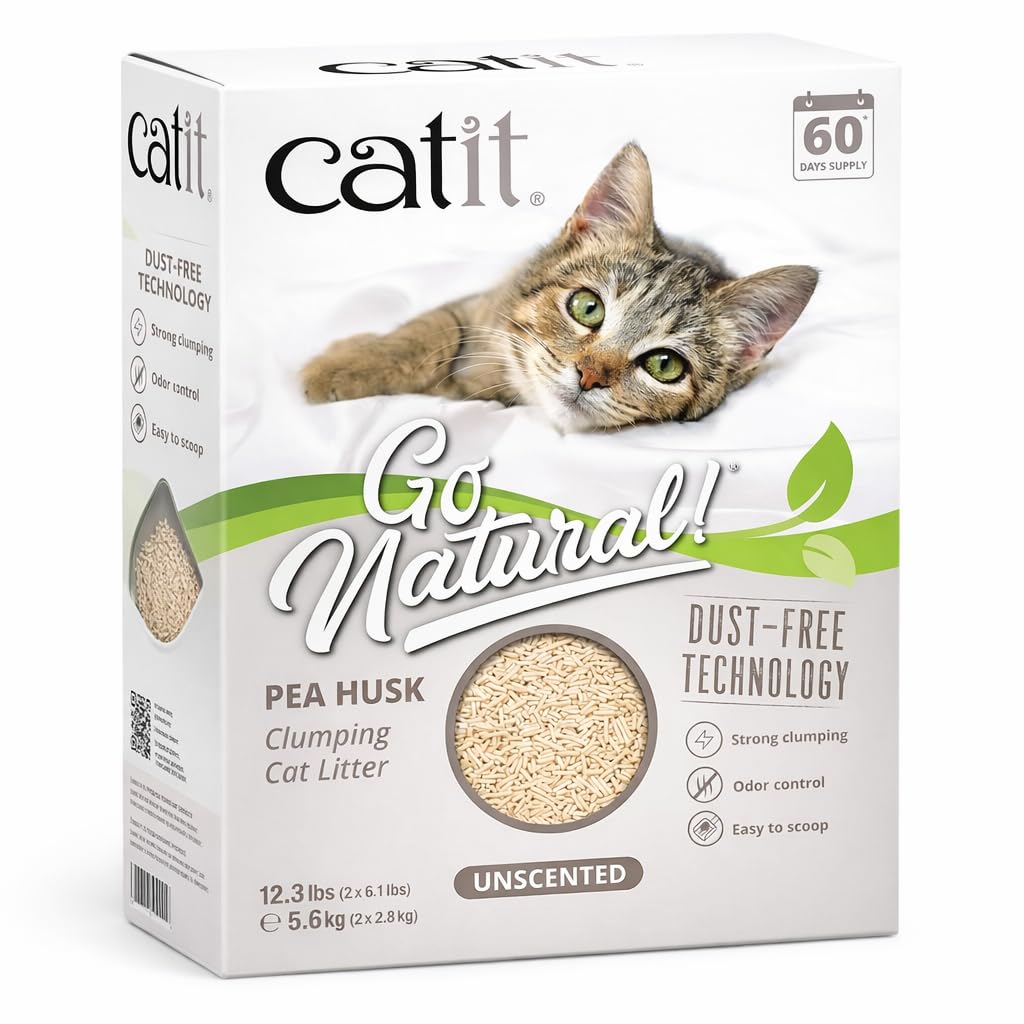
The Catit Go Natural Pea Husk litter redefines what “dust-free” means in the category. Made from recycled pea husks, corn powder, and guar gum, this plant-based formula produces zero visible dust during pouring or scooping — verified by multiple owners of asthmatic cats who report no coughing episodes after switching. The 300% moisture absorption rate means ammonia is locked inside the pellet rather than released into the air, and the clumps hold together like putty without crumbling into fines.
At 12.3 lbs, the bag weighs roughly half of a comparable clay option, making it much easier for asthmatic caregivers to lift and pour without triggering their own breathing issues. The soft pellet texture is paw-friendly and produces very little scatter — owners describe the tracking as “rice-sized pieces” that stay mostly on the mat. The flushable nature also means no dusty bag disposal trips that could stir up dust inside the home.
The main trade-off is cost: for multi-cat homes, the 60-day supply claim is realistic only for single cats; expect closer to 30 days with two felines. Some users report that the gum-like clumps can stick to the scooper, requiring a firm tap to release. Still, for an asthmatic-sensitive household, the combination of zero airborne particulates, no synthetic fragrance, and strong odor elimination makes this the top pick.
Why we love it
- Zero visible dust during pour and scoop
- Unscented with no chemical masking agents
- Flushable and biodegradable for easy disposal
Good to know
- Clumps can stick to the scooper even when firm
- Bag size runs out faster than clay for 2+ cats
2. KOCHO Hinoki Wood Cat Litter

KOCHO delivers an ultra-lightweight Hinoki cypress wood litter that weighs roughly 4x less than standard clay — a 3.4 lb bag feels like carrying a loaf of bread. The natural hinoki scent is the key differentiator: instead of synthetic perfume, the litter uses the wood’s own aromatic oils to suppress ammonia odors. Asthmatic owners consistently report that the fresh cypress smell does not irritate airway passages the way scented clay litters do.
The pellet form is 99% dust-free, producing no cloud when pouring. However, the larger pellet size makes scooping more challenging — the pieces are similar to small wood chips, and clumps form loosely rather than bonding tightly. Owners of long-haired cats report that the pellets stick to fur and track through the house. Mixing with a tofu-based litter (like the Catit) is a popular workaround to improve clump integrity while retaining the natural wood scent.
The value proposition is the biggest sticking point: at 3.4 lbs, a single bag lasts roughly one month for one cat. For multi-cat homes, the cost per use is significantly higher than any other option on this list. The lightweight benefit is real for asthmatic caregivers who struggle with heavy bags, but the frequency of repurchase should be factored into your decision. The hinoki scent also fades after a few days of use, so odor control requires timely scooping.
Why we love it
- Natural hinoki wood scent, no synthetic fragrances
- Extremely lightweight — 4x lighter than clay
- Minimal airborne dust during handling
Good to know
- 3.4 lb bag requires frequent repurchase
- Pellet size makes scooping loose clumps difficult
3. Feline Pine Platinum Non-Clumping Cat Litter
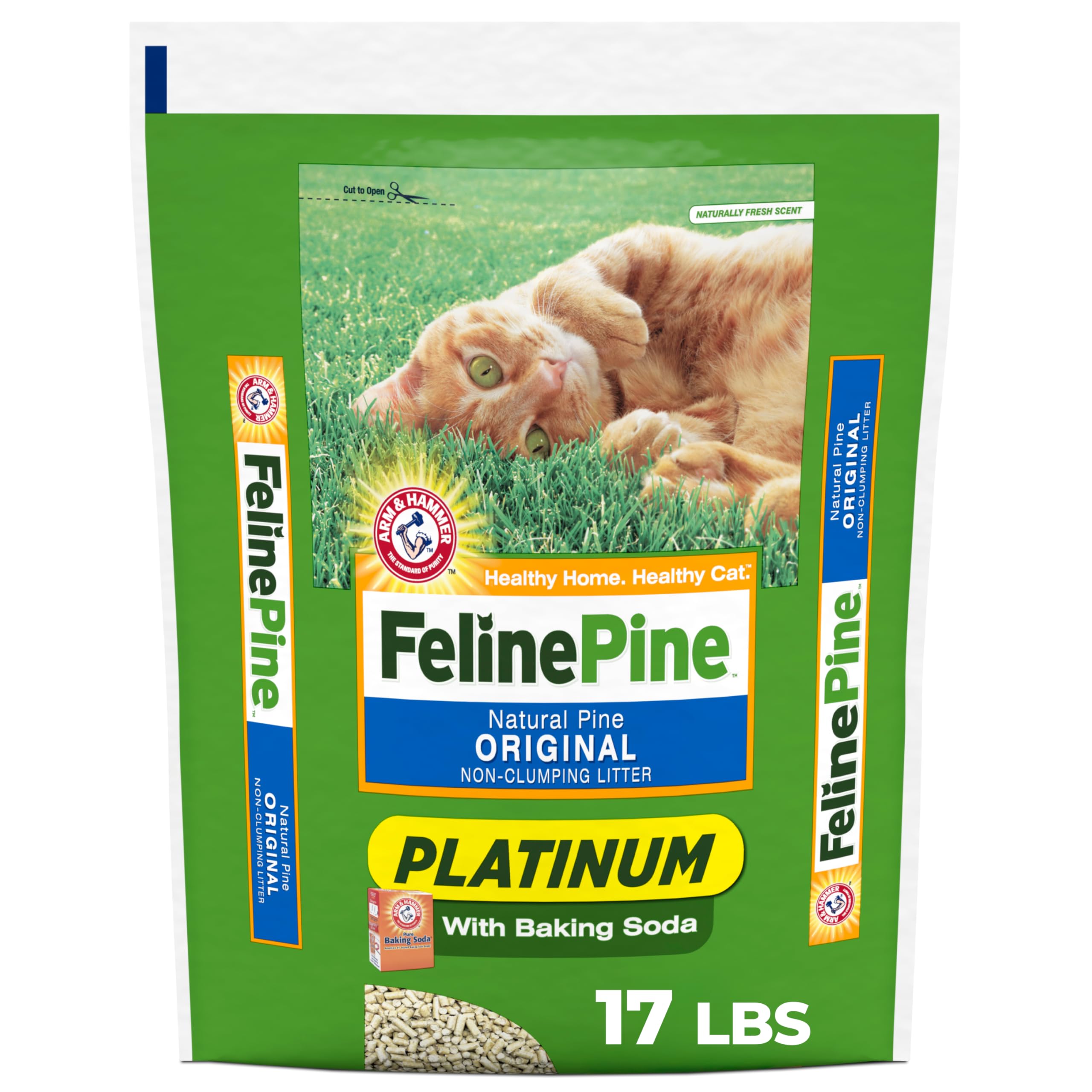
Feline Pine Platinum is a non-clumping wood pellet litter that uses reclaimed pine shavings augmented with ARM & HAMMER Baking Soda for extra ammonia neutralization. The pellet structure produces almost zero airborne dust — the pine fibers lock liquid into the pellet core, causing it to break down into sawdust rather than fine powder. Multiple owners of senior cats with arthritis report this is the only litter that keeps both the cat and the owner breathing comfortably in a small apartment.
The non-clumping mechanics mean urine is absorbed into the pellet until it saturates and falls apart into dry sawdust. The sawdust sits at the bottom of the pan and does not become airborne during scooping because it is trapped under intact pellets. Weekly full changes with a mid-week sawdust sift keep odor minimal without any chemical fragrances. The 17 lb box is lightweight enough for easy handling but still offers a respectable per-use cost.
The key limitation is poop scooping: you must remove solid waste manually without the benefit of urine clumps holding it in place. Some owners find the sawdust sifting process takes longer than standard scooping. The pine smell is noticeable when fresh but fades quickly. For asthmatic households on a budget, this is the most cost-effective way to eliminate silica dust from the home environment.
Why we love it
- No silica dust — natural pine fiber composition
- Baking Soda additive for ammonia control
- Lightweight and affordable for the volume
Good to know
- Non-clumping requires sawdust sifting routine
- Poop odor less contained than clumping litters
4. Purina Tidy Cats Performance Plus Low Tracking Unscented
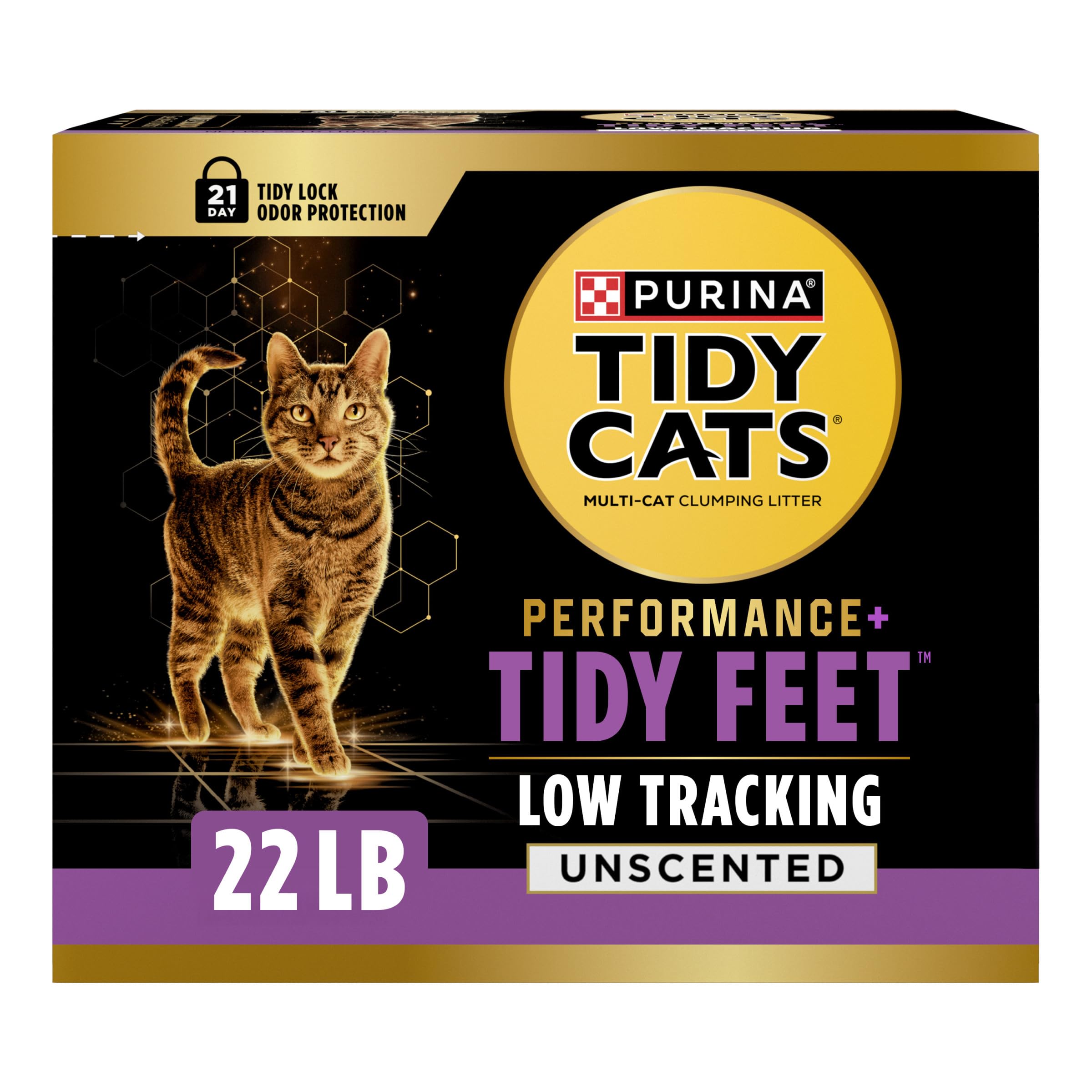
For asthmatic owners who feel stuck with clay litter but need a lower-dust alternative, this Purina Tidy Cats variant in the unscented formulation is the best bridge option. The “Tidy Feet” particle blend is engineered to minimize tracking — 64% less scatter compared to the leading clay clumping litter — which means fewer crushed granules on the floor that could become airborne. The 99.9% less-dust claim is genuine relative to standard clay, though it does not reach the zero-dust standard of plant-based options.
The unscented version eliminates the fragrance chemicals that can trigger asthma attacks, though the clay itself still contains trace silica. Owners report tight clumps that hold shape during scooping and reliable 21-day odor control for single cats. The 22 lb box is heavy but typical for clay. Multi-cat households find the low-tracking benefit keeps the surrounding area significantly cleaner than traditional clay litter.
The trade-off is that “less dust” is not “no dust.” During pouring, a faint haze can still be observed, and asthmatic users may want to wear a mask during refills. The clay composition also means disposal bags are heavy and can kick up dust when thrown into an outdoor bin. For those not ready to switch to plant-based, this is the safest clay option.
Why we love it
- Unscented formula avoids fragrance irritants
- 64% less tracking keeps floors cleaner
- Tight clumps with strong odor control
Good to know
- Still contains silica — not zero-dust
- 22 lb bag heavy for asthmatic caregivers
5. Purina Tidy Cats Clumping Cat Litter 24/7 Performance Multi Cat

This 38 lb bulk box is the highest-volume option and the most cost-effective per pound, but it is also the least suitable for asthma-sensitive households. The “Clean Linen” scent is a synthetic fragrance that produces noticeable VOCs — multiple owners note the scent is “not too overpowering,” but for asthmatic individuals, any added fragrance carries risk. The low-dust claim is relative to standard clay, but the formula still produces a visible haze when pouring the 38 lb bag.
The clumping performance is excellent: tight, large clumps that do not break apart during scooping, with 10-day guaranteed odor control that holds up even in multi-cat automatic litter boxes. The 38 lb weight means the bag is extremely heavy, which itself can be a breathing risk for asthmatic caregivers who may struggle with lifting. Some owners use a small pot to scoop litter directly from the bag to avoid lifting the whole box.
For asthmatic households, this product serves only if the asthmatic individual is not the one handling the litter and the box is in a well-ventilated area away from living spaces. The fragrance and dust load make it a tertiary option behind the unscented Tidy Cats and the plant-based alternatives. If budget is the sole constraint and another household member handles litter duty, the clumping quality and bulk value are undeniable.
Why we love it
- Best cost-per-pound value in the list
- Strong clumps that hold shape in auto boxes
- Proven 10-day odor control in multi-cat homes
Good to know
- Fragrance may trigger asthma symptoms
- 38 lb bag is very heavy and produces dust during pour
FAQ
Is any clay litter truly safe for asthma?
How often should I change the litter for asthma safety?
Does scented litter always trigger asthma?
Final Thoughts: The Verdict
For most asthmatic households, the cat litter for asthma winner is the Catit Go Natural Pea Husk Clumping Litter because it delivers genuine zero-dust performance with effective clumping and no synthetic fragrance. If you prefer the natural wood aroma and ultra-lightweight handling, grab the KOCHO Hinoki Wood Litter. And for budget-conscious owners wanting to eliminate silica entirely, nothing beats the Feline Pine Platinum for cost-effective pine-based odor control.