
A declawed cat’s paws are permanently sensitive. The wrong litter — sharp clay crystals, coarse granules, or heavy clumps that stick — can turn every trip to the box into a painful ordeal. Choosing a formula that prioritizes soft texture, low dust, and gentle clumping isn’t a luxury; it’s a necessity for your cat’s comfort and long-term litter box habits.
I’m Mo Mahin — the founder and writer behind Furric. I’ve spent years cross-referencing veterinary guidance with thousands of verified owner experiences to pinpoint exactly which litter textures, particle sizes, and absorption mechanisms work best for cats recovering from declaw surgery or living with permanently tender paws.
This guide breaks down the five most reliable options on the market right now. Whether you need a dust-free crystal formula, a lightweight grass seed alternative, or a flushable plant-based pellet, here is everything you need to pick the best cat litter for declawed cats without second-guessing a single scoop.
How To Choose The Best Cat Litter For Declawed Cats
Declawed cats lack the first knuckle of each toe, so their paw pads bear weight differently. Litter that feels fine to a clawed cat can feel like walking on glass shards to a declawed one. You need to evaluate three specific factors: texture softness, dust level, and clump structure.
Particle Texture and Size
The ideal particle is small enough to feel smooth under a paw pad but large enough that it doesn’t become a fine, irritating powder. Fine silica gel crystals (around 1–2 mm) are often the gentlest option because they lack the sharp, angular edges of crushed clay. Plant-based pellets made from tofu, corn, or soft wood fibers can also work, provided the pellet surface is rounded and not splintery. Avoid any litter labeled as “crystal” that uses coarse, jagged silica chunks — those can cause paw pad abrasion over time.
Dust Levels and Respiratory Health
Declawed cats often dig more frantically or shift their weight differently, kicking up more dust than a clawed cat. A litter labeled “99.9% dust-free” isn’t just a marketing claim — it’s a real health factor. Excessive clay dust can irritate both your cat’s lungs and the sensitive tissue between their paw pads. Grass seed and tofu litters typically produce the lowest airborne particles, followed by premium silica gel. Standard clumping clay, even low-dust versions, still generates measurable dust during pouring and scooping.
Clump Stickiness and Box Cleanliness
For declawed cats, clumps that stick to the bottom of the box force them to scrape harder to cover their waste — a motion that can be painful on tender paws. A litter that forms a tight, non-stick clump that lifts cleanly from the box is critical. Look for “ClumpLock” or “non-stick” technologies in clay litters, or switch to a clumping plant-based litter that releases cleanly from plastic surfaces. Silica gel litters that don’t clump urine require full box changes every 2–3 weeks but eliminate the scraping problem entirely.
Quick Comparison
On smaller screens, swipe sideways to see the full table.
| Model | Category | Best For | Key Spec | Amazon |
|---|---|---|---|---|
| Dr. Elsey’s Precious Cat Senior Litter | Premium | Ultra-soft paw protection | Fine 1mm silica gel crystals | Amazon |
| Fresh Step Heavy Duty Odor Block | Mid-Range | Budget-friendly clumping | ClumpLock technology | Amazon |
| So Phresh Grass Seed Litter | Mid-Range | Natural dust-free option | 100% USA farmed grass seed | Amazon |
| VETRESKA Tofu Cat Litter | Premium | Flushable eco-friendly | 5-second clumping time | Amazon |
| Catalyst Natural Soft Wood Litter | Premium | Long-lasting value | Upcycled soft wood fiber | Amazon |
In‑Depth Reviews
1. Dr. Elsey’s Precious Cat Senior Litter
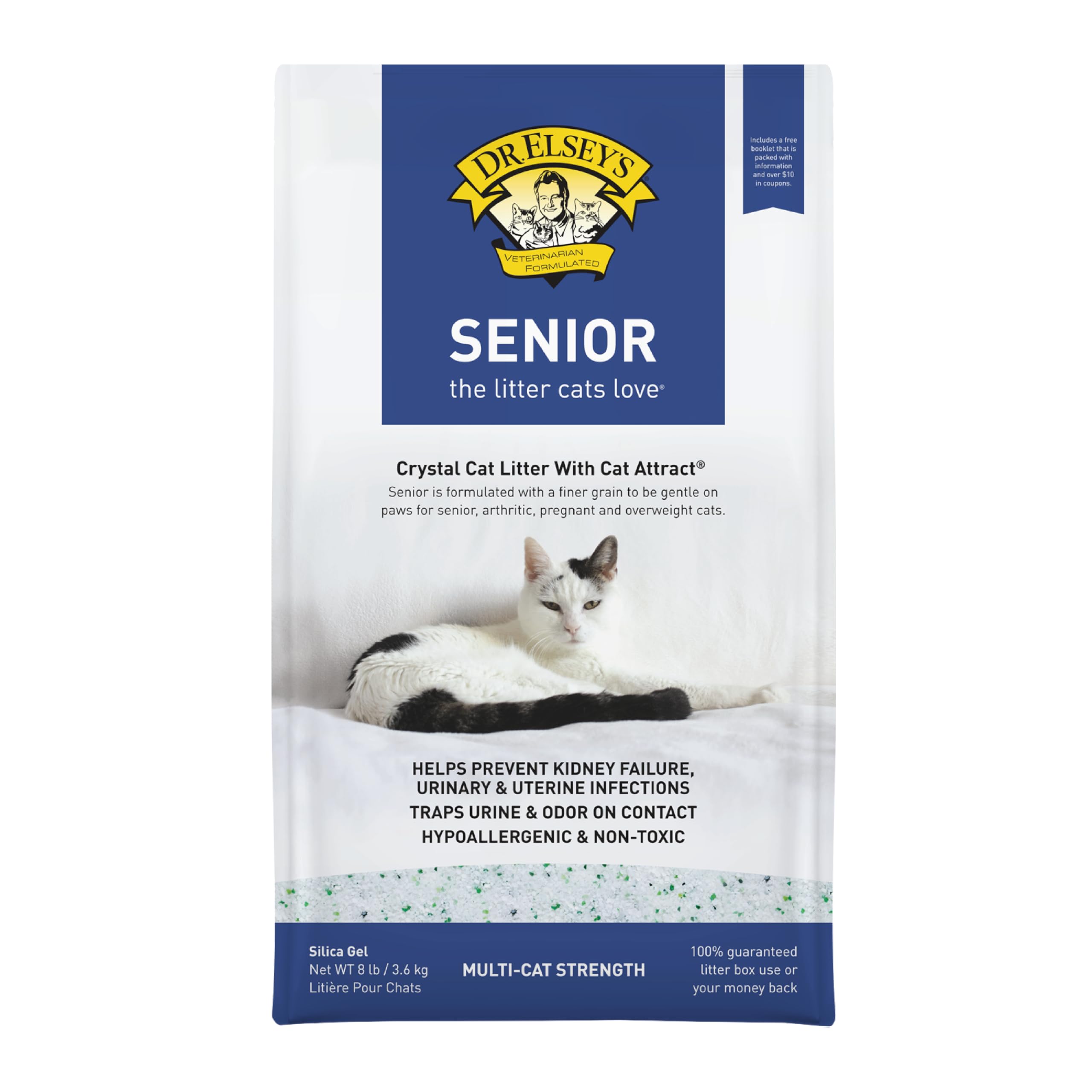
Dr. Elsey’s Senior Litter uses amorphous silica gel crystals that measure roughly 1 mm in diameter — substantially finer than standard crystal litters. This small particle size creates a surface that feels almost like fine sand under a paw, which matters immensely for declawed cats who transfer full body weight onto raw toe pads. The formula is also hypoallergenic and contains a hydrolyzed herbal attractant that encourages use, a practical feature when a cat is reluctant to step into the box post-surgery.
The biggest trade-off is that this is a non-clumping formula. Urine is absorbed into the crystals and cannot be scooped out, so the entire box must be dumped every 2 to 3 weeks for a single cat. Owners of multiple cats report replacing the box every 10 to 14 days. The upside: there is no scraping required, no stuck clumps to work loose, and the crystals dehydrate feces on contact, which controls odor effectively between full changes.
Some reviewers note that the fine crystals can produce a noticeable dust cloud when poured fresh from the bag, contradicting the “low dust” claim. However, once settled, ongoing dust generation during daily use is minimal. The tracking is less severe than with clumping clay, though the tiny crystals can embed in a cat’s paw fur and get carried onto furniture. Overall, this is the gentlest texture available for a declawed cat’s most sensitive days.
Why we love it
- Extremely fine crystals are the softest texture on this list
- Hydrolyzed herbal attractant helps reluctant cats use the box
- No clumps to scrape — reduces paw strain during cleanup
Good to know
- Non-clumping formula requires full box replacement every 2–3 weeks
- Noticeable dust when pouring from the bag
- Fine crystals can get caught in paw fur and tracked out of the box
2. Fresh Step Heavy Duty Odor Block Advanced Multi Cat Clumping Litter
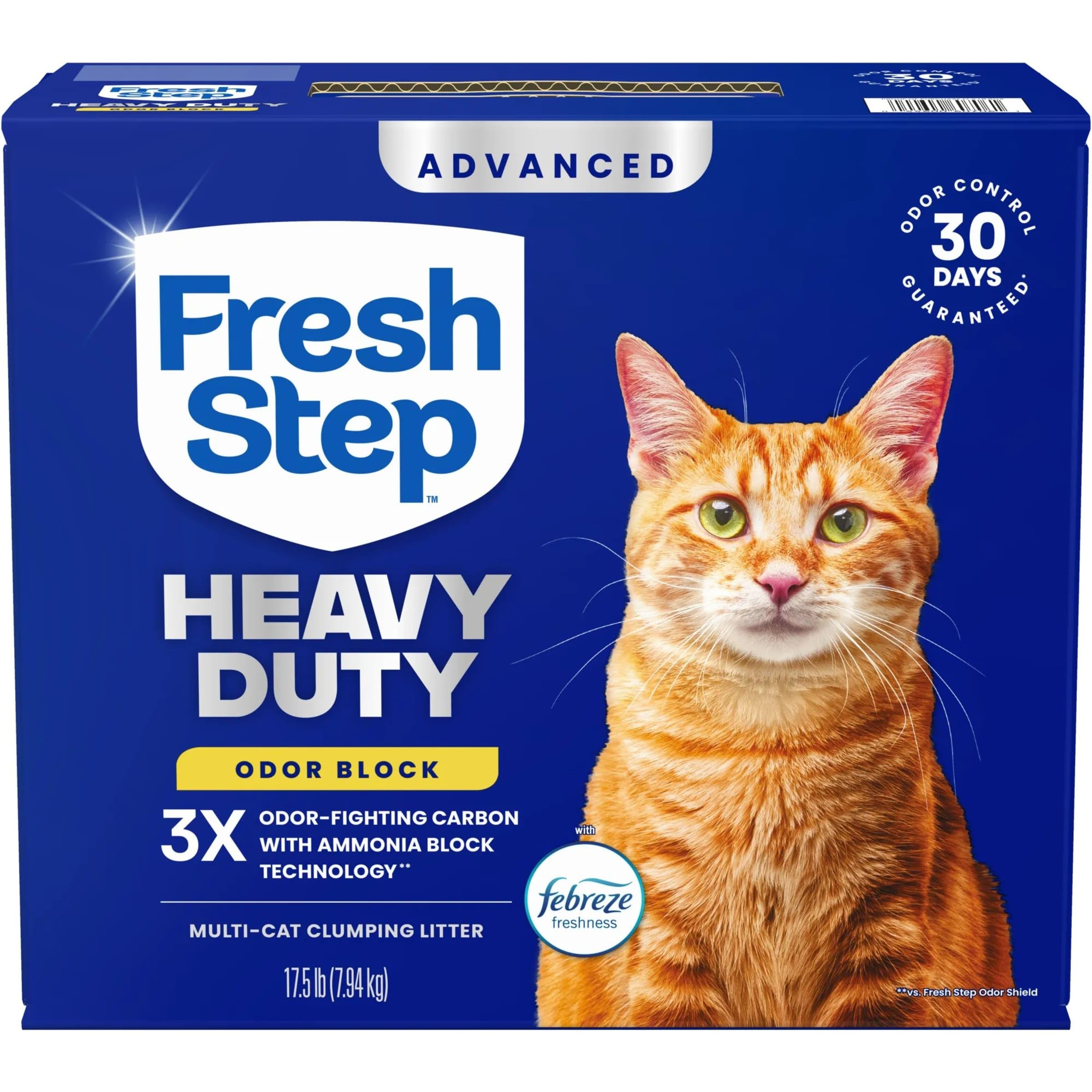
Fresh Step’s Heavy Duty formula uses natural clay blended with black carbon granules and Febreze scent to attack odors from multiple angles. The ClumpLock technology creates tight clumps around liquid that hold together during scooping without crumbling into smaller pieces that require extra digging. For a declawed cat, this means you can remove waste in one clean motion instead of scraping the box floor repeatedly, which reduces the time the cat’s paws are exposed to litter box activity.
The carbon-infused formula is marketed as offering 30 days of odor control, and owners of multiple cats consistently confirm that the odor-fighting ability outperforms standard clay litters. The scent from the Febreze addition is noticeable — some owners describe it as “fresh linen” — but it does not seem to deter cats from using the box. The low-dust label is legitimate relative to standard clay litter, but it is not as dust-free as grass seed or tofu alternatives.
Tracking is a common complaint with this product. Several reviewers report finding litter on their bed and around the house, which suggests the granules are small enough to cling to paw pads. For a declawed cat, lighter tracking is a direct benefit — it means the litter is less likely to cause discomfort while walking away from the box. However, you will want a good litter mat to catch the stray granules. The 17.5-lb box provides solid value for multi-cat households on a budget.
Why we love it
- ClumpLock prevents crumbling — one-scoop removal reduces paw irritation
- Carbon and Febreze deliver excellent multi-day odor control
- Low-dust formula keeps airborne particles manageable
Good to know
- Tracking is noticeable — litter gets carried throughout the house
- Febreze scent may be too strong for some cats’ noses
- Heavier than plant-based alternatives — 17.5 lbs per box
3. So Phresh Extreme Clumping Unscented Grass Seed Cat Litter
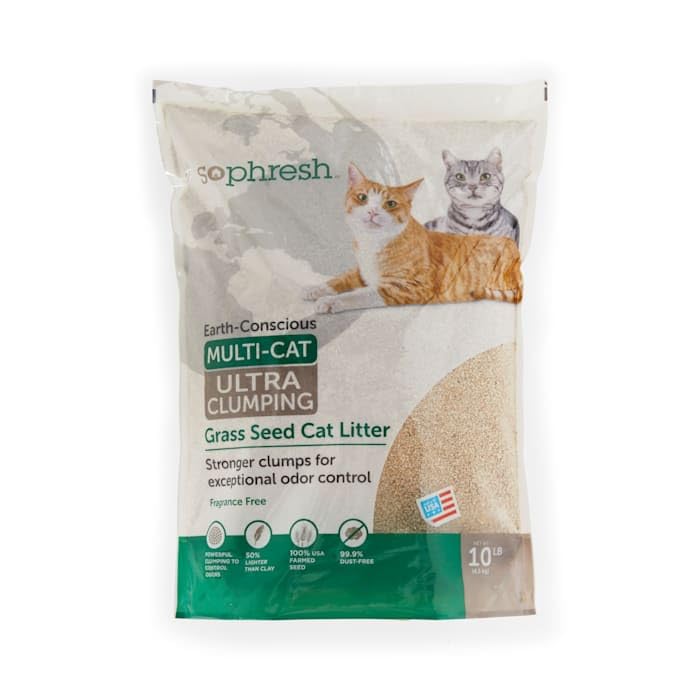
So Phresh’s grass seed litter is a standout for owners who prioritize dust-free air quality above everything else. The 99.9% dust-free claim holds up in practice — multiple long-term reviewers with respiratory sensitivities confirm that opening and pouring this litter generates near-zero airborne particles. For a declawed cat that breathes closer to the litter surface while digging, this dramatically reduces the risk of inhaling irritants that could trigger sneezing or discomfort.
The clumping action is described by owners as “cement-like” — tight, solid clumps that do not crumble or leave residue behind. This is critical for declawed cats because it means no scraping or scrubbing of the box bottom is required. The litter is also 50% lighter than clay by weight, which makes pouring and carrying much easier on your back. The unscented formula eliminates the risk of fragrance aversion, which is common among sensitive cats.
Tracking is the primary downside. The lightweight granules adhere to paws and fur easily, and several owners note that the litter spreads beyond the box area. Additionally, some cats with grass allergies may react negatively to the seed material, though this is rare. The 10-lb bag lasts roughly one month for a single cat with daily scooping, making it competitive with premium clay on a per-use cost basis. Compostable for non-food use, it is also the most environmentally friendly option here.
Why we love it
- Virtually zero airborne dust — best in class for respiratory health
- Forms rock-solid clumps that lift cleanly without scraping
- 50% lighter than clay — easier to handle and pour
Good to know
- Lightweight granules track noticeably beyond the box area
- May trigger grass allergies in sensitive cats
- 10-lb bag is small — may require more frequent repurchasing
4. VETRESKA Tofu Cat Litter

VETRESKA’s tofu litter is made from peas and cornstarch, formed into rounded pellets that are surprisingly soft underfoot. The brand claims a 5-second clumping time, and owner reviews confirm that liquid is absorbed rapidly into tight clumps that do not stick to the box walls or bottom. This non-stick behavior is a major advantage for declawed cats — there is never a need to scrape or scrub, which keeps the box interior stress-free for tender paws.
The formula is infused with natural green tea extract plus 5% deodorizing beads. Owners report that the faint green tea scent is pleasant and effective at neutralizing ammonia odors, though one reviewer with seven cats noted that uncovered waste still created smell issues if the box wasn’t topped up regularly. The pellets are flushable (in small amounts), which simplifies disposal and reduces the frequency of touching the litter directly.
One important compatibility issue: the pellets measure roughly 5–6 mm in diameter, which is too large for the sifting mechanisms in automatic litter boxes like the Litter Robot 4. If you use an auto-scooper, this litter will not pass through the sieve properly. For standard manual scooping, it works beautifully. The vacuum-sealed packaging compresses the litter into a brick-like block — you need to let it expand with air for a few minutes before use. Two 5.5-lb bags last roughly one month for a single cat, but the per-bag cost is higher than most clay alternatives.
Why we love it
- Rounded pellets are soft on sensitive paws and do not stick to the box
- Flushable — easy disposal without touching the litter
- Green tea scent provides gentle, natural odor control
Good to know
- Pellet size is incompatible with automatic litter box sifters
- Higher per-use cost than clumping clay or grass seed
- Uncovered waste may still produce odors between scoopings
5. Catalyst Natural Soft Wood Cat Litter
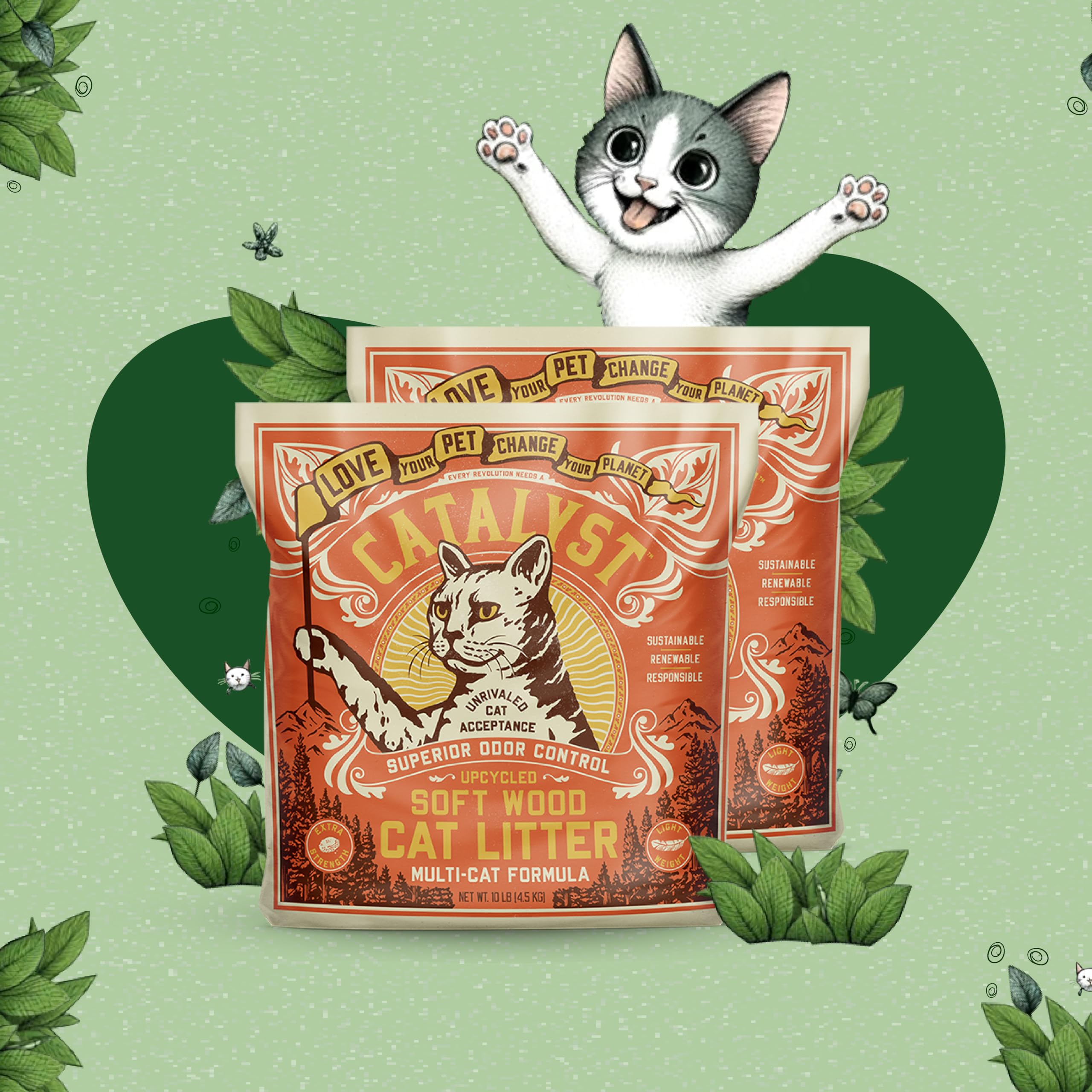
Catalyst uses upcycled soft wood fiber — essentially clean, unused sawdust from lumber production — processed into a granular form that is noticeably softer than standard pine pellet litter. The wood fibers are not compressed into hard pellets; instead, they create a fluffy, almost sawdust-like texture that declawed cats tend to accept quickly. Owners report that cats that previously avoided the box due to pain began using it normally after switching to Catalyst.
The odor control comes from the natural pine aroma rather than added fragrances, and reviewers consistently note that the box stays fresh for 2–3 weeks with daily scooping. Clumping is good — the fibers bind together tightly around liquid — but not as rock-solid as clay or grass seed alternatives. Some owners mention that clay still produces firmer clumps, but the trade-off is worth it for the softer paw feel. The litter is also lightweight: one 10-lb bag lasts roughly one month per cat, and the two-pack covers two months.
Dust levels are low but not zero. Several long-term users describe the dust as “minimal” and note that whatever dust does form is much easier to clean than clay dust — it doesn’t leave the same grey film on surfaces. Tracking is also reported as minimal compared to clay or grass seed. The biggest advantage is cost per use: Catalyst claims about six cents per use, which undercuts most premium litters. For a declawed cat that needs a soft, natural texture, this is a strong everyday option.
Why we love it
- Soft, fluffy wood fiber texture is gentle on sensitive paw pads
- Lasts 2–3 weeks between full changes with daily scooping
- Low cost per use — comparable to budget clay litters
Good to know
- Clumps are not as hard as clay — may break apart if scooped too aggressively
- Natural pine scent may not appeal to all cats
- Not suitable for automatic sifting litter boxes
FAQ
Can I use clumping clay litter for my recently declawed cat?
How deep should the litter be for a declawed cat?
What particle size is best for declawed cat paws?
Is flushable tofu litter safe for declawed cats?
Final Thoughts: The Verdict
For most caregivers of declawed cats, the best cat litter for declawed cats is the Dr. Elsey’s Precious Cat Senior Litter because its ultra-fine silica gel crystals provide the softest paw-feel on the market while eliminating the need to scrape stuck clumps. If you want a lightweight, near-zero dust option, grab the So Phresh Grass Seed Litter. And for eco-conscious owners who need a flushable, non-stick formula, nothing beats the VETRESKA Tofu Cat Litter.