
Watching your senior dog bump into furniture or struggle to find their food bowl is heartbreaking. Canine cataracts cloud the lens, progressively stealing their vision and confidence, but targeted nutritional and topical support can slow the process and maintain comfort. The market is flooded with options, so knowing which actually deliver measurable ingredients matters more than flashy packaging.
I’m Mo Mahin — the founder and writer behind Furric. I specialize in analyzing veterinary ophthalmology research, comparing active ingredient concentrations, and cross-referencing hundreds of verified owner reports to separate genuine cataract support from empty promises.
After weeks of sifting through data, I’ve identified the five most effective formulations on the market today. This guide delivers my complete breakdown of the best cataract eye drops for dogs based on real ingredient science and owner-verified results.
How To Choose The Best Cataract Eye Drops For Dogs
Not all eye drops marketed for canine cataracts work the same way. Some are purely lubricating, while others contain active compounds like lanosterol or N-Acetylcysteine (NAC) that target the lens directly. Understanding the difference prevents wasted money and gives your dog the best shot at preserving vision.
Lanosterol and NAC — The Power Pair
Lanosterol is a naturally occurring sterol that has shown promise in reducing lens opacity by preventing protein clumping — the root cause of cataract formation. NAC is a potent antioxidant that breaks down disulfide bonds in cataractous lenses and fights oxidative stress. A formula containing both compounds offers the most targeted therapeutic potential.
Preservative Check — BAK vs. Preservative-Free
Benzalkonium chloride (BAK) is a common preservative in multi-dose eye drops, but it is cytotoxic to corneal epithelial cells. For long-term daily use on a senior dog’s sensitive eyes, preservative-free formulations or drops using safer preservatives minimize the risk of compounding irritation.
Oral Support vs. Topical Drops
Topical drops deliver active ingredients directly to the cornea and lens, making them the first line of defense. Oral supplements containing lutein, zeaxanthin, omega-3 fatty acids, and grape seed extract build systemic antioxidant reserves that support retinal health and reduce inflammation. A combined approach — drops plus chews or gelcaps — yields the best overall outcome for dogs with early to moderate cataracts.
Quick Comparison
On smaller screens, swipe sideways to see the full table.
| Model | Category | Best For | Key Spec | Amazon |
|---|---|---|---|---|
| NOVEHA Advanced Lanosterol + NAC | Topical Drops | Cataract intervention | Lanosterol + NAC dual formula | Amazon |
| Ocu-GLO Vision for Small Dogs | Oral Gelcap | Daily antioxidant defense | 12 antioxidants + lutein + grape seed | Amazon |
| NOVEHA Pet Gel with Hyaluronan | Topical Gel | Severe dry eye + discomfort | 0.3% Viscoadaptive Hyaluronan | Amazon |
| Clear Vision Eye Vitamins Chews | Soft Chew | Senior dogs with cloudy eyes | Lutein 4% + Lycopene 5% + DHA 40% | Amazon |
| Nutridog Eye Supplement Soft Chews | Soft Chew | Multi-dog households on a budget | 120 ct + DHA + Bilberry + Lutein | Amazon |
In‑Depth Reviews
1. NOVEHA Advanced Lanosterol Solution + NAC (2 x 10 mL)

This is the only topical drop in this roundup combining both lanosterol and NAC — the two compounds most frequently cited in veterinary ophthalmology research for directly addressing lens opacification. The 10 mL twin-pack offers a full two-month course at the standard 2–3 drops per eye, twice daily. Owners report noticeable reductions in haziness after approximately two weeks of consistent use, particularly in senior dogs presenting with nuclear sclerosis or early cataracts.
The NAC component provides robust antioxidant activity that targets oxidative stress within the lens, while lanosterol works on protein aggregation. Customer feedback shows clear improvement in eye brightness and reduced bloodshot appearance, though advanced cataracts see no reversal — only slowed progression. The formula is gentle enough that most dogs tolerate application without stinging, a common complaint with lesser lubricants.
The primary concern is the inclusion of benzalkonium chloride (BAK) as a preservative. A subset of users with chemically sensitive dogs reported avoiding the product despite its efficacy. For short-term therapeutic use, the risk is minimal, but owners planning lifelong daily application should weigh this factor carefully and consult their veterinarian.
Why we love it
- Dual active ingredients (lanosterol + NAC) target cataract pathways directly
- Visible reduction in haziness reported within two weeks by multiple owners
- Generous twin-pack provides value and consistent supply for multi-pet households
Good to know
- Contains BAK preservative which may irritate extremely sensitive eyes
- Drops can be difficult to administer on squirming dogs due to watery consistency
2. Ocu-GLO Vision Supplement for Small Dogs by Animal Necessity (45ct)
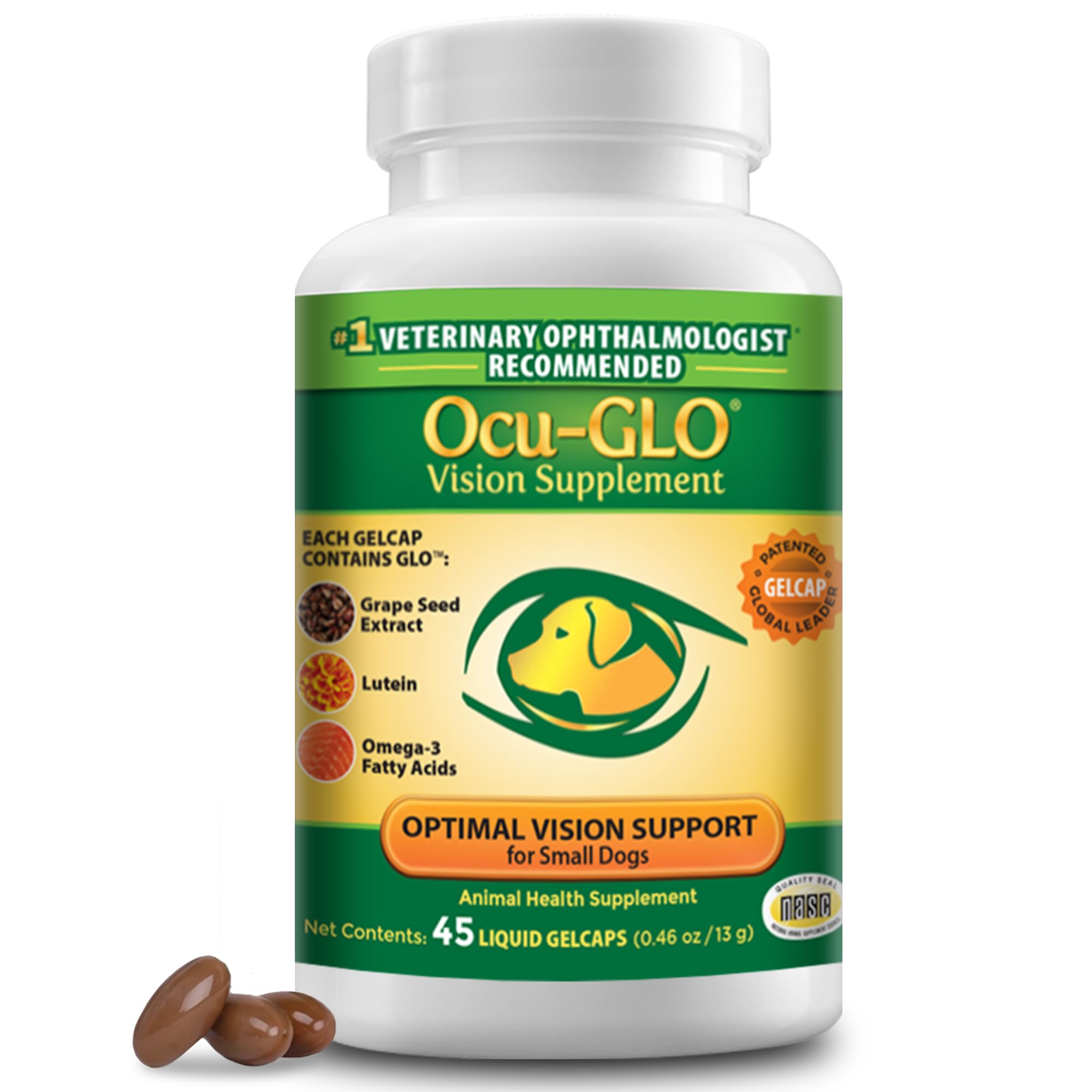
Ocu-GLO is the veterinarian-recommended gold standard in oral canine vision support. Each liquid gelcap delivers 12 antioxidants including lutein, grape seed extract, zinc, and omega-3 fatty acids — a comprehensive blend designed to combat oxidative stress throughout the entire visual system. The 45-count bottle provides a 45-day supply for small dogs under 25 lbs, making it an exact-fit solution for breeds like Chihuahuas, Yorkies, and Maltese that are prone to early cataract formation.
The liquid gelcap format is a clever workaround for picky eaters — you can administer the entire capsule or snip the tip and squeeze the oil directly onto wet food. Owners of dogs with advanced cataracts reported the grayish lens darkening back toward a healthier brown hue after a full 90-day course, with measurable improvements in spatial navigation and reduced bumping into furniture. One 15-year-old dachshund showed sufficient vision recovery that the owner could visibly see the dog tracking movement again.
The cost is higher than chewable alternatives, and the small-breed formulation limits dosing for larger dogs unless you double the quantity. But for targeted, high-potency antioxidant support backed by NASC animal eye specialists, this is the most science-driven oral option on this list.
Why we love it
- Veterinarian-formulated with 12 antioxidants — most comprehensive oral blend
- Real owner reports of cataract clearing and improved vision in senior dogs
- Liquid gelcap format allows easy mixing into food for finicky eaters
Good to know
- Premium price point compared to chewable alternatives
- Small breed sizing requires multiple capsules for dogs over 25 lbs
3. NOVEHA Pet Gel Eye Drops with 0.3% Viscoadaptive Hyaluronan (2 x 10 mL)
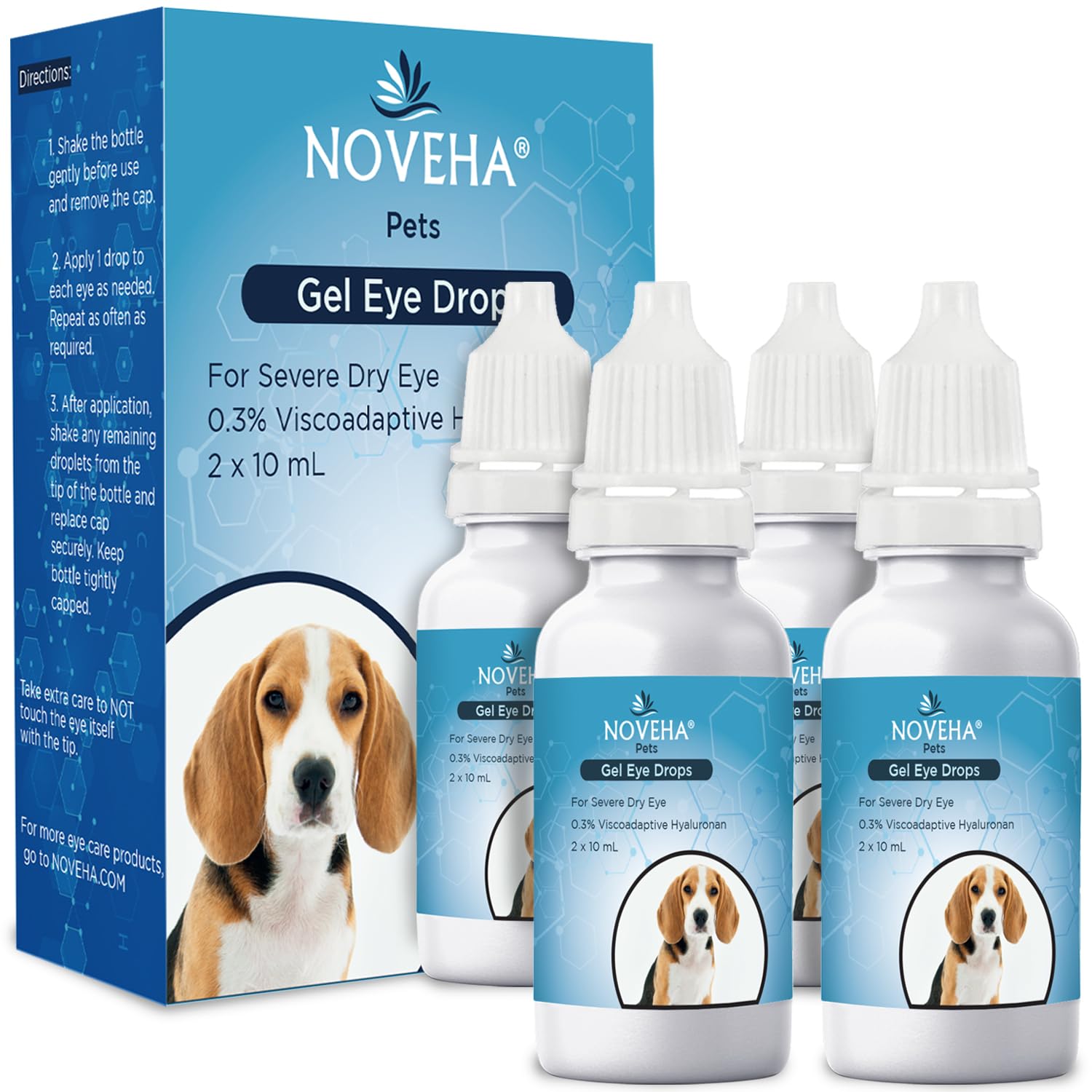
This gel-based drop from NOVEHA is engineered for maximum lubrication and tear film stabilization thanks to its 0.3% viscoadaptive hyaluronan concentration — significantly higher than standard 0.1% or 0.2% formulas. The gel activates with each blink, creating a persistent moisture barrier that lasts longer than watery drops. Owners of dogs with keratoconjunctivitis sicca (dry eye) reported that this was the only OTC product that soothed their dog’s eyes without triggering avoidance behavior.
The formula is steroid-free and antibiotic-free, relying on the natural hydrating power of hyaluronan to promote natural tear production and reduce inflammatory discharge. Multiple owners of elderly Cocker Spaniels and Chihuahuas noted a marked reduction in yellow mucous and redness after just three to four days of twice-daily application. The gel consistency also means fewer daily applications — some owners maintain comfort with just one drop per eye per day.
While this gel excels at comfort and hydration, it contains no lanosterol or NAC — meaning it does not directly address lens opacity or protein aggregation. It is best used as a complementary therapy alongside a cataract-targeting drop like the NOVEHA Lanosterol + NAC solution, or as a standalone for dogs whose primary issue is dry eye secondary to cataract development.
Why we love it
- High-concentration hyaluronan provides hours of lasting lubrication
- Dogs tolerate application well — no stinging, no running away
- Vet-recommended formula free of steroids and antibiotics
Good to know
- Does not contain active cataract-fighting ingredients like lanosterol or NAC
- Gel texture may blur vision briefly after application until the dog blinks it in
4. Clear Vision Eye Vitamins for Dogs – Soft Duck Chews (120 ct)
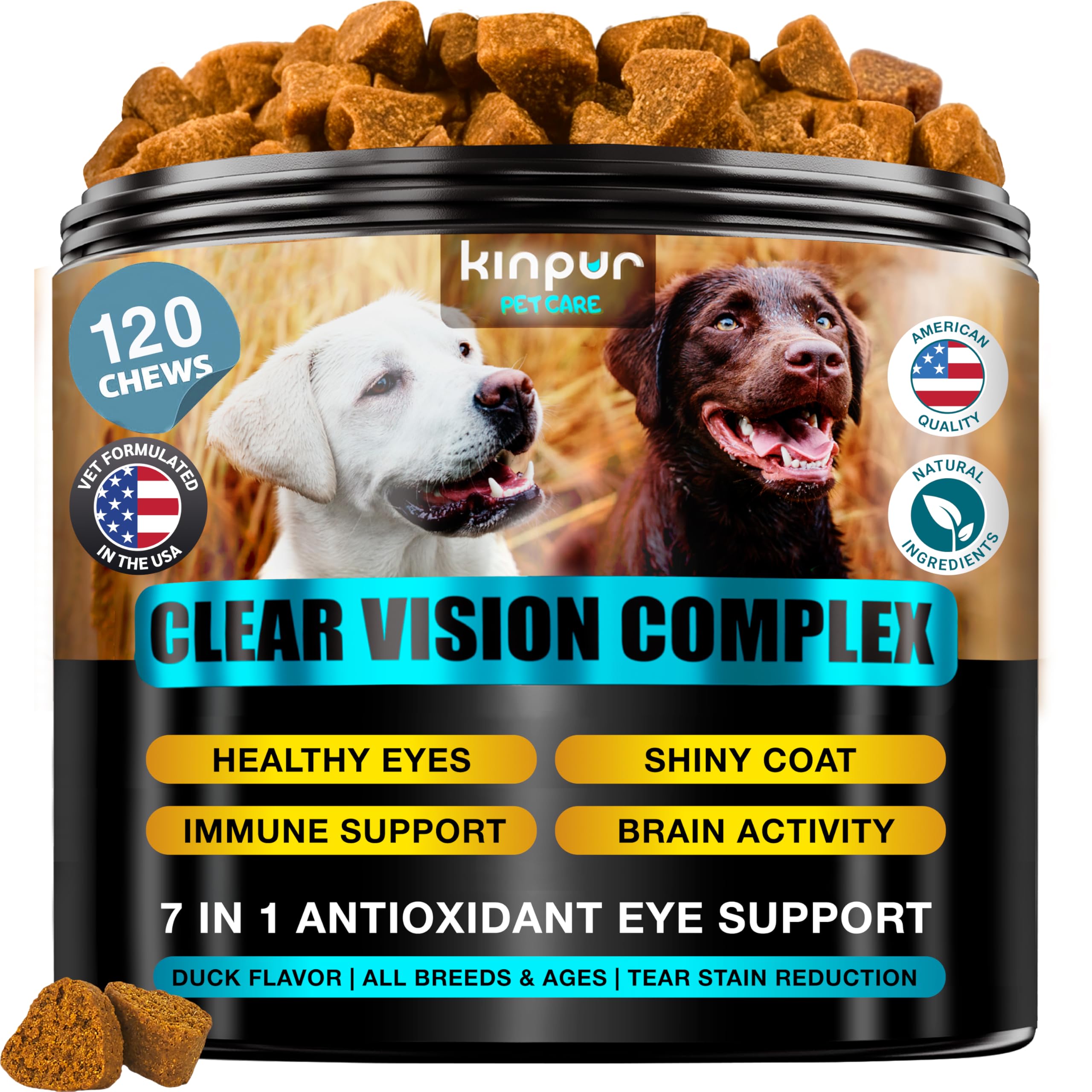
Kinpur Pet Care’s Clear Vision chews deliver a 4‑in‑1 oral support system combining 4% lutein, 5% lycopene, 40% DHA from fish oil, and beta-carotene — a well-balanced profile for senior dogs already showing cloudy eyes or tear staining. The soft duck-carrot flavor base is a genuine triumph for picky eaters; owners of toothless seniors and finicky Maltese reported the chews were accepted eagerly, eliminating the need to crush pills or hide capsules.
The product focuses on supporting natural tear production and moisture levels, which helps reduce the red-brown tear staining common in white breeds like Bichons and Shih Tzus. Owners noted a decrease in eye gunk and watery discharge after roughly four to six weeks of daily use. The chews also support joint and coat health thanks to their omega-3 content, delivering secondary benefits that make them a solid all-around senior wellness supplement.
The formula does not contain the high-concentration antioxidants found in the Ocu-GLO gelcaps, and it lacks any direct cataract-intervention compounds. For dogs already diagnosed with significant lens opacity, these chews work best as a supportive adjunct to a topical lanosterol drop rather than a standalone cataract treatment.
Why we love it
- Soft duck-chew format is readily accepted even by toothless seniors
- Reduces tear staining and eye discharge with consistent daily use
- Dual benefits for eye health, joint support, and coat shine
Good to know
- Lower antioxidant potency compared to gelcap alternatives
- Best used as a supportive supplement, not a standalone cataract treatment
5. Nutridog Eye Supplements – Salmon Soft Chews (120 ct)
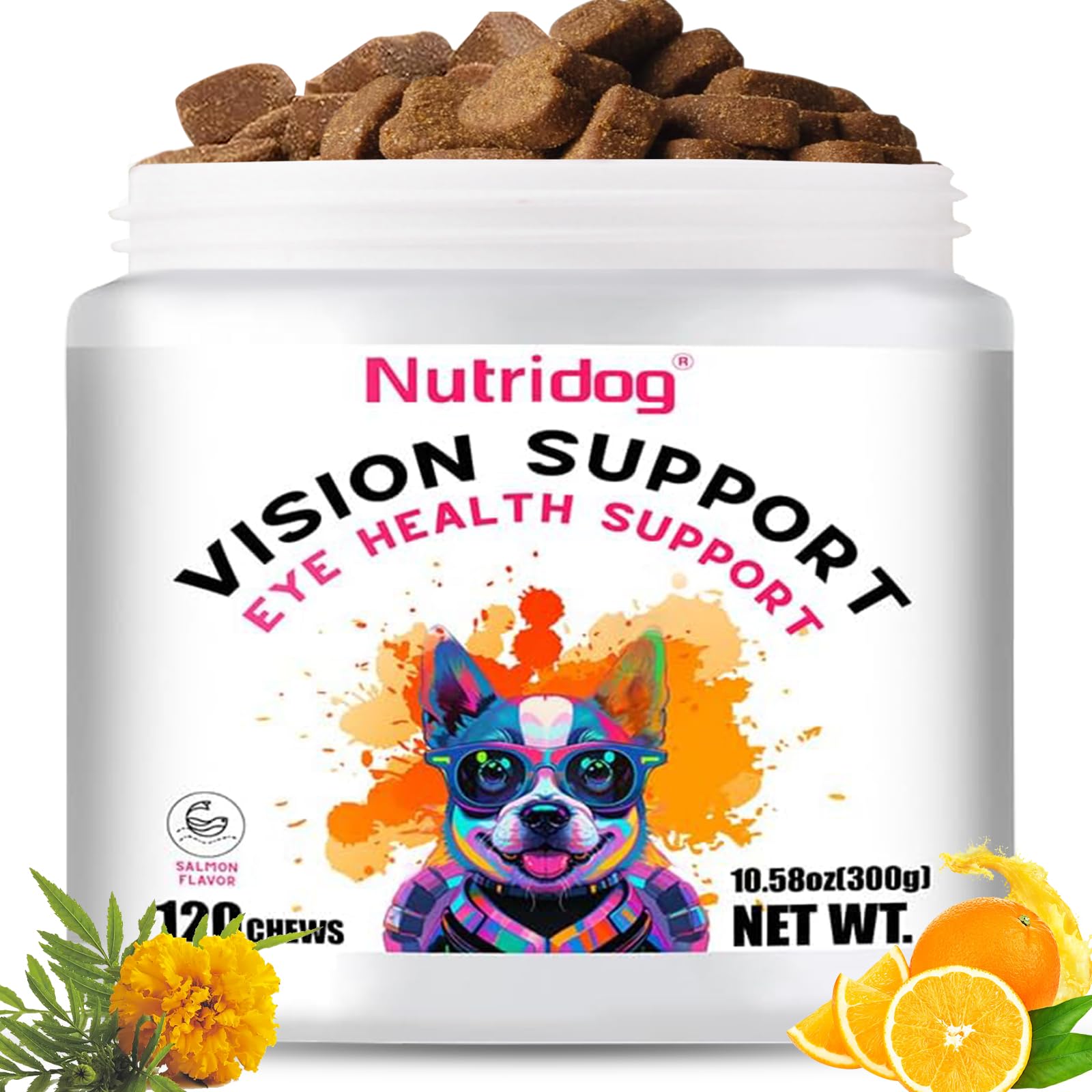
Nutridog’s 120-count soft chews offer the most servings per dollar in this roundup, making them the go-to option for multi-dog households or owners on a tighter budget who still want meaningful active ingredients. The formula packs cod liver oil, DHA from algae, bilberry extract, lutein, astaxanthin, zeaxanthin, and beta-carotene — an impressive breadth of antioxidants typically found only in pricier supplements.
Owners reported subtle but positive shifts after several weeks: less gunk accumulation around the eyes, reduced tear staining, and improved eye clarity in dogs with mild cloudiness. The salmon flavor was widely accepted across breeds, including notoriously picky Poodles and Shih Tzus. The soft texture is ideal for seniors with dental issues who struggle with hard biscuits or tablets.
The breadth of ingredients means no single compound is present at a high concentration, so this supplement best serves as a general eye wellness maintenance chew rather than an aggressive intervention for established cataracts. Owners seeking a potent cataract-specific oral therapy should consider the Ocu-GLO gelcaps instead, but for consistent daily broad-spectrum antioxidant support at a low cost-per-serving, this is a solid choice.
Why we love it
- Highest serving count in this list — ideal for multi-pet households
- Broad antioxidant profile covering lutein, zeaxanthin, and astaxanthin
- Salmon flavor and soft texture accepted by picky eaters and seniors
Good to know
- Ingredient concentration per chew is lower than targeted gelcap formulas
- Best for prevention and maintenance, not advanced cataract reversal
FAQ
Can lanosterol eye drops reverse cataracts in dogs?
How long before I see results from cataract eye drops for dogs?
Should I use topical drops alone or combine them with oral supplements?
What is the difference between nuclear sclerosis and cataracts in dogs?
Are there any side effects of using NAC or lanosterol eye drops on dogs?
Why do white dog breeds get more tear stains with cataracts?
Final Thoughts: The Verdict
For most owners seeking direct cataract intervention, the best cataract eye drops for dogs winner is the NOVEHA Advanced Lanosterol + NAC twin-pack because it is the only topical formula combining both key cataract-fighting compounds with verified owner reports of reduced haziness. If you want comprehensive oral antioxidant support, grab the Ocu-GLO Vision Supplement for Small Dogs. And for keeping a senior dog comfortable with severe dry eye alongside cataract management, nothing beats the NOVEHA Pet Gel with 0.3% Hyaluronan.