
Keeping a herd hydrated through a deep freeze or a dusty summer is the real test of a cattle waterer. A bucket that shatters, a trough that ices over, or a float that jams mid-season can turn a simple chore into an hours-long battle with ice, mud, and frozen pipes.
I’m Mo Mahin — the founder and writer behind Furric. I’ve spent years comparing the thermal efficiency of polyurethane foam insulation, the corrosion resistance of 304-grade stainless versus galvanized steel, and the real-world reliability of thermostatic heaters against gravity-fed designs across dozens of farm setups.
This guide breaks down the specific heating capacities, trough volumes, and material specs that separate a winter-ready waterer from a mid-season failure, so you can find the most reliable best cattle waterer for your operation.
How To Choose The Best Cattle Waterer
The right cattle waterer isn’t just about capacity — it’s about surviving the specific conditions of your pasture. Three factors define real performance: insulation and heating capability for winter, material resistance to zinc and ammonia corrosion from manure and urine, and trough geometry that allows easy cleaning without spooking the herd.
Heated vs. Non-Heated: Matching the Climate
If your winter lows regularly drop below 20°F, a thermostatically controlled heated waterer is non-negotiable. Look for a heater rated at least 1500 watts for a 300-gallon tank, or a fully insulated unit with an R-value of 7 per inch if you want to minimize electricity costs. Non-heated designs like the Ritchie Watermatic 100 rely on underground water temperature and foam insulation alone — they work best in milder zones or when buried below the frost line.
Material Matters: Galvanized Steel vs. HDPE vs. Stainless
Galvanized steel is the traditional workhorse — it withstands kicking, rubbing, and sun exposure for a decade or more, but eventually the galvanization wears where animals lick. High-density polyethylene (HDPE) resists impact and never rusts, but can crack in extreme cold if water freezes inside. 304-grade stainless steel costs more upfront but eliminates corrosion entirely, making it the best choice for automated waterers that stay hooked up year-round.
Tank Volume and Herd Size
An adult cow drinks 10 to 12 gallons per day. A waterer with a 2.8-gallon basin like the Ritchie Watermatic 100 is suited for individual pens or small groups — expect the valve to cycle frequently with heavy traffic. A 16-gallon heated bucket like the API handles a handful of animals but requires manual refills. For a herd of 20 or more, a plumbed automatic model with a 28-liter stainless trough and continuous refill beats any bucket system on labor alone.
Quick Comparison
On smaller screens, swipe sideways to see the full table.
| Model | Category | Best For | Key Spec | Amazon |
|---|---|---|---|---|
| Ritchie Omni Fount 2 | Heated/Premium | Large herds in extreme cold | R-7 foam insulation, 1500W heater | Amazon |
| Brower MK32E | Heated/Super Insulated | High-efficiency heated trough | Double trough, R-7.14/in foam | Amazon |
| Brower MC32E | Heated/Hog-Focused | Fence-line watering, 150 hogs | Galvanized steel, mud grates | Amazon |
| Ritchie Watermatic 100 | Non-Heated/Insulated | Mild winter stall watering | 2.8-gallon basin, foam body | Amazon |
| Farm Innovators DPH-15 | Add-On Heater | De-icing Rubbermaid tanks | 1500W, thermostatic, 4-pack | Amazon |
| API Heated Bucket 16HB | Heated/Bucket | Small pens, portable use | 16-gal, polyethylene, chew-proof cord | Amazon |
| Trojan Barrel Pig Waterer | Gravity-Fed | 55-gal barrel conversion | PVC, 1-yr warranty | Amazon |
| Trojan Corner Pen Waterer | Gravity-Fed | Temporary hog pens | 4-gal, HDPE, corner mount | Amazon |
| Nelson Rust Proof Auto Dog Waterer | Gravity-Fed/Stainless | Small livestock, kennel use | 304 stainless, 5.5L bowl | Amazon |
In‑Depth Reviews
1. Ritchie Omni Fount 2 Automatic Heated Cattle, Horse Waterer

The Ritchie Omni Fount 2 is a fully plumbed, electric-heated waterer built to handle the worst winters a farm can throw at it. Its polyurethane foam core delivers an R-value of 7 per inch, which combined with the 1500W heating element positioned directly under the stainless steel trough, keeps water flowing even when ambient temperatures drop below -30°F. Owners in northern Wisconsin and Wyoming report zero freeze-ups through entire winters with that level of insulation, and the absence of a sizzling sound when the heater engages is a sign the element stays fully submerged.
The stainless trough resists the corrosive effects of manure and urine far better than painted or galvanized surfaces, and the large access panel allows for quick wintertime maintenance without disassembling the whole unit. At 41.4 pounds, the Omni Fount 2 feels solid yet compact enough for a two-pen fence-line installation. One installer noted that bypassing a GFCI in favor of a remote switch prevented nuisance tripping during extreme cold — a worthwhile electrical consideration.
Horses and cattle adapt to the Omni Fount 2 almost immediately, and its 28-liter capacity means the valve cycles less frequently than smaller basins. The unit does require a dedicated water line and a thermal tube (sold separately) for proper installation, but the upfront work returns a decade of reliable service. For a permanent, heated solution that protects a medium-to-large herd, this is the benchmark.
Why we love it
- Insulation R-value of 7 per inch keeps water liquid in extreme cold without excessive power draw.
- Stainless steel trough resists corrosion and is easy to sanitize.
- Heating element under the trough prevents ice formation even during partial submersion.
Good to know
- Thermal tube for underground water line is not included.
- GFCI can trip in extreme cold — a remote switch setup is recommended.
- Premium pricing reflects permanent plumbing and professional-grade components.
2. Brower Super Insulated Electric Heated Livestock Waterer MK32E

The Brower MK32E steps up from the MC32E with extra-thick polyurethane foam that achieves an R-value of 7.14 per inch — among the highest in any off-the-shelf livestock waterer. The double-trough design measures 23.75 inches long, 13 inches wide, and 18 inches tall, offering enough surface area for a small herd of cattle or multiple horses to drink without crowding. The foam is rodent-resistant and contains no formaldehyde or CFCs, making it a safer choice for organic operations.
Galvanized steel construction forms the outer shell, and the rounded edges minimize injury risk to livestock. Some users reported that the plastic float valve included with the unit was too large for the top cover, causing overflow; swapping to a brass float and fitting resolved the issue permanently. The same owners noted that replacing plastic water fittings with brass is a common upgrade that extends the unit’s lifespan to 15 years or more. One Wyoming owner reported -30°F operation without any freeze issues after the initial heater replacement was handled promptly by the manufacturer.
The MK32E requires a 1/2-inch water line and a concrete pad or firm base for stability. Installation is more involved than a bucket system — expect a half-day project with pipe dope and thread adapters. But once in place, the heated delivery keeps ice out and cleanup minimal. For a farmer who prefers a heavily insulated galvanized trough over stainless, the MK32E offers excellent cold-weather performance at a mid-premium price point.
Why we love it
- Exceptional R-7.14 foam insulation reduces heating costs in extreme winter climates.
- Double-trough design accommodates multiple animals without jostling.
- Steel body with rounded edges improves safety and long-term durability.
Good to know
- Plastic float valve may need replacement with a brass or smaller unit.
- Water line fittings require brass upgrade for leak-free operation.
- Heavier installation — requires concrete pad and dedicated supply line.
3. Brower Polyurethane Foam Insulated Heated Livestock Waterer MC32E
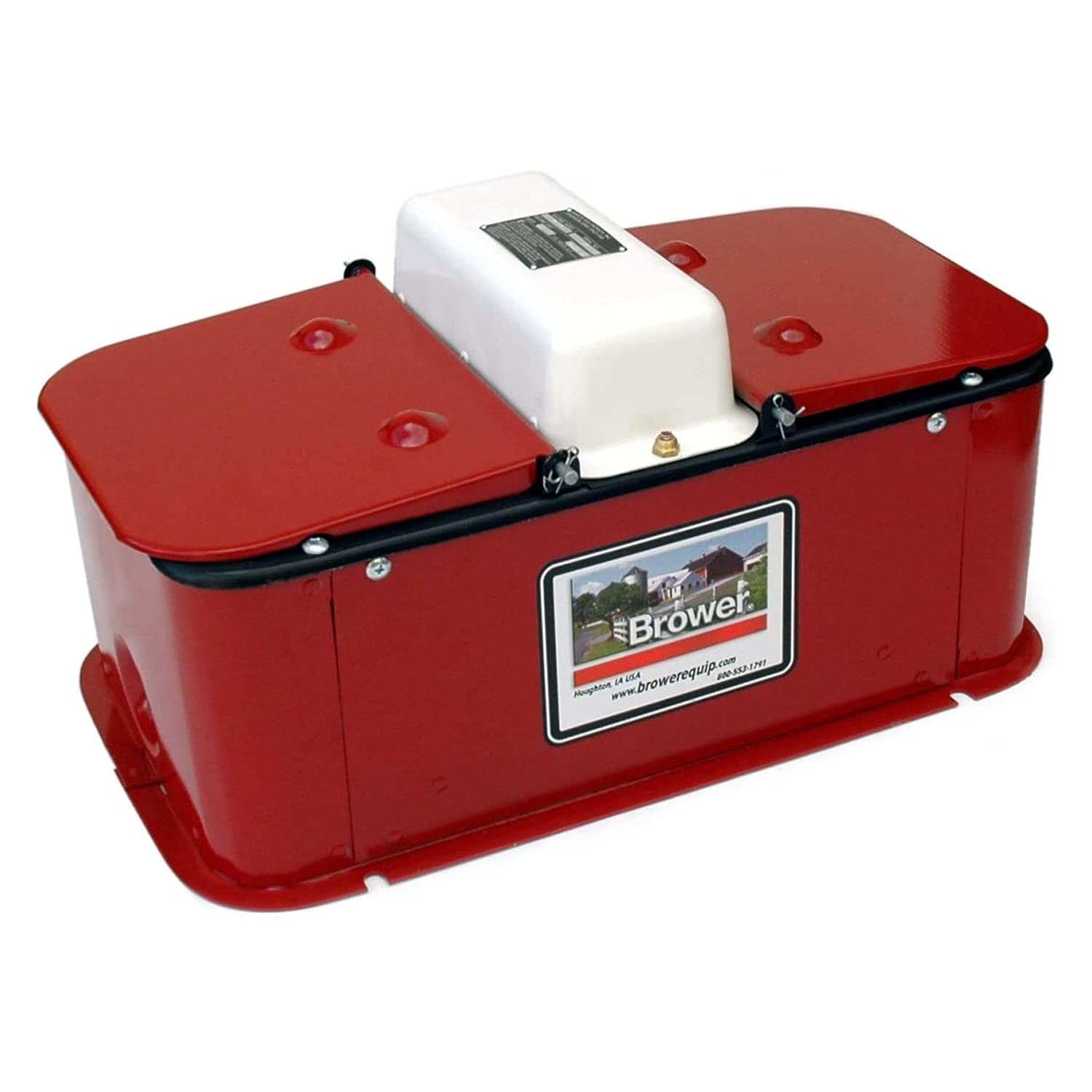
The Brower MC32E is a galvanized steel, electrically heated waterer engineered specifically for swine operations, with a capacity rated for up to 150 hogs. Its most distinctive feature is the fence-line installation design — the unit sits against a pen partition so two enclosures share a single water source. This reduces the number of watering stations needed and simplifies winter maintenance on large finishing floors or farrowing houses.
The insulated body uses extra-thick polyurethane foam that resists water absorption and deters rodent nesting, while the included mud grates and lids keep bedding and manure out of the drinking reservoir. At 23.75 inches long and 13 inches wide, the trough is compact enough for tight pens but still provides adequate drinking space. One owner in Illinois reported the unit froze on the first cold night, which may indicate a defective heater or improper installation depth relative to the frost line. On the positive side, a Montana sheep and horse owner ran it at 17°F with no issues and praised the straightforward water line hookup.
Installation requires a 1/2-inch NPT water line adapter and a concrete pad for level mounting. The 1500W heating element is thermostatically controlled to activate only when temperatures approach freezing, keeping energy use reasonable. The MC32E is a purpose-built tool for serious hog operations — it’s less suited for random cattle watering but performs exactly as advertised in its intended role.
Why we love it
- Fence-line design waters two pens simultaneously, saving space and plumbing.
- Mud grates and lids keep drinking water clean in active hog pens.
- Galvanized steel shell stands up to aggressive livestock behavior.
Good to know
- Some units may require adapter fittings for standard 1/2-inch water lines.
- Installation depth and concrete base are critical for reliable winter operation.
- Best suited for hogs — cattle and horses may prefer a larger trough surface.
4. Ritchie Watermatic 100 Automatic Cattle Horse Waterer
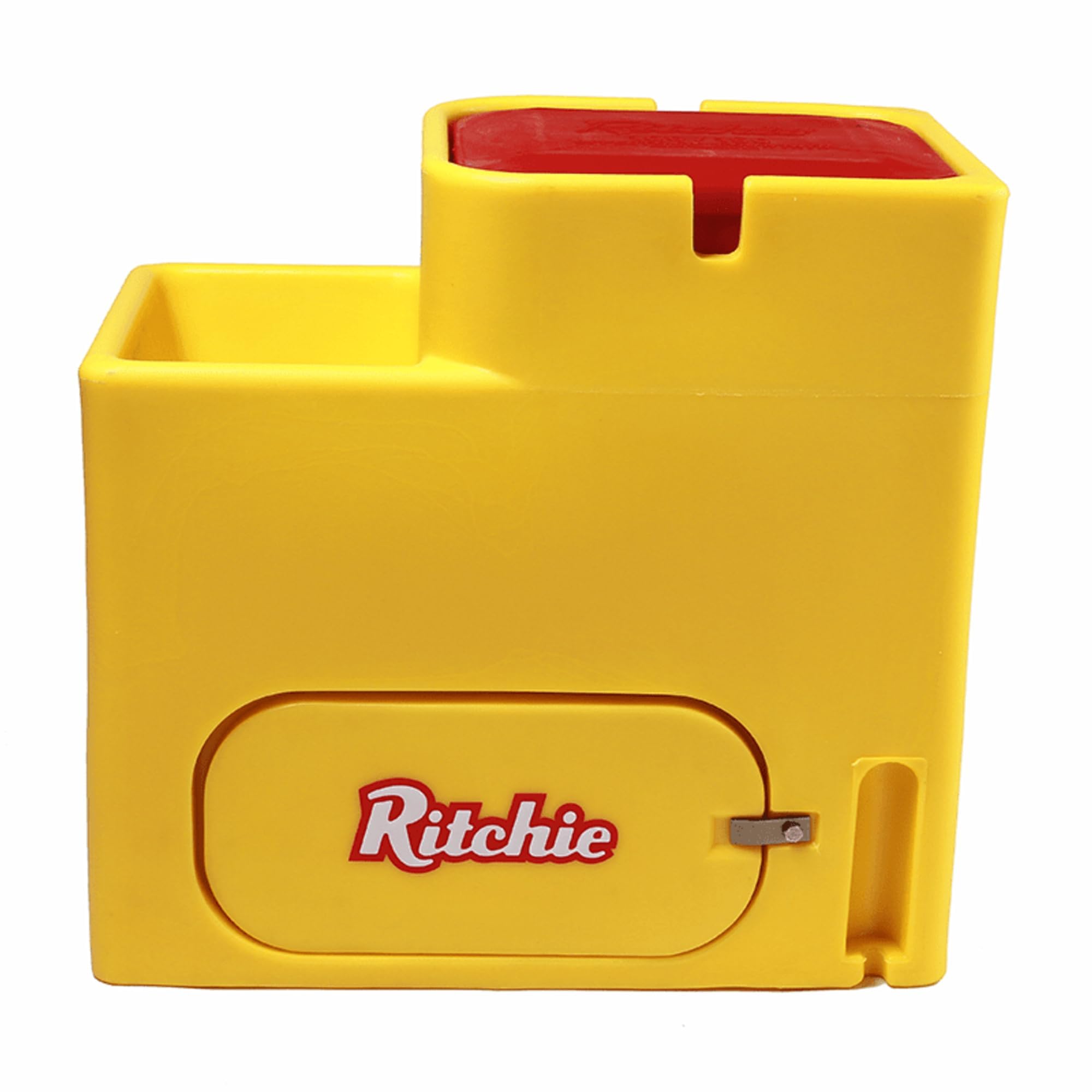
The Ritchie Watermatic 100 is a non-heated, foam-insulated automatic waterer built for indoor stalls, show pens, and mild winter climates. Its one-piece yellow body is made from rugged metal, and the entire design eliminates gaskets — the most common failure point on older waterers — by using a sloped basin that drains completely during cleaning. The 2.8-gallon capacity is modest, but the automatic refill valve means a small group of horses or cattle can drink continuously without the bowl running dry.
The insulation is effective enough that a Wisconsin owner who added an external bird bath heater and wrapped the unit in extra batting kept water flowing at -30°F. However, many buyers mistakenly assume the Watermatic 100 is electrically heated straight from the box, which is not the case — it is an insulated shell designed for optional heater installation. The side access panel is generous, and all interior surfaces slope to drains, making it one of the easiest waterers to scrub and sanitize between rotations.
Installation requires a water line connection to the 1/2-inch inlet and a stable mounting surface. Without the optional heater, this unit is best suited for barns where ambient temperatures rarely dip below freezing, or for summer-only use in hot climates. For a stockman who wants a simple, gasket-free automatic waterer and is willing to add an aftermarket heater, the Watermatic 100 is a solid foundation.
Why we love it
- No gaskets means no cracking, tearing, or leaking over time.
- Sloped basin and drains make cleaning quick and thorough.
- Optional heater can be added for cold-weather use.
Good to know
- Not heated out of the box — buyers must confirm if the optional heater is included.
- 2.8-gallon basin is small for large herds; best for single-stall or pen use.
- Requires insulation wrap for extreme cold even with an added heater.
5. Farm Innovators DPH-15 Outdoor Water Tank Heaters (4-Pack)
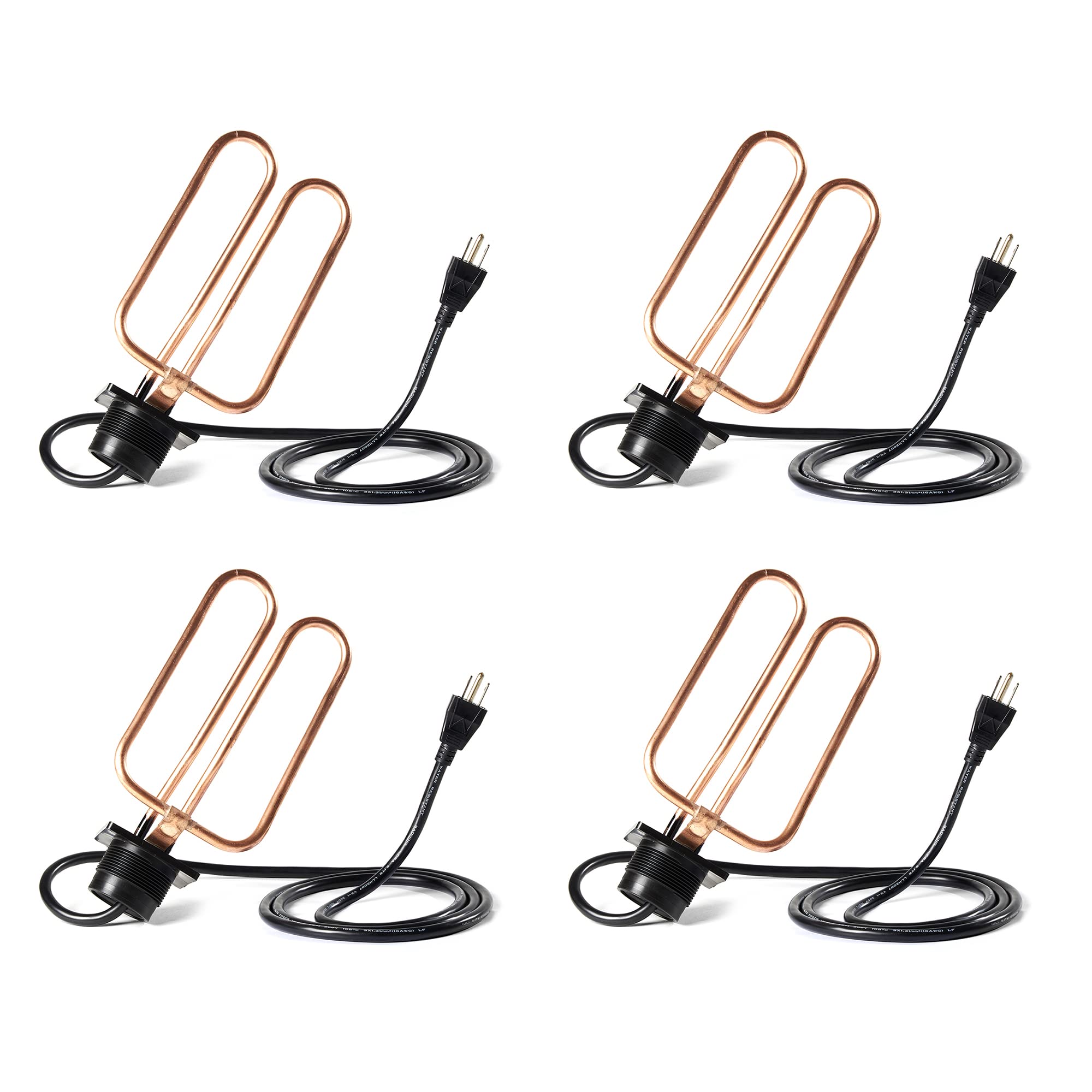
The Farm Innovators DPH-15 is not a standalone waterer but a 1500-watt drain-plug de-icer designed to retrofit into existing Rubbermaid stock tanks. This 4-pack provides enough heating power to prevent freezing in a 300-gallon tank through single-digit temperatures, as verified by owners in North Texas and Montana. Each unit is thermostatically controlled, meaning it powers on only when water temperature approaches freezing, which keeps electricity costs lower than running a heater constantly.
Installation is straightforward: the drain plug of a Rubbermaid tank is removed and replaced with the DPH-15’s threaded heater body. The heating element stays submerged, and the cord is routed outside the tank, keeping it out of reach of curious livestock. Owners who reported leaks almost always had the unit installed incorrectly — when the gasket sits flush and the threads are hand-tightened without cross-threading, the seal holds completely.
These heaters typically last 3 to 5 years in continuous winter use, which is competitive for a drain-plug-style de-icer. The 4-pack format is cost-effective for farms running multiple large tanks, and the compatibility with Rubbermaid’s standard drain opening eliminates the need for adapters. For anyone maintaining a 150-gallon or larger trough without an integrated heating element, the DPH-15 pack is a budget-conscious upgrade that turns a passive tank into a winter-ready water source.
Why we love it
- Thermostatic control saves energy by operating only when needed.
- Easy installation — simply replaces the tank’s existing drain plug.
- 4-pack covers multiple tanks or provides redundancy for a single large tank.
Good to know
- Designed exclusively for Rubbermaid tanks — may not fit other drain openings.
- Average lifespan of 3 to 5 years before needing replacement.
- Leaks occur if the gasket is not seated perfectly during installation.
6. API Heated Bucket 16HB — 16 Gallon

The API Heated Bucket 16HB is a self-contained, thermostatically controlled watering solution for small pens, stalls, or temporary setups. The 16-gallon polyethylene bucket is impact-resistant and treated to prevent warpage and stress cracks, while the built-in heating element prevents water from freezing down to about 10°F, based on owner reports from Vermont. The cord is sheathed in a chew-proof jacket designed to resist goats and other livestock that like to gnaw on wiring.
At 9.9 pounds empty, the bucket is portable enough to move between pens or store during the off-season. The thermostat includes over-temperature protection, so the water does not get dangerously hot — it stays merely above freezing. Owners love the convenience of not busting ice in winter, though a small number reported the heater failing after two months of continuous use. The manufacturer responded to those cases by providing replacement units, which suggests quality control varies but customer support is responsive.
The 6-foot cord is adequate for most barn outlets, and the bucket’s rounded shape and sturdy handle make it easy to carry when full. Capacity is limited to 16 gallons, so it works best for a small herd of goats, sheep, or a few horses — not a full cattle operation. For a farmer who needs a reliable heated water source that doesn’t require plumbing, the API 16HB is a proven, USB-free workhorse.
Why we love it
- Thermostatic control with over-temperature protection for safe operation.
- Chew-proof cord resists damage from goats and other gnawing livestock.
- Portable — no plumbing required, easy to store in warm months.
Good to know
- Some units experienced heater failure within the first few months of use.
- 16-gallon capacity is insufficient for large herds.
- Requires a nearby grounded electrical outlet — not for open pastures.
7. Gravity Flow Barrel Pig Waterer by Trojan

The Gravity Flow Barrel Pig Waterer by Trojan Speciality Products is a kit that converts a standard 55-gallon drum into a gravity-fed drinking station for hogs. The assembly uses a PVC valve body that attaches to the barrel’s bung hole, and the nipple mechanism releases water only when the pig presses it, reducing waste compared to open troughs. Owners consistently report that even aggressive sows cannot damage the unit, and the pigs learn to use the nipple within a day — often attracted by a dab of peanut butter during training.
The 1-year manufacturer warranty is a safety net, but the build quality appears robust for the price point. A customer in Iowa praised the handwritten thank-you card included with the order and noted the small business behind the product. Installation requires drilling a hole in the barrel and securing the valve through the opening, which is a straightforward job for anyone comfortable with basic tools. One caveat: a second pair of arms helps significantly during assembly, as holding the valve in place while tightening the nut can be awkward alone.
This waterer is strictly gravity-fed — there is no heating element or insulation, so it is best suited for moderate climates or winter use with a tank heater placed inside the barrel. The real advantage is water efficiency: far less spillage than nipple-style drinkers that dribble continuously. For a hog operation running 55-gallon drums, this kit turns an existing barrel into a reliable, low-waste watering station at a minimal cost.
Why we love it
- Minimizes water waste compared to open troughs or standard nipples.
- Durable PVC and plastic construction withstands aggressive hog use.
- Simple conversion of a 55-gallon drum into an automatic waterer.
Good to know
- Installation is easier with two people due to the tight valve assembly.
- No built-in heating — requires a separate tank heater for winter use.
- Designed specifically for hogs; the nipple angle may not suit cattle.
8. Trojan Speciality Products 4-Gallon Corner Pen Waterer
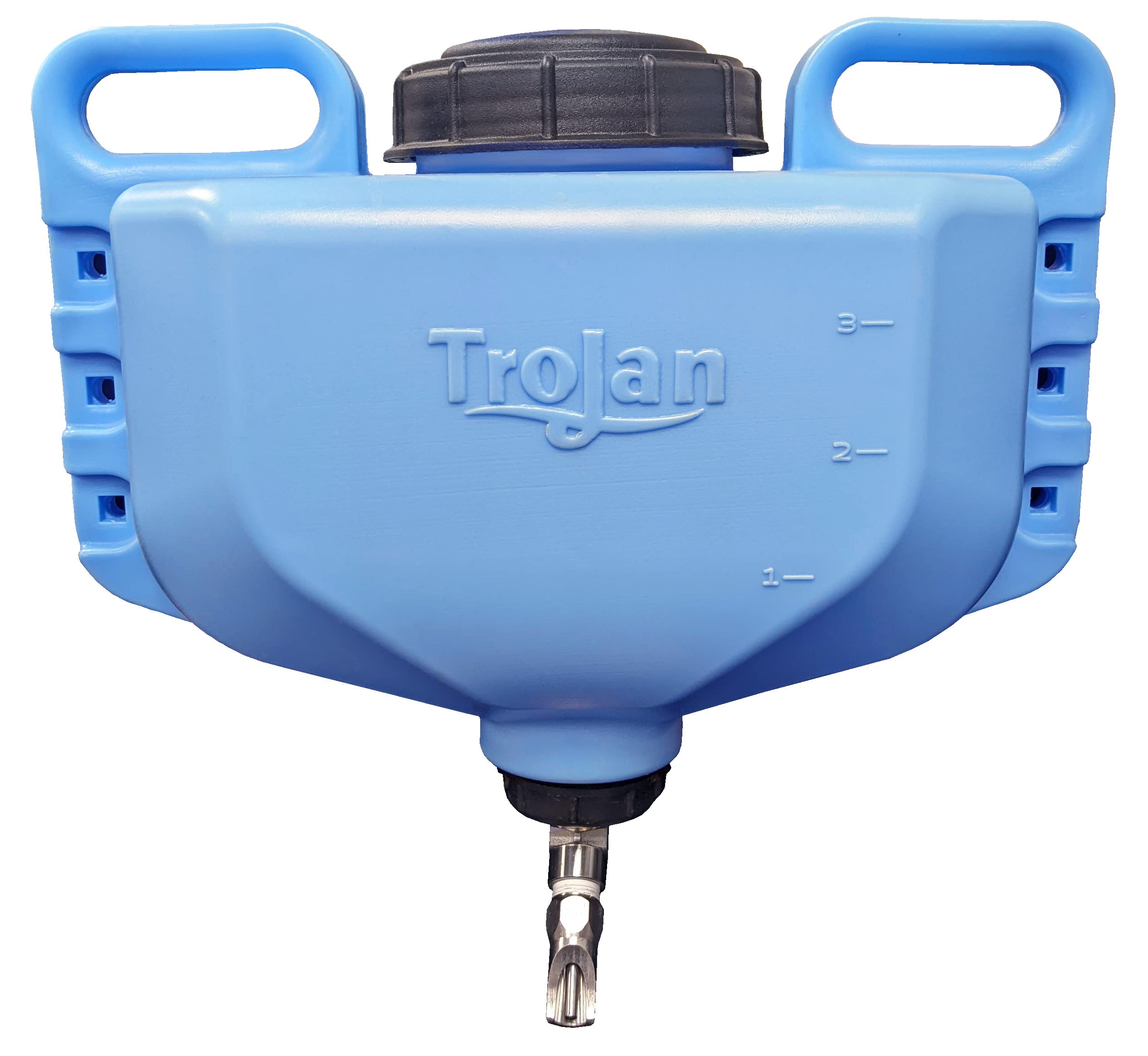
The Trojan Corner Pen Waterer is a compact, gravity-fed system that mounts into a pen corner to save space while providing a clean drinking source for swine. The 4-gallon HDPE tank is designed with heavy-duty handles and thick mounting holes, allowing it to be fastened securely with bolts, washers, or even zip ties for temporary setup at shows or sales. The nipple mechanism is designed to resist activation from jarring or motion — only deliberate pressure by the animal releases water.
Owners of growing pigs and piglets absolutely love this unit for its simplicity and cleanliness. The clear benefit is that the water stays separate from the bedding area, keeping it free from manure and reducing refill frequency compared to open pans. A few customers noted the hogs were persistent enough to tear the waterer down if not reinforced with chain or additional strapping, so a secure mount is essential for long-term use in active pens.
At 4 gallons, the tank is small — expect to refill it daily for a group of 3 to 5 hogs. The nipple design minimizes waste but requires training (peanut butter trick works here too). The corner footprint makes it unobtrusive in tight quarters, and the lack of any electrical components means it is completely winter-proof in a heated barn, though it will freeze solid if left in an unheated enclosure. For show pigs, weaning pens, or short-term confinement, this waterer is a practical, low-maintenance choice.
Why we love it
- Corner-mount design saves valuable pen space.
- Nipple resists false activation from movement or jostling.
- Portable and easy to install for temporary setups.
Good to know
- 4-gallon capacity requires frequent refills for multiple hogs.
- May need reinforcement (chain or strap) against aggressive animals.
- Not heated — freezes solid in uninsulated winter pens.
9. Nelson Rust Proof Stainless Steel Outdoor Automatic Waterer

The Nelson Rust Proof Automatic Waterer is built around a 304-grade stainless steel bowl that resists rust, corrosion, and the bacterial buildup common in plastic or painted troughs. The gravity-fed system uses a simple float valve to maintain a constant water level, and it connects directly to a garden hose via the included adaptor, making it one of the easiest automatic waterers to set up without permanent plumbing. The bowl holds approximately 5.5 liters — a modest size suited for medium-to-large dogs, sheep, goats, or a small number of calves.
Several owners of large-breed dog packs praised its ability to consistently deliver fresh, cool water even on hot days, and the stainless bowl is simple to detach and scrub when algae appears. The hose hookup on either side (left or right) gives flexibility in tight corners, and the unit’s 5.5-pound weight means it can be moved or stored easily. Made in the USA is a bonus for buyers prioritizing domestic manufacturing.
The primary limitation for cattle use is the 5.5-liter capacity — a full-grown cow drains this bowl in a few minutes and then waits for the float to refill. This design is best for animals that don’t require high flow rates, or as a secondary water station. The absence of any heating element means the bowl will freeze in winter unless it’s in a heated building. For a kennel, goat pen, or small livestock enclosure needing corrosion-free automatic watering, the Nelson is a high-quality, easy-install option.
Why we love it
- 304 stainless steel bowl resists rust and corrosion indefinitely.
- Garden hose adaptor allows tool-free setup without permanent plumbing.
- Easy to detach and sanitize — reduces algae and bacterial growth.
Good to know
- 5.5-liter bowl is too small for more than a couple of cattle at a time.
- No built-in heating — not suitable for unheated winter use.
- Gravity-fed refill rate may lag behind heavy drinking demand.
FAQ
Can I use a heated bucket as a permanent cattle waterer?
What is the best material for a cattle waterer in a high-sun climate?
How do I winterize a non-heated gravity waterer?
Why does my heated waterer float stick or overflow?
Final Thoughts: The Verdict
For most cattle operations, the best cattle waterer is the Ritchie Omni Fount 2 because its combination of R-7 foam insulation, stainless trough, and submerged heating element ensures ice-free water in extreme cold without the plastic float failures common in other units. If you want the highest insulation value and a double-trough design for heavy traffic, grab the Brower MK32E and plan to upgrade the float and fittings to brass. And for a budget-friendly de-icing upgrade to an existing tank, nothing beats the Farm Innovators DPH-15 4-pack for keeping a large Rubbermaid trough liquid through the harshest weeks of winter.