
Getting the particle size wrong is the single most common mistake new flock owners make with chick grit. Choking hazards, impacted gizzards, and poor nutrient absorption all trace back to gravel pieces that are either too large for a baby bird’s throat or too fine to grind feed effectively.
I’m Mo Mahin — the founder and writer behind Furric. I’ve spent years comparing the specifications of poultry supplements, analyzing the mineral composition of different grit sources, and cross-referencing owner feedback to understand what actually works for digestion in young birds.
This guide breaks down five of the most popular options to help you find the ideal best chick grit that supports healthy gizzard function from hatch day through the first two months.
How To Choose The Best Chick Grit
The two factors that determine whether a bag of grit helps or harms your chicks are material type and particle size. Insoluble grit from crushed granite or quartzite stays in the gizzard to grind feed, while soluble grit like oyster shell dissolves for calcium absorption. Starter chicks need the former, not the latter.
Material Type: Insoluble Over Soluble
Insoluble grit (crushed granite, quartzite, flint) is the only material that sits permanently in the gizzard and mechanically breaks down whole grains and fibrous feed. Oyster shell dissolves in the digestive tract and provides calcium for laying hens — it does nothing for a chick’s grinding needs and can throw off calcium-to-phosphorus ratios in a starter diet. Always check the bag label for “crushed granite” or “quartzite” before buying.
Particle Size and Age Matching
Chicks under 8 weeks old need grit particles roughly 1–3 millimeters in diameter — small enough to swallow without resistance but large enough to create grinding friction inside the gizzard. Products labeled “starter grit” or “chick grit” are typically screened for this range. Feeding adult-sized poultry grit to baby chicks can cause crop impaction, while offering powder-fine sand delivers no mechanical benefit.
Free-Choice Feeding and Consumption Rates
Chicks self-regulate their grit intake based on need. Place grit in a separate container alongside their starter feed rather than mixing it in. A single chick consumes roughly 0.25 pounds of grit per month on average, though breed and environmental factors can shift that number. A 4-pound bag covers a small starter flock for several weeks.
Quick Comparison
On smaller screens, swipe sideways to see the full table.
| Model | Category | Best For | Key Spec | Amazon |
|---|---|---|---|---|
| Mile Four Chick Grit | Premium | Starter chicks 0–8 weeks | 4 lbs, crushed quartzite | Amazon |
| Small Pet Select Chick Grit | Premium | Hatch to 6–8 weeks | 9.95 lbs, washed granite | Amazon |
| Country Heritage Chick Grit | Mid-Range | Chicks 2+ weeks, ducks | 5 lbs, crushed granite | Amazon |
| SLEEK & SASSY Mineralized Grit | Mid-Range | Small pet birds, canaries | 14 oz, oyster shell blend | Amazon |
| F.M. Brown’s Avian Grit | Budget | Finches, small birds | 1.3 lbs, ground seashell | Amazon |
In‑Depth Reviews
1. Mile Four Chick Grit

Mile Four engineered this grit specifically for the 0–8 week window, using crushed quartzite instead of standard granite. Quartzite is harder than granite, which means the particles hold their sharp edges longer inside the gizzard and grind feed more consistently — a meaningful advantage when chicks are transitioning from starter mash to larger crumbles.
The 4-pound bag aligns directly with their own feeding rule: one chick consumes roughly a quarter-pound per month. For a flock of six chicks, one bag covers the full starter period without waste. Multiple verified buyers note the dust level is exceptionally low compared to budget alternatives, which reduces respiratory irritation in the brooder.
All ingredients are US-mined and the bag includes no fillers, artificial additives, or preservatives. The only limitation is the bag size — keepers raising larger flocks may need to order multiple units before the 8-week mark.
Why we love it
- Hard quartzite provides superior grinding durability
- Very low dust content keeps brooder air clean
- US-mined with no fillers or preservatives
Good to know
- 4-pound bag may require multiple orders for larger flocks
2. Small Pet Select Chick Grit
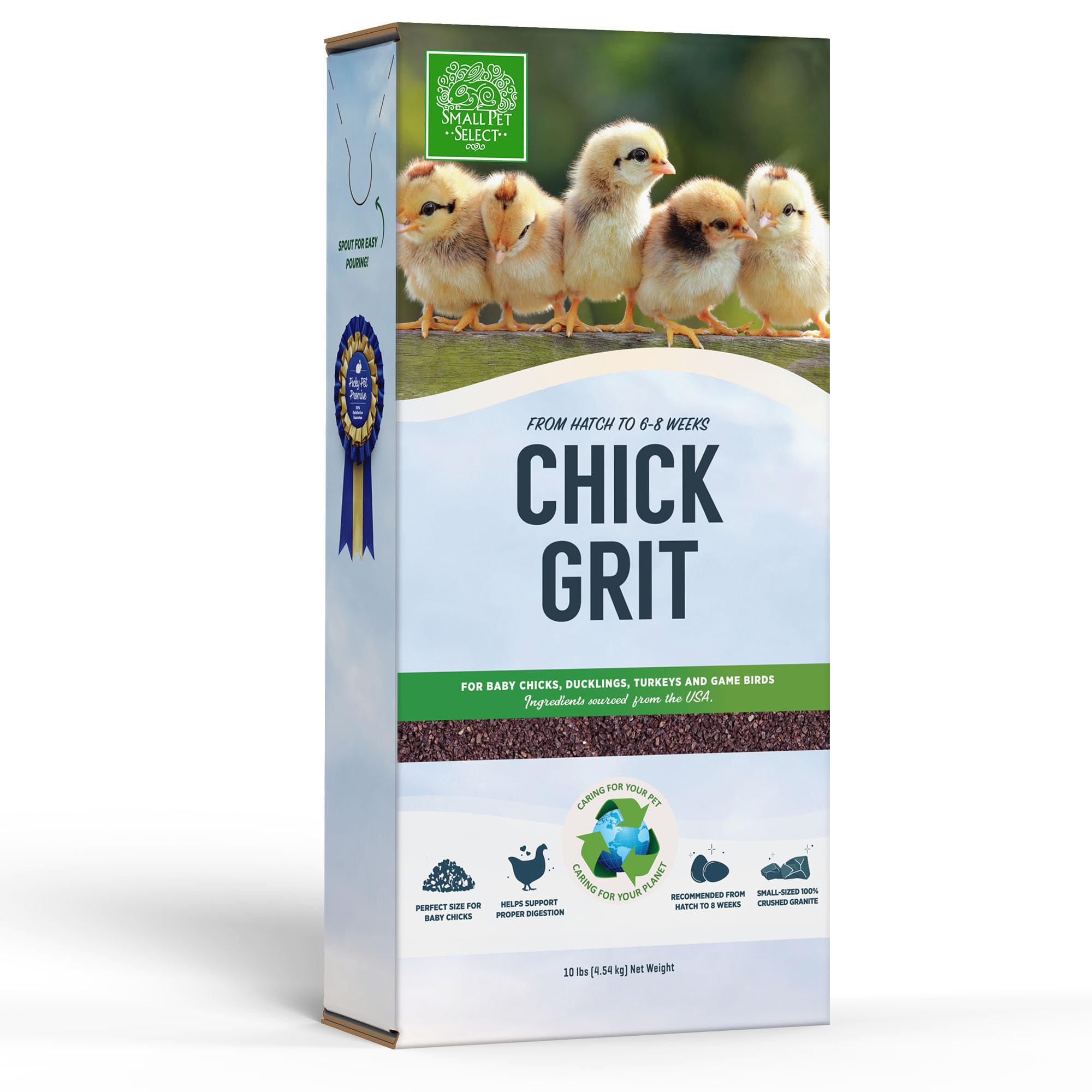
Small Pet Select delivers the largest volume in this lineup — a 9.95-pound bag of 100% crushed washed granite sourced entirely in the USA. The washing step is a crucial detail: unwashed granite grit carries fine stone dust that clumps when wet and can cake inside the feeder. Washed grit pours clean and stays free-flowing.
The particle size is screened specifically for chicks from hatch through 6–8 weeks. Several owners with mixed-age flocks report that even older birds preferred this finer consistency over standard adult grit, presumably because the smaller pieces are easier to swallow and lodge more tightly between feed particles for grinding. The bag includes a 100% satisfaction guarantee.
The only downside is that a 10-pound bag exceeds what a small backyard flock can consume before they outgrow starter grit. If you have under six chicks, the surplus will sit open for weeks unless you repurpose it as a foraging substrate for adult birds.
Why we love it
- Crushed washed granite removes dust and clumping risk
- Largest single-bag volume reduces repurchase frequency
- Made in the USA with a full satisfaction guarantee
Good to know
- Bag size may be excessive for flocks under six chicks
3. Country Heritage Insoluble Chick Grit

Country Heritage formulates this grit specifically for chicks starting at 2 weeks old, not from day one. The 2-week threshold is worth flagging: the particle size is slightly larger than the Mile Four and Small Pet Select options, which makes it safer for slightly older chicks but less ideal for newly hatched birds still adjusting to solid feed.
The base material is natural crushed granite with zero artificial ingredients, fillers, or preservatives — identical in composition to the granite mined for commercial poultry operations. The 5-pound bag hits a sweet spot for medium flocks: enough volume to cover eight to ten chicks through the starter phase without leaving half a bag to gather moisture.
This product also works for ducklings, which have larger gizzards than chicks and benefit from the slightly bigger particle size. The resealable bag design helps maintain freshness in humid climates, though the bag itself is standard polyethylene and can tear if stacked under heavier items.
Why we love it
- 5-pound bag is ideal for medium backyard flocks
- Suitable for both chicks (2+ weeks) and ducklings
- No artificial fillers, preservatives, or additives
Good to know
- Particle size may be too large for chicks under 2 weeks old
- Bag material is not puncture-resistant
4. SLEEK & SASSY Mineralized Health Grit

SLEEK & SASSY takes a different approach by blending oyster shell with essential minerals rather than relying on insoluble stone. This makes the product a hybrid: it supplies both grinding grit for the gizzard and soluble calcium for bone development. However, because it contains soluble material, it is far better suited to adult canaries, finches, and pet birds than to brooder chicks who need purely insoluble granite or quartzite.
Several owners of small pet birds report excellent foraging enrichment results — the flake form sits loosely in a shallow dish, and birds spend hours sifting through it. The 14-ounce bag is family-owned and produced in Oregon since 1983, with no artificial colors or sulfites. For button quail, doves, and parakeets, this is a solid digestive and enrichment tool.
The price per ounce is higher than the other options here, and it is not designed as a primary starter grit for broiler or layer chicks. Keep this product on the shelf for small caged birds rather than backyard poultry.
Why we love it
- Oyster shell plus mineral blend supports digestion and calcium intake
- Excellent foraging substrate for small pet birds
- Family-made in Oregon with no artificial colors
Good to know
- Not suitable as primary insoluble grit for backyard chicks
- Higher cost per ounce than granite-based alternatives
5. F.M. Brown’s Avian Grit Digestive Supplement
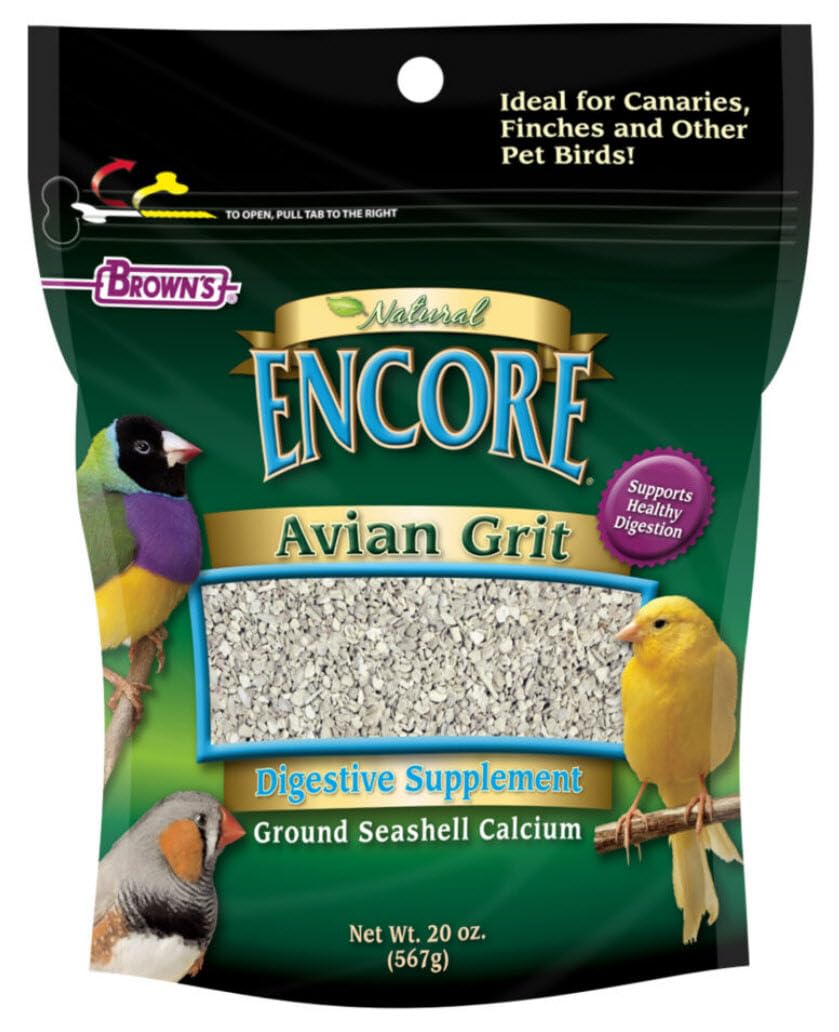
F.M. Brown’s Avian Grit uses ground seashell calcium rather than insoluble stone — the label states calcium content between 38% and 40%. This positions it firmly in the soluble-supplement category, intended to support eggshell strength and bone health in mature birds rather than mechanical feed grinding in chicks.
That said, several finch and diamond dove owners report the fine grind works well for very small birds that struggle with larger granite particles. The 1.3-pound bag fits neatly into small cages and lasts weeks for single birds. The product has been on the market since 2005, which speaks to consistent formulation and manufacturing reliability.
For backyard chicken keepers raising meat or layer flocks, this grit is not a replacement for crushed granite or quartzite. Reserve it for small caged pet birds or mix it into an adult flock’s calcium rotation once hens reach laying age.
Why we love it
- Fine grind works well for finches and very small bird species
- High calcium content (38–40%) supports laying hens
- Long-established brand with consistent formulation since 2005
Good to know
- Not an insoluble grit — will not mechanically grind feed in the gizzard
- 1.3-pound bag offers low volume for multi-bird flocks
FAQ
Can I feed oyster shell instead of chick grit?
How much grit does a single chick eat per week?
When should I switch from starter grit to adult poultry grit?
What happens if I give chick grit that is too large?
Final Thoughts: The Verdict
For most backyard flock owners, the best chick grit winner is the Mile Four Chick Grit because its crushed quartzite provides superior grinding durability and the low-dust formula keeps brooder conditions clean through the first 8 weeks. If you want the largest single-bag volume for the best per-pound value, grab the Small Pet Select Chick Grit. And for keepers raising both chicks and ducklings starting at 2 weeks, nothing beats the Country Heritage Insoluble Chick Grit for versatility in a mixed-species brooder.