
One of the most vulnerable moments in a backyard flock’s life is the first few weeks after hatching. A chick starter formula dictates the speed of feathering, skeletal strength, and digestive health during this critical window — get the wrong balance of protein or filler grains, and you’re setting the stage for slowed development or vitamin deficiencies long before they ever reach a laying box.
I’m Mo Mahin — the founder and writer behind Furric. I spend my time studying ingredient declarations, comparing protein percentages, and analyzing aggregated owner feedback from hundreds of brooder setups to identify which chick starter formulas actually deliver on their nutritional promises.
Whether you are raising a small backyard batch or managing a larger operation, selecting the right feed is a science. That is why I put together this breakdown of the top formulas on the market, covering protein levels, ingredient sourcing, and feeding formats so you can confidently choose the best chick starter for your flock’s needs.
How To Choose The Best Chick Starter
Not all chick starters are created equal — the protein level, ingredient sourcing, and feed form all play a major role in how quickly your chicks feather and grow. Understanding these three variables will help you match the bag to your specific brooder conditions.
Protein percentage: the growth driver
Chicks need a starter with 18 to 22 percent crude protein to support rapid muscle development and feather growth. A 20 percent protein formula is the standard for most mixed-flock brooder setups, while higher-protein options around 22 percent suit fast-growing meat breeds. Anything below 18 percent risks slowing growth rates and prolonging the transition to a grower feed.
Ingredient sourcing: fillers vs. whole nutrition
Corn and soy are common fillers in mass-market chick starters, but they can cause digestive upset in young birds. Corn-free and soy-free formulas rely on whole grains like oats, wheat, and barley for energy, which often leads to more consistent droppings and better feed conversion. Organic certification also eliminates synthetic pesticides and GMO material — a factor worth prioritizing if you plan to eventually eat the eggs or meat.
Feed form: mash, crumble, or whole grain
Very young chicks do best with a fine mash or a small crumble because the particle size matches their tiny beaks and less developed crop. Whole-grain starters that imitate salad textures encourage foraging behavior but require a longer learning curve. If you choose a whole-grain starter for four-week-old chicks, always provide chick grit so their gizzards can break down the kernels.
Quick Comparison
On smaller screens, swipe sideways to see the full table.
| Model | Category | Best For | Key Spec | Amazon |
|---|---|---|---|---|
| Scratch and Peck Whole Grain Starter Mash | Premium Organic | Whole-grain, eco-conscious flocks | 20.5% Protein, Corn & Soy Free | Amazon |
| Wholesome Harvest 22% Protein Starter | High Protein | Muscle growth & feather development | 22% Protein, with Probiotics | Amazon |
| Purina Start and Grow (5 lb Bag) | Mid-Range Standard | Mixed-flock convenience | Includes Marigold Extract & Prebiotics | Amazon |
| Mile Four Organic Chicken Feed – Starter Mash | Organic Sample | Trying organic, corn-free mash | 21% Protein, 2 lb Sample Size | Amazon |
| ZenxyHoC 2-in-1 Chick Starter Set | Starter Kit | Brooder equipment bundle | 0.4 Gal Top-Fill Feeder + Waterer | Amazon |
In‑Depth Reviews
1. Scratch and Peck Whole Grain Starter Mash

This 10-pound bag packs 20.5 percent organic protein from a whole-grain blend that includes oats, wheat, and barley — no corn, no soy, no synthetic additives. The mash texture is ideal for chicks aged one to eight weeks because particle size matches their small beaks and developing gizzards, but it also ferments well if you want to encourage balanced eating later.
Owner reports consistently highlight how quickly chicks feather out on this formula, with several noting a visible bounce-back from suspected vitamin deficiencies after switching from conventional store-brand feed. The packaging is eco-friendly and resealable, which is a practical touch given the 10-pound size that typically lasts three to four weeks for a batch of 25 chicks.
The single limitation is the absence of insect protein — if your chicks need an extra protein boost for rapid meat-breed growth, you may want to supplement with dried mealworms. At roughly per pound, this is a premium cost, but the organic, Pacific Northwest sourcing justifies the price for anyone prioritizing clean ingredient chains.
Why we love it
- Organic, non-GMO whole-grain blend with no corn or soy fillers
- Resealable, eco-friendly packaging reduces waste
- Can be fed dry or fermented for feeding flexibility
Good to know
- Lacks insect protein for high-protein meat-breed needs
- Paper packaging can tear during shipping without extra protection
2. Wholesome Harvest 22% Protein Starter
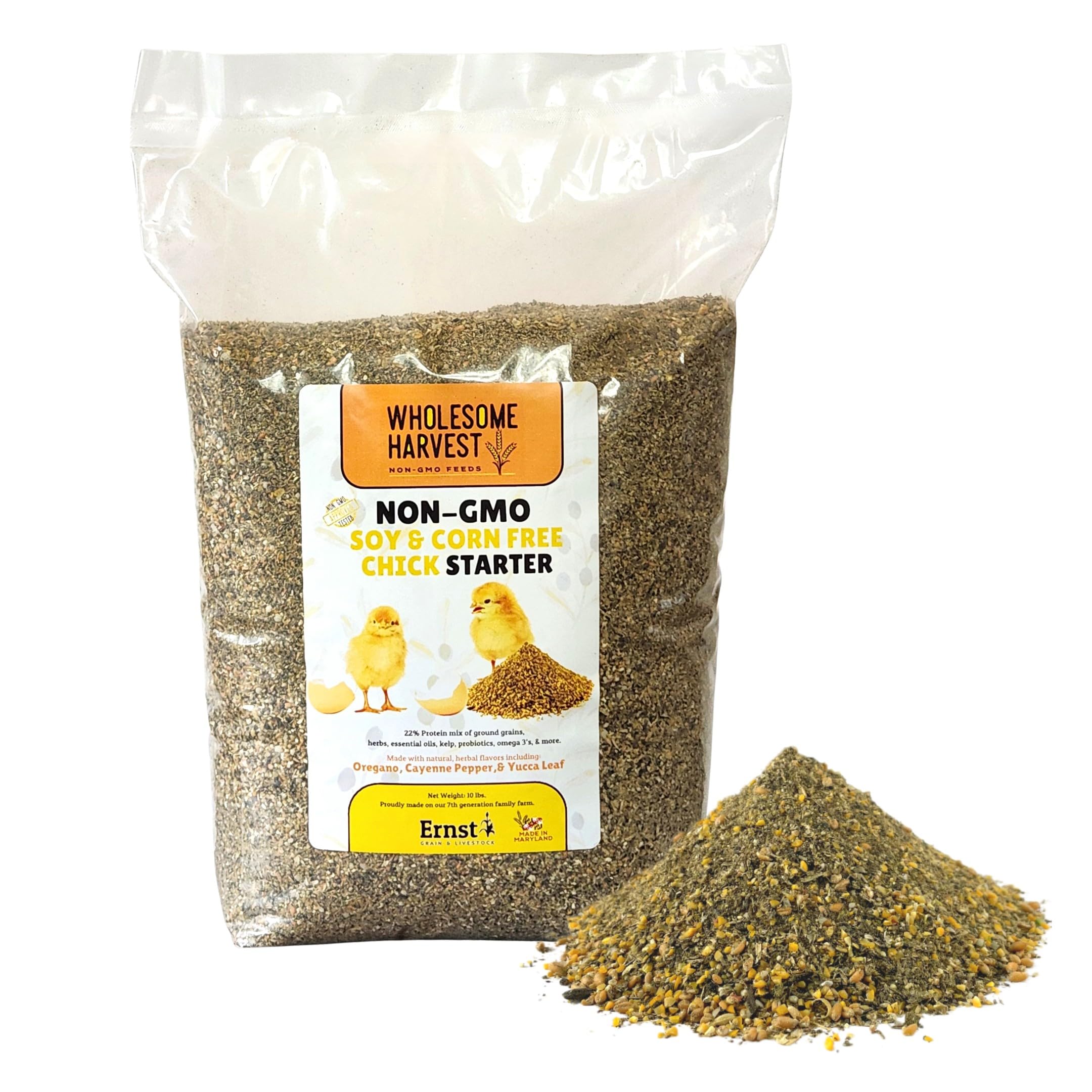
Wholesome Harvest cuts straight to the chase with a 22 percent protein formula that uses linseed oil, essential oils, and herbs instead of corn or soy fillers. The granule form strikes a practical middle ground — fine enough for day-old chicks to consume without choking but substantial enough to reduce the powdery mess that plagues mash-only feeders.
Multiple buyers report that their chicks consistently prefer this feed over other brands, noting stronger appetites and noticeably shinier feathers within the first week of use. The added probiotics and herbs appear to support gut flora, which translates into fewer pasty vent issues during the first seven days in the brooder. The 10-pound size works well for a starter flock of ten to fifteen chicks through the first month.
The price sits at the higher end of the non-GMO segment, but the inclusion of omega-3s from linseed oil adds a nutritional layer that standard 20-percent formulas lack. If your goal is to raise replacement pullets with robust immune systems from hatch day, this formula delivers measurable results in feather quality and activity levels.
Why we love it
- High 22% protein with omega-3 from linseed oil for feather and brain development
- Corn-free and soy-free formula reduces digestive upset in young birds
- Includes essential oils and herbs to support immunity
Good to know
- Granule form may be too coarse for very small bantam chicks on day one
- Premium price compared to conventional starter feeds
3. Purina Start and Grow (5 lb Bag)
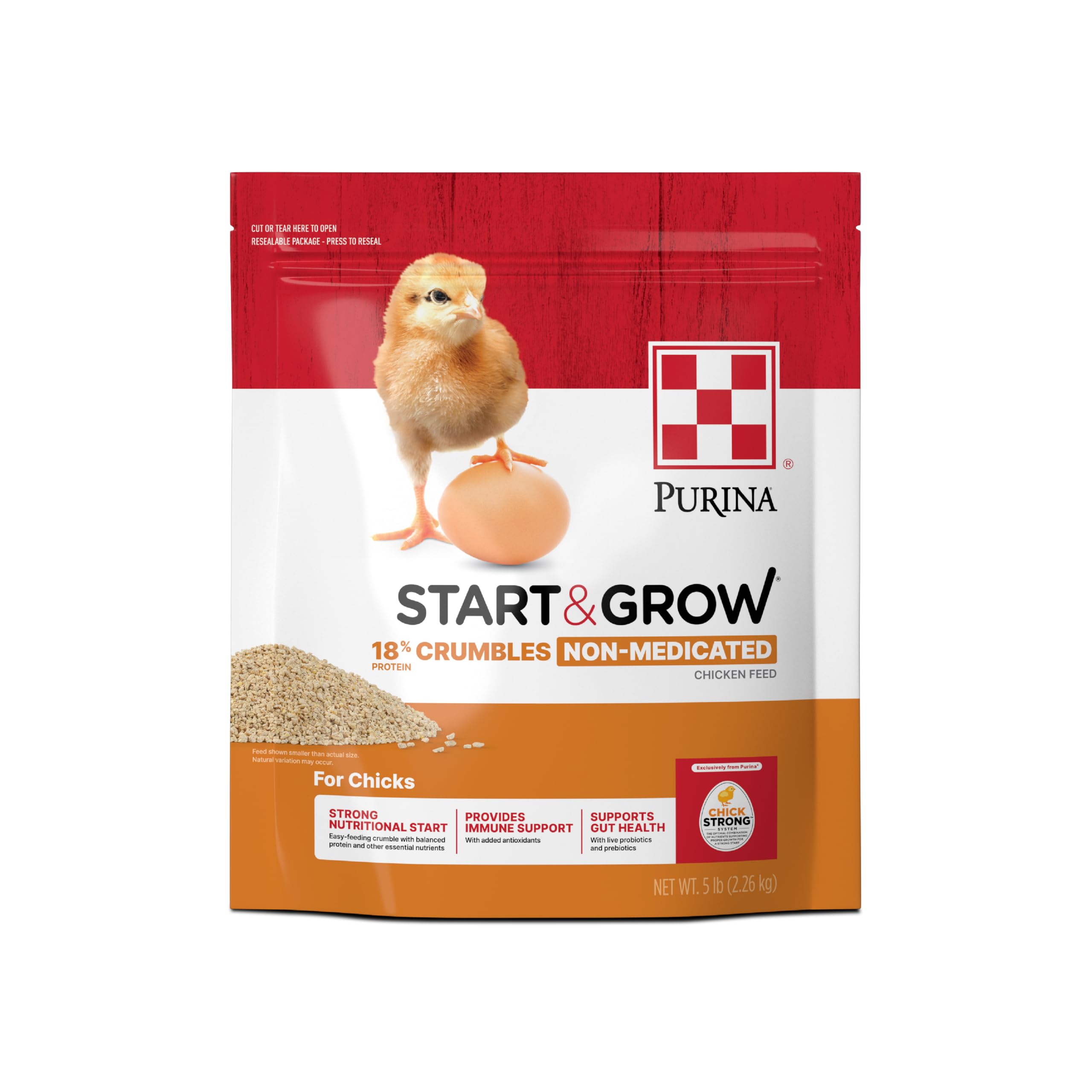
Purina’s 5-pound crumble is the go-to mid-range option for new flock owners who want a nutritionally complete formula without the sticker shock of organic blends. It delivers prebiotics and probiotics to stabilize the gut microbiome, plus marigold extract — a clever addition that deepens the yellow pigmentation in shanks and beaks for a vibrant appearance that many breeders look for in show birds.
Owner feedback is consistent: chicks eat it readily, transition smoothly to regular grower feed when the time comes, and the resealable bag keeps the crumble fresh even in humid brooder environments. Reviewers specifically praise the compact 5-pound size, which is ideal for small hatches of three to eight chicks without committing to a 40-pound sack that would degrade before use.
The formula does rely on corn and soy as base ingredients, and the crude protein sits at a conventional 18-20 percent range — adequate for most backyard layers but insufficient for fast-growing dual-purpose or meat breeds. If your flock is standard-size egg layers and you prefer a trusted brand with widely available restocking, this is a perfectly functional, wallet-friendly starter.
Why we love it
- Prebiotics and probiotics support digestive health from day one
- Marigold extract enhances natural shank and beak coloration
- Compact 5-pound bag is ideal for small backyard hatches
Good to know
- Contains corn and soy fillers that may cause digestive issues in sensitive chicks
- Protein level is on the lower end for fast-growing meat breeds
4. Mile Four Organic Chicken Feed – Starter Mash
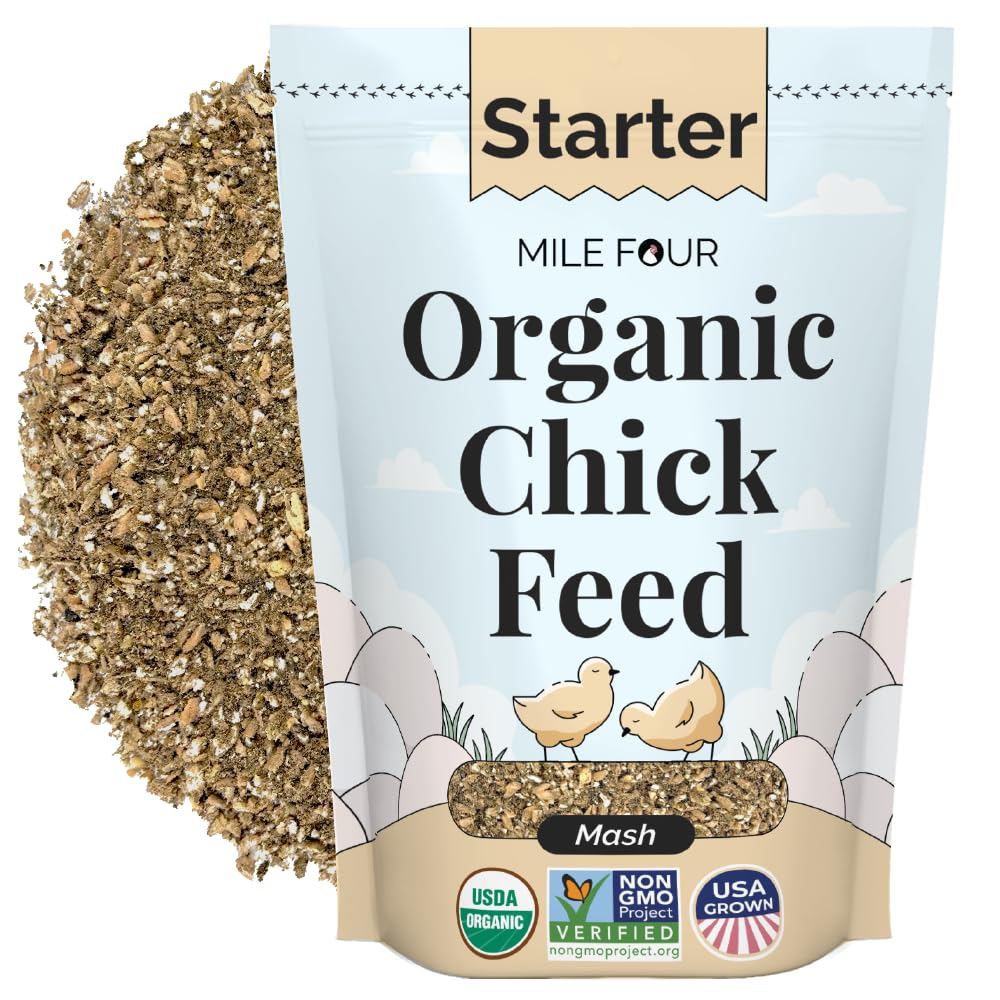
Mile Four’s 2-pound sample bag is a smart entry point for keepers who want to test an organic, corn-free, soy-free mash before committing to a larger bag. The 21 percent protein level sits right at the sweet spot for standard egg-type chicks, and the organic flax meal and kelp add trace minerals that synthetic premixes often skip.
Buyers frequently mention that their chicks reject conventional mash after tasting this formula — a testament to the freshness of the locally milled grains. The mash form works well for day-old chicks, though a few owners noted the powder-like consistency can be messy if the feeder lacks a lip or anti-waste tray. The sample size is perfect for a two-week trial with five to seven chicks.
The cost per pound is among the highest on this list because of the 2-pound packaging and the organic certification from small family farms. If you are raising a bigger batch, you will need to move up to the full-size bag, but the sample is a low-risk way to confirm your flock’s enthusiasm for organic whole grains before making that investment.
Why we love it
- 100% organic, non-GMO grains sourced from US family farms
- Corn-free and soy-free formula minimizes digestive issues
- 21% protein supports muscle growth and feathering
Good to know
- 2-pound sample size is only suitable for small trial batches
- Mash form creates more dust and waste than crumble or pellet
5. ZenxyHoC 2-in-1 Chick Starter Set
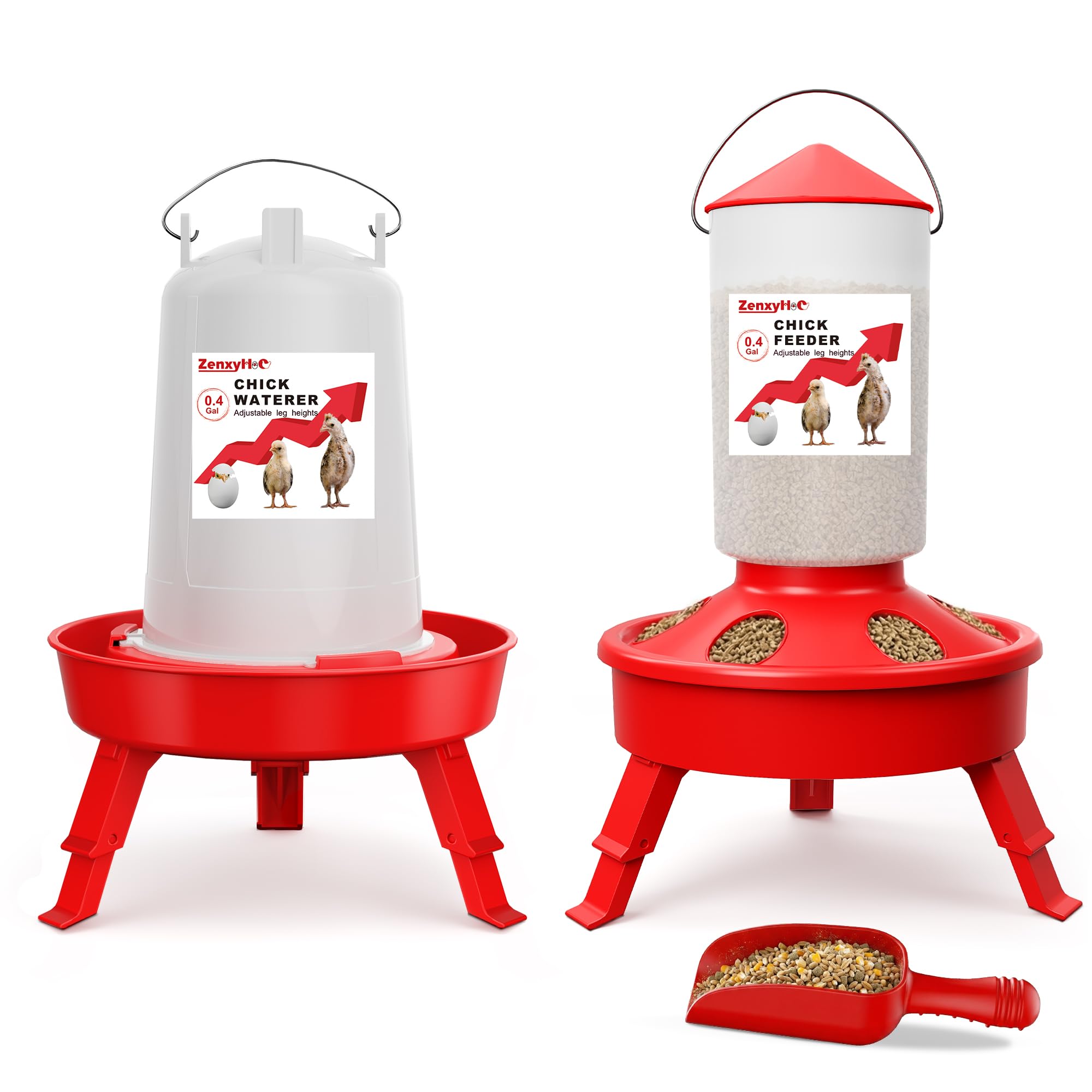
While not a feed, this 2-in-1 starter set solves a perennial brooder problem — keeping feed and water clean while chicks grow. The 0.4-gallon feeder uses a top-fill design that prevents waste, and both the feeder and waterer feature three adjustable leg heights so you can raise them as your chicks grow without propping them on makeshift blocks.
The waterer uses a taller, narrower trough shape specifically to prevent accidental drowning, an upgrade over the wide-base models that tiny chicks can fall into. Semi-transparent material lets you check levels at a glance, and the included scoop makes top-filling the feeder a quick, hands-off process. Owner reviews specifically praise the stability of the tripod base for active brooder flocks.
One common note: the waterer trough is still wide enough that chicks under two weeks old may wander in, so adding clean marbles or stones inside the trough during the first ten days reduces the drowning risk significantly. For the price of a single quality feeder alone, you get both units plus hanging hooks — a budget-friendly equipment bundle for anyone setting up their first brooder station.
Why we love it
- Adjustable legs grow with chicks from day one to six weeks
- Top-fill feeder reduces wasted feed and keeps grime out
- Taller water trough design reduces drowning risk
Good to know
- Water trough still requires marbles or pebbles for chicks under two weeks
- Legs can feel loose when fully extended to the highest setting
FAQ
Can I feed chick starter to adult chickens?
When should I switch from chick starter to grower feed?
Final Thoughts: The Verdict
For most backyard keepers looking for a dependable, organic, and whole-grain option, the best chick starter is the Scratch and Peck Whole Grain Starter Mash because its 20.5 percent protein, corn-free and soy-free ingredient list, and fermentable whole-grain texture deliver strong feathering and growth across standard breeds. If you need a higher protein push for fast-feathering meat breeds, grab the Wholesome Harvest 22% Protein Starter. And for new flock owners building their first brooder setup on a budget, the Purina Start and Grow 5 lb paired with the ZenxyHoC 2-in-1 Starter Set gives you a complete, low-hassle kit for a small hatch.