
A nesting box that hens refuse to use, eggs that roll out and crack, or a box that rots within a season — these are the concrete frustrations that turn a simple coop upgrade into a recurring headache. Choosing the right structure means knowing exactly how material, depth, and access points affect a hen’s willingness to lay and your ability to collect clean eggs without daily battles.
I’m Mo Mahin — the founder and writer behind Furric. I analyze product specifications and aggregated owner feedback for poultry equipment, studying how material density, compartment geometry, and ventilation patterns directly influence egg yield and flock comfort across dozens of commercial and backyard setups.
After sifting through hundreds of verified owner reports and technical specs, these seven models define the current standard for what a reliable chicken nesting box should deliver in terms of durability, privacy, and easy collection.
How To Choose The Best Chicken Nesting Boxes
Selecting a nesting box is not about picking the cheapest or the prettiest — it is about matching the material, compartment size, and egg-collection method to your specific flock size and coop layout. Four factors separate a functional box from a source of frustration.
Material: Plastic, Wood, or Galvanized Steel
Plastic boxes resist moisture and mites but can feel cold in winter and may crack under heavy use. Wood offers natural insulation and a familiar texture for hens, but it absorbs moisture and requires regular treatment to prevent rot and red mite infestations. Galvanized steel is the most durable option — it resists rust, holds up to aggressive scratching, and is the easiest to sanitize with a pressure washer. The trade-off is that metal conducts temperature more than plastic or wood, so placement in a shaded, ventilated area matters.
Compartment Size and Depth
A standard nesting compartment should be at least 12 inches wide, 12 inches deep, and 12 inches tall for medium breeds. Large breeds like Brahmas or Orpingtons need 14-inch widths and deeper floors to turn around comfortably. Shallow compartments cause eggs to roll out and straw to kick out, while overly tall compartments encourage roosting inside the box — which leads to dirty eggs and broken shells.
Rollout vs. Standard Design
Standard boxes require you to reach in and collect eggs, which can lead to pecking damage or dirty eggs if the bedding is not changed frequently. Rollout or rollaway boxes use a sloped floor that gently rolls eggs into a covered collection tray. This design prevents hens from stepping on or eating eggs and keeps eggs cleaner longer. The downside is that some hens are slower to accept rollout floors, and nesting pads can block the rolling mechanism.
Mounting and Perch Design
Boxes mounted 18 to 24 inches off the ground reduce predator access and discourage roosting on top. A perch at the entrance gives hens a natural spot to land before entering, but a perch that is too wide can collect droppings and block the entrance. Foldable perches or swing gates allow you to close the box at night, preventing hens from sleeping inside and soiling the nesting area.
Quick Comparison
On smaller screens, swipe sideways to see the full table.
| Model | Category | Best For | Key Spec | Amazon |
|---|---|---|---|---|
| Homestead Essentials 3 Compartment | Premium | Rollout egg collection, large flocks | 3 compartments, 31.5″ x 19.5″ x 19.5″ | Amazon |
| ZenxyHoC Two-Tier 4 Compartment | Premium | Space-saving, rollout trays | 2 tiers, 4 holes, 30″ x 20″ x 20″ | Amazon |
| Toriexon 6 Compartment Metal | Premium | Large flocks, wall mount | 6 compartments, 31.9″ x 13″ x 25″ | Amazon |
| Kinchoix 3 Hole Metal | Mid-Range | Durable metal, budget price | 3 holes, 9.8″ x 11.8″ per hole | Amazon |
| ZeenArt 4 Compartment Wood | Mid-Range | Natural wood, medium breeds | 4 compartments, 25.2″ x 15.7″ x 27″ | Amazon |
| Little Giant Single Plastic | Entry-Level | Single box, small coops | 1 compartment, 26.5″ x 15.88″ x 19.75″ | Amazon |
| Touri 6 Pack Plastic | Entry-Level | Lightweight, portable setup | 6 boxes, 14.25″ x 12.5″ x 12.25″ | Amazon |
In-Depth Reviews
1. Homestead Essentials Compact Style 3 Compartment
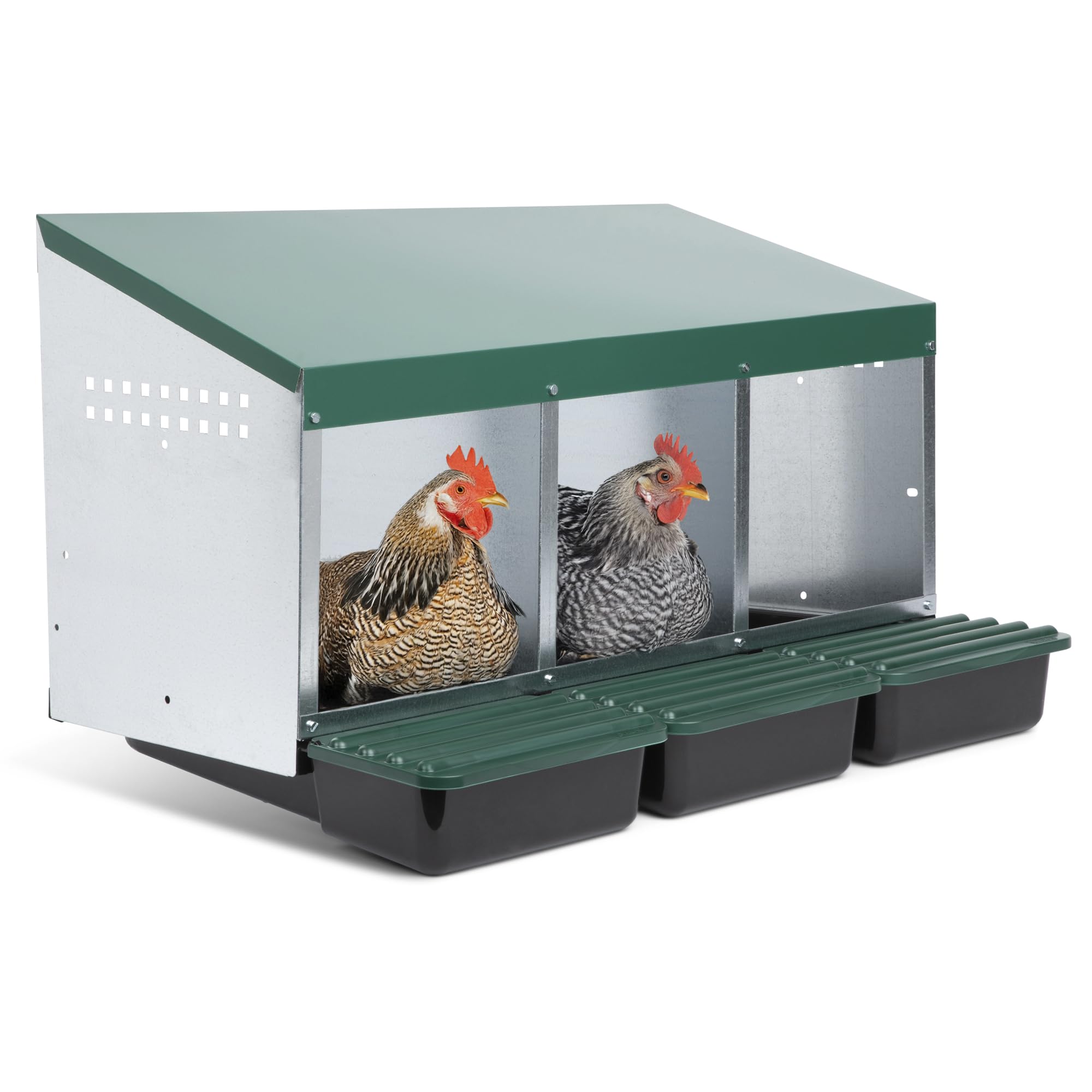
The Homestead Essentials rollout box is the most practical upgrade for anyone tired of cracked eggs. Each compartment uses a slanted galvanized steel floor that gently rolls eggs forward into a covered collection tray — eliminating the need for deep bedding and preventing hens from pecking or stepping on their eggs. The 31.5-inch width houses three compartments, and owners report it comfortably accommodates up to 15 hens with regular rotation.
Assembly takes about 30 minutes with the included hardware, and the sloped roof prevents chickens from roosting on top — a feature that keeps the unit cleaner over time. The 14-pound weight makes it sturdy enough to stay in place without wall anchors, though mounting holes are provided for additional security. Owners of large Cochins note the compartments are a snug fit, but the hens still manage to lay successfully.
Cleaning is remarkably simple: the egg trays slide out for washing, and the metal surface can be pressure-washed without damage. One user reported that a broody hen sat in the box for weeks without damaging the structure. The main con is the lack of a metal hanging bracket — owners have to buy or build their own if they want wall mounting instead of floor placement.
Why we love it
- Rollout design protects eggs from pecking and breakage
- Galvanized steel resists rust and is easy to sanitize
- Sloped roof prevents roosting on top of the box
Good to know
- Compartments are slightly tight for large breeds like Cochins
- No metal hanging bracket included for wall mounting
2. ZenxyHoC Two-Tier Chicken Nesting Box
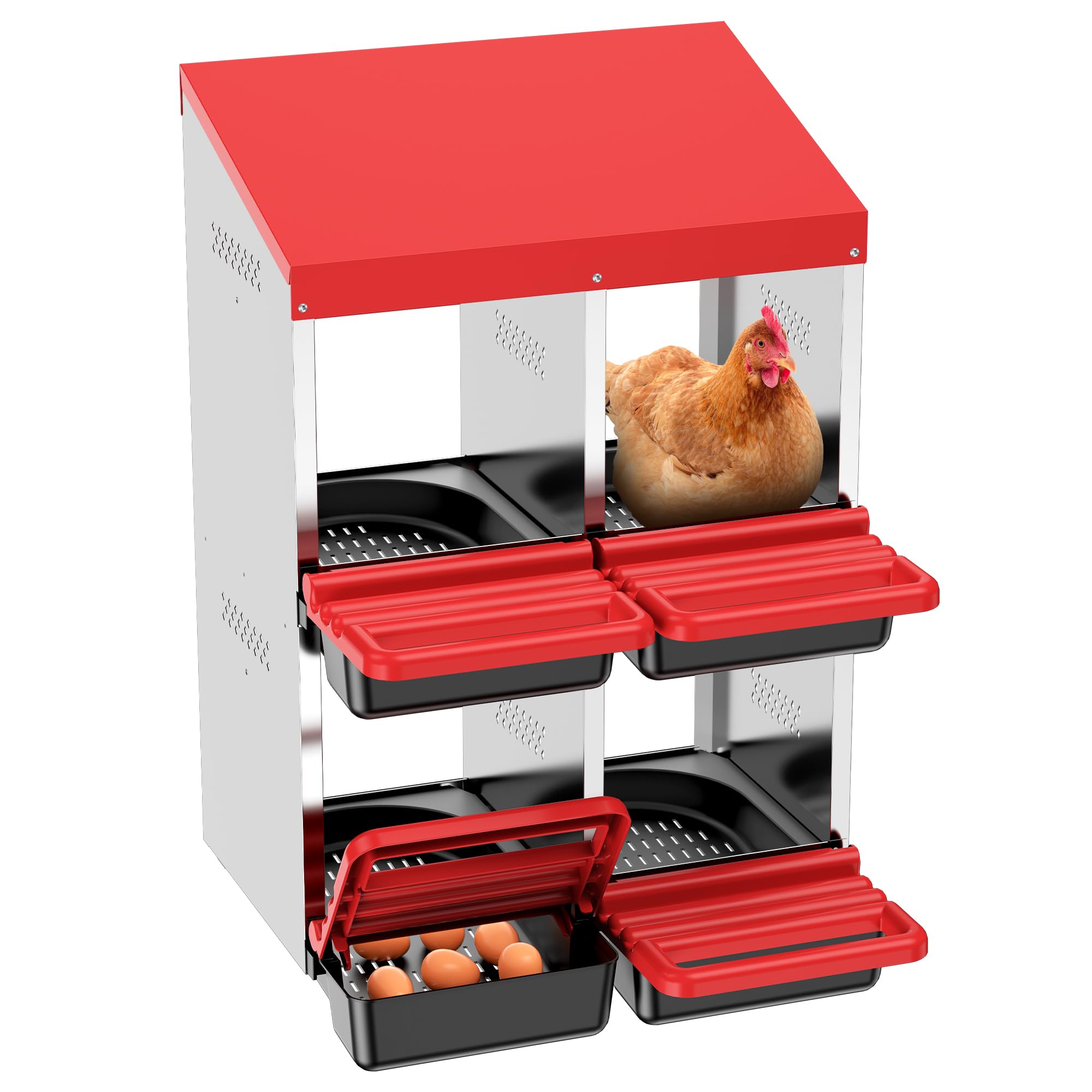
The ZenxyHoC two-tier box solves two common problems at once: it provides four compartments in a vertical footprint, and it incorporates a foldable swing perch that doubles as a gate. Closing the perch at night prevents hens from roosting inside and soiling the nesting area — a feature that owners with messy coops appreciate immediately. Each compartment measures 9.8 inches wide, which fits medium breeds comfortably but is noticeably snug for larger hens.
The rollout floor uses a slanted metal sheet to guide eggs into a removable collection tray. Owners recommend placing soft padding in the tray to prevent eggs from cracking on the metal. The side ventilation holes are a thoughtful addition — they allow airflow without creating drafts that chill hens. Assembly involves small nuts and bolts, and the instructions could benefit from larger diagrams, but most users complete it within 45 minutes.
One point of concern is the painted finish — several owners report paint chipping after a year of use, though the underlying galvanized steel remains functional. The unit comes with fake eggs to encourage nesting, a smart touch that helps new hens adapt faster. For flock owners with limited coop floor space, this vertical design is a space-saving solution that still delivers clean egg collection.
Why we love it
- Swing perch closes at night to prevent roosting
- Rollout collection tray keeps eggs clean
- Two-tier design saves horizontal floor space
Good to know
- Painted finish may chip over time
- Compartment width is tight for large breeds
3. Toriexon 6 Compartment Metal Nesting Box

The Toriexon 6-compartment box is designed for flock owners who need volume without sacrificing durability. Each of the six compartments provides a private nesting space, and the heavy-duty galvanized steel construction is built to withstand aggressive scratching and outdoor weather. At 31.9 inches wide and 25 inches tall, it occupies a full wall section but delivers enough nesting capacity for flocks of 20 to 25 hens.
Owners report that the chickens adapt quickly — many noted eggs within the first day of installation. The removable dividers make it easy to reconfigure the interior space, and the included nest pads help keep bedding contained. Cleaning is straightforward: a quick wipe or pressure wash restores the metal surface, and the open-front design allows easy access for egg collection without reaching into dark corners.
The main challenges are assembly and fit. Several owners describe the instructions as difficult to follow, and some report sharp edges on the metal panels that require filing. The compartment width of 13 inches is functional for medium breeds but a tight squeeze for heavy breeds like Buff Orpingtons. One user received a missing panel and had to cut a board to fill the gap — a quality-control issue worth checking upon delivery.
Why we love it
- Six compartments handle large flocks efficiently
- Galvanized steel resists rust and weather damage
- Removable dividers allow flexible interior configuration
Good to know
- Assembly instructions are poorly organized
- Sharp edges on some panels require filing
4. Kinchoix 3 Hole Metal Nesting Box
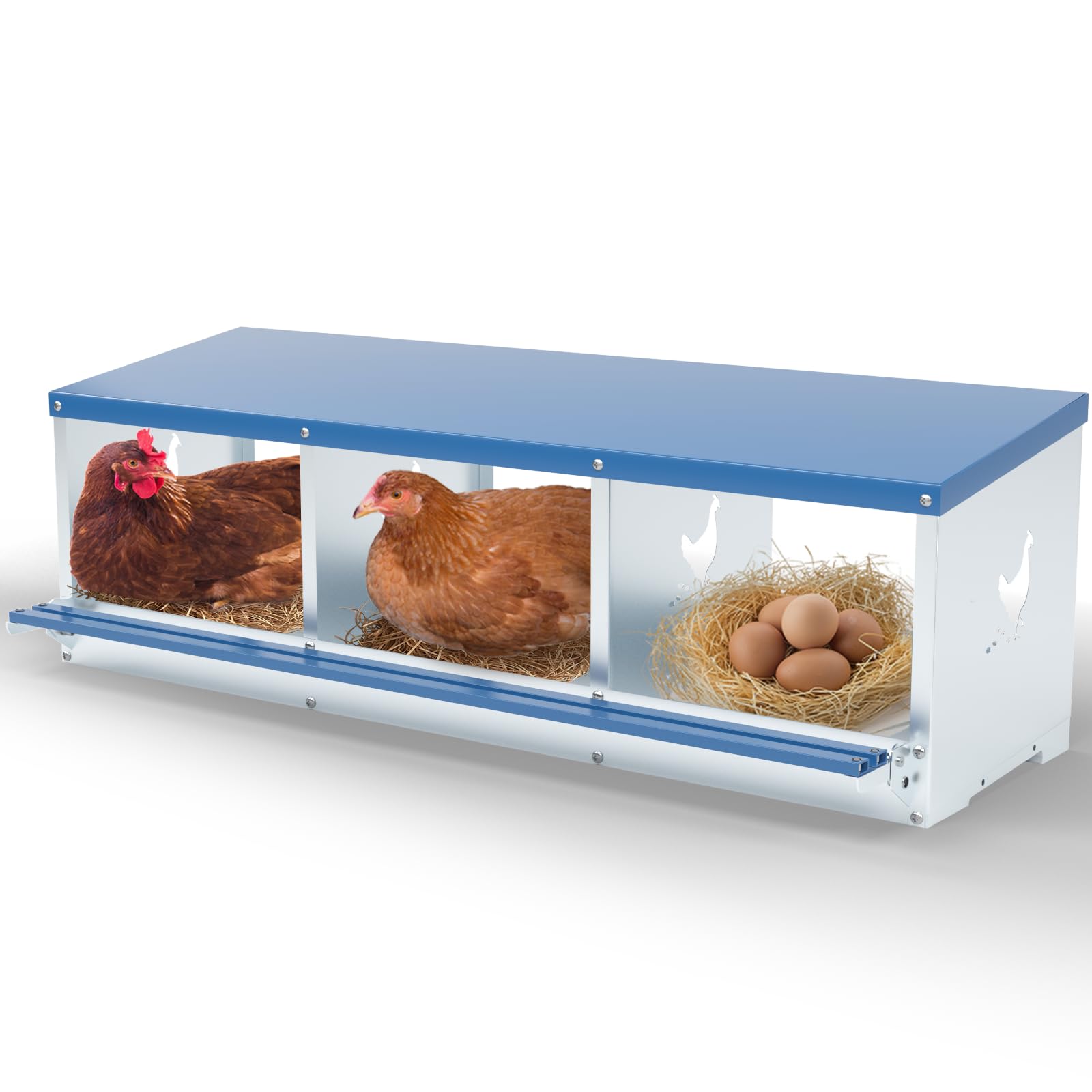
The Kinchoix three-hole box delivers a galvanized steel structure at a price point that undercuts most metal competitors. Each compartment measures 9.8 inches by 11.8 inches — adequate for standard breeds but noticeably narrow for larger hens. The sloped roof prevents water pooling and discourages roosting, and the rounded edges reduce the risk of injury to both chickens and the person cleaning the box.
Assembly involves screwing panels together with included hardware, and most owners complete the build in under an hour. The mounting holes are positioned for 18-20 inch ground clearance, which aligns with standard predator-deterrence height. One owner reported that a hen laid an egg within 30 minutes of the box being installed, indicating strong acceptance. The blue enamel finish looks clean and resists fading in direct sunlight.
The primary limitation is compartment width. Bantam breeds fit comfortably, but owners of full-size hens note that turning around inside the compartment is difficult, leading some hens to lay underneath the box instead. The metal edges can be sharp where panels join — careful filing is recommended before introducing birds. For small flocks of bantams or standard-sized hens, this is a solid, long-lasting entry point into metal nesting boxes.
Why we love it
- Galvanized steel construction for long-term durability
- Sloped roof prevents water accumulation and roosting
- Rounded edges reduce injury risk
Good to know
- Compartments are narrow for large breeds
- Sharp metal edges may require filing after assembly
5. ZeenArt 4 Compartment Wooden Nesting Box

The ZeenArt wooden nesting box appeals to keepers who prefer natural materials over plastic or metal. Constructed from solid cedar, it offers natural moisture resistance and a texture that hens recognize as familiar. The four compartments are each 12.5 inches wide, providing comfortable space for medium breeds like Americaunas and Rhode Island Reds. The baffles and perches help prevent eggs from rolling out and breaking.
Assembly is straightforward — owners report completing it in 20 minutes with the included tools. The cedar smell is strong initially, which some owners noted as pleasant and others found overpowering. The ventilation slots on the sides allow airflow without drafts, and the sloped roof prevents chickens from perching on top. The 27-inch height gives the unit a substantial presence in the coop, but it remains lightweight enough for one person to carry.
Some owners received units with random extra holes and missing hardware pieces, though replacement parts were provided quickly. The wood surface requires occasional treatment with a sealant to prevent moisture absorption in humid climates. One owner noted that the interior compartment depth is shallow, causing straw to kick out more easily than deeper boxes. For coop setups where aesthetics and natural materials are priorities, this is a strong mid-range option.
Why we love it
- Solid cedar provides natural moisture and mite resistance
- Baffles and perches prevent eggs from rolling out
- Lightweight and easy to install
Good to know
- Shallow interior causes bedding to kick out
- Wood needs occasional sealant treatment in humid areas
6. Little Giant Single Plastic Nesting Box

The Little Giant single nesting box is a straightforward plastic solution for keepers who need one or two boxes without committing to a multi-compartment unit. Made from high-density, impact-resistant polyethylene, it will not rust, rot, or corrode — and it stays warmer than metal in winter, which hens appreciate. The 15.88-inch width and 19.75-inch height provide generous interior space that accommodates Brahma hens comfortably.
The included fold-down perch gives hens a landing spot before entering, and the sloped roof prevents roosting on top. Ventilation holes keep air moving without creating drafts. Mounting to 16-inch on-center studs is straightforward, though the box does not include screws — you will need #10 hardware. The smooth plastic surface cleans easily with a hose, and the lowered floor design helps retain bedding better than flat-bottom alternatives.
Some owners note that the egg-laying area is shallow, causing straw to kick out and eggs to sit directly on the plastic. The lack of a back panel means eggs can roll out the back if the box is not mounted flush against a wall. For a single-bird setup or as an add-on to an existing coop, this is a durable, low-maintenance entry-level choice that requires minor modifications for optimal performance.
Why we love it
- Polyethylene plastic resists rust, rot, and corrosion
- Stays warmer than metal in winter
- Fold-down perch and sloped roof prevent roosting
Good to know
- No screws included for mounting
- Shallow egg area may cause straw and eggs to kick out
7. Touri 6 Pack Plastic Nesting Boxes
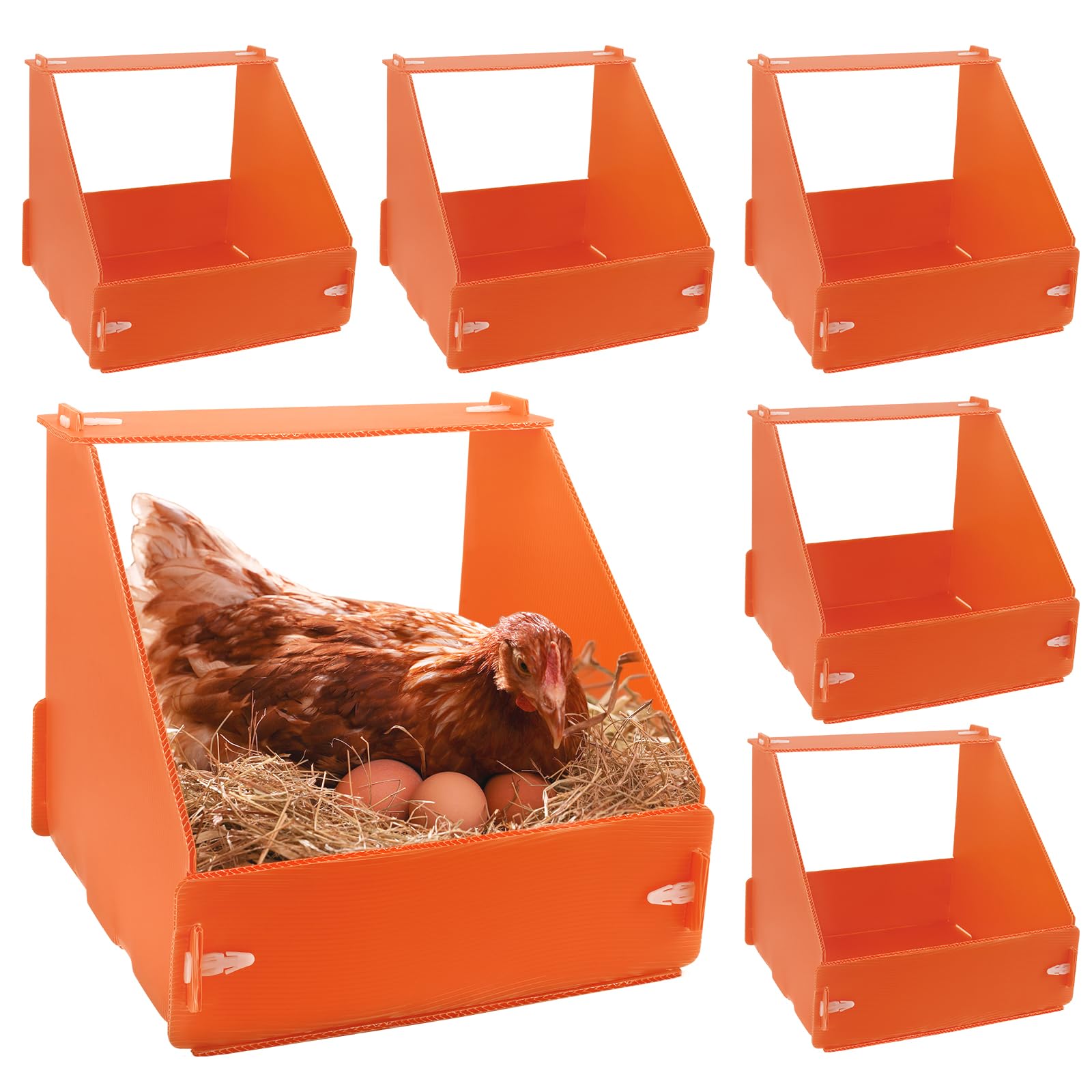
The Touri six-pack of nesting boxes is designed for mobility — each box is made from corrugated polypropylene plastic that folds flat for storage and assembles in under a minute using Velcro tabs. No tools are required, making this an ideal solution for chicken tractors or temporary coops where boxes need to move frequently. Each box measures 14.25 inches by 12.5 inches, which fits all breed sizes, though the 0.2-inch material thickness is noticeably less rigid than solid plastic or metal.
Surprisingly, multiple owners report that hens prefer these boxes over more expensive permanent options. The bright orange color is intended to stimulate egg production, and the corrugated material provides enough insulation for temperate climates. The lightweight construction means they can be hung on walls with simple hooks or placed on shelves without reinforcement. Cleaning is straightforward — the plastic surface wipes clean, and the boxes can be replaced individually if damaged.
The durability ceiling is the main consideration. Owners using them in stationary coops report they last about a year before showing wear, while those in chicken tractors find them functional for multiple seasons. Some hens refused to use the boxes entirely, though that risk exists with any nesting box design. For keepers who value portability, quick setup, and low initial investment, this pack delivers functionality at a per-box cost that is hard to beat.
Why we love it
- Tool-free assembly in under one minute per box
- Lightweight and portable for chicken tractors
- Bright orange color may stimulate egg production
Good to know
- Corrugated material has limited durability (∼1 year)
- Some hens may reject the boxes entirely
FAQ
How many nesting boxes do I need per chicken?
Why are my chickens not using the nesting boxes?
Should I use bedding in a rollout nesting box?
What is the best height to mount a chicken nesting box?
How do I prevent chickens from sleeping in the nesting boxes?
Final Thoughts: The Verdict
For most keepers, the best chicken nesting box is the Homestead Essentials 3 Compartment Rollout because its galvanized steel construction and rollout tray system deliver the best balance of durability, egg protection, and easy cleaning for flocks of any size. If you need a space-saving vertical design with a functional swing perch, grab the ZenxyHoC Two-Tier. And for large flocks that need high compartment count without breaking the bank, nothing beats the Toriexon 6 Compartment Metal Box.