
You want the absolute best for your feathered companion, and that starts with what goes into their bowl every single day. Walking down the bird food aisle can feel overwhelming — bags of seeds, colorful pellets, and mixes promising everything under the sun. I understand the worry about choosing wrong, because I’ve felt it too.
I’m Mo Mahin — the founder and writer behind Furric. I’ve spent years researching avian nutrition, cross-referencing veterinary safety standards, and analyzing real feedback from cockatiel owners to separate marketing fluff from genuinely healthy food.
After extensively researching dozens of blends and evaluating veterinary safety standards alongside real owner experiences, I built this guide to the best cockatiel food for every bird and budget.
How To Choose The Best Cockatiel Food
Not all bird food is created equal. Many seed-based mixes are high in fat and low in essential vitamins, which can shorten your cockatiel’s lifespan and dull their feathers. A high-quality diet focuses on balanced nutrition through pellets, supplemented with safe fruits, veggies, and occasional treats.
Prioritize Pellets Over Seed Mixes
Pellets deliver complete, uniform nutrition in every bite, preventing selective eating where a bird picks out only the tasty seeds and leaves the rest. Look for a pellet that makes up at least 70–80% of the daily diet. Seed-heavy diets are linked to obesity, fatty liver disease, and vitamin deficiencies in cockatiels.
Check Ingredient Quality and Sourcing
Skip foods listing corn, soy, or artificial preservatives like BHA and BHT as primary ingredients. Seek out non-GMO, organic, or human-grade claims when possible. Whole grains, real fruits, and omega fatty acids support immune function, vibrant plumage, and steady energy levels.
Match the Pellet Size to Your Bird
Cockatiels have small beaks and do best with mini or small-sized pellets. Oversized pellets lead to waste and frustration. If your bird is picky, look for a crumble or small extruded shape that’s easy to pick up and chew. Cold-pressed pellets retain more natural nutrients than high-heat extrusion.
Quick Comparison
On smaller screens, swipe sideways to see the full table.
| Model | Type | Best For | Key Feature | Amazon |
|---|---|---|---|---|
| Kaytee Forti-Diet Egg-Cite | Seed & Pellet Mix | Feather & Skin Health | Real Egg & Honey | Amazon |
| TOP’s Parrot Food Mini Pellets | Organic Pellet | Clean Ingredient Diet | USDA Organic, No Corn/Soy | Amazon |
| Psittacus Mini | Extruded Pellet | European Quality Nutrition | Non-GMO, Low Fat | Amazon |
| LAFEBER’S Classic Avi-Cakes | Baked Avi-Cakes | Treats & Diet Transition | Human-Grade Ingredients | Amazon |
| Vitakraft Vita Smart Gourmet | Seed & Fruit Mix | Budget-Friendly Variety | Real Fruit Pieces | Amazon |
In-Depth Reviews
1. Kaytee Forti-Diet Egg-Cite

Kaytee’s Forti-Diet Egg-Cite has earned its reputation among cockatiel owners for a simple reason — birds genuinely love the taste, and the nutrition profile backs it up. The blend combines high-quality seeds with real egg and honey, providing natural protein and essential fatty acids that support feather vibrancy and overall energy. The 5-pound bag offers solid value for daily feeding without taking up excessive storage space.
Omega-3s feature prominently in this formula to support brain and heart health, while the added vitamin fortification fills gaps that seed-only diets leave wide open. The texture is chunk-style, which encourages natural foraging behavior and keeps your bird engaged during mealtime. Many owners report noticeable improvements in feather condition within weeks of switching to this food.
For the vast majority of cockatiel parents, this is the one to start with. It balances convenience, taste acceptance, and nutritional density at a price point that won’t strain your monthly pet budget. Just be mindful that some birds selectively eat the seeds first — monitor their bowl to ensure they’re finishing the whole mix.
Why we love it
- High-quality protein from real egg supports strong feathers
- Omega-3s promote heart and brain health
- Great taste acceptance — most birds eat it eagerly
- Naturally preserved for freshness without artificial additives
Good to know
- Seed content means some birds may pick around pellets
- Not a complete pellet diet — best paired with veggie treats
2. TOP’s Parrot Food Mini Pellets
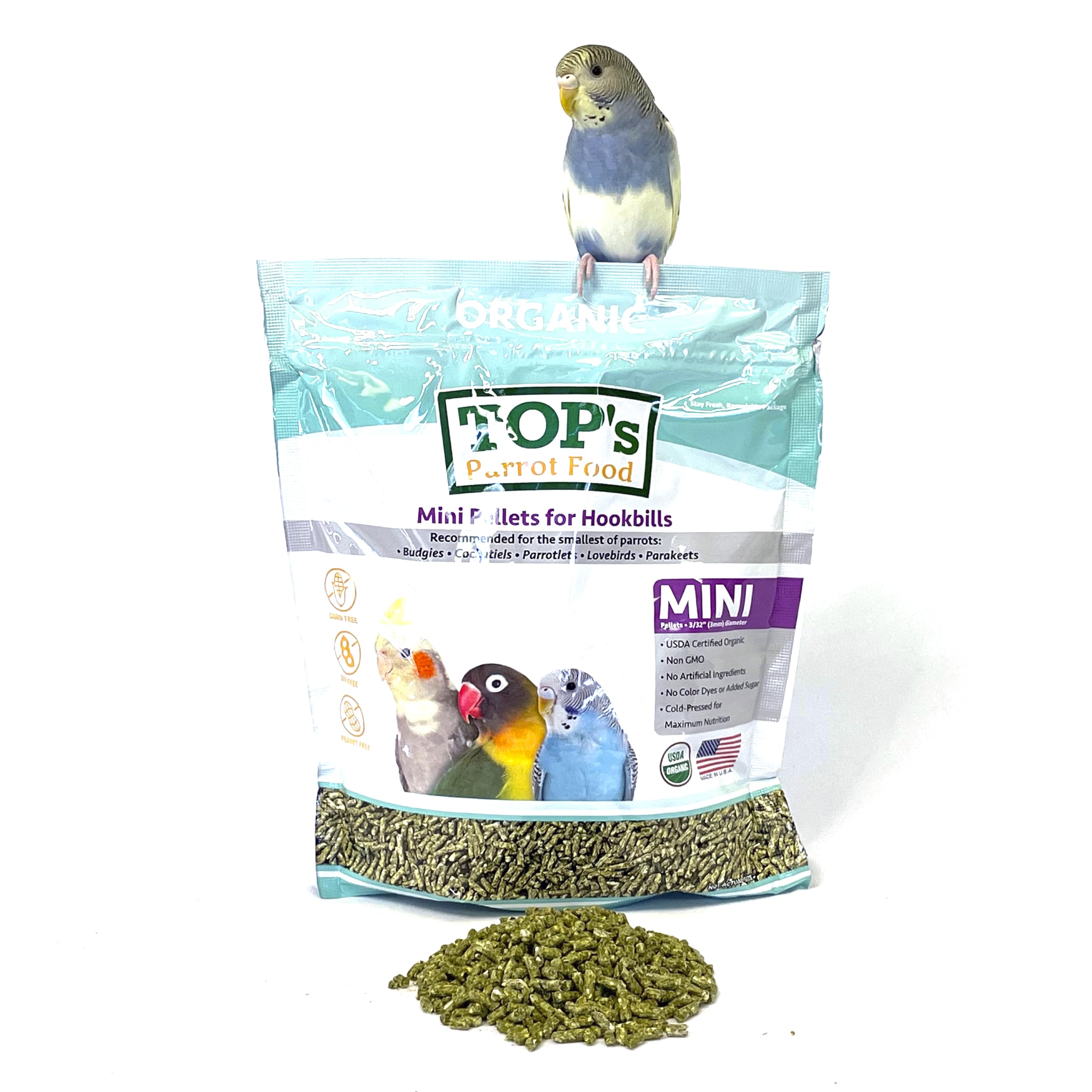
TOP’s Parrot Food Mini Pellets represents the gold standard for owners who prioritize ingredient purity above everything else. This is the only USDA Certified organic complete diet bird food on the market that is completely corn-free and soy-free. The cold-pressed manufacturing process retains natural enzymes and nutrients that high-heat extrusion destroys, making every tiny pellet densely nutritious.
Measuring just 3/32 inches in diameter, these mini pellets are ideal for cockatiels, lovebirds, and budgies with small beaks. The formula avoids all synthetic preservatives, artificial colors, and added sugars. Instead, natural preservation comes from rosemary, rose hips, lemon, and orange peel. Owners transitioning their birds from seed diets report that moistening the pellets slightly helps with acceptance during the first few weeks.
If clean eating is your top priority, this is the pick. The cost is higher per pound than conventional brands, but the nutrient density means your bird eats less volume while getting more actual nutrition. One 1-pound bag can stretch surprisingly far for a single cockatiel. The absence of corn and soy makes it especially suitable for birds with sensitive digestive systems.
Why we love it
- USDA Organic certified with no GMO ingredients
- Completely free of corn, soy, and peanut fillers
- Cold-pressed to retain natural nutrition
- No artificial colors, flavors, or preservatives
Good to know
- Higher cost per pound than standard blends
- Some birds need time to accept the texture and taste
3. Psittacus Mini

Psittacus Mini comes from a European manufacturer with over two decades of avian nutrition expertise, and that experience shows in the formulation. This extruded pellet is designed specifically for species that consume mainly low-fat seeds in nature — cockatiels, sun conures, and Galah cockatoos. The low-fat profile helps prevent obesity and fatty liver disease, two common issues in captive birds fed high-fat seed mixes.
The pellets have a naturally fruity aroma that many birds find appealing, and the small size works well for cockatiel beaks. Psittacus uses no artificial coloring, no synthetic antioxidants, and 100% non-GMO ingredients. The formula is intended to constitute the complete diet, though owners can supplement with fresh fruits and vegetables for variety. Birds that are picky about other pellet brands often take to this one quickly.
For owners who want a species-specific, low-fat pellet engineered by avian nutrition specialists, Psittacus Mini is an excellent middle-ground choice between budget blends and ultra-premium organic options. The 450-gram bag is compact but nutrient-dense, and the natural apple-like smell makes mealtime more inviting for cautious eaters.
Why we love it
- Low-fat formula designed specifically for cockatiels
- No artificial colors or synthetic antioxidants
- Pleasant natural aroma that attracts picky birds
- European manufacturing with 20+ years of avian expertise
Good to know
- Smaller bag size requires more frequent repurchasing
- Some owners wish for more detailed ingredient sourcing info
4. LAFEBER’S Classic Avi-Cakes
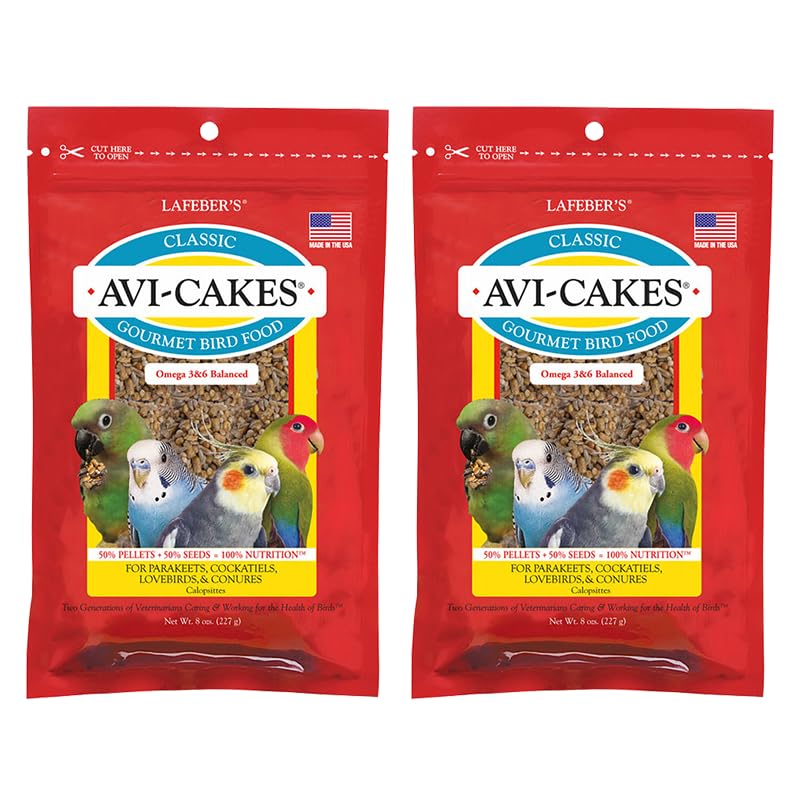
LAFEBER’S Classic Avi-Cakes are a unique hybrid between a treat and a complete food, baked into convenient cake form using non-GMO, human-grade ingredients. They work brilliantly as a transition tool for birds stubbornly refusing to leave an all-seed diet. The texture is soft enough for small beaks to break apart, yet dense enough to provide balanced nutrition with protein, grains, and natural flavors.
Each package contains two 8-ounce bags, and the cakes can be broken into smaller pieces for training rewards or clipped into a treat holder for foraging enrichment. Owners consistently report that even the pickiest cockatiels eagerly devour these cakes, often preferring them over plain seeds. The ingredient list is clean, with no artificial preservatives or by-products, and the brand has built strong trust among avian veterinarians over decades.
Use Avi-Cakes as a stepping stone to a pellet-based diet or as a daily enrichment food that adds texture and variety. They are not intended to replace a complete pellet diet long-term, but they make the journey from seed addiction to balanced eating far less stressful for both you and your bird. The 2-pack format is convenient for travel or rotating freshness.
Why we love it
- Human-grade, non-GMO ingredients you can trust
- Excellent for transitioning seed-addicted birds
- Soft texture easy for cockatiels to break and eat
- Doubles as foraging treat for mental stimulation
Good to know
- Best used as a supplement, not a standalone complete diet
- Birds may love them so much they refuse other food
5. Vitakraft Vita Smart Gourmet
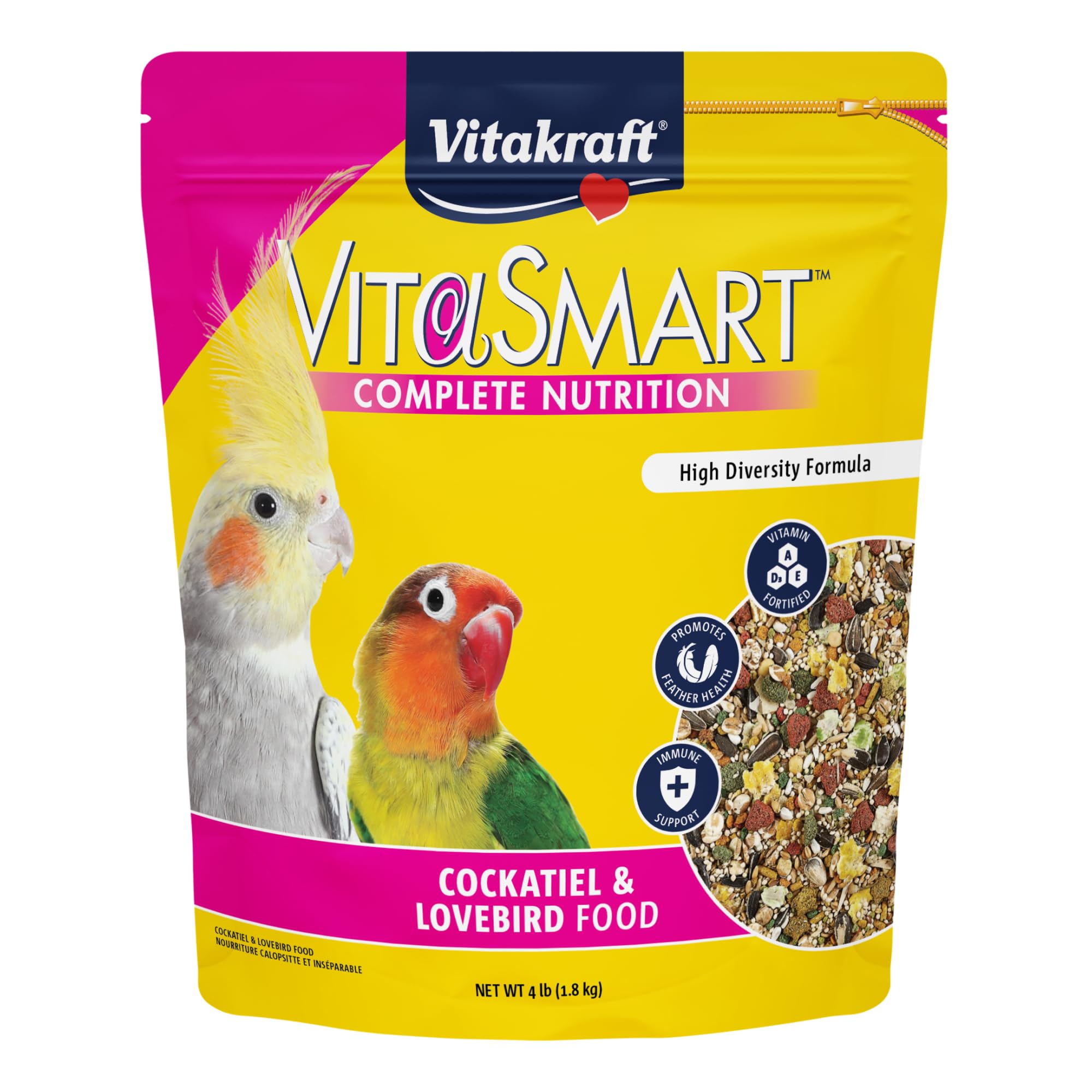
Vitakraft brings over 180 years of pet nutrition experience to this vitamin-fortified seed and fruit blend, making it an approachable entry point for new cockatiel owners. The mix includes select seeds, grains, nutrient-rich pellets, and real pieces of papaya and pineapple that add natural sweetness and texture. The omega-3 and omega-6 fatty acid inclusion helps maintain radiant feathers and immune function at a very accessible price point.
For birds currently on a plain seed diet, this blend offers a noticeable upgrade in variety and nutritional completeness without the shock of switching straight to pure pellets. The 4-pound bag lasts a good while for a single cockatiel, and the added vitamins and minerals fill nutritional gaps that plain seed mixes leave wide open. Many owners report their birds eagerly digging through the mix to find the fruit pieces first, then circling back for the rest.
This is the smart choice for budget-conscious owners who want to improve their bird’s diet without jumping to premium pellet prices. Keep in mind that some particularly picky birds may ignore the fruit and pellet pieces, so monitor eating habits. For the price, it delivers more nutritional value than basic seed-only bags and introduces your cockatiel to a wider range of flavors.
Why we love it
- Real fruit pieces encourage natural foraging behavior
- Omega fatty acids support feather and immune health
- Budget-friendly price with vitamin fortification
- Trusted brand with nearly two centuries of experience
Good to know
- Seed-heavy mix may encourage selective eating
- Some birds avoid the fruit and pellet components
Safety & Care Tips
Transitioning to a Pellet Diet
Switching a seed-addicted cockatiel to pellets requires patience. Gradually mix increasing amounts of pellets into their current food over 2–4 weeks. If your bird resists, try moistening pellets slightly with warm water or offering Lafeber’s Avi-Cakes as a bridge. Never fast your bird to force acceptance — this can cause serious health issues. Monitor weight and droppings daily during the transition.
Proper Food Storage
Bird food spoils faster than most owners realize. Store pellets and seed mixes in an airtight container in a cool, dry place away from direct sunlight. Avoid buying more than a 4–6 week supply at a time to ensure freshness. Discard any food that smells musty, shows signs of mold, or has visible insect activity. Wash and dry food bowls thoroughly before each refill to prevent bacterial growth.
FAQ
Can cockatiels eat only seeds?
How do I transition my cockatiel from seeds to pellets?
What ingredients should I avoid in cockatiel food?
Final Thoughts: The Verdict
For most cockatiel parents, the best cockatiel food winner is the Kaytee Forti-Diet Egg-Cite because it balances proven taste acceptance with solid nutritional fortification at a reasonable price. If you want pristine, organic ingredients with zero corn or soy, grab the TOP’s Parrot Food Mini Pellets. And for owners dealing with a stubborn seed addict who needs gentle encouragement, nothing beats the LAFEBER’S Classic Avi-Cakes as a transition tool.