
A single roundworm burden can set a ewe back weeks, drop weight gain across your entire flock, and leave lambs struggling to thrive. Choosing the wrong dewormer for sheep doesn’t just waste money—it risks resistance that makes the whole flock harder to manage. The market is split between concentrated drench powders, ready-to-use ivermectin suspensions, and broad-spectrum fenbendazole liquids, each with a different target range and withdrawal protocol. Understanding which active ingredient fits your specific parasite profile is the difference between a clean herd and a recurring problem.
I’m Mo Mahin — the founder and writer behind Furric. My approach to evaluating livestock health products combines analysis of published parasitology data, direct comparison of formulation concentrations, and extensive review of aggregated owner feedback across thousands of real-world flock treatments.
After comparing concentration ratios, parasite coverage lists, and ease-of-dosing across the top shelf options, the right pick comes down to your flock size and target worms. This guide breaks down the market for a dewormer for sheep into actionable tiers so you can treat with confidence.
How To Choose The Best Dewormer For Sheep
Sheep parasites vary by region, climate, and grazing management, so a single active ingredient rarely covers every threat. The three main chemical classes available in retail dewormers each target a specific range of internal parasites, and rotating between classes is the standard practice to slow resistance buildup in your flock.
Active Ingredient: Ivermectin, Fenbendazole, or Levamisole
Ivermectin is the most widely used broad-spectrum macrocyclic lactone, effective against gastrointestinal roundworms, lungworms, and nasal bots in sheep. Fenbendazole, a benzimidazole, offers a different mode of action and covers tapeworms more reliably than ivermectin alone. Levamisole, found in some drench powders like the soluble option, targets resistant strains and has a very short withdrawal time—ideal for ewes near lambing. Matching the active ingredient to your flock’s specific parasite history is step one.
Withdrawal Period
Every dewormer requires a specific withdrawal time before meat, milk, or wool can enter the human food chain. Ivermectin drenches typically carry an 11-day meat withdrawal for sheep, while fenbendazole products often require a 6-day wait. Levamisole-based drenches generally clear faster, sometimes as short as 3 days. Always verify the label of your exact product, especially if you are treating lactating ewes.
Formulation and Ease of Dosing
Powder drenches require mixing with water and careful measurement to hit the right concentration per head, but they tend to be the most cost-effective per dose for large flocks. Ready-to-use liquid suspensions come pre-mixed with a known mg/mL concentration, making dosage calculation simpler and reducing the risk of under-dosing—a major contributor to drug resistance. For small flocks or first-time users, a liquid with a measuring syringe is the safer bet.
Parasite Coverage Spectrum
Not all dewormers kill the same worms. A product labeled for “gastrointestinal roundworms” may not touch tapeworms or liver flukes. If you have confirmed Haemonchus contortus (barber pole worm) in your flock, you need an active that penetrates the abomasum effectively—ivermectin and fenbendazole both work, but resistance patterns vary locally. Fecal egg count testing before and after treatment is the only reliable way to know if your chosen product is still effective on your farm.
Quick Comparison
On smaller screens, swipe sideways to see the full table.
| Model | Category | Best For | Key Spec | Amazon |
|---|---|---|---|---|
| Durvet Ivermectin Sheep Drench | Oral Drench | Proven single-active broad-spectrum treatment | 0.08% Ivermectin | Amazon |
| Luxekem Fenbendazole Dewormer | Liquid Suspension | Gentle tapeworm & roundworm control | 10% Fenbendazole | Amazon |
| Agrilabs Prohibit Soluble Drench | Powder Drench | Cost-effective large-flock dosing | Levamisole HCl 46.8g/lb | Amazon |
| NateNatenight Ivermectin Liquid | Oral Liquid | Multi-species farm with sheep & poultry | 1% Ivermectin | Amazon |
| QIFEISHANKA Ivermectin Suspension | Liquid Suspension | Entry-level poultry and small flock care | Ivermectin Base | Amazon |
In‑Depth Reviews
1. Durvet Ivermectin Sheep Drench

Durvet’s Ivermectin Sheep Drench is the industry-standard oral solution for sheep producers who need a reliably broad-spectrum macrocyclic lactone. At a 0.08% ivermectin concentration, this ready-to-use liquid targets adult and fourth-stage larvae of gastrointestinal roundworms, lungworms, and all larval stages of nasal bots with a single application. The formula is stored at label concentration, so you dose by weight (1 mL per 10 lbs of body weight) without any mixing or guesswork—a major advantage when treating 50 or more head at once.
Owner feedback consistently highlights its predictable efficacy against the most common sheep parasites like Haemonchus and Ostertagia, and many long-term users report rotating it with a benzimidazole to manage resistance across multiple seasons. The 11-day meat withdrawal is clearly stated, and the product’s stable shelf life at room temperature makes it practical for barn storage. The bottle includes a measuring cup, but for precise dosing across varying ewe weights, a dosing syringe with mL markings is recommended.
The one limitation is its lack of tapeworm coverage—if your fecal samples show Monizia, you will need a fenbendazole or praziquantel-based product in the rotation. But for the highest-impact single-active treatment against roundworms and lungworms in a mid-to-large flock, Durvet’s ivermectin drench remains the benchmark that other products are measured against.
Why we love it
- Ready-to-use liquid requires no mixing for fast dosing of large groups
- Proven efficacy against fourth-stage larvae and nasal bots not covered by all products
- Over 1,700 verified reviews with a 4.7-star average confirm real-world reliability
Good to know
- Does not treat tapeworms — requires a separate product for full-spectrum rotation
- 11-day meat withdrawal longer than levamisole alternatives
2. Luxekem Fenbendazole Dewormer, 100ml
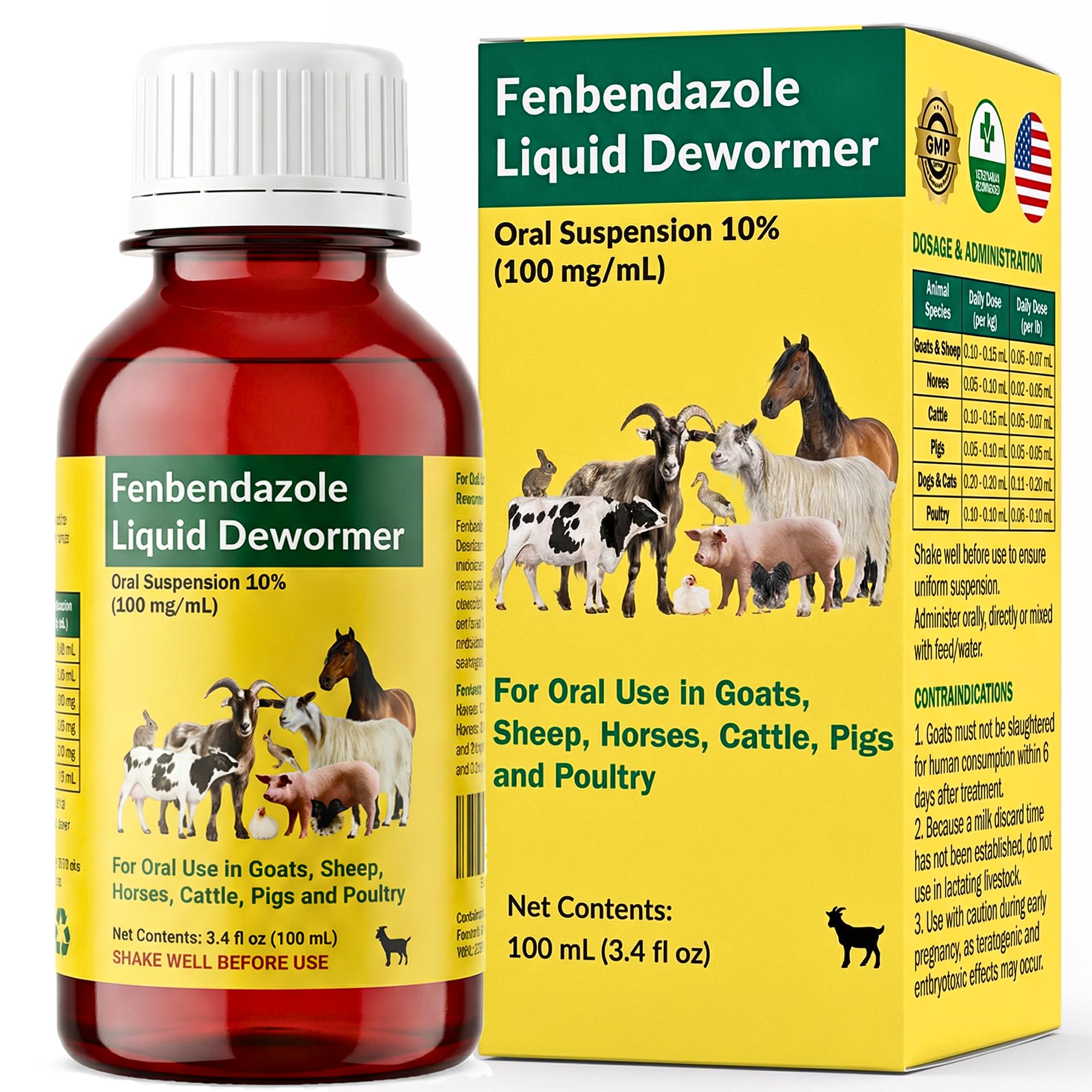
Luxekem’s fenbendazole suspension brings a different mode of action to the sheep deworming arsenal—one that covers tapeworms, giardia, and the full roundworm complex that ivermectin alone misses. At a 10% fenbendazole concentration, this liquid targets the parasite’s microtubule formation, making it an ideal rotational partner to macrocyclic lactones. The ready-to-use oral suspension includes built-in measuring marks on the bottle, so you can dose by weight without an extra syringe, and it mixes into feed or water for group treatment.
Sheep owners report it works gently on the digestive system, which matters when treating pregnant ewes or lambs during weaning stress. The formula is also labeled for goats, poultry, and other livestock, making it a practical single-bottle solution for multi-species farms. The withdrawal period for fenbendazole in sheep is generally shorter than ivermectin, though you must confirm the exact label of your batch—most fenbendazole products require a 6-day meat withdrawal.
The smaller 100 ml bottle size means this is best suited for flocks under 30 head unless you buy multiple units. For the farm manager who wants a gentle, broad-spectrum benzimidazole option that handles tapeworms without the harshness of some chemical classes, Luxekem delivers a quality formulation at a mid-tier price point that works reliably across multiple species.
Why we love it
- Covers tapeworms and giardia that ivermectin alone does not reach
- Gentle enough for pregnant ewes and young lambs during treatment
- Built-in measuring marks simplify dosing without extra equipment
Good to know
- 100 ml bottle covers a smaller flock than gallon-sized drenches
- Fenbendazole resistance is rising in some regions — confirm with fecal egg counts
3. Agrilabs Prohibit Soluble Drench Powder

Agrilabs Prohibit is a levamisole hydrochloride soluble drench powder that delivers a chemically distinct class of dewormer—perfect for rotating away from ivermectin and fenbendazole to slow resistance. Each pound of powder mixes into water to create a drench that targets nine major worm types including lungworms, stomach worms, and intestinal roundworms in sheep and cattle. The standout advantage is the very short 3-day meat withdrawal, making this the go-to choice when treating ewes close to market or lambing.
The powder is lightweight at 1.9 ounces and stores indefinitely in a cool dry place, unlike liquids that can settle or expire. Keep in mind that levamisole works best against active adult worms, not encysted larvae, so it’s often paired with an ivermectin or fenbendazole treatment six weeks later for full seasonal coverage.
Dosing requires accurate scale measurement—each bag treats a specific volume of drench, and under-dosing is the fastest route to resistance. A kitchen gram scale is highly recommended for splitting the powder into precise doses for smaller flocks. For the budget-conscious shepherd who prioritizes rapid withdrawal and resistance management, Prohibit is the smartest dollar spent per treated head.
Why we love it
- Shortest meat withdrawal at 3 days — ideal for market-ready sheep
- Cost-effective per dose for large flocks compared to liquid alternatives
- Distinct chemical class supports dewormer rotation protocols
Good to know
- Requires mixing and precise scale measurement for accurate dosing
- Does not treat encysted larvae or tapeworms effectively
4. NateNatenight Ivermectin Liquid, 100ml
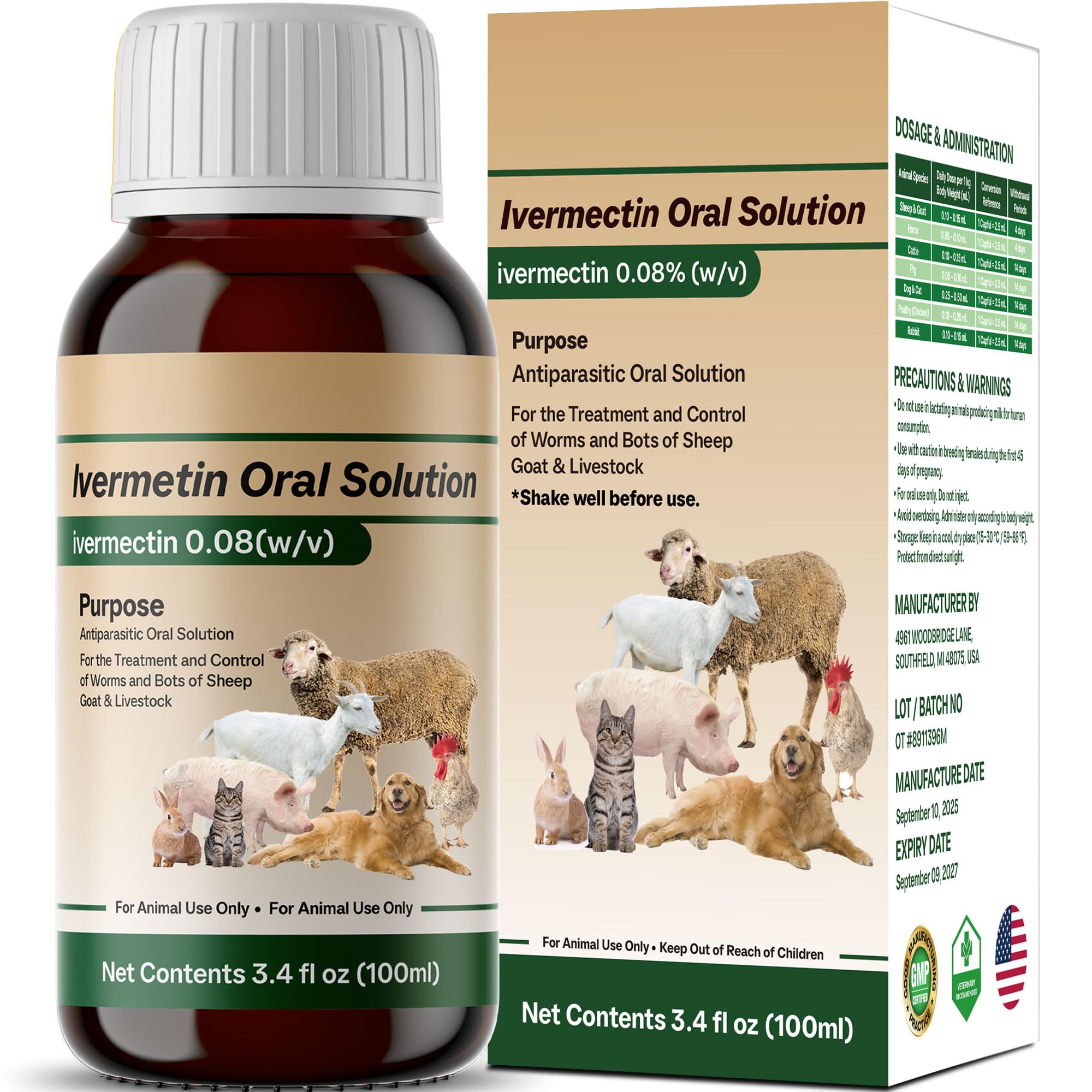
NateNatenight’s Ivermectin Liquid offers a higher concentration—1% ivermectin—than the standard 0.08% sheep drench, meaning a smaller volume delivers the same active dose. This 100 ml bottle is labeled for sheep, goats, and poultry, making it a strong multi-species option for the small farm that runs a mixed herd. The liquid is ready-to-use with a measured dropper or syringe, and the higher concentration reduces the physical volume you need to administer per animal, which is helpful when dosing resistant ewes that dislike large liquid amounts.
Customer experiences lean heavily positive, with many verifying its effectiveness against roundworms and external parasites when dosed correctly by weight. Several long-term users report using a dilution protocol to adapt the 1% ivermectin for small animal heartworm prevention, but for sheep, the straight label dosing of 1 mL per 50 lbs is straightforward. The manufacturer includes a lifetime customer support guarantee, which provides reassurance if you have dosing questions for unusual flock sizes.
The trade-off is that the 100 ml bottle treats a limited number of sheep at the 1% concentration—roughly 8 adult ewes per bottle at typical dosing—so larger flocks will need multiple units. For the shepherd with under 20 head who also keeps goats or chickens and wants a single storage bottle that handles multiple species, this 1% ivermectin liquid is a practical and potent choice.
Why we love it
- Higher 1% concentration reduces administered volume per dose
- Labeled for sheep, goats, and poultry — one bottle for multi-species farms
- Lifetime customer support included for dosing assistance
Good to know
- 100 ml bottle treats fewer than 20 adult sheep — buy multiple for larger flocks
- Withdrawal period for 1% ivermectin in sheep must be verified on label
5. QIFEISHANKA Ivermectin Suspension, 1 fl. oz.
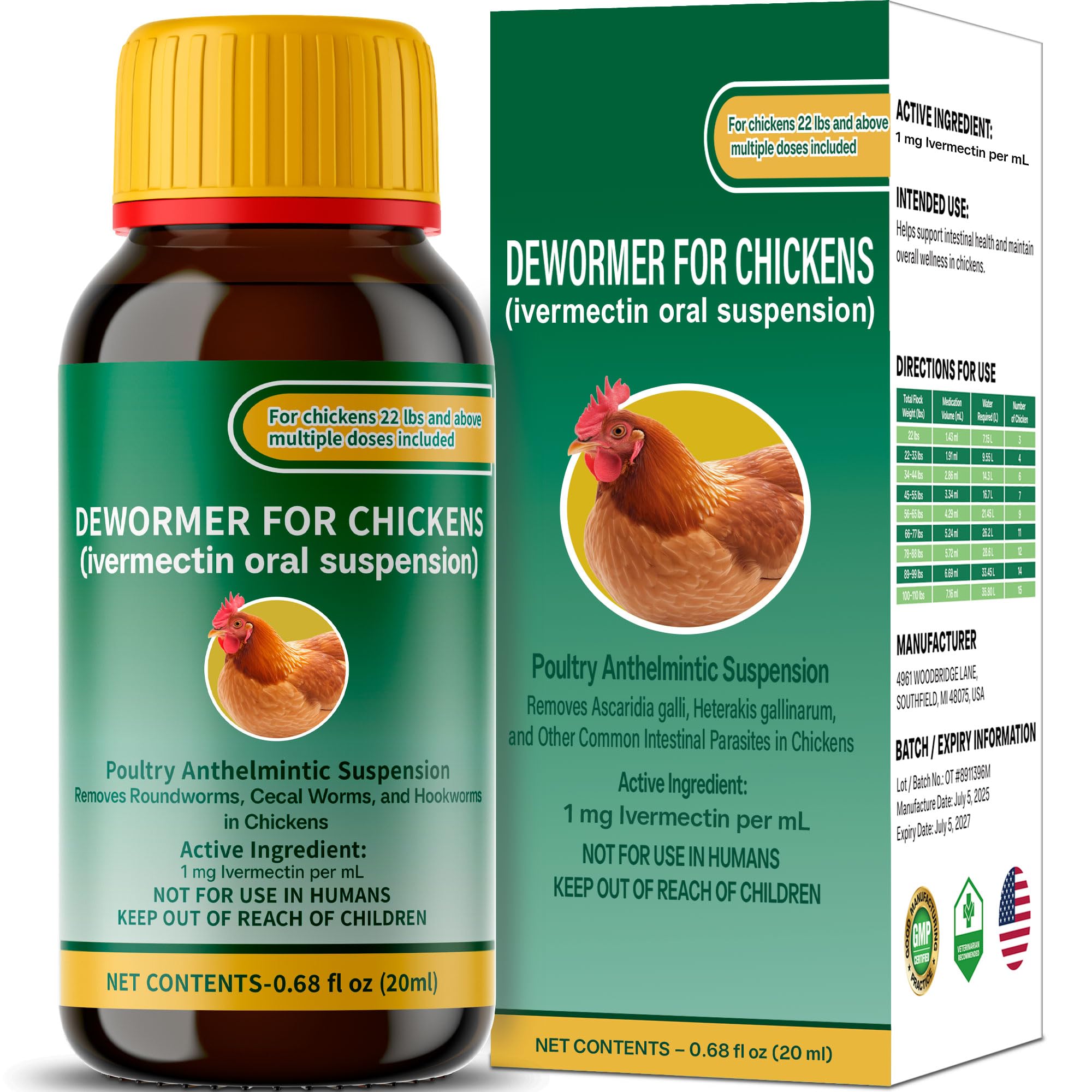
QIFEISHANKA’s Ivermectin Suspension is formulated primarily for chickens but carries ivermectin as its active base, which some owners have used off-label for small sheep flocks in a pinch. The product comes as a 1 fluid ounce bottle with a precision measuring syringe, and the instructions recommend mixing it into drinking water for group administration. For poultry, the reviews confirm effective clearance of cecal worms and roundworms with no observed side effects.
For sheep specifically, this product sits in a gray area—it is not labeled for ovine use, and the concentration is not standardized to the typical sheep drench ratios. Owners considering it for sheep would need to calculate their own dosage conversion from the poultry rate, which introduces significant risk of under- or over-dosing. The small bottle size (1 fl. oz.) also limits how many animals it can treat even if dosed conservatively.
Reviews are mixed—some buyers report success when using it for small pets, while others found the price high for the volume and the printed directions hard to read. This product earns a spot in this guide only as an entry-level reference point for first-time buyers who may see it listed alongside sheep products. For a dedicated sheep dewormer, the Durvet or Luxekem options above are the safer, more reliable investments that come with species-specific labeling and verified dosing.
Why we love it
- Comes with a precision measuring syringe for accurate mixing
- Lifetime customer support included with purchase
Good to know
- Not labeled for sheep — off-label use requires careful conversion calculations
- Very small 1 fl. oz. bottle treats a limited number of animals
- Mixed reviews on price-to-volume ratio and instruction clarity
FAQ
How often should I deworm my sheep each year?
Can I mix two different dewormers together for better coverage?
What is the difference between a drench and an injectable dewormer for sheep?
How do I calculate the correct dose for my ewe?
Can I use a horse or cattle dewormer on my sheep?
Final Thoughts: The Verdict
For most flock owners, the best dewormer for sheep is the Durvet Ivermectin Sheep Drench because it combines a proven broad-spectrum active with ready-to-use liquid convenience and over a decade of verified field results. If you need tapeworm coverage and a gentle formulation for pregnant or young animals, grab the Luxekem Fenbendazole Dewormer. And for budget-conscious rotation protocols with the shortest withdrawal time, nothing beats the Agrilabs Prohibit Soluble Drench Powder.