
A diabetes diagnosis for your cat can feel overwhelming, but you are not alone in this journey. With the right nutrition, many diabetic cats go on to live full, energetic lives — some even achieving remission. The food bowl becomes your most powerful tool for managing blood sugar, supporting a healthy weight, and giving your feline companion the best possible outcome.
I’m Mo Mahin — the founder and writer behind Furric. I’ve spent countless hours analyzing veterinary nutritional protocols, studying how macronutrient ratios impact feline glucose regulation, and sifting through real owner experiences to identify what truly works for diabetic cats.
Every cat deserves food that heals rather than harms, and this guide walks you through the critical nutritional choices that can stabilize blood sugar and improve quality of life. After extensive research, I’ve curated the best diabetic cat food options to help you navigate this important decision with confidence.
How To Choose The Best Diabetic Cat Food
Selecting the right food for a diabetic cat goes beyond reading the label — it requires understanding how feline metabolism works. Cats are obligate carnivores, meaning their bodies are designed to run on protein and fat, not carbohydrates. When you pair this biological truth with diabetes management, the ideal diet becomes clear: high protein, moderate fat, and very low carbohydrates.
Prioritize Low Carbohydrate, High Protein Formulas
Unlike dogs or humans, cats have a limited ability to handle dietary carbohydrates. For a diabetic cat, carbs spike blood sugar and increase insulin demand. Look for wet foods with under 10% calories from carbs — canned pates and shreds typically deliver this better than dry kibble. Prescription diets like Hill’s m/d and Purina Pro Plan DM are specifically formulated with this macronutrient profile in mind.
Choose Wet Food Over Dry Whenever Possible
Wet food is naturally lower in carbohydrates and higher in moisture, which supports kidney health — a common concern for diabetic cats. The extra water content also helps with hydration and can make your cat feel fuller longer. If your cat absolutely refuses wet food, look for a low-carb dry option and monitor blood sugar closely with your veterinarian.
Consult Your Veterinarian Before Switching
Every diabetic cat is different. Some need a prescription diet to achieve glucose control, while others respond well to carefully selected over-the-counter options. Always involve your vet in the decision, especially if your cat requires insulin. A sudden diet change can affect blood sugar levels dramatically, so transitions should be gradual and monitored.
Quick Comparison
On smaller screens, swipe sideways to see the full table.
| Model | Type | Best For | Key Feature | Amazon |
|---|---|---|---|---|
| Hill’s m/d GlucoSupport | Dry | Diabetes & Weight Management | Clinically proven glucose control | Amazon |
| Purina Pro Plan DM | Wet | Diabetes & Urinary Health | High protein, low carb formula | Amazon |
| Hill’s w/d Multi-Benefit | Dry | Digestive, Weight & Glucose | Multi-condition management | Amazon |
| Hill’s r/d Weight Reduction | Dry | Weight Loss & Diabetes | Clinically tested weight loss | Amazon |
| Royal Canin Urinary Care | Wet | Urinary Health & Hydration | Regulates mineral balance | Amazon |
| Blue Buffalo Weight Control | Wet | Natural Weight Management | L-Carnitine for fat metabolism | Amazon |
| Purina ONE Weight Control | Wet | Weight Control on a Budget | High protein, real salmon | Amazon |
| IAMS Perfect Portions | Wet | Sensitive Digestion & Skin | Grain free with prebiotics | Amazon |
In-Depth Reviews
1. Hill’s Prescription Diet m/d GlucoSupport Dry Cat Food

Hill’s m/d GlucoSupport is the gold standard for diabetic cats, and for good reason. This prescription diet was formulated by veterinary nutritionists specifically to support glucose management and weight control, making it the most targeted option you can buy over the counter through your vet. It packs high-quality chicken protein while keeping carbohydrates optimally low to prevent blood sugar spikes after meals.
What sets this formula apart is the clinical research backing it. The high protein content helps maintain lean muscle mass even as your cat loses weight, while the addition of arginine supports healthy insulin function. Owners report visible improvements in energy and weight within weeks. One cat parent shared that their 15-year-old diabetic cat regained vitality after just one bag, and another noted their finicky diabetic cat actually craves this food — a rare win for picky felines managing a chronic condition.
The main trade-off is cost, which runs higher than standard pet store brands. But given the therapeutic value and the fact that many cats on this diet achieve better glucose control with lower insulin doses, the investment often pays for itself in reduced vet visits and medication costs. Start with the 4-pound bag to test your cat’s response before committing to a larger size.
Why we love it
- Clinically formulated for glucose and weight management
- High protein helps maintain lean muscle during weight loss
- Vet recommended as the #1 therapeutic food for diabetic cats
- Enriched with arginine and antioxidants for immune support
Good to know
- Requires veterinarian prescription to purchase
- Dry food only; some cats need wet food for hydration
- Premium pricing compared to over-the-counter options
2. Purina Pro Plan Veterinary Diets DM Dietetic Management Feline Formula
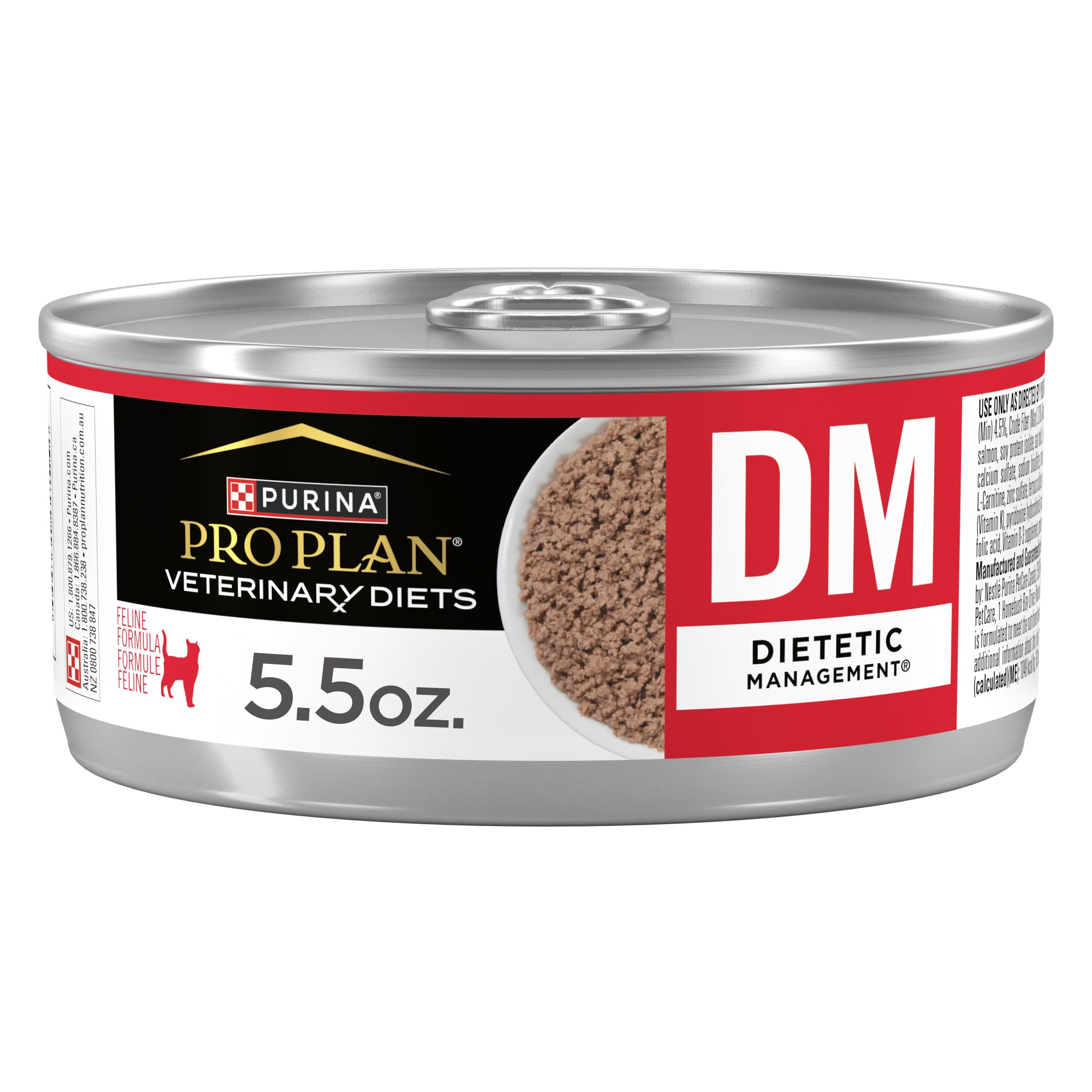
Purina Pro Plan Veterinary Diets DM is a powerhouse in the diabetic cat food world, and it comes with a remarkable track record of helping cats achieve diabetes remission. This wet formula delivers the high-protein, low-carbohydrate profile that diabetic cats desperately need, all in a salmon-based ground texture that even picky eaters tend to love. It is a prescription diet, so a conversation with your veterinarian is required before purchase.
The real magic here is the clinical outcomes. Several cat owners report that their diabetic cats no longer needed insulin after switching to this food exclusively. One detailed story involved a cat with both pancreatitis and diabetes whose blood sugar normalized within roughly five weeks, allowing insulin to be discontinued entirely under veterinary supervision. The formula also includes St/Ox Defense to prevent struvite and calcium oxalate crystals — a smart bonus since diabetic cats are at higher risk for urinary issues. The 5.5-ounce cans provide generous portion sizes for larger cats or those who need multiple meals per day.
On the downside, the cost per case is substantial, especially if your cat requires two cans daily. But for cats who achieve remission, the long-term savings on insulin and supplies more than compensate. Many owners use Amazon Subscribe & Save to bring the price down. This is a serious therapeutic food for cats who need a wet-only or wet-heavy diet to manage their diabetes effectively.
Why we love it
- High protein, low carb formula proven to support glucose control
- Promotes urinary health with St/Ox Defense technology
- Many cats achieve diabetes remission on this diet
- Salmon-based flavor cats find highly palatable
Good to know
- Prescription required from your veterinarian
- Higher cost per case compared to non-prescription wet foods
- Some cats may need portion control to avoid weight gain
3. Hill’s Prescription Diet w/d Multi-Benefit Dry Cat Food

Hill’s w/d Multi-Benefit is the Swiss Army knife of prescription cat diets — it manages glucose, weight, digestion, and urinary health all in one formula. For diabetic cats who also battle chronic digestive upset or recurrent urinary issues, this food addresses multiple problems simultaneously. The recipe is built around an optimal blend of soluble and insoluble fiber, which helps regulate blood sugar by slowing glucose absorption while keeping your cat feeling full between meals.
The real-world results speak volumes. One owner reported that their cat no longer needed insulin after switching to w/d, calling food “the best medicine.” Another shared that this formula resolved severe loose stool issues that had persisted for months after a parasitic infection. The therapeutic L-carnitine levels help metabolize fat and preserve lean muscle, which is critical for diabetic cats who need to lose weight without losing strength. The 17.6-pound bag offers excellent value for multi-cat households or long-term management, though the upfront investment is significant.
Because this is a multi-benefit formula, it may not be as aggressively low in carbohydrates as m/d GlucoSupport or Purina DM. For cats with mild to moderate diabetes who also have digestive or urinary concerns, this balance works beautifully. For cats with severe or unstable diabetes, a more targeted glucose-control diet might be a better first choice. Always transition slowly and monitor blood sugar closely when switching.
Why we love it
- Manages glucose, weight, digestion, and urinary health in one diet
- Optimal fiber blend helps regulate blood sugar absorption
- Therapeutic L-carnitine supports fat metabolism and lean muscle
- Large bag size offers better long-term value
Good to know
- Prescription required from your veterinarian
- Not as low in carbs as dedicated diabetic formulas
- Expensive regardless of where you purchase it
4. Hill’s Prescription Diet r/d Weight Reduction Dry Cat Food

Weight management and diabetes go hand in paw — excess fat makes insulin resistance worse, creating a vicious cycle that’s hard to break. Hill’s r/d Weight Reduction is clinically tested to produce healthy weight loss in just four weeks, making it an excellent tool for diabetic cats who need to shed pounds to improve glucose control. The formula is low in calories but high in fiber, which helps your cat feel satisfied without the constant begging that often derails dieting efforts.
The results from cat owners are consistently positive. One shared that their cat dropped from 17 pounds to 12.8 pounds on this diet, and another saw significant weight loss after their vet recommended it following spay-related weight gain. The therapeutic L-carnitine levels help convert fat into energy while preserving lean muscle tissue. For diabetic cats, even modest weight loss can lead to dramatically better blood sugar readings and, in some cases, reduced insulin requirements.
This is a dry food, so hydration becomes an extra consideration. Make sure your cat has access to plenty of fresh water, or consider mixing in a low-carb wet food to increase moisture intake. The 8.5-pound bag is a reasonable starting size, though your cat will eat smaller portions than with standard foods due to the calorie restriction. Some owners note that their cats beg for more food, but with consistency, most adjust within a week or two.
Why we love it
- Clinically proven to produce weight loss in 4 weeks
- Therapeutic L-carnitine metabolizes fat and preserves muscle
- Fiber blend keeps cats feeling full and satisfied
- Vet recommended for weight-related health conditions
Good to know
- Prescription required; not available over the counter
- Dry food only; additional moisture sources recommended
- Some cats may beg persistently during the adjustment period
5. Royal Canin Feline Care Nutrition Urinary Care Thin Slices in Gravy

Royal Canin’s Urinary Care wet food is an excellent non-prescription option for diabetic cats who also struggle with urinary tract issues — a common comorbidity since high blood sugar can predispose cats to urinary infections and crystal formation. This formula regulates mineral balance to maintain a healthy urine concentration, reducing the risk of struvite crystals while delivering complete and balanced nutrition. The thin slices in gravy texture is highly palatable, making it a great choice for picky eaters who need encouragement to eat.
Cat owners consistently praise this food for its effectiveness. One shared that their cat with cystitis improved dramatically, and another noted that their 10-year-old male with a history of urinary disease ate this food completely despite being notoriously picky. The gravy format naturally increases water intake, which is a critical benefit for both urinary health and diabetes management. Many owners use this as a rotating option alongside prescription diets to give their cats variety without sacrificing nutritional quality.
This is not a prescription diet, so it’s more accessible, but it is also not specifically formulated for diabetes management. The carbohydrate content is moderate rather than low, so it works best for cats with well-controlled diabetes or as a supplementary option. If your cat’s diabetes is unstable, stick with a prescription diabetic diet and use this as an occasional rotation or topper. The 3-ounce cans are perfectly portioned for single meals.
Why we love it
- Supports urinary health by regulating mineral balance
- Thin slices in gravy encourage hydration and are highly palatable
- Non-prescription formula, easy to purchase
- Perfect for cats with concurrent urinary and diabetic concerns
Good to know
- Not specifically formulated for diabetes management
- Cans may arrive damaged during shipping
- Higher cost than standard grocery store wet foods
6. Blue Buffalo True Solutions Weight Control Wet Cat Food

Blue Buffalo True Solutions Weight Control brings natural, high-quality ingredients to the weight management category, making it a solid over-the-counter option for diabetic cats who need to slim down. Real chicken is the first ingredient, and the formula is free from chicken by-product meals, corn, wheat, and soy. The inclusion of L-Carnitine supports fat metabolism, while the fiber blend helps your cat feel fuller between meals — a huge plus for diabetic cats who tend to beg persistently.
Cat owners report real, measurable results. One shared that their cat Lily lost a pound and a half on this food combined with a weight-control dry kibble. Another owner with two overweight cats saw a collective loss of one to two pounds each over several months. The 3-ounce cans are small, which actually helps with portion control — you can feed exactly the right amount without leftovers going to waste. The chicken pate texture is smooth and appealing, even for cats who are usually picky about wet food.
Because this is a weight control formula and not a diabetes-specific diet, it may not be low enough in carbohydrates for cats with unstable blood sugar. It works best for diabetic cats who are overweight and whose glucose levels are already well-managed with medication or insulin. Always check with your vet before making this a primary food for a diabetic cat, but as a supportive option for weight loss, it performs exceptionally well.
Why we love it
- Real chicken as the first ingredient, no by-products
- L-Carnitine supports healthy fat metabolism
- Small cans make portion control easy
- Free from corn, wheat, and soy
Good to know
- Not a diabetes-specific therapeutic diet
- Some cats may not find it palatable
- Packaging may arrive damaged or with missing cans
7. Purina ONE Natural Weight Control Wet Cat Food

Purina ONE Natural Weight Control is a smart, budget-conscious choice for diabetic cats who need weight management support without breaking the bank. Made with real salmon as the primary protein source, it delivers high protein content that helps maintain muscle mass while your cat sheds pounds. The tender flakes in savory sauce texture is appealing to most cats, and the moisture-rich formula supports hydration — a critical factor for diabetic cats who are prone to dehydration and kidney stress.
Owners report that this food helps curb appetite and improve satiety in overweight cats. One cat parent noted that even though it was too early to see significant weight loss, their cat seemed more satisfied and less hungry after meals. Another shared that their one-year-old cat loved the moist shredded texture and showed improved coat shine and energy levels. The omega-6 fatty acids support skin and coat health, which is an added bonus for cats whose coats may have become dull due to metabolic issues.
This is not a prescription diet, so it lacks the targeted macronutrient profile of foods like Hill’s m/d or Purina DM. The carbohydrate content is moderate, making it more suitable for diabetic cats with well-controlled blood sugar rather than those needing aggressive glucose management. Some picky cats may turn up their noses at it, as a few owners noted their felines refused to eat it. But for the price point, it offers respectable nutritional value for diabetic cats on a tight budget.
Why we love it
- Real salmon as the first ingredient at a reasonable cost
- High protein helps maintain muscle during weight loss
- Moisture-rich formula supports hydration
- Omega-6 fatty acids promote healthy skin and coat
Good to know
- Not specifically formulated for diabetes management
- Some cats may refuse to eat it
- Moderate carbohydrate content may not suit
- Moderate carbohydrate content may not suit all diabetic cats
8. IAMS Perfect Portions Sensitive Digestion & Skin Wet Cat Food Pate
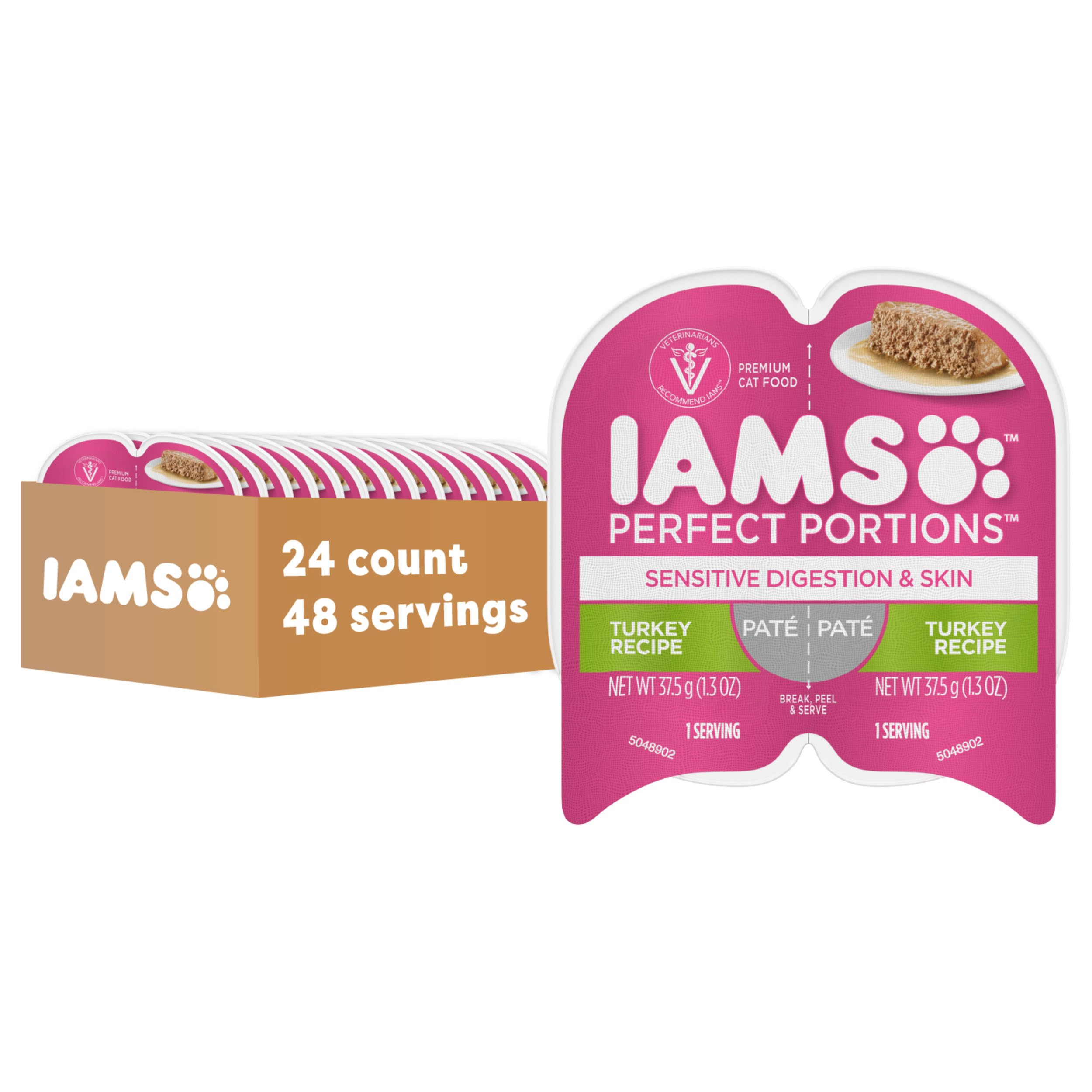
IAMS Perfect Portions Sensitive Digestion & Skin is a grain-free wet food designed for cats with delicate digestive systems — a common concern for diabetic cats whose metabolism is already under stress. Turkey is the primary protein source, and the formula includes a unique fiber blend with prebiotics and beet pulp to support digestive health. Each twin-pack tray contains two perfectly portioned meals, which helps with consistency in feeding schedules — essential for diabetic cats who need meals at regular intervals.
Cat owners have been impressed with the results. One shared that this food finally stopped their cat’s chronic vomiting, reducing episodes to rare hairball-related incidents. Another owner of a picky eater with sensitive skin and a delicate stomach found that their cat tolerated this pâté well, with less vomiting when eating slowly. The grain-free recipe avoids common allergens, and the omega-6 and omega-3 fatty acids support healthy skin and coat. The individual trays eliminate messy leftovers and stale food, ensuring your cat gets a fresh meal every time.
This is not a diabetes-specific formula, so carbohydrate content is not optimized for blood sugar management. It works best as a supportive option for diabetic cats who also struggle with digestive issues, or as a rotation food alongside a primary diabetic diet. Some owners have reported receiving fewer trays than expected in their subscription, so it’s worth counting upon arrival. The pâté texture can vary seasonally, becoming slightly watery in summer and firmer in winter, but overall this is a reliable, gentle option for sensitive cats.
Why we love it
- Grain-free formula with prebiotics supports digestive health
- Twin-pack trays ensure fresh, portion-controlled meals
- Omega fatty acids promote healthy skin and coat
- Highly palatable for picky eaters with sensitive stomachs
Good to know
- Not formulated for diabetes management specifically
- Texture may vary between seasons
- Subscription issues reported with missing trays
Safety & Care Tips
Transition Foods Slowly
Diabetic cats have sensitive systems, and sudden dietary changes can cause dangerous blood sugar fluctuations. Always transition over 7 to 10 days by mixing increasing amounts of the new food with the old food. Monitor your cat’s appetite, energy, and litter box habits during the switch, and check blood glucose levels more frequently if you are testing at home.
Stick to a Consistent Feeding Schedule
Diabetic cats thrive on routine. Feed the same amount at the same times each day, ideally 12 hours apart if your cat requires insulin. Consistent meal timing helps stabilize blood glucose and makes it easier for your veterinarian to adjust insulin doses. Avoid free-feeding dry food unless your vet specifically recommends it.
FAQ
Can diabetic cat food help my cat stop needing insulin?
Is dry food bad for diabetic cats?
Do I need a prescription for diabetic cat food?
Final Thoughts: The Verdict
For most diabetic cats, the best diabetic cat food winner is the Hill’s Prescription Diet m/d GlucoSupport because it delivers clinically proven glucose and weight management with a formula that cats actually enjoy. If you prefer wet food or have a cat with urinary concerns, grab the Purina Pro Plan Veterinary Diets DM for its remission success stories and urinary support. And for cats with digestive issues or multi-condition needs, nothing beats the versatility of the Hill’s w/d Multi-Benefit.