
When strangles hits your barn, every second counts. The bacterium Streptococcus equi subspecies equi can linger on stalls, buckets, and grooming tools for weeks, silently infecting horse after horse. You need a disinfectant that works — not one that just smells like it does.
I’m Mo Mahin — the founder and writer behind Furric. I’ve spent countless hours analyzing veterinary-level disinfectant labels, studying contact times, and reading hundreds of real-world reports from breeders, barn managers, and equine veterinarians to understand what truly stops strangles in its tracks.
For horse owners facing a strangles outbreak, selecting the best disinfectant for strangles is critical to stopping transmission and protecting your barn.
How To Choose The Best Disinfectant For Strangles
Not all disinfectants are created equal when it comes to Streptococcus equi. The bacteria is hardy, protected by a capsule, and can survive in organic matter like manure or hay. You need a product that penetrates biofilm, works at the right dilution, and has a contact time you can actually follow.
1. Active Ingredients That Work
Quaternary ammonium compounds (quats), accelerated hydrogen peroxide, and chlorine dioxide have solid track records against strangles. Avoid bleach — it’s quickly neutralized by organic material and can damage equipment. Look for labels that mention efficacy against equine pathogens or have broad-spectrum virucidal claims.
2. Contact Time Is Non‑Negotiable
A disinfectant that claims 10‑minute kill time is useless if you spray and wipe after 30 seconds. For strangles, most experts recommend a minimum of 10 minutes of wet contact. Check the label, set a timer, and apply enough solution to keep the surface visibly damp.
3. Safety Around Horses
Stalls and aisles need to be disinfected even when horses are present. Harsh fumes can irritate delicate equine airways. Choose products that are labeled as low-odor or fume-free, and always ventilate the area. Some concentrates must be rinsed after use on surfaces horses can lick.
Quick Comparison
On smaller screens, swipe sideways to see the full table.
| Model | Type | Best For | Key Feature | Amazon |
|---|---|---|---|---|
| ProVetLogic Animal Facility Disinfectant | Concentrate | Veterinary clinics & home barns | Kills 50+ pathogens including ringworm | Amazon |
| F10 Ready‑To‑Use Disinfectant | RTU Spray | Exotic pets & quarantine areas | No mixing, no rinsing required | Amazon |
| SNiPER Hospital Disinfectant | RTU Spray | Odor elimination & general disinfection | Chlorine dioxide – fume free | Amazon |
| Nutra‑Max Hospital Grade Concentrate | Concentrate | Kennels & high-traffic surfaces | Makes 32 gallons, kills parvovirus | Amazon |
| In‑Cide Hospital Grade Disinfectant | Ready‑to‑Use | Home & office daily cleaning | Fresh scent, streak‑free finish | Amazon |
| Micro‑Scientific Opti‑Cide Max | Concentrate | Medical equipment & tools | Kills in 2 minutes, won’t cloud plastic | Amazon |
| Zep Commercial Quick Clean | RTU Liquid | Commercial facilities & barns | Lemon scent, no phosphates | Amazon |
| Prevention RTU Disinfectant Cleaner | Ready‑to‑Use | Spas & clinics (eco‑friendly) | Hydrogen peroxide, 1‑minute kill | Amazon |
| ForPro Total‑Cide | 2X Concentrate | Salon & veterinary tools | Anti‑rust, 64 gallons per bottle | Amazon |
| Petology 256:1 Disinfectant | Concentrate | Grooming salons & large barns | 256 gallons per gallon, multiple scents | Amazon |
| LUCAS‑CIDE Salon Disinfectant | Concentrate | Small implements & surfaces | Budget‑friendly, 256 gallons per quart | Amazon |
In-Depth Reviews
1. ProVetLogic Animal Facility Disinfectant

ProVetLogic was designed for the places where strangles hits hardest: veterinary hospitals, boarding kennels, and animal shelters. This concentrated formula kills over 50 infectious agents, including canine parvovirus, feline leukemia, and ringworm — and its label specifically lists broad antimicrobial efficacy that gives you confidence against Streptococcus equi.
The AcuPro bottle makes measuring a breeze; you just squeeze the inner chamber to the marked line and pour into a spray bottle or mop bucket. One 32‑ounce bottle makes up to 32 gallons of ready‑to‑use solution. The lavender scent is mild and pleasant, leaving stalls smelling fresh instead of like a chemical lab. It’s EPA registered and even appears on the N‑list for COVID‑19, showing its versatility.
Barn managers who have used this during outbreaks report that the easy dilution reduces waste and the low‑odor formula means horses don’t cough or show respiratory distress when stalls are treated. If you want a single product that can handle strangles, ringworm, and everyday germs without breaking the bank, this is your answer.
Why we love it
- Broad‑spectrum kill including ringworm and parvovirus
- AcuPro bottle ensures accurate, waste‑free mixing
- Pleasant lavender scent, low irritation to horses
Good to know
- Some users felt the scent was too faint for heavy odor jobs
2. F10 Ready‑To‑Use Disinfectant
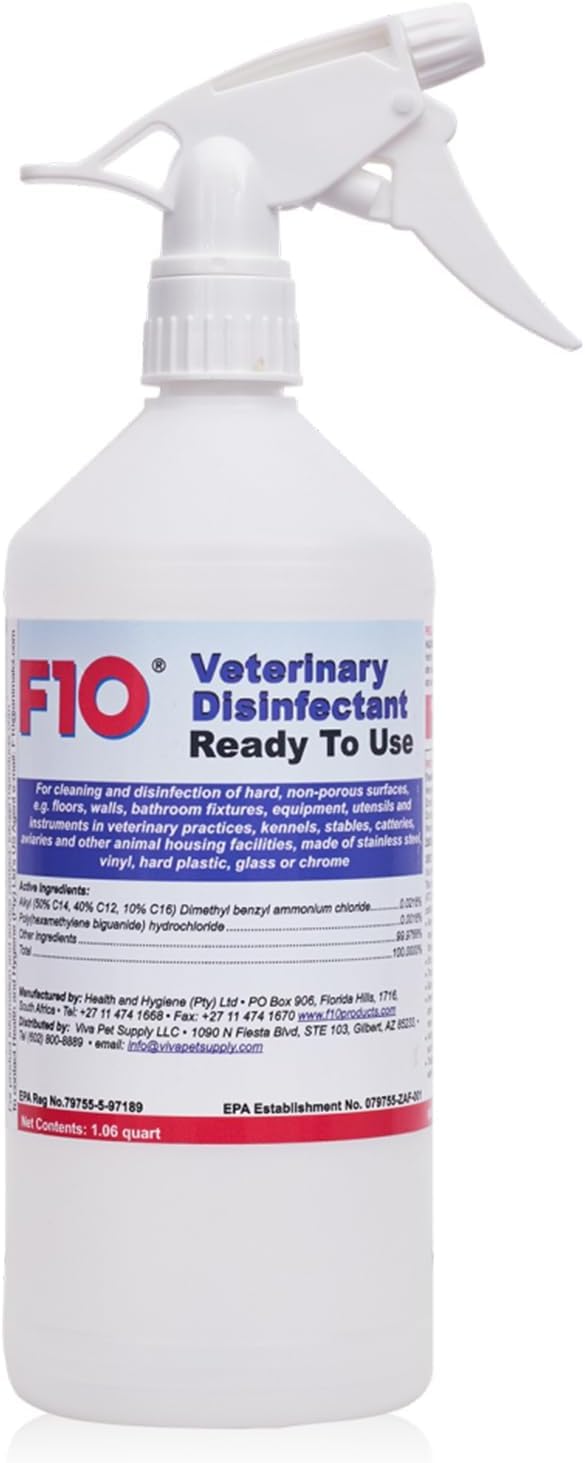
F10 is the gold standard in reptile and exotic animal circles, but its science works equally well on equine pathogens. This ready‑to‑use spray contains F10SC at a 1:250 dilution, offering a powerful yet residue‑free disinfection that kills bacteria, viruses, and fungi. The best part? No rinsing — just spray, let it dry, and you’re done.
The sprayer delivers a fine mist that reaches into cracks and crevices of tack, grooming kits, and stall corners. It’s completely odorless, which is a huge plus when working near horses with sensitive airways. One liter lasts a long time because a little coverage goes far. Users in the horse world praise its convenience for quick disinfection of water buckets, feed tubs, and halters between horses.
Although the price per ounce is higher than concentrates, the time saved by skipping dilution and rinsing makes this a smart choice for busy barns. For quarantine stalls or equipment that needs frequent re‑treatment, F10’s long‑lasting residual activity adds an extra layer of protection.
Why we love it
- No mixing, no rinsing — truly ready to use
- Odorless, safe for respiratory health
- Long‑lasting residual protection
Good to know
- More expensive per gallon than concentrates
3. SNiPER Hospital Disinfectant
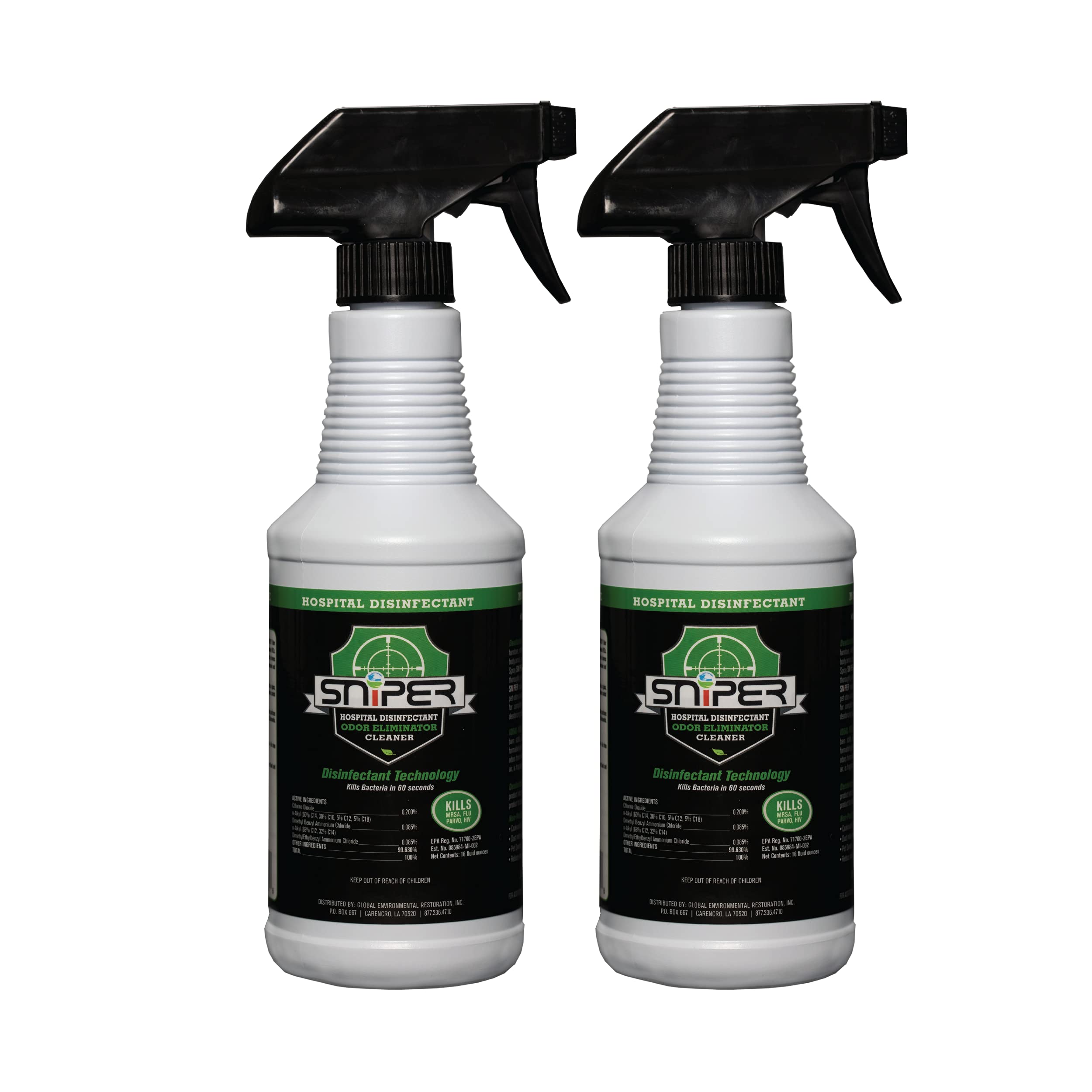
SNiPER uses stabilized chlorine dioxide — a powerful oxidizer that destroys pathogens without harsh fumes. It comes ready‑to‑use in a 16‑ounce spray bottle (two‑pack), making it ideal for spot‑treating high‑touch surfaces like door handles, light switches, and stall latches. Users report it eliminates urine and manure odors completely, not just masks them.
The formula is non‑corrosive and leaves no residue, so you can spray and walk away — no wiping needed. A reviewer noted that the faint scent is gone within minutes, and the product dries clear. For strangles prevention, this is perfect for disinfecting shared equipment like hay nets, grooming brushes, and lead ropes between uses.
Some customers experienced leakage during shipping due to the lack of a top seal, so inspect the bottles upon arrival. That aside, SNiPER’s ability to kill a broad range of pathogens while being gentle on surfaces makes it a reliable everyday companion for barn biosecurity.
Why we love it
- Chlorine dioxide kills pathogens without fumes
- No wiping required, dries clear
- Excellent odor elimination
Good to know
- Shipping leaks reported due to loose caps
4. Nutra‑Max Hospital Grade Disinfectant
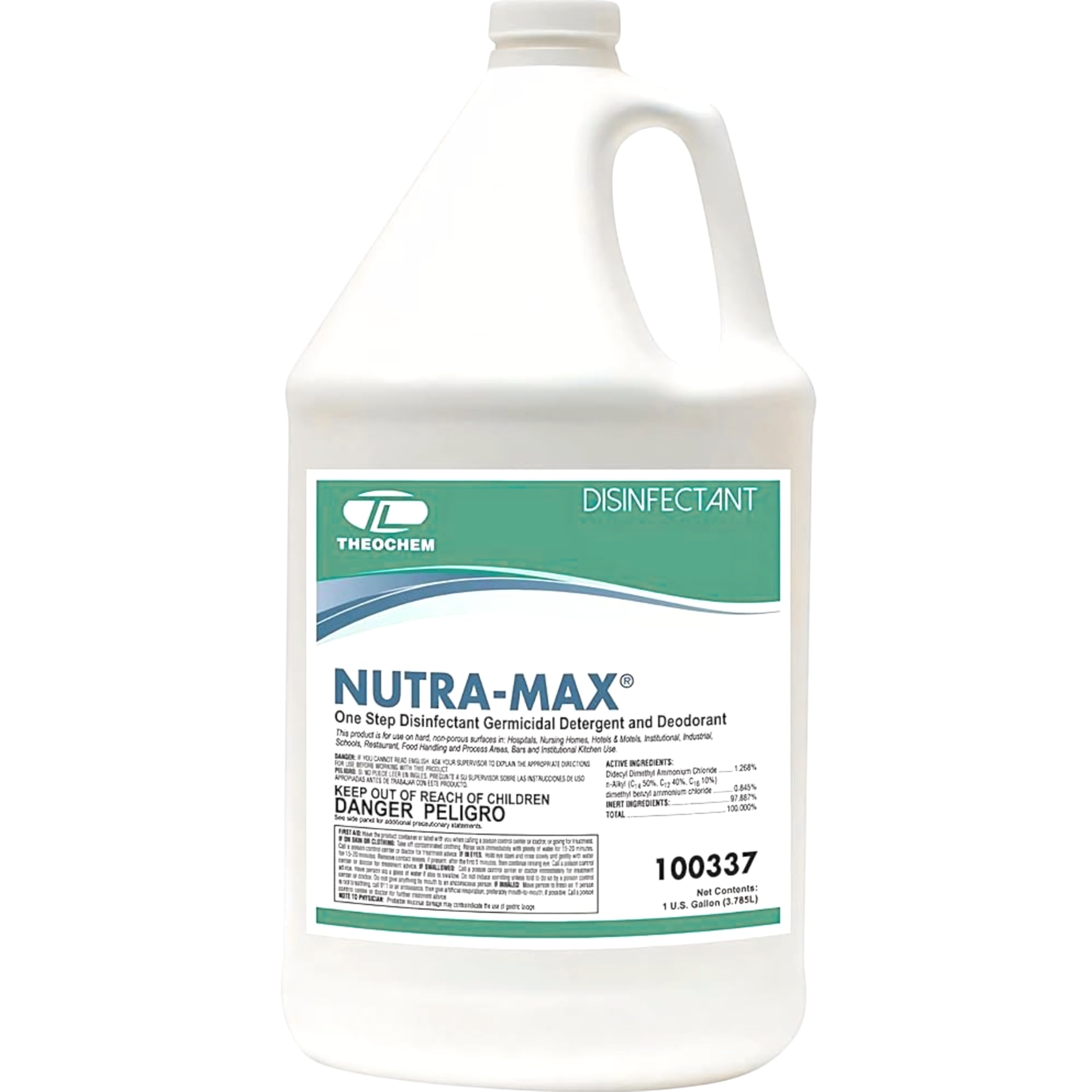
Nutra‑Max is a hospital‑grade quat‑based concentrate that has been trusted in veterinary clinics for decades. At a 1:32 dilution, one gallon makes 32 gallons of ready‑to‑use solution — that’s serious value for barns with large surface areas. The label includes efficacy against canine parvovirus, a cousin in resilience to Streptococcus equi, giving you confidence in its killing power.
The fresh scent is clean without being overpowering, and the neutral pH means it won’t damage sealed wood, tile, or vinyl. Many users mention mopping entire kennels and loving the fresh result. It’s also compatible with electrostatic sprayers, which can help you reach every nook in a stall in minutes.
A few users noted that this is primarily a disinfectant, not a heavy‑duty cleaner — surfaces should be pre‑cleaned of manure and gross soil before application. But for a cost‑effective, vet‑approved disinfectant that works on parvo‑level pathogens, Nutra‑Max is hard to beat.
Why we love it
- Excellent value — 32 gallons per gallon of concentrate
- Pleasant fresh scent, pH neutral
- Kills parvovirus – strong sign it stops strangles
Good to know
- Must pre‑clean heavy soils for best results
5. In‑Cide Hospital Grade Disinfectant
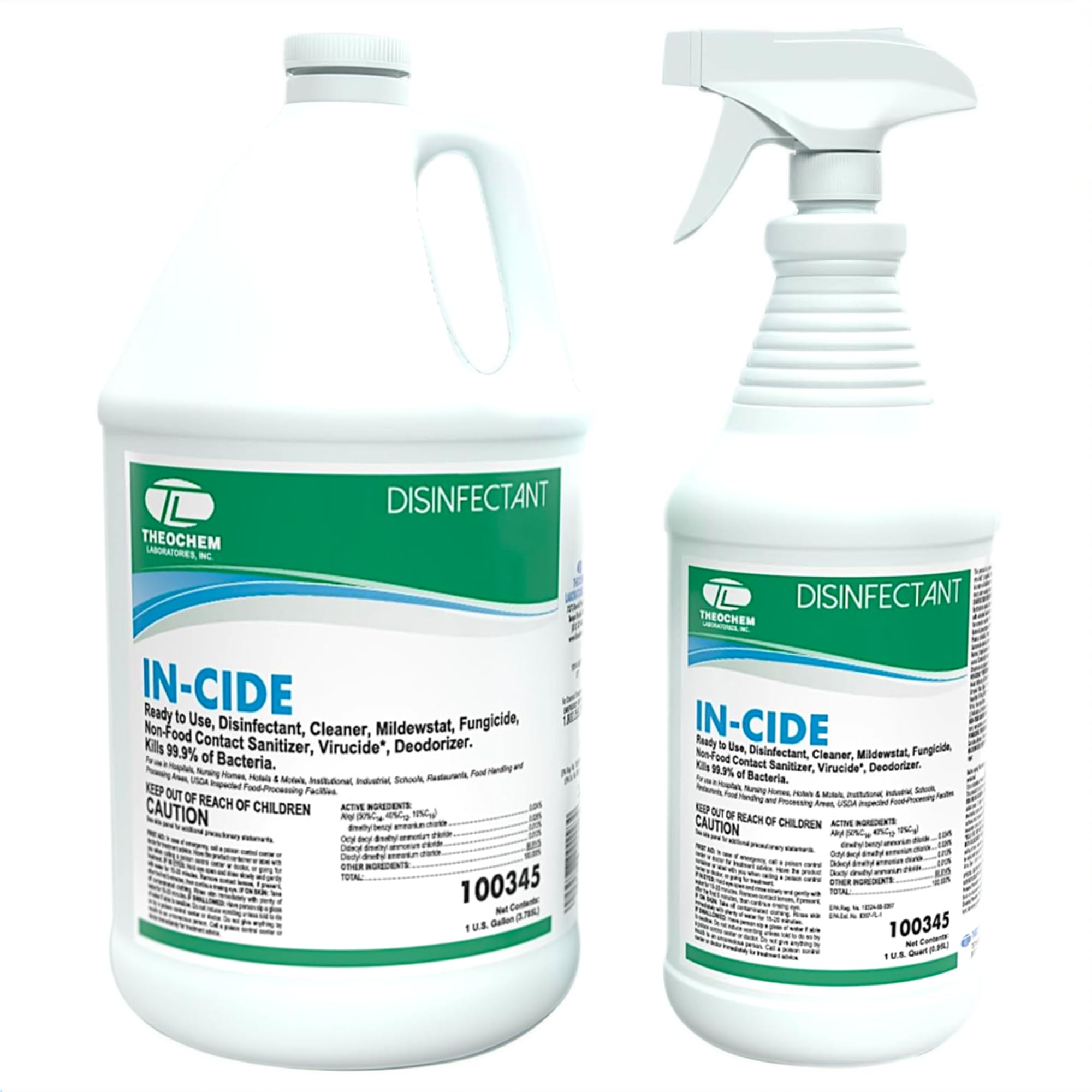
In‑Cide is another Theochem product (same parent as Nutra‑Max) but offered in ready‑to‑use spray form with a fresh scent that people genuinely enjoy. The 1‑gallon plus 32‑ounce bundle gives you a spray bottle and a refill, making it easy to grab and go. It kills 99.9% of viruses and bacteria including MRSA and influenza, with a 10‑minute contact time.
This product is non‑abrasive and safe on granite, stainless steel, and sealed wood, so you can use it in the barn office, kitchen, and wash rack alike. Users rave about the smell — calling it “clean and fresh” without chemical harshness. For daily horse gear disinfection (halters, lead ropes, grooming tools), In‑Cide is gentle enough to use often.
Keep in mind that the sprayer included is basic; you may want to replace it with a heavy‑duty model if you’re covering large areas. But for ready‑to‑use convenience with a scent that doesn’t linger like bleach, In‑Cide is a solid choice for maintaining a low‑level biosecurity routine.
Why we love it
- Fresh, pleasant scent – no chemical smell
- Non‑abrasive, streak‑free on surfaces
- Bundle includes spray bottle and refill
Good to know
- Sprayer quality could be better
6. Micro‑Scientific Opti‑Cide Max

Opti‑Cide Max is a premium concentrate designed for medical and dental offices, so it’s built for the highest standards of disinfection. It kills a broad spectrum of organisms in just two minutes — a huge time‑saver when you’re racing to clean a stall between turnouts. It’s also gentle on plastics, won’t cloud acrylic or polycarbonate surfaces like high‑alcohol sanitizers.
Many veterinary clinics use this for cleaning equipment because it’s bactericidal, fungicidal, virucidal, and tuberculocidal. The pour bottle makes dilution straightforward, and the low odor profile means you can apply it without evacuating the barn. Users in the nail salon world love it, but horse owners will appreciate its efficacy on metal tools, hoof picks, and even dental equipment.
The main drawback is the initial price — it’s higher per gallon than some veterinary‑branded quat disinfectants. But for facilities that need speed and a broad kill claim, Opti‑Cide Max is worth every penny. Plus, a one‑gallon bottle lasts a long time because you only use a small amount per gallon of water.
Why we love it
- Ultra‑fast 2‑minute contact time
- Safe for plastics, won’t cloud tools
- Broad spectrum hospital grade
Good to know
- Higher upfront cost
- Strong odor requires ventilation during application
7. Zep Commercial Quick Clean Disinfectant

Zep Commercial Quick Clean is a workhorse disinfectant used in restaurants, gyms, and commercial facilities. The case of two gallons gives you a huge volume at a price that makes daily mopping affordable. It has a pleasant lemon scent, leaves no sticky residue, and deodorizes as it cleans. The label covers disinfection with a three‑minute contact time — faster than many veterinary disinfectants.
For strangles management, Zep is excellent for large‑area disinfection of aisleways, wash stalls, and grooming bays. It’s designed to work on hard, non‑porous surfaces and can be applied with a mop, sprayer, or even a floor scrubber. Users with dogs in the house mention it keeps the home clean and disinfected, which suggests it’s safe enough for shared spaces.
The only caveat is that Zep is not specifically labeled for equine pathogens, but its efficacy against a broad range of bacteria and viruses means it’s likely effective. If you want a budget‑friendly, high‑volume option for routine barn cleaning, this case of two gallons is a fantastic value.
Why we love it
- Very affordable per gallon (case of two)
- Pleasant lemon scent, residue‑free
- 3‑minute contact time saves time
Good to know
- Not specifically labeled for equine pathogens
- Lemon scent may be strong for some horses
8. Prevention Ready‑To‑Use Disinfectant

Prevention is an EPA‑registered, hospital‑grade disinfectant that uses accelerated hydrogen peroxide (AHP) technology. It’s ready‑to‑use, which means no measuring, no mixing, and no risk of dilution errors. The 1‑gallon refill is designed for spray bottles, and the formula is biodegradable and non‑irritating to eyes and skin — a huge win when working around animals.
This product kills a broad spectrum of pathogens in just one minute, including viruses, bacteria, fungi, and tuberculosis. The lack of harsh chemical fumes makes it ideal for use in occupied stalls or near horses recovering from respiratory illness. Massage therapists and salon professionals love it, but it works just as well on grooming tables, crossties, and saddle racks.
The eco‑friendly angle comes with a trade‑off: AHP solutions have a shorter shelf life once diluted, but since this is ready‑to‑use, that’s not an issue. If you’re looking for a gentle‑yet‑powerful disinfectant that you can spray directly without worrying about residue, Prevention is an excellent choice for daily strangles prevention.
Why we love it
- One‑minute contact time – fastest in this list
- Non‑irritating, biodegradable, low odor
- Ready‑to‑use, no mixing mistakes
Good to know
- Higher cost per gallon compared to concentrates
9. ForPro Total‑Cide

ForPro Total‑Cide is a 2X concentrated hospital‑grade disinfectant specifically formulated to protect metal tools from rust. That’s critical for anyone disinfecting expensive farrier tools, clipper blades, or hoof knives. At just 2 ounces per gallon, a 128‑ounce bottle makes 64 gallons of working solution — incredible value.
The blue solution is easy to see, ensuring coverage, and the fresh scent is pleasant. It deodorizes as it disinfects, making it a go‑to for grooming salons and veterinary clinics. One reviewer mentioned using it to sanitize an area where a cat had been sick, and it worked without any issues. For strangles control, keeping bits, bridles, and dental equipment disinfected is non‑negotiable, and ForPro excels here.
Be aware that the cap is shallow, so you need to follow the dilution instructions carefully — one capful per barbicide jar, not per gallon of water. But once you get the ratio right, this product delivers hospital‑grade disinfection at an unbeatable price per gallon.
Why we love it
- Anti‑rust formula protects expensive tools
- 2X concentrate – 64 gallons per bottle
- Fresh scent, effective deodorizer
Good to know
- Cap is shallow – pay attention to dilution
10. Petology 256:1 Disinfectant
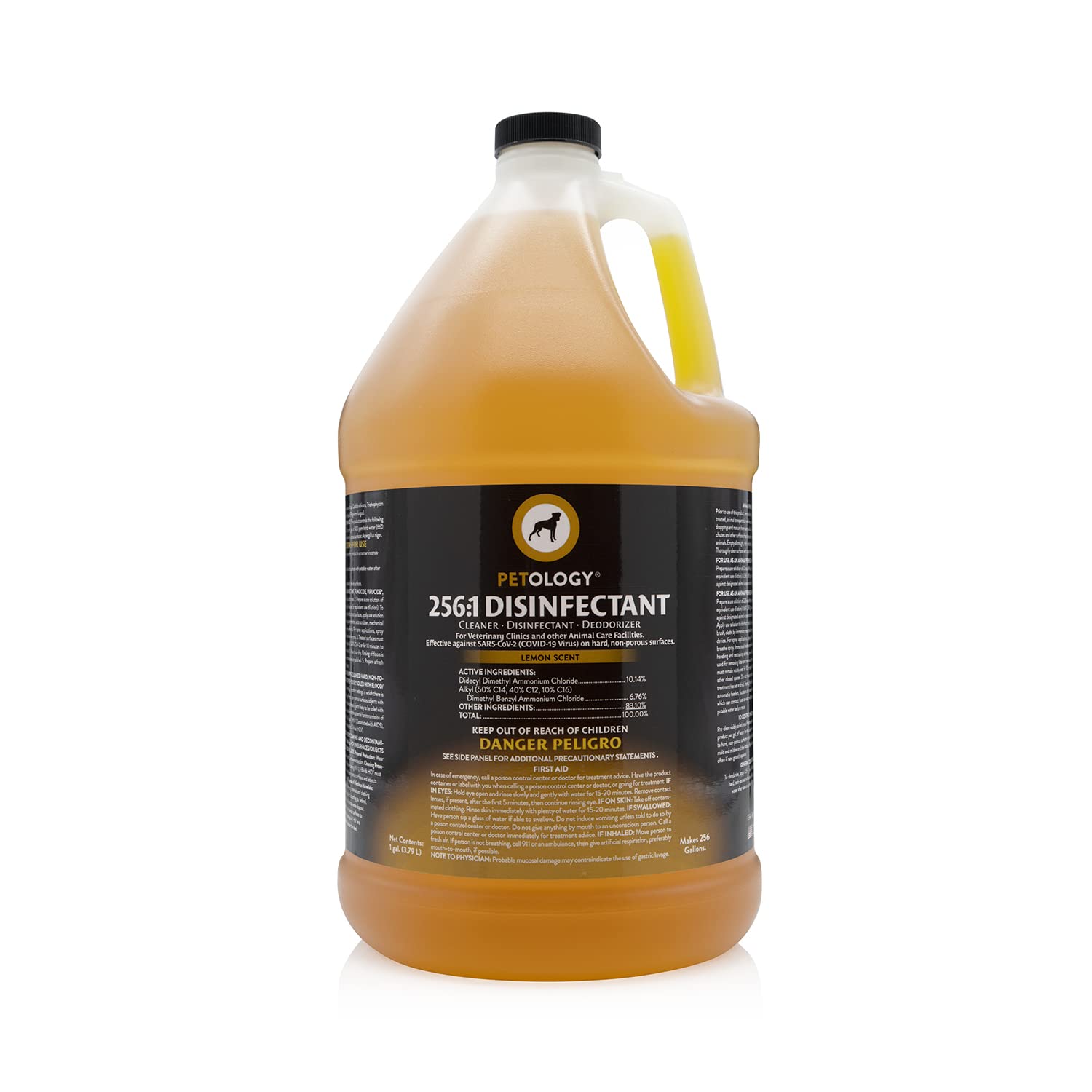
Petology’s 256:1 concentrate is the most economical option on this list if you look at cost per gallon of end‑use solution. One gallon of concentrate makes 256 gallons of disinfectant — that’s enough to clean an entire barn for months. It’s marketed to veterinary clinics, kennels, and grooming salons, and kills a long list of pathogens including parvo, influenza, and rabies.
Available in cherry, fresh, lavender, lemon, and wintergreen scents, you can choose a fragrance that works for your barn. The wintergreen scent is reported to smell heavenly without being overwhelming. Users love that it lasts forever — a little goes a long way. For strangles biosecurity, you can afford to be generous with application, soaking mats, stall floors, and grooming stalls without worrying about cost.
The only challenge is that the concentrate can foam if used in a wet vac, so it’s best applied with a mop or sprayer. Also, you must follow the 10‑minute contact time exactly. But for sheer value and the ability to maintain a constant disinfection schedule, Petology is a barn manager’s best friend.
Why we love it
- Extreme value – 256 gallons per gallon
- Multiple scent options
- Kills parvo, flu, and many other pathogens
Good to know
- Can foam in wet vacs – use mop or sprayer
11. LUCAS‑CIDE Salon Disinfectant
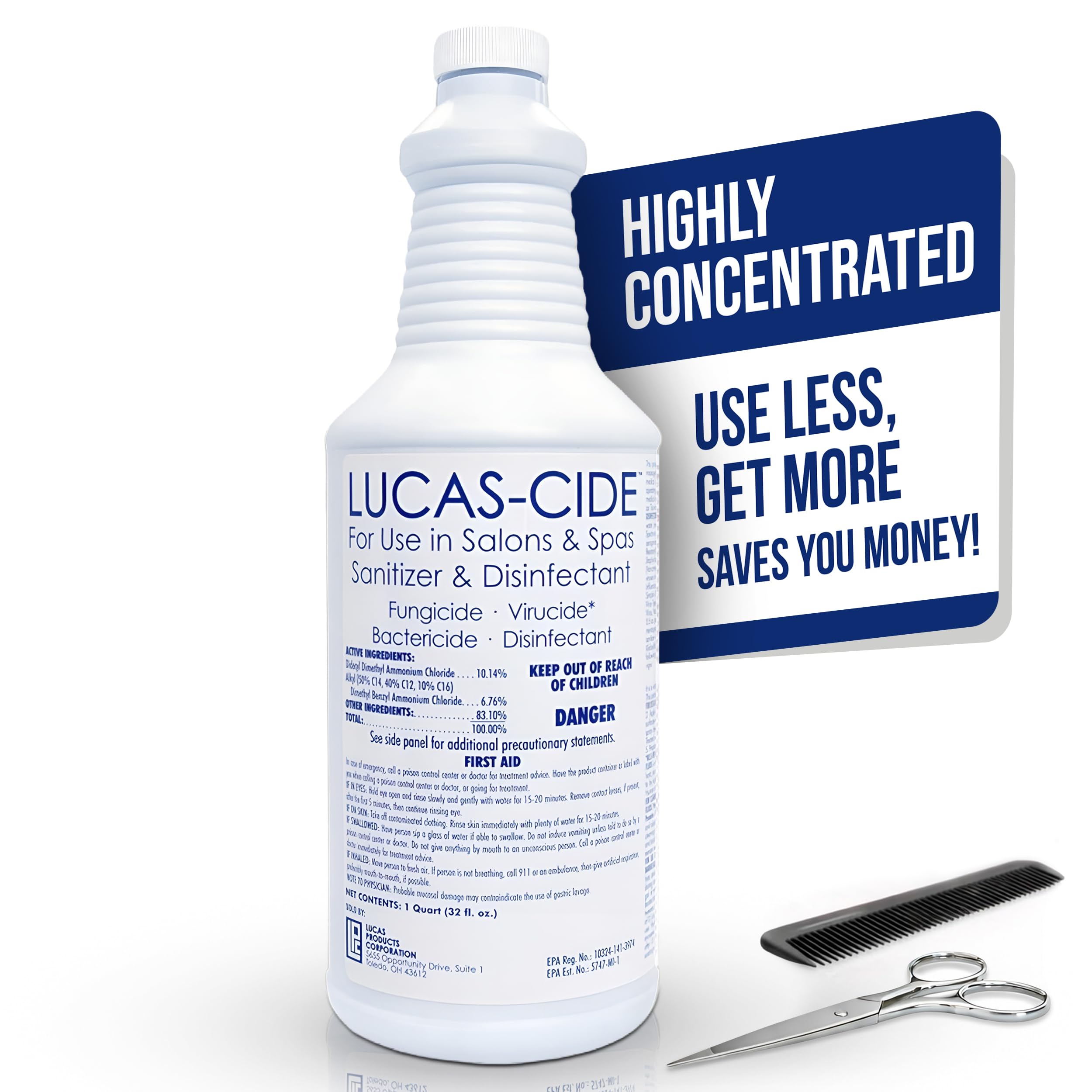
LUCAS‑CIDE is the salon industry’s answer to Barbicide, but it’s also a capable disinfectant for home barn use. The 32‑ounce bottle is a concentrate that makes up to 256 gallons of solution — an incredible ratio that makes this the cheapest option per gallon. It’s hospital‑grade, EPA‑registered, and trusted by salons for disinfecting scissors, combs, and clippers.
For horse owners, LUCAS‑CIDE works well for soaking bits, hoof picks, and small grooming tools. It has a neutral pH and a low odor that won’t irritate your nose or your horse’s. The biodegradable formula is a plus for those who want an environmentally friendlier choice. A user noted that it’s “less expensive than Barbicide and does a better job,” so it’s a proven performer.
Because it’s designed for salon tools, the label doesn’t list equine pathogens specifically. But its broad‑spectrum quat formula should be effective against strangles when used at the correct concentration. If you’re on a tight budget and need to stretch every dollar, LUCAS‑CIDE is a solid entry‑level disinfectant for basic biosecurity.
Why we love it
- Ultra‑low cost per gallon of solution
- Biodegradable, low‑odor
- Good for soaking small tools
Good to know
- Not specifically labeled for equine use
Safety & Care Tips
Proper Surface Preparation
Disinfectants work best on clean, dry surfaces. Organic matter like manure, hay, or mud can neutralize many active ingredients. Always sweep, scrape, or hose down the area before applying disinfectant. For porous surfaces like wood, consider switching to a product that specifically lists efficacy on porous materials, or use multiple applications.
Contact Time Matters
Every disinfectant has a required wet contact time — usually between 2 and 10 minutes. Set a timer and keep the surface visibly wet for the entire period. If the solution dries, reapply. For stalls and buckets, this means you can’t just spray and walk away. Patience is the key to killing Streptococcus equi.
FAQ
Can I use bleach to disinfect against strangles?
How long does strangles survive on surfaces?
Final Thoughts: The Verdict
For most horse barns, the best disinfectant for strangles winner is the ProVetLogic Animal Facility Disinfectant because it combines broad‑spectrum kill, easy AcuPro measuring, and a pleasant lavender scent at a fair price. If you want convenience, grab the F10 Ready‑To‑Use Disinfectant. And for the most value when treating large areas, nothing beats the Petology 256:1 Disinfectant.