
Doberman Pinscher puppies grow at a deceptive speed — their frames stretch tall before their joints fully harden, making every kibble choice a direct bet on their future skeletal health. The wrong calcium-to-phosphorus ratio or an excessive protein load can turn a promising pup into a candidate for hip dysplasia or panosteitis before their first birthday.
I’m Mo Mahin — the founder and writer behind Furric. I’ve spent years analyzing extruded kibble macronutrient profiles, comparing ingredient density across breed-specific formulations, and studying aggregated owner feedback on how Doberman puppies metabolize different calcium and fat levels during their rapid growth window.
This guide breaks down the precise nutritional specs that matter for this breed’s deep chest, long bones, and high-energy metabolism so you can confidently choose the best dog food for doberman pinscher puppy development.
How To Choose The Best Dog Food For Doberman Pinscher Puppy
Doberman puppies are not small-breed pups in a big body — they have distinct metabolic demands tied to their deep chest conformation and rapid vertical growth. Selecting the wrong kibble can lead to developmental orthopedic disease or bloat later in life. Here are the critical factors to evaluate before you buy.
Calcium and Phosphorus Ratios for Skeletal Control
Doberman puppies need a calcium level around 1.0% to 1.5% on a dry matter basis — anything above 2.0% can interfere with endochondral ossification and trigger angular limb deformities. Look for a calcium-to-phosphorus ratio between 1.1:1 and 1.4:1. Avoid foods that add calcium supplements or high-calcium ingredients like bone meal unless the guaranteed analysis stays within this window.
Protein Density for Lean Muscle Without Overfeeding
Target 28% to 32% crude protein from named animal sources like chicken, turkey, or lamb. Dobermans thrive on high-quality amino acid profiles, but excessive protein above 36% can accelerate growth plate closure unevenly. The protein should come from real meat first, not unnamed meat meals or plant concentrates that dilute bioavailability.
DHA, Omega-3s, and Cognitive Foundation
Doberman puppies are highly trainable but can be sharp and reactive — DHA from fish oil or algal sources supports retinal and brain development during the critical socialization window. A minimum of 0.1% DHA in the guaranteed analysis is a solid baseline. Omega-3s also support the long, tight coat this breed is known for.
Fat Content and Caloric Density for Energy Management
Look for 14% to 18% crude fat. Doberman puppies are energetic but can pack on weight quickly if fed calorie-dense formulas above 400 kcal per cup. Controlled fat levels help maintain a lean body condition throughout the first 18 months, reducing stress on developing joints.
Quick Comparison
On smaller screens, swipe sideways to see the full table.
| Model | Category | Best For | Key Spec | Amazon |
|---|---|---|---|---|
| Wellness CORE Large Breed Puppy | Grain-Free | High protein lean muscle | 36% Protein / Grain-Free | Amazon |
| Purina Pro Plan Sport 30/20 | High Performance | Active, working lines | 30% Protein / 20% Fat | Amazon |
| Hill’s Science Diet Large Breed Puppy | Vet Recommended | Balanced joint support | Balanced Minerals / DHA | Amazon |
| Nutro Max Large Breed Puppy | Joint Formula | Glucosamine joint care | Glucosamine + Chondroitin | Amazon |
| Blue Buffalo Baby Blue Large Breed | Natural Recipe | Clean ingredient transition | LifeSource Bits / DHA | Amazon |
In‑Depth Reviews
1. Wellness CORE Large Breed Puppy Dry Dog Food
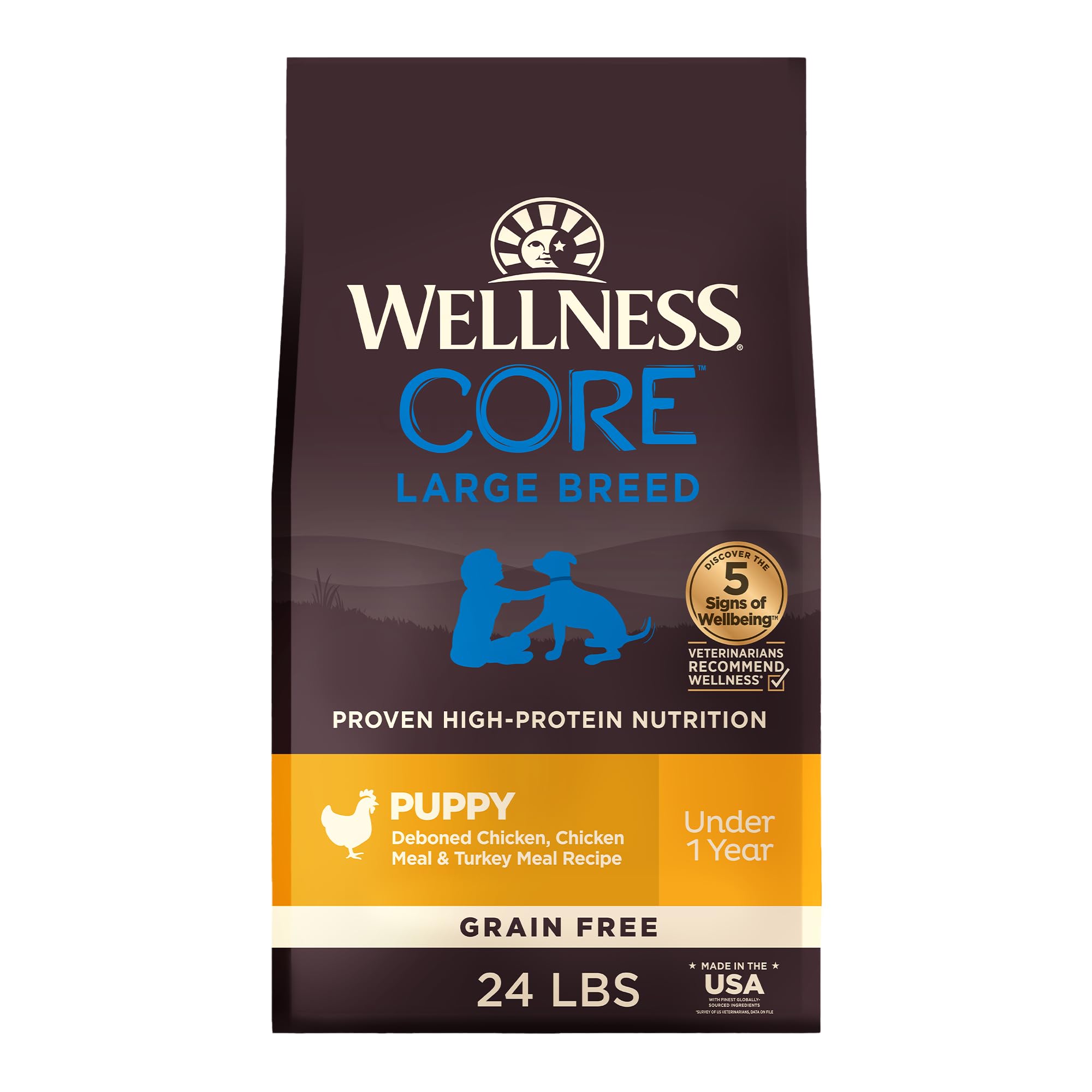
Wellness CORE Large Breed Puppy delivers a hefty 36% crude protein from deboned chicken and turkey meal, which is at the upper end of the recommended range for Doberman puppies. The grain-free formula uses peas and potatoes as carbohydrate sources, keeping the glycemic load moderate while providing steady energy for a breed that needs sustained fuel for growth spurts. The kibble size is appropriately scaled for larger puppy mouths — not too small to gulp, not so large that a Doberman pup struggles.
Each serving includes guaranteed levels of DHA from salmon oil for cognitive development, plus chelated minerals that improve calcium absorption control. The calcium content sits at approximately 1.2%, which falls safely under the 1.5% threshold for large-breed developmental safety. The formula also contains glucosamine and chondroitin — both critical for a breed prone to hip dysplasia — though the exact milligram levels are not listed on the guaranteed analysis.
Owner reports consistently highlight improved coat shine and reduced stool volume, which aligns with the high digestibility of the protein sources. Some owners noted that the 24-pound bag lasts roughly three weeks for a growing Doberman puppy, so budgeting for the premium price point is worth factoring in early. The bag is not resealable, so transferring to an airtight container is recommended for freshness.
Why we love it
- Very high protein density supports lean muscle without excess fillers
- Grain-free recipe reduces allergy risks for sensitive Doberman stomachs
- DHA and omega-3s support trainability and coat quality
Good to know
- Grain-free may not suit all puppies — check with your vet on cardiology research
- Not resealable; requires airtight storage to maintain freshness
- Premium price point stretches the monthly budget for larger pups
2. Purina Pro Plan Sport Development 30/20
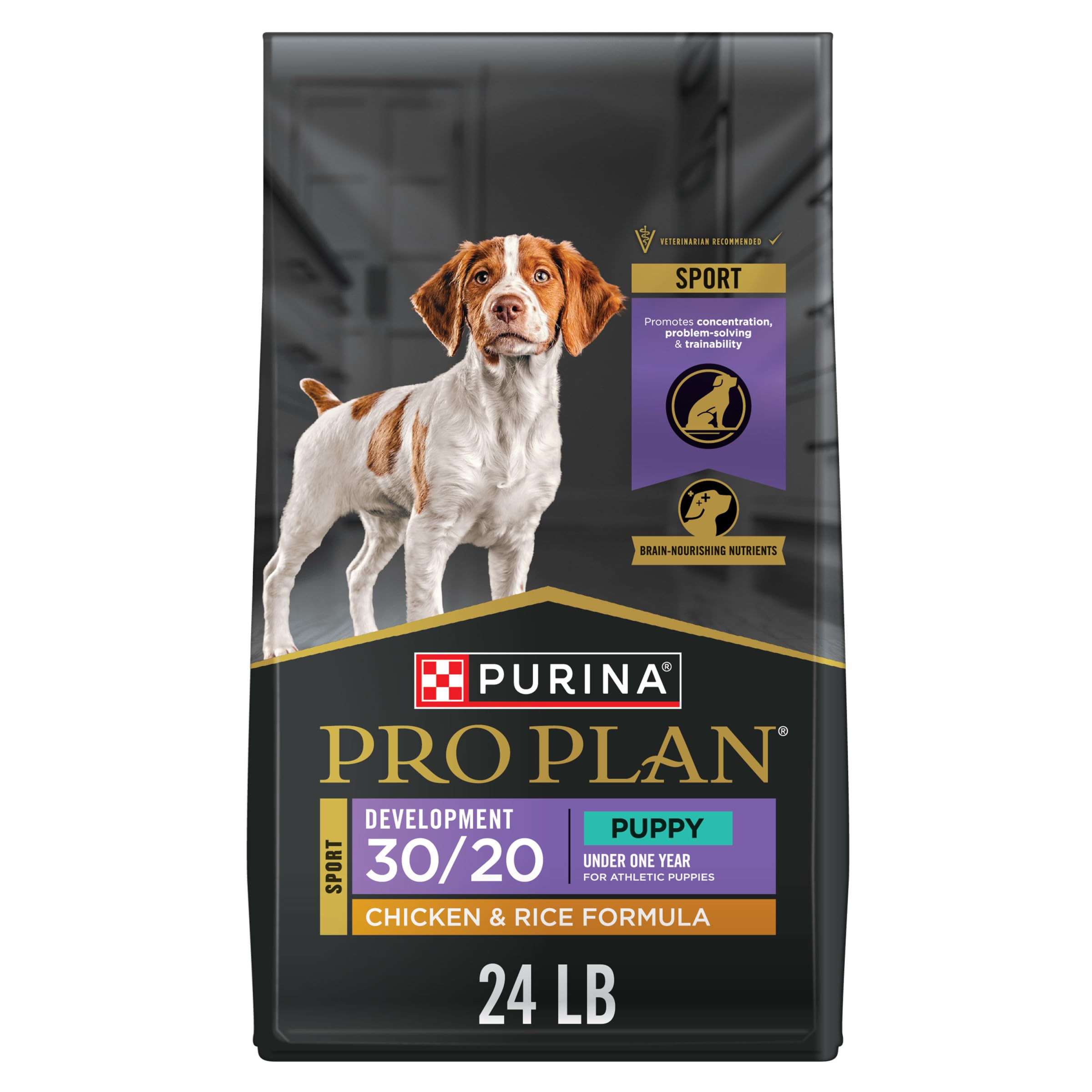
Purina Pro Plan Sport 30/20 is built for performance-oriented puppies with real chicken as the first ingredient and a 30% protein / 20% fat split that delivers dense caloric energy. For Doberman puppies from working lines or those engaged in early structured exercise, this formula provides the fuel needed for sustained activity and muscle recovery. The kibble is crunchy and hard — the texture helps with dental health but may require a slow feeder bowl for rapid eaters prone to gulping.
The 20% fat content is notably higher than typical large-breed puppy foods, which usually hover around 14-16%. This makes the formula better suited for Doberman puppies with high daily energy output rather than couch companions. The formula includes DHA, EPA, taurine, and choline — a cognitive support stack that aids in focus during training sessions. Calcium and phosphorus levels are balanced for bone growth, though the exact percentage should be verified against the label if your pup is from a line with known orthopedic issues.
Breeders frequently recommend this food for its consistency and for maintaining healthy body condition in fast-growing breeds. The resealable bag is a practical feature for daily feeding. Owners of less active Doberman puppies should monitor weight closely, as the 20% fat can promote rapid gain if portions are not carefully measured against the feeding chart.
Why we love it
- High fat content ideal for active working-line Doberman puppies
- Cognitive nutrient stack supports training responsiveness
- Resealable bag maintains kibble freshness between feedings
Good to know
- 20% fat may cause weight gain in low-activity puppies
- Not specifically formulated for large-breed growth rates
- Kibble hardness may not suit very young puppies with sensitive teeth
3. Hill’s Science Diet Large Breed Puppy Chicken & Brown Rice
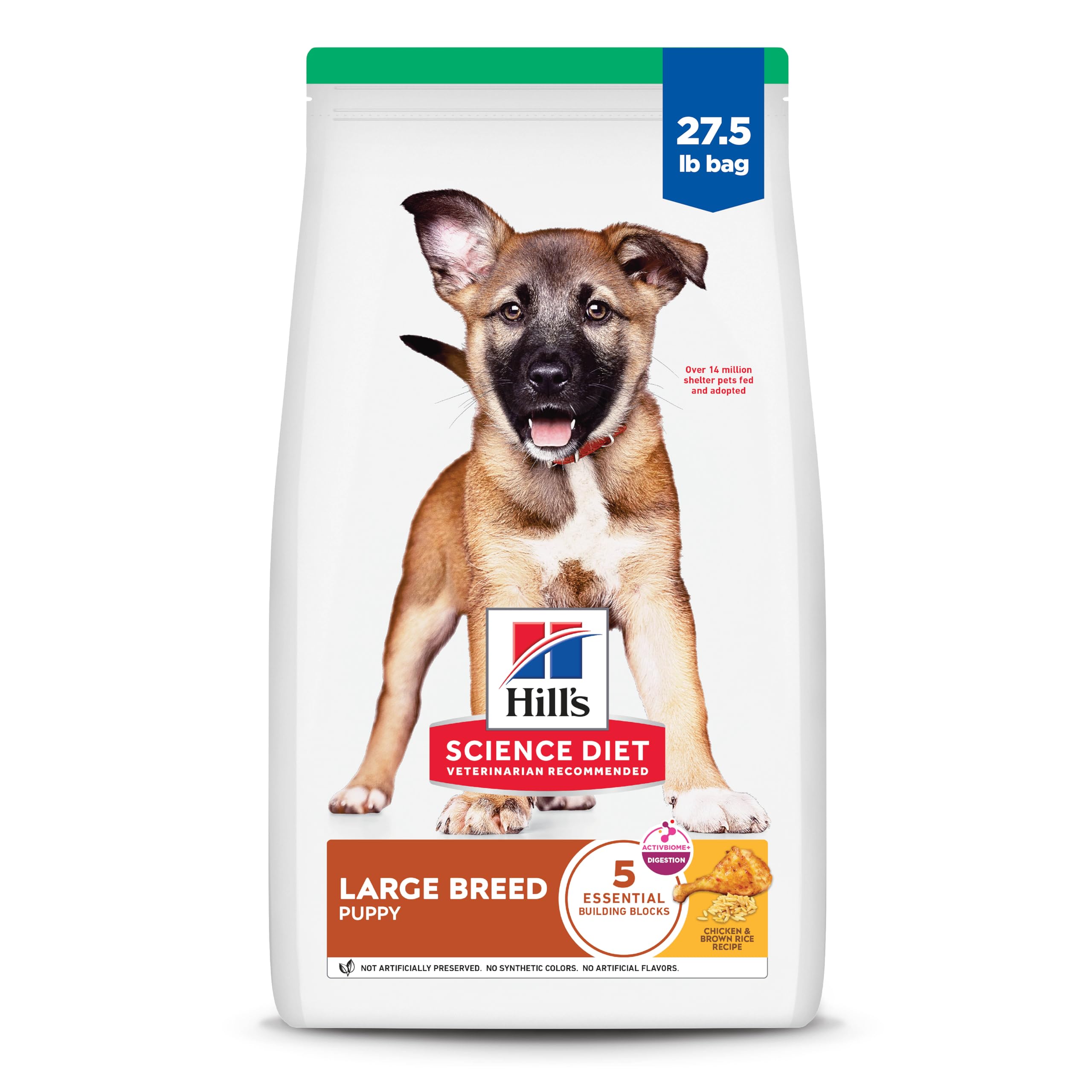
Hill’s Science Diet Large Breed Puppy is the most veterinarian-recommended option in this lineup, and for Doberman owners who want a formula with decades of clinical testing behind it, this is the safest starting point. The chicken and brown rice recipe delivers moderate protein around 25% and fat near 15%, which aligns with the conservative nutritional philosophy that slower, controlled growth reduces hip dysplasia risk in large breeds. The calcium content is precisely managed — it stays within the 1.0% to 1.2% range — making it appropriate for Doberman puppies with a family history of elbow or hip issues.
The 27.5-pound bag is the largest in this comparison, offering better value per feeding. The kibble is smaller and easier for young puppies to chew compared to some premium brands that use oversized pieces. DHA from fish oil supports eye and brain development during the critical socialization window of 8 to 16 weeks. The formula does not include added glucosamine or chondroitin, so owners concerned about joint health may want to supplement separately under veterinary guidance.
Owner reviews consistently note that puppies maintain a healthy body condition score — not too thin, not too heavy — when fed according to the bag guidelines. The main trade-off is the protein level: at 25%, it may be too low for Doberman puppies from high-energy working lines that require sustained muscle development from higher-protein inputs.
Why we love it
- Precise calcium control for large-breed skeletal safety
- Veterinarian-recommended with extensive clinical research backing
- Largest bag size offers strong value for a growing Doberman
Good to know
- Moderate protein may not meet needs of high-energy working-line pups
- No added glucosamine or chondroitin for proactive joint support
- Brown rice content may not suit grain-sensitive puppies
4. Nutro Max Large Breed Puppy Farm-Raised Chicken
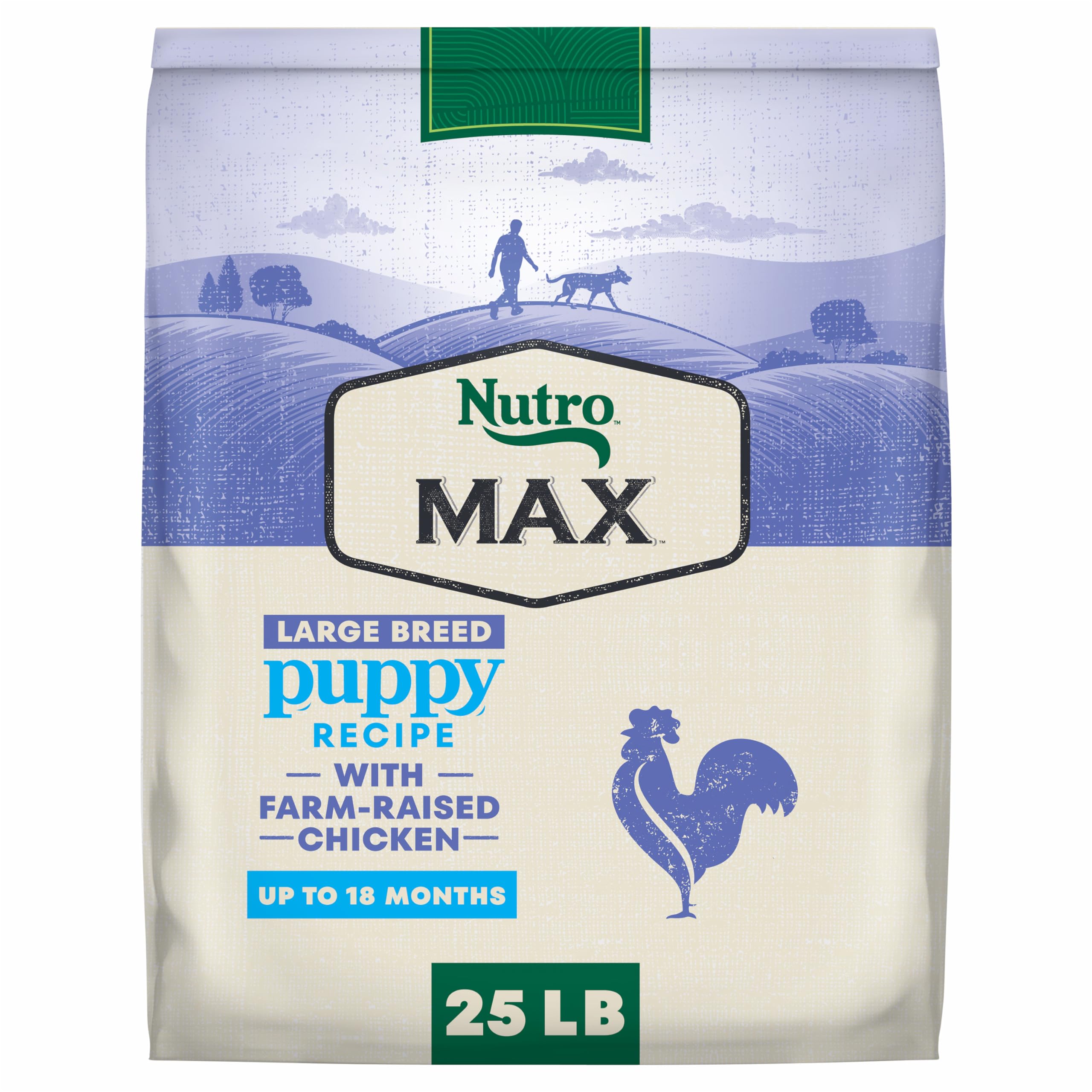
Nutro Max Large Breed Puppy stands out among mid-range options because it adds natural sources of glucosamine and chondroitin directly into the kibble — a proactive move for Doberman owners who want joint support built into every meal rather than relying on separate supplements. The farm-raised chicken is the first ingredient, with protein landing around 27% and fat at 16%, which suits a moderately active Doberman puppy without pushing growth too fast. The non-GMO ingredient list and the absence of corn, wheat, and soy reduce the chance of food sensitivities that can show up as loose stools or itchy ears.
Each serving includes DHA from flaxseed for brain development, though the bioavailability of plant-based DHA is lower than marine sources. The calcium-to-phosphorus ratio is balanced for large breeds but not explicitly stated on the bag — owners concerned about precise mineral levels should contact Nutro directly for the guaranteed analysis documentation. The kibble size is medium, and the texture holds up well in slow feeder bowls without crumbling.
Owner feedback notes that puppies transition easily to this food without digestive upset, and long-term users report that their Dobermans maintained clean ears and normal bowel movements through the first year. The main limitation is the lower protein ceiling compared to premium competitors, which may not fully support the muscle definition that Doberman owners expect in show-line puppies.
Why we love it
- Natural glucosamine and chondroitin support joint health from day one
- Non-GMO ingredients with no corn, wheat, or soy
- Smooth transition with minimal digestive upset
Good to know
- Plant-based DHA is less bioavailable than marine sources
- Exact calcium percentage not published on packaging
- Protein level may be insufficient for highly active working lines
5. Blue Buffalo Baby Blue Natural Large Breed Puppy
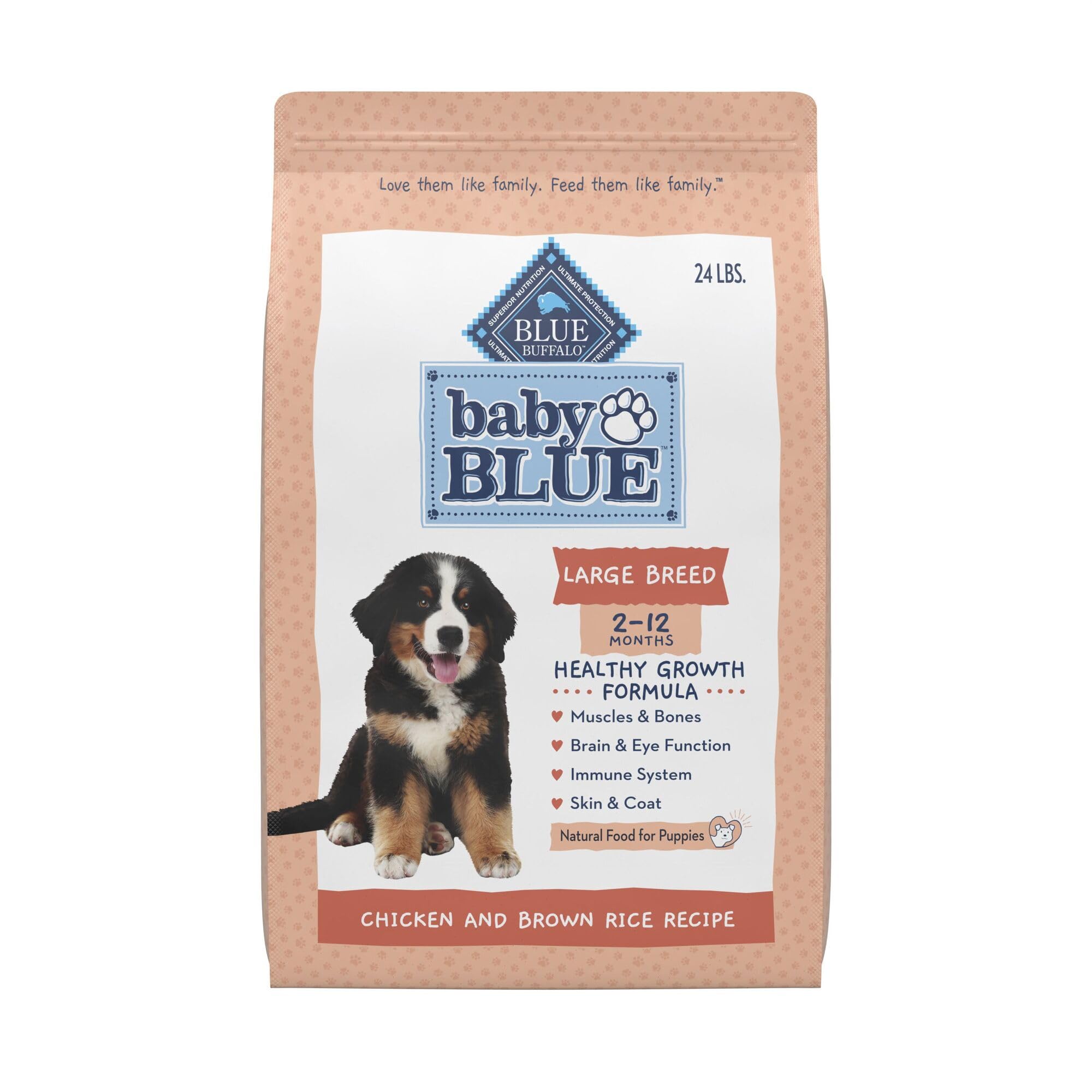
Blue Buffalo Baby Blue Natural Large Breed Puppy formula uses deboned chicken as the first ingredient and includes exclusive LifeSource Bits — small, dark kibble pieces packed with antioxidants, vitamins, and chelated minerals. The protein content is around 28%, with fat near 16%, placing it comfortably in the mid-range for controlled growth. The formula is free from chicken by-product meals, corn, wheat, and soy, making it a clean option for Doberman puppies with sensitive digestive systems during their first few months.
The inclusion of DHA and ARA supports retinal and brain development during the first-year socialization window. The calcium level is managed for large breeds but is not explicitly listed on the bag — owners should contact Blue Buffalo for the specific dry matter analysis if they are managing a puppy from a joint-sensitive lineage. The kibble is smaller than some large-breed formulas, which can be an advantage for newly weaned puppies but may encourage faster eating as they grow. A slow feeder bowl is advisable.
Long-term Blue Buffalo customers often cite multi-dog consistency, with several owners in the review data noting they have fed Blue Buffalo across different breeds for a decade. The mid-range price point makes this a strong entry-level option for first-time Doberman owners, though the lack of added glucosamine or chondroitin means joint support must come from the overall mineral balance rather than direct supplementation.
Why we love it
- Clean ingredient list with no by-product meals or corn/wheat/soy
- LifeSource Bits provide antioxidant support in each serving
- Affordable entry point for a large-breed-specific formula
Good to know
- Calcium percentage not disclosed on the bag label
- No added glucosamine or chondroitin for joint protection
- Smaller kibble size may encourage gulping in larger puppies
FAQ
How much protein does a Doberman puppy need daily?
Can I feed grain-free food to my Doberman puppy?
Should I switch formulas when my Doberman turns one year old?
How do I know if my Doberman puppy is allergic to its food?
Final Thoughts: The Verdict
For most Doberman owners, the best dog food for doberman pinscher puppy winner is the Wellness CORE Large Breed Puppy because its 36% protein density builds the lean muscle Dobermans are bred for while keeping calcium safely within the large-breed window. If you want a vet-backed formula with precise mineral control for a puppy with known joint sensitivity in its lineage, grab the Hill’s Science Diet Large Breed Puppy. And for an active working-line puppy that needs dense caloric fuel for structured training, nothing beats the Purina Pro Plan Sport 30/20.