
That frantic 3 a.m. dash to the back door, the gurgling sounds from the other room, or the refusal to touch a bowl of food that was fine yesterday — living with a dog who has a sensitive stomach means every meal feels like a dice roll. You’re not just feeding a pet; you’re managing a digestive system that reacts to the wrong protein, a splash of fat, or an undisclosed filler as if it were an invader. The quest for a kibble or wet food that delivers complete nutrition without triggering loose stools, gas, or vomiting is the central challenge for owners of these pups.
I’m Mo Mahin — the founder and writer behind Furric. I’ve logged hundreds of hours cross-referencing AAFCO nutrient profiles with real-world owner feedback to identify which limited-ingredient, single-protein, and probiotic-enriched formulas actually deliver on their promises of digestive peace.
To cut through the marketing noise of prebiotic blends and grain-free claims, I’ve analyzed the ingredient decks, guaranteed analyses, and verified owner experiences to find the actual dog food for dogs with sensitive stomachs that consistently earns its place in your bowl rotation.
How To Choose The Best Dog Food For Dogs With Sensitive Stomachs
Selecting a formula for a sensitive stomach isn’t about picking the most expensive bag or the trendiest protein. It’s about matching the digestibility of the ingredients to your dog’s specific triggers. Here are the critical specs to investigate on every label.
Single Novel Protein Source
The easiest win for a reactive gut is eliminating common allergens like chicken, beef, and dairy. A novel protein — duck, salmon, venison, or turkey — provides amino acids your dog needs without the inflammatory response triggered by more familiar meats. Look for a formula that declares a single animal protein source in the first ingredient slot and avoids ambiguous terms like “meat meal” or “poultry by-product.”
Fat Content and Digestibility
Dogs with sensitive stomachs often struggle to break down high levels of fat, leading to pancreatitis-like symptoms and loose stools. A crude fat percentage in the single digits (think 6% to 12% on a dry matter basis) is a safer starting point than the 15%+ found in performance or high-energy formulas. The digestibility of the fiber source — whole sweet potato, pumpkin, or peas — also dictates stool quality better than generic “cellulose” or “beet pulp.”
Probiotic Viability and Prebiotic Fiber
Not all probiotics are equal. Look for a specific strain named on the label, such as Bacillus coagulans (BC30), which is a spore-forming bacteria that survives the high heat of kibble extrusion and stomach acid. Prebiotic fibers like chicory root or inulin feed the good bacteria already in the gut, creating a synergistic effect that supports regular, firm stools and reduced gas.
Quick Comparison
On smaller screens, swipe sideways to see the full table.
| Model | Category | Best For | Key Spec | Amazon |
|---|---|---|---|---|
| Nulo FreeStyle Salmon & Peas | Dry Kibble | Overall gut balance & coat health | BC30 Probiotic (Bacillus coagulans) | Amazon |
| Evanger’s Duck & Sweet Potato | Wet Pâté | Novel protein for allergies | Single protein (100% Duck) | Amazon |
| Dave’s Bland Chicken & Rice | Wet Pâté | Flare-ups and dietary transitions | 6% Crude Fat content | Amazon |
| Blue Buffalo Basics Turkey & Potato | Dry Kibble | Single protein dry food | LifeSource Bits antioxidants | Amazon |
| Purina Pro Plan Variety Pack | Wet Variety | Two flavor rotation | Prebiotic fiber & linoleic acid | Amazon |
In‑Depth Reviews
1. Nulo FreeStyle Salmon & Peas
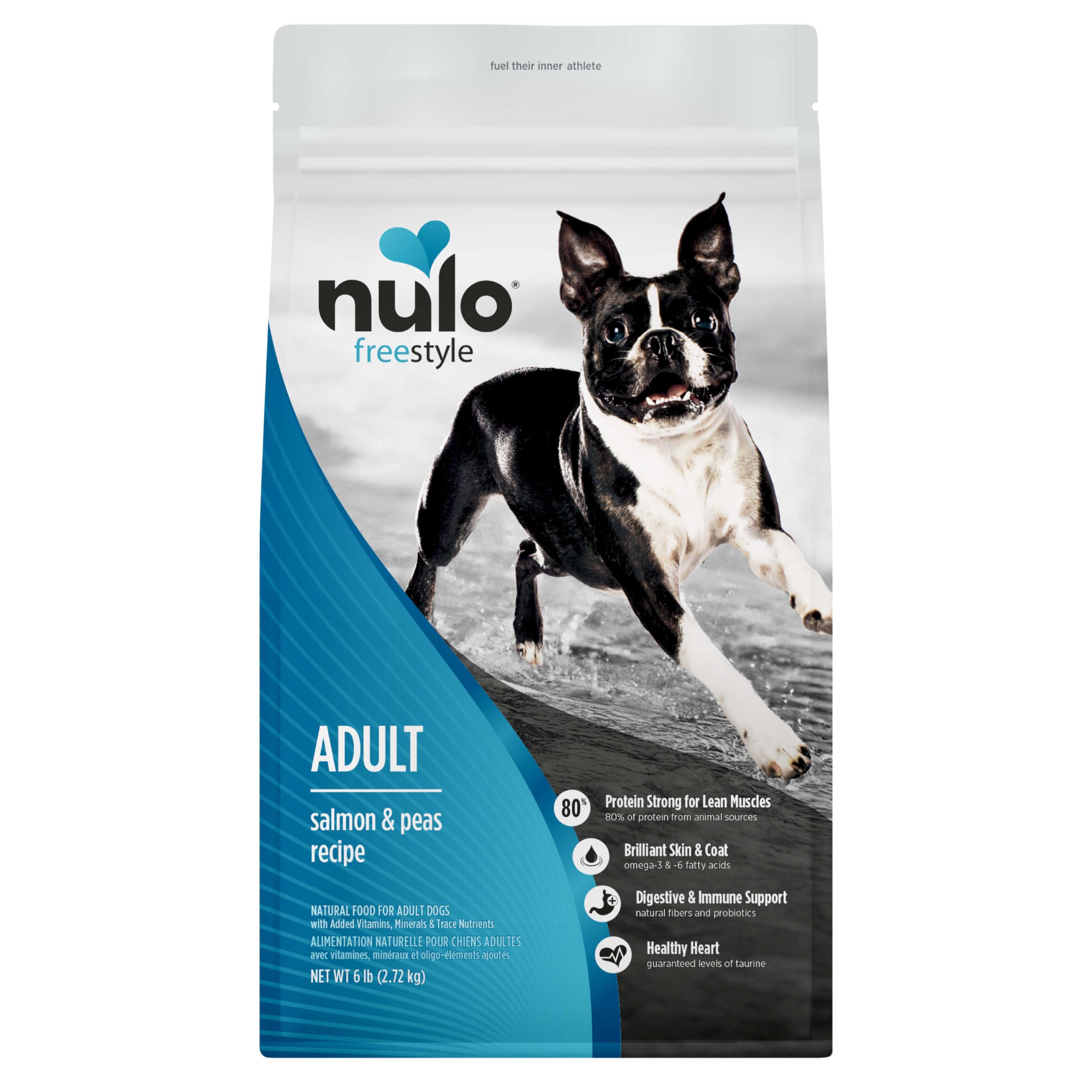
This dry kibble takes the top spot because it addresses the three pillars of digestive health — high-quality protein, prebiotic fiber, and a shelf-stable probiotic strain — all in one bag. Deboned salmon is the first ingredient, delivering 80% animal-based protein that supports lean muscle without the inflammatory response common with chicken or beef. The inclusion of BC30 (Bacillus coagulans) is the differentiator: this spore-forming probiotic survives the kibble baking process and gastric acid to colonize the gut with beneficial bacteria.
Owner feedback overwhelmingly cites firmer stools and reduced gas in breeds notoriously prone to digestive chaos, particularly French Bulldogs. The formula excludes chicken, egg protein, corn, wheat, soy, rice, and tapioca, making it a safe bet for dogs with multiple sensitivities. The Omega-3 and Omega-6 fatty acids from fish oil also support the skin barrier, which often suffers alongside digestive issues.
The 6-pound bag is a practical starting size for a trial period, allowing you to observe stool quality before committing to a larger bag. As a dry food, it provides the crunch that supports dental health, though it should be paired with moisture if your dog is prone to dehydration during stomach upsets.
Why we love it
- Guaranteed live BC30 probiotic for gut health
- Salmon as single novel protein source
- No chicken, egg, or common starches
Good to know
- Small bag size (6 lbs) for trial runs
- Grain-free formula may not suit all dogs
2. Evanger’s Duck & Sweet Potato Dinner

When a dog’s system has declared war on chicken, beef, and even salmon, duck is often the last-resort novel protein that finally brings relief. Evanger’s offers a wet pâté built entirely around this premise: real duck as the sole animal protein, paired with farm-grown sweet potato for a single, digestible carbohydrate source. The formula is free from grains, gluten, soy, and artificial preservatives, reducing the total number of ingredients your dog’s immune system has to evaluate.
Owners report that even dogs who turn their nose up at bland veterinary diets will eagerly eat this pâté, making it invaluable for maintaining appetite during recovery from vomiting or diarrhea episodes. The 12.5-ounce cans provide generous portions for medium and large breeds.
It’s not just a temporary solution; many owners use it as a long-term complete meal for adult dogs, finding that the predictable ingredient list prevents the cycle of flare-ups common with rotational feeding. The only real friction is the price per can compared to chicken-based alternatives, but for dogs with confirmed duck tolerance, the health outcomes justify the investment.
Why we love it
- Single novel protein (100% duck) for allergies
- Gently cooked for enhanced digestibility
- Excellent for senior dogs with dental issues
Good to know
- Higher price point per can than average
- Wet food requires refrigeration after opening
3. Dave’s Pet Food Bland Chicken & Rice
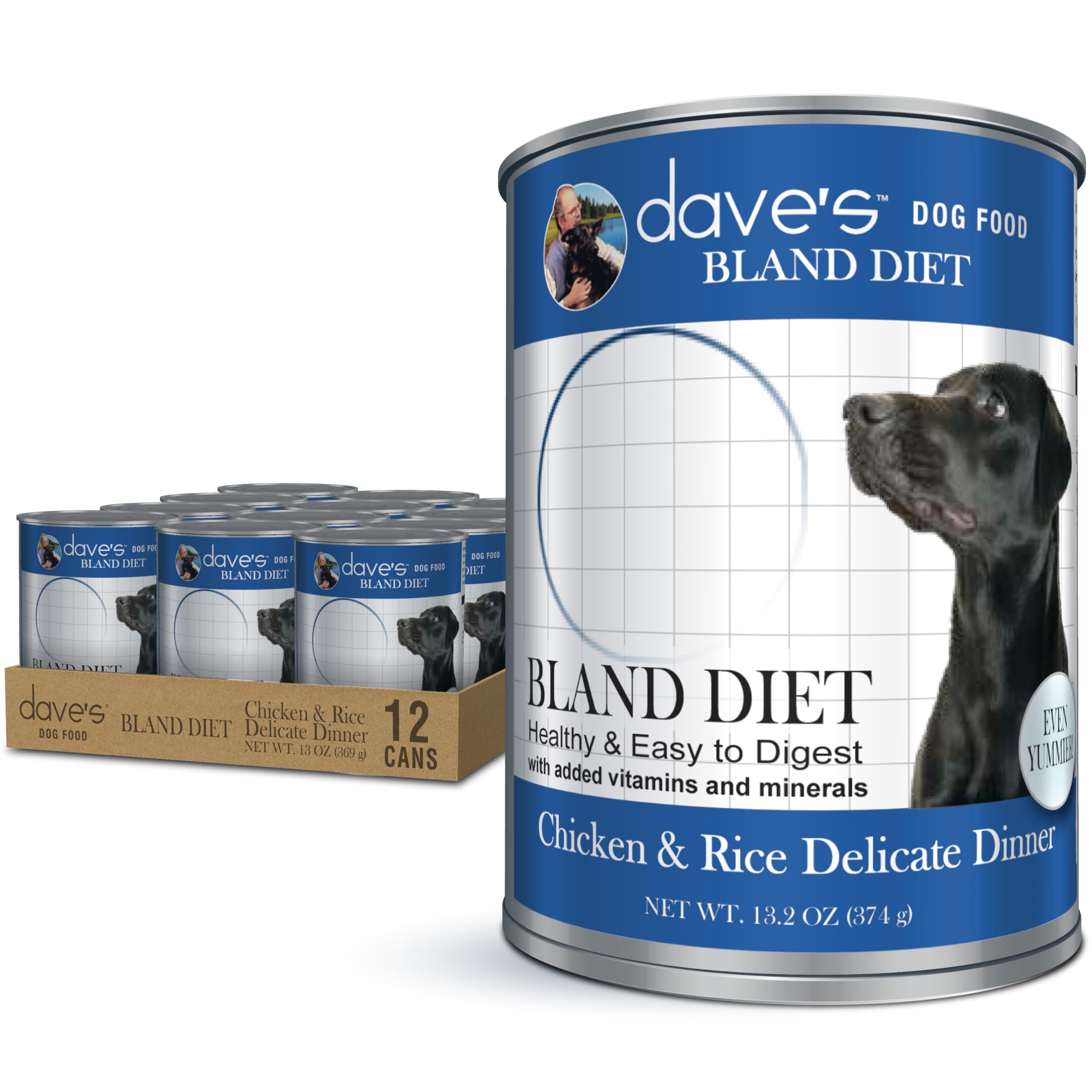
This is the closest thing to a veterinary-prescribed bland diet you can buy without a prescription, and it’s earned its reputation as a “lifesaver” for dogs experiencing acute vomiting, diarrhea, or post-surgery recovery. The formula is brutally simple — chicken, white rice, essential vitamins, and minerals — and deliberately low in fat at just 6% crude fat. For dogs whose pancreas or gallbladder is struggling to process lipids, this low-fat ceiling is the critical spec that prevents a repeat trip to the vet.
The smooth pâté texture is designed for easy swallowing, making it ideal for senior dogs with dental pain or smaller breeds that gum their food. It’s a complete and balanced adult maintenance formula per AAFCO standards, meaning you can feed it as a long-term diet, not just a three-day reset. Owners report it works as a medication delivery system — the mild chicken flavor masks pills effectively without the strong odor that can trigger nausea in an already sensitive dog.
For owners who have spent hundreds on complex prescription diets, this represents a practical alternative that delivers the same principle — minimal ingredients, maximum digestibility — at a more accessible price per can. It’s a staple to keep on the shelf for emergencies or dietary transitions, especially for dogs who react poorly to the high fat or exotic proteins in other limited-ingredient brands.
Why we love it
- Ultra-low fat (6%) for sensitive pancreases
- Simple, digestible chicken and rice recipe
- Works as a complete meal or recovery topper
Good to know
- Not suitable for dogs with chicken allergy
- Pâté format, not chunk or shred texture
4. Blue Buffalo Basics Turkey & Potato

Blue Buffalo’s “Basics” line strips away the complexity that often overwhelms a sensitive stomach, centering around a single animal protein — turkey — paired with potato as the primary carbohydrate. This is a grain-free, limited-ingredient formula specifically designed for skin and stomach care, meaning it addresses the two most common allergic responses in tandem. The absence of chicken or poultry by-product meals removes the most frequent dietary trigger for environmental and food allergies alike.
The standout feature is the inclusion of LifeSource Bits — small, cold-formed pieces packed with antioxidants, vitamins, and minerals that survive the kibble extrusion process intact. This ensures that even if the main kibble loses some nutrient bioavailability during cooking, the bits deliver a concentrated shot of immune support. Omega 3 and 6 fatty acids from flaxseed and fish oil work to repair the skin barrier, which often becomes inflamed alongside gut inflammation in allergic dogs.
Owners of medium and large breeds find the 11-pound bag a manageable size, and the kibble size is appropriate for standard adult mouths. It’s a drier, crunchier alternative to the wet food options, which can be beneficial for dental hygiene but may require soaking if your dog is dehydrated or recovering from a vomiting episode.
Why we love it
- Single turkey protein, free from chicken and beef
- LifeSource Bits for cold-form nutrient delivery
- Widely available at pet retailers
Good to know
- Turkey is not as exotic as duck or venison
- Some picky eaters may refuse the kibble
5. Purina Pro Plan Sensitive Skin & Stomach Variety

This variety pack solves a specific problem: the dog who gets bored with a single wet food flavor but can’t tolerate the chaos of random brand-hopping. It includes two recipes — Salmon & Rice and Lamb & Oat Meal — both formulated with prebiotic fiber from oat meal that feeds beneficial intestinal bacteria. The high protein content comes from real salmon and lamb, both considered less reactive proteins than chicken or beef for a significant portion of allergic dogs.
The inclusion of linoleic acid (an Omega-6 fatty acid) targets the skin-stomach connection that often manifests as itchy paws, recurring ear infections, and a dull coat. Owner feedback highlights that the formula reduces licking, scooting, and general itchiness within a few weeks of exclusive feeding. The wet format adds moisture to the diet, which is crucial for dogs with sensitive stomachs who may be prone to dehydration during loose stool episodes.
As a variety pack, it allows you to rotate proteins without digestive disruption, since both recipes share the same base formula and are both free from wheat, soy, and artificial colors. The 13-ounce cans are generous, and the larger size makes it economical for medium and large breeds. It’s a practical choice for owners who want the convenience of a widespread brand with the specificity of a sensitive-stomach recipe.
Why we love it
- Two novel protein flavors for rotation
- Prebiotic fiber from oat meal
- Contains linoleic acid for skin health
Good to know
- Lamb may still trigger some sensitivities
- Not suitable for dogs with oat intolerance
FAQ
Is a grain-free diet always better for a sensitive stomach?
How long should I feed a bland diet during a flare-up?
Can I mix a wet sensitive-stomach food with a dry kibble?
Final Thoughts: The Verdict
For most owners dealing with a reactive gut, the dog food for dogs with sensitive stomachs winner is the Nulo FreeStyle Salmon & Peas because its combination of a single novel protein, prebiotic fiber, and a shelf-stable probiotic strain addresses the root causes of digestive distress in a single convenient dry kibble. If you need a novel protein for a confirmed chicken allergy, grab the Evanger’s Duck & Sweet Potato Dinner for its pure, gently cooked duck pâté. And for acute flare-ups or post-recovery feeding, nothing beats the simplicity of the Dave’s Pet Food Bland Chicken & Rice — with its 6% fat content, it’s the closest you can get to a veterinary bland diet without a prescription.