
A dog with a churning gut is a miserable sight. The pacing, the urgency, the distressed look back at you before the inevitable accident on the rug — it is a cycle that leaves both of you exhausted. Selecting the right nutrition is the single most effective way to break that cycle, turning loose, unformed stools into consistent, healthy movements that let your dog relax and your home stay clean.
I’m Mo Mahin — the founder and writer behind Furric. My approach to evaluating canine nutrition blends rigorous analysis of veterinary clinical research with cross-referencing thousands of verified owner experiences to identify what truly stabilizes a compromised gut.
You are here because you need a reliable, digestible solution that won’t aggravate a sensitive system, and this guide breaks down the top contenders in the category of dog food for intestinal issues, comparing fiber sources, fat levels, and protein digestibility so you can choose with confidence.
How To Choose The Best Dog Food For Intestinal Issues
Not all formulas labeled “sensitive stomach” are created equal. When your dog’s digestive tract is inflamed, every ingredient matters. Focus on three non-negotiable pillars: fat percentage, fiber profile, and protein source complexity.
Fat Content: The Pancreas and Gallbladder Factor
The single most important number on the guaranteed analysis for intestinal issues is crude fat. Anything above 10-12% can trigger a relapse in dogs with pancreatitis, exocrine pancreatic insufficiency (EPI), or bile acid diarrhea. Look for low-fat formulas, ideally around 6-8%, that provide essential fatty acids without overwhelming the digestive enzymes. This is why many therapeutic diets are designated “Low Fat” or “LF” — it is not a marketing adjective but a clinical requirement.
Fiber Profile: The Balancing Act Between Firm and Loose
There are two types of fiber in canine digestion management. Soluble fiber (found in pumpkin, beet pulp, psyllium, and chicory root) absorbs water in the gut, helping to firm up loose stools by creating a gel-like mass. Insoluble fiber (from cellulose and certain grains) adds bulk and speeds transit time — which is the opposite of what a dog with diarrhea needs. A good intestinal-support formula will have a higher ratio of soluble to insoluble fiber and may list prebiotic fibers like FOS or inulin to feed beneficial gut bacteria.
Protein Digestibility and Novel Sources
A dog with gut inflammation loses the ability to break down complex proteins. The food should use a highly digestible single protein source — not a blend of chicken, beef, lamb, fish, and egg all in one bag. Many intestinal formula failures happen because the protein is too complex, forcing an already stressed digestive system to work overtime. Look for a single named protein (like turkey or salmon) or a hydrolyzed protein (broken down into amino acids so small the immune system does not react to them).
Quick Comparison
On smaller screens, swipe sideways to see the full table.
| Model | Category | Best For | Key Spec | Amazon |
|---|---|---|---|---|
| Hill’s i/d Digestive Care | Veterinary Diet | Clinical gut recovery | ActivBiome+ prebiotic fiber blend | Amazon |
| Royal Canin GLF Low Fat | Veterinary Diet | Pancreatitis & low fat needs | 6.6 lbs, low fat (approx. 6% dry matter) | Amazon |
| Blue Buffalo Basics Senior | Limited Ingredient | Senior dogs with stomach and joint needs | Turkey single protein, grain-free | Amazon |
| Stella & Chewy’s Digestive Boost | Freeze-Dried Raw | Picky eaters needing gut enzymes | Freeze-dried morsels with papain enzyme | Amazon |
| Dave’s Bland Diet Pate | Limited Ingredient | Budget-friendly acute flare-ups | 6% crude fat, chicken & rice | Amazon |
In‑Depth Reviews
1. Hill’s Prescription Diet i/d Digestive Care Wet Dog Food

This is the gold standard for active digestive crisis management. Hill’s i/d line has decades of clinical backing, and this wet formula brings their proprietary ActivBiome+ technology — a specific blend of prebiotic fibers designed to rapidly activate the gut microbiome. For a dog coming off a bout of gastroenteritis or chronic loose stool, the high digestibility of the chicken and vegetable stew base means nearly all the nutrients get absorbed before they reach the colon, where fermentation can cause gas and diarrhea.
The added electrolytes and elevated B vitamin levels address two critical deficits common during intestinal upset: dehydration and depleted energy metabolism. Unlike many over-the-counter formulas, the S+OXSHIELD property also supports urinary health, which is a thoughtful inclusion since dogs with diarrhea often reduce water intake. This is a veterinary-exclusive diet, so a prescription is required, confirming that its nutritional profile is designed for medical management rather than general maintenance.
Texture-wise, the stew is soft and palatable, which helps when a dog has lost its appetite due to nausea. It mixes easily with the dry version for dogs that need both hydration and fiber. The biggest limitation is the cost per can, which places it firmly in the premium tier, but for dogs with recurrent or severe digestive issues, the results are typically visible within 24-48 hours.
Why we love it
- Clinically proven ActivBiome+ fiber blend rapidly stabilizes stools
- High moisture content supports hydration during diarrhea episodes
- Added electrolytes and B vitamins restore depleted nutrients
Good to know
- Requires a veterinary prescription
- Premium cost per can adds up for multi-dog households
2. Royal Canin Veterinary Diet Gastrointestinal Low Fat Dry Dog Food
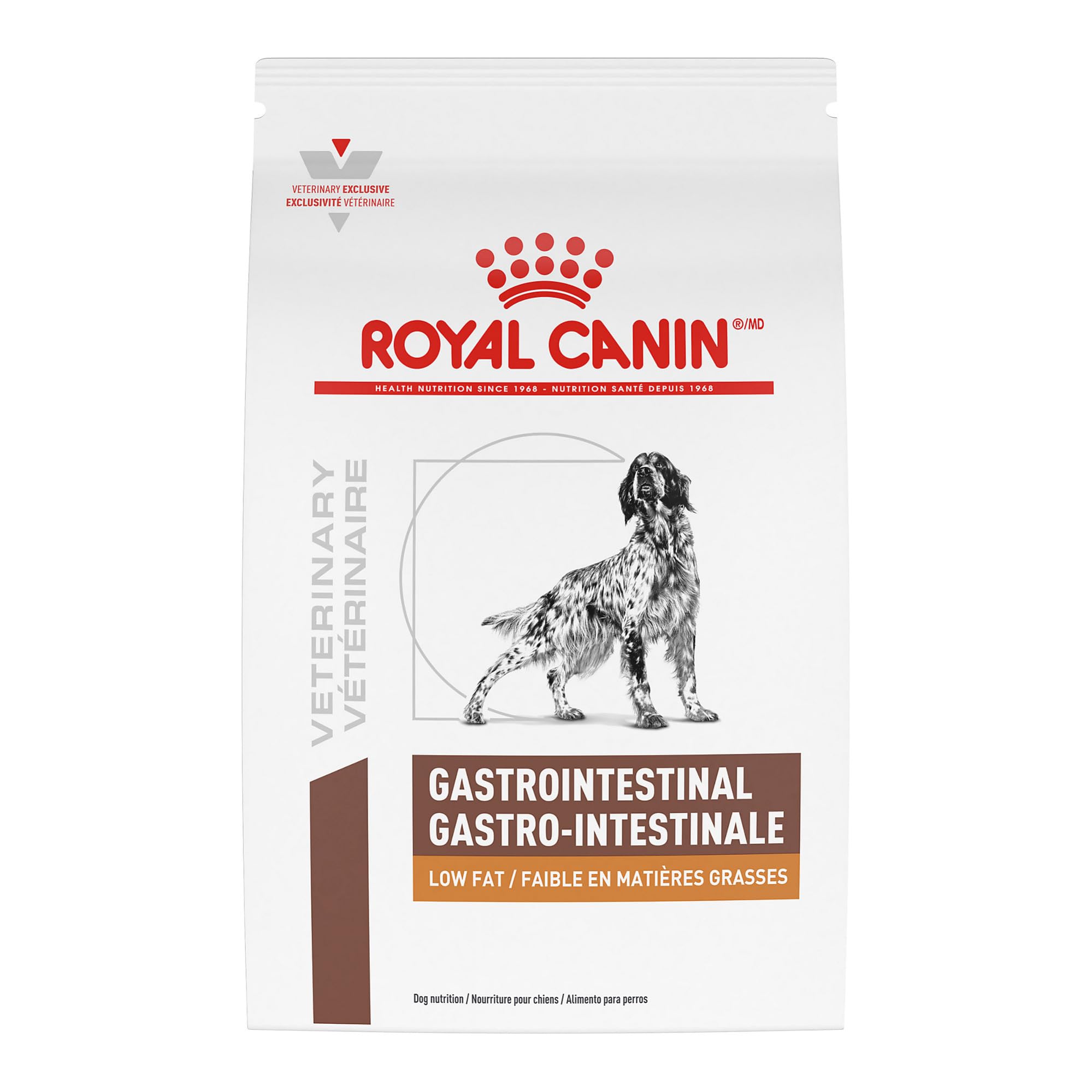
If your dog struggles specifically with fat intolerance — whether from pancreatitis, EPI, or bile acid malabsorption — this is the formula to prioritize. The “Low Fat” designation is not a relative claim; Royal Canin precisely formulates this kibble to have a drastically reduced fat content while still providing the essential fatty acids a dog needs for coat and skin health. The kibble itself is designed with a highly digestible protein base and a specific blend of dietary fibers (including psyllium and beet pulp) that work together to create firm, well-formed stools.
The dry kibble texture is engineered to be highly palatable, addressing the common issue of appetite loss in dogs with chronic digestive pain. It also contains a prebiotic fiber blend to support the colonization of beneficial gut bacteria, which is especially important after a course of antibiotics or during a gut-flora reset. Because it is a veterinary-exclusive diet, your veterinarian will determine if the fat level is appropriate for your dog’s specific condition, but for confirmed pancreatitis cases, this is often the first line of defense.
The main trade-off is that this is a dry-only formula in this specific SKU. While it can be mixed with the wet version, the 6.6 lb bag size represents a good entry point to test tolerance before committing to larger quantities. Some owners note that dogs with extremely sensitive palates may turn up their noses at first, but a slow transition over a week usually resolves this.
Why we love it
- Precisely controlled low fat ideal for pancreatitis management
- Psyllium and beet pulp fiber blend for consistent stool quality
- Prebiotic support helps restore gut microbiome balance
Good to know
- Requires a vet prescription
- Some picky eaters may need a gradual transition period
3. Blue Buffalo Basics Grain-Free Senior Wet Dog Food

Senior dogs often face a dual challenge: a slowing digestive system and deteriorating joint health. This Blue Buffalo Basics formula addresses both by combining a limited ingredient, single-protein turkey recipe with added glucosamine and chondroitin. The turkey and potato foundation is inherently low in fat and very digestible, making it a strong option for an older dog whose stomach is becoming less tolerant of rich, multi-protein meals.
The grain-free formulation is worth noting here — while grain-free diets are not necessary for all dogs, senior dogs with specific gluten sensitivities or inflammatory bowel disease (IBD) often respond better to a grain-free, potato-based carbohydrate source. The pate texture is soft enough for dogs with missing teeth or gum sensitivity, and the 12.5-oz can size allows for flexible portion control. It is not a veterinary-exclusive diet, so no prescription is needed, making it an accessible mid-range option for owners who want a step up from generic sensitive-stomach formulas.
The main drawback is that the fat content, while moderate, is not as strictly controlled as the veterinary low-fat formulas. For a senior dog with confirmed pancreatitis, this may still be too rich. Additionally, the joint support ingredients are present in maintenance levels rather than therapeutic levels, so dogs with severe arthritis may need a separate supplement.
Why we love it
- Single-source turkey protein reduces immune confusion
- Added glucosamine and chondroitin support aging joints
- Soft pate texture ideal for senior dental health
Good to know
- Fat content may not be low enough for pancreatitis cases
- Grain-free formulation not necessary for all dogs
4. Stella & Chewy’s Freeze-Dried Raw Dog Food Digestive Boost

This product takes a fundamentally different approach to gut health by incorporating natural digestive enzymes directly into the raw formula. The inclusion of papain (from papaya) and pumpkin provides enzymatic support that helps break down proteins and fiber before they hit the small intestine, which is a game-changer for dogs whose own enzyme production is compromised. The freeze-dried morsel format retains the nutritional integrity of the raw ingredients without the mess and freezer space required by frozen raw diets.
The ingredient list is notably clean — grass-fed beef as the single protein, coconut flour for fiber, and multiple strains of probiotics plus prebiotics. For dogs that are picky eaters on top of having digestive issues, the freeze-dried texture is often highly appealing, and it can be crumbled as a topper over a bland base diet or fed as a complete meal. High-Pressure Processing (HPP) ensures pathogen safety without cooking away the live enzymes, which is a legitimate advantage for raw feeding advocates.
The caveat is that this is a raw diet, and dogs with severely compromised immune systems or those on immunosuppressant therapy should not consume raw food without veterinary guidance. Additionally, the 13 oz bag has a high cost per pound compared to kibble, so it is best suited as a primary food for small breeds or as a rotational tool for medium to large dogs.
Why we love it
- Natural papain and pumpkin enzymes aid direct protein digestion
- High-Pressure Processing ensures safety without killing enzymes
- Versatile as meal or topper for picky eaters
Good to know
- Not suitable for immunocompromised dogs without vet approval
- High cost per pound for larger breed feeding
5. Dave’s Pet Food Bland Diet Dog Food
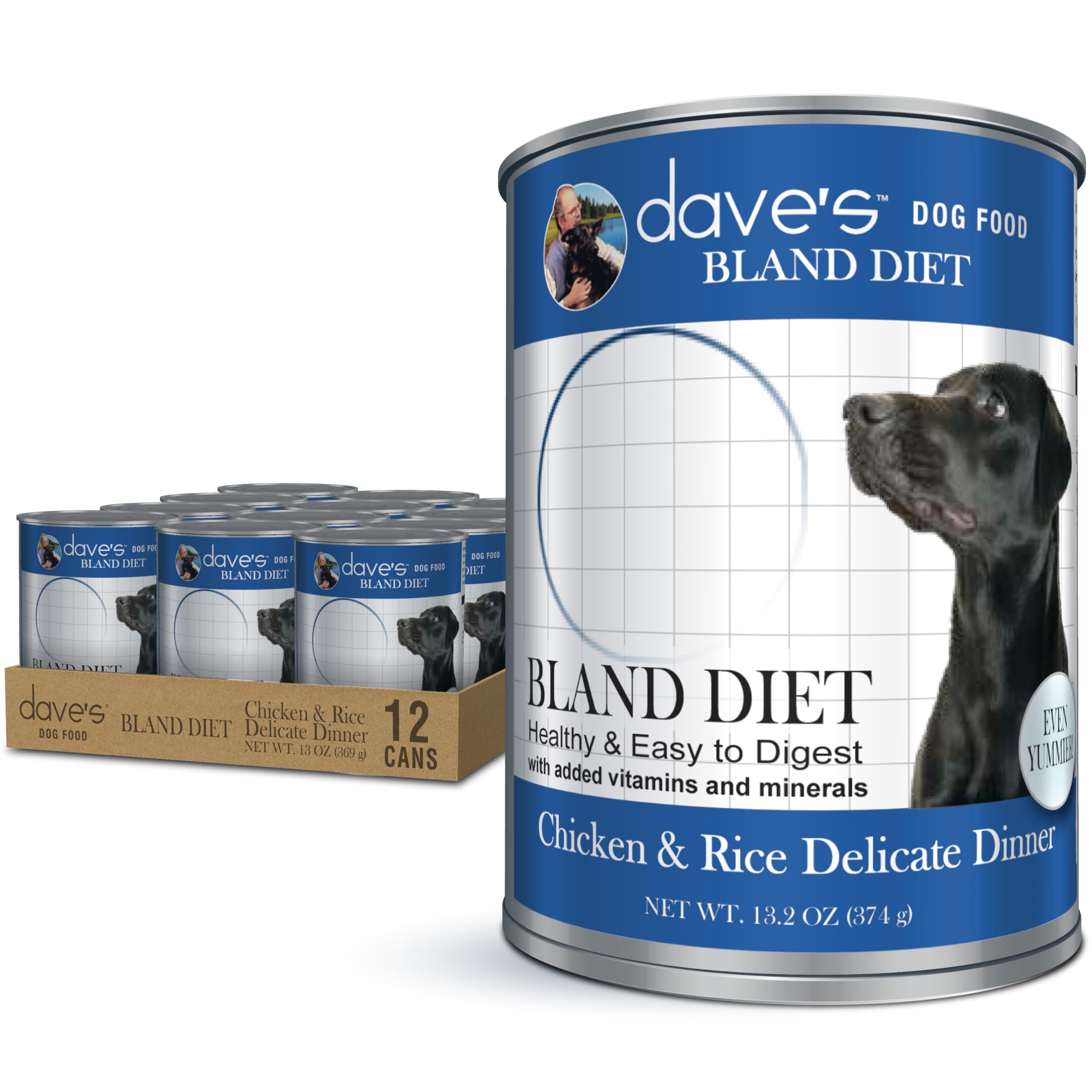
For owners facing an acute flare-up who need a reliable, affordable solution without a vet visit, this is the workhorse of the list. Dave’s Bland Diet is exactly what it sounds like: a limited ingredient chicken and white rice pate with a guaranteed maximum of 6% crude fat, designed to sit gently on a stressed stomach. The simplicity of the formula — no legumes, no exotic grains, no multiple protein sources — is its greatest strength for dogs who react to anything complex.
The pate texture is ideal for dogs that are nauseous and need to eat something that slides down easily. It is marketed as a complete and balanced meal (AAFCO-compliant) for adult maintenance, meaning it can be used as a long-term diet rather than just a 3-day rest, though most owners use it during transitional periods. The case of 12 cans provides substantial volume for a reasonable cost, making it accessible for households watching their budget.
Where it falls short is in the depth of gut support. There are no added prebiotics, no digestive enzyme blend, and no specialized fiber profile beyond basic white rice. For a dog with chronic IBD or recurrent pancreatitis, this lacks the therapeutic precision of the veterinary diets. However, for the occasional stress-induced diarrhea or post-surgical transition, it is a perfectly solid, low-risk choice.
Why we love it
- Extremely low 6% crude fat for sensitive pancreas
- Simple two-ingredient base reduces reaction risk
- Budget-friendly for multi-can feeding during recovery
Good to know
- Lacks prebiotics and advanced fiber for chronic gut issues
- Single protein (chicken) may not suit all allergies
FAQ
When should I choose a veterinary diet over an over-the-counter sensitive stomach formula?
Can a raw diet help or hurt a dog with chronic intestinal issues?
How long does it take to see improvement in stool quality after switching food?
Final Thoughts: The Verdict
For most pet parents, the dog food for intestinal issues winner is the Hill’s Prescription Diet i/d Digestive Care because its ActivBiome+ prebiotic technology offers the fastest and most reliable stool firming of any product tested. If you want precise low-fat management for pancreatitis, grab the Royal Canin Gastrointestinal Low Fat. And for a budget-friendly acute flare-up solution that won’t break the bank, nothing beats the Dave’s Bland Diet Pate.