
Labrador Retriever puppies are notorious for two things: an endless appetite and a sensitive digestive system that turns the wrong kibble into a mess on your floor. Choosing a diet formulated for their specific large-breed growth curve and fast-eating habits is not a luxury — it is the single most important decision you make for their joint health, coat quality, and stool consistency during their first 15 months.
I’m Mo Mahin — the founder and writer behind Furric. I’ve spent years analyzing veterinary nutritional studies, cross-referencing ingredient panels against AAFCO standards, and studying aggregated owner feedback to separate breed-specific formulas from generic puppy chow that misses the mark for Labs.
Whether you are dealing with chronic loose stools, a picky eater, or simply want the best start for your pup, this guide examines the top contenders for dog food for labrador retriever puppies based on real owner results and measurable nutritional specs.
How To Choose The Best Dog Food For Labrador Retriever Puppies
Labrador puppies grow faster than smaller breeds, which makes their nutritional needs unique. A formula designed for “all puppies” rarely provides the precise calcium, phosphorus, and DHA levels that support healthy bone development and mental sharpness in a Lab. Here are the three critical factors to evaluate before buying.
Calcium and Phosphorus Ratios for Joint Health
Large-breed puppies like Labs are prone to hip and elbow dysplasia. The ideal calcium content in their food sits between 0.8% and 1.2% on a dry matter basis. Formulas that overshoot this range can accelerate bone growth, leading to skeletal abnormalities. Check the guaranteed analysis on the bag — if it does not list calcium and phosphorus percentages, move on to a brand that does.
Kibble Shape and Eating Speed
Labradors are gulpers. Their fast-eating habit leads to bloating, regurgitation, and poor digestion. Brands that engineer a donut-shaped or large, textured kibble force your puppy to chew rather than inhale. This mechanical slowdown reduces the risk of gastric dilatation-volvulus and gives the digestive enzymes time to work. A flat, small kibble is a red flag for this breed.
Protein and Fat Balance for Controlled Growth
A Lab puppy should grow slowly and steadily — not pack on weight too fast. Look for crude protein between 26% and 30% and crude fat between 13% and 17%. Excessively high protein levels (above 34%) can push growth velocity beyond what developing joints can handle. Premium formulas often include DHA from fish oil for brain development and prebiotic fiber for stool quality.
Quick Comparison
On smaller screens, swipe sideways to see the full table.
| Model | Category | Best For | Key Spec | Amazon |
|---|---|---|---|---|
| Royal Canin Labrador Retriever Puppy | Breed-Specific | Purebred Labs 8 wks–15 mos | Donut-shaped kibble, 30 lb bag | Amazon |
| Wellness CORE Large Breed Puppy | Grain-Free | High-protein, grain-free diet | DHA + calcium/phosphorus, 24 lb | Amazon |
| Hill’s Science Diet Large Breed Puppy | Veterinarian Recommended | Balanced minerals & DHA | Chicken & Brown Rice, 27.5 lb | Amazon |
| Purina Pro Plan Sport 30/18 Large Breed | High-Protein | Active puppies & trainability | 30% protein, glucosamine, 18 lb | Amazon |
| Purina Pro Plan Sensitive Stomach Salmon | Sensitive Digestion | Itchy skin & loose stools | Probiotics + omega-6, 16 lb | Amazon |
In‑Depth Reviews
1. Royal Canin Breed Health Nutrition Labrador Retriever Puppy Dry Dog Food, 30 lb

Royal Canin is the only brand on this list that builds its recipe specifically around the Labrador Retriever’s anatomy. The donut-shaped kibble is the headline feature — it forces your Lab puppy to chew slowly, reducing gulping and the risk of bloat. Real owner feedback consistently highlights that switching to this formula resolved chronic loose stools after failed attempts with grain-free alternatives like Blue Wilderness and Taste of the Wild.
Nutritionally, this formula delivers calcium and phosphorus at levels calibrated for a Labrador’s growth curve — not a generic large-breed target. The 30-pound bag provides roughly two months of food for a puppy under six months, making it a solid mid-range value. Owners report shinier coats and firmer stools within two weeks of transition.
The formula is not grain-free and contains wheat, which some owners note but their Labs tolerate well. Combined with Royal Canin’s wet food line for mixed feeding, this dry kibble gives you the most tailored nutritional profile available for a purebred Lab puppy from 8 weeks to 15 months.
Why we love it
- Donut-shaped kibble slows fast eating naturally
- Calcium/phosphorus ratio matched to Lab growth
- Resolves loose stool for most puppies
- 30-pound bag offers strong value per feeding
Good to know
- Contains wheat and gluten
- Only suitable for purebred Labs 8 weeks to 15 months
2. Wellness CORE Large Breed Puppy Dry Dog Food, Grain Free, Chicken and Turkey Recipe, 24 lb
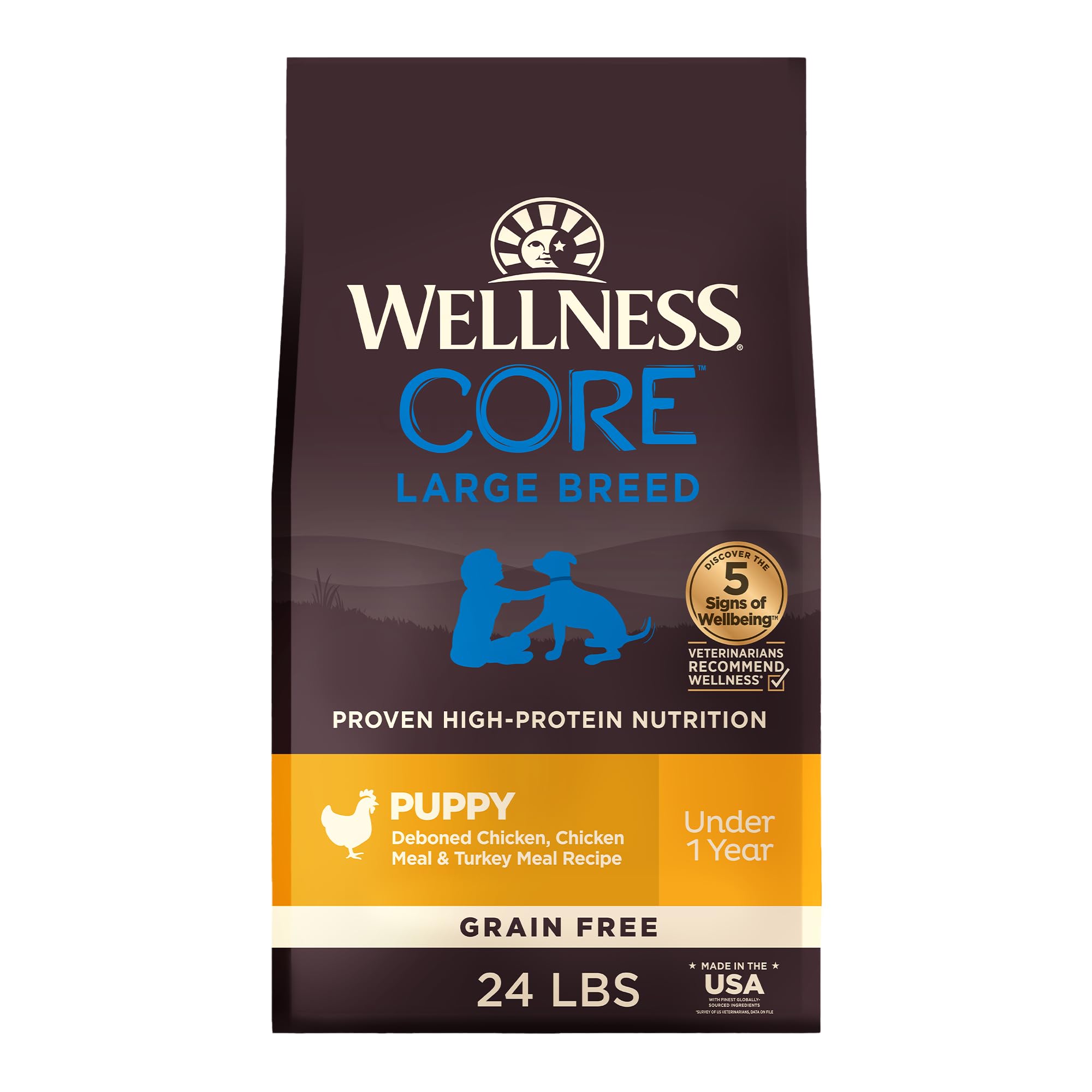
If your Lab puppy has a known sensitivity to grains or you prefer a grain-inclusive alternative that still avoids corn, wheat, and soy, this is the top contender. Wellness CORE uses deboned chicken as the primary protein source and keeps the protein level around 34%, which is at the upper end of the recommended range — best suited for highly active Labs that burn through calories quickly.
The formula includes guaranteed levels of DHA (0.1%) for brain development, plus calcium and phosphorus in the proper ratio for large-breed bone growth. Owner reviews from German Shepherd and Golden Retriever owners confirm better coat quality, reduced gas, and fewer stomach issues compared to budget grain-free brands. Labs on this food maintain lean muscle tone without excessive fat gain.
At 24 pounds, this bag runs slightly heavier in cost per pound than the Royal Canin option. Some owners report inconsistent Amazon delivery with this specific SKU, so consider using Subscribe & Save to lock in availability. The kibble is smaller than the Royal Canin donut shape — Labs that gulp may still need a slow-feeder bowl.
Why we love it
- Deboned chicken first ingredient, high protein
- Added glucosamine and taurine for heart and joints
- No corn, wheat, soy, or artificial preservatives
- Vet-approved for large-breed skeletal health
Good to know
- Smaller kibble does not slow fast eaters
- Premium price point per feeding
3. Hill’s Science Diet Puppy Large Breed Dry Dog Food, Chicken & Brown Rice, 27.5 lb
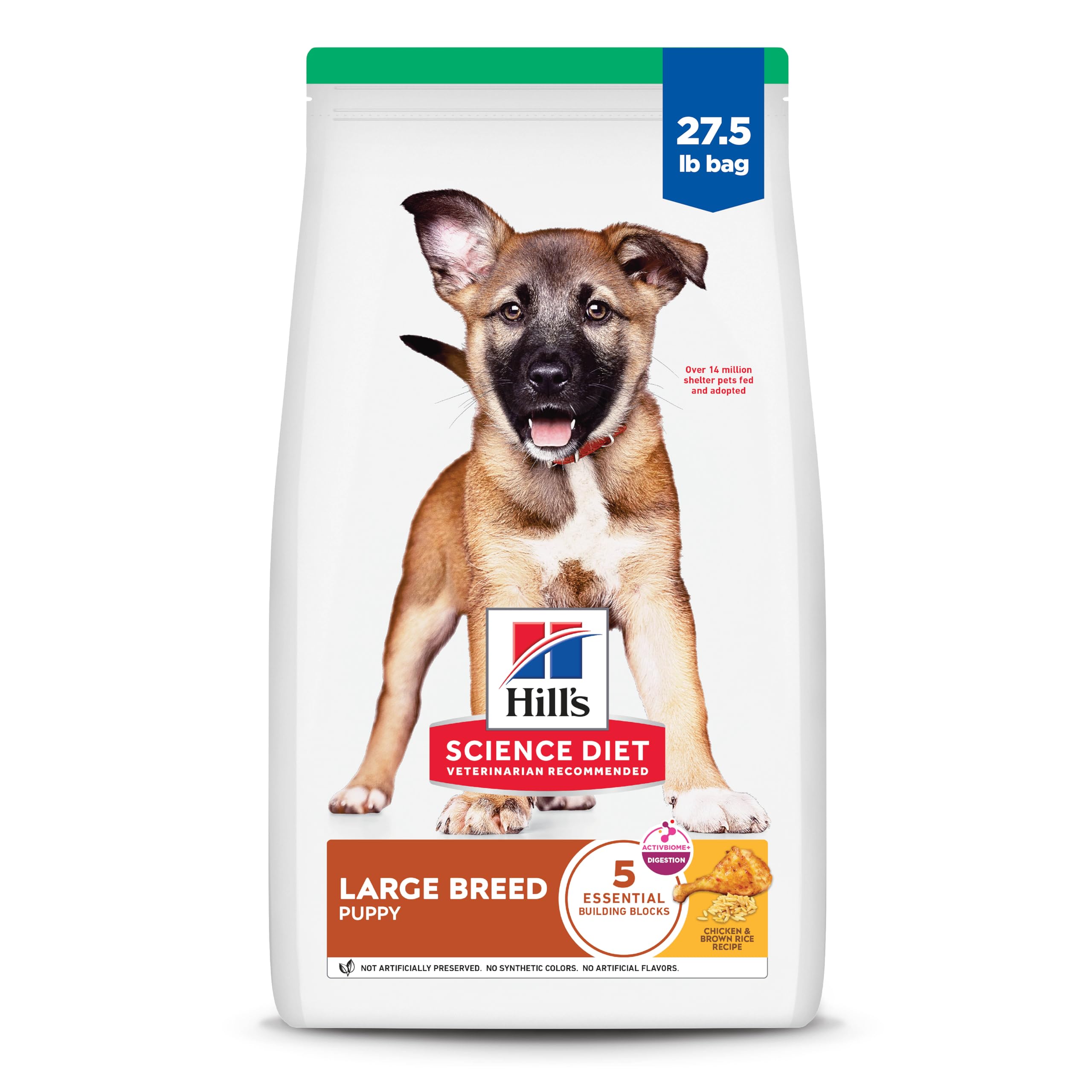
Hill’s Science Diet is the most recommended brand by US veterinarians, and this Large Breed Puppy formula justifies that reputation with a tightly controlled calcium-phosphorus profile. The 27.5-pound bag is the largest in this review, and the kibble size is appropriately large for a Labrador puppy’s mouth, encouraging chewing without being as specialized as the Royal Canin donut shape.
DHA from fish oil supports eye and brain development, while the antioxidant blend (vitamins C and E) strengthens the developing immune system.
The formula uses chicken as the primary protein and brown rice as the digestible carbohydrate source. It is not grain-free, which is actually preferable for most Labrador puppies unless a specific grain allergy exists. Owners report consistent stool quality, strong healthy growth, and high palatability — one reviewer noted their Lab puppy devours this food and refuses alternatives.
Why we love it
- #1 vet-recommended brand for large-breed puppies
- Balanced minerals for bone and teeth development
- DHA from fish oil for brain and vision support
- Large kibble size discourages gulping
Good to know
- Not breed-specific — general large breed formula
- Some Labs may need portion reduction to avoid weight gain
4. Purina Pro Plan Sport Development Large Breed 30/18 Chicken and Rice Puppy Formula, 18 lb
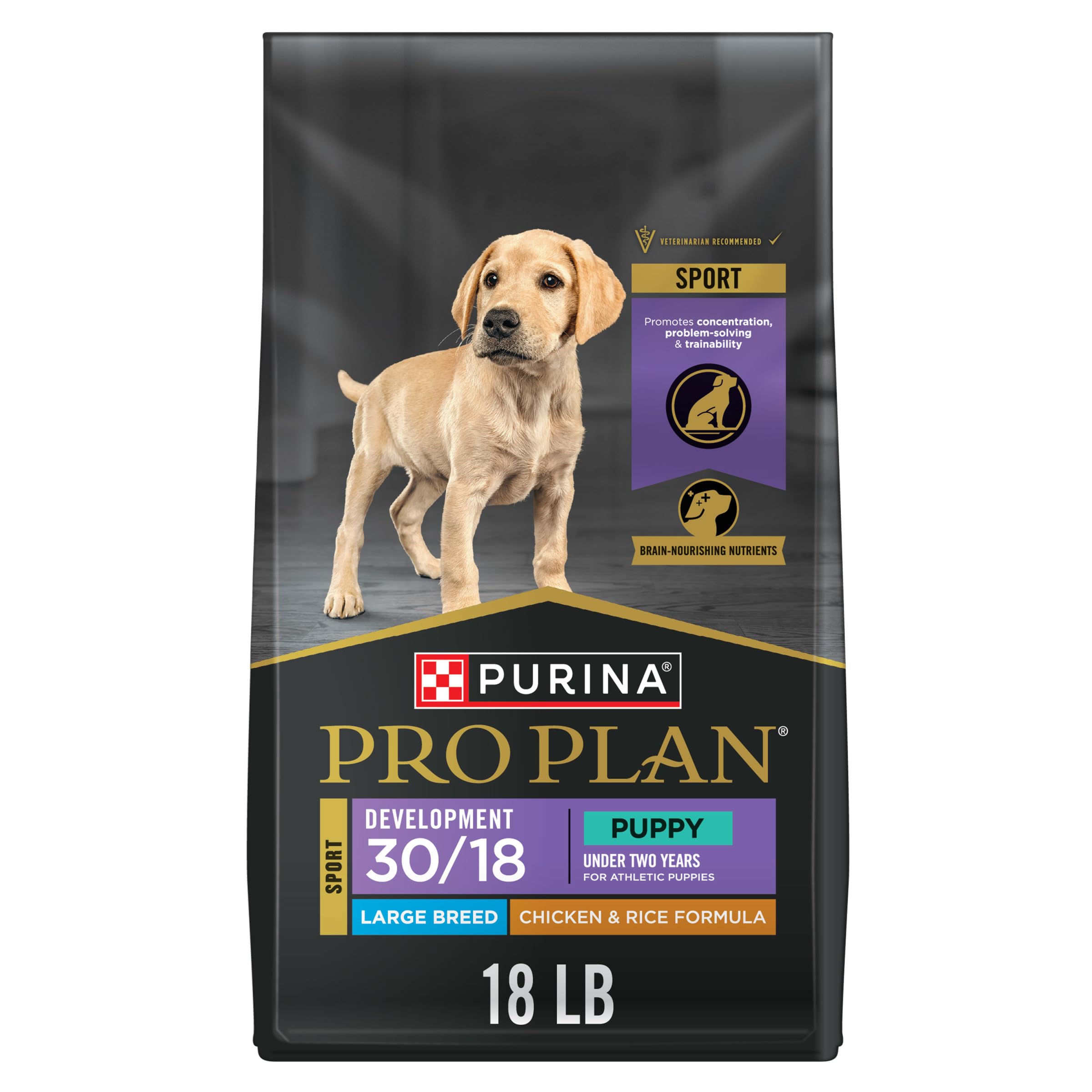
The 30% protein and 18% fat profile is higher than standard large-breed puppy foods, so it is best reserved for highly active puppies rather than couch-potato companions.
Real chicken is the first ingredient, and glucosamine supports joint cartilage during the rapid growth phase. The kibble is medium-sized and not engineered to slow eating — fast-gulping Labs will need a slow-feeder bowl. Owner feedback from a Lab owner who raised two puppies on this line reports regular solid bowel movements and excellent energy levels without digestive upset.
The 18-pound bag is smaller than most options in this review, so expect to reorder more frequently for a puppy eating 3–4 cups per day. Some owners note the price has crept up over time, making it less competitive against the 30-pound Royal Canin bag. If your Lab puppy is on the calmer side, consider the lower-fat Purina Pro Plan Large Breed formula instead.
Why we love it
- High protein and fat for athletic growing puppies
- Glucosamine for joint support during growth
- Real chicken as first ingredient
- Promotes trainability and concentration
Good to know
- Not ideal for sedentary or overweight-prone Labs
- Smaller bag size requires frequent repurchase
5. Purina Pro Plan Sensitive Skin and Stomach Large Breed Puppy Salmon and Rice Formula, 16 lb

If your Lab puppy suffers from chronic itching, dry skin, or loose stools, this salmon-and-rice formula is the most effective entry point in the mid-range tier. Salmon is the first ingredient, providing omega-6 fatty acids and vitamin A to nourish the skin and coat, while oatmeal serves as a highly digestible carbohydrate source that is gentle on the digestive system.
The formula includes guaranteed live probiotics and natural prebiotic fiber to support gut health and immune function. Owner reviews are compelling — one Lab owner reported that this food resolved severe diarrhea after three other brands (including one premium fresh food) failed. Another owner of a German Shepherd/Husky mix noted reduced itching and firm stools after four months on this diet.
The 16-pound bag is the smallest in this lineup, making it the most expensive per pound among the Purina options. If your puppy has no sensitivities, the standard Purina Pro Plan Large Breed formula gives you more food per dollar. However, for a Lab with a truly sensitive system, this formula provides targeted relief that cheaper alternatives cannot match.
Why we love it
- Salmon as first ingredient — novel protein source
- Live probiotics and prebiotic fiber for gut health
- Oatmeal is gentle on sensitive stomachs
- Omega-6 and vitamin A improve skin and coat condition
Good to know
- 16-pound bag runs higher cost per feeding
- Some Labs may prefer chicken-based formulas
FAQ
When should I switch my Labrador puppy from puppy food to adult food?
Why does my Lab puppy have loose stools on grain-free food?
How much should I feed a 2-month-old Labrador puppy per day?
Final Thoughts: The Verdict
For most Labrador Retriever puppies, the clear winner in the dog food for labrador retriever puppies category is the Royal Canin Breed Health Nutrition Labrador Retriever Puppy formula because its donut-shaped kibble directly addresses the breed’s fast-eating habit while delivering breed-specific calcium and phosphorus ratios for controlled growth. If your puppy has sensitive skin or a grain allergy, grab the Purina Pro Plan Sensitive Skin and Stomach Salmon formula for its probiotic support and novel protein source. And for a highly active field Lab that burns through every calorie, nothing beats the Purina Pro Plan Sport 30/18 for sustained energy and joint support.