
That constant licking of paws, the reddened belly after meals, the endless ear infections—the struggle of finding a diet that doesn’t trigger a Labrador’s sensitive immune system is all too real.
I’m Mo Mahin — the founder and writer behind Furric. I’ve spent over a decade analyzing pet food formulations, cross-referencing veterinary nutritional guidelines against owner-reported outcomes, and breaking down the critical differences between limited-ingredient diets, novel proteins, and hydrolyzed options that actually make a difference for Labs with allergies.
After evaluating dozens of recipes based on single-protein sourcing, Omega fatty acid levels, and guaranteed digestibility, I’ve narrowed the field to seven strong contenders. This roundup of the very best dog food for labs with allergies should give you a clear path toward a calmer, itch-free companion.
How To Choose The Best Dog Food For Labs With Allergies
A Labrador Retriever’s digestive tract is shorter and more reactive than many other large breeds, which means common fillers and multiple protein sources can quickly lead to chronic itching, loose stools, and ear inflammation. When selecting any formula labeled for allergies, start by verifying that the recipe uses a single, named animal protein—ideally one your Lab has never eaten before (this is called a “novel” protein). From there, assess the Omega fatty acid content: a minimum combined Omega-3 + Omega-6 level of roughly 2.5% on a dry matter basis is the therapeutic threshold many dermatology veterinarians recommend for maintaining skin barrier integrity.
Single vs Multiple Protein Sources
Labs with confirmed food allergies often react to chicken, beef, and eggs. A true limited-ingredient diet (LID) should list exactly one animal protein—such as lamb, duck, or salmon—as the first ingredient, and no other animal proteins in the guaranteed analysis. Avoid formulas that hide a second animal fat or meat meal later in the list.
Carbohydrate Sources and Digestive Load
Labradors are prone to obesity and pancreatitis, so the carbohydrate matrix matters. Look for single, easily digestible carbs like oatmeal, brown rice, or pumpkin. Avoid recipes that stack multiple grains or legumes, as this raises the glycemic load and can aggravate skin inflammation through insulin spikes.
Supplemental Fatty Acids and Probiotics
Omega-3 from fish oil or flaxseed directly reduces the production of inflammatory cytokines. For a Lab, a target of at least 0.5% Omega-3 by dry matter is the baseline for visible coat improvement. Probiotics—specifically Enterococcus faecium or Bacillus coagulans—help stabilize the gut microbiome, which is directly linked to allergy severity in dogs.
Quick Comparison
On smaller screens, swipe sideways to see the full table.
| Model | Category | Best For | Key Spec | Amazon |
|---|---|---|---|---|
| Natural Balance L.I.D. Lamb | LID Dry | Allergy intro & rotation | Single lamb protein, no soy or gluten | Amazon |
| Wellness Simple Lamb & Oatmeal | LID Dry | Sensitive stomachs & skin | Potato-free, prebiotics & Omega fatty acids | Amazon |
| Zignature Lamb Formula | Grain-Free LID | High-protein rotational diet | Lamb #1, probiotics, low-fat | Amazon |
| Merrick Backcountry Great Plains | Raw-Infused | Ancestral diet fans | Freeze-dried raw pieces, glucosamine | Amazon |
| Lucy Pet Duck & Pumpkin | Grain-Free LID | Novel protein & gut health | P.B.F. prebiotic fiber, duck protein | Amazon |
| Royal Canin Large Sensitive Skin | Veterinary Diet | Large breed dry coat | Omega-3 & 6 tailored for 56-100 lb dogs | Amazon |
| Nutrish Salmon Dry Dog Food | Budget Dry | Affordable single-protein | Salmon #1, budget-friendly entry | Amazon |
In‑Depth Reviews
1. Natural Balance L.I.D. Lamb & Brown Rice
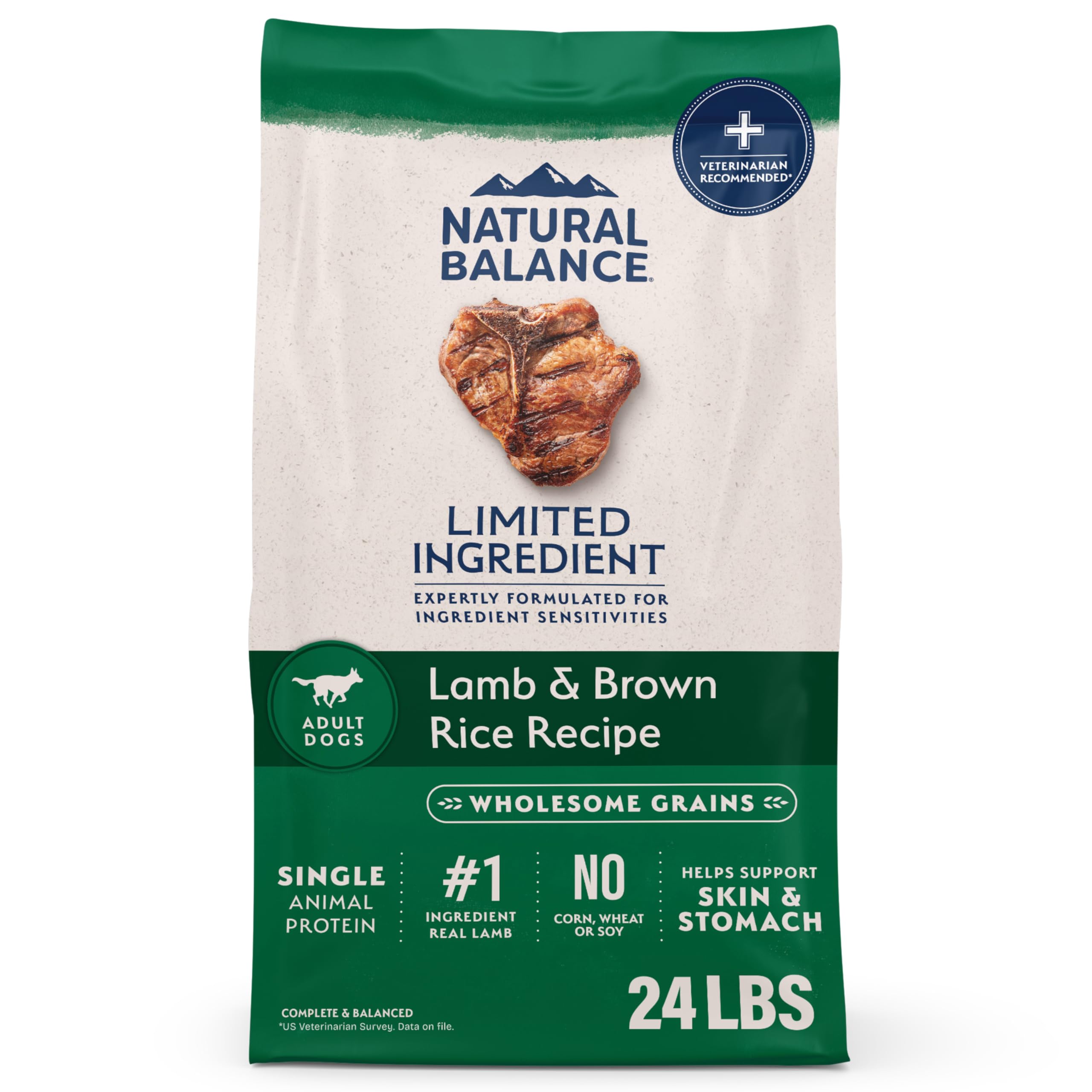
This 24-pound bag delivers exactly what a Lab with allergies needs most: a single lamb protein source paired with brown rice as the sole carbohydrate anchor. Natural Balance’s “Feed with Confidence” program tests every batch, so you’re not gambling on cross-contamination from chicken or corn—a real risk with many mid-tier brands. The limited-ingredient formula explicitly excludes soy, gluten, and artificial colors, which aligns with the most common triggers for Labs.
The guaranteed Omega fatty acid profile is sufficient to support coat condition without requiring separate fish oil supplementation for most dogs. Owners transitioning from chicken-based diets report visible reduction in paw licking within 10 to 14 days. The kibble size is medium-format, appropriate for a Lab’s jaw but small enough to slow down fast eaters.
One detail worth noting: the recipe is not grain-free, which is actually an advantage for many Labs, as the brown rice provides a lower glycemic load than potato or tapioca starches. If your Lab has confirmed grain allergy (rare but possible), you will need to look at the Zignature or Lucy Pet options instead.
Why we love it
- Single lamb protein reduces allergic confusion in reactive Labs
- “Feed with Confidence” batch testing provides safety traceability
- Brown rice keeps glycemic load moderate for weight-prone Labs
Good to know
- Not suitable for confirmed grain allergies
- Crude fat content is moderate; may not satisfy highly active field Labs
2. Wellness Simple Lamb & Oatmeal

Wellness Simple is one of the few limited-ingredient recipes that is explicitly chicken-free, potato-free, and poultry-by-product-free—three boxes that Lab allergy owners learn to check immediately. The lamb-and-oatmeal foundation is particularly effective for Labs that react to both chicken and typical grain-free carb sources like potato or tapioca. The 26-pound bag offers strong value at the premium tier.
The recipe includes natural prebiotics (chicory root extract) and taurine for heart health, which is a thoughtful addition since Labs are predisposed to dilated cardiomyopathy. Omega fatty acids are present at levels that dermatology-focused owners will recognize as therapeutic, not just maintenance. The kibble shape is a small oval, which helps with slower chewing.
Transitioning Labs from a poultry-heavy diet may take a full week of mixing due to the higher fiber load from oatmeal. A small minority of owners report looser stools during the first three days, which usually resolves by day five. If your Lab has a very sensitive colon, you may want to start with a 75/25 ratio of old food to this formula.
Why we love it
- Potato-free carb matrix is rare and helpful for allergy-prone Labs
- Taurine supplementation supports cardiac health in the breed
- Prebiotic fiber stabilizes digestion without causing gas
Good to know
- Higher fiber content may cause loose stool during first week
- Not suitable for Labs with confirmed oatmeal intolerance
3. Zignature Lamb Limited Ingredient Formula

Zignature takes a grain-free approach that works well for Labs whose allergies extend to wheat, corn, or soy. Lamb is the number-one ingredient, and the recipe is fortified with probiotics—specifically dried Bacillus coagulans fermentation product—which directly supports the gut-brain-skin axis. This is a low-fat formula relative to other grain-free options, making it a safer choice for Labs prone to pancreatitis.
At 25 pounds, the bag size is practical for single-dog households. The small-bites variant (available) is easier for older Labs with dental wear to manage. The company explicitly markets this as suitable for rotational feeding, which means you can cycle it with a different novel protein (like Zignature’s duck or salmon formula) every few months to prevent new protein sensitivities from developing.
Some Labs with very sensitive stomachs may experience soft stool if switched abruptly from a higher-fiber food. The pea fiber in this formula is moderate, not high. Owners should plan a seven-day transition. Additionally, the grain-free nature means the carbohydrate load comes from chickpeas and peas, which are slightly higher in calories than brown rice—watch your Lab’s weight.
Why we love it
- Probiotic blend targets gut health directly linked to allergy severity
- Low-fat profile is pancreas-safe for predisposed Labs
- Designed for rotational feeding to delay new food sensitivities
Good to know
- Grain-free carb sources are calorie-dense for sedentary Labs
- Transition period needed to avoid soft stool
4. Merrick Backcountry Great Plains Red Recipe

Merrick Backcountry offers a hybrid approach: grain-free kibble with real freeze-dried raw pieces, giving your Lab the enzyme benefits of raw feeding without the hassle of handling raw meat. The Great Plains Red Recipe uses deboned beef as its primary protein with lamb as a secondary source—still a poultry-free formulation, which is critical for chicken-allergic Labs.
This formula includes glucosamine and chondroitin, which are directly relevant to Labrador hip and joint health—a nice dual benefit when treating skin allergies. The Omega-6 to Omega-3 ratio is balanced enough to support skin barrier repair. The raw pieces are small and distributed evenly, so picky eaters cannot simply sort them out.
The bag size is 20 pounds, which is smaller than most dry-food bags in this price bracket. If you have a large male Lab, you will be reordering approximately every three weeks. Some Labs that are sensitive to legumes may experience gassiness from the pea fiber content. Transition slowly if your Lab has a history of flatulence.
Why we love it
- Freeze-dried raw pieces provide enzyme diversity for digestion
- Glucosamine and chondroitin support Lab hip health
- Poultry-free formulation reduces common allergic triggers
Good to know
- 20-pound bag requires frequent reordering for large Labs
- Pea fiber may cause gas in sensitive individuals
5. Lucy Pet Products Duck, Pumpkin & Quinoa
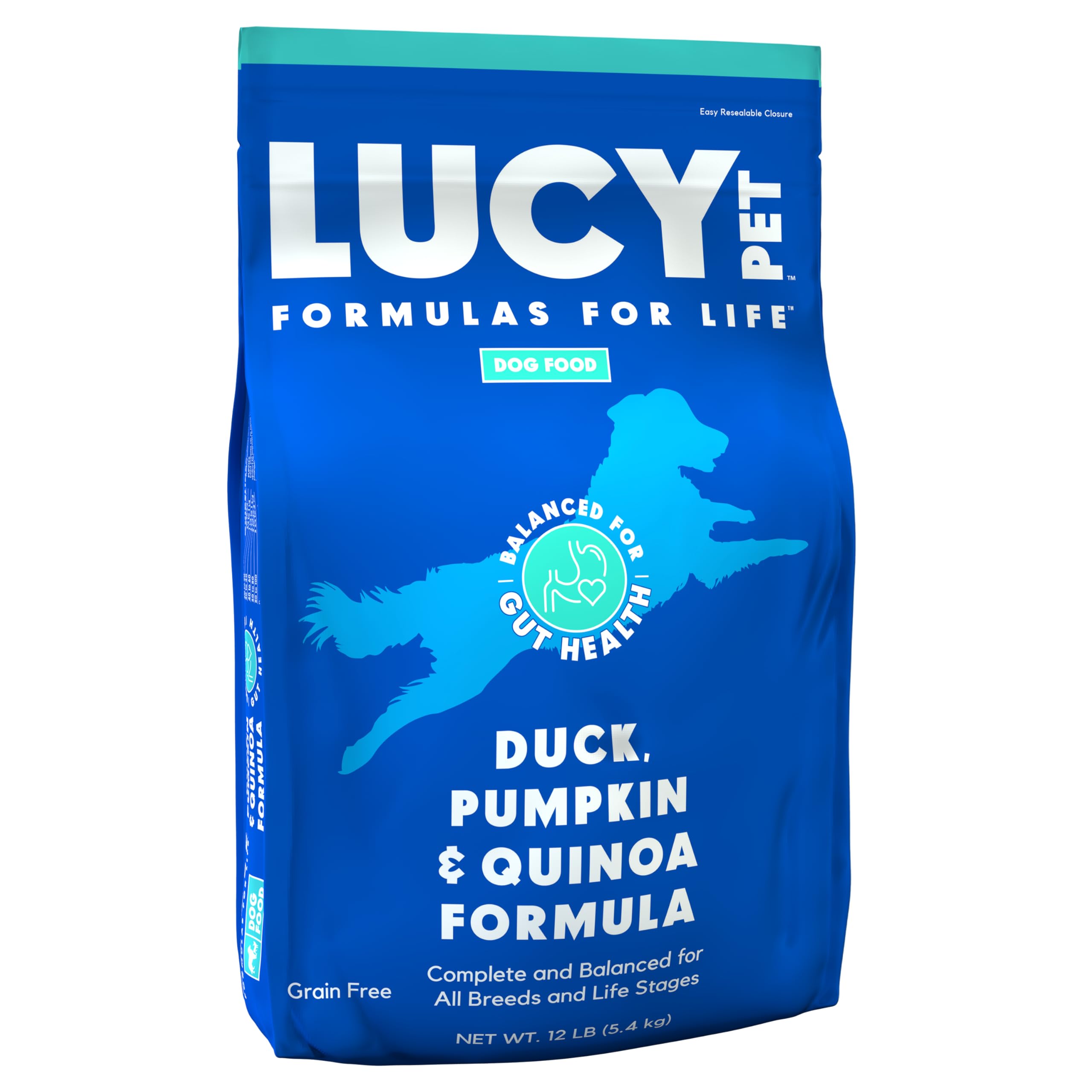
Lucy Pet takes a genuinely novel approach by using duck as the sole animal protein—an excellent option for Labs that have developed sensitivities to lamb or beef after months on those recipes. The formula is built on Dr. George Fahey’s 40 years of gut-health research, specifically the P.B.F. (Prebiotic Balanced Fiber) system that optimizes the gut microbiome for allergy mitigation.
Pumpkin and quinoa serve as the carbohydrate and fiber base, providing a lower glycemic load than many other grain-free options. The 12-pound bag is small, but the brand also offers larger sizes for multi-dog households. Duck is a leaner protein than beef or lamb, which helps maintain a healthy weight in Labs that are prone to obesity—a frequent comorbidity with allergy-prone dogs.
The smaller bag size means this works best as a trial size before committing to a larger purchase. Some Labs may need a longer transition period (up to 10 days) because duck is significantly different from typical poultry or red meat proteins. The kibble is slightly smaller than average, which could encourage faster eating in gulpers.
Why we love it
- Duck is a true novel protein for Labs tired of lamb or chicken
- P.B.F. prebiotic system is clinically researched for gut health
- Lean protein profile supports weight management in Labs
Good to know
- 12-pound bag is small for large breed feeding
- Long transition period needed due to novel protein novelty
6. Royal Canin Large Sensitive Skin Care

Royal Canin’s Large Sensitive Skin Care formula is a veterinary diet specifically calibrated for dogs weighing 56 to 100 pounds—the precise range for most adult Labrador Retrievers. The kibble shape is designed for large jaws, encouraging chewing and slowing intake. The Omega-3 and Omega-6 fatty acid profile is clinically formulated to improve coat shine and reduce dander, with 91% of owners reporting visible skin improvement after two months.
This is not a limited-ingredient diet. The formula uses multiple protein sources including chicken by-product meal, which means it is not suitable for Labs with confirmed poultry allergies. However, for Labs with environmental allergies or atopic dermatitis rather than food-specific triggers, this diet provides comprehensive nutritional support that many over-the-counter LIDs cannot match.
The 30-pound bag offers strong value for a veterinary-grade large-breed diet. Owners should note that Royal Canin formulas are typically higher in fiber than grain-free options, which helps with stool quality. If your Lab has both skin issues and a confirmed chicken allergy, skip this and choose the Natural Balance or Wellness Simple instead.
Why we love it
- Kibble shape and size optimized for Labrador jaw anatomy
- Clinically proven Omega ratio for visible skin improvement
- Veterinary formula with large-breed-specific nutrient levels
Good to know
- Contains chicken by-product meal—unsafe for poultry-allergic Labs
- Not a limited-ingredient formula; has multiple protein sources
7. Nutrish Salmon Dry Dog Food
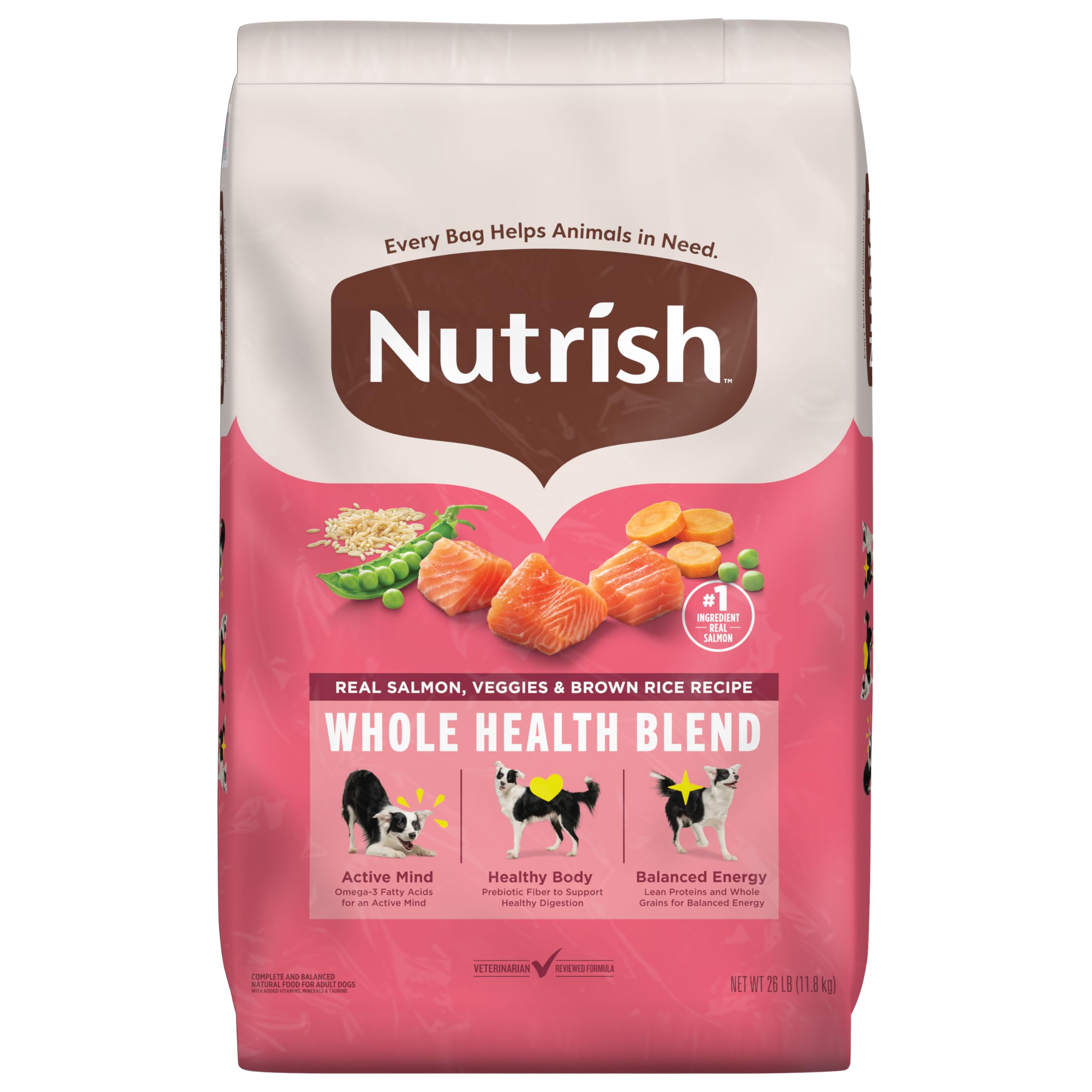
Nutrish Salmon provides an entry-level single-protein salmon formula that avoids chicken, beef, and lamb entirely—useful for Labs whose allergies are just beginning to be diagnosed and owners who do not want to commit to a higher-priced LID upfront. Salmon is a naturally anti-inflammatory protein due to its high Omega-3 content, which offers immediate skin support.
The 26-pound bag is the largest in the budget category included here, making it cost-efficient per feeding. This formula does contain grain (rice and oatmeal), which is fine for most Labs but may not work for the small percentage with confirmed grain allergies. The ingredient list is shorter than many grocery-store brands but longer than true LIDs like Natural Balance or Wellness Simple.
Some Labs with severe allergies may not respond as well to this formula because it is not explicitly a limited-ingredient diet and may contain trace cross-contaminants from the manufacturing facility. Use this as a stepping stone: if your Lab improves on Nutrish, you may save money long-term. If not, you have a clear signal to move up to a premium LID.
Why we love it
- Salmon provides natural Omega-3 for anti-inflammatory skin support
- Budget-friendly entry point for allergy diet trials
- Large 26-pound bag reduces per-meal cost significantly
Good to know
- Not a true limited-ingredient formula; risk of trace contaminants
- Contains grain—avoid if your Lab has grain-specific allergy
FAQ
Is lamb a safe novel protein for Labs with chicken allergies?
Should I choose grain-free or grain-inclusive food for my allergic Lab?
How much Omega-3 does a Lab with allergies need per day?
Final Thoughts: The Verdict
For most gardeners, the dog food for labs with allergies winner is the Natural Balance L.I.D. Lamb & Brown Rice because it combines a single novel protein with a low-glycemic grain, batch-tested safety, and strong Omega support at a mid-range price point. If you want a potato-free formula with prebiotic fiber specifically for skin and digestive health, grab the Wellness Simple Lamb & Oatmeal. And for a grain-free rotational diet with probiotics that help prevent new protein sensitivities from developing, nothing beats the Zignature Lamb Limited Ingredient Formula.