
Watching your dog limp or struggle to stand up is a heart-wrenching experience. Whether it’s a sudden injury, the slow progression of arthritis, or post-surgery recovery, finding the right support can feel overwhelming and confusing. You want to provide relief, not add discomfort, but the sea of options online makes it hard to know what truly works.
I’m Mo Mahin — the founder and writer behind Furric. My approach involves deep analysis of veterinary orthopedic principles, scrutinizing material safety and durability claims, and synthesizing thousands of real-world experiences from dedicated pet parents to separate effective support from well-marketed hopefuls.
This guide cuts through the complexity, providing a clear path to the devices that offer genuine stability and comfort. Selecting the appropriate best dog knee brace involves understanding specific injuries, precise sizing, and material integrity for your dog’s safe recovery.
How To Choose The Best Dog Knee Brace
Navigating the world of canine orthopedic support isn’t just about picking the highest-rated item. It’s a deliberate process that starts with a professional diagnosis and hinges on understanding your dog’s unique anatomy and injury. A misstep here can waste precious recovery time or even cause additional harm.
Confirm the Injury Location: Knee vs. Hock
This is the most crucial first step. A knee (stifle) brace and a hock (ankle) brace are designed for completely different joints and provide support in distinct ways. Applying a hock brace to a knee injury offers zero stabilization for a torn CCL. Always start with a vet exam to pinpoint the exact source of lameness. The product descriptions and reviews in this guide will specify which joint each brace is intended to support.
Master the Art of Measurement
Incorrect sizing is the leading cause of brace failure. Never guess based on your dog’s breed or weight alone. Use a soft measuring tape and follow the manufacturer’s guide meticulously, typically measuring the circumference above and below the joint, and the length of the leg segment. If your dog’s measurements fall between sizes, consulting the brand’s customer service is wiser than guessing.
Evaluate Materials and Support Structure
Look beyond the fabric. For knee stabilization, some form of rigid or semi-rigid support is often necessary. This can include flexible metal springs, hinged aluminum splints, or molded plastic. The lining should be a breathable, neoprene-like material that wicks moisture. Check how straps are anchored; multiple points of adjustment generally provide a more secure and customizable fit than a single strap.
Consider Your Dog’s Lifestyle and Temperament
A highly active dog will need a more durable brace with secure, high-quality closures. A patient, calm dog might tolerate a more complex design, while an anxious pup may do better with a simpler wrap. Also, think about maintenance—braces need to be cleaned regularly, so easy washability is a practical feature.
Quick Comparison
On smaller screens, swipe sideways to see the full table.
| Model | Type | Best For | Key Feature | Amazon |
|---|---|---|---|---|
| MerryMilo Knee Brace | Knee Support | Mid-range ACL/CCL support | Stabilizing hinge, waist strap | Amazon |
| Ortocanis Knee Immobilizer | Immobilizing Splint | Post-surgery or severe instability | Dual aluminum splints | Amazon |
| LISPOO Hinged Knee Brace | Hinged Knee Brace | Active dogs with ligament injuries | Movable metal hinge, full harness | Amazon |
| Ortocanis Flexible Brace (Right) | Flexible Support | Joint instability & osteoarthritis | 360° HDR neoprene compression | Amazon |
| Ortocanis Flexible Brace (Left) | Flexible Support | Joint instability & osteoarthritis | 360° HDR neoprene compression | Amazon |
| Ortocanis Flexible Brace (Med) | Flexible Support | Medium dogs with ACL strains | Flexible neoprene for controlled motion | Amazon |
| Lyderpet ACL Knee Brace | Knee Support | General ligament pain relief | Metal spring supports, breathable neoprene | Amazon |
| Bawektrl Dog Knee Brace | Knee Support | Entry-level knee support trial | 360-degree stable design | Amazon |
| Pawee Tree Hock Brace | Hock/Ankle Support | Rear hock arthritis or sprains | Metal springs, reflective straps | Amazon |
| AGON Rear Hock Brace | Hock/Ankle Support | Budget-friendly hock compression | Smooth mesh sheet, adjustable straps | Amazon |
| COMFPET Hock Brace | Hock/Ankle Support | Small breed hock issues | X-strap design, anti-licking sleeve | Amazon |
In-Depth Reviews
1. MerryMilo Dog Knee Brace for Torn ACL
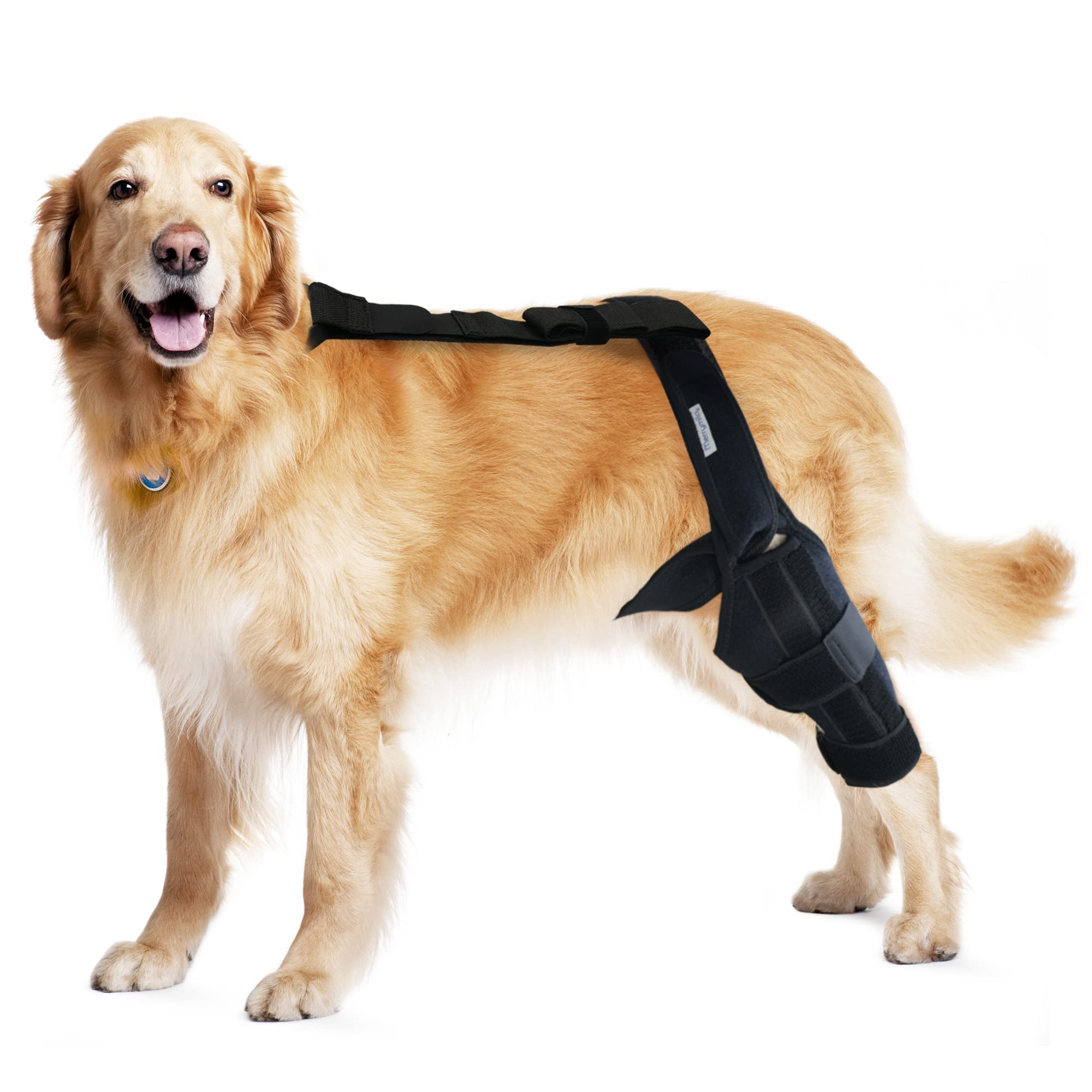
For pet parents facing a daunting ACL or CCL injury diagnosis, this brace stands out as a thoughtfully engineered mid-range option that balances effective stabilization with relative ease of use. It moves beyond basic compression to incorporate structural support where it’s needed most.
The design features a stabilizing hinge on the outside of the knee that aims to limit harmful lateral motion while allowing a safer range of flexion. A key differentiator is the inclusion of a waist strap, which anchors the brace and prevents the frustrating and potentially dangerous slippage common with cheaper models. Constructed from a flexible yet durable fabric, it’s built for daily wear during rehabilitation walks or around-the-house support.
Feedback from guardians of mid-sized to larger dogs highlights its role as a credible non-surgical alternative for older pets or those where surgery carries elevated risk. The consensus is that it provides tangible stability, giving dogs the confidence to bear weight on an injured leg again.
Why we love it
- Hinged design offers genuine lateral stabilization for ligament injuries.
- Integrated waist strap provides a secure, anti-slip fit that stays in place.
- High-quality materials and construction offer excellent durability for the category.
- Effective for managing pain from arthritis and post-surgery recovery support.
Good to know
- Can be challenging to fit correctly on very small or short-legged breeds.
- Requires a patient adjustment period; some dogs need days to accept it.
- The fit needs periodic checking and tightening during extended wear.
2. Ortocanis Knee Immobilizer with Aluminum Splints
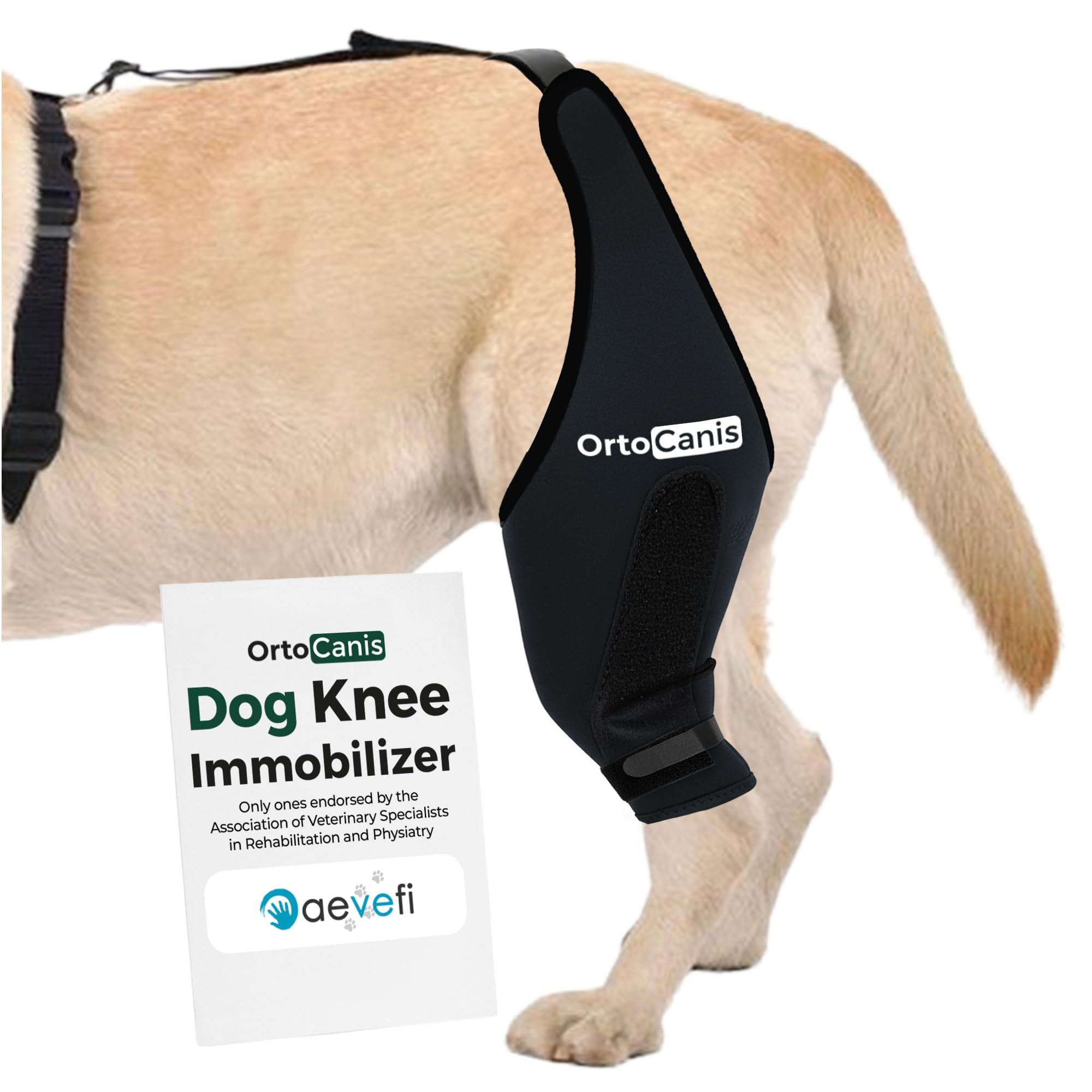
When a soft brace isn’t enough and a dog requires significant joint stabilization—be it for a severe ligament rupture, post-operative care, or advanced luxating patella—this immobilizer enters the conversation. It represents a more serious tier of support, designed for situations where limiting movement is the primary therapeutic goal.
The core of this brace is its dual aluminum splints, shaped to conform to a dog’s leg anatomy. These splints run along the sides of the knee, virtually eliminating sideways motion and severely limiting flexion, which is crucial for preventing re-injury during the initial healing phase. The splints are integrated into a durable neoprene sleeve, and the system is secured with multiple adjustable straps for a customized, firm fit.
Many guardians who used this while awaiting surgery or for conservative management of a tear report it provided the “locked” feeling they needed for peace of mind. It’s a tool for controlled, necessary rest, not for unrestricted activity.
Why we love it
- Provides maximum stability and near-total immobilization for serious injuries.
- Durable aluminum splints offer robust, reliable support that soft braces cannot.
- Ideal for post-surgical recovery or as a last-resort non-surgical option.
- Ergonomic design aims to distribute pressure and prevent pressure sores.
Good to know
- Premium price point reflects its specialized design and construction.
- Rigid design can be difficult for some dogs to acclimate to for long periods.
- Precise measurement is absolutely critical; an improper fit can cause rubbing.
- Not intended for all-day, everyday wear without strict monitoring.
3. LISPOO Hinged Dog Knee Brace with Harness
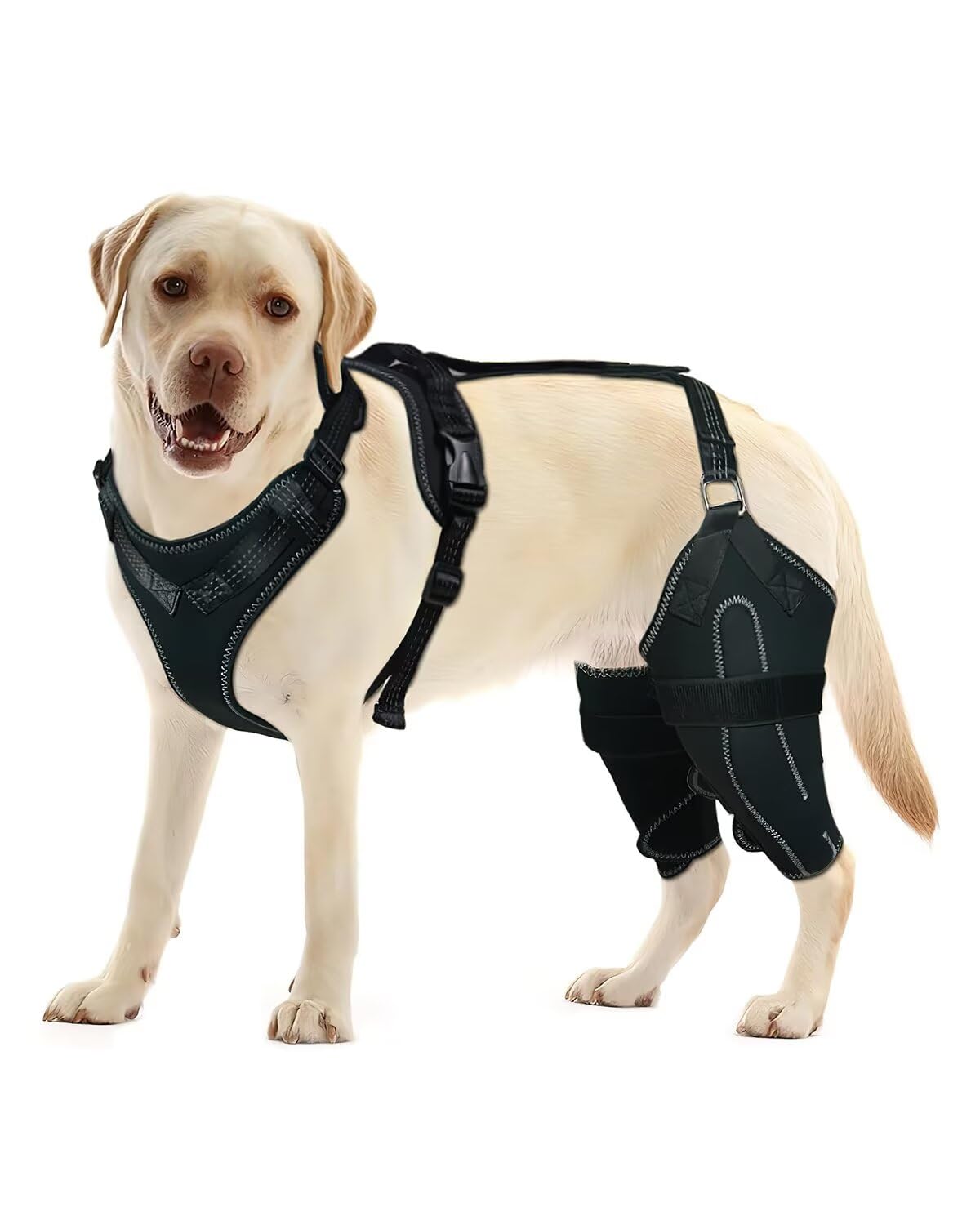
For the energetic companion who can’t simply switch off their drive, this comprehensive system offers a solution aimed at providing support during necessary activity. It’s more than a brace; it’s an integrated support harness designed for dogs who still need to enjoy controlled walks or play.
The standout feature is the movable metal hinge on the knee brace itself, which is intended to provide dynamic support that adjusts with the leg’s motion. Each brace connects to a central, padded harness that distributes tension across the torso, eliminating the risk of the brace sliding down the leg. This full-body approach is often necessary for powerful breeds or dogs with bilateral injuries.
Testimonials from owners of athletic breeds like Belgian Malinois highlight how this system allowed their dogs to regain confidence on walks and even run with support, serving as a functional alternative when surgery wasn’t feasible.
Why we love it
- Integrated harness system ensures the brace stays perfectly positioned without slippage.
- Movable hinge aims to support natural gait while preventing harmful movements.
- Excellent for large, active breeds or dogs with injuries on both hind legs.
- Robust construction is built to withstand the demands of an energetic dog.
Good to know
- The most premium investment, reflecting its complex design.
- Putting it on involves multiple steps and can have a learning curve.
- The harness component may be impractical for all-day indoor wear.
- Some reports indicate the Velcro straps may lose strength before the brace wears out.
4. Ortocanis Flexible Neoprene Knee Brace (Right Leg)
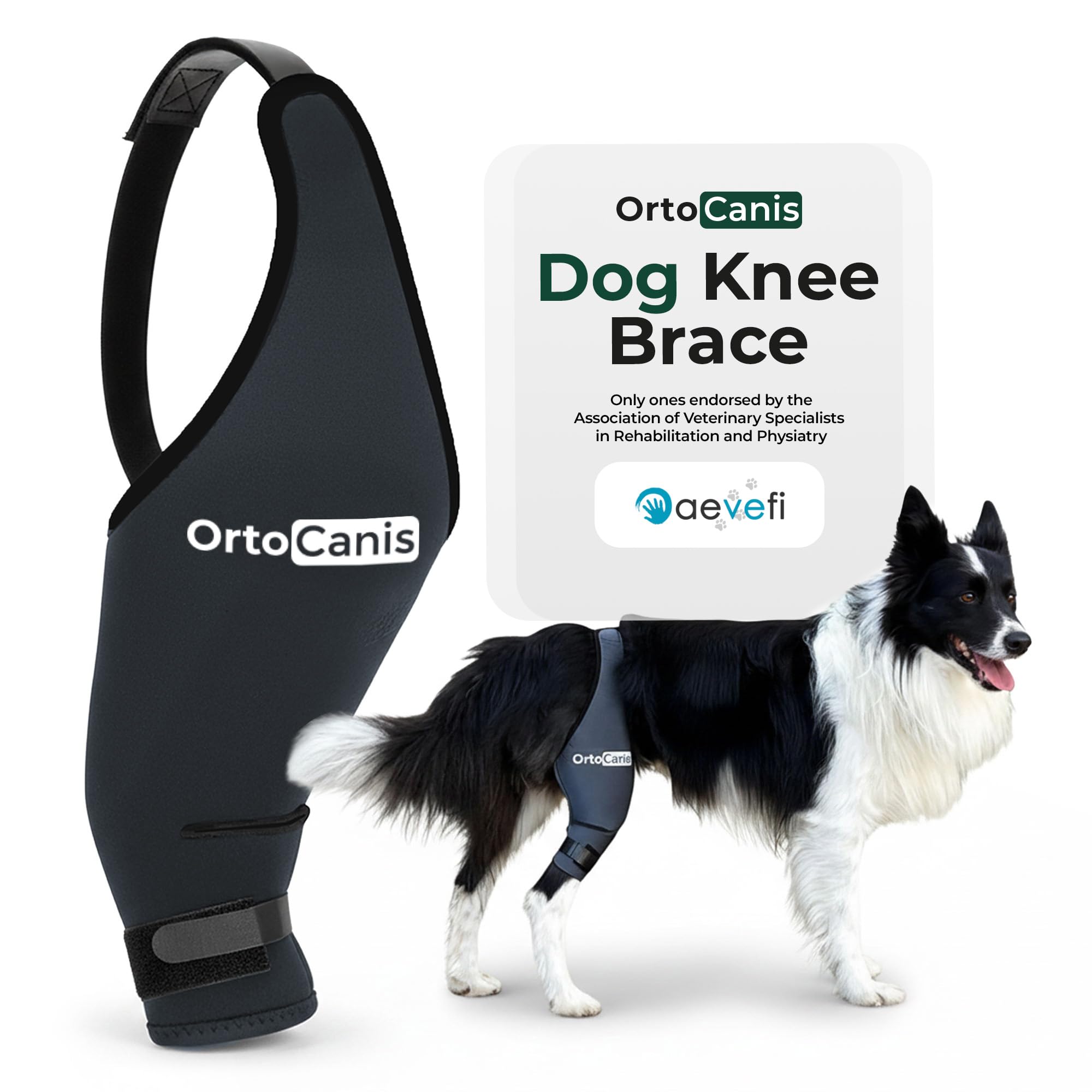
Not every knee issue requires rigid immobilization. For dogs with osteoarthritis, mild joint instability, or as part of a post-surgery recovery plan to increase warmth and circulation, a high-quality flexible brace can be an excellent tool. This model focuses on compression and proprioceptive support.
Made from High Dynamic Resistance (HDR) neoprene, it provides firm, even compression around the knee joint. This serves to increase blood flow, reduce swelling, and provide gentle stabilizing feedback that can improve a dog’s awareness of their limb placement. The design allows for a full range of motion while discouraging abrupt, painful movements.
Stories from pet parents often mention this brace helping senior dogs with arthritis feel more secure on their feet, and some have even used it successfully to manage a mild CCL sprain without surgery, giving the body’s natural healing processes a supportive environment.
Why we love it
- Excellent for managing osteoarthritis pain and mild to moderate instability.
- Flexible design allows natural movement while providing therapeutic compression.
- High-quality neoprene is durable, breathable, and comfortable for extended wear.
- Can be a great pre-or post-surgery supportive measure.
Good to know
- Not suitable for complete ligament tears where rigid support is needed.
- The strap configuration can be problematic for male dogs, potentially rubbing the sheath.
- Relies on precise fit for effectiveness; too loose offers no support, too tight can chafe.
5. Ortocanis Flexible Neoprene Knee Brace (Left Leg)
This is the left-leg counterpart to the previously reviewed Ortocanis flexible brace, offering the same therapeutic benefits for injuries or conditions affecting the opposite limb. The need for a specific left or right model underscores a focus on anatomical fit, which is a positive sign in orthopedic support.
It provides the same balanced, 360-degree compression using HDR neoprene to warm the joint, promote circulation, and offer mild stabilization. It’s designed for conditions where controlled movement is beneficial, such as managing arthritis stiffness or supporting a knee during low-impact rehabilitation exercises. The contoured shape aims to sit correctly on the left leg without twisting or buckling.
Feedback mirrors that of the right-leg version, with many noting its effectiveness for chronic conditions. Several accounts from owners of working breed dogs mention it helped their companion return to light duty by reducing discomfort and improving confidence in the affected leg.
Why we love it
- Anatomical design for the left leg provides a superior, non-slip fit.
- Effective for reducing inflammation and discomfort from chronic osteoarthritis.
- Promotes muscle elasticity and safer weight-bearing during daily activity.
- Often well-tolerated by dogs due to its flexible, non-restrictive feel.
Good to know
- As a soft brace, it does not prevent hyperextension or severe rotational instability.
- The same potential issue for male dogs exists with strap placement.
- Quality control concerns from a few buyers regarding receiving used or soiled items.
6. Lyderpet ACL Knee Brace for Dogs

Sitting at a accessible mid-point, this brace attempts to bridge the gap between simple sleeves and complex hinged systems. It incorporates structural support through metal springs sewn into the sides, aiming to maintain the knee’s natural alignment while providing compression.
The design is straightforward: a neoprene sleeve with flexible stabilizers and an adjustable strap system that includes a band meant to secure around the waist or upper thigh. This aims to address the common slippage problem. The breathable material is a plus for longer wear, especially in warmer climates or for dogs prone to overheating.
Experiences are mixed, which is common in this price segment. For some dogs with specific body types and mild to moderate issues, it provides noticeable relief and improved mobility. For others, particularly very muscular or uniquely shaped dogs, achieving and maintaining a functional fit proves challenging.
Why we love it
- Offers a step up in support from basic wraps with its integrated metal springs.
- Breathable neoprene construction enhances comfort for all-day wear.
- Includes a stabilizing strap to help keep the brace positioned on the leg.
- Can be effective for pain relief from arthritis and minor ligament strains.
Good to know
- Fit is highly variable; the waist strap can irritate the belly on some dogs.
- May not provide sufficient stabilization for a complete CCL tear.
- Some users report the brace sliding down despite the strap, especially on active dogs.
- Instructions can be minimal, leading to initial user confusion.
7. Bawektrl Dog Knee Brace for Torn ACL

For those seeking an initial foray into knee support without a significant financial commitment, this brace presents a basic option. It features the hallmarks of an entry-level supportive device: a neoprene construction, side stabilizers, and a wrap-around design.
The brace promises a 360-degree fit intended to secure the knee joint, with flexible stabilizers to help maintain alignment. It’s marketed for a range of issues from arthritis to post-surgery support. The simplicity of the design means there’s less to go wrong, but also less sophisticated engineering to address complex biomechanical problems.
User feedback is a testament to the “your mileage may vary” nature of budget braces. Some small dog owners found it perfectly adequate for providing comfort during arthritis flare-ups. However, several reports note difficulties with fit on short-haired breeds (leading to rubbing) and challenges keeping it securely positioned during movement.
Why we love it
- An accessible option for trying supportive care for mild conditions.
- Simple design with side stabilizers offers more support than a plain sleeve.
- May provide adequate comfort management for minor arthritis or post-surgery warmth.
- Useful as a temporary measure while waiting for a custom-fitted brace.
Good to know
- Not suitable for significant injuries; lacks the rigidity for torn ligament support.
- High potential for slippage and rotation on the leg, reducing effectiveness.
- Can cause chafing or raw spots on dogs with sensitive skin or short coats.
- Sizing can be inconsistent, requiring careful measurement and perhaps a trial.
8. Pawee Tree Dog Leg Braces for Back Legs (Hock Brace)

This product addresses a common point of confusion: it is specifically a hock (ankle) brace, not a knee brace. For dogs suffering from arthritis, sprains, or weakness in the rear ankle joint, this design can offer meaningful support where a knee brace would be useless.
It incorporates metal support springs along each side of the hock joint, providing stability to an area that otherwise has little inherent structural support. The four reflective Velcro straps allow for customizable tightness and security. The 3.5mm neoprene offers compression and warmth to the affected area.
Senior dog guardians have shared transformative stories, noting how this brace helped their older companions stop stumbling and regain a more stable gait by supporting weakening hocks. The key, as emphasized repeatedly, is recognizing that this is for the ankle, not the knee.
Why we love it
- Provides targeted, rigid support for the hock joint, which few other products address.
- Can dramatically improve stability in senior dogs with weak or arthritic ankles.
- Reflective straps add a safety element for evening walks.
- Often well-received by dogs, with many accepting it quickly once they feel the support.
Good to know
- CRITICAL: This is NOT for knee injuries. Using it on a knee will do nothing.
- Quality control on stitching can be inconsistent; inspect seams upon arrival.
- The sizing chart must be followed exactly, as the fit is very specific to hock dimensions.
- Velcro strength may diminish with frequent use and washing.
9. AGON Dog Leg Braces for Back Leg (Hock Brace)

Representing a very entry-level approach to hock support, this wrap is a simple compression sleeve made from a smooth mesh material. It’s designed for mild sprains, post-injury swelling, or providing gentle stability to a wobbly ankle without the rigid support of metal springs.
The design philosophy here is minimalism: apply even compression to reduce inflammation, provide mild proprioceptive feedback, and potentially prevent a secondary injury by reminding the dog to be careful with the limb. It’s easy to clean and put on, making it a low-stress option for both pet and owner.
Feedback indicates it works well for its intended purpose—managing minor, transient issues. Many found it helpful for a mild sprain diagnosed by their vet, using it during the day and removing it at night. However, the Velcro’s durability is a frequent point of criticism, with adhesion failing after a few weeks of regular use.
Why we love it
- Extremely affordable way to provide basic compression for minor hock issues.
- Smooth mesh material is gentle on skin and easy to wash.
- Simple to apply and adjust, with a straightforward strap system.
- Can be a good first-step intervention for acute, minor swelling or strain.
Good to know
- Offers compression only, not structural support for significant weakness or injury.
- Long-term durability is limited, especially the hook-and-loop closures.
- If put on too tightly, it can rub and irritate thelimb.
- Most effective for short-term use or as a complementary therapy.
10. COMFPET Hock Brace for Small Dogs

Toy breed owners face unique challenges when their tiny companions suffer leg issues. This brace is explicitly scaled for dogs between 5 and 15 pounds, addressing the common problems of Chihuahuas, Pomeranians, and Yorkies with delicate hocks.
Its clever X-strap design is the standout feature, crossing at the back of the leg to create a secure, non-slip hold that simpler wraps struggle to achieve on small, tapered limbs. The integrated metal springs offer gentle support, while the full-coverage neoprene sleeve serves a dual purpose: providing warmth and acting as a barrier to prevent licking and chewing at wounds or surgical sites.
Small dog advocates report success using this for arthritis, post-dental surgery (where a cone is impossible), and recovery from minor sprains. The sizing is precise, so measuring the hock circumference is non-negotiable for a good fit.
Why we love it
- Specifically designed for the anatomy of toy breeds (5-15 lbs).
- Innovative X-strap system provides superior security on tiny legs.
- Acts as both a support brace and an anti-licking sleeve.
- Soft neoprene keeps joints warm and is comfortable for extended wear.
Good to know
- As a hock brace, it is not intended for knee (stifle) injuries.
- The Velcro straps, while effective, may lose strength over time with frequent use.
- Requires regular cleaning due to its close-fitting, full-coverage design.
- Not suitable for dogs outside its very specific weight range.
11. Ortocanis Flexible Neoprene Knee Brace (Medium, Right)
This medium-sized, right-leg version of the Ortocanis flexible brace rounds out the options for dogs who need compression and mild stabilization without rigid splints. It encapsulates the brand’s approach to supportive care for joint instability and osteoarthritis in a specific size.
The value here lies in its targeted application. For a medium-sized dog with a confirmed right-leg knee issue, this brace offers a designed fit that generic wraps cannot match. The HDR neoprene provides therapeutic compression that can reduce swelling and pain, while still allowing the dog to move naturally during rehabilitation or daily life.
Shared experiences often highlight its use as part of a conservative management plan, sometimes helping dogs avoid surgery for partial tears. It’s frequently mentioned as a tool that improved quality of life for arthritic pets, giving them more confidence on stairs and during walks.
Why we love it
- Anatomically correct for the right knee of medium-sized dogs.
- Provides excellent compression for pain management and swelling reduction.
- Supports controlled movement, which is vital for maintaining muscle mass during recovery.
- Durable, high-quality material construction for its category.
Good to know
- Like its counterparts, it is not a solution for complete ligament ruptures requiring immobilization.
- Potential for strap-related discomfort in male dogs remains a consideration.
- Effectiveness is entirely dependent on achieving a precise, snug fit.
Safety & Care Tips
Monitor for Skin Irritation
Always check your dog’s skin under and around the brace at least twice daily. Look for redness, hot spots, or hair loss. These are signs the brace is too tight, rubbing, or that your dog is having an allergic reaction to the material. Allow the skin to breathe by removing the brace for several hours each day.
Introduce the Brace Gradually
Do not expect your dog to tolerate a brace for hours on the first day. Start with short sessions of 15-30 minutes while offering high-value treats and praise. Gradually increase wear time over several days as your dog acclimates. Forcing prolonged wear immediately will create a negative association and increase stress.
Maintain Hygiene
Braces accumulate dirt, sweat, and fur. Follow the manufacturer’s cleaning instructions—typically hand washing with mild soap and air drying away from direct heat. A clean brace prevents bacterial growth and skin infections. Always ensure the brace is completely dry before putting it back on your dog.
Use Under Veterinary Guidance
A brace is a medical device, not a substitute for professional diagnosis and treatment. Always use it under the advice of your veterinarian or a certified veterinary rehabilitation therapist. They can confirm it’s the right tool for the injury, show you how to fit it properly, and integrate it into a full recovery plan that may include rest, medication, and physical therapy.
FAQ
Can a dog knee brace heal a torn ACL?
How tight should a dog knee brace be?
What is the difference between a knee brace and a hock brace?
How long can my dog wear a knee brace each day?
Final Thoughts: The Verdict
For most pet parents, the best dog knee brace winner is the MerryMilo Knee Brace because it strikes an ideal balance of effective hinged support, secure fit with a waist strap, and durable construction at a mid-range value point. If you want maximum immobilization for a severe injury or post-surgery, grab the Ortocanis Knee Immobilizer. And for small breeds with hock issues, nothing beats the targeted design of the COMFPET Hock Brace. Remember, the right support begins with a vet’s diagnosis and is sustained by your attentive care.