
The front door is the most trafficked entry point in any home, yet most people rely on a peephole or a glance through the window to see who’s arriving. A doorbell camera changes that equation entirely, giving you a live view of packages, visitors, and potential threats straight from your phone, whether you’re upstairs or three time zones away. The challenge is sorting through the resolution specs, field-of-view angles, power options, and subscription models to find the unit that actually fits your home’s wiring and your daily routine.
I’m Mo Mahin — the founder and writer behind Furric. I’ve spent years poring over technical specifications, comparing video processors, and analyzing thousands of verified owner reports to separate the doorbell cameras that deliver on their specs from those that fall short in real-world use.
My research shows that the single most important factor in choosing one is matching its power source and video quality to your specific entryway layout, which is exactly what this guide to the best doorbell camera will help you do.
How To Choose The Best Doorbell Camera
The market offers everything from budget battery-powered units to premium wired systems with AI-driven recognition. Understanding a few core specifications will help you filter the options that match your home’s setup without overspending on features you won’t use.
Resolution and Image Quality
Resolution determines how clearly you can identify a face or read a package label from a distance. Most entry-level units deliver 1080p, which is adequate for general awareness but struggles to capture fine details at the edge of the frame. Mid-range models step up to 2K (around 1536p or 1944p), providing noticeably sharper zoomed-in clips. Premium units reach 4K, which offers the best clarity for identifying subjects at 15-20 feet, but comes with higher bandwidth demands and usually requires a wired power connection to maintain continuous recording.
Power Source: Wired vs. Battery
Wired doorbells connect directly to your existing 16-24VAC transformer, giving you unlimited power for 24/7 recording, instant live view without latency, and no recharging schedule. The trade-off is the installation effort — you need compatible wiring and a mechanical or digital chime. Battery-powered units install in minutes with no wiring at all, making them ideal for apartments or homes without doorbell wiring, but they require periodic recharging (every 1-6 months depending on traffic and settings), and they often impose a short delay before live view activates to conserve power.
Field of View and Aspect Ratio
A doorbell camera’s field of view determines how much of your porch you see. Standard 160-180 degree horizontal coverage is common, but the aspect ratio matters just as much. Units with a 1:1 square or vertical 4:3 ratio capture more of the ground in front of the door, which means you can see packages tucked against the base of the door and a visitor’s full body from head to toe. Wider 16:9 aspect ratios give a broader panoramic view but often miss the ground-level package zone entirely.
Smart Detection and Subscription Costs
Basic motion alerts come free with every doorbell, but features like person detection, package recognition, facial familiarity, and cloud video history almost always require a monthly or annual subscription. The cost ranges from roughly to per month per device. If you want to avoid subscriptions entirely, look for models that support local storage via microSD card or a hub with a hard drive. If you want the most advanced AI features — like Gemini-powered search on Google’s Nest or the full Ring Protect plan — factor the subscription fee into your total cost before buying.
Quick Comparison
On smaller screens, swipe sideways to see the full table.
| Model | Category | Best For | Key Spec | Amazon |
|---|---|---|---|---|
| Ring Wired Doorbell Pro | Wired Premium | Best Overall Performance | Retinal 4K with 10x Enhanced Zoom | Amazon |
| Google Nest Doorbell (Wired, 3rd Gen) | Wired Premium | Google Home Integration | 2K HDR with 166° field of view | Amazon |
| Chamberlain myQ Video Doorbell | Battery/Wired Value | Garage & Doorbell in One App | 2K video with Color Night Vision | Amazon |
| Roku Smart Home Wireless Doorbell | Battery Mid-Range | Roku TV Integration | 1440p HD with 150° ultrawide view | Amazon |
| Arlo Video Doorbell 2K + Chime 2 | Battery Mid-Range | Arlo Ecosystem & Detection | 2K video with 180° field of view | Amazon |
| Wyze Battery Video Doorbell | Battery Budget | No Subscription Required | 1536×1536 HD+ with 1:1 view | Amazon |
| Ring Battery Doorbell (2nd Gen) | Battery Budget | Entry-Level Simplicity | Head-to-Toe Video with 66% more vertical coverage | Amazon |
In‑Depth Reviews
1. Ring Wired Doorbell Pro (Newest Model)
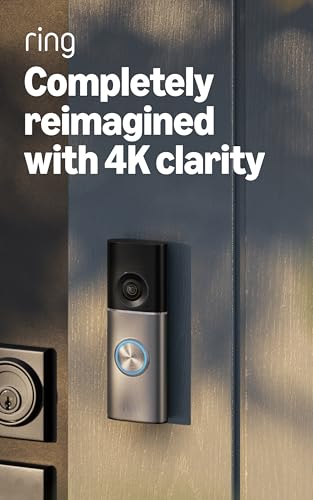
Ring’s latest wired flagship delivers Retinal 4K video that captures every detail — users report reading faces clearly at 15-20 feet, which is a massive leap over the 1080p Pro models of previous generations. The 10x Enhanced Zoom allows you to inspect a package label or a license plate without losing clarity, thanks to the higher base resolution. Low-Light Sight uses ambient light to maintain full-color footage until total darkness triggers the switch to crisp black-and-white, ensuring no events go undetected at night.
The 3D Motion Detection system pinpoints motion across the property with reduced false alerts, and the 4-second pre-roll captures the moments just before the trigger. Two-way audio with Audio+ provides clear conversation with visitors, and the DIY hardwired installation keeps the unit powered continuously — no recharging, no gaps in coverage. The Deep Silver finish and optional Polished Night Navy, Sandstone, and Mocha finishes allow it to match a variety of exterior aesthetics.
Owner feedback consistently highlights the significant video quality upgrade over previous Ring models, with several calling the clarity improvement “like cataract surgery.” A few users with existing Ring Pro systems noted that the new model’s radar-based motion detection has a shorter effective range (roughly 20-30 feet) compared to the older passive infrared sensors, which may be an issue for homes with a deep porch or a long walkway. Overall, this is the best option for anyone who prioritizes video fidelity above all else and already has compatible wiring.
Why we love it
- Retinal 4K video produces unmatched clarity for identifying visitors and packages
- 10x Enhanced Zoom maintains sharpness even when cropping into distant details
- Wired power eliminates battery anxiety and supports continuous recording
Good to know
- Requires compatible 16-24VAC wiring and a mechanical or digital chime
- Radar-based motion detection caps effective range at roughly 20-30 feet
2. Google Nest Doorbell (Wired, 3rd Gen)
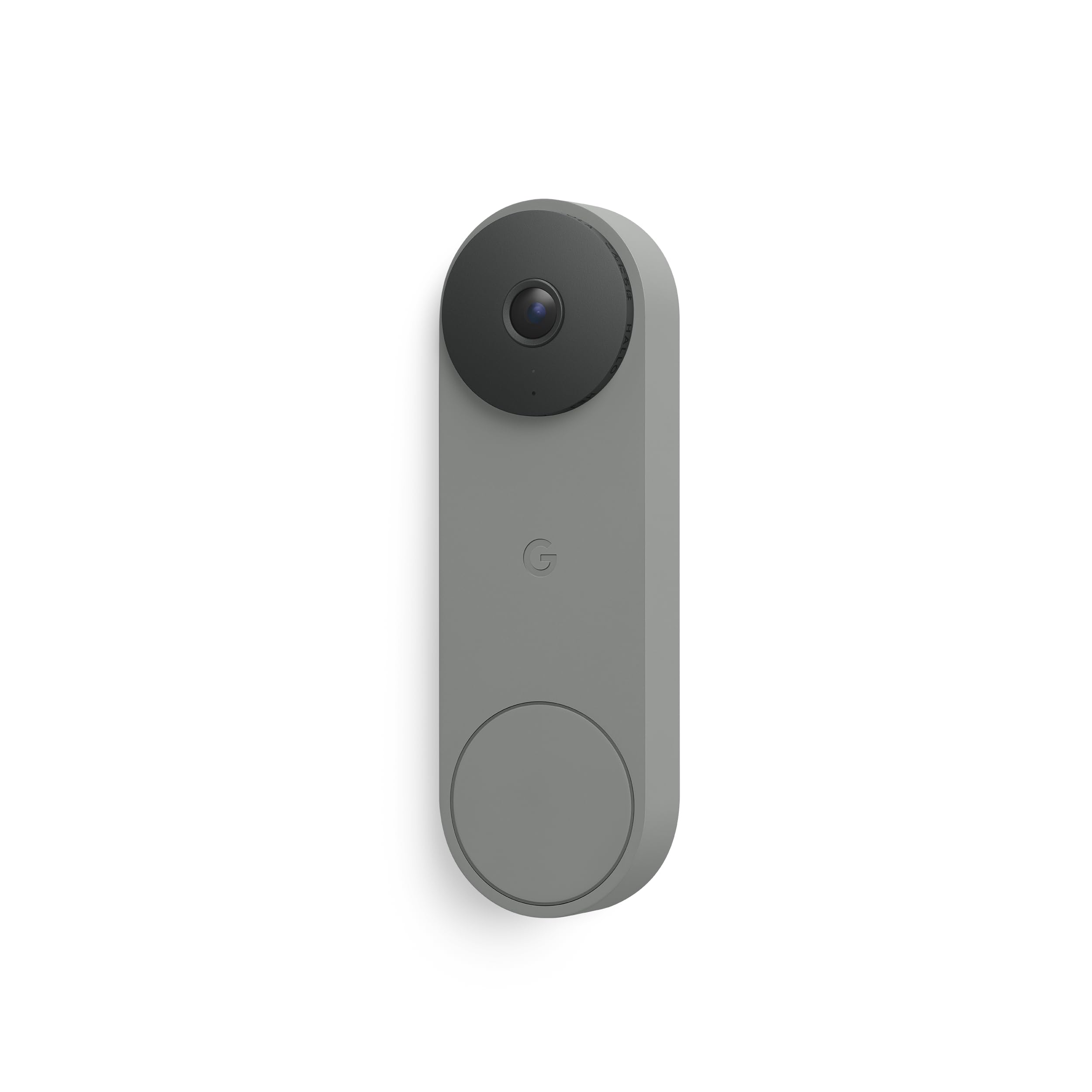
The 2025 wired Nest Doorbell steps up to 2K HDR video with a 166° field of view, giving it the widest coverage of any wired unit in this lineup. The expanded aspect ratio captures both the visitor’s full frame and packages placed to the side of the door. Google’s Gemini AI powers intelligent alerts that can identify specific people, vehicles, animals, and packages, and even answer natural-language queries like “Who let the dogs out?” to pull up relevant clips from your video history — though this requires a Google Home Premium subscription.
Installation requires a 16-24VAC transformer and a compatible chime, but the kit includes spacers, a wedge, and a security screw to accommodate different mounting angles and deterrent needs. Video is encrypted, two-step verification is supported, and a green LED confirms when the camera is actively processing or streaming. The Hazel finish is understated, and the unit is noticeably smaller than the battery-powered Nest Doorbell, which helps it blend into the door frame without protruding excessively.
Verified owners switching from Ring praised the reliable Wi-Fi connection and the absence of battery-related delays, noting that wired power eliminates the gaps in recording that plague battery units. The main drawbacks are the cost of the hardware combined with the required subscription for full Gemini features, and the fact that the Google Home app — rather than the legacy Nest app — is the only control interface, which some users find less intuitive. For anyone deeply invested in the Google ecosystem, this is the most intelligent doorbell camera available.
Why we love it
- Gemini AI enables natural-language video search and detailed smart alerts
- 166° field of view is the widest among wired premium models
- Wired power ensures 24/7 operation with no recharging
Good to know
- Requires a Google Home Premium subscription for full AI features
- Installation may require upgrading an older doorbell transformer
3. Chamberlain myQ Video Doorbell
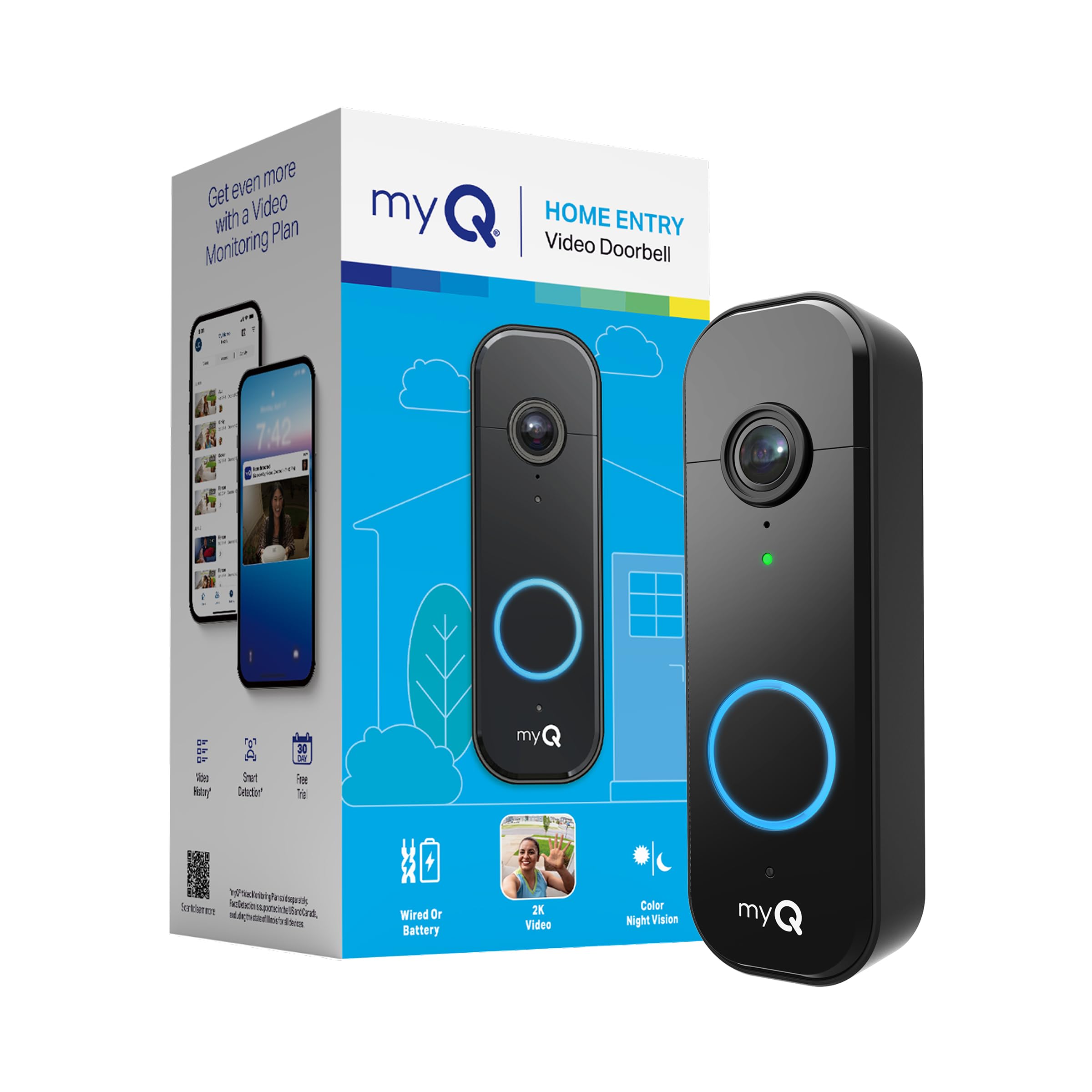
Chamberlain’s myQ Video Doorbell brings 2K resolution and Color Night Vision through a 150° wide-angle lens, producing clear footage in both daytime and low-light conditions without switching to monochrome. The dual power option — battery or wired — gives you flexibility depending on your home’s existing doorbell wiring. When used as a battery unit, the included USB-C cable makes recharging straightforward, while wired installation connects to your existing chime for traditional ringing.
The motion detection system uses AI to recognize faces, vehicles, packages, and even animals, with customizable activity zones that let you focus on specific areas like your walkway or driveway. The integration with the myQ app means you can monitor both your doorbell and your garage door from a single interface — a unique advantage if you already own a myQ garage opener. Bluetooth and Wi-Fi connectivity support app-based setup and control, and the metal-and-plastic enclosure feels solid enough for outdoor use.
Owner reviews are generally positive, particularly among those migrating from Ring who appreciate the unified app for garage and front door management. However, several users flagged that the doorbell is locked to 2.4GHz Wi-Fi during setup, with no 5GHz support, which can cause initial pairing frustration in mesh networks. A separate complaint involves the doorbell’s chime being exceptionally loud with no option to reduce volume. Despite these quirks, the myQ offers strong video quality and smart detection at a competitive price point for the 2K class.
Why we love it
- Color Night Vision maintains full-color footage in low-light conditions
- Integrated myQ app controls both doorbell and garage opener
- Flexible power options suit homes with or without existing wiring
Good to know
- Setup requires 2.4GHz Wi-Fi only, which may complicate mesh network pairing
- Internal chime volume cannot be adjusted or muted
4. Roku Smart Home Wireless Video Doorbell & Chime

Roku’s entry into the doorbell camera space focuses on deep integration with the Roku TV platform, allowing you to see your front door feed pop up on screen when the bell rings or motion is detected. The 1440p HD sensor captures video with a low-light amplifier that pulls in twice as much light for color night vision, and the 150° ultrawide lens provides a solid balance of horizontal and vertical coverage. The included Chime offers 20 different tones and can be placed in any room, which is helpful for homes where the existing mechanical chime is hard to hear.
The wireless battery design installs in minutes with no wiring, and the battery is rated for up to six months between charges in moderate traffic. IP65 weather resistance ensures reliable operation in rain, snow, and direct sun. The Roku Smart Home app supports two-way audio, customizable motion zones, and smart detection that can distinguish people, pets, and packages — though the 14-day cloud storage and advanced detection require a subscription after the included 90-day trial expires.
Verified owners consistently praise the seamless integration with Roku TVs and Alexa devices, with several noting that the picture quality exceeds expectations for a battery-powered unit. A few users reported limited wireless range between the camera and the chime in larger homes, and the dedicated Roku phone app is not available on older Android operating systems. For Roku TV owners who want a cohesive smart home experience, this doorbell offers the best native integration available.
Why we love it
- Native pop-up feed on Roku TVs when doorbell rings or motion is detected
- IP65 weather rating handles extreme climates without performance loss
- 20-selectable chime tones with a plug-in chime for any room
Good to know
- Wireless range between camera and chime may be limited in larger homes
- Advanced detection and cloud storage require a paid subscription after trial
5. Arlo Video Doorbell 2K + Chime 2

Arlo’s 2nd Generation Video Doorbell delivers 2K video with a 180-degree field of view, the widest horizontal coverage in this lineup, which helps capture visitors approaching from either side of the door. The bundled Chime 2 plugs into any outlet and provides loud, clear chimes without relying on your existing doorbell wiring. The integrated siren adds an extra layer of deterrent, and the two-way audio is clear enough for natural conversation without shouting.
Night vision performance is a standout feature, with verified owners calling the 2K night footage “excellent” and “crystal clear” even in complete darkness. The package detection feature specifically recognizes delivery drop-offs, and the person and vehicle recognition reduces nuisance alerts from passing cars or swaying trees. The unit operates wirelessly on battery power, which allows flexible placement without wiring constraints, but the battery life does decrease noticeably in high-traffic areas — users report charging every few weeks in busier locations.
The Arlo Secure Plan trial includes 30 days of cloud video storage, but full access to package detection, activity zones, and 24/7 emergency response requires a paid subscription after the trial. Owner feedback highlights the sleek design and the simplicity of the app-based setup, though a few users noted the battery charging process requires the camera to be removed from its mount and the USB plug must be fully reseated to initiate charging. For those already in the Arlo ecosystem, this doorbell integrates seamlessly with existing Arlo cameras and sensors.
Why we love it
- 180° field of view captures visitors from a wide approach angle
- 2K night vision delivers excellent clarity in complete darkness
- Integrated siren and package detection enhance security
Good to know
- Battery life drops significantly with high foot traffic requiring frequent charges
- Full detection and cloud features require an Arlo Secure subscription
6. Wyze Battery Video Doorbell
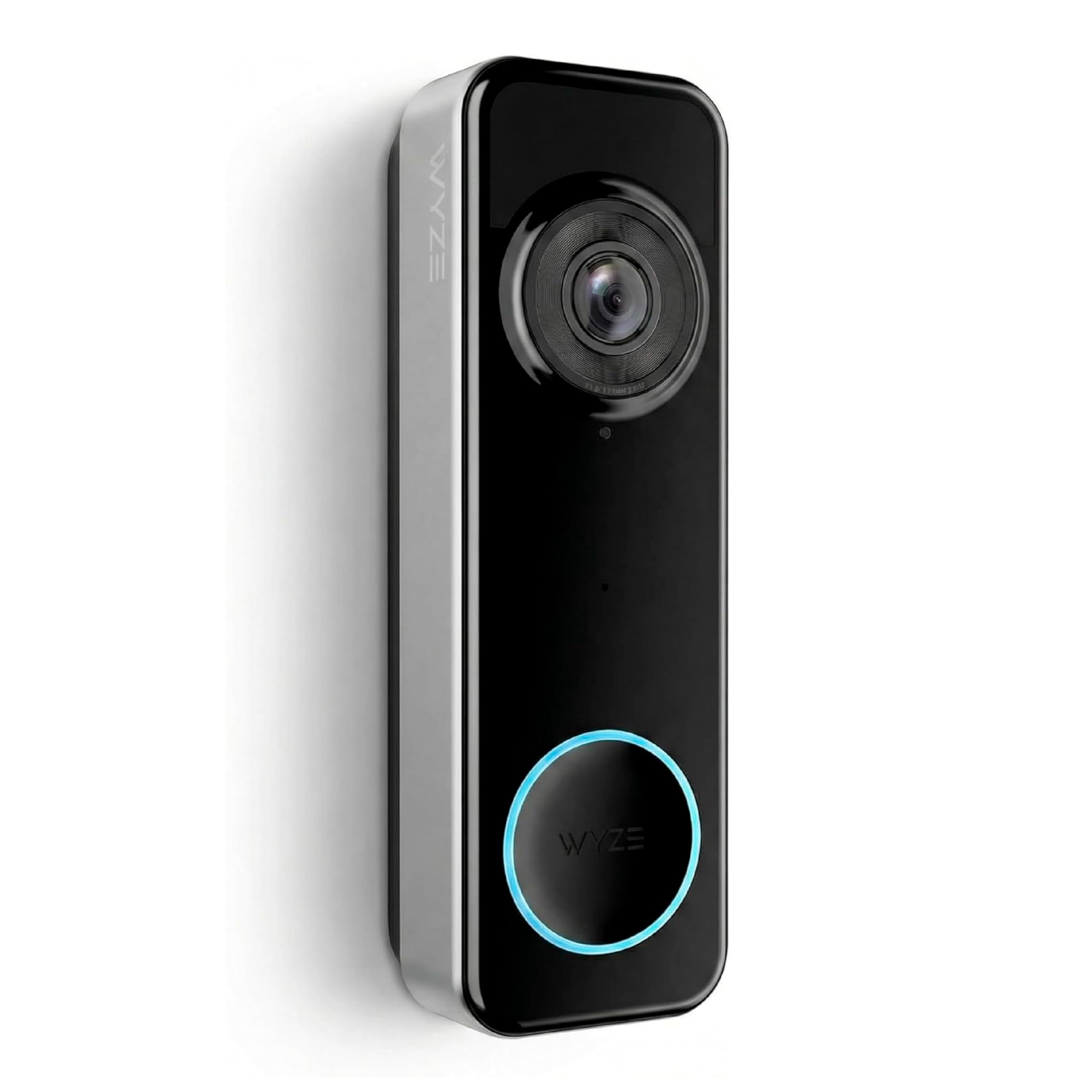
Wyze delivers a compelling value proposition with its Battery Video Doorbell, offering 1536×1536 HD+ resolution in a square 1:1 aspect ratio — the same head-to-toe format that Ring’s mid-range models use. The 150° x 150° ultra-wide field of view captures both the visitor’s full body and packages resting at the base of the door, solving the common issue of wide-angle lenses that miss the ground. Color Night Vision uses a starlight sensor to produce vivid color images in low light, and the two-way audio with auto-response lets you set pre-recorded replies for when you can’t speak.
The biggest differentiator here is the cost of ownership: the doorbell supports free local storage via a microSD card (up to 256GB), with no required monthly subscription. You can opt for Cam Plus for 14 days of cloud storage if desired, but the base functionality works without paying. Battery life is rated at up to six months, and the Bluetooth-assisted setup is genuinely tool-free — the mounting plate clicks into place without screws. Wyze also includes a corner plate for angled mounting to optimize the viewing position.
Owner feedback is overwhelmingly positive, with users switching from Blink and Ring praising the longer battery life and the lack of connectivity drops. However, some verified reviews noted that the left-side motion detection has blind spots, and the USB-C port cannot be used for continuous power while the unit is mounted on the wall — you must use the battery. A few users also reported that the Alexa doorbell chime integration does not work reliably. For budget-conscious buyers who want solid video quality without monthly fees, the Wyze is the smartest choice.
Why we love it
- 1:1 aspect ratio captures packages and visitors head-to-toe
- Free local storage via microSD with no required subscription
- Tool-free Bluetooth setup installs in minutes
Good to know
- Left-side motion detection can have blind spots
- USB-C power is not functional while the unit is mounted
7. Ring Battery Doorbell (2nd Gen)
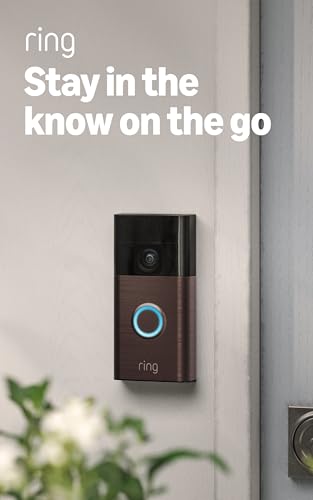
Ring’s second-generation Battery Doorbell upgrades the vertical coverage by 66% compared to the original, giving it the Head-to-Toe Video that captures packages on the ground and visitors from head to foot. The resolution is 1080p, which is the standard for this price tier, but the improved sensor and lens deliver noticeably clearer footage than the first-gen model. The built-in rechargeable battery charges via USB-C, and the doorbell detaches from its mounting plate for convenient indoor charging without uninstalling the bracket.
Installation is genuinely simple — charge the unit, mount the bracket with the included screws or adhesive, click the doorbell into place, and complete the setup through the Ring app. Real-time alerts, Live View, and Two-Way Talk all function through the same app, and compatibility with Alexa-enabled devices allows you to receive announcements through Echo speakers or view the feed on an Echo Show. Smart Alerts that distinguish between a person and a package require a Ring Protect subscription, which adds ongoing cost after the trial period.
Verified owner reviews consistently highlight the “outstanding” battery life, with several users reporting 3+ months on a single charge even in moderate to high traffic. The video clarity is described as “crystal clear” during both day and night, and the ease of installation is a recurring compliment. The primary limitation is the 1080p ceiling, which means zoomed-in clips are less detailed than the 2K or 4K units above. For a first-time buyer who wants a reliable, no-wires doorbell at an accessible entry point, this Ring model delivers proven performance.
Why we love it
- Head-to-Toe Video captures packages and visitors in full vertical view
- Battery lasts 3+ months between charges in typical use
- Tool-free installation and simple click-in mounting
Good to know
- 1080p resolution limits detail when zooming in on distant subjects
- Person and package detection require a Ring Protect subscription
FAQ
Can a battery-powered doorbell camera still record when the battery dies?
What minimum transformer rating do I need for a wired doorbell camera?
Does a doorbell camera need a subscription to work at all?
How do I prevent false motion alerts from cars or trees?
Can I install a doorbell camera on a metal door frame?
Final Thoughts: The Verdict
For most homeowners, the best doorbell camera is the Ring Wired Doorbell Pro because its Retinal 4K video and 10x Enhanced Zoom provide the highest clarity for identifying visitors and packages at any distance, making it ideal for those with compatible wiring. If you want deep AI integration with natural language search and a wide 166-degree view, grab the Google Nest Doorbell (Wired, 3rd Gen). And for a battery-powered setup that avoids monthly fees while still delivering excellent head-to-toe video, nothing beats the Wyze Battery Video Doorbell.