
When your cat is diagnosed with chronic kidney disease (CKD), every meal becomes a medical decision. The wrong kibble can accelerate the decline of their remaining kidney function, while the right therapeutic diet—one that strictly limits phosphorus and delivers high-quality, restricted protein—can buy you precious months or even years of quality time together.
I’m Mo Mahin — the founder and writer behind Furric. I’ve spent countless hours cross-referencing veterinary nutritional guidelines, analyzing guaranteed analysis panels, and synthesizing owner-reported outcomes to pinpoint which dry foods genuinely help manage feline renal disease.
After evaluating dozens of formulas against the specific needs of compromised kidneys, these are the options I trust most. This guide ranks the very best dry cat food for cats with kidney problems based on clinical evidence and real-world results.
How To Choose The Best Dry Cat Food For Cats With Kidney Problems
Feline CKD management revolves around three nutritional pillars: reduced phosphorus, moderate high-biological-value protein, and increased omega-3 fatty acids. A food’s success depends on how precisely it balances these while maintaining palatability for a nauseous cat.
Phosphorus Restriction: The Primary Target
The single most important spec on a bag of renal diet food is phosphorus content. For cats with IRIS Stage 2 or higher CKD, dry matter phosphorus should fall below 1.0%, and ideally below 0.6%. Excess phosphorus accelerates kidney tissue mineralization, directly worsening the disease. Check the guaranteed analysis—if phosphorus isn’t listed or is above 1.2%, that food is unsuitable for therapeutic use.
Protein Quality Over Quantity
CKD cats need enough protein to prevent muscle wasting, but not so much that it forces the kidneys to overwork filtering nitrogenous waste. The best renal diets use highly digestible animal proteins (chicken, fish) at moderate levels—typically 28-35% on a dry matter basis. Avoid generic “meat meal” sources, which can be harder on the renal system.
Omega-3 Fatty Acids and Appetite Support
Omega-3s (EPA and DHA) from fish oil have been shown to reduce proteinuria and inflammation in feline kidneys. Many therapeutic foods also include an appetite trigger technology—cats with CKD often feel nauseous from uremic toxins, so a diet that smells and tastes appealing is critical for maintaining caloric intake.
Quick Comparison
On smaller screens, swipe sideways to see the full table.
| Model | Category | Best For | Key Spec | Amazon |
|---|---|---|---|---|
| Purina NF Advanced Care | Veterinary Rx | Advanced CKD management | Phosphorus 0.5% DM | Amazon |
| Hill’s k/d Early Support Chicken | Veterinary Rx | Early-stage CKD + picky eaters | ActivBiome+ Kidney Defense | Amazon |
| Farmina N&D Quinoa Duck | Non-prescription | Grain-free urinary + renal support | Protein 32% DM | Amazon |
| Hill’s k/d Kidney Care Ocean Fish | Veterinary Rx | Seafood flavor for finicky cats | Omega-3 fish oil | Amazon |
| Blue Buffalo K+M Kidney Support | Veterinary Rx | Combined kidney + joint support | Glucosamine + Chondroitin | Amazon |
| Pro Plan DM Dietetic Management | Veterinary Rx | Diabetic + kidney risk cats | High protein 46% DM | Amazon |
| Vetriscience Kidney Health Chews | Supplement | Supplemental renal support | B vitamins + herbs | Amazon |
In‑Depth Reviews
1. Pro Plan Veterinary Diets Purina NF Kidney Function Advanced Care

Purina’s NF Advanced Care formula is engineered for cats who need the most aggressive nutritional intervention. With a targeted phosphorus restriction (roughly 0.5% on a dry matter basis) and a reduced but high-quality protein profile, this kibble aims to slow CKD progression while maintaining lean body mass. The inclusion of omega-3 fatty acids from fish oil provides the anti-inflammatory support that can reduce proteinuria, a key marker of kidney damage.
Real-world owner reports are striking: one reviewer’s 18-year-old cat with just 10% kidney function saw that number climb to 25% after two months on this diet, combined with blood pressure medication. Multiple owners of geriatric cats—17.5 and 18 years old—noted rapid acceptance, improved coat condition, and noticeable energy rebounds within days. The kibble has a slightly smaller, lighter texture than standard grocery brands, which helps cats with dental sensitivity.
This is a prescription diet, meaning you’ll need veterinarian authorization to purchase. It’s available in a smaller 3.15-pound bag, which helps with freshness if your cat eats slowly. The advanced care designation makes it suitable for IRIS Stage 3 and 4 patients, though it can also maintain early-stage cats with aggressive management goals.
Why we love it
- Proven to improve kidney function markers in advanced CKD cats
- Omega-3s directly target renal inflammation
- High palatability even for geriatric, nauseous cats
Good to know
- Requires veterinarian prescription to purchase
- Small bag size (3.15 lb) may not suit multi-cat households
2. Hill’s Prescription Diet k/d Early Support Kidney Care Dry Cat Food, Chicken

Hill’s k/d Early Support leverages the brand’s Enhanced Appetite Trigger (E.A.T.) technology—a proprietary blend designed to make the food more aromatic and palatable for cats with reduced appetite, a common symptom of uremia. The formula centers on ActivBiome+ Kidney Defense, a prebiotic blend that feeds beneficial gut bacteria, which in turn may help reduce the production of uremic toxins that accelerate kidney decline.
Customer feedback confirms the appetite strategy works: owners report that their cats “eat it willingly” and “look forward to it as their dry food,” a high bar for a therapeutic renal diet. The kibble is also engineered to maintain a urinary pH that discourages both struvite and calcium oxalate crystal formation—a dual benefit for cats with concurrent lower urinary tract issues. The chicken flavor and slow-baked aroma make it one of the more appealing dry options for cats transitioning from standard commercial foods.
It’s important to note that Hill’s lists chicken as the first ingredient, which provides high-quality, digestible protein. The bag size is a practical 4 pounds—manageable for freshness while giving you enough volume to mix with a wet food rotation. This is a veterinary prescription product, so a vet’s authorization is required before checkout.
Why we love it
- Clinically proven appetite trigger helps under-eating CKD cats
- ActivBiome+ prebiotics target uremic toxin production
- Dual action: kidney support + urinary crystal prevention
Good to know
- Some cats may eventually reject the flavor after prolonged use
- Requires vet prescription for purchase
3. Farmina N&D Quinoa Urinary Duck Formula Adult Dry Cat Food

Farmina’s Quinoa Urinary Duck formula offers a non-prescription alternative for owners who want higher ingredient transparency without sacrificing renal-friendly nutrition. The formula swaps traditional grains for quinoa—a complete protein source with a low glycemic index that’s gentle on digestion—and uses duck and herring as primary animal proteins. This provides a novel protein source for cats with food sensitivities, which is valuable since many CKD cats also develop gastrointestinal issues.
Owners report that this food resolved urinary blockages, cystitis, and chronic scratching in one particularly sensitive cat, attributing the success to the clean ingredient list and the absence of common fillers found in mass-market therapeutic diets. The kibble size is notably small (roughly 8mm), making it ideal for automatic feeders and cats with gingivitis or missing teeth. Multiple reviewers noted that their cats’ water intake increased on this diet, a crucial factor for kidney health.
While this food is not a veterinary prescription diet, it does not carry the same guaranteed low phosphorus levels as dedicated renal therapies. It’s best suited for cats in early-stage CKD or as a rotational option alongside a prescription renal wet food. The price point reflects its grain-free, premium ingredient profile, but many owners consider it a worthwhile investment in preventative nephrology.
Why we love it
- Novel duck protein ideal for cats with food allergies
- Small kibble size perfect for seniors and automatic feeders
- No corn, wheat, soy, or artificial preservatives
Good to know
- Not a prescription diet—phosphorus levels are higher than therapeutic formulas
- Premium price reflects high-quality, imported ingredients
4. Hill’s Prescription Diet k/d Kidney Care Dry Cat Food, Ocean Fish

The Ocean Fish variant of Hill’s k/d line provides an alternative protein source for cats who grow bored with chicken-based renal diets. Like its chicken counterpart, it incorporates ActivBiome+ Kidney Defense and the Enhanced Appetite Trigger to support both kidney function and caloric intake. The fish flavor tends to be more aromatic, which can be advantageous for cats whose sense of smell has diminished or who associate chicken with nausea from previous treatments.
Owner experiences highlight the small, gentle kibble texture as a major benefit for cats with dental issues or oral pain. One owner’s cat with Stage 4 kidney disease accepted this food readily after rejecting multiple other options—a critical win when every calorie counts. The formula includes more essential amino acids than the AAFCO minimum requirements, helping preserve muscle mass, and the reduced sodium content protects against hypertension often seen alongside CKD.
As with all Hill’s k/d products, this requires veterinarian authorization. Some cats may eventually tire of the fish taste—one owner noted their initially enthusiastic cat later refused it—so rotating with the chicken variety may help maintain long-term acceptance. The 4-pound bag offers a reasonable trial size before committing to a larger purchase.
Why we love it
- Fish flavor appeals to cats bored with chicken diets
- Small kibble texture ideal for cats with dental sensitivity
- Reduced sodium supports blood pressure management
Good to know
- Some cats may lose interest over time
- Requires veterinarian prescription
5. Blue Buffalo Natural Veterinary Diet K+M Kidney + Mobility Support
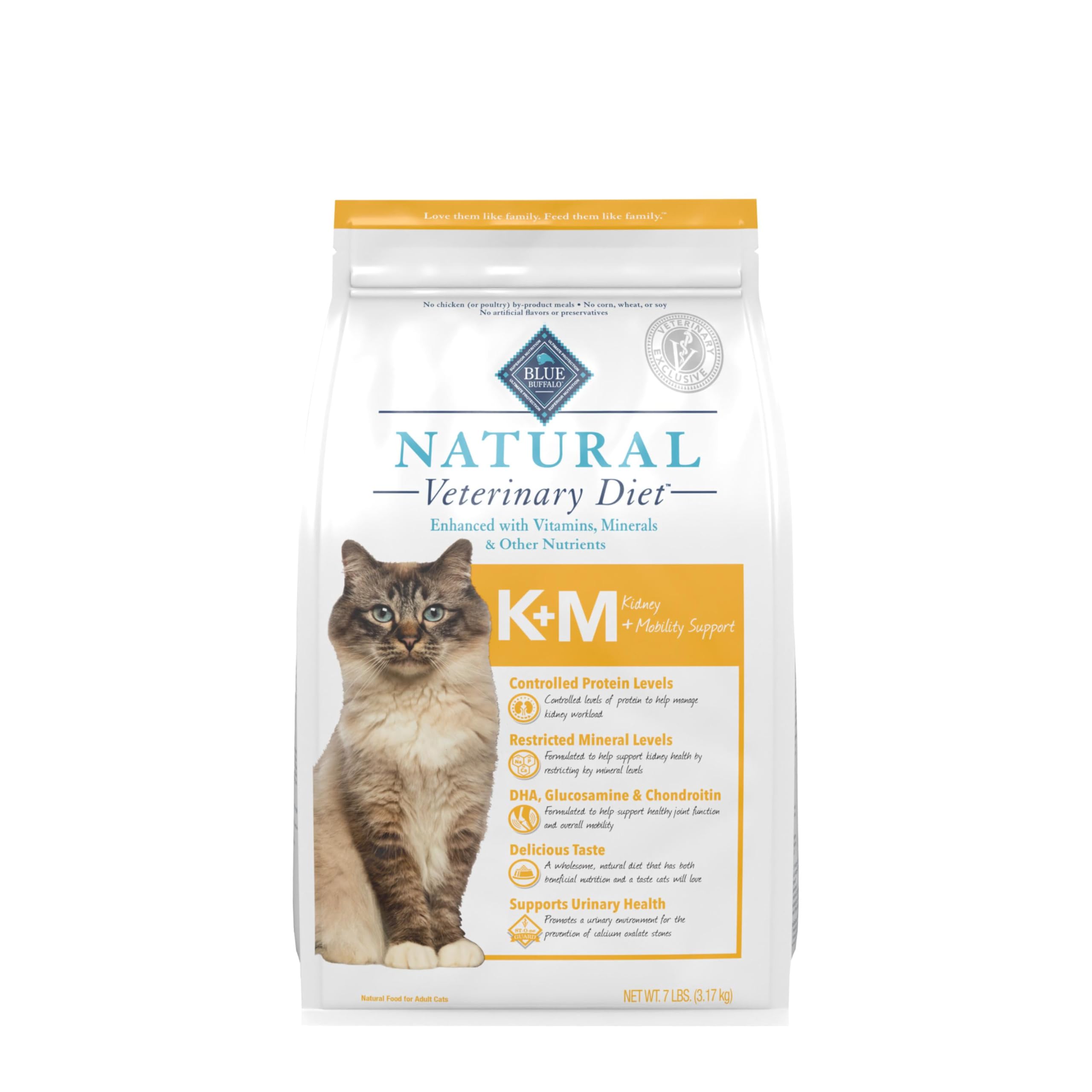
Blue Buffalo’s K+M formula uniquely addresses two concurrent age-related issues: kidney disease and joint mobility. The recipe features controlled levels of high-quality chicken protein to reduce kidney workload while incorporating glucosamine and chondroitin for joint support—a smart combination for senior cats who often suffer from both CKD and arthritis. The formula is also free from corn, wheat, soy, and artificial preservatives, aligning with the brand’s natural philosophy.
Owner reviews reveal a strong track record with picky eaters: one 16-year-old calico who had rejected all other dry kidney diets eagerly accepted the Blue Buffalo kibble. The small kibble size, combined with the added psyllium husk fiber for hairball control, makes it a practical choice for long-haired seniors. Several owners reported that their cats’ appetites returned and they began eating entire servings in one sitting—a stark contrast to the grazing behavior typical of nauseous CKD cats.
This is a veterinary prescription diet, so authorization from your vet is mandatory. The 7-pound bag provides better value per serving compared to smaller prescription bags, but the dual-targeted formulation means phosphorus restriction may be slightly less aggressive than dedicated renal-only formulas like Purina NF Advanced Care. It’s ideal for cats in early-to-mid stage CKD who also need joint support.
Why we love it
- Combines kidney support with joint health ingredients
- High palatability for picky senior cats
- Small kibble size and added fiber for hairball control
Good to know
- Phosphorus restriction less aggressive than advanced renal formulas
- Requires veterinarian prescription
6. Pro Plan Veterinary Diets DM Dietetic Management Feline Formula

The Purina DM Dietetic Management formula is designed for a specific metabolic profile: cats with diabetes who also require kidney- and urinary-friendly nutrition. With 46% protein on a dry matter basis and low carbohydrate content, it helps regulate glucose levels while the St/Ox Defense promotes a urinary environment that discourages both struvite and calcium oxalate crystals. This dual focus makes it a targeted option for cats managing both endocrine and renal challenges.
Owner feedback highlights one remarkable case: a cat with a blood glucose reading of 404 mg/dL achieved complete remission from diabetes on this diet. While the primary indication is diabetic management, the controlled protein profile and urinary health emphasis make it a reasonable consideration for cats with early-stage CKD who also struggle with insulin regulation. The kibble is available in both dry and canned formats, allowing consistency across meal types.
This formula requires a veterinary prescription. It’s important to note that the phosphorus content is not as aggressively restricted as in dedicated renal diets, so it should not be a first-line choice for cats with advanced CKD (Stage 3 or 4). However, for cats with Stage 1 or 2 kidney issues who are also diabetic, this food offers an elegant solution by addressing both conditions simultaneously.
Why we love it
- Excellent glucose management for diabetic cats
- St/Ox Defense reduces risk of urinary crystals
- Available in multiple textures for variety
Good to know
- Not a dedicated renal diet—phosphorus not as restricted
- Requires vet prescription; may cause constipation in some cats
7. Vetriscience Veterinary Strength Kidney Health Chews

Vetriscience Kidney Health Chews are a palatable supplement designed to support kidney function through a holistic blend of B vitamins, herbs, and antioxidants. The formula includes ingredients like folic acid, vitamin B12, and rosemary extract, which aim to support normal detoxification and fluid balance. While not a replacement for a therapeutic renal diet, these chews can be used as an adjunct therapy to bolster a cat’s nutritional support.
Customer reviews are primarily from dog owners, but the supplement is labeled for both cats and dogs. One feline-specific review noted the chews are bone-shaped and quite large (not the advertised small triangles), making them difficult for a cat with CKD to chew effectively. The chicken liver flavor is reported as appealing, but the physical size and hard texture present a barrier for cats with dental issues or reduced appetite.
For cat owners specifically, this product is best used with caution. The large chew size may need to be broken into smaller pieces or crushed over wet food. The holistic ingredient list lacks the phosphorus-binder properties of prescription medications like aluminum hydroxide, so it should never be considered a sole treatment for CKD. It’s a supplementary option—not a dietary foundation—for supportive care.
Why we love it
- B vitamin and antioxidant support for kidney function
- Palatable chicken flavor
- Can be used alongside any therapeutic diet
Good to know
- Large, hard bone shape is difficult for many cats to chew
- Not a replacement for prescription renal diet or phosphorus binders
FAQ
Can I feed my CKD cat regular senior cat food instead of a prescription diet?
How do I know if my cat is eating enough of the renal diet?
What’s the ideal phosphorus percentage for a CKD cat’s dry food?
Can I use a non-prescription food like Farmina for my CKD cat?
Final Thoughts: The Verdict
For most gardeners, the best dry cat food for cats with kidney problems winner is the Purina NF Advanced Care because it delivers the most aggressive phosphorus restriction combined with proven clinical outcomes in advanced-stage cats. If your cat is a picky eater who rejects chicken-based formulas, grab the Hill’s k/d Early Support Chicken for its proprietary appetite trigger that helps keep food intake consistent. And for owners seeking a non-prescription, grain-free option with novel protein sources, nothing beats the Farmina N&D Quinoa Duck for early-stage renal support and overall digestive health.