
Indoor cats face a unique nutritional challenge — a sedentary lifestyle combined with a constant food bowl often leads to weight gain, hairballs, and urinary tract stress. The wrong dry kibble can worsen these issues, while a recipe designed for their lower energy needs can make a measurable difference in their long-term health.
I’m Mo Mahin — the founder and writer behind Furric. My approach to selecting cat food is rooted in analyzing ingredient sourcing, decoding guaranteed analysis values, and cross-referencing thousands of owner feedback reports to identify which formulas actually deliver on their claims for indoor living.
After looking at fiber profiles, calorie density, and protein sources across the market, I’ve narrowed down the top performers to help you find the finest dry indoor cat food that supports weight control, digestive regularity, and coat health without relying on cheap fillers.
How To Choose The Best Dry Indoor Cat Food
Indoor cats are prone to obesity, hairballs, and FLUTD (Feline Lower Urinary Tract Disease). The right dry food actively addresses these risks through specific macronutrient ratios and ingredient choices. Here is what to prioritize when reading the guaranteed analysis on the bag.
Calorie Density and Protein-to-Fat Ratio
Indoor formulas should sit around 350 to 400 kilocalories per cup. Anything higher accelerates weight gain in a cat that moves less. Look for a protein content of at least 35 percent on a dry matter basis and a moderate fat level around 12 to 15 percent. This ratio preserves lean muscle without packing on excess body fat.
Fiber Type and Hairball Management
Not all fiber is equal. Soluble fibers like psyllium seed husk and beet pulp help move ingested hair through the digestive tract, while insoluble fibers like cellulose add bulk. A blend of both, typically totaling 3 to 6 percent crude fiber, reduces hairball frequency better than a single-fiber source.
Controlled Mineral Levels for Urinary Health
Indoor cats often drink less water, concentrating their urine and increasing crystal risk. A quality dry food will keep magnesium below 0.1 percent and maintain a calcium-to-phosphorus ratio near 1.2-to-1. Added potassium citrate or DL-methionine can help maintain a urinary pH around 6.2 to 6.4, discouraging struvite and calcium oxalate formation.
Quick Comparison
On smaller screens, swipe sideways to see the full table.
| Model | Category | Best For | Key Spec | Amazon |
|---|---|---|---|---|
| Tiki Cat Born Carnivore Indoor Health | High-Protein | Active indoor cats needing lean weight support | 38% crude protein, 8% fiber | Amazon |
| Royal Canin Indoor Long Hair | Hairball Control | Long-haired breeds prone to hairballs | Psyllium fiber + L.I.P. protein | Amazon |
| Hill’s Prescription Diet w/d | Prescription | Multi-condition management (glucose, weight, urinary) | L-carnitine + low calorie | Amazon |
| Wellness Complete Health Adult Indoor | Grain-Free | Indoor cats needing balanced everyday nutrition | L-Carnitine + healthy fiber | Amazon |
| Rachael Ray Nutrish Zero Grain Indoor | Entry-Level | Budget-friendly grain-free transition | US farm-raised chicken #1 | Amazon |
In‑Depth Reviews
1. Tiki Cat Born Carnivore Indoor Health Dry Cat Food

Tiki Cat leads this list with a protein punch that is unusual for an indoor formula — 38 percent crude protein on a dry matter basis, sourced primarily from real chicken and turkey meal. That muscle-preserving macronutrient profile is paired with pumpkin as a gentle, digestible fiber source that clocks in at 8 percent crude fiber, well above the indoor baseline.
The 12-pound bag delivers around 380 kilocalories per cup, putting it squarely in the moderate-calorie sweet spot. Taurine is supplemented at a level that supports cardiac function, and the omega-6 fatty acids from chicken fat promote a glossy coat even in cats that spend most of their day napping. The kibble itself is small and crunchy, which helps with dental scraping.
Owner feedback consistently highlights reduced stool odor and fewer hairball incidents after switching, likely thanks to the pumpkin fiber and absence of potato, corn, wheat, and soy. The only trade-off is that the high protein content may be too rich for cats with advanced kidney disease, so a vet check is wise before switching seniors to this formula.
Why we love it
- High animal-protein content supports lean body condition
- Non-GMO ingredients with no corn, wheat, or soy
- Pumpkin fiber reduces hairball frequency effectively
Good to know
- Not formulated for kittens or pregnant cats
- Higher protein may require slow transition for sensitive stomachs
2. Royal Canin Feline Health Nutrition Indoor Long Hair Adult Dry Cat Food
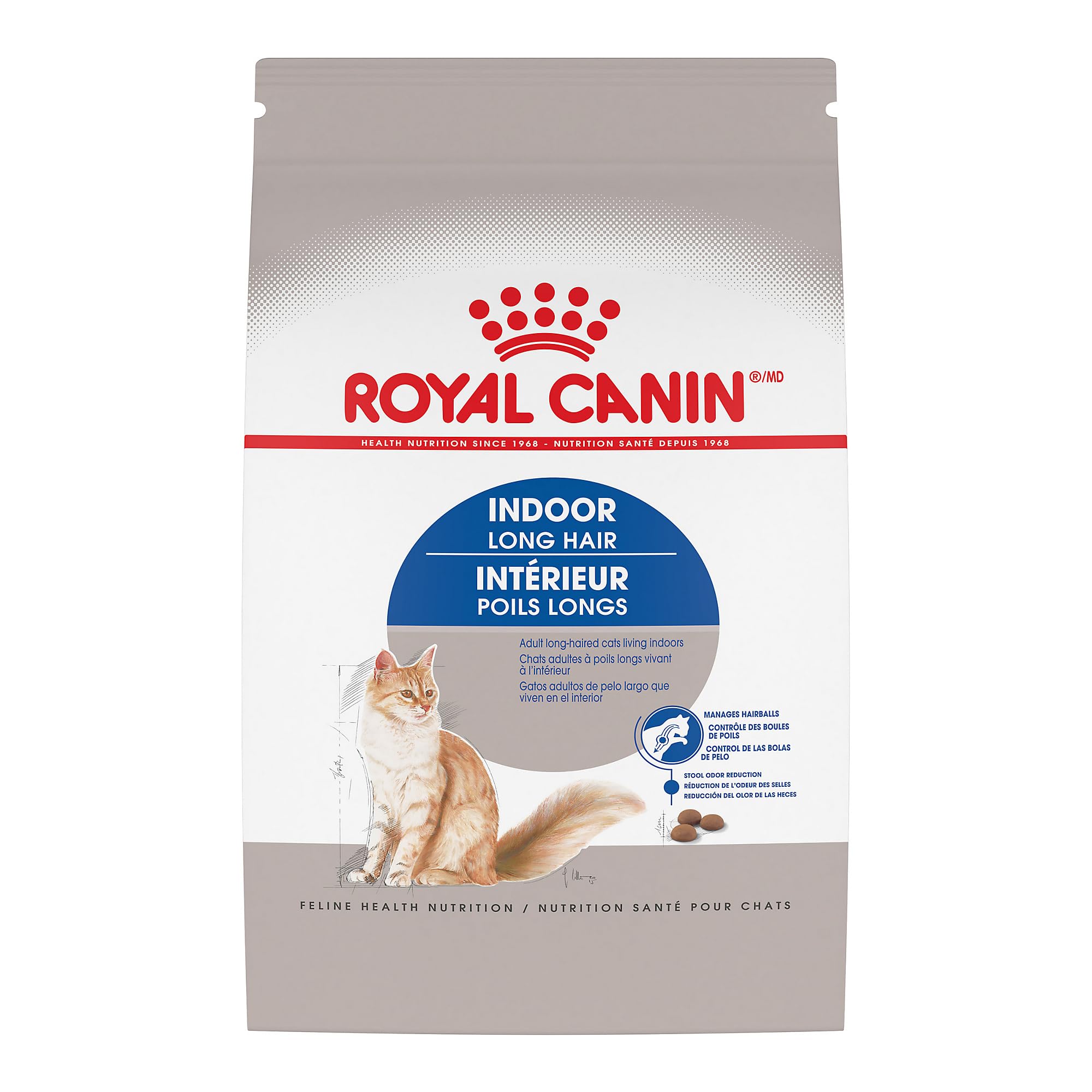
Royal Canin designed this kibble specifically for long-haired indoor cats between one and seven years old. The key differentiator is the precise blend of psyllium seed husk and other fibers that mechanically push hair through the digestive tract before it can accumulate into a mass. The crude fiber content is calibrated to deliver consistent hairball maintenance without causing loose stool.
The protein source is highly digestible L.I.P. (Limited Ingredient Protein), which reduces the volume of stool produced — a practical benefit for indoor owners managing a litter box. Calorie content is finely tuned for weight maintenance in less active cats, and the kibble shape is designed to encourage chewing rather than gulping, which slows down fast eaters.
Omega-3 and omega-6 fatty acid levels are elevated to support a dense, shiny coat in breeds like Persians, Maine Coons, and Ragdolls. The 6-pound bag size is practical for single-cat households, though multi-cat homes may prefer a larger volume. Some cats with gluten sensitivity may react to the gluten-containing ingredient listed as a possible allergen.
Why we love it
- Psyllium fiber specifically targets hairball reduction in long coats
- Highly digestible protein minimizes stool volume and odor
- Fatty acid blend enhances coat condition for long-haired breeds
Good to know
- May contain gluten, limiting options for sensitive cats
- Smaller bag size requires more frequent repurchases
3. Hill’s Prescription Diet w/d Multi-Benefit Dry Cat Food

Hill’s w/d is a veterinary therapeutic diet that manages multiple issues simultaneously — weight, glucose, digestion, and urinary health. The fiber matrix uses both soluble and insoluble types to slow carbohydrate absorption, which helps stabilize blood glucose in diabetic or pre-diabetic cats. Therapeutic L-carnitine levels help metabolize stored fat while preserving lean muscle mass during weight loss.
Urinary support comes from reduced magnesium and sodium, which lower the risk of struvite crystal formation. The low-calorie formulation means your cat can eat a reasonable portion without feeling deprived, making weight reduction programs more sustainable. The 4-pound bag is a typical starter size for prescription diets, allowing owners to test palatability without a large commitment.
This is a prescription food, so you will need veterinary authorization before purchasing. While the therapeutic benefits are well-documented for cats with diagnosed conditions, healthy indoor cats without specific medical needs may be better served by a non-prescription maintenance formula. Owner reviews routinely cite noticeable improvements in litter box consistency and coat quality within three weeks of feeding.
Why we love it
- Multi-benefit formula addresses weight, glucose, digestion, and urinary health
- L-carnitine supports fat metabolism and lean muscle preservation
- Optimal fiber blend stabilizes blood sugar levels
Good to know
- Requires veterinary prescription to purchase
- Higher price point than maintenance diets
4. Wellness Complete Health Adult Dry Cat Food for Indoor Cats
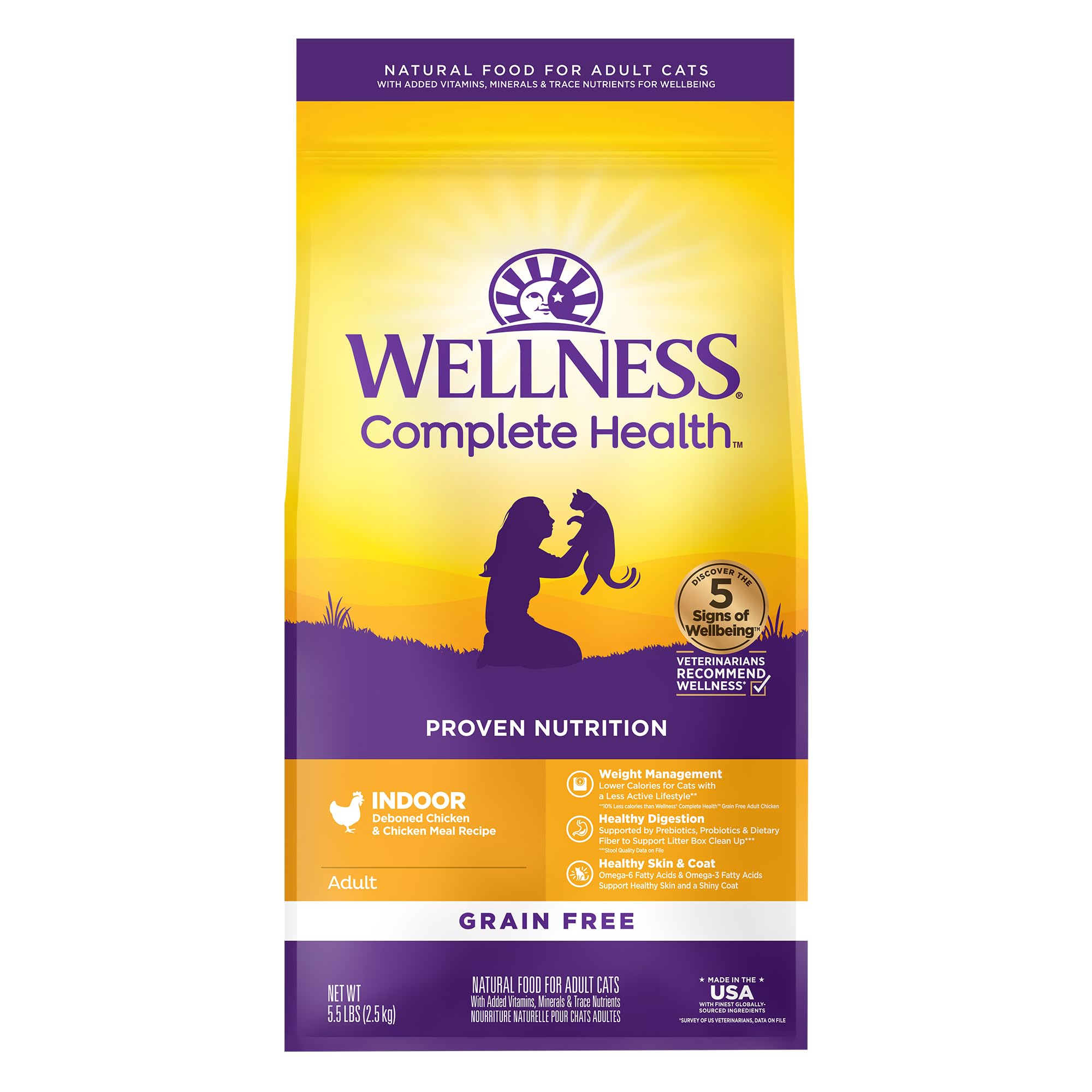
Wellness Complete Health strikes a careful balance between nutritional density and calorie control. The grain-free chicken recipe delivers 36 percent crude protein — slightly below the Tiki Cat but still well above average for indoor formulas — while keeping fat moderate to prevent weight creep. L-Carnitine is added at a meaningful level to support fat metabolism.
The fiber matrix includes ground flaxseed and dried chicory root, which act as prebiotics to feed beneficial gut bacteria. This leads to firmer, less odorous stool — a frequent point of praise in owner feedback. Controlled mineral levels help maintain urinary pH in a healthy range, making it suitable for neutered male indoor cats who are at higher risk for blockages.
The 5.5-pound bag is a good middle-ground size for single-cat households, though multi-cat homes may want to buy in bulk. The kibble size is moderate, and the texture is crunchy enough to provide mild dental abrasion. A small number of finicky cats may turn away from the chicken flavor if they are accustomed to fish-based diets, but most adapt within a few days of mixed feeding.
Why we love it
- Grain-free with 36% protein from real chicken
- Prebiotic fiber supports digestive regularity and firm stool
- Controlled minerals help urinary health in neutered males
Good to know
- Some cats may prefer fish-based flavors over chicken
- Not suitable for cats with existing kidney disease without vet guidance
5. Rachael Ray Nutrish Zero Grain Natural Indoor Dry Cat Food

Rachael Ray Nutrish Zero Grain positions itself as an accessible grain-free option without the premium price tag. US farm-raised chicken is the number one ingredient, and the formula excludes poultry by-product meal, corn, wheat, soy, and artificial preservatives. The 3-pound bag size makes it a practical trial size for cats transitioning away from grain-inclusive diets.
Crude protein sits around 32 percent, which is adequate for weight maintenance but lower than the high-protein competitors on this list. The crude fiber level is moderate, meaning hairball management is present but not as aggressive as in formulas specifically designed for long-haired cats. Taurine is supplemented at an AAFCO-approved level for heart and eye health.
Owner feedback points to good palatability — cats that refuse other grain-free brands often accept this one readily. The chicken and potato flavor base is simple, reducing the risk of food aversion. The main limitation is the 3-pound bag, which requires frequent reordering for multi-cat households, and the protein level may not be sufficient for very active indoor cats that need more lean mass support.
Why we love it
- Real US chicken is the first ingredient
- No artificial colors, flavors, or poultry by-product meal
- Affordable grain-free option for trial or small households
Good to know
- Small bag size requires frequent reordering
- Protein content is lower than premium indoor formulas
FAQ
Can dry indoor cat food cause urinary crystals in male cats?
Is grain-free dry food necessary for indoor cats?
How much dry indoor cat food should I feed my cat per day?
Final Thoughts: The Verdict
For most owners, the dry indoor cat food winner is the Tiki Cat Born Carnivore Indoor Health because it combines an exceptional protein-to-fat ratio with pumpkin-based fiber that actively reduces hairballs while supporting lean body condition. If you want a formula specifically engineered for long-haired breeds and stubborn hairballs, grab the Royal Canin Indoor Long Hair. And for multi-condition management in cats with weight or urinary concerns, nothing beats the Hill’s Prescription Diet w/d.