
An egg incubator replaces the hen, but not all incubators do it well. The difference between a 40% hatch rate and an 85% hatch rate comes down to three things: temperature stability, humidity control, and how the eggs are turned. Get those right, and your chicks, ducklings, or poults arrive on schedule. Get them wrong, and you’re left cracking open eggs at day 21 with nothing inside.
I’m Mo Mahin — the founder and writer behind Furric. I’ve spent years comparing incubation specifications, studying poultry embryology data, and analyzing aggregated owner feedback across hundreds of models to separate the incubators that deliver consistent results from those that just look good on a shelf.
Whether you’re hatching a classroom project, restocking your backyard flock, or trying to save a rare breed, finding the right egg incubator is the single most important equipment decision you will make in the process.
How To Choose The Best Egg Incubator
Most first-time buyers focus on egg capacity and price. Those are important, but they miss the three specs that actually determine hatch rates: temperature uniformity, humidity control method, and turning mechanism reliability. Here is what to look for when comparing incubators.
Temperature Uniformity: Forced Air vs Still Air
A forced-air incubator uses a fan to circulate warm air, keeping the temperature within half a degree from top to bottom. Still-air incubators rely on convection, which creates temperature gradients of 2–4°F between the top and bottom trays. For consistent embryo development, forced-air designs are strongly preferred — especially with loads larger than a dozen eggs.
Humidity Control: Automatic vs Manual
Manual humidity means you add water to trays and monitor a hygrometer yourself. Automatic systems use a pump or wicking mechanism to maintain a set relative humidity. The late-stage spike to 65–70% RH during lockdown is critical for chicks to rotate and pip. Models with automatic humidity remove the single biggest variable that ruins a hatch — owner forgetfulness.
Egg Turner Design: Roller vs Tilt vs Cradle
Roller turners gently rotate eggs on their long axis, tilt turners rock the entire tray side-to-side, and cradle turners lift individual egg slots. Each design works, but tilt and cradle types are gentler on shipped eggs with weakened air cells. The key spec is whether the turning stops automatically 3 days before hatch (lockdown) — manual removal of the turner increases the risk of umbilical issues.
Quick Comparison
On smaller screens, swipe sideways to see the full table.
| Model | Category | Best For | Key Spec | Amazon |
|---|---|---|---|---|
| CluckRun 12 Egg | Mid-Range | Hobbyists & homeschoolers | 2-in-1 humidity control with external bottles | Amazon |
| Sailnovo 56 Egg | Mid-Range | High volume on a budget | Auto-humidification pump system | Amazon |
| SENXINGYAN 36 Egg | Mid-Range | Beginner-friendly 36-egg batches | Sink-type water tray with 360° airflow | Amazon |
| IBKINXX 48 Egg | Mid-Range | Customizable turn intervals | Programmable turn countdown (60–210 min) | Amazon |
| Chickcozy 25 Egg | Premium | High hatch rates with dry hatch method | Dual C & D watering zones | Amazon |
| Farm Innovators 2450 | Premium | Large egg species (duck, goose) | Deep bottom tray for oversized eggs | Amazon |
| Brinsea Ovation 56 EX | Premium | Professional set-and-forget incubation | Auto humidity pump with external reservoir | Amazon |
In‑Depth Reviews
1. CluckRun 12 Egg Incubator
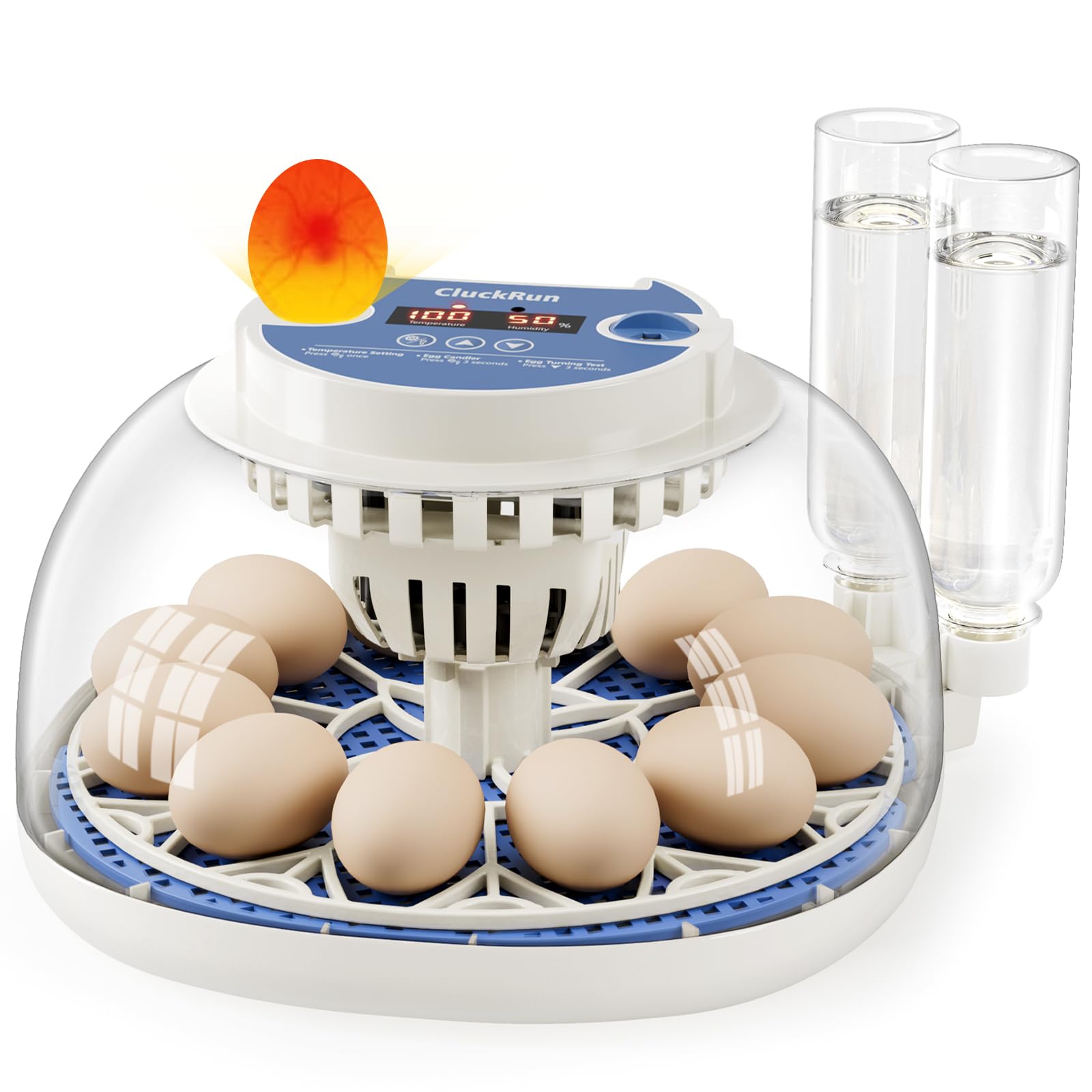
The CluckRun packs a 2-in-1 humidity control system with dual external water bottles that minimize lid-opening during incubation — a feature typically found on models costing twice as much. Its 360° airflow prevents the hot and cold pockets that cause uneven development in smaller incubators, and the clear digital display shows temperature, humidity, and day count without guesswork. The auto egg turner mimics a hen’s natural cycle, and the turner tray can be removed during lockdown without dismantling the whole unit.
Owner reports consistently show 75% to 80% hatch rates even among first-time users, with several reviewers achieving full hatches on quail, silkie chickens, and pigeon eggs. The unit weighs only 3.6 pounds and measures 10.2 inches wide, making it easy to store between hatches. Beginners praised the straightforward setup — one verified review noted a 7-year-old assembled it in ten minutes without assistance.
Tech support is backed by a 3-year limited warranty and lifetime assistance, which is unusually generous for this price bracket.
Why we love it
- Dual external water bottles reduce lid-opening by 80%
- 3-year warranty with lifetime tech support
- Multiple egg tray sizes included for quail, chicken, and duck
Good to know
- Small 12-egg capacity limits batch size
- Side-rolling turner not ideal for shipped eggs with fragile air cells
2. Sailnovo 56 Egg Incubator
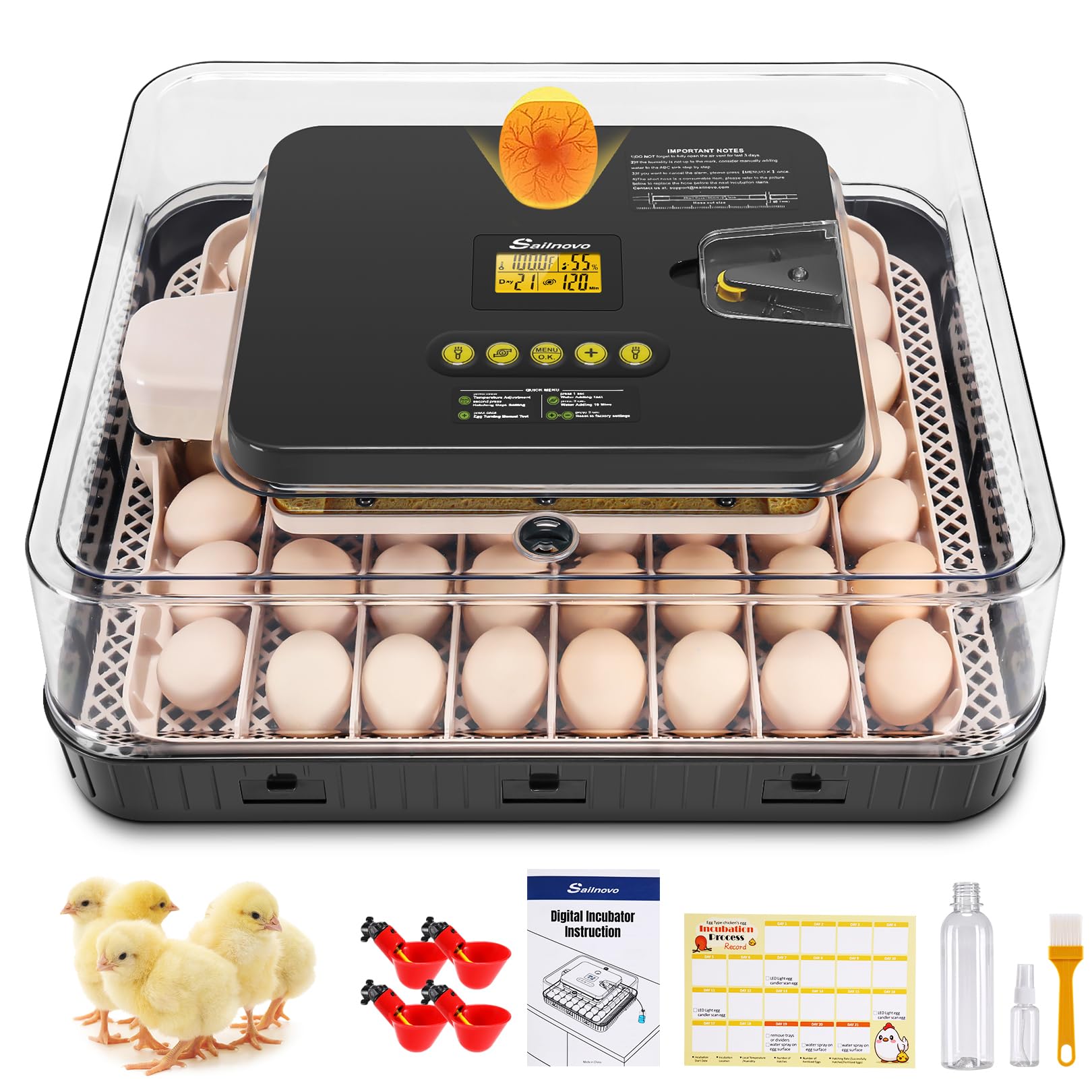
The Sailnovo 56 delivers serious capacity at a mid-range price point, with an advanced heating system and a motor-driven fan that holds temperature within 0.3°F of the setpoint. The automatic humidification pump pulls water from an external bottle and distributes it without opening the lid, which eliminates the temperature drops that plague manual-add designs. Owners have reported hatch rates of 80% to 85% on chicken eggs during their first run, beating the manufacturer’s own 65% estimate.
The built-in egg turner rotates eggs every two hours and stops automatically on day 18 for lockdown. The transparent ABS cover lets you monitor progress without disturbing the internal environment, and the adjustable alarm system can be temporarily silenced for 30 minutes — useful when using dry incubation methods. The package includes four poultry feeders, a cleaning brush, and a tracking calendar card, reducing the number of separate purchases needed.
The main downside is the side-rolling nature of the turner: shipped eggs with damaged air cells may roll unevenly, and one owner reported a hatch bag getting caught in the fan, causing a 12-hour temperature drop. The lid is also large and slightly tricky to seat properly, which makes quick chick removal less convenient. But for volume hatching on a budget, the per-egg cost here is hard to beat.
Why we love it
- Large 56-egg capacity for under
- Auto-humidification pump maintains stable RH without lid-opening
- Includes feeders, brush, and tracking calendar
Good to know
- Side-rolling turner can be rough on shipped eggs
- Lid is difficult to remove quickly during hatch emergencies
3. SENXINGYAN 36 Egg Incubator
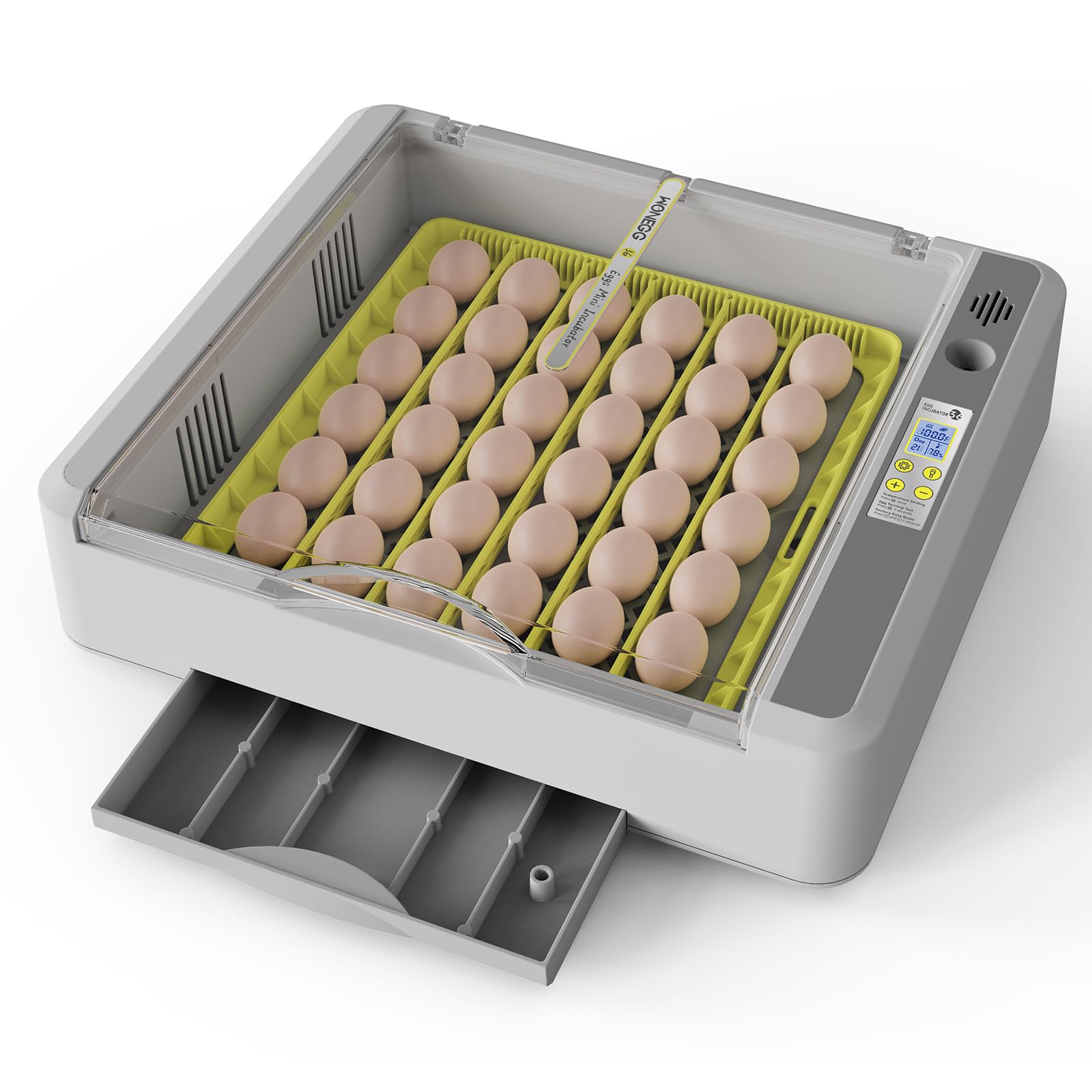
The SENXINGYAN offers a crystalline ultra-clear cover that spans the entire top, giving you a full view of the hatching process without lifting the lid. This makes it an excellent choice for classrooms and families who want to watch development each day. The sink-type water tray slides out from the side, so humidity adjustments don’t require breaking the internal climate. The 360° circulating airflow system distributes heat evenly, preventing the hot-spot issues common in smaller still-air boxes.
The adjustable egg bracket accommodates chicken, duck, goose, and bird eggs by moving the card strips closer or further apart. The auto egg turner cycles every two hours, and the turner can be removed during lockdown to let chicks rest before pipping. One verified review reported 7 out of 8 chicks hatched by day 21 using the auto turner, and multiple owners praised the sturdy construction and easy cleaning.
The instruction manual is sparse — several owners noted that the lack of clear setup steps caused confusion about water levels and turner removal timing. The included external water bottle can drive humidity above 80% if not monitored closely, so a separate hygrometer is recommended. The warranty is generous at 90-day returns and a 36-month coverage period, which adds confidence for first-time buyers.
Why we love it
- Ultra-clear panoramic cover for unobstructed viewing
- Slide-out water tray eliminates lid-opening for refills
- Adjustable card strips fit multiple egg sizes
Good to know
- Poor instruction manual requires troubleshooting
- External water bottle can overshoot humidity target
4. IBKINXX 48 Egg Incubator

The IBKINXX differentiates itself with a programmable egg-turn countdown timer that lets you set intervals from 60 to 210 minutes. This is genuinely useful for rare breed keepers who need longer turning pauses for eggs with weak chalazae. The horizontal egg-turning design gently rocks the eggs rather than rolling them, which reduces the risk of albumen rupture in shipped or fragile eggs. The automatic humidity control uses a motor-driven dripper system that meters water precisely, and the external water inlet means you never have to open the lid to top up.
The 360° visual cover includes a built-in candler for checking embryo development without moving eggs to a separate device. The 48-egg capacity sits between the small 12-egg units and the massive 56-egg models, making it ideal for steady weekly hatches. One reviewer reported 10 out of 12 chicks hatched on day 21, with the auto-turner stopping rotation at pipping as expected.
The downside is durability: some owners reported the humidity sensor failing after one or two hatches, causing constant false alarms. The 9.93-pound weight makes it one of the heavier units in this tier, which may be an issue if you store it between uses. The price is slightly higher than other mid-range units, but the tunable turn timer and external water fill justify the cost for those who need those features.
Why we love it
- Programmable turn interval (60–210 min) for specialty eggs
- Horizontal rocker turner is gentler than roller designs
- External water inlet maintains internal climate stability
Good to know
- Humidity sensor reliability issues reported after multiple cycles
- Heavier build (9.93 lbs) limits portability
5. Chickcozy 25 Egg Incubator

The Chickcozy 25 stands out for its dedicated dry hatch support — a method many experienced breeders prefer because it reduces bacterial growth inside the incubator. The unit includes dual watering zones (labeled C and D) that you simply leave empty for dry incubation, then fill during lockdown to spike humidity. The 360° clear dome gives a full view of the hatch, and the lid handle allows one-handed operation. The anti-slip mat and 2-inch protective wall prevent leg splay in newborns, a detail most incubators overlook.
The auto egg turner rotates eggs every hour, which multiple owners confirm improves yolk positioning and reduces early mortality. The turner stops automatically on day 18, and the tray slides out without tools. One reviewer reported a 100% hatch rate on 15 fertile eggs in the first run, and another owner runs three units simultaneously for staggered production. The built-in candler is bright enough to check air cell growth through the shell.
The turner power cord is attached to the base, which makes thorough cleaning a bit annoying — the cord gets in the way when scrubbing the floor tray. The C and D watering reservoirs sit close to the edge, and some chicks have climbed into them during hatching, so a higher lip on those zones would help. The 25-egg capacity is a sweet spot for serious hobbyists, but large-scale breeders may find it too small.
Why we love it
- Dual watering zones perfectly support dry hatch protocols
- 2-inch protective wall prevents leg splay and injury
- Two-year warranty covers defects and motor failure
Good to know
- Turner cord attached to base complicates deep cleaning
- Watering zones need higher lips to prevent chick drowning
6. Farm Innovators 2450 Pro Series
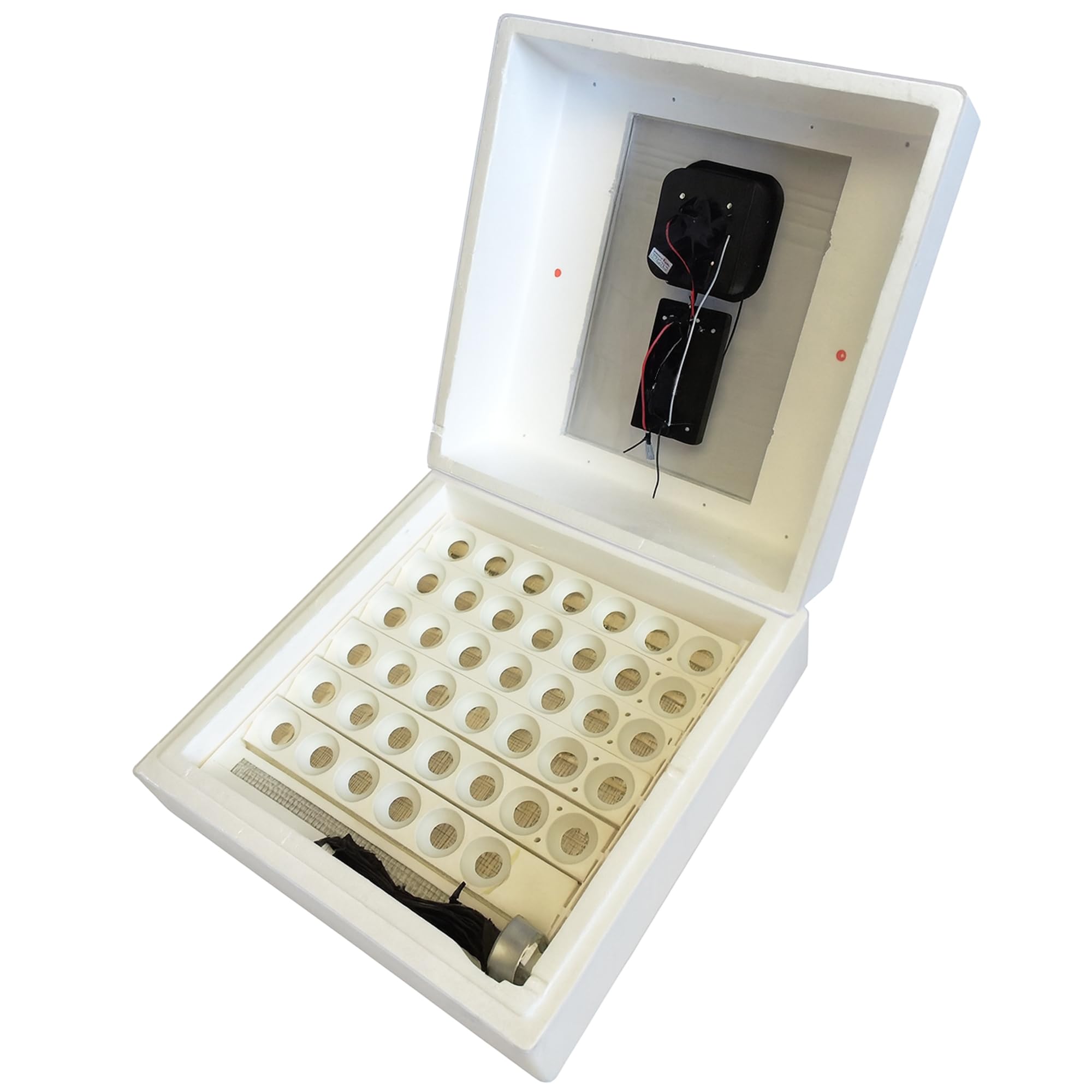
The Farm Innovators 2450 is built around a deep polystyrene foam body that provides exceptional thermal insulation and a forced-air fan that keeps temperature stable even in drafty barns. The deep bottom tray is the standout feature: it accommodates large duck and goose eggs without crowding, which is rare in this price range. The E-Z Fill water channels let you pour water into external ports without removing the lid, and the digital display shows temperature and humidity with Hi/Lo alert lights.
The auto egg turner simplifies handling for chickens, ducks, and geese, and the adjustable days-to-hatch countdown timer works for different incubation periods (28 days for ducks, 30 for geese, etc.). The viewing windows wrap 360 degrees around the unit, and an LED indicator shows when the heater is actively cycling. One long-term owner reported using the same unit for five years straight, replacing only the foam filler plugs that cover the water channels — a fix.
The external hygrometer readings are notoriously inaccurate — multiple reviewers note that the top-mounted sensor can show 10–15% RH off from the actual interior humidity. A second hygrometer placed inside the egg zone is mandatory for reliable results. The foam construction is durable but doesn’t clean as easily as ABS plastic units, and the egg turner is noticeably noisy compared to motor-driven competitors.
Why we love it
- Deep tray handles duck and goose eggs without modification
- Excellent thermal insulation for barn or garage use
- Proven five-year durability with minor part replacements
Good to know
- External hygrometer is consistently inaccurate
- Foam shell is harder to sanitize between hatches
7. Brinsea Ovation 56 EX
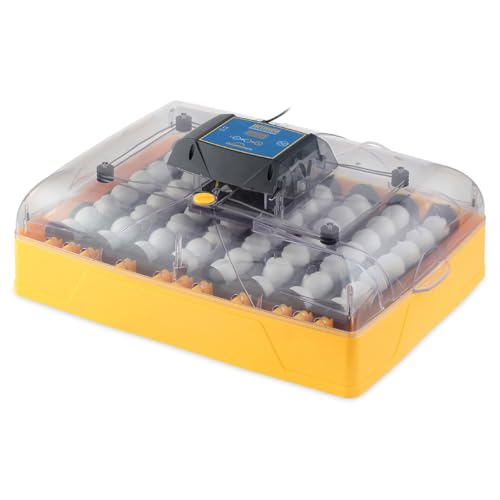
The Brinsea Ovation 56 EX is the closest thing to a fully automated incubation system under . Its integrated pump draws water from an external reservoir and injects it into the chamber as needed to maintain the set humidity level — no wicks, no sponges, no user intervention. The Induced Dual Airflow system moves air from two fan positions, eliminating the temperature stratification that still plagues fanless competitors. The display shows temperature in Fahrenheit or Celsius, humidity percentage, and turning status on a backlit screen.
The 56-egg capacity is designed for serious breeders: the included carriers hold standard chicken eggs, and optional carriers fit duck, goose, turkey, quail, and pheasant eggs without adapters. The programmable turning interval can be customized between 1 and 12 hours, and the built-in alarm alerts you to power failures and temperature deviations outside your set range. Owners report consistent 95–100% hatch rates on fertile eggs, with one reviewer running the unit nonstop for six months across geese, chickens, guineas, and peachicks with zero failures.
The ABS plastic with Biomaster antimicrobial protection prevents bacterial buildup and makes cleaning straightforward. The 3-year warranty and US-based support in Florida provide reassurance that cheap imports cannot match. The downsides are the high entry price and the top panel, which requires unscrewing to clean — a minor frustration in an otherwise excellent design. The carriers are also not chick-friendly for pipping, so you may need to transfer hatchlings to a brooder early.
Why we love it
- Fully automatic humidity pump eliminates the #1 cause of hatch failure
- UK-manufactured with US-based support and 3-year warranty
- Programmable turn intervals support any poultry species
Good to know
- High price limits accessibility for casual hobbyists
- Top panel requires screwdriver removal for full cleaning
FAQ
What is the difference between forced-air and still-air incubators?
How do I know when to stop turning eggs before hatching?
Why is my incubator humidity reading different from my separate hygrometer?
Can I hatch different bird species in the same incubator?
Final Thoughts: The Verdict
For most backyard keepers and hobbyists, the best egg incubator winner is the CluckRun 12 Egg because it delivers reliable automatic humidity, consistent 360° airflow, and a 3-year warranty at a price that does not punish beginners for their first mistake. If you need high volume without the high price, grab the Sailnovo 56 Egg — it holds 56 eggs and includes auto-humidification that rivals units three times its cost. And for professional-grade set-and-forget incubation where hatch rates consistently hit 95% or higher, nothing beats the Brinsea Ovation 56 EX, even with its premium price tag.