
A saddle that goes numb after 20 miles isn’t an endurance saddle — it’s a torture device. The difference between finishing a century ride in agony and finishing strong comes down to one thing: how well the saddle manages pressure across your sit bones and soft tissue over hours of constant output. Real endurance saddles use specific shell flex, channel depth, and padding density to prevent the blood-flow cutoffs that sabotage long-distance cyclists.
I’m Mo Mahin — the founder and writer behind Furric. I’ve spent years analyzing saddle shell compositions, rail materials, and pressure-mapping data across hundreds of models, cross-referencing owner feedback from ultramarathon riders, gravel racers, and touring cyclists to understand what actually keeps riders comfortable at mile 80.
This guide breaks down the specific materials, geometry, and cutout designs that separate a proper endurance saddle from a generic perch. You’ll learn why rail material matters more than cover leather, how to match cutout depth to your riding position, and which foam densities survive back-to-back 6-hour days without packing out.
How To Choose The Best Endurance Saddle
Buying an endurance saddle is different from picking a racing perch. You’re optimizing for hours of sustained contact, not maximum power transfer in a sprint. Five factors determine whether a saddle disappears under you or becomes a problem at mile 40.
Sit-Bone Width Match
Your sit bones (ischial tuberosities) carry most of your weight on a saddle. A saddle too narrow lets your sit bones hang over the edges, concentrating pressure. A saddle too wide creates chafing on the inner thighs. Measure your sit-bone spacing — most riders between 100–130mm need a 135–155mm saddle width. The ID Match system from Selle Italia and the 109% rule for saddle height both depend on getting this number right before you account for padding.
Cutout Depth and Pressure Relief Channel
The perineal area contains soft tissue and nerves that compress under sustained weight in the forward riding position. A full-length cutout (SuperFlow, Imperial, or carved channel) creates a void that prevents that compression. Deeper cutouts work better for riders who spend significant time in aero or drop positions. Shallow pressure relief channels benefit upright touring riders. The critical spec is channel width at the nose — narrow channels can still pinch tissue even with a cutout present.
Rail Material and Shell Compliance
Rails determine how much road vibration transfers to your body. CroMo (chromoly steel) rails offer the best damping-to-weight ratio for the price — they flex slightly without breaking. Carbon rails save grams but transmit more high-frequency vibration, which becomes noticeable after 3+ hours. Full carbon shells (as in the Fizik Vento Argo R1) add torsional flex that helps the saddle move with your pedaling motion. Nylon composite shells (Ergon’s approach) are stiffer but durable for heavier riders.
Foam Density vs. Support Persistence
Soft gel pads feel comfortable in the store but pack out after 50 hours of riding. High-density orthopedic foam (like the Ergon SMC’s Orthopedic Comfort Foam) maintains its shape across thousands of miles. Some saddles (Brooks leather models) use no foam at all, relying on the leather’s ability to mold to your anatomy over time. The tradeoff: foam saddles are comfortable immediately but degrade; leather saddles need a break-in period but last decades.
Flex Zone and Nose Shape
Endurance saddles need a nose that doesn’t dig into the inner thigh when you’re pedaling for hours. Short-nose designs (Fizik Vento Argo) improve thigh clearance and allow you to sit farther forward without pressure. Tapered noses (ISM’s noseless design) eliminate nose pressure entirely. The flex zone — the area between the nose and the widest part of the saddle — should allow the shell to deflect under pedal stroke without creating a hard edge.
Quick Comparison
On smaller screens, swipe sideways to see the full table.
| Model | Category | Best For | Key Spec | Amazon |
|---|---|---|---|---|
| Brooks B67 | Spring Leather | Upright touring with suspension | Spring suspension + leather | Amazon |
| Fizik Vento Argo | Short-Nose Carbon | Aggressive aero endurance | Carbon shell + rail, 125mm | Amazon |
| Brooks B17 Carved | Leather Cutout | Classic touring with perineal relief | Vegetable-tanned leather, cutout | Amazon |
| ISM PN 3.1 | Noseless | Zero-nose numbness relief | 255mm x 120mm, chromoly rails | Amazon |
| Brooks Cambium C15 | Waterproof Vulcanized | All-weather maintenance-free | Vulcanized rubber, 450g | Amazon |
| Selle Italia Novus SuperFlow | Extra Padding | Long-distance extra cushion | SuperFlow cutout, 306g | Amazon |
| Ergon SMC Sport Gel | Gel + Foam | Heavy rider + MTB endurance | CroMo rails, 6.25″ width | Amazon |
| Selle Italia SLR Superflow | Ultra-Light Carbon | Featherweight racing endurance | Carbon shell, 129g | Amazon |
| Weaver Equine Pad | Horse Pad | Equestrian saddle cushion | 1″ wool felt, 6.13 lbs | Amazon |
In‑Depth Reviews
1. Brooks England B67

The Brooks B67 is the only saddle on this list with spring suspension built into the rails — a feature that directly addresses the long-distance vibration problem hardtail riders face on gravel and chip-seal roads. The single-rail design attaches to modern micro-adjust seatposts while the wider rear portion (approximately 180mm) distributes pressure across a larger sit-bone area for upright touring positions. The vegetable-tanned leather cover breathes naturally, preventing the sweat buildup that causes chafing on rides exceeding 3 hours.
Owner feedback confirms the B67 is comfortable out of the box for riders using an upright position — no break-in period before your first 30-mile ride. The springs absorb low-frequency bumps that would otherwise travel through the seatpost directly into your pelvis. Multiple reviewers report zero discomfort on 30+ mile rides without padded cycling shorts, which is rare for a saddle in this price tier. The honey color option darkens beautifully over time and requires periodic Proofide treatment to maintain the leather’s flexibility.
The B67 is designed exclusively for upright riding positions — if you spend significant time in a drop or aero position, the wider rear and spring suspension create an unstable platform that doesn’t support forward pelvis rotation. At 3.05 pounds, it’s the heaviest saddle reviewed here, a tradeoff for the steel hardware and spring assembly. The single-rail design also limits seatpost clamp compatibility compared to standard twin-rail systems, requiring careful confirmation of your post’s clamp width before purchasing.
Why we love it
- Spring suspension absorbs road vibration for hardtail and touring bikes
- Wider rear section distributes sit-bone pressure across a larger area
- Vegetable-tanned leather breathes naturally, reducing moisture buildup on long rides
Good to know
- Not suitable for aggressive drop-bar or aero riding positions
- Weighs 3 pounds, significantly more than foam or carbon saddles
- Requires periodic Proofide treatment and rain cover for longevity
2. Fizik Vento Argo

The Fizik Vento Argo combines a ride-compliant carbon reinforced nylon shell with a stiff carbon rail to create a saddle that works equally well for aggressive aero endurance positions and long days in the saddle. The short-nose design — approximately 260mm long — improves thigh clearance when you’re pedaling in a tucked position, allowing you to move forward without the nose digging into your inner thighs. Type 1 foam is low-profile and reactive, meaning it doesn’t sag or pack out after repeated 3-hour sessions the way softer foams do.
The ergonomic cutout was developed using pressure analysis and input from medical experts, and owner feedback confirms it solves the chronic perineum pressure issue that conventional saddles cause. One 240-pound reviewer reported zero numbness or tingling after switching to the 125mm width, solving a problem that persisted across multiple previous saddles. The R1 configuration (carbon shell + carbon rail) keeps weight to approximately 200g while the shell flex adds a subtle hammock effect that smooths out road chatter without reducing power transfer efficiency.
Some owners report the polyurethane cover is slippery during the first 50 miles, making it difficult to maintain a fixed position until you find the sweet spot. The saddle is firm — not plush — and riders accustomed to soft gel pads may find it harsh for the first few rides until their sit bones adapt. The short nose also leaves less fore-aft adjustment range compared to traditional long-nose saddles, so your seatpost needs sufficient setback to accommodate the shorter platform.
Why we love it
- Carbon shell + carbon rail combination provides torsional flex without weight penalty
- Short-nose design eliminates inner-thigh chafing during aggressive aero positions
- Medical-expert-developed cutout solves perineum numbness for heavy riders
Good to know
- Polyurethane cover can feel slippery until you find the correct seating position
- Firm foam requires an adaptation period for riders used to gel padding
- Short nose limits fore-aft adjustment range compared to traditional saddles
3. Brooks England B17 Carved

What sets the Carved version apart from the standard B17 is the Imperial cutout: a longitudinal channel that removes material from the center of the saddle to relieve perineal pressure while maintaining the leather’s natural flex and breathability. The shape of the B17 is deliberately wide (approximately 175mm) to provide stable support for an upright touring position, with a flat profile that allows you to shift your seating position slightly on long climbs.
Owner feedback from a 50-year cyclist confirms the B17 Carved eliminates clothing seam irritation that padded saddles exacerbate — the smooth leather surface reduces friction points during 40-minute daily commutes and 100-mile century rides. Multiple reviewers report the saddle was comfortable from the first ride with zero break-in discomfort, contradicting the common belief that all Brooks saddles require months of break-in before they become usable. The eyelets on the rear of the saddle allow you to attach a tool bag or saddle pack without damaging the leather, a practical feature for touring cyclists who carry supplies.
The B17 Carved is designed primarily for upright riding positions — riders who spend significant time in a drop or aero position may find the wide rear portion interferes with their pelvis rotation. The leather surface requires more care than synthetic covers: it must be kept dry with a rain cover in wet weather and treated with Brooks Proofide every few months to maintain flexibility. At 530 grams, it’s heavier than foam and carbon saddles, and the chrome-plated steel rails add weight that matters on lightweight builds.
Why we love it
- Handmade in England with vegetable-tanned leather that molds to your sit bones over time
- Imperial cutout provides perineal pressure relief without compromising leather integrity
- Eliminates clothing seam irritation better than any padded saddle
Good to know
- Designed primarily for upright touring positions, not aero or aggressive drop-bar riding
- Requires periodic Proofide treatment and rain cover to prevent weather damage
- Heavier than foam and carbon alternatives at around 530 grams
4. ISM PN 3.1

The ISM PN 3.1 uses a patented noseless design to eliminate soft tissue pressure entirely — the saddle ends before your perineum area begins, shifting all weight to your sit bones and allowing unrestricted blood flow. The 255mm length and 120mm width are narrower than traditional endurance saddles, designed specifically for road, time trial, and triathlon positions where the rider spends extended time in a forward aerodynamic posture. The 40-Series foam upgrade provides softer cushioning compared to the PN 3.0, and the tapered front ensures superior leg clearance when diving into fast corners.
Owners who tested the ISM across 1,000+ miles report that the noseless design completely eliminates the numbness and pelvic discomfort that conventional saddles cause in the aero position. The open nose allows freedom of movement and power transfer that traditional saddles block — your legs can pedal without the saddle interfering with your inner thigh path. The chromoly rails provide adequate stiffness for sprinting and climbing without the harsh vibration transfer of carbon rails, and the slender profile works well for riders with narrower sit bones (typically 100–125mm range).
The noseless design has a learning curve — first-time users often struggle to find the correct fore-aft position because the saddle doesn’t have a traditional nose to use as a reference point. The ISM is also expensive, putting it at the premium end of the endurance saddle market. Some owners report the synthetic cover seams can begin separating after 9–12 months of heavy use, though ISM’s customer service has a strong reputation for providing free replacements when this occurs.
Why we love it
- Noseless design eliminates perineal pressure and genital numbness entirely
- 40-Series foam provides softer cushioning for long rides in aero positions
- Tapered front ensures excellent leg clearance for cornering and climbing
Good to know
- Significant learning curve for first-time users adjusting to noseless geometry
- Premium price point places it at the high end of the endurance saddle market
- Some owners report seam durability issues after extended use
5. Brooks Cambium C15 Carved

The Brooks Cambium C15 Carved is the maintenance-free answer to Brooks’ leather heritage — a vulcanized natural rubber and organic cotton canvas top reinforced with structural textile, mounted on a fiberglass-reinforced back plate with loops for a saddle bag. The Carved version adds a cutout to the fully waterproof design, providing perineal relief in a saddle that never needs break-in, never requires Proofide, and survives rain, mud, and sun without degradation. At 450 grams, it’s lighter than leather Brooks saddles while offering the same hammock-like flex from the vulcanized rubber construction.
Owner feedback from a rider who has owned over 25 saddles (including SMP, Brooks leather, and Fizik models) rates the C15 Carved as the most comfortable saddle they’ve ever used on rides exceeding 4 hours. The flexible top moves with your pedaling motion rather than fighting it, absorbing road vibration without needing foam or gel padding. The rubberized surface provides consistent grip even when wet, unlike leather saddles that become slippery in rain. The cutout adds pressure relief without compromising the structural integrity of the rubberized top.
Some riders with narrow sit bones (under 110mm) report that the carved zone’s ridge creates pressure instead of relief — the edge of the cutout can press into the perineum in certain riding positions. The C15 is also slightly heavier than synthetic racing saddles, and the vulcanized rubber surface can squeak against the rails after several weeks of use if the interface isn’t properly torqued. The rubberized construction also doesn’t conform to your sit bones over time the way leather does, so what you feel on day one is what you get forever.
Why we love it
- Fully waterproof and maintenance-free — no break-in, no conditioning, no rain cover
- Vulcanized rubber provides hammock-like flex that absorbs road vibration
- Fiberglass back plate includes loops for saddle bag attachment
Good to know
- Riders with very narrow sit bones may feel pressure from the carved zone’s edge
- Heavier than synthetic racing saddles at 450 grams
- Does not conform to anatomy over time — what you feel initially is permanent
6. Selle Italia Novus SuperFlow Endurance TM

The Selle Italia Novus SuperFlow Endurance TM is built specifically for long-distance riders who want extra padding without sacrificing the pressure relief of a deep cutout. The SuperFlow channel is a full-length cutout that runs from the nose to the rear, providing uncompromised perineal relief even when you shift your seating position during hours of riding. The ID Match S3 fit corresponds to a medium width (approximately 149mm), which matches the most common sit-bone spacing for male cyclists. The Duron Tec cover is a strong technical microfiber that resists wear from cycling shorts and weather exposure.
Owners confirm the Novus SuperFlow is comfortable for 50-mile rides on the first outing, with the extra padding absorbing road chatter without the numbness that plagues thinner saddles. One 300-pound rider reports this saddle allowed him to complete 20–30 mile rides without rubbing or soreness for the first time — a testament to how well the SuperFlow channel offloads soft tissue pressure. The 306-gram weight is competitive for an endurance saddle with this much padding, and the gel-infused outer material provides a plush initial feel without packing out quickly.
Some units experience a creaking sound from the rail-shell interface during the first 20 miles, though this typically resolves as the components settle into place. A small number of owners report the plastic shell can crack after several hundred miles if the saddle is overloaded or subjected to crash forces, which is a durability concern for heavier riders or those who ride aggressive terrain. The extra padding also means the saddle feels slightly wider under the thighs compared to minimalist racing saddles, which can cause chafing for riders with narrow hips.
Why we love it
- Full-length SuperFlow cutout provides perineal relief across the entire saddle length
- Extra padding absorbs road vibration for riders who prefer a cushioned feel
- 149mm width matches common sit-bone spacing for medium-sized male cyclists
Good to know
- Initial creaking from rail-shell interface may be audible during the first 20 miles
- Plastic shell durability concerns for heavier riders or aggressive terrain
- Extra width under the thighs can cause chafing for riders with narrow hips
7. Ergon SMC Sport Gel
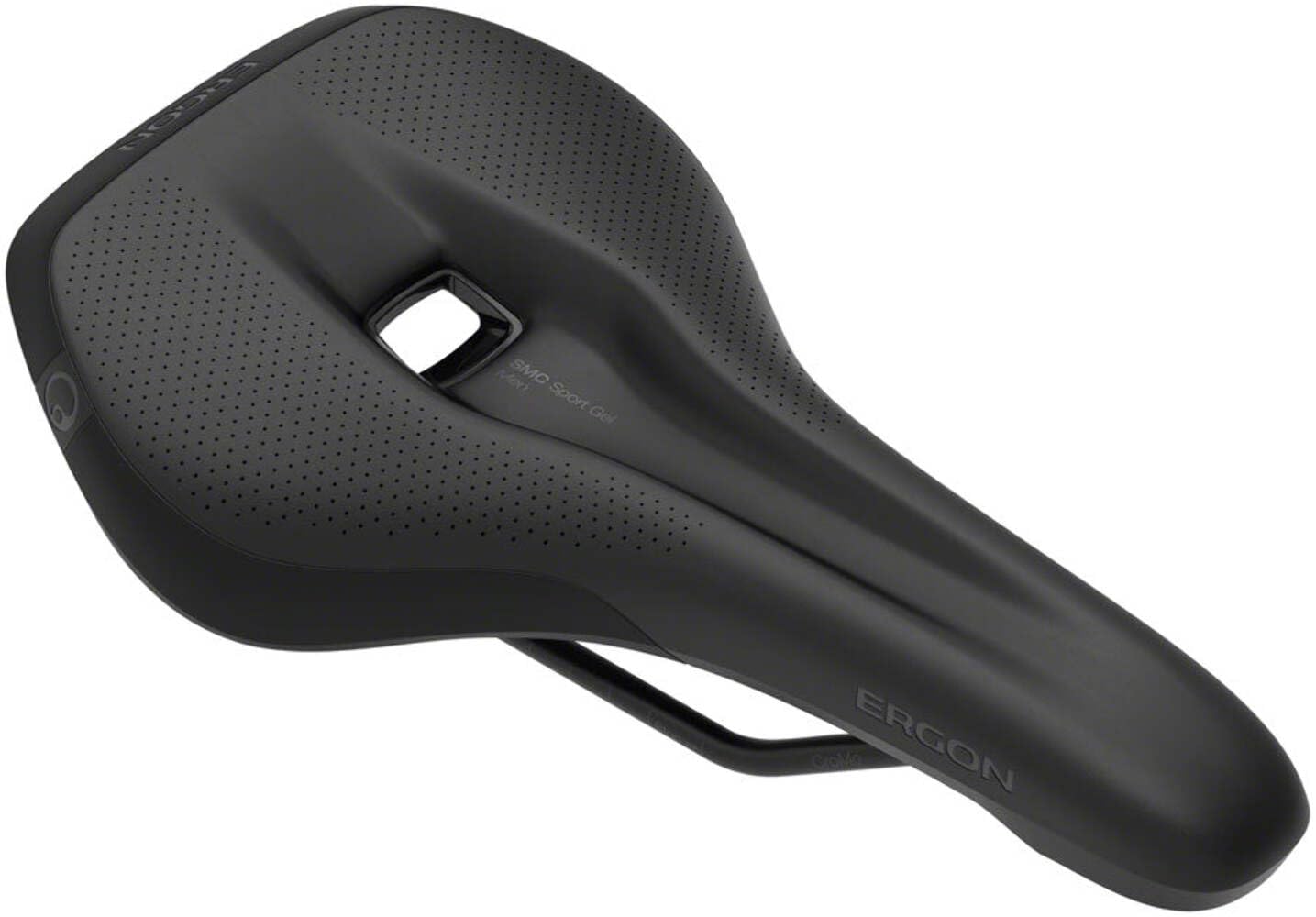
The Ergon SMC Sport Gel Saddle pairs a Nylon Composite shell with CroMo rails and a microfiber cover, but the standout feature for endurance is the Orthopedic Comfort Foam with thin gel pads inset at pressure points. The 6.25-inch width provides generous sit-bone support for larger riders — one 6’3”, 240-pound owner reports the SMC is the first saddle that perfectly matches his width requirements without causing perineum pressure. The contoured nose design slopes downward to remove pressure from the soft tissue area, a geometry choice that works particularly well for mountain bike and gravel positions where the rider is more upright.
Owner feedback includes a review from a cyclist who completed 10,000+ km of touring on the Ergon SMC and reports it still looks new — the gel pads don’t pack out the way cheaper gel saddles do after a few hundred miles. Another rider reports zero numbness or discomfort during the first hour ride, solving a problem that made their previous bike unenjoyable. The combination of firm Orthopedic Comfort Foam with selective gel pads creates a saddle that is supportive for heavy riders without feeling like a plank.
The Ergon SMC is approximately 100 grams heavier than performance-oriented endurance saddles, a tradeoff for the gel pad integration and wider platform. Some units arrive with slightly twisted rails, indicating quality control inconsistency at the assembly level. The saddle requires careful tilt tuning — cyclists who don’t spend time adjusting the angle often complain about nose pressure, though once properly set, the saddle disappears under you for rides lasting 2 hours or more.
Why we love it
- 6.25-inch width provides excellent sit-bone support for larger riders
- Orthopedic Comfort Foam with gel pads maintains shape across thousands of miles
- Contoured nose design relieves perineum pressure for upright riding positions
Good to know
- Heavier than performance-oriented endurance saddles by approximately 100 grams
- Some units arrive with slightly bent or twisted rails
- Requires precise tilt tuning to eliminate nose pressure
8. Selle Italia SLR Superflow

The Selle Italia SLR Superflow is one of the lightest saddles ever produced at 129 grams, achieved through a carbon-infused shell and CarboKeramic rails — ceramic-coated carbon that provides superior clamping resistance without adding weight. The Boost short-nose design improves thigh clearance and reduces overall saddle length, while the Superflow cutout provides full-length pressure relief in the perineal area. The Fibra-Tek cover is a strong, lightweight technical microfiber that resists wear and reduces the total saddle weight even further.
Owner feedback confirms the SLR Superflow eliminates the soreness that stock saddles cause on rides exceeding 20 miles — one rider reports zero discomfort after a hard 40-mile ride that would have been painful on their previous saddle. The 129-gram weight makes it an attractive option for weight-conscious endurance cyclists who want to save grams without sacrificing the Superflow pressure relief channel. The carbon shell provides a firm, reactive platform that maintains power transfer efficiency during climbs and sprints, while the short nose prevents thigh interference during aggressive pedaling.
The SLR Superflow’s nose is sharp enough to rub against the inner stitching of bib shorts, and multiple owners report that one ride is enough to fray expensive bib shorts beyond repair. The saddle is also extremely expensive, placing it firmly in the premium tier for cyclists who prioritize weight savings above all other considerations. The CarboKeramic rails require careful torque management — over-tightening can crack the ceramic coating, which reduces clamping resistance and can lead to rail failure over time.
Why we love it
- Incredible 129-gram weight makes it one of the lightest endurance saddles available
- Superflow cutout provides full-length perineal pressure relief
- CarboKeramic rails offer superior clamping resistance for carbon components
Good to know
- Nose design can fray inner stitching of bib shorts after a single ride
- CarboKeramic rails require precise torque management to prevent coating damage
- Extremely expensive, placing it strictly in the weight-conscious premium tier
9. Weaver Equine 30″ x 30″ Contoured Wool Blend Pad

The Weaver Equine Contoured Wool Blend Felt Saddle Pad is designed for the horse, not the rider — a 1-inch-thick wool felt pad that provides shock absorption and moisture-wicking for your equine companion during endurance rides. The 30×30-inch dimensions fit most Western saddles, and the contoured shape with wither slits prevents the pad from slipping forward or bunching under the saddle. The top grain wear leathers add durability at contact points, while the reinforced spine ensures the pad maintains its shape through repeated use.
Owner feedback from equestrians confirms the wool felt blend effectively absorbs shock and distributes weight evenly across the horse’s back, preventing the pressure points that cause soreness after long trail rides or gallops. The wither slit prevents saddle slipping on horses from 14.1hh to 16hh, and multiple reviewers report the pad is comfortable enough for back-to-back weekend rides without the horse showing signs of back soreness. The tan color is light enough to reflect heat during summer rides, and the wool felt material breathes naturally to prevent sweat buildup under the saddle.
This is a saddle pad, not a bicycle saddle — it belongs to the equestrian category and serves a completely different endurance application. The 6.13-pound weight is heavy for bicycle use, and the 1-inch thickness would interfere with pedaling motion and seatpost clamping if mounted on a bike. The Weaver pad is included here for the equestrian audience seeking endurance-specific equipment for their horse, not for cyclists looking for personal saddle upgrades.
Why we love it
- 1-inch wool felt provides effective shock absorption for the horse’s back
- Wither slit prevents saddle slipping on horses 14.1–16hh
- Top grain wear leathers add durability at high-contact points
Good to know
- This is a horse saddle pad, not a bicycle saddle — verify your application
- 6.13-pound weight is unsuitable for bicycle use
- Primarily designed for Western saddles; may not fit English or dressage setups
FAQ
How do I measure my sit bone width for an endurance saddle?
How does a cutout channel prevent perineal numbness on long rides?
Should I choose gel padding or orthopedic foam for rides over 4 hours?
Do carbon rails improve endurance comfort or just reduce weight?
Can I use an endurance saddle for mountain biking or gravel riding?
Final Thoughts: The Verdict
For most cyclists seeking the best endurance saddle, the winner is the Fizik Vento Argo because its short-nose carbon design, medical-expert-developed cutout, and reactive Type 1 foam solve perineal numbness without sacrificing power transfer for riders in forward positions. If you want spring suspension for upright touring comfort that absorbs road vibration, grab the Brooks B67. And for cyclists who want zero-nose pressure relief with the best customer service in the industry, nothing beats the ISM PN 3.1.