
Selecting the right equine vitamin E supplement means navigating a sea of potency levels, selenium blends, and bio-availability claims — all while your horse’s muscle recovery, immune response, and nerve function hang in the balance. Whether you manage a senior with metabolic concerns, a performance horse facing oxidative stress, or a pasture horse in a selenium-deficient region, the wrong choice can waste months of feeding and delay real results.
I’m Mo Mahin — the founder and writer behind Furric. I’ve spent years analyzing market research, comparing supplement specifications, studying equine nutritional data, and aggregating owner feedback to identify which formulations actually deliver measurable improvements in coat condition, muscle tone, and recovery times.
This guide breaks down the most effective options by potency, form, and intended use so you can confidently select from the best equine vitamin e supplement for your horse’s specific needs.
How To Choose The Best Equine Vitamin E Supplement
Equine vitamin E is not a one-size-fits-all category. The right choice depends on your horse’s workload, age, pasture access, and existing diet. Focus on three core factors: vitamin E form and potency, selenium co-supplementation, and physical presentation for palatability.
Natural vs. Synthetic Vitamin E — Absorption Matters
Natural vitamin E (d-alpha-tocopherol) binds more effectively to equine cellular receptors than the synthetic form (dl-alpha-tocopherol). Horses on limited turnout or hay-only diets often need the higher bio-availability of natural E to maintain nerve and muscle health. Synthetic dl-alpha-tocopherol still works but requires higher IU levels to achieve comparable serum concentrations.
Selenium Levels Are Location Dependent
Many vitamin E supplements pair with selenium because the two antioxidants work synergistically to protect cell membranes. However, selenium toxicity is a real risk. If your region has selenium-rich soil or you already feed a complete feed with selenium, choose a straight vitamin E product. For horses in selenium-deficient areas, a balanced E-selenium blend restores function without guesswork.
Pellet, Powder, or Crumble — What Your Horse Will Actually Eat
Pellet forms are convenient for horses that clean their bucket completely, but some horses sort pellets out of grain. Powders mix more evenly but can settle at the bottom if not stirred immediately. Crumble formats offer middle-ground consistency and often have a seaweed or alfalfa base that picky eaters accept more readily.
Quick Comparison
On smaller screens, swipe sideways to see the full table.
| Model | Category | Best For | Key Spec | Amazon |
|---|---|---|---|---|
| Vita Flex Pro E & Selenium | Powder | Daily balanced antioxidant with yeast culture | 1,000 IU vitamin E per oz | Amazon |
| Kentucky Performance Prod Elevate Se | Natural E Powder | High bio-availability natural E & organic selenium | Natural vitamin E complex | Amazon |
| Health-E Vitamin E Powder | High-Potency Powder | Metabolic-sensitive horses needing low sugar/starch | 14,000+ IU per ounce | Amazon |
| Horse Guard All-in-One | Pellet | Complete mineral + E + probiotics in one feed | 1,000 IU + 3 mg organic selenium per dose | Amazon |
| Farnam Vita-Min E & Selenium | Pellet | Budget-friendly baseline support for active horses | 625 IU per ½ oz serving | Amazon |
| Horse Health Vita E & Selenium Crumbles | Crumble | Picky eaters needing a palatable antioxidant crumble | 625 IU plus 1 mg selenium per ½ oz | Amazon |
| Manna Pro Sho-Glo Complete | Pellet | Coat/hoof conditioning with full vitamin mineral blend | Complete vitamin/mineral pellet | Amazon |
In‑Depth Reviews
1. Vita Flex Pro E & Selenium Supplement
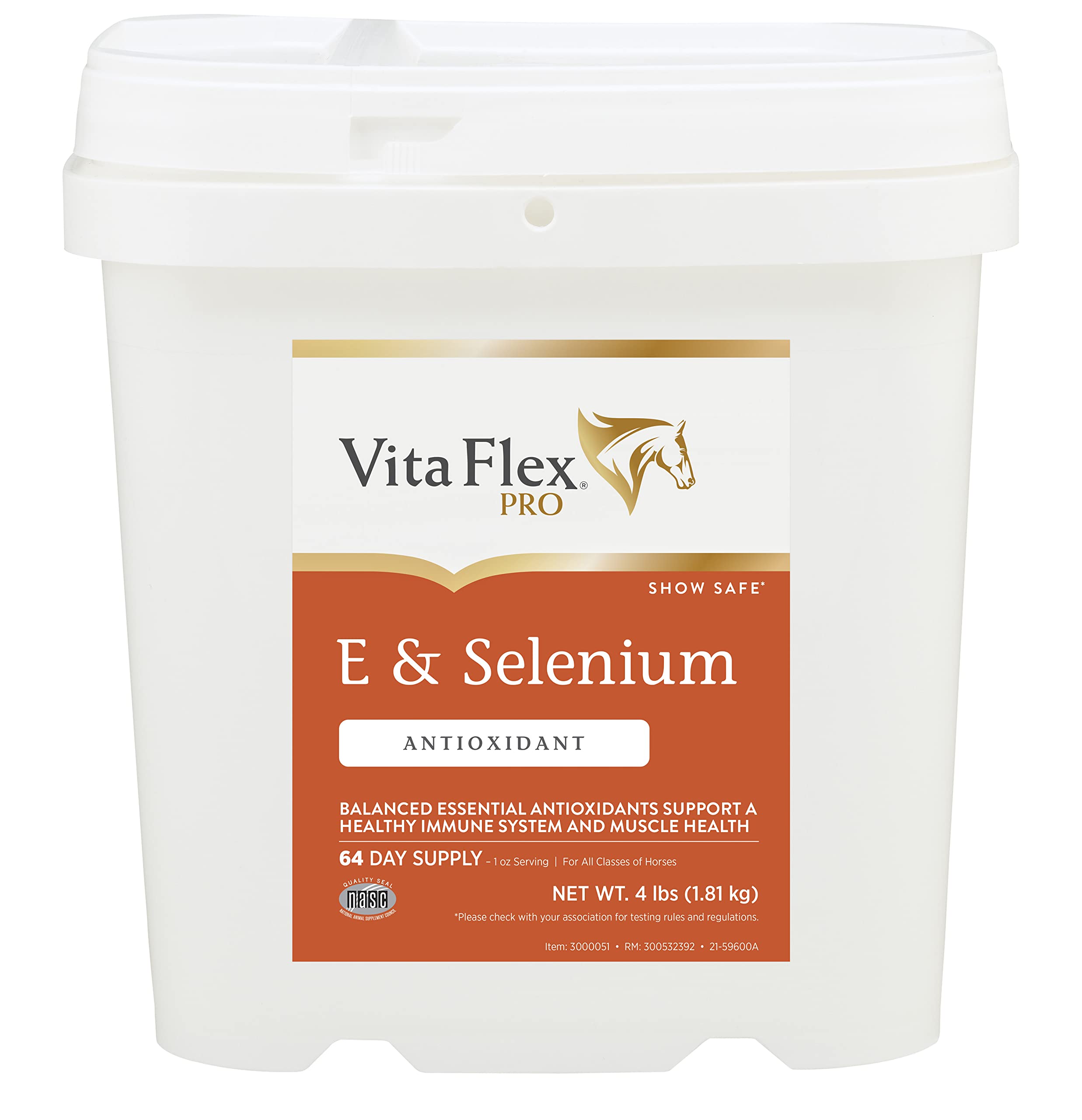
The Vita Flex Pro E & Selenium delivers 1,000 IU of vitamin E per one-ounce serving, making it a strong mid-range potency option for active horses. Its yeast culture base improves palatability and supports hindgut digestion, helping horses absorb both the E and the selenium more consistently than a straight mineral carrier would allow.
Owner reports highlight its effectiveness for senior horses showing neurological signs or muscle degeneration. Multiple verified reviews describe a 30-year-old horse with dementia-like symptoms returning to normal cognition when this supplement was added alongside a veterinary protocol. The 4-pound container provides a 64-day supply, and a larger 320-day option exists for multi-horse barns.
The powdered texture mixes easily into grain, though some horses that are heavy sorters may leave residue. For horses in selenium-deficient regions, this formulation covers the gap without requiring a separate selenium source.
Why we love it
- Yeast culture aids nutrient absorption and gut health
- Vet-recommended for neurological and age-related decline
- Available in multiple supply sizes for barn flexibility
Good to know
- Powder form may settle; requires thorough mixing
- Selenium inclusion not ideal for horses on already-supplemented feeds
2. Kentucky Performance Prod Elevate Se Natural Vitamin E

The Elevate Se stands out because it uses natural vitamin E (not dl-alpha tocopherol) paired with organic selenium yeast. Natural d-alpha-tocopherol has higher bio-availability in horses compared to synthetic sources, meaning a smaller IU can produce a stronger blood level response — crucial for horses with tissue repair needs or reproductive demands.
Breeders and performance barns report visible muscle relaxation and improved willingness to work within one week of starting this powder. The unflavored powder is well-tolerated by broodmares and foals, and the 2-pound container is compact but lasts roughly 32 days at the standard feeding rate.
The cost per serving sits above entry-level synthetic blends, but the premium ingredient sourcing justifies the difference for horses requiring maximum absorption. It is also a strong choice for horses recovering from injury or stall rest.
Why we love it
- Natural vitamin E with superior bio-availability
- Organic selenium yeast supports muscle and nerve function
- Proven results for horses recovering from injury or tension
Good to know
- Higher cost per serving than synthetic options
- Small container size may require frequent reordering
3. Health-E Vitamin E Supplement for Horses
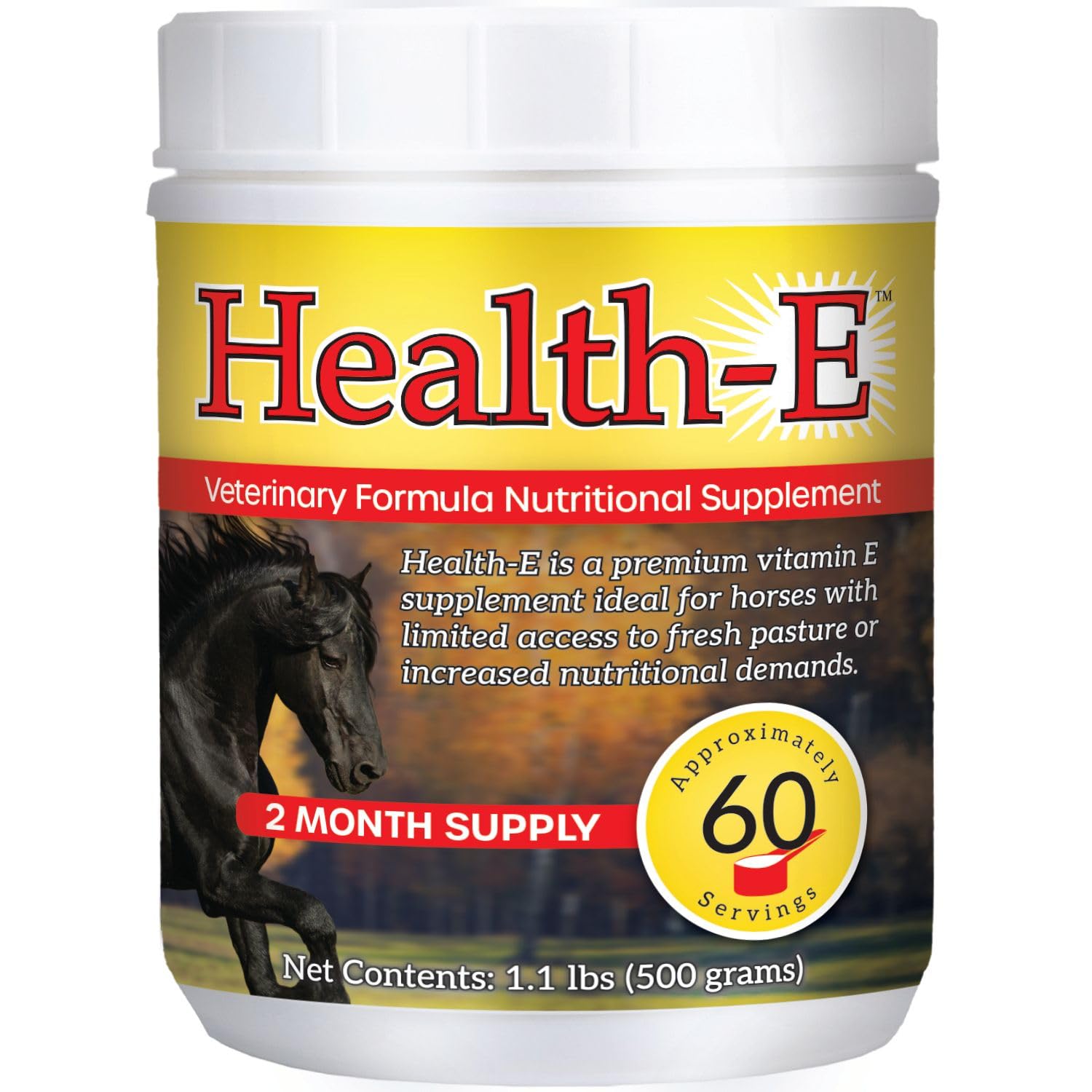
The Health-E formula pushes vitamin E potency to over 14,000 IU per ounce of dl-alpha-tocopherol powder, making it the highest-concentration option in this comparison. This is particularly relevant for horses with neurological conditions like EPM or equine motor neuron disease, where therapeutic dosing often requires significantly higher IU levels than general maintenance.
Developed by equine veterinarian Dr. Frank Reilly, the formula is low in sugar, starch, and fructans — a critical detail for horses with metabolic syndrome or insulin resistance. Owners managing EMS horses report that this supplement integrates safely into a forage-based diet without triggering laminitic concerns. The fine powder mixes cleanly into a small amount of grain or wet feed.
The 60-serving container commands the highest up-front cost of the group, but when calculated on a per-IU basis, it delivers exceptional value for horses needing higher therapeutic doses. It contains no selenium, making it a pure vitamin E solution for those who want to control selenium intake separately.
Why we love it
- Extremely high IU per serving for therapeutic dosing
- Low sugar/starch/fructans safe for metabolic horses
- Veterinarian-formulated with third-party testing
Good to know
- No selenium included; requires separate management
- Powder may be dusty if not stirred into wet feed
4. Horse Guard Equine Vitamin Mineral Supplement

Horse Guard functions as a complete daily multivitamin and mineral supplement with 1,000 IU of vitamin E and 3 mg of organic selenium per two-ounce serving, plus added probiotics and prebiotics. This is the most concentrated all-in-one product on the market, meaning you do not need to add separate hoof, coat, or digestive supplements alongside it.
Owners report that horses stopped licking the ground within days of starting Horse Guard — a classic sign of mineral deficiency — and that older mares showed visibly thicker coats and improved hoof quality within ten days. The 10-pound bag is the largest physical size in this review, providing roughly an 80-day supply for a single horse. The pellet form is easy to scoop and horses eat it readily even without grain.
The trade-off is that Horse Guard is not a pure vitamin E supplement. If your only goal is to raise vitamin E levels for a specific neurological condition, you may prefer a higher-potency straight E product. But for general herd health where you want E, selenium, probiotics, and trace minerals in one feed, this is the most efficient option.
Why we love it
- Replaces multiple separate supplements with one pellet
- Organic selenium and probiotics in every dose
- Rapid results on coat, hoof, and mineral-seeking behavior
Good to know
- Lower vitamin E potency per dollar compared to straight E products
- Not ideal for horses needing high therapeutic vitamin E doses
5. Farnam Vita-Min E & Selenium Supplement

The Farnam Vita-Min E & Selenium is the entry-point workhorse of this roundup. With 625 IU of synthetic vitamin E and 1 mg of selenium per half-ounce serving, it provides baseline antioxidant support for horses on hay-heavy diets or limited pasture. The alfalfa-flavored pellet format is highly palatable, and the 3-pound bag supplies 96 days of supplementation.
Owners in selenium-deficient regions specifically note that this product corrected muscle tone issues in aged horses and improved energy levels in younger animals. Several reviewers mention using it successfully for chickens and other livestock, indicating the simple formula is broadly accepted. The synthetic E form means the IU count is adequate for maintenance but may not be sufficient for horses needing therapeutic-level support.
This is a straightforward, no-frills pelleted supplement that gets the job done for budget-conscious barns. It is also a good starter option if you are unsure whether your horse has a vitamin E or selenium gap and want to test response without a large investment.
Why we love it
- Very low cost per serving for daily maintenance
- Alfalfa pellet is accepted by most horses easily
- Long 96-day supply from a single bag
Good to know
- Synthetic E has lower bio-availability than natural forms
- 625 IU may be too low for horses with active neurological issues
6. Horse Health Vita E & Selenium Crumbles

The Horse Health Vita E & Selenium Crumbles are chemically identical to the Farnam product in vitamin E and selenium content (625 IU and 1 mg per half-ounce), but the crumble format with a seaweed base changes how horses interact with the supplement. Crumble textures tend to mix into grain without settling as quickly as fine powders, and the seaweed flavor is more appealing to horses that reject alfalfa-based pellets.
Owners of horses with equine metabolic syndrome or laminitis history have reported success using this crumble because it does not require a grain carrier — the crumbles can be soaked and fed as a mash or sprinkled directly onto hay pellets. One reviewer noted that a 20-year-old mare with EMS and shaky legs showed noticeable improvement in muscle control after starting this supplement.
The 3-pound bag provides a 96-day supply at the standard dose. This is an excellent option for barns with multiple horses of varying palatability preferences, as the crumble format is less likely to be sorted out of the feed tub compared to larger pellets.
Why we love it
- Crumble texture reduces sorting behavior in picky eaters
- Seaweed base is palatable to horses rejecting alfalfa pellets
- Can be fed without grain for metabolic-sensitive horses
Good to know
- Same moderate potency as Farnam — not for high therapeutic needs
- Contains selenium; avoid if feed already provides full selenium
7. Manna Pro Sho-Glo Supplement for Horses
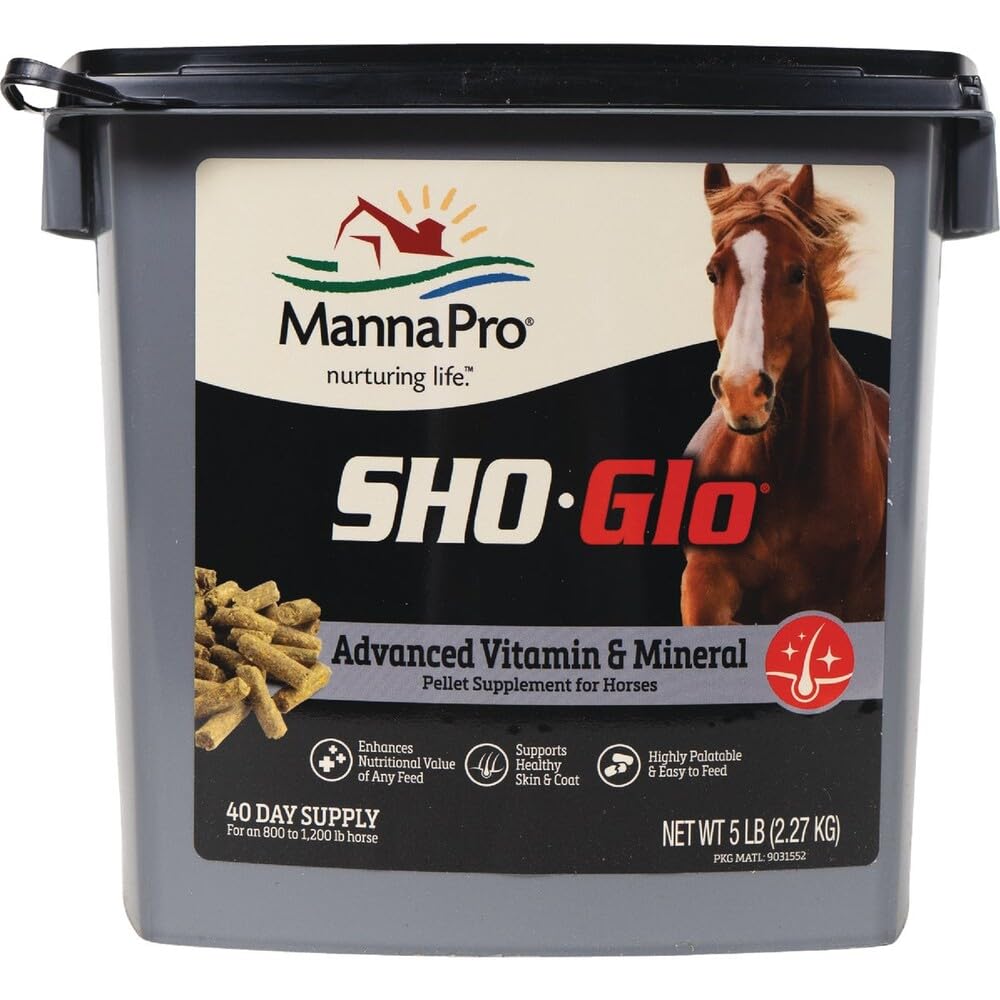
Manna Pro Sho-Glo is not a vitamin E supplement first — it is a complete vitamin and mineral pellet that includes vitamin E as part of a broader nutritional profile. Its primary reputation is built on improving coat shine, hoof quality, and overall condition rather than delivering therapeutic E levels. The 5-pound bag is larger than the budget E-specific options, reflecting its all-in-one formula.
Long-time users consistently report that Sho-Glo improves hoof thickness and coat gloss, with one owner describing a broodmare with lifelong poor feet finally growing thicker soles after months on this product. The pellet form does require soaking for horses that tend to sort or leave powdery residue, but most horses accept it readily when mixed with grain. The formula is NASC certified.
If your primary goal is strictly vitamin E repletion, Sho-Glo is not the right tool — its E content is not listed at a high enough inclusion to address deficiency. However, for horse owners looking for a general condition-building supplement that includes E along with biotin, zinc, and other coat-supporting nutrients, this is a proven herd standard.
Why we love it
- Proven results for coat shine and hoof quality
- NASC certified quality assurance
- Broad vitamin and mineral support in one pellet
Good to know
- Not a high-potency vitamin E supplement
- Pellets may stick to grain; soaking recommended
FAQ
How much vitamin E does a horse need daily?
Is natural or synthetic vitamin E better for horses?
Can I feed vitamin E supplement to a horse with metabolic syndrome?
Should all horses get selenium with their vitamin E?
Final Thoughts: The Verdict
For most horse owners seeking a balanced, daily equine vitamin e supplement, the winner is the Vita Flex Pro E & Selenium because its yeast culture base improves nutrient absorption and the moderate 1,000 IU per serving suits both maintenance and mild deficiency correction. If your horse needs high-potency E for a neurological condition without added sugar or starch, grab the Health-E Powder. And for a complete all-in-one mineral program that replaces five separate supplements with one pellet, nothing beats the Horse Guard concentrated formula.