
You fill the feeder, the birds scatter half of it on the ground, and within a week you are battling weeds sprouting from discarded hulls. That persistent cycle of waste, mess, and unwanted growth is the real daily frustration of feeding finches. The solution lies in selecting the right seed composition that finches actually consume completely, leaving your patio or yard clean and weed-free.
I’m Mo Mahin — the founder and writer behind Furric. I specialize in comparing the nutritional profiles, ingredient sourcing, and sprout potential of bird feed blends to help backyard birders make smarter, mess-free purchases.
After analyzing over a decade of owner feedback and nutritional data, I have compiled the definitive list of the best feed for finches that minimizes waste while maximizing the number of vibrant goldfinches and house finches visiting your feeder.
How To Choose The Best Feed For Finches
Finches have small, conical beaks specialized for hulling tiny seeds. The wrong blend — one loaded with millet, cracked corn, or wheat — gets tossed aside as inedible filler. The smart choice focuses on two primary ingredients: nyjer (thistle) seed and sunflower hearts. Selecting a blend that is 100 percent consumable or close to it saves money over time and keeps your feeding station clean.
No-Grow Seed vs Traditional Hulled Seed
The single biggest maintenance headache for finch feeders is the carpet of weeds that sprouts from discarded hulls. Nyjer seed is naturally heat-treated in its country of origin to sterilize it, but standard finch mixes with whole sunflower seeds or millet will germinate if they fall on moist soil. The most effective feed for finches uses shelled seeds — sunflower hearts and hulled nyjer — that cannot sprout. This completely eliminates the need to rake or pull sprouted weeds under the feeder.
Protein and Fat Content for Plumage and Energy
Finches, especially goldfinches during molting season, require a diet rich in oil and protein to maintain bright yellow plumage and high activity levels. Look for blends with a crude fat content of at least 15 percent and crude protein of at least 14 percent. Sunflower hearts naturally deliver around 50 percent fat, making them a dense energy source. Blends that rely too heavily on cheap grains like white millet or oats will leave finches undernourished and less likely to return.
Filler Ingredients to Avoid
Check the ingredient panel for red millet, white millet, cracked corn, wheat, oats, and flax. These are common filler seeds that larger birds like doves or sparrows may eat, but finches typically reject them. A bag that lists “millet” as the first ingredient is unlikely to satisfy a finch flock. The most targeted finch blends list nyjer seed and sunflower chips (hearts) as the first two ingredients, with no more than a small percentage of canary seed or rapeseed for variety.
Quick Comparison
On smaller screens, swipe sideways to see the full table.
| Model | Category | Best For | Key Spec | Amazon |
|---|---|---|---|---|
| Kaytee No Mess Finch Blend | No-Mess Premium | Zero cleanup under feeder | 100% consumable, no hulls | Amazon |
| Dr. Harvey’s Fabulous Finch Food | Holistic Premium | Complete nutritional variety | 15% crude protein, 18% crude fat | Amazon |
| Happy Wings Finch Blend | No-Grow Mid | USDA-approved quality assurance | High protein, no-grow seeds | Amazon |
| Better Bird Finch Food | Value Pick | Budget-friendly daily feeding | Corn-free and Milo-free formula | Amazon |
| Sweet Harvest Finch Food | Vitamin Enriched | Bright feathers and skin health | Triple cleaned, vitamin mineral added | Amazon |
In‑Depth Reviews
1. Kaytee No Mess Finch Seed and Nyjer Blend

The Kaytee No Mess Finch Blend solves the two biggest frustrations of finch feeding: wasted seed that rots on the ground and weeds sprouting from discarded hulls. This 8-pound bag contains only shelled seeds — nyjer and sunflower chips — which means every kernel is edible and nothing germinates. Finches, chickadees, and juncos consume the entire blend, leaving no pile of husks to sweep. With a 4.5-star average across thousands of reviews, it consistently earns praise as the only seed mix longtime birders will buy.
Birds attack this food aggressively, according to reviewers, and the lack of millet filler means you get exactly what finches want. The 8-pound format offers an efficient cost-per-pound for a hulled blend, especially compared to smaller premium bags. Because there are no hulls, ground-feeding doves and sparrows can clean up any scattered sunflower chips without leaving a trace. The bag is large enough to fill a standard tube feeder multiple times, reducing how often you need to restock.
The one trade-off: hulled seed can spoil faster if it gets wet, so keep this blend in a mesh feeder or use a weather guard to prevent moisture from clumping the sunflower chips. That small storage consideration aside, this is the most waste-free, high-conversion finch feed on the market for regular backyard use.
Why we love it
- Zero hulls mean zero mess and zero weed sprouts under the feeder
- Finches and chickadees consume every seed, reducing overall waste
- Large 8-pound bag offers strong value for a no-mess premium blend
Good to know
- Hulled seeds can clump if exposed to rain — use a covered feeder
- More expensive per pound than whole-seed blends with filler
2. Dr. Harvey’s Fabulous Finch Food

Dr. Harvey’s takes a holistic approach to finch nutrition by blending seeds, nuts, fruits, vegetables, and grains into a single 4-pound bag. The guaranteed analysis shows 15 percent crude protein and 18 percent crude fat, both significantly higher than standard grocery-store blends. This nutritional density supports molting finches and keeps their plumage vibrant. The resealable bag also features a sturdy zipper that protects freshness and keeps moisture out between refills.
Reviewers consistently note that finches leave their bowls empty when fed this mix — a strong sign of palatability. The ingredient list avoids artificial colors, flavors, and preservatives, and all components are sourced in the United States. Many users report that wild songbirds, including cardinals and doves, also show up for the variety. Because the blend contains whole foods rather than processed pellets, it mimics the natural foraging experience that keeps birds returning.
The main consideration is the price point: this is the most expensive option per pound on this list. Some birders use it sparingly, sprinkling a small amount on top of a more economical base seed to extend the bag. If you keep indoor finches or want a premium rotation for your outdoor feeder, the nutritional range and ingredient quality justify the investment.
Why we love it
- Highest crude protein and fat content on the list for peak avian health
- Includes fruits, nuts, and grains — not just seeds — for dietary variety
- Made in the USA with all-natural ingredients and a resealable bag
Good to know
- Premium price per pound makes it best used as a supplement or rotational feed
- Some seeds may sprout if they fall onto damp soil
3. Happy Wings Finch Blend Bird Food
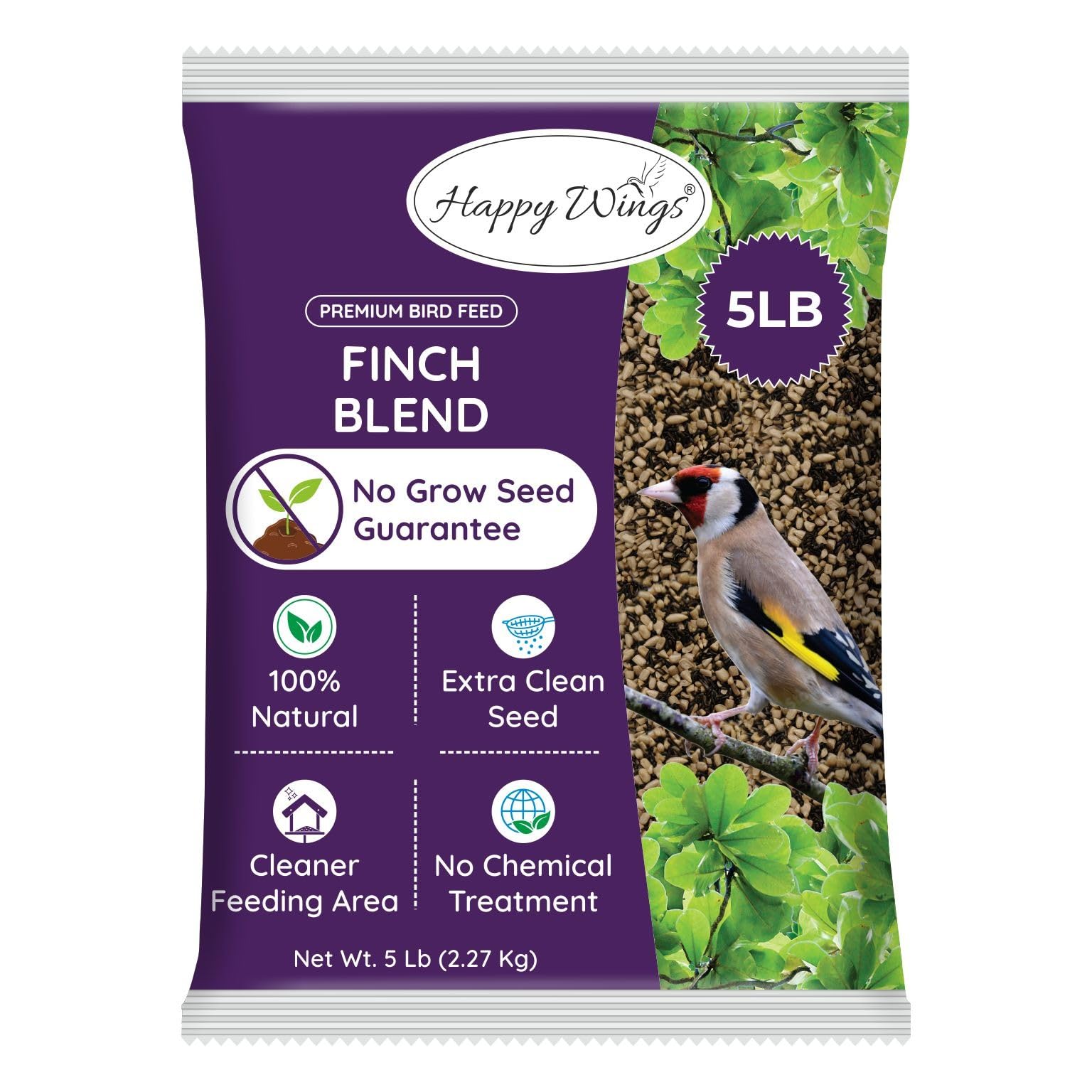
Happy Wings markets this 5-pound blend specifically around the dual value of high nutrition and zero germination. The seeds are processed in a USDA and BRC-GS approved facility, which provides an extra layer of quality assurance that commodity seed bags typically lack. The blend uses sunflower hearts and nyjer — the same core ingredients as the best no-mess options — but does so in a 5-pound format that fits tight budgets while still avoiding weed growth under the feeder.
Customer reviews highlight the immediate attraction of goldfinches and the absence of sprouts as the two main selling points. One long-time bird feeder noted that this is the best finch birdseed they have ever found specifically because of the no-grow property. The seeds meet the quality standards of the Wild Bird Feeding Institute, so you are getting a certified product rather than an unbranded bulk bin fill.
The primary criticism is the cost relative to the bag size. Several reviewers mention that the 5-pound bag empties quickly when filling two feeders, and the price per pound runs above the mid-range blends. This makes Happy Wings an excellent option if your main priority is eliminating weeds, but it may feel expensive as a daily staple if you feed a large flock.
Why we love it
- No-grow seeds keep your yard completely free of weed sprouts
- Certified by the Wild Bird Feeding Institute for ingredient quality
- High oil and protein content delivers strong energy for active finches
Good to know
- Price per pound is slightly higher than the Kaytee 8-pound bag
- 5 pounds may last only a week with two active feeders
4. Better Bird Finch Food, 4 Lb

Better Bird positions this 4-pound bag as an entry-level option that skips the cheapest fillers — corn and milo — while still keeping the price accessible. The formula attracts American goldfinches, purple finches, house finches, and buntings without relying on bulk grains that finches ignore. For budget-conscious birders who want to avoid the most common waste ingredients, this is a solid starting point. The smaller 4-pound bag also ensures the seed stays fresh before it runs out, preventing the stale dust problem that plagues larger bags in humid climates.
Reviewers confirm that local finches take to this blend quickly, and several mention mixing it into their wild bird feed to increase the finch count at their feeders. The all-natural, plant-based formulation appeals to those who want a simpler ingredient deck without synthetic additives. Because the bag is smaller, it is easy to store in a pantry or garage bin without dedicating significant space.
The trade-off for the lower price is that this is not a hulled or no-grow blend. The seeds still have their outer shells, so some waste will accumulate under the feeder, and you may see sprouting in damp conditions. If your main concern is mess-free feeding, the Kaytee or Happy Wings blends will serve you better. But for a straightforward, filler-free entry into finch feeding, this bag delivers reliable results.
Why we love it
- No corn or milo filler means finches get what they actually eat
- Small 4-pound bag prevents seed from going stale before use
- Attracts a wide range of finch species including buntings
Good to know
- Contains whole seeds with hulls — some waste and sprouting is expected
- Protein and fat percentages are not listed on the bag
5. Sweet Harvest Finch Bird Food, 4 lbs
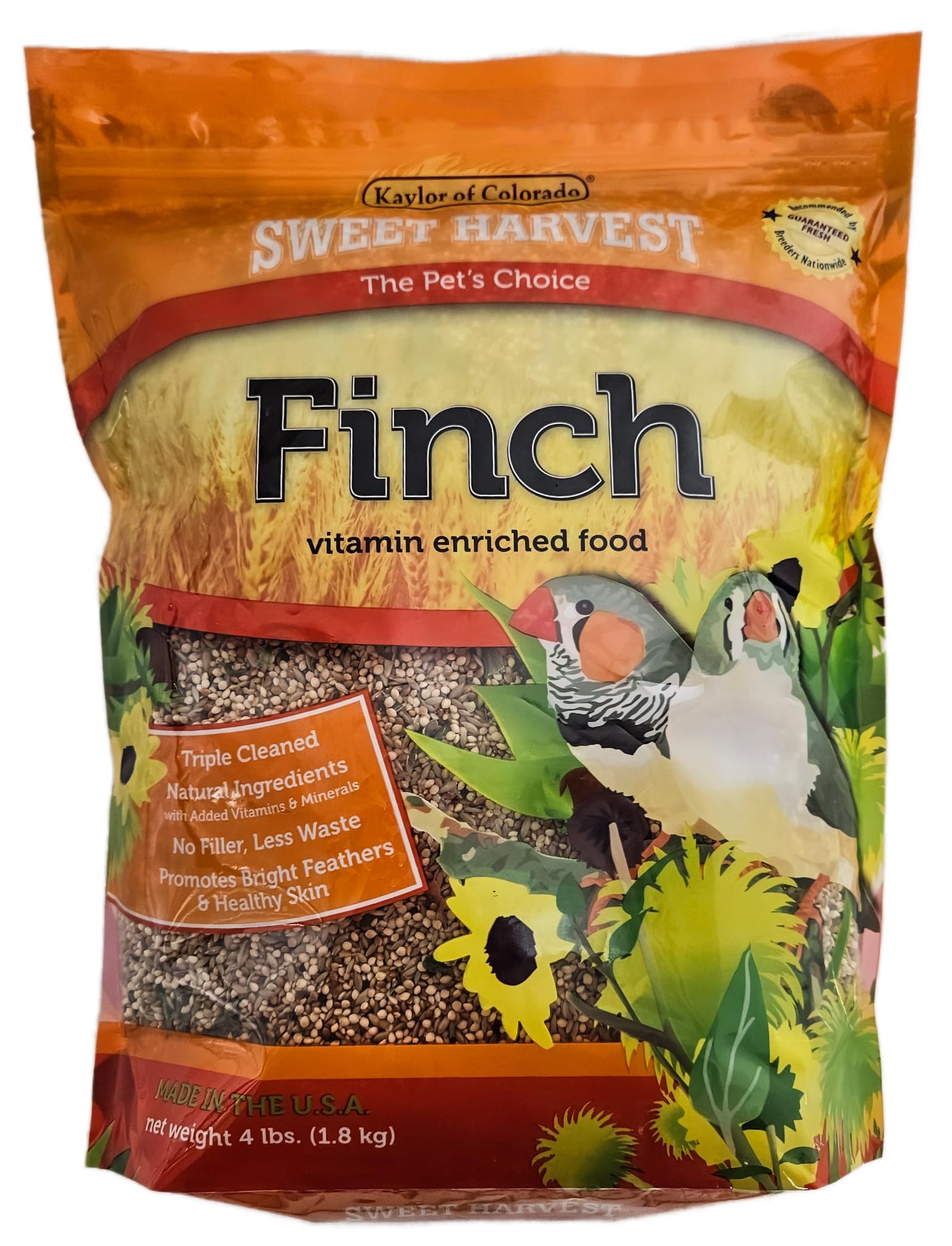
Sweet Harvest differentiates its 4-pound finch formula with a triple-cleaning process that removes dust, chaff, and debris before the seed reaches your feeder. This is particularly useful for indoor finch owners or those using mesh feeders where dust can accumulate and clog ports.
Owner reviews frequently mention zebra finch and society finch satisfaction, with one keeper noting that the seeds produce excellent sprouts for live feeding. The “Mixed Seed and Vegetable” flavor profile indicates the inclusion of dried vegetables alongside the seed base, which adds foraging interest. The triple-cleaning claim is backed by reviews comparing this brand favorably to other seed bags that appear dusty when poured into the dish.
At 4 pounds, the bag size aligns with the mid-range volume, but the price per pound sits higher than the Better Bird option. If you are primarily feeding outdoor wild finches, the vitamin enrichment is a nice bonus but not essential. However, for indoor finch owners or those who want a cleaner, dust-free pour, the Sweet Harvest formula adds real value through its processing and nutritional fortification.
Why we love it
- Triple-cleaned formula delivers virtually dust-free seed for indoor feeders
- Added vitamins and minerals specifically support feather brightness and skin health
- Zebra and society finches show strong preference for this blend
Good to know
- Price per pound is higher than basic whole-seed finch blends
- Not a no-grow formula — hulls and potential sprouting are part of the package
FAQ
What is the primary ingredient finches need in their feed?
Why do some finch blends say no-grow or waste-free on the label?
How often should I change the feed in my finch feeder during hot weather?
Can I attract finches without using nyjer seed in the blend?
What does triple-cleaned mean on a finch feed label?
Final Thoughts: The Verdict
For most gardeners, the best feed for finches winner is the Kaytee No Mess Finch Blend because it delivers 100 percent consumable, no-grow seed in a generous 8-pound bag at a fair value, eliminating both weed sprouts and feeder cleanup. If you want a broader nutritional profile with fruits, nuts, and higher fat content for vibrant plumage, grab the Dr. Harvey’s Fabulous Finch Food. And for a budget-friendly entry that skips the worst fillers like corn and milo, nothing beats the Better Bird Finch Food for getting started with zero filler waste.