
When your flock starts dropping feathers and their combs lose color, the clock is ticking. Molting is the most metabolically demanding phase in a laying hen’s life, requiring a dramatic shift in dietary protein and calcium to regrow feathers and maintain egg production. The wrong feed leaves birds bald, stressed, and vulnerable to illness.
I’m Mo Mahin — the founder and writer behind Furric. I’ve spent years comparing feed formulations, studying poultry nutrition data from extension services, and analyzing aggregated owner feedback to determine which products actually support hens through a hard molt.
Whether you need a complete layer ration or a concentrated supplement to boost protein mid-molt, this guide isolates the five most effective options that deliver measurable results. Finding the right best feed for molting chickens hinges on matching the protein percentage and calcium ratio to your flock’s current molt stage.
How To Choose The Best Feed For Molting Chickens
Molting chickens need roughly 20-22% crude protein to regrow feathers efficiently, compared to the 16% typical in standard layer rations. Feathers are over 85% protein, so a deficit here stretches the molt out by weeks and leaves hens looking ragged. Beyond protein, calcium and phosphorus ratios must remain balanced to support eggshell formation as production restarts.
Protein Percentage & Source Quality
The protein number on the guaranteed analysis matters, but so does the source. Animal-based proteins like dried mealworms, black soldier fly larvae, or fish meal offer a more complete amino acid profile than plant-only proteins. For a hard molt, look for feeds or supplements delivering at least 20% protein with a lysine and methionine breakdown that supports keratin formation.
Supplement vs. Complete Feed
A complete layer feed like Purina Layena provides balanced nutrition including calcium for shells, but its protein sits around 16-17%. During active molting, you can either switch to a higher-protein complete feed or keep your current layer ration and add a concentrated supplement such as dried mealworms or BSFL to push the overall protein intake higher. The supplement route gives you precise control over the protein spike without disrupting calcium ratios.
Calcium-to-Phosphorus Ratio
Feather regrowth consumes phosphorus, while eggshell production demands calcium. A ratio near 2:1 calcium to phosphorus is ideal. If you oversupplement calcium without adjusting phosphorus, you risk soft shells when egg production resumes. Products with added oyster shell or a known calcium percentage above 4% should be paired with a phosphorus source during molt.
Quick Comparison
On smaller screens, swipe sideways to see the full table.
| Model | Category | Best For | Key Spec | Amazon |
|---|---|---|---|---|
| Purina Layena | Complete Feed | Daily layer nutrition + molt support | 16% Protein + Marigold Extract | Amazon |
| Grubs Delight BSFL | Supplement | High-calcium molt recovery | 45% Protein / 6% Calcium | Amazon |
| hatortpet Mealworms | Supplement | Budget protein boost | 5lb Non-GMO Mealworms | Amazon |
| I LOVE WORMS Mealworms | Supplement | Premium protein for feather regrowth | 51%+ Insect Protein | Amazon |
| FCI GRUBS Mealworms | Supplement | Organic protein + immune support | 5LB Premium Non-GMO | Amazon |
In‑Depth Reviews
1. Purina Layena

Purina Layena delivers a nutritionally complete base for laying hens entering a molt. Its 16% protein level is lower than a dedicated molt feed, but the added marigold extract provides xanthophylls that keep egg yolks rich while the Oyster Strong System supplies calcium for shell integrity. This creates a stable foundation that you can augment with high-protein supplements during peak feather regrowth.
The freshly ground grains from North American farms offer digestible carbohydrates that sustain energy without causing digestive upset. Vitamin A, D, and E levels are specifically calibrated to support reproductive health and immune function, both of which dip during the stress of molting. Customers report that hens maintain body condition and resume laying sooner when Layena is the base ration.
No artificial preservatives, antibiotics, or growth hormones are added, making it a clean choice for keepers who prioritize ingredient transparency. The crumble form suits both standard and bantam breeds, and the 10-pound bag is easy to handle for small to medium flocks. Pair it with a protein supplement during hard molt for best results.
Why we love it
- Balanced calcium with Oyster Strong System for shells
- Marigold extract enhances yolk color naturally
- Trusted brand with consistent formulation
Good to know
- Protein at 16% is too low as a standalone molt feed
- Smaller bag costs more per pound than bulk sizes
- Not formulated specifically for molt recovery
2. Grubs Delight Dried Black Soldier Fly Larvae
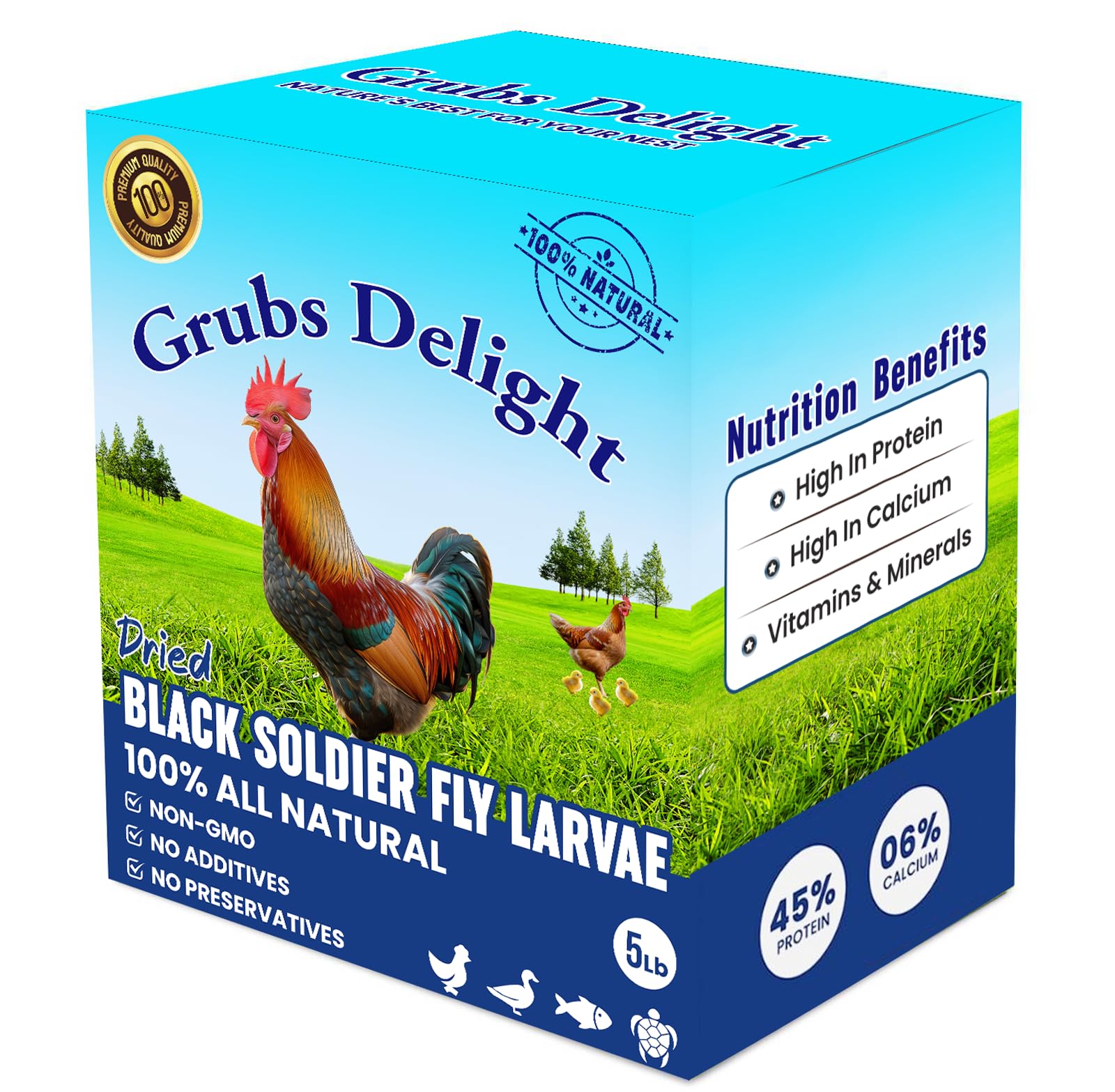
Black soldier fly larvae offer a nutritional profile that directly targets the two biggest needs during a molt: protein for feathers and calcium for shells. The 45% crude protein and 6% calcium content in these Grubs Delight larvae crush both mealworms and standard layer feeds in supporting regrowth. Hens hitting a hard molt will recover feathers noticeably faster when these are added daily.
The calcium density is the standout metric here — 85 times more calcium than an equivalent weight of mealworms. This makes BSFL a dual-purpose supplement that reduces the need for separate oyster shell or limestone grit during molt. The natural chitin in the exoskeleton also provides prebiotic fiber that supports gut health, which is often compromised during the stress of feather loss.
Sourced from traceable pre-consumer food waste and never from China, these larvae come in a resealable bag inside a protective outer carton. The 5-pound bulk pack delivers long-lasting value for multi-flock setups. Owners consistently note that even picky hens devour them, and the results in feather gloss and shell strength are visible within two weeks.
Why we love it
- Extremely high calcium content supports rapid shell recovery
- Sustainable sourcing from traceable food waste streams
- Resealable packaging locks in freshness for bulk storage
Good to know
- Whole larvae may need crushing for smaller bantam breeds
- Higher cost per pound than standard mealworms
- Not a complete feed — must be paired with layer ration
3. hatortpet Dried Mealworms
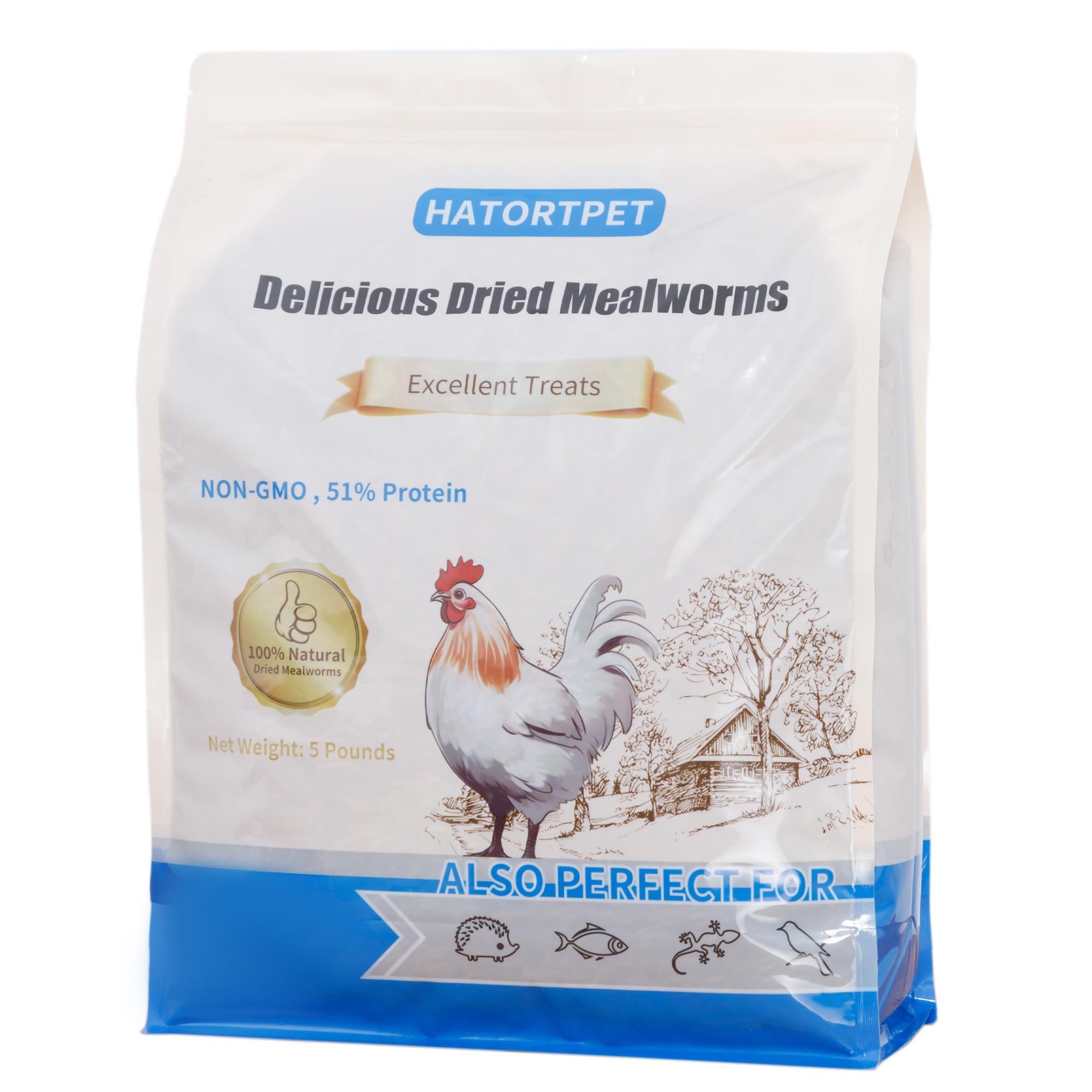
When your flock is mid-molt and you need a simple, affordable protein boost without overhauling your feeding system, hatortpet’s 5-pound bag of dried mealworms delivers exactly that. These non-GMO mealworms provide a concentrated source of crude protein that you can sprinkle directly over your existing layer feed. The high protein content helps hens channel amino acids into feather growth rather than muscle catabolism.
The mealworms are raised on a nutritious diet of brans, flours, and leftover fruits and vegetables, producing a supplement free from additives. The resealable zip-top bag design is practical for daily feeding — just scoop, scatter, and seal. Foraging behavior naturally increases when hens scratch for worms, which provides mental enrichment during the irritable molt period.
While mealworms are lower in calcium compared to BSFL, this bag’s price point makes it accessible for flock owners on a tight budget. Combine it with a calcium source like crushed oyster shell to cover both bases. Customers repeatedly cite the price-to-volume ratio as the primary reason for repeat purchases, with hens showing clear preference over standard grain treats.
Why we love it
- Excellent price per pound for bulk mealworms
- Non-GMO with no additives or preservatives
- Encourages natural foraging behavior during molt
Good to know
- Lower calcium content requires separate calcium supplementation
- Some bags may contain broken pieces or dust
- Protein percentage not listed on the bag’s guaranteed analysis
4. I LOVE WORMS Dried Mealworms
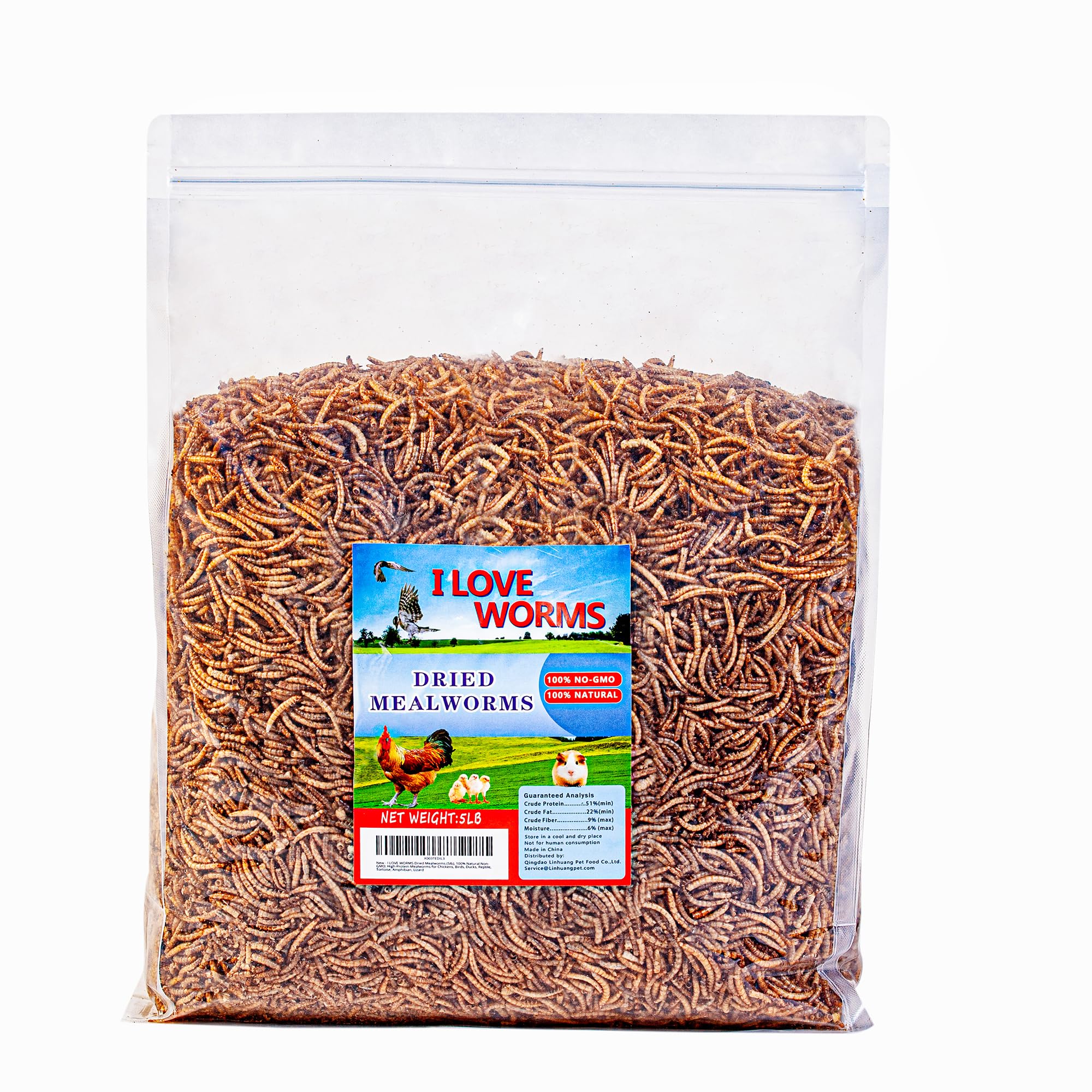
I LOVE WORMS positions its dried mealworms as a premium protein supplement, and the 51%+ insect protein content justifies the positioning. This level of crude protein is among the highest available in a dried mealworm product, making it a powerful tool for accelerating feather regrowth during a hard molt. Hens consuming these show faster pin feather development and reduced bald patches compared to lower-protein alternatives.
The microwave drying technology used by I LOVE WORMS preserves the nutritional integrity of the mealworms without charring or nutrient loss. The worms are fed carrots, bran, and vegetables in a controlled environment, resulting in a clean product that passes veterinary certification standards. The 5-pound bag comes in packaging designed for long-term storage, which is critical when buying in bulk for a molting flock.
While the price per bag is higher than generic mealworm options, the protein density means you can feed less volume to achieve the same amino acid intake. This product is best suited for keepers who want a targeted protein tool rather than a general treat. Combine it with a complete layer feed to create a molt-specific ration that pushes overall protein above 20% without disrupting mineral balance.
Why we love it
- Over 51% insect protein accelerates feather growth
- Microwave drying preserves nutrients effectively
- Veterinarian certified with clean ingredient sourcing
Good to know
- Higher cost per bag than basic mealworm options
- Bag design may benefit from stronger zipper seal
- Protein percentage not always visible on front label
5. FCI GRUBS Dried Mealworms
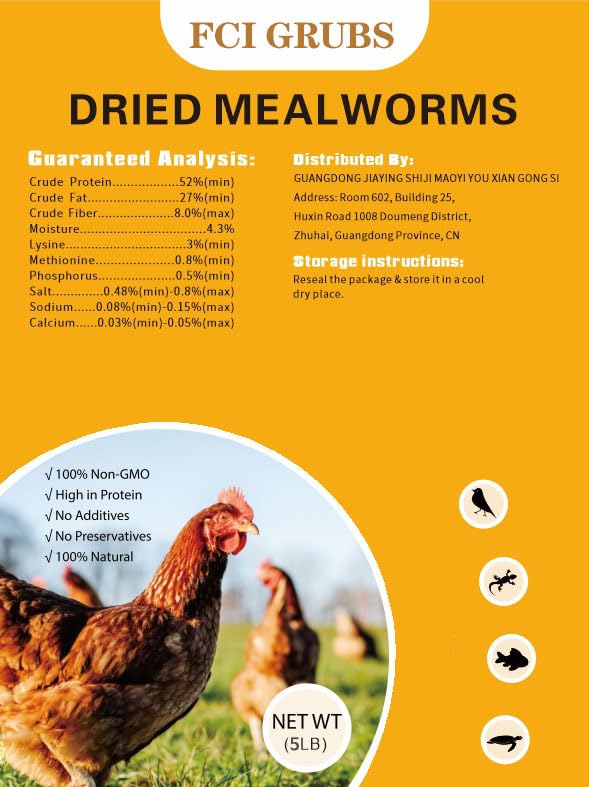
FCI GRUBS emphasizes organic production and a limited-ingredient philosophy that appeals to keepers who want to avoid any synthetic inputs during molt. These dried mealworms contain no additives, no preservatives, and are certified non-GMO, making them a clean protein source for hens whose immune systems are already under pressure from feather loss. The protein content supports feather follicle activation and new quill development.
The resealable zipper bag is designed to maintain crispness and prevent spoilage over extended storage. A 5-pound bag at this price tier offers strong value for keepers who feed mealworms daily during the molt window. The product is explicitly recommended for laying hens, turkeys, and game birds, giving it versatility across mixed-species flocks that may all be molting simultaneously.
FCI GRUBS recommends feeding mealworms at 5-10% of the total daily diet, which is the correct proportion to avoid protein overload while still delivering a meaningful boost. Customers specifically note improved egg size and quality after introducing these worms, indicating that the amino acid profile supports both feather and reproductive tissue repair. This is a solid mid-range option that balances cost with clean-label sourcing.
Why we love it
- Organic non-GMO production with no synthetic additives
- Strong value for a 5-pound bag at this price tier
- Improves egg size and quality per customer feedback
Good to know
- Bag shape may require careful storage to avoid crushing
- Limited ingredient list means no added calcium
- Some bags arrive with variable worm size consistency
FAQ
How much extra protein do molting chickens need daily?
Can I feed only mealworms during a hard molt?
Why are black soldier fly larvae better than mealworms for molt?
Should I add oyster shell if I feed BSFL during molt?
How long does a typical molt last with proper nutrition?
Final Thoughts: The Verdict
For most keepers, the best feed for molting chickens winner is the Purina Layena as your complete base ration, paired with Grubs Delight BSFL for the protein and calcium spike during active molt. If you want a budget-friendly protein boost, grab the hatortpet Dried Mealworms. And for premium protein density that drives the fastest feather regrowth, nothing beats the I LOVE WORMS Mealworms.