
A goat that respects a fence is a goat that stays put. The wrong fence means daily repairs, escaped animals wandering into trouble, and frustrated mornings spent chasing livestock through the neighbor’s pasture. Goats are natural escape artists—they test horizontal tension, lean on vertical wires, and exploit every sagging section until a gap opens. A fence built for goats must neutralize that behavior before it becomes a habit.
I’m Mo Mahin — the founder and writer behind Furric. I’ve spent years cross-referencing galvanized wire gauges, evaluating electric netting joule requirements, and studying owner-reported failure points across every goat fencing system available from major manufacturers.
Whether you need a mobile grazing enclosure or a permanent perimeter barrier, choosing the right fence for goats comes down to wire strength, mesh spacing, and electrification strategy.
How To Choose The Best Fence For Goats
Goats push, climb, and squeeze. A fence that works for cattle or horses will fail within weeks with goats. Focus on three pillars: the physical barrier strength, the electrified deterrent, and the portability needed for rotational grazing systems.
Wire Gauge and Mesh Configuration
Thicker wire resists deformation when goats lean or rub against it. Look for 12.5-gauge to 14-gauge steel wire for permanent installations. Mesh spacing matters more than total height with goats because they don’t jump as much as they squeeze. A tapered mesh design with smaller openings at the bottom prevents kids from wriggling through and blocks ground predators. A 4-inch x 4-inch mesh allows goats to push their heads through; a 2-inch x 4-inch or 2-inch x 3-inch mesh at the bottom line is safer for permanent woven wire setups.
Electric Netting Voltage and Joule Requirements
Portable electric netting relies on an energizer delivering at least 0.25 joules per 164-foot roll. Anything weaker lets goats test the fence and learn they can push through without consequence. The lowest electrified strand should sit no more than 6 inches off the ground to deliver the first memorable shock when a goat sniffs the bottom line. A non-electrified bottom strand prevents vegetation from shorting the fence while still teaching the herd to respect the boundary.
Galvanization and Corrosion Resistance
Goat fencing lives outdoors through rain, snow, and soil moisture. Hot-dip galvanized steel creates a thicker zinc coating than electro-galvanized wire, offering decades of rust resistance. For coastal or high-humidity regions, a heavier zinc coating prevents the wire from becoming brittle and snapping under tension. Cheaper fencing skips the hot-dip step to cut costs, but the savings disappear when wires fail two seasons in.
Quick Comparison
On smaller screens, swipe sideways to see the full table.
| Model | Category | Best For | Key Spec | Amazon |
|---|---|---|---|---|
| RentACoop 42″ Electric Fence | Electric Netting | Premium go containment | 168′ x 42″, 0.25J minimum energizer | Amazon |
| Premier 1 ElectroNet 35″ | Electric Netting | Rotational grazing | 164′ x 35″, 9 strands, 8 electrified | Amazon |
| Starkline All-Purpose 35″ | Electric Netting | Fiberglass post durability | 164′ x 35″, 14 fiberglass posts | Amazon |
| PPOLB Electric Fence Netting | Electric Netting | Budget entry-level electric | 164′ x 42.5″, 11 horizontal strands | Amazon |
| YESON Farm Fence 5ft | Woven Wire | Permanent perimeter barrier | 5′ x 164′, 14-gauge hot-dip steel | Amazon |
| Mymawzey Livestock Fence 4ft | Woven Wire | Garden and deer protection | 4′ x 164′, galvanized steel wire | Amazon |
| Premier 1 PoultryNet 48″ | Electric Netting | Tall predator deterrent | 164′ x 48″, 12 strands, 11 conductive | Amazon |
| Starkline Premium Poultry 48″ | Electric Netting | Braided strand mobility | 100′ x 48″, 11 fiberglass posts | Amazon |
| Starkline 48″ Netting Solar Kit | Electric Netting Kit | All-in-one solar solution | 164′ x 48″, S400 solar energizer included | Amazon |
In‑Depth Reviews
1. RentACoop Electric Anti-Predator Goat Fence
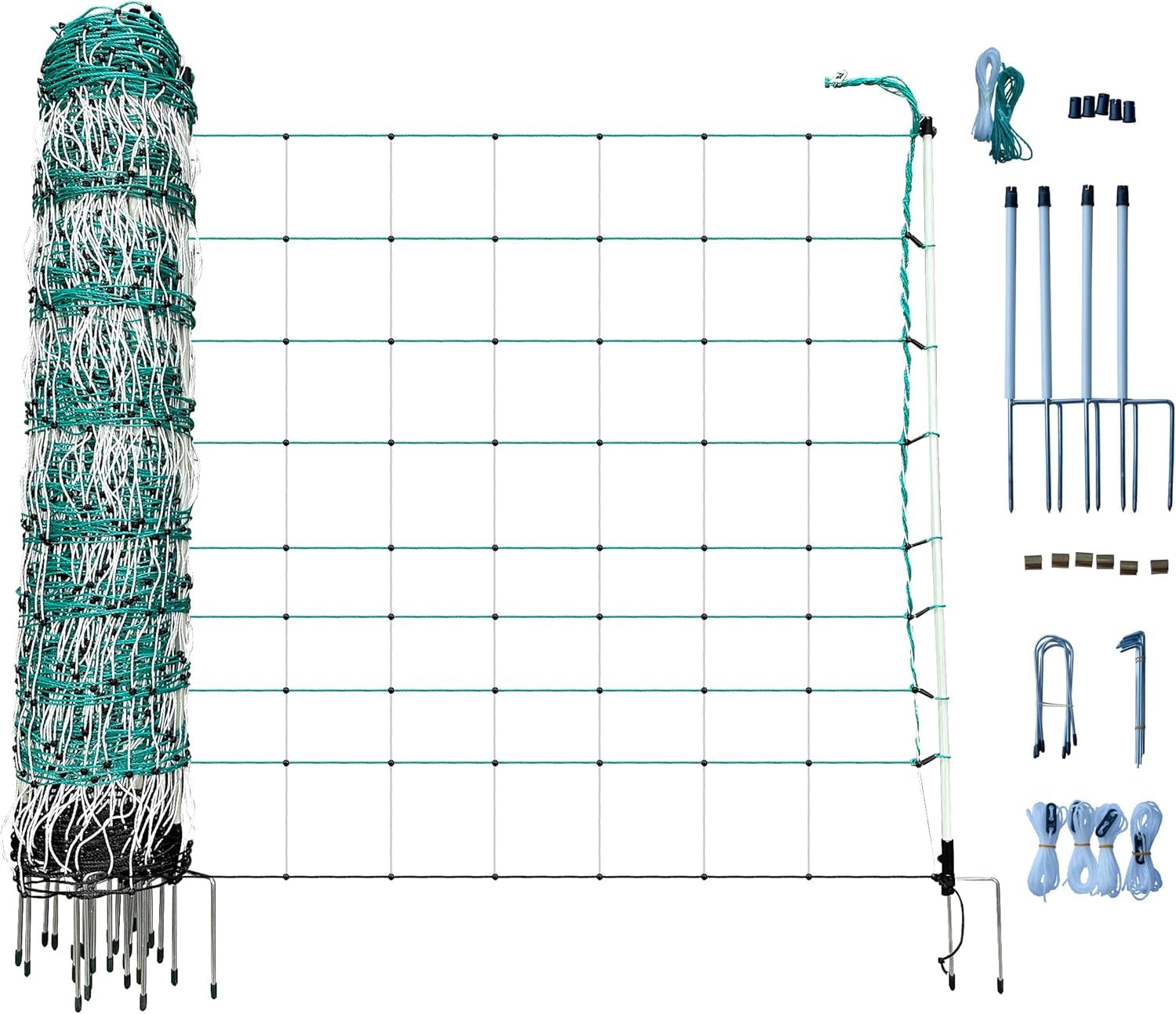
RentACoop designed this 42-inch electric netting specifically for goats and larger livestock, and it shows in the thoughtful construction. The pre-fastened fiber-reinforced plastic posts placed every 12 feet provide a rigid framework that resists the constant leaning behavior goats display. Triple-braided stainless steel wire maintains conductivity even after repeated folding and moving, which matters when you rotate grazing paddocks weekly. The 168-foot roll creates over 1,700 square feet of enclosed space, enough for a small herd to access fresh forage.
Setup requires a 0.25-joule low-impedance energizer and proper grounding, but the included corner guylines and mini-posts for uneven ground solve the two biggest complaints about electric netting: sagging and ground shorts. Owners using this fence with Boer and Pygmy goats report zero escapes after the animals learned the boundary. In wet East Kentucky weather, one reviewer noted the fence held four goats and kept dogs out for six months without a single failure.
The middle section can droop on long spans if tension isn’t maintained, and the clip ends require a 12.5-gauge wire connector for proper joining. Neither issue compromises containment once addressed during installation. A separate gate handle kit is sold separately for daily access, a minor inconvenience for a fence that otherwise performs at a premium level.
Why we love it
- Double-spike metal stakes anchor securely even in loose soil
- Corner guylines and mini-posts included for variable terrain
- Withstands severe weather without losing structural integrity
Good to know
- Energizer, ground rod, and gate handle sold separately
- Middle sections may sag without tensioning adjustments
2. Premier 1 ElectroNet 35″ x 164′

Premier 1 has supplied portable electric netting for over 40 years, and the ElectroNet 35-inch system reflects that long refinement cycle. The 164-foot roll comes with PVC line posts pre-installed every 12.5 feet, eliminating the time spent threading posts through mesh panels. Eight of the nine horizontal strands carry current, with the lowest strand left non-electrified to prevent the fence from grounding out when vegetation touches the bottom line. The plastic struts reduce sagging between posts better than unbraided netting alternatives.
Ranchers rotating goats and sheep on weekly cycles find this fence hits the sweet spot between portability and containment. An owner moving goats one to two times per week confirmed the setup takes under 15 minutes once you develop the routine. The metal spike tips on the PVC posts drive into average soil easily, though rocky or frozen ground may require a hammer or a switch to rebar stakes at corners. Rams during breeding season can tangle with the mesh, so managing horned animals separately is a practical precaution.
Multiple rolls connect together for larger enclosures without voltage drop if the energizer output is scaled accordingly. Buyers note the fiberglass poles have a slight bend under heavy wind load, but the fence stays functional. A quality energizer with at least 0.15 joules per roll ensures the shock is memorable enough to retrain any goat that tests the boundary after a storm.
Why we love it
- Lowest non-electrified strand prevents ground shorts from vegetation
- Industry-standard netting backed by decades of field use
- Light enough for one person to carry and reposition
Good to know
- PVC posts less rigid than fiberglass alternatives
- Metal pins may need sharpening for frozen ground
3. Starkline All-Purpose Utility Netting 35″ x 164′

Starkline differentiates this utility netting from competitors by using fiberglass line posts instead of the standard PVC tubes that sag and bend under heavy goat pressure. Fourteen posts with galvanized double-spike stakes anchor the 35-inch tall, 164-foot mesh in a way that resists the lateral pushing goats use to test fence integrity. The polyester mesh arrives fully assembled, so the labor is limited to unrolling and standing the fence up along your intended perimeter. A minimum 0.15-joule energizer is required per roll, and a grounding rod plus connector cables must be purchased separately.
Owners using this fence for sheep and goats confirm the mesh contains lambs and keeps predators at a distance without constant patrolling. The fiberglass posts hold their shape after repeated moves, unlike PVC alternatives that crack at the base after a season of ground insertion. Corner stakes from the factory can be underwhelming for tensioning larger enclosures, but adding zip ties to a permanent post solves the stability issue quickly. The netting tangles easily if laid out carelessly, so unrolling in a straight line pays off during setup.
For homesteaders managing gardens, beehives, and goats simultaneously, the 35-inch height creates an effective barrier for most goat breeds while remaining low enough to step over during pasture rotation. Owners with smaller goat breeds like Pygmies and Nigerians report zero escapes after a single training session with the energizer active.
Why we love it
- Fiberglass posts resist bending where PVC fails
- Galvanized double-spike stakes hold well in varied soil
- Arrives pre-assembled for immediate setup
Good to know
- Corner stakes alone may not provide enough tension
- Tangling during setup requires careful unrolling
4. PPOLB Electric Fence Netting 42.5″ x 164′
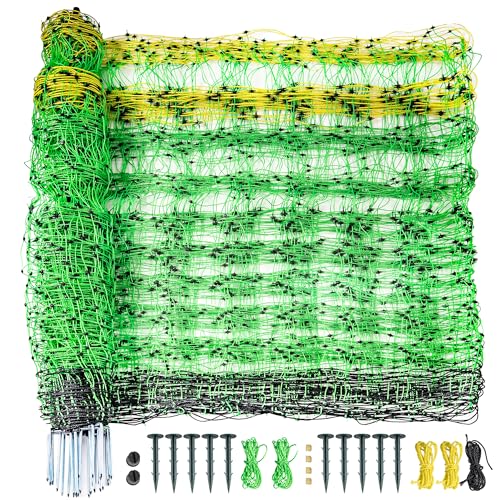
PPOLB offers a 42.5-inch tall electric netting bundle at a price point that brings portable electrified containment within reach for small homesteaders. The netting includes 11 horizontal strands with nine conductive lines and glass fiber rods embedded in the posts for structural support. Triple-braided stainless steel wire runs through the mesh to maintain electrical continuity across the 164-foot span. The 0.25-joule energizer recommendation aligns with industry standards for single-roll goat enclosures.
Buyers using this fence for goats confirm the bottom non-electrified line prevents ground shorts effectively, and the height stops most goat breeds from jumping or climbing over. An owner running a 70-pound dog on the same fence reported the animal respected the boundary after a single touch, which suggests the voltage delivery is consistent when paired with a proper energizer. Step-in posts provide adequate support for daily moves, though the bottom line can pop off during setup until the fence is fully tensioned.
Rolling this fence out on hilly terrain requires extra care because the panels don’t conform to uneven ground as tightly as premium brands. One owner reported a post breaking within the first hour and goats escaping, indicating the glass fiber rods are less durable than fiberglass or rigid PVC in rocky soil. The value proposition is strong for level, well-maintained pasture, but rocky or sloped landscapes may demand a more resilient system.
Why we love it
- Bottom non-electrified line prevents vegetation shorts
- Height suitable for standard goat breeds
- Significant cost savings over premium alternatives
Good to know
- Fiberglass posts can snap in hard or rocky soil
- Hillside performance requires extra staking
5. YESON Farm Fence 5ft x 164ft
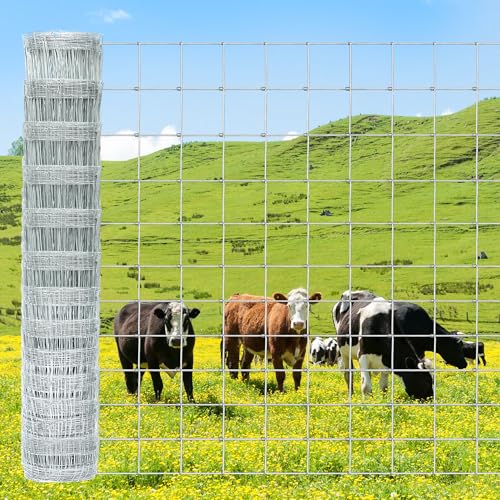
YESON manufactures this 5-foot tall woven wire fence from 14-gauge hot-dip galvanized steel, making it a legitimate permanent barrier for goats that have no respect for electric netting. The tapered mesh design places smaller openings at ground level to block kids and ground predators while wider openings at the top reduce material cost without compromising vertical containment. The hot-dip galvanized surface resists rust far better than electro-galvanized wire, a critical factor for fences installed near water sources or in high-humidity regions.
The 14-gauge wire is thick enough to resist the deformation caused by goats rubbing against it daily, but it is not a heavy-duty stock fence in the 12.5-gauge range. Owners using this for sheep found it holds up well with T-posts placed every 5 feet, and the graduated mesh kept rabbits out of vegetable gardens while blocking deer. The 5-foot height exceeds the jumping capability of most goat breeds, making it an effective psychological barrier even before the wire is tensioned.
Buyers seeking a structure that feels rigid against willful trespassers may find the wire gauge too light for aggressive containment. One owner described the fence as flimsy when used as a security barrier for human intruders, but that critique misses the intended agricultural application. For standard goat grazing, the strength-to-price ratio works well when posts are spaced properly and the wire is stretched taut.
Why we love it
- Tapered mesh stops small animals at the bottom
- Hot-dip galvanization provides long rust resistance
- 5-foot height deters most goat escape attempts
Good to know
- 14-gauge is lighter than premium stock fence wire
- Not suitable as a standalone security fence without tighter mesh
6. Mymawzey Livestock Fence 4ft x 164ft

Mymawzey offers a 4-foot tall woven wire fence designed around galvanized steel wire with a hot-dipped treatment aimed at preventing rust and maintaining structural flexibility. The advanced weaving technology uses twisted connections between vertical and horizontal lines, reducing the risk of welds breaking under the repetitive pressure goats apply along the perimeter. The 164-foot roll covers typical garden and small pasture boundaries without the need for splicing multiple panels together.
Owners using this fence to protect gardens from deer confirm the wire stops animal intrusions when attached to sturdy T-posts spaced every 5 feet. The mesh holes are sized differently at the top and bottom to block small animals from slipping through the lower section. One reviewer described the wire as somewhat light-duty, appropriate for garden exclusion rather than containing active, high-pressure goat herds that test boundaries intentionally. Another owner reported deer running into the fence without causing serious damage, suggesting the tensile strength exceeds typical garden netting.
The 4-foot height works for standard goats but taller or more athletic breeds may clear the top without a hot wire offset. The fence weighs 50.7 pounds, making it manageable for solo installation, but the lighter wire gauge means goats can push gaps open if posts are spaced too wide. For a bargain-priced woven option that handles garden and passive containment duties, this fence fills the role adequately.
Why we love it
- Tapered mesh blocks small animals at the base
- Hot-dipped galvanization adds corrosion protection
- Lightweight for solo installation
Good to know
- Wire gauge is light for persistent goat pressure
- 4-foot height may not contain athletic goat breeds
7. Premier 1 Portable PoultryNet 48″ x 164′
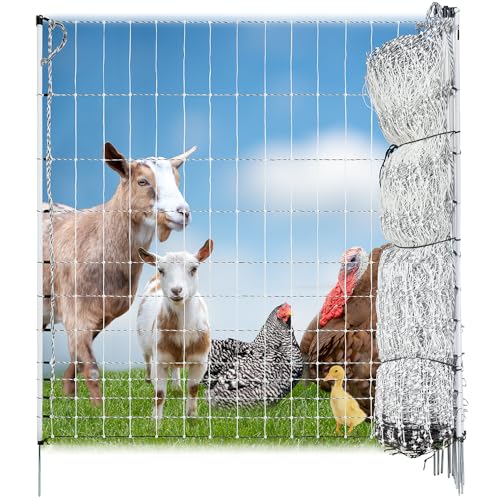
Premier 1 brings 48 inches of height to this portable netting, making it the best choice for goat owners facing coyote and dog pressure at night. The 12 horizontal strands include 11 conductive wires, with vertical string lines spaced every 3 inches to close gaps that smaller animals could exploit. Built-in single-spike line posts come pre-installed every 10 feet, reducing assembly time compared to netting systems that require post threading.
Buyers using this fence for goats and guard dogs confirm the 48-inch height discourages predators from attempting a jump, while the density of conductive strands ensures every point of contact delivers a shock. The netting takes less than 15 minutes to set up from the box, and no tools are required for assembly—a genuine advantage when you need a fence up before sunset.
The primary concern some owners raise is the fence’s effectiveness on hilly terrain, where the netting can sag and short against wet ground. Premier 1 addresses this through support posts sold separately, but the base kit requires relatively level pasture to perform optimally. A raccoon chewed through several wires in one owner’s experience, so rural settings with persistent chewing predators may require additional protection such as a hot wire offset at the top.
Why we love it
- 48-inch height blocks coyotes and large dogs from jumping
- 2-inch x 3-inch vertical spacing prevents kid escape
- Tool-free setup under 15 minutes out of the box
Good to know
- Requires level terrain or extra support stakes
- Wire vulnerable to chewing predators in remote areas
8. Starkline Premium Plus+ Braided Electric Poultry Netting 48″ x 100′

Starkline’s Premium Plus+ netting swaps the standard twisted strand construction for braided strands, a design choice that reduces snagging when the fence is dragged across the ground during rotational moves. The braided construction exposes more conductive wire surface to the animal upon contact, increasing the shock intensity compared to twisted alternatives where the wire is buried inside the insulation. Eleven fiberglass posts with galvanized double-spiked stakes provide structural support that surpasses the PVC posts found on competitors’ comparably priced rolls.
Owners moving goats and geese across 5 acres report the fence unpacks, lays out, and stands up faster with two people than single-person setups, though solo installation is still feasible. The 48-inch height with 2-inch x 3-inch spacing is effective for standard goat breeds, and the blue clips woven into the mesh create a visual barrier that chickens and ducks recognize as a boundary. One owner noted that sagging can cause the fence to short against the ground if the terrain slopes, requiring periodic tension checks.
The 100-foot length is shorter than the typical 164-foot roll, which works well for small paddocks and rotational cells but limits perimeter size for large herds. The price per linear foot is higher than non-braided alternatives, but the snag reduction alone justifies the premium for owners who move their fence weekly. A baby goose died after tangling in the mesh, so this netting requires daily supervision for newly hatched or very small livestock.
Why we love it
- Braided strands resist snagging during fence moves
- More exposed conductor improves shock delivery
- Fiberglass posts with double-spike stakes for stability
Good to know
- 100-foot length limits large-perimeter applications
- Tangling risk for very small animals requires supervision
9. Starkline 48″ x 164′ Premium Electric Poultry Netting Solar Kit
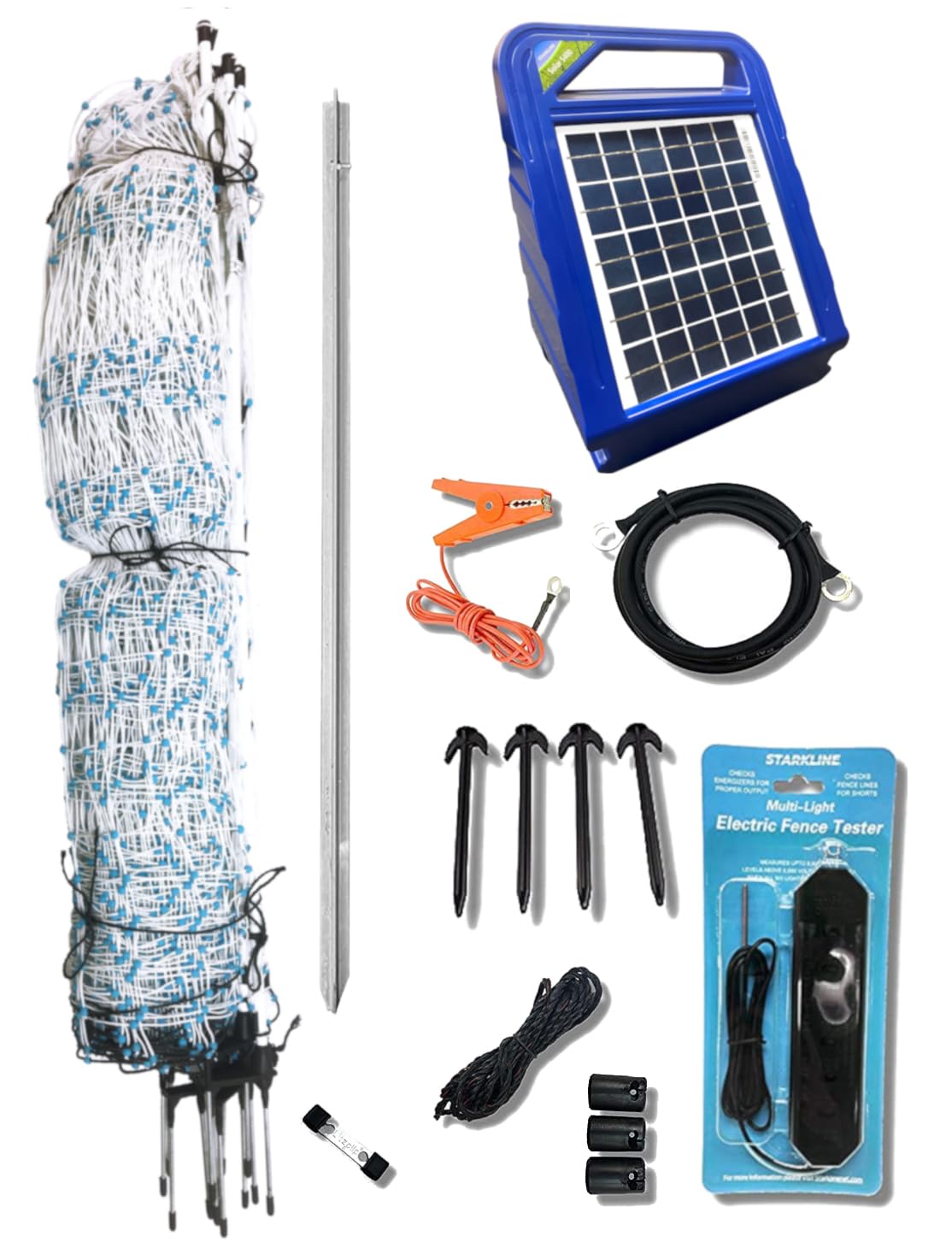
Starkline eliminates the separate shopping for energizer, ground rod, and connectors with this all-in-one solar kit that pairs the 48-inch x 164-foot poultry netting with the S400 solar energizer. The comprehensive package includes the fence tester, grounding rod, and connector cables, delivering everything needed to establish an electrified enclosure in under 45 minutes. The S400 draws energy from an integrated solar panel, removing the dependency on AC outlets or battery replacements for remote pasture locations.
Owners running goats, chickens, and ducks in the same enclosure confirm the fence charges effectively through overcast conditions and still delivers a memorable shock. One reviewer reported the fence contained goats, chickens, and ducks after a single training session, with the solar energizer maintaining consistent voltage even during rainy weeks. The 48-inch height and 2-inch x 3-inch mesh spacing block ground predators while keeping goats from testing the boundary line. The dog chewed through part of the mesh in one owner’s experience, requiring manual repair with the included kit.
The pre-purchase information provided by the manufacturer is sparse, leading some buyers to underestimate the setup effort required. Multiple owners reported spending hours preparing the ground and adjusting posts before the fence was operational, contradicting the 45-minute claim. Solar output in heavily shaded locations may provide insufficient voltage for full containment, and the fiberglass poles can flex under heavy wind loads. For remote grazing applications where AC power is unavailable, this kit solves the infrastructure problem but demands realistic expectations around installation time.
Why we love it
- Complete package with solar energizer, ground rod, and tester
- Works without access to AC power or battery replacements
- 48-inch height with tight mesh for predator deterrence
Good to know
- Setup time often exceeds the advertised 45 minutes
- Solar charging is less effective in shaded or northern latitudes
FAQ
How high should a fence be to keep goats in?
What wire gauge is best for permanent goat fencing?
Can I use a poultry netting fence for goats?
How often should I move portable electric goat fencing?
Why are goats escaping my electric fence?
Final Thoughts: The Verdict
For most goat owners, the best fence for goats is the RentACoop 42-inch Electric Fence because it combines the 42-inch height most breeds need with double-spiked FRP posts that stay upright in variable terrain and triple-braided wire that maintains conductivity after repeated moves. If you need a permanent woven perimeter at a lower investment, the YESON Farm Fence 5ft offers hot-dip galvanized 14-gauge steel with tapered mesh for small animal defense. And for remote pasture without power access, nothing beats the Starkline 48-inch Solar Kit for its all-in-one convenience, despite the longer installation time.