
Watching your fish’s fins turn milky, fray at the edges, or shrink back toward the body is a sinking feeling—fin rot is often the first visible sign that something is wrong inside your tank. Left unchecked, this bacterial infection can progress from a cosmetic issue to a deadly systemic problem in a matter of days, making early intervention critical for any aquarium keeper.
I’m Mo Mahin — the founder and writer behind Furric. I’ve spent years comparing treatment formulations, studying bacterial resistance patterns in home aquariums, and analyzing owner-reported outcomes across dozens of products to identify what actually reverses tissue damage without destroying your biological filter.
This guide breaks down five proven options so you can confidently choose the right fin rot treatment for your specific tank setup and water chemistry.
How To Choose The Best Fin Rot Treatment
Fin rot is almost always a secondary infection triggered by poor water quality or stress, so the first step in any treatment plan is correcting the underlying cause. Beyond that, the product you choose should match your tank’s inhabitants, your experience level, and the severity of the infection. Here are the three factors that separate an effective treatment from a wasted dose.
Natural vs. Antibiotic Formulations
Natural remedies, typically based on tea tree extract (melaleuca), are gentle on biological filtration and safe for reef tanks and invertebrates. They work by promoting tissue regeneration and creating an inhospitable environment for bacteria. Antibiotic powders like doxycycline, on the other hand, kill bacteria directly and are better suited for advanced or stubborn infections, but they can disrupt your filter’s beneficial bacteria and often tint the water.
Tank Compatibility: Freshwater, Saltwater, Reef, and Planted
Not all fin rot treatments are safe for every tank. Copper-based medications, for example, are highly effective against external parasites but will kill snails, shrimp, and many corals. Some natural treatments can irritate sensitive corals if dosed too heavily. Always check whether a formula is labeled for your specific setup—reef-safe, planted-tank-safe, or freshwater-only—before adding it to the water column.
Dosing Precision and Treatment Duration
The most common reason fin rot treatments fail is incorrect dosing. Liquid concentrates require you to measure the exact water volume of your tank, including displacement from hardscape and décor. Powder packets are typically dosed per gallon and may require multiple rounds over 5–10 days. Under-dosing creates resistant bacteria; over-dosing can kill fish. A syringe or graduated measuring cup is a small investment that dramatically improves success rates.
Quick Comparison
On smaller screens, swipe sideways to see the full table.
| Model | Category | Best For | Key Spec | Amazon |
|---|---|---|---|---|
| API Marine Melafix | Natural Liquid | Reef & saltwater fin rot | Tea tree extract, 16 oz | Amazon |
| Microbe-Lift Artemiss | Immune Booster | Early-stage fin rot & stress | Expellant formula, 8 oz | Amazon |
| Microbe-Lift Xtreme | Water Conditioner | Prevention & water quality | Detoxifies nitrite, 16 oz | Amazon |
| Seachem Cupramine | Copper Liquid | Parasite + fin rot combo | Bound copper, 250 ml | Amazon |
| API Fin & Body Cure | Antibiotic Powder | Stubborn internal/external rot | Doxycycline, 10-count | Amazon |
In‑Depth Reviews
1. API Marine Melafix

API Marine Melafix combines a 16-ounce bottle of concentrated tea tree extract with a proven track record across both saltwater and reef setups. The natural botanical formula targets bacterial infections that cause fin rot, ulcers, and open wounds without the harsh side effects of synthetic antibiotics. Owners consistently report fin regrowth within one week of daily dosing, and the copper-free composition keeps corals, anemones, and invertebrates completely safe.
What sets this apart from other natural remedies is its dual-use protocol: seven consecutive days for active infections, then three days as a preventative when introducing new fish. The larger bottle size treats a substantial water volume, making it a practical choice for reef tanks up to 100 gallons. Several long-term users have relied on Melafix for decades, noting it cleared ich and severe rot on species as delicate as Copper Band Butterflyfish and Hippo Tangs.
The main trade-off is that tea tree extract can trigger protein skimmer overflow and may irritate some soft corals if the dosage is not strictly followed. A few owners also observed that while Melafix stops tissue loss, heavily damaged fins may require multiple treatment cycles for full regrowth. Despite these nuances, it remains the most versatile and forgiving option for saltwater aquarists who need a reliable first-line defense.
Why we love it
- Natural formula is safe for reef tanks and invertebrates
- Promotes visible fin regrowth within 7 days
- Large 16 oz bottle offers great coverage per dose
Good to know
- May cause protein skimmer foam overproduction
- Does not fully cure advanced infections without multiple rounds
- Can temporarily cloud water or irritate sensitive corals
2. Microbe-Lift Artemiss

Microbe-Lift Artemiss takes a different approach to fin rot by functioning as an immune-boosting expellant rather than a direct bacterial killer. The 8-ounce liquid formula accelerates the regeneration of damaged tissue while simultaneously helping fish expel pathogens that cause dropsy, fungus, mouth rot, and fin or tail rot. It is safe for both freshwater and saltwater aquariums, making it a strong option for keepers who manage multiple tank types.
The standout feature is its ability to support long-term fish health without creating antibiotic resistance—a real concern with repeated medication use. Users who caught fin rot early and applied Artemiss immediately reported resolution in as few as four days, with complete tissue recovery by day ten. The tea-tree-like scent and gentle action also make it safe for snails and other invertebrates, a rare quality among disease treatments in this category.
On the downside, Artemiss is less effective against advanced, deeply entrenched infections where tissue necrosis has already set in. It also requires you to shut off UV sterilizers, protein skimmers, and ozone generators during treatment, which adds an extra step to the protocol. For mild to moderate cases or as a stress reducer during new fish acclimation, however, this is one of the most thoughtful formulations on the market.
Why we love it
- Boosts natural immune response without antibiotic resistance
- Safe for freshwater, saltwater, and invertebrates
- Visible improvement within 2–4 days on early infections
Good to know
- Less powerful on advanced or chronic fin rot
- Requires shutting off skimmers and UV during treatment
- Smaller 8 oz bottle may need frequent reordering for large tanks
3. Seachem Cupramine Copper

Seachem Cupramine is not a general fin rot treatment—it is a precision copper medication targeting external parasites like Costia, Ichthyophthirius (ich), and Cryptocaryon that often trigger or worsen fin rot. The 250-milliliter bottle contains copper bound to an organic amine complex, which keeps it active at very low concentrations without the precipitation issues common with other copper products. This means a single dose can eradicate parasites while remaining less toxic to the fish themselves.
The key advantage is its removability: Cupramine is 100% extractable using activated carbon or Seachem’s Cuprisorb, giving you full control over the treatment window. Users treating marine ich in quarantine tanks have successfully cleared infections without losing nassarius snails, starfish, or other hardy inverts—though you should never use it in a display reef tank with corals. Several reviewers confirmed that a single 10-day course resolved parasite-driven fin damage entirely.
Cupramine demands precise dosing and a reliable copper test kit, because the margin between therapeutic and toxic levels is narrow. Overdosing, especially in smaller tanks, has caused fish loss even among experienced keepers. It also requires a pre-cycled quarantine tank with an established biofilter since it can stress an immature system. For directed use against parasite-induced fin rot in a controlled QT environment, however, this is the most effective weapon available.
Why we love it
- Active at ultra-low concentration; low toxicity to fish
- 100% removable with carbon or Cuprisorb
- Does not stain tank water or plastic equipment
Good to know
- Requires separate copper test kit for safe dosing
- Not safe for reef tanks, snails, or shrimp
- Best used in a bare quarantine tank only
4. API Fin & Body Cure (2-Pack)

API Fin & Body Cure delivers doxycycline—a broad-spectrum antibiotic—in a powdered, packet-based format designed for freshwater aquariums. Each packet treats 10 gallons, and the two-pack gives you 20 total treatments, making it a strong budget-friendly option for serious or recurring outbreaks. Unlike liquid concentrates, the powder is not removed by mechanical filtration, so the medication stays in the water column for the full treatment cycle.
Owners who switched to Fin & Body Cure after failing with natural remedies saw the most dramatic turnarounds, particularly in cases where fin rot had progressed to body slime, eye cloud, or gill disease. One reviewer reported that a 60-gallon community tank with stubborn rot began showing fin regrowth within days of the first dose. The powder mixes cleanly into frozen foods for treating internal infections, and the doxycycline base clears cloudy water caused by bacterial blooms.
The trade-offs are real: doxycycline turns aquarium water a deep red and generates a thick purple foam that requires manual removal. Some long-term users noted that the medication lost effectiveness after two to three years of repeated use, suggesting bacterial resistance can develop. It is also strictly for freshwater—saltwater and reef keepers need to look elsewhere. For raw antibiotic power in a community freshwater tank, though, this two-pack delivers the highest infection-clearing capacity per dollar.
Why we love it
- Powerful doxycycline fights internal and external infections
- Effective where natural remedies have already failed
- Two-pack provides excellent value for large or multiple tanks
Good to know
- Causes heavy red water discoloration and purple foam
- Freshwater only—not safe for saltwater or invertebrates
- Repeated use may lead to bacterial resistance over time
5. Microbe-Lift Xtreme Water Conditioner
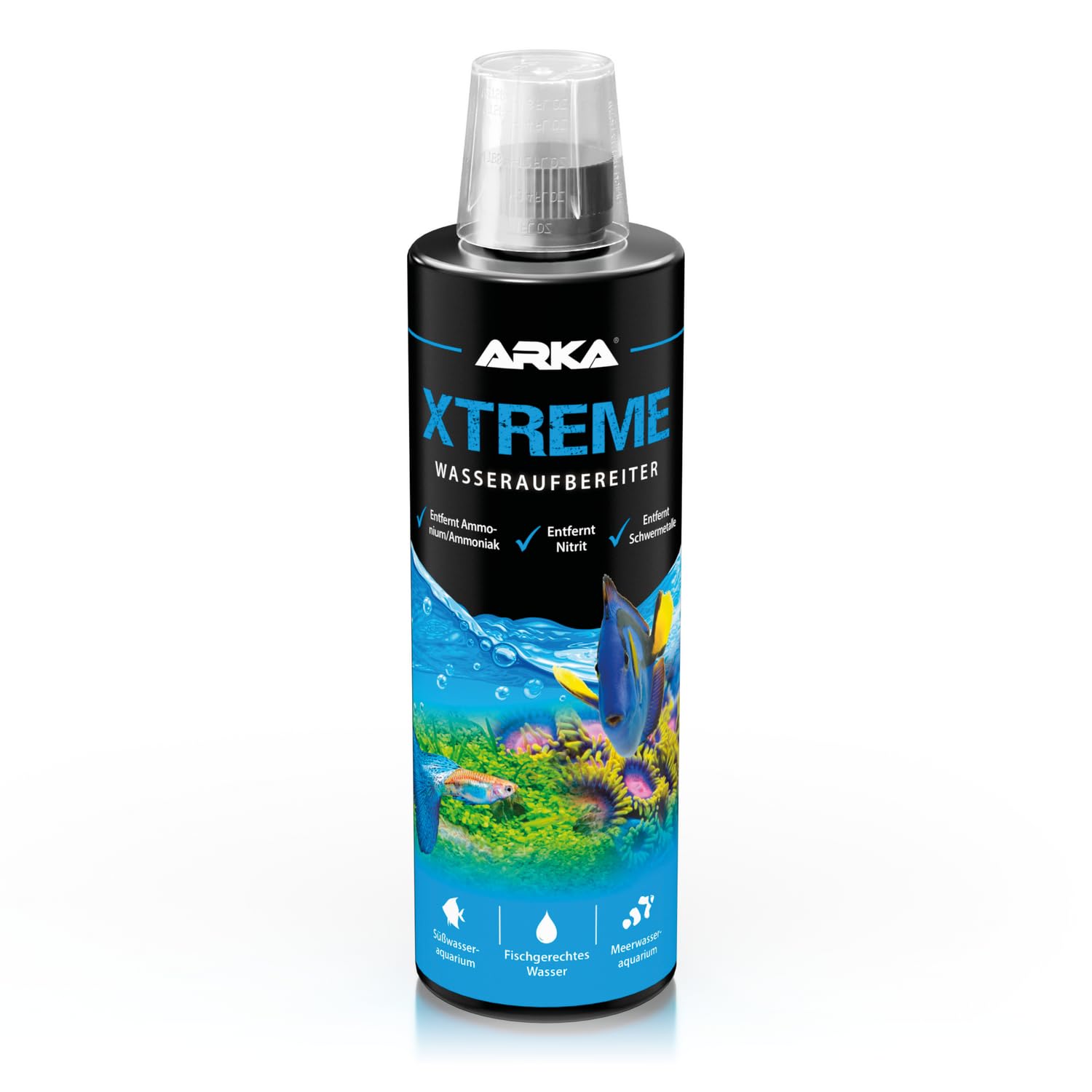
Microbe-Lift Xtreme Water Conditioner is not a direct fin rot cure—it is a comprehensive water treatment that addresses the root cause of most fin rot outbreaks: poor water quality. The 16-ounce formula detoxifies ammonia, nitrite, and chloramines while adding a multi-part skin-slime replacer that strengthens the fish’s natural protective barrier. In practice, this means it prevents fin rot from developing in the first place and supports recovery in tanks where the condition is already present.
Long-term aquarium owners who switched to Xtreme report that their fish became more active, plants looked healthier, and water stayed clear for extended periods between changes. Users with heavily stocked 40-gallon planted tanks have maintained stable conditions using half the recommended dose, indicating the formula is potent enough for serious bio-loads. The nut-free, allergen-safe composition also makes it a worry-free choice for households with allergy concerns.
The limitation is obvious: if your fish already have active fin rot with visible tissue erosion, Xtreme alone will not stop the infection. You need to pair it with a targeted medication like Melafix or Fin & Body Cure for active cases. It also lacks the ability to treat fungal or bacterial infections directly. As a frontline water conditioner and prevention tool, however, it is arguably the most effective long-term investment for keeping fin rot from returning.
Why we love it
- Detoxifies ammonia, nitrite, chloramines, and chlorine
- Skin-slime replacer strengthens natural fish defenses
- Half doses work well in heavily stocked planted tanks
Good to know
- Does not directly treat active fin rot infections
- Must be used alongside medication for existing cases
- Best results require consistent dosing schedule
FAQ
How do I tell if my fish has fin rot or just torn fins?Torn fins from fighting or sharp décor typically show clean, straight splits with no color change at the edges. Fin rot, by contrast, causes the fin margins to look milky white, cloudy, or blood-tinged, and the tissue itself often appears frayed, ragged, or slowly shrinking. If the edges show any discoloration or if the fin continues to deteriorate over 24 hours, it is rot and requires treatment.?
Can I treat fin rot without removing my snails and shrimp?
Why did my fin rot treatment not work the first time?
Final Thoughts: The Verdict
For most aquarists, the best fin rot treatment winner is the API Marine Melafix because it combines a natural, reef-safe formulation with proven results on bacterial infections, tissue regeneration, and ease of use across both saltwater and freshwater tanks. If you want a gentle immune-support approach for early-stage rot, grab the Microbe-Lift Artemiss. And for stubborn cases where natural remedies have already failed, nothing beats the antibiotic power of the API Fin & Body Cure.