
Watching your pet scratch until their skin is raw is a helpless feeling. The real frustration, however, starts when you realize that most flea killers on the market either use harsh neurotoxins indoors or simply fail to break the egg cycle. The difference between temporary relief and total eradication comes down to the active ingredient profile and the application method you choose.
I’m Mo Mahin — the founder and writer behind Furric. I’ve spent countless hours comparing the chemical safety data sheets, Environmental Protection Agency registrations, and aggregated owner feedback on dozens of flea control products to separate the effective solutions from the ones that just smell like peppermint.
This guide evaluates the proven formulas for indoor home treatment and direct pet application, helping you choose the best flea killer that actually matches your infestation level and household tolerance for chemical exposure.
How To Choose The Best Flea Killer
Not all flea killers are created equal. A spray that works on a hardwood floor might fail on a carpet, and a topical drop that works for a small dog could be toxic for a cat. Focus on the active chemistry and how you apply it.
Active Ingredients: Contact Kill vs. Ingestion Kill
Contact killers like dinotefuran and prallethrin provide fast knockdown on surfaces, but they dry and degrade over time. Ingestion killers like fipronil and (S)-methoprene accumulate in the pet’s sebaceous glands, killing fleas when they bite. For an indoor spray, you want a contact killer with a residual label claim of at least two weeks. For a pet treatment, you need a topical that breaks the egg cycle with an Insect Growth Regulator (IGR).
Application Format: Topical, Spray, or Oral Supplement
A topical drop like PetArmor Plus delivers precise dosing and waterproof protection for a full month. A liquid spray like Harris Flea and Tick Killer treats baseboards, carpets, and furniture where fleas hide. Oral supplements like the Cudory chews support the pet’s natural defenses but do not kill an active infestation — they are best used as a preventative alongside a proven killer.
Quick Comparison
On smaller screens, swipe sideways to see the full table.
| Model | Category | Best For | Key Spec | Amazon |
|---|---|---|---|---|
| PetArmor Plus for Dogs | Topical | Monthly pet protection | Fipronil + (S)-methoprene | Amazon |
| BASF PT Alpine Flea & Bed Bug Killer | Aerosol | Indoor surface treatment | Dinotefuran + Pyriproxyfen | Amazon |
| Harris Flea and Tick Killer Spray | Liquid Spray | Large area home treatment | Odorless, non-staining gallon | Amazon |
| Mighty Mint Peppermint Oil Spray | Natural | Scent-sensitive households | Plant-based, 16 oz spray | Amazon |
| Cudory Flea and Tick Prevention Chews | Oral Chew | Daily preventative support | 500 count, chicken flavor | Amazon |
In‑Depth Reviews
1. PetArmor Plus for Dogs (Small)

This topical treatment uses the same active ingredients as the leading vet brand — fipronil and (S)-methoprene — but at a noticeably lower cost per dose. The fipronil spreads through the pet’s natural oils and kills adult fleas on contact, while the (S)-methoprene acts as an Insect Growth Regulator to stop eggs and larvae from developing. Within 24 hours of application, you should see dead fleas falling off the pet.
It is waterproof after drying, so a rain walk or a bath won’t wash it away. The 3-dose package covers a full quarter of the year, which is convenient for seasonal flea pressure. It is specifically formulated for small dogs between 5 and 22 pounds — do not use it on cats, as the permethrin concentration in some topical formulas is dangerous for felines.
Owners with multi-pet households often report that one application on the dog keeps the entire home flea cycle under control. The main limitation is that this product must be applied to the pet’s skin, not the coat, to work properly — parting the fur at the base of the neck ensures the dose reaches the skin rather than sitting on top of the hair.
Why we love it
- Same active ingredients as premium vet brands
- Waterproof and lasts a full 30 days
- Breaks the flea life cycle with IGR
Good to know
- Only for dogs 5-22 pounds
- Requires direct skin application
2. BASF PT Alpine Flea & Bed Bug Killer
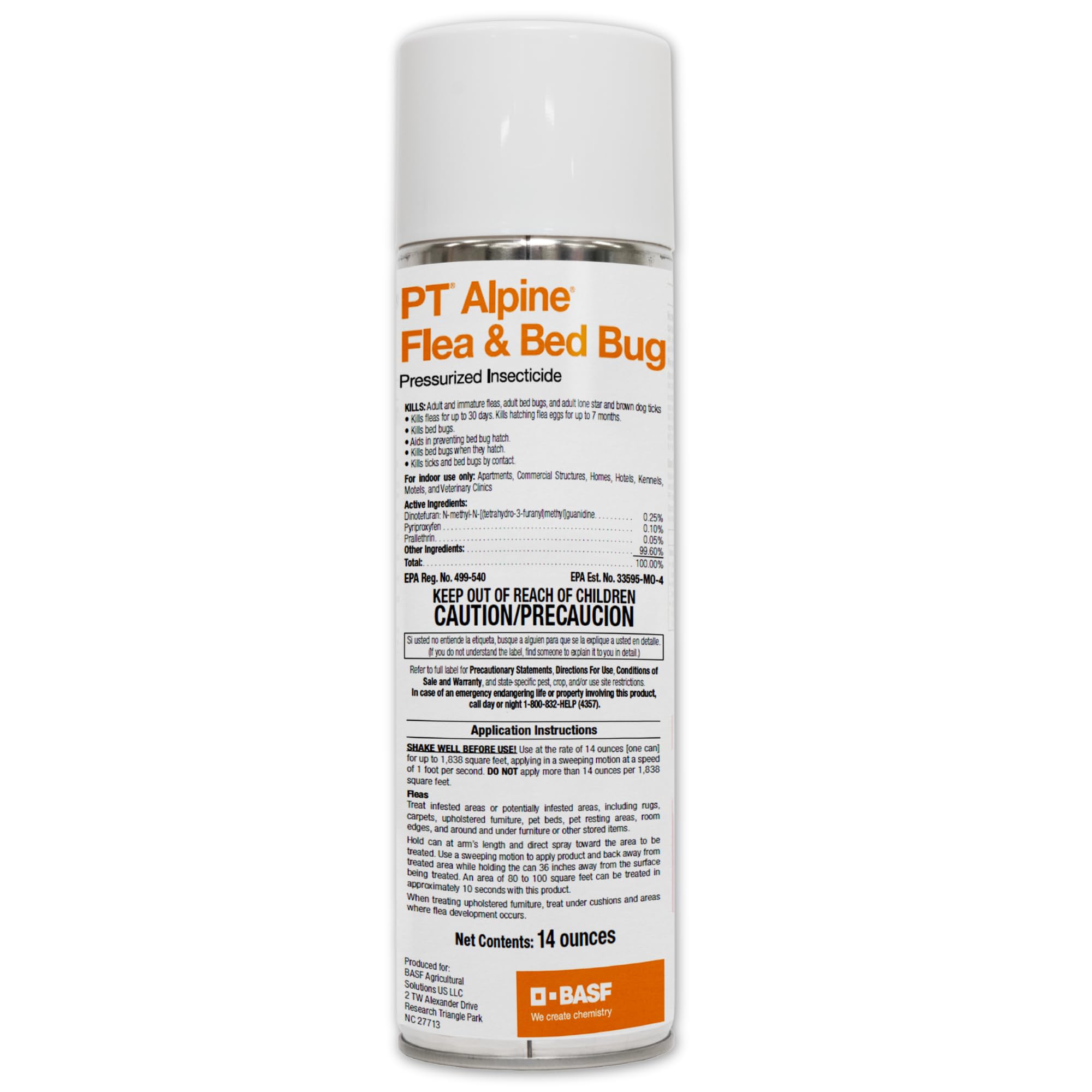
This aerosol contains dinotefuran, a fast-acting active ingredient that provides noticeable knockdown of fleas within minutes after spraying. The dual formula also includes pyriproxyfen, an IGR that prevents eggs from hatching for up to seven months on treated surfaces. It is non-staining and dries quickly, making it suitable for mattresses, carpet edges, and upholstery without leaving residue.
The spray covers up to 2,625 square feet per can, which is enough to treat a standard three-bedroom home’s perimeter. It is EPA-registered for use in homes with people and pets when applied according to the label. The formulation is specifically designed to treat wall-floor junctions, furniture seams, and luggage — the exact spots where fleas and bed bugs harbor.
One professional-grade detail is that the prallethrin component provides an immediate flushing effect, driving hidden pests out of cracks so the dinotefuran can kill them. The trade-off is that the residual activity on surfaces lasts about three weeks, not a full month, so reapplication is needed for severe infestations.
Why we love it
- Fast knockdown of adult fleas
- Seven-month egg hatch suppression
- Non-staining and quick-drying aerosol
Good to know
- Residual effect is about 3 weeks
- Not for direct pet application
3. Harris Flea and Tick Killer Spray

This gallon-sized liquid concentrate comes with an extended trigger sprayer, allowing you to treat large areas like basements, living rooms, and kennels without running out halfway through. The formula is odorless and non-staining, which is critical when treating carpeted areas or light-colored fabrics. It kills fleas and ticks on contact once the spray dries and continues to provide residual protection for weeks after application.
The EPA registration number (No. 3-11) confirms it is approved for indoor use around people and pets when the label instructions are followed. The extended sprayer nozzle reaches under furniture and into baseboard cracks where fleas lay eggs. One gallon allows for repeated applications — useful because a single treatment often misses hidden pupae that later emerge as adults.
Owners with large properties appreciate that this spray works on both indoor surfaces and outdoor areas like patios and garage perimeters. The only notable restriction is that it is not for sale in Connecticut, and it should never be sprayed directly on a pet or on pet bedding while the animal is present.
Why we love it
- Odorless and non-staining formula
- Gallon size for repeated applications
- EPA registered for home use
Good to know
- Not for direct pet application
- Not available in Connecticut
4. Mighty Mint Peppermint Oil Insect Repellent

This spray relies on extra-concentrated peppermint oil as a deterrent rather than a synthetic insecticide. It is designed to repel spiders, ants, and roaches, and it can help discourage fleas from entering treated areas when used as a barrier around doors, windows, and baseboards. The mint scent is crisp and clean, leaving no chemical fumes — a significant plus for households with scent sensitivities or small children.
It is not a kill-on-contact product for existing flea infestations. If you already see fleas on your pet or in the carpet, this spray will not break the life cycle. It works best as a preventative perimeter treatment to keep pests from coming inside, or as a spot treatment in areas where you want to avoid synthetic residues, such as pet bedding or kitchen corners.
The formula is plant-based and pre-mixed in a 16 oz ready-to-use bottle, so there is no dilution or mixing required. It is safe to use around cats and dogs when applied as directed, but note that concentrated peppermint oil can be irritating if sprayed directly onto a pet’s face or open skin.
Why we love it
- Plant-based and family-safe formula
- Fresh mint scent without chemical fumes
- Ready-to-use spray for targeted application
Good to know
- Does not kill existing flea infestations
- Not a residual killer for carpets
5. Cudory Flea and Tick Prevention Chews
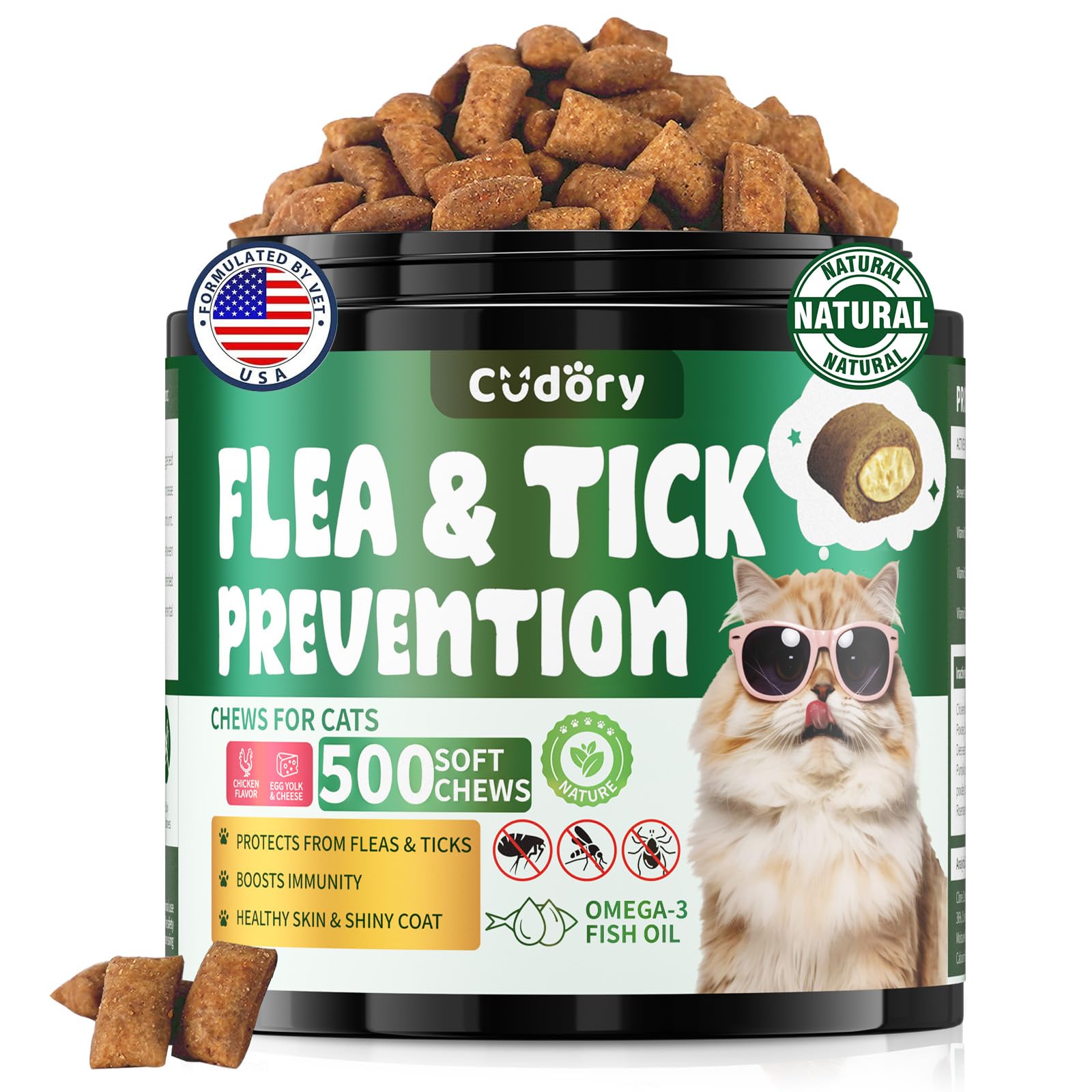
These crunchy and creamy chews are formulated as an oral supplement that supports the cat’s natural defenses against fleas and ticks, rather than killing the pests directly. The ingredients include B-complex vitamins and brewer’s yeast, which may make the cat’s skin and coat less attractive to fleas. Each chew has a chicken and cheese flavor that cats typically accept easily.
With 500 chews per container, this is an extremely long-lasting supply for daily use. It is appropriate for all cat breeds and ages, from kittens to seniors. However, it is critical to understand that this is a wellness supplement, not a pesticide. If your cat already has an active flea infestation, these chews will not eliminate the fleas — you need a topical or environmental treatment for that.
The formula is free from synthetic chemicals and artificial fillers, which appeals to owners who prefer a clean ingredient profile for daily feeding. Use it alongside a proven flea killer spray or topical to maintain a pest-free environment throughout the flea season.
Why we love it
- 500-count supply lasts months
- Natural ingredients with B-vitamins
- Palatable chicken flavor for picky cats
Good to know
- Does not kill active flea infestations
- Intended as a preventative supplement
FAQ
Can I use a dog flea killer on my cat?
Why do I still see fleas after spraying my house?
How long does a flea killer spray take to dry?
Final Thoughts: The Verdict
For most pet parents, the flea killer winner is the PetArmor Plus for Dogs because it combines a proven dual-active formula with waterproof monthly protection at a practical cost per dose. If you want a powerful indoor surface treatment that stops eggs for months, grab the BASF PT Alpine Flea & Bed Bug Killer. And for a budget-friendly, odorless approach to large-scale home treatment, nothing beats the Harris Flea and Tick Killer Spray.