
A fly mask is the first line of defense against eye irritation, summer sores, and the relentless annoyance of flies that can make a horse miserable in its own pasture. A poorly designed mask, however, can rub raw spots, slip off during a roll, or create enough pressure to cause more problems than it solves. The difference between a mask your horse tolerates and one it fights comes down to material feel, anatomical fit, and the specific mesh density that keeps insects out while letting your horse see clearly.
I’m Mo Mahin — the founder and writer behind Furric. I’ve spent years comparing the technical specifications of equine fly masks, studying how different mesh weaves, fleece padding placements, and strap configurations influence retention rates across various head shapes and turnout environments.
After analyzing owner feedback and spec sheets across dozens of models, I’ve narrowed the field to the five most reliable options you can buy today. This guide covers exactly how to pick the best fly mask for horses based on real-world durability, fit consistency, and insect-exclusion performance.
How To Choose The Best Fly Mask For Horses
Not all fly masks perform equally in full sun, wet conditions, or high-pressure insect environments. Focus on these four criteria to avoid buying a mask your horse will rip off or rub against fence posts to remove.
Mesh Visibility & UV Protection
The mesh must be translucent enough for the horse to see clearly while dense enough to block flying insects and UV rays. Fine translucent mesh (like the Harrison Howard LumiVista uses) offers lab-tested UV protection, while coarser weaves may let in both gnats and harmful sunlight. Check for lab-tested UV ratings if your horse has a pink nose or sensitive eye area.
Padding & Pressure Point Management
Fleece or plush trim around the eyes, nose, and ears prevents rub sores that develop from constant movement. Thick fleece padding (featured on both Harrison Howard masks) eliminates gaps that insects can crawl through. The Farnam SuperMask II uses plush flyproof trim around the entire eye perimeter to seal out debris without abrading the skin.
Retention System & Closure Location
Two adjustable hook-and-loop straps are the industry standard, but the location of the closure matters. Masks with latches under the jaw (like the Farnam SuperMask II) are harder for other horses to grab and pull off. The double-latch system on that model places the closure away from the cheekbone, reducing the chance of another horse getting a bite hold on the mask during herd interactions.
Material Durability & Treatment
Permethrin-infused mesh (as found in the Opti-Force mask) provides long-lasting, odorless insect repellent protection built directly into the fibers. Non-treated masks rely purely on the physical barrier. For high-turnout horses in peak fly season, a treated mesh offers a measurable reduction in the number of insects actually landing on the mask and nearby skin.
Quick Comparison
On smaller screens, swipe sideways to see the full table.
| Model | Category | Best For | Key Spec | Amazon |
|---|---|---|---|---|
| Opti-Force Horse Fly Mask | Mid-Range | All-day turnout with insect repellent treatment | Permethrin-treated mesh + reflective Equi-Glo Nite trim | Amazon |
| Harrison Howard CareMaster Fly Mask | Mid-Range | Horses needing nose fringe and full ear coverage | Spanish-style tassle fringe + midge-proof fabric | Amazon |
| Harrison Howard LumiVista Fly Mask | Mid-Range | Sunburn protection for pink noses with extended nose length | Translucent fine mesh with lab-tested UV protection | Amazon |
| Farnam SuperMask II | Premium | Herd turnout with double-latch under-jaw retention | Plush flyproof trim + under-jaw double-latch closure | Amazon |
| Cashel Quiet Ride Fly Mask | Premium | Trail riding over bridle and lightweight pasture use | Breathable nylon mesh designed to fit under most bridles | Amazon |
In‑Depth Reviews
1. Opti-Force Horse Fly Mask – Insect Shield Repellent UV Protected Clear-View Mesh

The Opti-Force mask stands apart because of its permethrin Insect Shield treatment — the insect repellent is actually bonded into the mesh fibers rather than sprayed on. Owners report visibly fewer insects landing on the mask and nearby face compared to untreated masks, and the treatment remains effective through washing cycles. The lightweight tear-resistant mesh is tough enough to survive pasture wear without sagging or tearing at stress points.
The no-ears design keeps the profile low and reduces heat buildup, while the adjustable dual hook-and-loop straps allow a secure fit without overtightening. One owner noted this mask sat lower on the nose than previous models, offering better face protection without causing the horse to rub against fence posts. The reflective Equi-Glo Nite trim adds a safety layer for horses turned out near roads or in dim dawn/dusk conditions.
The permethrin treatment is odorless and the UV-shielding mesh protects pink skin from sun damage during long summer days. Several long-term users report masks lasting two years or more with regular use, and the Standard size fits a broad range of warmbloods and larger breeds without restriction. The Velcro overlap can snag on branches, so inspect the closure area periodically.
Why we love it
- Built-in permethrin repellent reduces insect landings measurably compared to untreated masks
- Reflective night trim improves visibility for horses in pasture near roadways
- Lightweight construction resists tears and holds up for multiple seasons
Good to know
- Velcro overlap can catch on branches and cause tearing
- Does not include ear coverage for horses needing full head protection
2. Harrison Howard CareMaster Horse Fly Mask With Ears and Nose Fringe
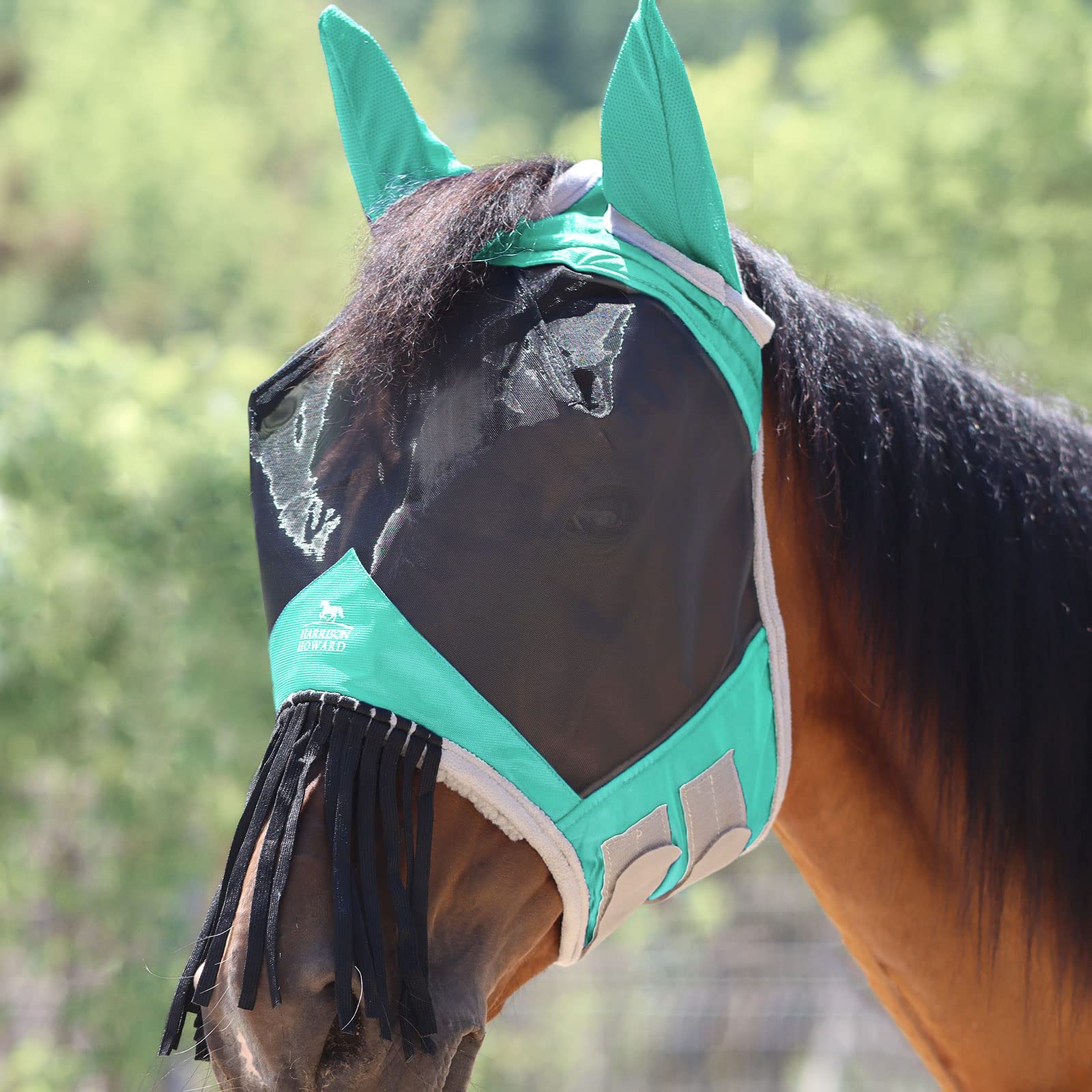
The CareMaster mask differentiates itself with a Spanish-style tassle fringe that hangs along the nose strap, providing an extra physical barrier that insects must cross before reaching the nose. Owner feedback confirms the fringe effectively keeps flies off the muzzle area during high-pressure turnout. The midge-proof breathable fabric is designed to block even small biting midges while remaining skin-friendly against sensitive faces.
Thick fleece padding around the eyes and along the cheek panels eliminates the gaps that typically let insects crawl under the mask edge. The anatomically shaped ear pockets fit full ear coverage without pressure points, and the secure touch closures hold the mask through rolling and rubbing. Several owners noted the Full size runs large — a Medium fits most quarter horse heads comfortably, while the Full better suits warmbloods or draft crosses.
The vibrant sky blue color stands out in pasture, making it easy to spot from a distance. The fringe can dip into water buckets or wet feed; owners report simply trimming an inch off the fringe resolves this without affecting fly protection. The mask holds its shape after multiple washes and maintains the fleece padding density without flattening out.
Why we love it
- Nose fringe adds physical barrier layer that disrupts insect landing patterns
- Thick fleece padding seals gaps around eyes and cheeks without rubbing
- Midge-proof fabric blocks smaller biting insects that pass through standard mesh
Good to know
- Fringe may dip into water buckets — may need to trim 1 inch
- Runs large — verify your horse’s head measurements before ordering Full size
3. Harrison Howard LumiVista Horse Fly Mask Long Nose With Ears UV Protection
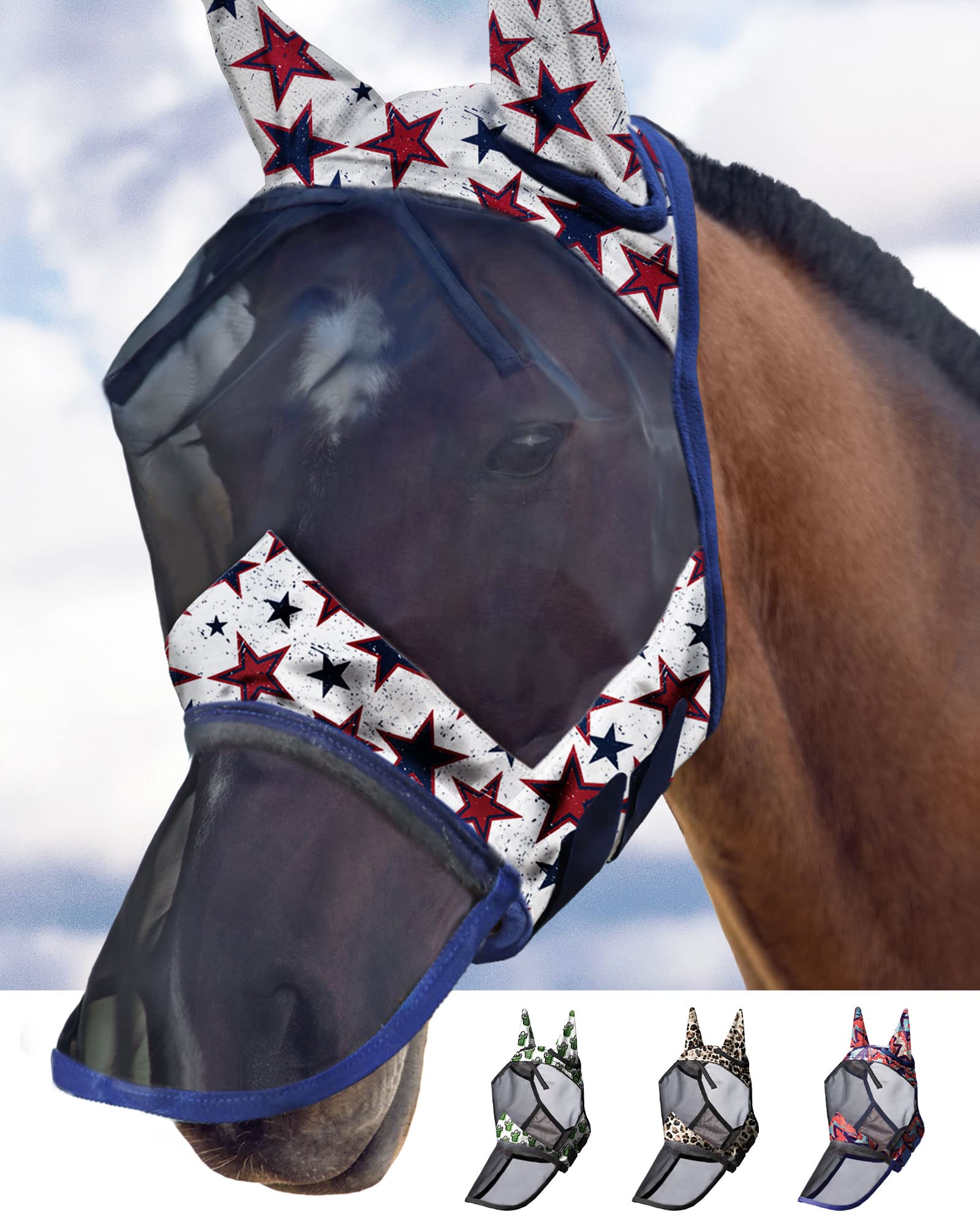
The LumiVista is purpose-built for horses with white noses, pink skin, or a history of sunburn on the muzzle. The translucent fine mesh underwent lab testing to confirm its UV-blocking capability, and the extended nose piece covers the entire nose bridge to the nostrils. Owners of horses with sun-sensitive skin report sunburn healing under this mask while the horse continues turnout.
The anatomically shaped design wraps the face without creating tight spots around the eyes, and the thick fleece padding prevents pressure marks even after 12-hour wear periods. The secure touch closures keep the mask firmly in place during energetic pasture play — several reviewers noted this is the only mask their horse hasn’t managed to remove. The translucent mesh provides high visibility, allowing the horse to eat, drink, and interact without feeling restricted.
The size Cob runs large on Arabians but fits a 14.1hh quarter horse well in the Large. The long nose design also serves as a physical barrier against flies landing on the muzzle, and the vibrant color options make it easy to identify in a group. The mask holds its shape after machine washing and the Velcro stays sticky through repeated use.
Why we love it
- Lab-tested UV protection prevents sunburn on pink noses and sensitive skin
- Extended nose piece covers entire bridge without obstructing eating or drinking
- Anatomically shaped fleece padding eliminates pressure marks during all-day wear
Good to know
- Runs slightly large — check sizing against your horse’s face length
- Long nose design may not suit horses with very short muzzles
4. Farnam SuperMask II Shimmer Weave Mesh Horse Fly Mask Without Ears
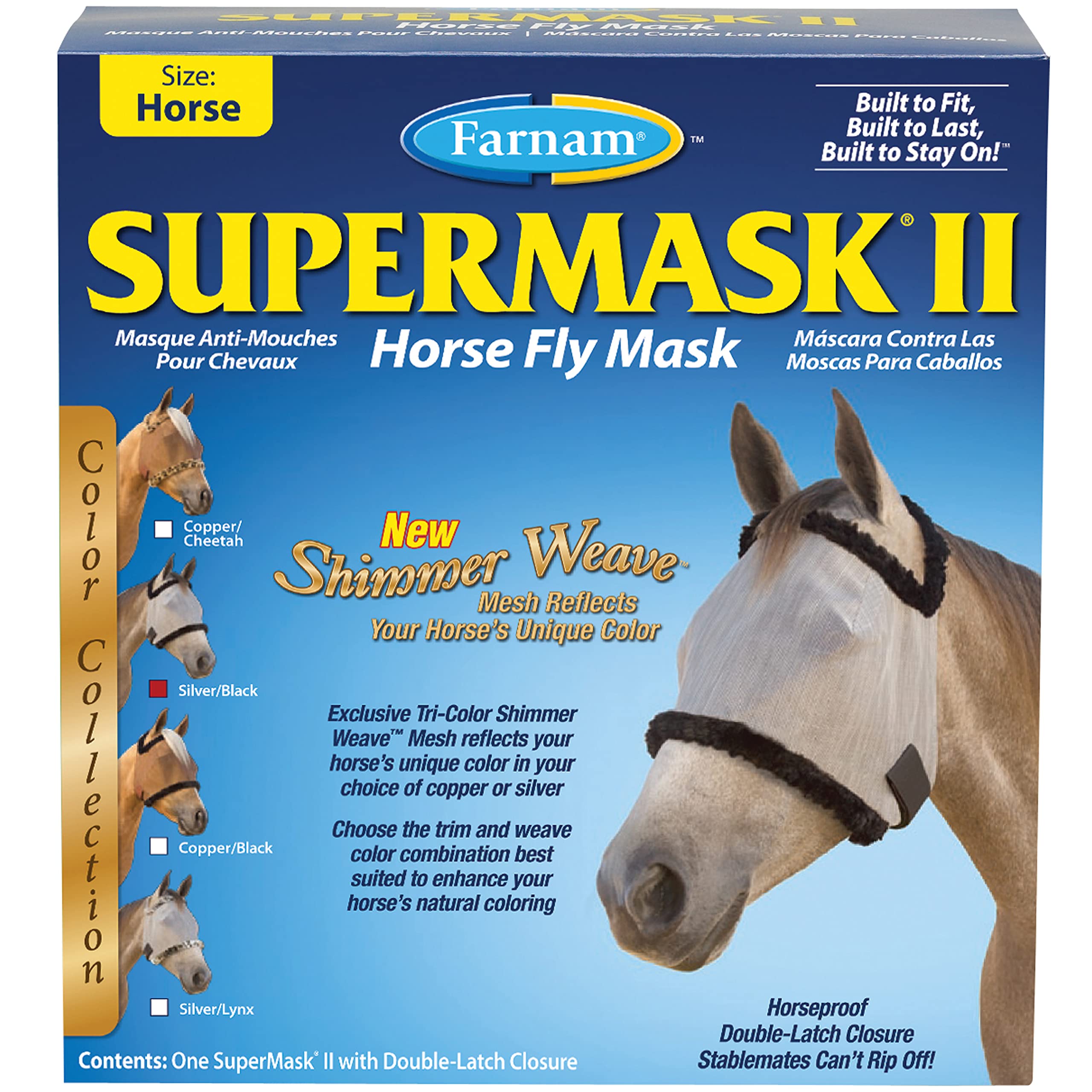
The SuperMask II solves a specific herd problem — other horses grabbing and pulling off masks. The double-latch closure sits under the jaw instead of on the cheekbone, making it physically harder for herdmates to bite the closure and rip the mask off. The see-through shimmer weave mesh is reinforced with plush flyproof trim around the entire eye area, creating a seal that keeps dust, debris, and small insects out while allowing full visibility.
The no-ears design reduces overall weight and heat retention, making this a strong choice for hot climates. The soft silver mesh with black plush trim provides UV protection and aids healing after eye injuries — several owners used this mask post-surgery and reported the eyes cleared within two days. The horse size fits most average heads well, though warmblood owners find it slightly snug and wish for a large size between standard and XL.
The mask is durable enough to survive washing on hot sanitary cycles without losing shape or color. One owner reported the mask came out like new after multiple wash cycles. The under-jaw closure location does mean the mask can be harder to put on than side-velcro models, but the retention benefit for herd turnout outweighs the slightly slower fitting process.
Why we love it
- Under-jaw double latch prevents other horses from biting and removing the mask
- Plush flyproof trim creates a tight seal around eyes to block debris
- Supports healing after eye injuries without obstructing vision
Good to know
- Slightly small for warmbloods — no intermediate large size available
- Closure location makes fitting slightly slower than side-velcro designs
5. Cashel Quiet Ride Horse Fly Mask
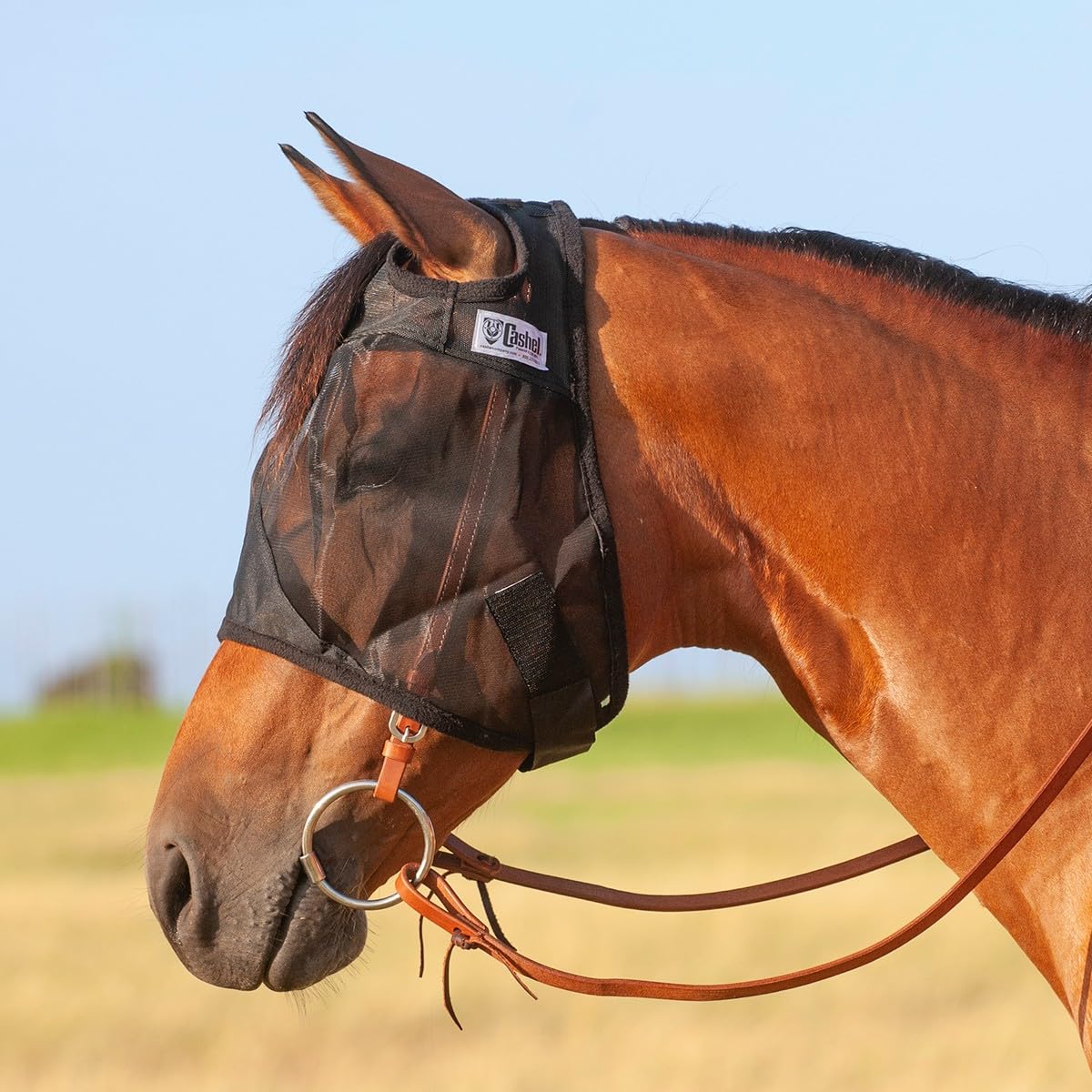
The Quiet Ride is designed for a specific scenario — trail riding under a bridle. The ultra-lightweight breathable nylon mesh fits smoothly under most bridle styles without bunching or interfering with bit action. The soft nylon construction weighs only 2.88 ounces, making it the lightest mask in this comparison, which translates to less heat buildup during rides. Owners consistently report the mask stays put even during cantering and trail navigation.
The mask protects the eyes, cheeks, and forehead from flies while the sheer mesh allows clear vision — essential for a riding mask where the horse needs to see trail obstacles. The felt edges around the trim prevent rub sores, and the material is soft enough that horses don’t fight the mask as much as heavier options. Several long-term users reported the mask looked like new after a full year of use, surviving mud, water, and rolling.
The Arab size fits mini donkeys and smaller-headed horses well, while the Full works for standard quarter horses and thoroughbreds. The mask is less suited for everyday pasture turnout due to its lighter construction; the nylon mesh can snag on branches and the Velcro closure showed wear after about a month of 24/7 use. For its intended use as a riding or light-turnout mask, the Quiet Ride offers excellent value for the price.
Why we love it
- Ultra-lightweight nylon mesh fits comfortably under bridles without bunching
- Sheer enough to see the horse’s eyes clearly and allows full forward vision
- Felt edges prevent rub sores even during active riding movement
Good to know
- Lighter construction less suited for 24/7 pasture turnout in rough environments
- Velcro closure may show wear faster with constant daily use
FAQ
Should I get a fly mask with or without ears?
How do I measure my horse for a fly mask?
Can a fly mask make eye problems worse?
How long do permethrin-treated masks stay effective?
Final Thoughts: The Verdict
For most turnout situations, the best fly mask for horses is the Opti-Force Horse Fly Mask because its permethrin treatment actively reduces insect pressure while the reflective trim adds night safety at a price that undercuts other treated options. If your horse has a sun-sensitive white nose, grab the Harrison Howard LumiVista for its lab-tested UV protection and extended nose coverage. And for herd environments where other horses pull masks off, nothing beats the Farnam SuperMask II and its under-jaw double-latch retention system.