
At eight weeks old, a kitten’s digestive system is still learning to process solid food, and their tiny mouths are packed with baby teeth that demand kibble small enough to crunch without struggle. The wrong texture or ingredient profile at this stage can lead to upset stomachs, picky eating, or skipped meals at a time when every calorie counts toward growth. Selecting a formula that balances high animal protein with digestible fats and the right kibble geometry matters more now than at any other life stage.
I’m Mo Mahin — the founder and writer behind Furric. I’ve spent over a decade cross-referencing feline nutritional science against thousands of owner-reported feeding outcomes, analyzing guaranteed analyses, ingredient sourcing records, and AAFCO compliance data to separate truly kitten-appropriate recipes from marketing fluff.
Because a two-month-old kitten needs a diet built for rapid development and gentle digestion, I’ve curated this guide to help you identify safe, nutrient-dense options. Finding the right food for 2 month old kitten means looking beyond the label to the actual protein-to-fat ratio, kibble dimensions, and DHA content that supports brain and eye formation during these critical first weeks.
How To Choose The Best Food For 2 Month Old Kitten
Selecting a kitten food at this stage requires attention to three core levers: ingredient density, digestibility, and physical kibble characteristics. A two-month-old is transitioning from mother’s milk or formula, so the food must bridge that gap without causing gastrointestinal distress.
Kibble size and rehydration capability
Kittens at eight weeks have small jaws and razor-sharp baby teeth that cannot effectively break down large, hard kibble. Look for products with kibble diameters under 8mm or formulas labeled “tiny” or “babycat.” Some premium dry recipes are designed to be rehydratable — softening in minutes with warm water — which eases the transition from wet to dry food and encourages higher fluid intake during a period when dehydration risk is elevated.
Protein source and fat ratio
Growing kittens require a minimum of 30% crude protein on a dry matter basis, preferably from named animal sources such as chicken, turkey, or salmon rather than ambiguous “meat meal.” A fat content between 18–22% provides concentrated energy for their high metabolic rate. Avoid recipes that lean heavily on plant proteins like corn gluten or pea protein, as felines have limited ability to convert these into essential amino acids like taurine and arginine.
DHA, taurine, and calcium-to-phosphorus balance
DHA from fish oil supports retinal and brain development during the first four months of life. Taurine is non-negotiable for heart function and vision, and it must be supplemented because cats cannot synthesize it endogenously. A calcium-to-phosphorus ratio between 1.1:1 and 1.3:1 is critical for proper skeletal mineralization; ratios outside this band can contribute to developmental bone disorders in fast-growing breeds.
Quick Comparison
On smaller screens, swipe sideways to see the full table.
| Model | Category | Best For | Key Spec | Amazon |
|---|---|---|---|---|
| Royal Canin Mother & Babycat Dry | Dry Kibble | Weaning transition & tiny mouths | Rehydratable kibble, 1–4 month formula | Amazon |
| Wellness CORE Kitten Dry | Dry Kibble | High protein & grain-free preference | 55% animal protein, DHA from salmon oil | Amazon |
| ORIJEN Kitten Recipe Dry | Dry Kibble | Biologically appropriate, high meat inclusion | 90% animal ingredients, freeze-dried coating | Amazon |
| Tiki Cat Baby Wet Variety Pack | Wet Food | Hydration & flavor rotation | 4 recipes, 2.4 oz cans, 8+ week formula | Amazon |
| Weruva Kitten Fur Baby Favorites | Wet Food | Human-grade ingredients & gravy texture | Human food facility, grain & carrageenan-free | Amazon |
In‑Depth Reviews
1. Royal Canin Feline Health Nutrition Mother & Babycat Queen Dry Cat Food
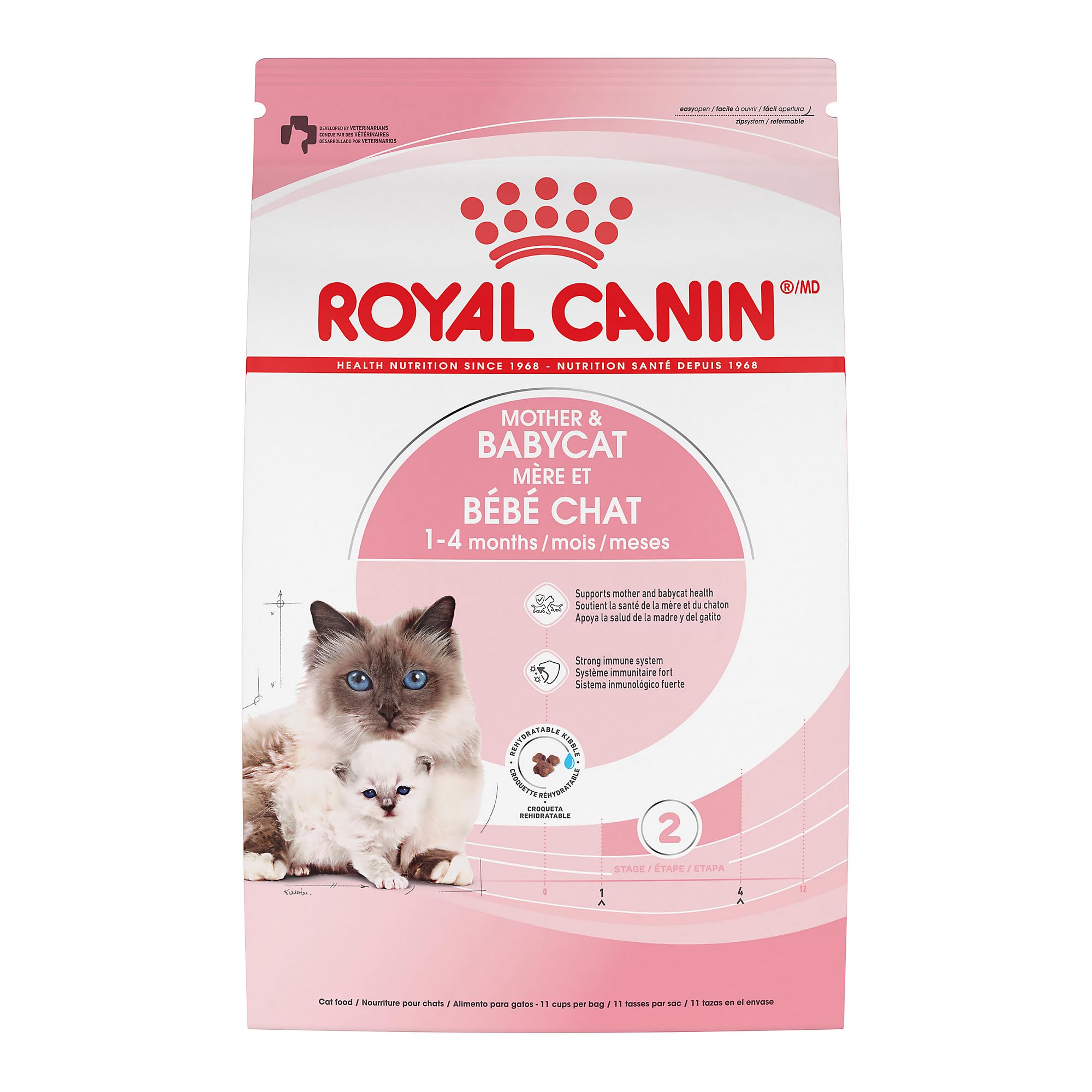
Royal Canin engineered this recipe specifically for the 1-to-4-month window, which directly covers the two-month mark. The kibble is intentionally small — roughly 6mm in diameter — and designed to be rehydrated with warm water into a porridge-like texture that mimics the consistency of mother’s milk gruel, making it ideal for kittens still learning to chew solids. The formula includes a proprietary blend of clinically proven antioxidants (vitamins E and C) to support the developing immune system during a phase when maternal antibody protection is waning.
Digestibility is a standout: the combination of prebiotics (MOS and FOS) and highly digestible proteins helps maintain a balanced intestinal microbiome, which reduces the likelihood of loose stools during the weaning transition. The calcium-to-phosphorus ratio is carefully calibrated for growing bones, and the added DHA from fish oil supports retinal and cognitive development. The 3-pound bag size is practical for this short feeding window, as a single kitten will go through roughly one pound per week.
Owner feedback consistently highlights that picky eaters who rejected other dry foods accepted this one readily, especially when softened. The formula is also safe for pregnant and nursing queens, so multi-cat households with a mother present can feed a single food. The only trade-off is the price point, which sits above typical kitten kibble, but the targeted life-stage formulation justifies the investment for the critical first four months.
Why we love it
- Rehydratable kibble eases weaning transition
- Clinically proven antioxidant blend supports developing immunity
- Kibble size ideal for baby teeth
Good to know
- Higher price per pound than most dry kitten foods
- Bag size requires frequent reordering for multi-kitten homes
2. Wellness CORE Kitten Dry Cat Food, Turkey & Chicken Recipe

Wellness CORE Kitten delivers 55% animal protein from deboned turkey, chicken meal, and salmon meal — a concentration that mirrors the high-protein intake kittens would naturally get from prey. The kibble is approximately 8mm in diameter, which is manageable for most eight-week-olds but may require softening for smaller breeds. DHA from salmon oil is included at levels that support neural development, and the recipe adds probiotics (dried Enterococcus faecium fermentation product) to aid digestive stability during the transition from milk.
The 5-pound bag provides roughly three weeks of food for a single kitten, which is cost-efficient compared to smaller-bag alternatives. The formula is grain-free, which some owners prefer for kittens with sensitivities, though the primary carbohydrate source is peas and potatoes rather than corn or wheat. The guaranteed analysis shows 42% crude protein and 18% crude fat — numbers that sit at the higher end of the growth standard and support steady weight gain without excessive caloric density.
Customer reviews note that kittens with sensitive stomachs tolerated this formula well, with minimal vomiting or diarrhea reported. A subset of picky eaters showed lukewarm interest compared to wet food options, but most adapted within three days. The kibble’s texture is crunchy enough to provide mild dental abrasion without being too hard for baby teeth. For owners seeking a premium grain-free dry option with strong muscle-development support, this is the most balanced choice in its tier.
Why we love it
- High animal protein supports lean muscle growth
- Probiotics aid digestive transition
- 5-pound bag offers better per-feeding value
Good to know
- Kibble size may need softening for very small kittens
- Some picky eaters prefer wet food textures
3. ORIJEN Grain Free High Protein Premium Dry Cat Food Kitten Recipe

ORIJEN pushes the protein envelope with 90% animal ingredients, including fresh free-run chicken, turkey, wild-caught salmon, whole herring, and chicken liver as the first five ingredients. That level of meat inclusion means the crude protein hovers around 40% with 20% fat, providing a macronutrient profile closer to what a feral kitten would consume. The kibble is a small disc shape — 7.5mm by 3.5mm — specifically sized for growing mouths, and each piece is freeze-dried coated with raw liver for palatability.
The recipe includes whole prey ratios of meat, organs, and cartilage, which supplies naturally occurring taurine, glucosamine, and chondroitin without relying heavily on synthetic supplementation. DHA and EPA from salmon and herring oils support brain and eye development, and the absence of potatoes, tapioca, and grains reduces the risk of carbohydrate-induced digestive upset. The 4-pound bag is compact but dense; a single two-month-old kitten will go through roughly 1.5 pounds per week, so it offers about 2.5 weeks of feeding.
Owner reviews consistently cite dramatically improved coat softness and energy levels after switching to ORIJEN. The high protein content means kittens feel satiated longer, which can help regulate feeding schedules. A small percentage of kittens transitioning from lower-protein foods may experience temporarily looser stools as their microbiome adjusts, so a gradual seven-day transition is recommended. For owners who prioritize a whole-prey philosophy and are willing to pay a premium for ingredient transparency, this is the most biologically faithful option on the list.
Why we love it
- 90% animal ingredients with whole prey ratios
- Freeze-dried coating enhances palatability
- Kibble disc size matches kitten jaw dimensions
Good to know
- Higher price point; may require slower transition for sensitive stomachs
- Smaller bag size means more frequent reordering
4. Tiki Cat Baby Wet Cat Food for Kittens, Shreds Variety Pack

Tiki Cat Baby is formulated for kittens 8 weeks and older, making it directly appropriate for the two-month mark. The variety pack includes four recipes — Chicken & Salmon, Chicken, Tuna & Chicken Liver, Chicken, Duck & Duck Liver, and Chicken & Egg — which provides flavor rotation that reduces the risk of food boredom and helps identify any protein sensitivities early. Each 2.4-ounce can is a single-serving size for a two-month-old kitten, eliminating waste from leftover opened cans.
The shreds-in-broth texture delivers high moisture content — critical for kittens who may not drink enough water independently — while the shreds are thin and soft enough for baby teeth to tear. DHA is included for cognitive development, taurine is added at therapeutic levels, and the calcium-to-phosphorus ratio is balanced for growing bones. The ingredient list is clean: no grains, fruits, vegetables, carrageenan, or artificial preservatives, with all protein coming from named muscle meats and organs.
Owner feedback emphasizes that even the pickiest weaning kittens enthusiastically eat this food, likely because the shreds-in-broth texture mimics the mouthfeel of fresh meat. The 12-count case provides a solid two-week supply for a single kitten when fed as one can per day. The only limitation is that wet food alone may not provide enough caloric density for rapid growth if used exclusively, so many owners pair it with a high-quality dry kibble for a mixed feeding approach.
Why we love it
- Multiple recipes reduce flavor fatigue
- High moisture content supports hydration
- Soft shreds are easy for baby teeth to manage
Good to know
- Wet-only diet may need dry food pairing for caloric density
- Single-serving cans generate more packaging waste
5. Weruva Kitten, Fur Baby Favorites Variety Pack

Weruva sets itself apart by manufacturing this kitten food in human food facilities under BRC Global Standards for Food Safety — a certification more commonly associated with packaged foods for people than pet products. The Fur Baby Favorites variety pack delivers a mix of gravied recipes made with real shredded meat in a hydrating broth, free of grains, gluten, carrageenan, by-products, corn, soy, and artificial preservatives. The 3-ounce can size is slightly larger than the Tiki Cat tins, so a single can may cover two meals for a two-month-old kitten.
The gravy texture is particularly useful for kittens who are still ambivalent about solid food, as the broth encourages lap-licking behavior that mimics nursing. Added vitamins, minerals, and antioxidants complete the AAFCO growth profile, though the crude protein (around 10% as-fed) and fat levels are lower than what dry food provides, meaning this is best used as a complement to a dry kibble base. The ingredient transparency extends to sourcing: the company is family-owned and publishes detailed sourcing information on each protein used.
Owner reviews frequently mention that kittens transitioned from bottle feeding or mother’s milk to this wet food with virtually no refusal. The absence of carrageenan is a specific selling point for owners concerned about inflammatory digestive responses. The price per ounce sits in the mid-range for premium wet kitten food, and the variety aspect helps owners determine which protein sources their kitten tolerates best before committing to a larger case of a single flavor.
Why we love it
- Manufactured in human food facilities under strict safety standards
- Gravy texture encourages eating during weaning
- Free of carrageenan, grains, and common allergens
Good to know
- Lower protein density requires pairing with dry food
- 3-ounce cans may need refrigeration after opening
FAQ
Is it safe to feed dry kibble to a two-month-old kitten without softening it first?
Can I give my two-month-old kitten adult cat food in an emergency?
How do I know if my kitten is allergic to the food I chose?
Should I feed only wet food, only dry food, or a combination?
Final Thoughts: The Verdict
For most kittens at eight weeks old, the food for 2 month old kitten that balances safety, nutrition, and ease of transition is the Royal Canin Mother & Babycat Dry Formula because its rehydratable kibble and clinically proven immune support address the two biggest risks at this age: aspiration and waning maternal antibodies. If you want a grain-free, higher-protein dry option with strong muscle-development support, grab the Wellness CORE Kitten Dry Recipe. And for owners who prioritize a whole-prey, biologically appropriate approach with superior ingredient sourcing, nothing beats the ORIJEN Kitten Recipe for its 90% animal inclusion and freeze-dried coating that even picky weaners accept.