
Pugs are a breed defined by their charming wrinkles and soulful eyes, but their brachycephalic structure often comes with a notoriously delicate digestive tract. Finding a kibble that doesn’t trigger gas, loose stools, or skin flare-ups is the single biggest challenge a Pug owner faces daily, as the wrong formula can turn mealtime into a messy ordeal.
I’m Mo Mahin — the founder and writer behind Furric. I’ve spent years cross-referencing veterinary nutritional data and owner-reported outcomes to identify which protein sources, fat levels, and kibble sizes actually agree with a Pug’s unique short-muzzle anatomy and sensitive system.
This guide focuses exclusively on recipes that use limited ingredients, high-quality proteins, and prebiotic fibers to minimize flatulence and support a calm gut. Whether you need a senior-friendly blend or a high-protein option for an active adult, here is the best food for a pug based on spec-matched ingredient analysis and real owner feedback.
How To Choose The Best Food For A Pug
Pugs have a flat face and a compact airway, which affects how they pick up, chew, and swallow kibble. A recipe that works for a Labrador can cause regurgitation or bloating in a Pug. Here are the most critical factors to evaluate.
Kibble Size & Shape
Standard-sized kibble is often too large for a Pug’s small jaw. Look for formulas marketed as “small breed” or “small bites” with a diameter of roughly 8–10 mm. Irregular shapes, like stars or ovals, often encourage chewing instead of gulping, which reduces swallowed air and the resulting gas.
Protein Source & Fat Content
A single novel protein—such as salmon, lamb, or chicken—should be the first ingredient. Pugs are prone to food sensitivities, so a limited-ingredient recipe helps isolate triggers. Fat content should stay below 15% to avoid loose stools, since Pugs have a short digestive tract that struggles with high-fat loads.
Prebiotic & Probiotic Profile
The gut microbiome of a brachycephalic dog can be unstable. Look for guaranteed levels of probiotics (such as Lactobacillus or Enterococcus) and prebiotic fiber sources like chicory root or pumpkin. A count of 80 million CFUs per pound or higher is a strong indicator of digestive support.
Quick Comparison
On smaller screens, swipe sideways to see the full table.
| Model | Category | Best For | Key Spec | Amazon |
|---|---|---|---|---|
| Purina Pro Plan Senior | Dry Kibble | Senior pugs with joint issues | 29% protein, glucosamine & EPA | Amazon |
| Wellness CORE Small Breed | Dry Kibble | Gut microbiome support | Probiotic-coated, digestive enzymes | Amazon |
| Blue Buffalo Wilderness Small Breed | Dry Kibble | Active adult pugs needing high protein | Chicken #1, LifeSource Bits | Amazon |
| Solid Gold Small Breed | Dry Kibble | Grain-free, all life stages | 90M probiotics/lb, grain & gluten free | Amazon |
| Royal Canin Small Digestive Care | Dry Kibble | Chronic sensitive stomachs | Highly digestible proteins, prebiotics | Amazon |
In‑Depth Reviews
1. Purina Pro Plan Sensitive Skin and Stomach Senior 7 Plus Salmon and Rice Formula

This formula uses salmon as the first ingredient paired with oatmeal and rice—both easily digestible carbohydrates that are gentle on a senior Pug’s system. The 29% protein content supports lean muscle maintenance without overloading the kidneys, which is a common concern in aging dogs. Glucosamine and EPA are included at therapeutic levels to support joint health, addressing the hip dysplasia risks the breed faces.
The kibble size falls within the small-bite range, making it manageable for a Pug’s shallow jaw. Owners consistently report firmer stools and reduced flatulence within two weeks of switching, a strong indicator that the limited ingredient profile minimizes gut irritation. The recipe is free of corn, wheat, soy, artificial colors, and poultry by-products, which aligns well with Pug-specific dietary sensitivity triggers.
One trade-off is the modest 4-pound bag size, which won’t last long for a multi-dog household. The formula is specifically designed for dogs aged seven and up, so younger adults or puppies would need a different Purina Pro Plan variant. For senior Pugs with stiff joints and a picky stomach, this is the most targeted option on the shelf.
Why we love it
- Salmon as single novel protein source reduces allergy flare-ups
- Glucosamine and EPA directly target senior Pug joint health
- Oatmeal and rice digest easily, lowering gas production
Good to know
- Only suitable for senior dogs (7+ years)
- 4-pound bag requires frequent repurchase for larger households
2. Wellness CORE Digestive Health Small Breed Adult Chicken Recipe
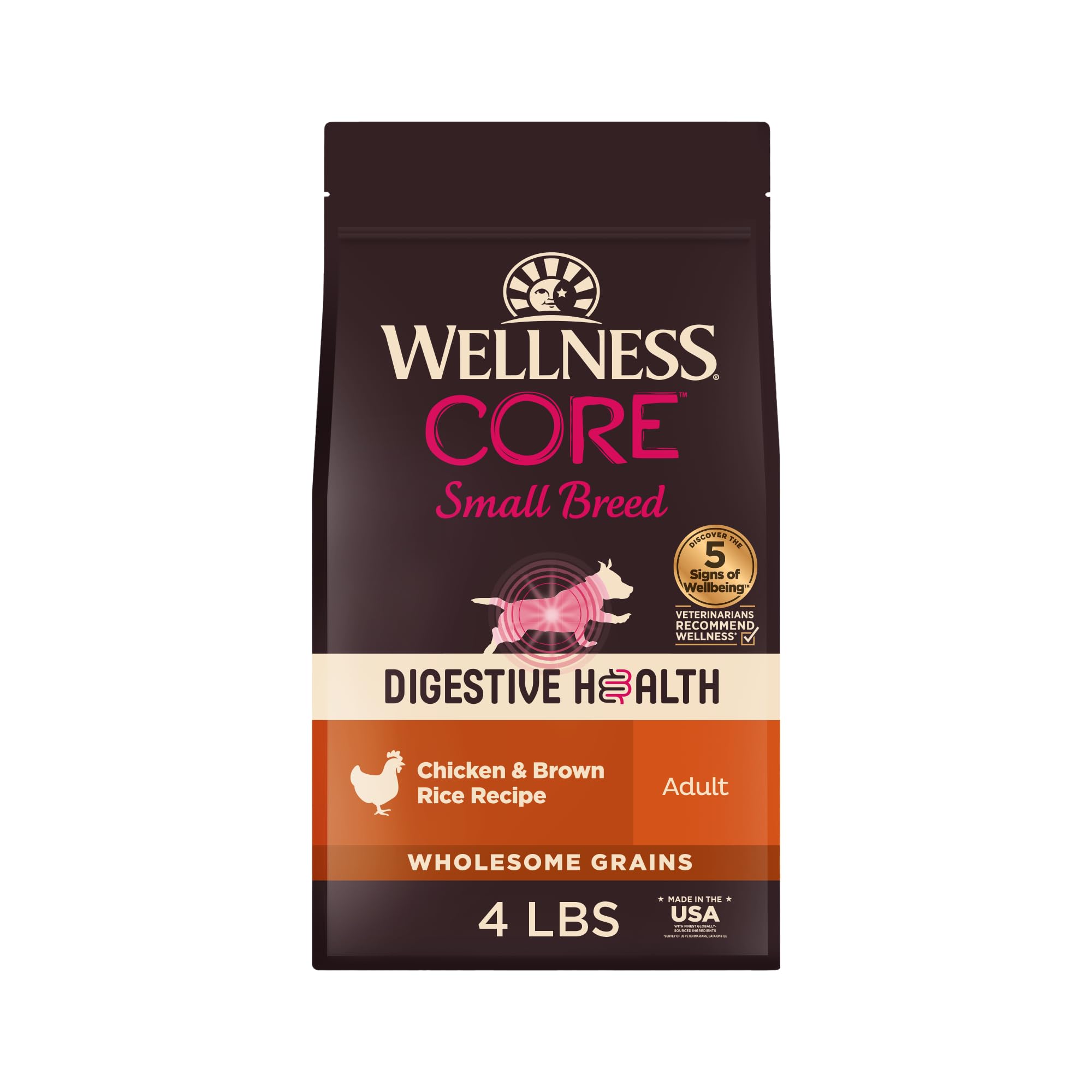
Wellness CORE targets the gut microbiome directly by coating each extruded kibble with guaranteed levels of probiotics—an approach that directly addresses the Pug’s tendency toward dysbiosis. The recipe includes digestive enzymes and a blend of prebiotic fibers from pumpkin and chicory root, which work synergistically to bulk up stool and reduce the watery accidents that sensitive-stomach Pugs are known for.
The protein comes from deboned chicken, a moderate fat source that provides amino acids without pushing the fat percentage too high for a Pug’s short digestive tract. Brown rice provides a wholesome carbohydrate base that is easier on the pancreas than potato-heavy grain-free alternatives. The kibble piece measures roughly 9 mm, which fits neatly into the small-breed classification and encourages proper chewing.
Because 70% of the immune system sits in the gut, the prebiotic and probiotic emphasis here supports skin and coat health as a secondary benefit—Pugs prone to interdigital cysts or fold dermatitis often see improvement. The only downside is that chicken is a moderate allergen for some Pugs; if your dog shows itchiness after switching, a salmon-based variant would be preferable.
Why we love it
- Probiotic-coated kibble directly stabilizes sensitive Pug digestion
- Pumpkin and chicory root prebiotics firm up stools
- Small kibble size fits a brachycephalic jaw shape
Good to know
- Chicken protein may trigger allergies in some Pugs
- 4-pound bag is a starter size; cost per pound is higher at this weight
3. Blue Buffalo Wilderness Adult Small Breed High Protein Chicken Recipe

Blue Buffalo Wilderness positions itself as a high-protein option for active small breeds, with deboned chicken as the first ingredient and a protein level that supports lean muscle maintenance in a Pug without encouraging obesity—provided portions are measured carefully. The kibble is sized for small breeds and has a slightly irregular shape that discourages gulping, a key feature for flat-faced dogs that inhale air.
The standout feature is the LifeSource Bits, a cold-formed pellet containing antioxidants from blueberries, cranberries, and carrots. These bits are designed to survive the extrusion process intact, delivering higher levels of vitamins E and C directly to the immune system. This matters for Pugs because their brachycephalic airway often stresses their cardiovascular system, and antioxidant support helps manage oxidative stress.
This recipe avoids corn, wheat, soy, and poultry by-product meals, which eliminates many common gastrointestinal triggers. Owners with moderately active adult Pugs report good energy levels and consistent bowel movements. However, the higher protein content (around 34%) may be too rich for a Pug that is sedentary or prone to pancreatitis, so this is best reserved for younger or more active dogs.
Why we love it
- LifeSource Bits provide antioxidant support for brachycephalic stress
- Irregular kibble shape reduces gulping and swallowed air
- No corn, wheat, or soy—common Pug allergic triggers
Good to know
- High protein (34%) may be too rich for sedentary or senior Pugs
- Chicken recipe may cause skin reactions in sensitive Pugs
4. Solid Gold Toy & Small Breed Dry Dog Food – Real Beef, Grain Free
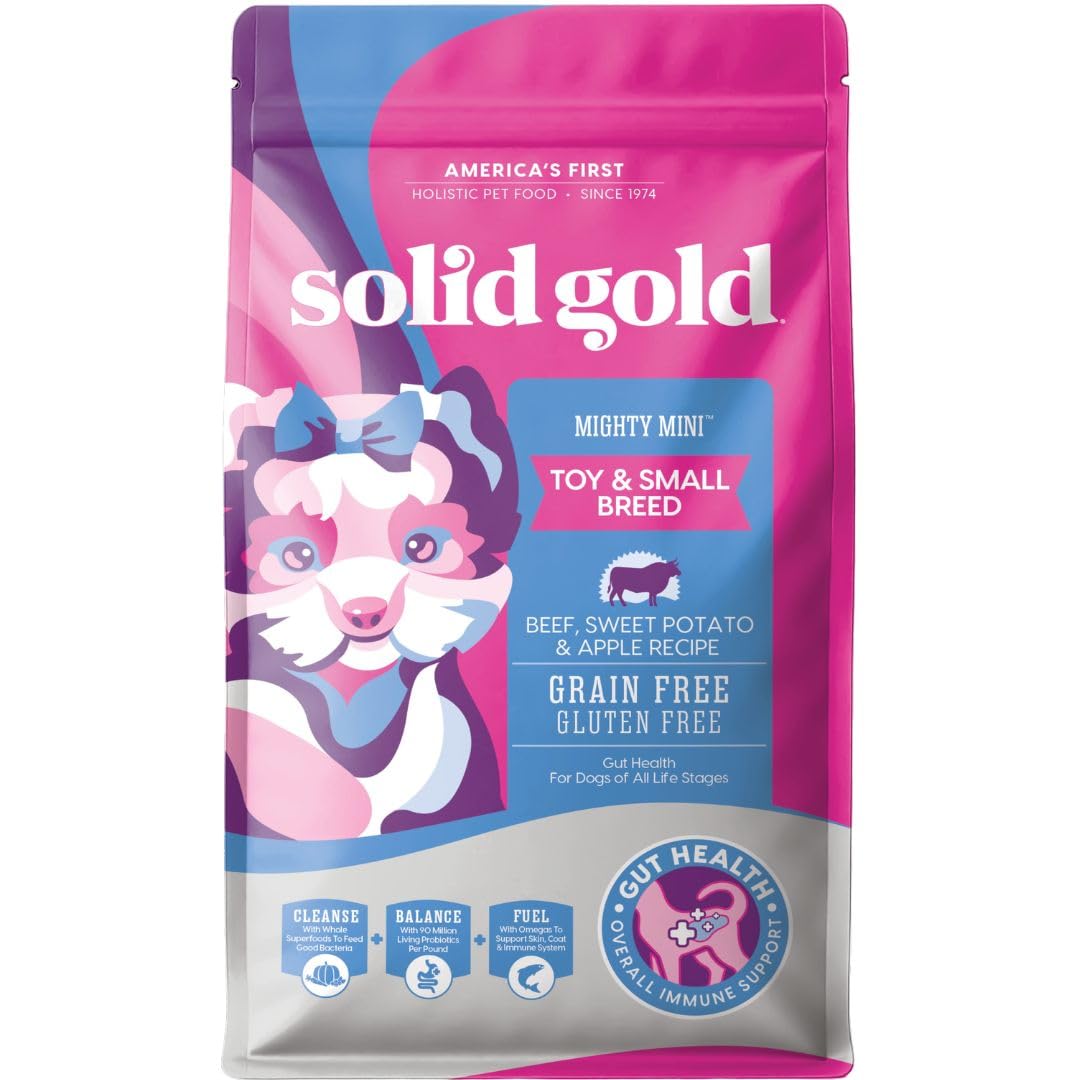
Solid Gold stands out for its exceptionally high probiotic count—90 million CFUs per pound—which makes it one of the most gut-directed formulas available for small breeds. The real beef first ingredient provides a single, high-quality protein source that avoids the multiple meat meals that often confuse a Pug’s digestion. The grain-free format uses sweet potato instead of grains, providing a lower-glycemic carbohydrate that won’t spike blood sugar in Pugs prone to weight gain.
The kibble is sized specifically for toy and small breeds, measuring around 8 mm, which is ideal for a Pug’s small mouth. The addition of omega fatty acids (from flaxseed and fish oil) promotes skin hydration and coat shine, directly addressing the dry skin that many Pugs develop in low-humidity environments. The recipe is also free of soy, corn, wheat, and gluten, which eliminates the most common dietary irritants for this breed.
Because this formula is labeled for all life stages, it can work for both adolescent and older Pugs, but owners should monitor portion sizes closely as the calorie density is higher in grain-free recipes. The beef and sweet potato flavor is generally well-accepted, though a small percentage of Pugs may be sensitive to red meat; in those cases, the salmon variant is a better choice.
Why we love it
- 90 million probiotics per pound provide heavy-duty gut support
- Single real beef protein simplifies allergy troubleshooting
- 8 mm kibble size is one of the smallest for brachycephalic breeds
Good to know
- Grain-free formula may have higher calorie density; watch portions
- Beef protein can still be an allergen for some Pugs
5. Royal Canin Canine Care Nutrition Small Digestive Care Adult Dry Dog Food
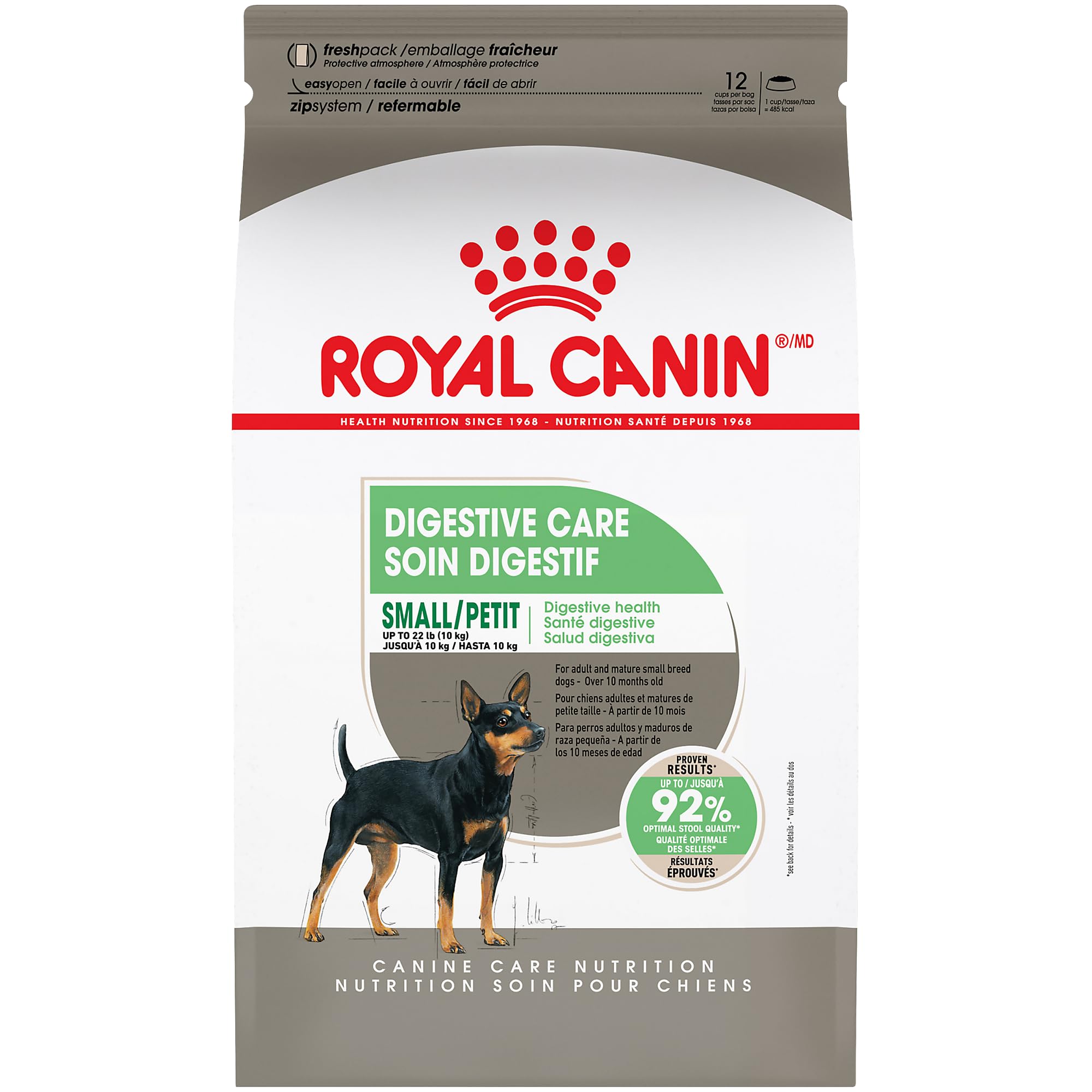
Royal Canin Small Digestive Care is not a generic dry food—it is a veterinary-formulated diet designed specifically for small dogs with confirmed digestive sensitivities. The protein sources are highly hydrolyzed and selected for maximum digestibility, which means the gut has to do less work to break them down. This is critical for Pugs with chronic loose stool or inflammatory bowel disease tendencies.
The formula includes a precise blend of prebiotics (FOS and MOS) and dietary fibers that work together to regulate intestinal transit time and promote optimal stool quality. Owners almost universally report that this is the only kibble that produces consistently formed, easy-to-pick-up stools. The pellet size is small but dense, and the shape is designed to encourage chewing rather than immediate swallowing, which reduces aerophagia in flat-faced breeds.
This is the most specialized option on this list, and it carries a higher price per pound as a result. It is also a recipe that works best for dogs weighing up to 22 pounds, which fits the typical Pug range. For Pugs that have been through multiple food trials without success, the Royal Canin Digestive Care line is often the end of the road for stomach issues.
Why we love it
- Hydrolyzed proteins require minimal digestive effort
- Prebiotic blend (FOS/MOS) reliably firms up loose stools
- Kibble shape actively reduces air swallowing in brachycephalic dogs
Good to know
- Premium pricing makes it a long-term investment for multi-dog homes
- Only suited for dogs up to 22 pounds; larger Pugs may need the next size up
FAQ
Why do Pugs get so much gas from certain dog foods?
Should I choose grain-free kibble for my Pug?
How often should I feed a Pug to prevent bloat?
Final Thoughts: The Verdict
For most Pug owners, the best food for a pug winner is the Purina Pro Plan Senior Salmon and Rice because it targets the two biggest Pug pains—joint health and sensitive digestion—with a single novel protein and a proven prebiotic profile. If you want maximum gut microbiome support for a younger or adult Pug, grab the Wellness CORE Digestive Health Small Breed. And for a Pug with chronic loose stool that has failed other diets, nothing beats the Royal Canin Small Digestive Care for its veterinary-grade hydrolyzed proteins and clinical stool-normalizing results.