
Selecting the right diet for an African Grey is not about grabbing the first bag of birdseed off the shelf — it is a species-specific decision that directly impacts feather condition, cognitive function, and lifespan. African Greys have unique calcium and vitamin A requirements that general parrot blends often miss, making a targeted formula a non-negotiable part of responsible ownership.
I’m Mo Mahin — the founder and writer behind Furric. I’ve spent years analyzing avian nutrition studies, comparing ingredient lists and guaranteed analyses, and cross-referencing owner-reported long-term health outcomes to identify which commercial diets actually deliver on their promises for sensitive species like the African Grey.
Whether you are transitioning a picky eater from an all-seed diet or supplementing fresh foods with a reliable base, the right choice hinges on pellet quality, calcium content, and ingredient transparency — which is why I put together this focused guide to the best food for african grey parrots available right now.
How To Choose The Best Food For African Grey
African Greys are prone to calcium deficiency and vitamin A hypovitaminosis, so a diet designed for a cockatiel or a macaw will not cover their specific metabolic needs. Here are three factors you must evaluate before buying.
Pellet Quality and Completeness
A nutritionally complete pellet should constitute at least 70–80% of an African Grey’s daily intake. Look for a guaranteed analysis that lists protein in the 14–16% range and fat around 4–8%. Avoid blends that rely heavily on sunflower seeds or peanuts — these are high in fat and encourage selective feeding, which leads to imbalanced nutrition over time.
Calcium and Vitamin A Levels
African Greys require more calcium than most companion parrots to support bone density and egg production in hens. A species-specific formula will list calcium around 0.6–1.0% and vitamin A as a significant supplement. Extra calcium sources, such as cuttlebone or oyster shell included in the mix, are a strong indicator that the brand understands Grey physiology.
Absence of Artificial Colors and Preservatives
Dyed pellets may look appealing to owners, but they can mask important health clues in droppings and offer no nutritional benefit. Choose a formula that relies on natural ingredients like carrots, celery, and grains for its color. Also confirm the food uses natural preservatives such as mixed tocopherols rather than ethoxyquin or BHA.
Quick Comparison
On smaller screens, swipe sideways to see the full table.
| Model | Category | Best For | Key Spec | Amazon |
|---|---|---|---|---|
| Pretty Bird Species Specific | Pellet | Long-term Grey specialists | 14% protein, 8% fat | Amazon |
| ZuPreem True Harvest | Pellet | No-artificial-color diet | Made with carrots and celery | Amazon |
| Psittacus High Energy | Pellet | Grain-free, non-breeding periods | 100% no-GMO, 1.76 lb | Amazon |
| ZuPreem Sensible Seed | Seed/Pellet Blend | Foraging enrichment | 30% diet use, 2 lb | Amazon |
| ABBA 1400 Premium | Seed Blend | Whole-food variety seekers | Whole eggs, nuts, legumes | Amazon |
In‑Depth Reviews
1. Pretty Bird International Species Specific African Bird Food

Pretty Bird has formulated this morsel specifically for African species, packing 14% protein and 8% fat into a medium-sized pellet that Greys handle easily. The extra calcium addition directly addresses the species’ vulnerability to hypocalcemia — a detail many general parrot blends overlook. Owners of 29- and 34-year-old Greys report consistent daily acceptance over decades, which speaks to both palatability and nutritional sustainability.
The morsel form produces minimal dust compared to crumble-style foods, and the sturdy bag packaging protects freshness during storage. The unflavored formulation avoids artificial fruit coatings that can encourage selective eating — every morsel delivers identical nutrition, preventing the nutrient gaps common with seed-and-pellet mixes.
Reviewers consistently note that their birds prefer this over ZuPreem and other popular pellets, with multiple owners reporting improved feather quality and energy levels after switching. The 3-pound size provides a practical entry point for testing acceptance without committing to a bulk purchase.
Why we love it
- Formulated specifically for African species with elevated calcium
- Decades-long owner loyalty indicates excellent long-term health support
- Unflavored morsels prevent selective feeding habits
Good to know
- Not suitable for birds that require a high-fat breeding formula
- Some owners wish the bag were resealable for better freshness
2. ZuPreem True Harvest Parrot Pellets (3 lb Pack of 2)
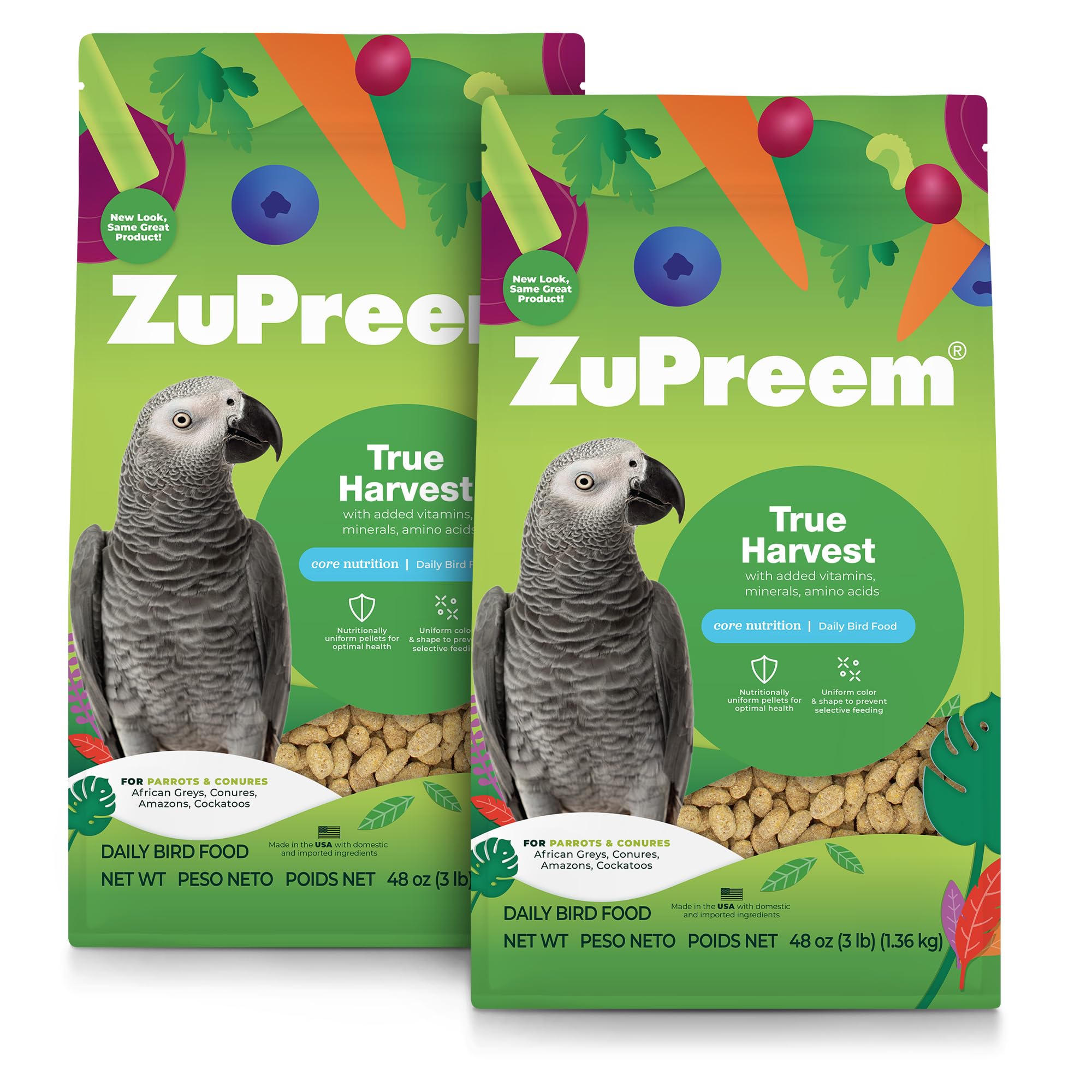
True Harvest is ZuPreem’s answer to owners who want the brand’s reliable pellet base without the artificial dyes found in the FruitBlend line. The formula uses real grains, carrots, and celery to deliver color naturally, which means droppings remain true indicators of health — a critical detail for owners who monitor their bird’s condition daily. The 6-pound two-pack offers strong value for consistent feeding.
The pellet size is calibrated for medium-to-large parrots, and the uniform shape eliminates the selective feeding that seed mixes encourage. Owners of multiple Greys report that conversion from seed-based diets is straightforward when following the recommended 7- to 10-day gradual transition. The low-fat profile (under 4%) makes it a solid choice for birds that maintain weight easily or are prone to hepatic lipidosis.
Long-term users with 6 African Greys and an Amazon report 8 years of healthy birds on this formula, noting improved feather condition and energy compared to fruit-flavored alternatives. The pack-of-2 configuration also keeps shipping costs efficient compared to buying single bags.
Why we love it
- Zero artificial coloring — droppings remain accurate health markers
- Two-pack delivers better per-pound value than single bags
- Plant-based ingredient list with no artificial flavors or preservatives
Good to know
- Some birds accustomed to sweeter fruit pellets may need a longer transition
- Lower fat content may not suit highly active or underweight birds
3. Psittacus High Energy Pellet Diet

Psittacus is a European brand with over two decades of specialized avian nutrition research, and the High Energy formula reflects that pedigree. Designed for African Greys, Macaws, and other African parrots that naturally consume higher-fat diets, this extruded pellet is 100% non-GMO with no artificial coloring or synthetic antioxidants. The 1.76-pound bag is purposefully sized for owners who want to test a premium product without storing large quantities.
The manufacturer recommends this formula for maintenance periods — meaning reproductive inactivity — and advises that it should constitute no less than 70–80% of the total diet. The grain-free ingredient profile makes it an option for birds with suspected sensitivities to corn or wheat-based pellets. The Yaco flavor variant is specifically named for the Grey parrot (Psittacus erithacus), indicating targeted formulation rather than a one-size-fits-all approach.
European customers consistently praise the acceptance rate, with multiple reviews noting that even picky Greys took to these pellets immediately. The premium manufacturing standards — including natural flavor sources and high nutrient concentration — justify the higher per-pound cost for owners who prioritize ingredient sourcing and purity.
Why we love it
- 100% non-GMO with no synthetic preservatives or artificial colors
- Formulated specifically for African Grey metabolic needs and fat requirements
- Grain-free option for birds with dietary sensitivities
Good to know
- Premium price point per pound compared to domestic brands
- Only a 1.76 lb bag — frequent reordering necessary for single-bird households
4. ZuPreem Sensible Seed Bird Food (2 lbs)
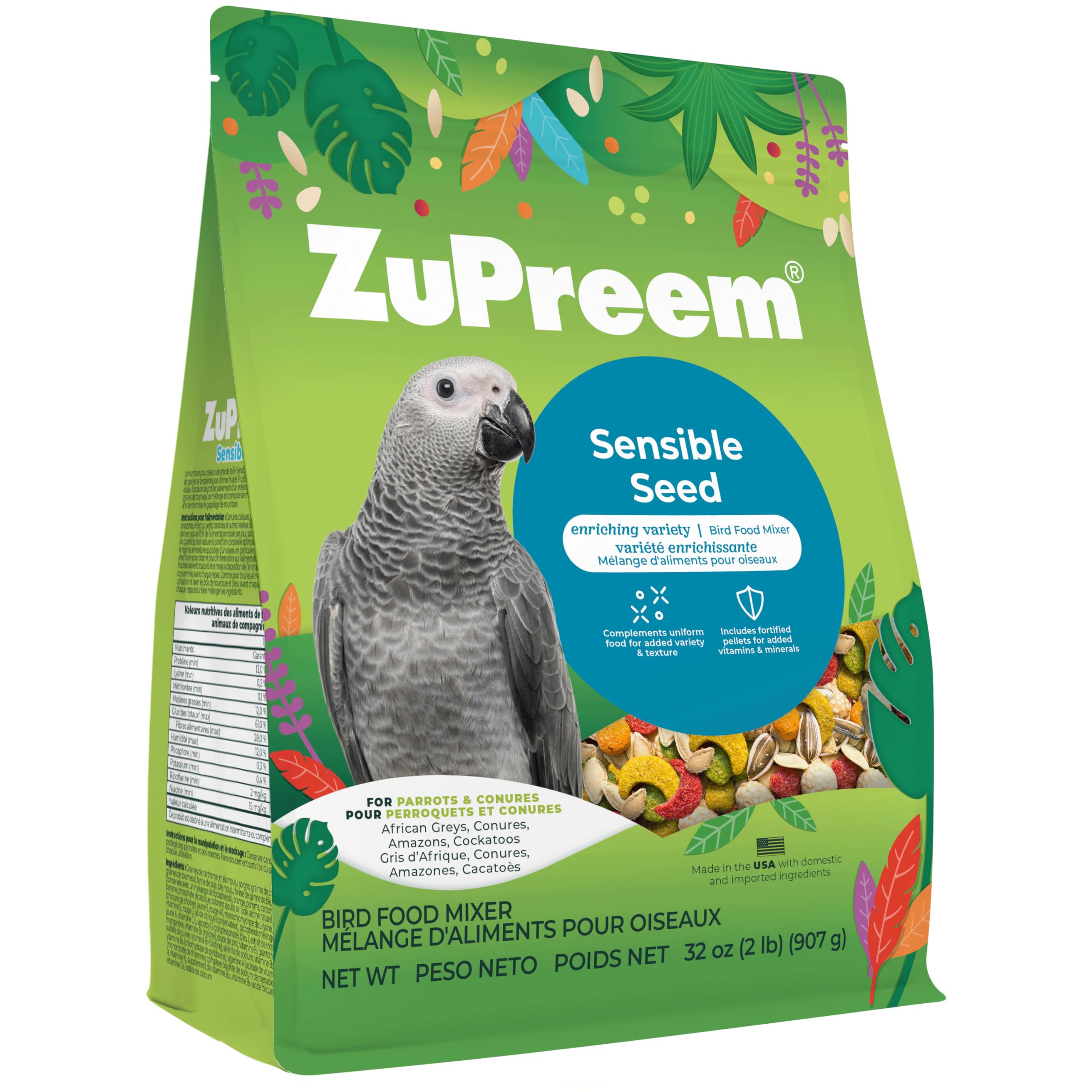
ZuPreem Sensible Seed positions itself as an intermediate step between a pure seed mix and a full pellet diet. The blend includes ground corn, safflower seeds, squash seeds, whole buckwheat, and pellets, providing variety that encourages natural foraging behavior. The manufacturer recommends serving this as no more than 30% of the bird’s diet, which means it functions best as a supplement or training treat rather than a primary nutrition source.
The inclusion of whole seeds like white milo and safflower gives this blend a sensory appeal that full-pellet diets lack, making it useful for owners trying to engage a bored eater or introduce new textures. The 2-pound bag is small enough to use as an occasional enrichment tool without worrying about long-term nutrient imbalances — provided the core diet remains a high-quality pellet.
Customer feedback highlights the natural ingredient list and the foraging engagement it provides. Some long-term users noted a recent formula change that removed sesame seed balls, which disappointed birds that preferred that specific texture. Overall, this is a targeted supplement, not a complete diet solution for the African Grey.
Why we love it
- Encourages natural foraging behavior with diverse seed textures
- Natural ingredient list with no artificial fillers listed
- Low-cost way to supplement pellet diet with variety
Good to know
- Only intended as 30% of total diet — not a complete food
- Recent formulation change removed sesame seed balls some birds loved
5. ABBA 1400 Premium Bird Food (5 lbs)

ABBA 1400 takes a whole-food approach, packing safflower seeds, sunflower kernels, cracked corn, peanuts, papaya, sorghum, soy nuts, pumpkin seeds, mollusk shells, kibbled biscuits, and a legume blend that includes navy, kidney, pinto, and azuki beans. It also incorporates whole eggs, egg shells, Brazil nuts, cashews, walnuts, almonds, and shredded coconut. This diverse ingredient list provides a high-protein profile that supports feather health and muscle development.
The inclusion of whole eggs and egg shells directly addresses calcium needs, which is relevant for African Greys, though the heavy reliance on sunflower seeds and peanuts means fat content is higher than a pellet-based diet. This product functions best as a rich supplement or a rotation option rather than a sole daily food, because the variety encourages selective feeding — birds may pick out favorite pieces and leave the legumes or biscuits.
Customers consistently note that their birds love the taste and that the blend arrives fresh, with multiple repeat orders confirming consistent quality. The 5-pound bag provides good volume for multi-bird households or owners who use this as a primary supplement. Monitor your bird’s weight and adjust portions if you notice selective picking.
Why we love it
- Exceptional ingredient variety with whole eggs, nuts, and legumes
- High protein content supports feather health and muscle condition
- Large 5-pound bag offers strong volume for the price
Good to know
- Seed-heavy blend encourages selective feeding and nutrient gaps
- Not a complete balanced diet — must be paired with pellets and fresh foods
FAQ
How much food should an African Grey eat daily?
Can I feed only pellets and skip fresh produce?
Why do African Greys need extra calcium in their diet?
What is the difference between extruded pellets and baked pellets?
How do I know if my Grey is eating enough of a new pellet?
Final Thoughts: The Verdict
For most gardeners, the best food for african grey winner is the Pretty Bird Species Specific because it delivers targeted calcium levels, decades of proven owner satisfaction, and unflavored morsels that prevent selective eating. If you want a completely dye-free pellet formula with strong multi-bird value, grab the ZuPreem True Harvest two-pack. And for a premium grain-free option with European manufacturing standards, nothing beats the Psittacus High Energy.