
Few things worry a cat parent more than watching their feline companion struggle with digestive distress. Whether it’s recurring vomiting, loose stools, or a finicky appetite that signals deeper discomfort, finding the right nutrition becomes more than a chore — it becomes a mission for peace of mind. The connection between what goes into the bowl and how your cat feels afterward is direct, and choosing a formula that supports rather than challenges a sensitive system can quietly transform daily life for both of you.
I’m Mo Mahin — the founder and writer behind Furric. My deep-dive market research, careful analysis of veterinary safety standards, and close evaluation of real pet owner feedback have shaped every recommendation you’ll find here.
The goal is simple: help you cut through marketing noise to find real relief. After reviewing veterinary guidelines and owner feedback, I trust the best food for cats with digestive problems for lasting, gentle digestive relief.
How To Choose The Best Food For Cats With Digestive Problems
Digestive issues in cats stem from many sources — food intolerances, stress, age-related changes, or chronic conditions like IBD. The right formula addresses the root cause by combining highly digestible proteins, targeted fiber, and carefully selected ingredients that reduce the digestive system’s workload. Understanding what to look for on the label is the first step toward lasting relief.
Recognize the signs of digestive trouble early
Chronic vomiting, diarrhea, constipation, excessive gas, or a sudden loss of appetite all point to a system under stress. Cats are masters at hiding discomfort, so tracking litter box habits and meal behavior over several days gives you the clearest picture. If symptoms persist beyond 48 hours, a veterinary checkup should come before any food change.
Prioritize highly digestible protein sources
Protein is essential, but not all protein is equally easy to break down. Turkey, chicken, and whitefish are generally well-tolerated, while less common or heavily processed protein sources can trigger reactions. Look for formulas that list a single, named protein as the first ingredient and avoid vague labels like “meat meal” or “poultry by-product.”
Choose prebiotics and fiber with purpose
Prebiotic fibers like inulin, chicory root, and beet pulp feed beneficial gut bacteria and help regulate stool quality. Soluble fiber absorbs excess water in the digestive tract, while insoluble fiber adds bulk. A balanced blend — not an excessive amount — supports regularity without causing bloating or discomfort.
Consider the role of kibble shape and texture
Ring-shaped kibble, oval pellets, and pate-style wet food each affect how quickly a cat eats and how the food moves through the digestive system. Slower eating reduces the chance of vomiting undigested food, while smooth pate textures are gentle on an irritated stomach lining. The physical form of the food matters almost as much as the ingredient list.
Avoid common irritants and fillers
Corn, wheat, soy, artificial colors, artificial flavors, and carrageenan appear in many mass-market cat foods and are frequent culprits in digestive upset. Limited ingredient diets strip away these potential triggers, making it easier to pinpoint what works. Grain-free options are not automatically better for every cat, but they remove a common source of sensitivity.
Quick Comparison
On smaller screens, swipe sideways to see the full table.
| Model | Type | Best For | Key Feature | Amazon |
|---|---|---|---|---|
| Royal Canin Digestive Care | Dry | Adult cats with sensitive stomachs | Ring-shaped kibble slows eating | Amazon |
| Wellness CORE+ Digestive Health Pate | Wet | Cats needing hydration and gentle digestion | Prebiotic fiber with Omega-3 | Amazon |
| Blue Buffalo Basics Skin & Stomach Care | Dry | Cats with food sensitivities | Limited ingredient turkey recipe | Amazon |
| Wellness Complete Health Indoor | Dry | Indoor cats needing balanced nutrition | Healthy fiber balance for indoor cats | Amazon |
| Purina Cat Chow Gentle Sensitive Stomach | Dry | Mild sensitivities on a budget | Farm-raised turkey with Omega-6 | Amazon |
In-Depth Reviews
1. Royal Canin Feline Care Nutrition Digestive Care

Royal Canin brings decades of feline nutrition research into this digestive care formula, designed specifically for cats with sensitive stomachs. The ring-shaped kibble is not a gimmick — it encourages slower eating, which naturally supports better digestion and reduces the likelihood of vomiting undigested food. Every bag reflects the kind of clinical precision you expect from a brand that works closely with veterinarians.
The optimal blend of prebiotics and dietary fiber actively promotes gut health, while highly digestible proteins reduce the workload on your cat’s digestive system. Royal Canin’s own internal studies show over 95 percent healthy stool quality after just 10 days of feeding, which speaks to the formula’s real-world effectiveness. The texture and size of the kibble are calibrated for easy chewing and gentle processing.
For cat parents managing persistent digestive issues, this formula offers the reliability of a veterinary-endorsed diet without requiring a prescription. It pairs well with the matching wet food for mixed feeding, giving you flexibility while maintaining digestive support. This is the standard I measure other digestive care foods against.
Why we love it
- Research-backed formula with proven stool quality results
- Ring-shaped kibble naturally slows eating speed
- Prebiotic and fiber blend supports healthy digestion
- Pairs with wet food for mixed feeding routines
Good to know
- Higher investment than standard maintenance diets
- Some cats may need time to adjust to the unique kibble shape
- Limited flavor variety compared to other brands
2. Wellness CORE+ Digestive Health Pate Variety Pack

Wellness CORE+ combines the hydration benefits of wet food with targeted digestive support, making it a strong choice for cats who struggle with dry kibble or need extra moisture in their diet. The smooth pate texture is easy to chew and swallow, and it sits gently on an irritated stomach lining. Each 3-ounce can delivers concentrated nutrition without unnecessary fillers.
High-quality protein appears as the first ingredient in both the Salmon and Whitefish recipes, and the grain-free formula includes prebiotic fiber specifically chosen to feed beneficial gut bacteria. Omega-3 fatty acids support skin and coat health while you address digestive concerns, so you get two benefits from one diet. The variety pack format lets you rotate flavors without committing to a single protein source.
For cats who turn their nose up at dry food or need the extra hydration that wet food provides, this pate offers complete and balanced nutrition across all life stages. It contains no corn, wheat, soy, or carrageenan, removing common irritants from the equation. The consistency is consistent batch to batch, which matters when your cat is finally eating well.
Why we love it
- High moisture content supports hydration and kidney health
- Prebiotic fiber actively promotes beneficial gut bacteria
- Smooth pate texture is gentle on sensitive stomachs
- No corn, wheat, soy, or carrageenan
Good to know
- Small 3-ounce cans require multiple servings per day for most cats
- Some cats may prefer chunkier textures over smooth pate
- Limited to seafood-based recipes in the variety pack
3. Blue Buffalo Basics Grain-Free Dry Cat Food

Blue Buffalo Basics takes a minimalist approach that often works wonders for cats with unknown food triggers. By limiting ingredients to turkey and potato, this formula dramatically reduces the chance of adverse reactions while still delivering complete nutrition. It is designed for senior cats, but the limited ingredient philosophy applies to any cat with sensitivities.
Real turkey is the first ingredient, providing high-quality protein without chicken or poultry by-products that commonly cause issues. Omega-3 and Omega-6 fatty acids work together to support skin health alongside digestive care, which matters because skin and stomach issues often travel together. The antioxidant-rich LifeSource Bits add targeted immune support without complicating the ingredient list.
For cat parents who suspect their feline has a specific protein intolerance but cannot pinpoint the exact trigger, this formula gives you a clean slate to work from. It avoids corn, wheat, soy, dairy, and eggs entirely, removing the most common dietary offenders. The 5-pound bag size is practical for trial feeding without committing to a larger volume.
Why we love it
- Short ingredient list reduces the risk of triggering reactions
- Real turkey as first ingredient with no chicken by-products
- LifeSource Bits provide antioxidant immune support
- Free from corn, wheat, soy, dairy, and eggs
Good to know
- Marketed for mature cats, though suitable for many adults
- Single-protein approach may not suit cats needing variety
- Some cats may find the kibble texture less appealing
4. Wellness Complete Health Adult Dry Cat Food for Indoor Cats

Wellness Complete Health Indoor addresses the unique digestive needs of less active indoor cats who tend toward slower digestion and weight gain. The balanced fiber content supports regular elimination while L-Carnitine helps maintain lean muscle mass. This is not marketed as a digestive care formula, but its gentle fiber balance makes it a practical choice for mild sensitivity.
The grain-free chicken recipe provides an optimal ratio of protein and fat for indoor cats who spend most of their time inside. Controlled minerals support urinary health, which is a common concern for indoor felines who may drink less water. Every batch is made in the USA with globally sourced ingredients, and the 11.5-pound bag offers strong value for daily feeding.
For cat parents whose feline has mild digestive sensitivity rather than chronic issues, this formula delivers reliable everyday nutrition without overcomplicating the diet. It works well as a maintenance food that supports digestion without being as specialized as the clinical options. The kibble size is appropriate for adult cats of all breed sizes.
Why we love it
- Balanced fiber content supports regular digestion for indoor cats
- Grain-free chicken recipe with L-Carnitine for weight management
- Controlled minerals promote urinary tract health
- Large 11.5-pound bag offers strong feeding value
Good to know
- Not specifically formulated for chronic digestive issues
- Chicken protein may not suit all food sensitivities
- Indoor-specific formula may lack calories for active cats
5. Purina Cat Chow Gentle Sensitive Stomach and Skin Dry Cat Food
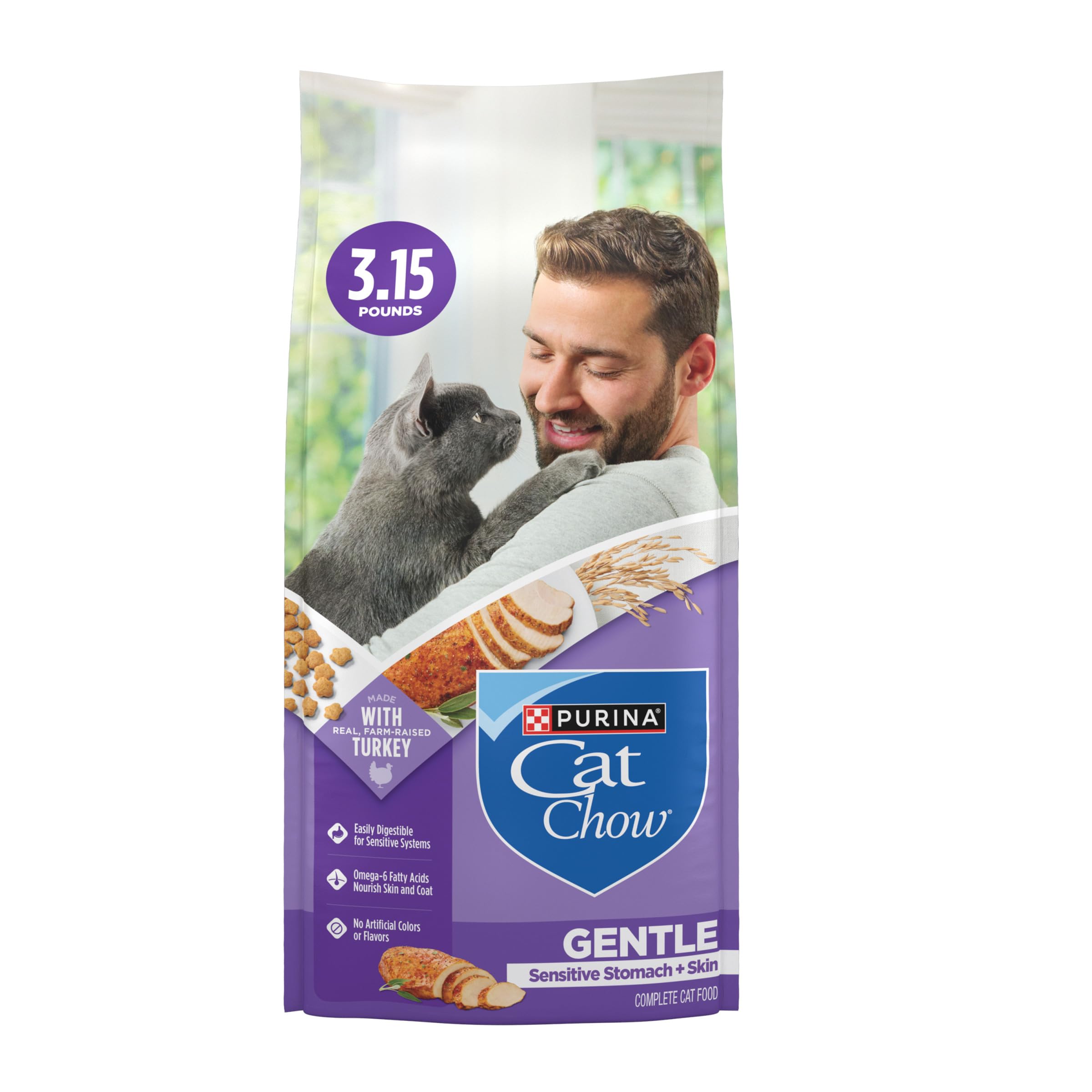
Purina Cat Chow Gentle proves that digestive-friendly nutrition does not have to come with a premium price tag. Made with real farm-raised turkey, this formula provides gentle nutrition for adult cats with mild stomach sensitivities. The pack of four 3.15-pound bags gives you flexibility in portioning and helps maintain freshness longer than a single large bag.
Omega-6 fatty acids support skin and coat health while the high-quality protein recipe maintains muscle strength and energy levels. The formula includes 29 essential vitamins and minerals to support overall wellbeing, and it contains no artificial colors or flavors. Each serving delivers 100 percent complete and balanced nutrition for adult cats at every meal.
For cat parents managing a tight budget who still want to address mild digestive concerns, this formula offers a practical and accessible entry point. It is less specialized than the premium options on this list, but it reliably meets the needs of cats with minor sensitivities who do not require a prescription-level diet. The multi-pack format also makes it easy to store and rotate.
Why we love it
- Multi-pack of four bags helps maintain kibble freshness
- Real turkey as the primary protein source
- Omega-6 fatty acids support healthy skin and coat
- No artificial colors or preservatives
Good to know
- Less specialized than veterinary-grade digestive diets
- May not be sufficient for severe or chronic digestive issues
- Contains grains, which some sensitive cats may not tolerate
Safety & Care Tips
Transition food gradually over seven to ten days
Switching a cat’s diet abruptly can worsen digestive upset even when the new food is better suited to their needs. Start by mixing 25 percent new food with 75 percent old food for the first two to three days, then gradually adjust the ratio until the transition is complete. Monitor stool quality and appetite throughout the process, and slow down the transition if you notice any signs of distress.
Pair diet changes with stress reduction at mealtime
A calm eating environment matters almost as much as the food itself. Place food bowls away from loud appliances, high-traffic areas, and other pets who may cause competition or anxiety. Elevated bowls can help some cats eat more comfortably, and feeding smaller, more frequent meals reduces the burden on the digestive system compared to one or two large portions.
FAQ
What ingredients help cats with digestive problems?
Is wet or dry food better for cats with sensitive stomachs?
How long does it take for a new food to help digestive issues?
Can I switch between different digestive care formulas?
Final Thoughts: The Verdict
For most cat parents, the food for cats with digestive problems winner is the Royal Canin Digestive Care because it combines research-backed prebiotics, a uniquely designed kibble that slows eating, and proven stool quality results in a formula your cat can thrive on long term. If you want the hydration and gentle texture of wet food, grab the Wellness CORE+ Digestive Health Pate. And for a clean, limited ingredient approach that strips away potential triggers, nothing beats the Blue Buffalo Basics Skin & Stomach Care.