
When your dog receives a diagnosis of liver disease, the right diet becomes the single most important lever you can pull to slow the condition, reduce symptoms, and improve quality of life. The wrong food — even a high-quality maintenance formula — can overwork an already compromised liver and accelerate decline. This is a category where veterinary guidance and precise nutrition are non-negotiable.
I’m Mo Mahin — the founder and writer behind Furric. My readers rely on me to sift through veterinary nutritional data, compare ingredient profiles like controlled phosphorus and low copper levels, and synthesize owner-reported outcomes from hundreds of households managing canine hepatic conditions.
The selection of a food that supports rather than stresses the liver depends on two critical factors: protein quality (not just quantity) and trace mineral levels that affect copper accumulation. Finding the right food for dog with liver disease means balancing these metrics against your dog’s specific tolerance and stage of illness.
How To Choose The Best Food For Dog With Liver Disease
Liver disease in dogs encompasses several distinct pathologies — chronic hepatitis, copper storage disease, portosystemic shunts — each demanding a slightly different nutritional profile. The guiding principles below apply broadly, but your veterinarian’s specific recommendation for your dog’s diagnosis should always take precedence over general guidance.
Protein: Quality Over Quantity
Conventional wisdom told owners to simply restrict protein. Modern veterinary nutrition focuses on highly digestible protein sources — chicken, egg, or vegetable isolates — that produce fewer nitrogenous waste byproducts for the liver to process. Controlled levels of usable protein reduce hepatic workload without causing muscle wasting that accelerates overall decline.
Copper: The Critical Threshold
Dogs with copper storage disease or chronic hepatitis often cannot excrete dietary copper efficiently. A food formulated specifically for liver care maintains copper levels well below standard maintenance diets. This single spec — measured in parts per million — can determine whether the condition stabilizes or progresses. Some general-purpose foods contain copper levels two to three times higher than what a compromised liver can handle.
Phosphorus and Sodium Restriction
As liver function declines, secondary kidney stress becomes a compounding problem. Dry foods with restricted phosphorus (under 0.5% on a dry matter basis) and reduced sodium help prevent fluid retention and renal overload. The dual-support formulas — labeled as “liver care” or “hepatic” — already account for this interaction.
Kibble Size and Palatability
A sick dog with a declining appetite or dental issues will refuse food that is physically difficult to chew or lacks palatability enhancers. Several liver-care dry foods feature larger kibble that older or small-breed dogs struggle to manage. Wet-food options or formulas designed for easy soaking can rescue a picky patient during the critical early weeks of dietary transition.
Quick Comparison
On smaller screens, swipe sideways to see the full table.
| Model | Category | Best For | Key Spec | Amazon |
|---|---|---|---|---|
| Hill’s Prescription Diet l/d | Premium | Established liver disease support | Low copper, controlled protein | Amazon |
| Royal Canin Hepatic Dry | Premium | Copper storage disease management | Lowest copper levels available | Amazon |
| Blue Buffalo KS Kidney Support | Mid-Range | Dual kidney-liver support | Controlled phosphorus | Amazon |
| Purina Pro Plan NF Kidney Function | Mid-Range | Restricted protein and phosphorus | Energy-dense formula | Amazon |
| Hill’s Prescription Diet i/d Wet | Budget-Friendly | Picky eaters with digestive distress | Wet, highly digestible pate | Amazon |
In‑Depth Reviews
1. Hill’s Prescription Diet l/d Liver Care Dry Dog Food, Chicken

Hill’s l/d is the most direct liver-targeting dry food in this roundup. It features controlled levels of highly digestible chicken protein specifically formulated to reduce hepatic workload, along with low copper to minimize accumulation in liver cells. This is the food that owner-verified reports show reversed declining liver function test results in dogs with shunts and chronic hepatitis.
The 5–7 mm kibble diameter works well for medium and large breeds, though a few owners of sub-15-pound dogs report their pets struggle with the size. Wetting the kibble softens it for seniors with missing teeth. The bag size (17.6 lb) offers better cost efficiency than smaller veterinary-diet alternatives, and the inclusion of clinically proven antioxidants supports immune function in dogs with compromised livers.
Owners of dogs with copper toxicosis specifically call out this formula as a key component of their management protocol. Multiple reports indicate that after switching from standard maintenance diets to l/d, weekly episodes of vomiting or lethargy decreased to rare occurrences. The food’s palatability is acceptable but not exceptional — some dogs need a gradual transition period to accept it fully.
Why we love it
- Targeted low-copper formulation for liver disease management
- Controlled protein reduces hepatic workload without muscle wasting
- Large 17.6 lb bag provides extended feeding schedule
Good to know
- Kibble size is too large for some small-breed dogs
- Requires veterinarian authorization to purchase
2. Royal Canin Veterinary Diet Canine Hepatic Dry Dog Food
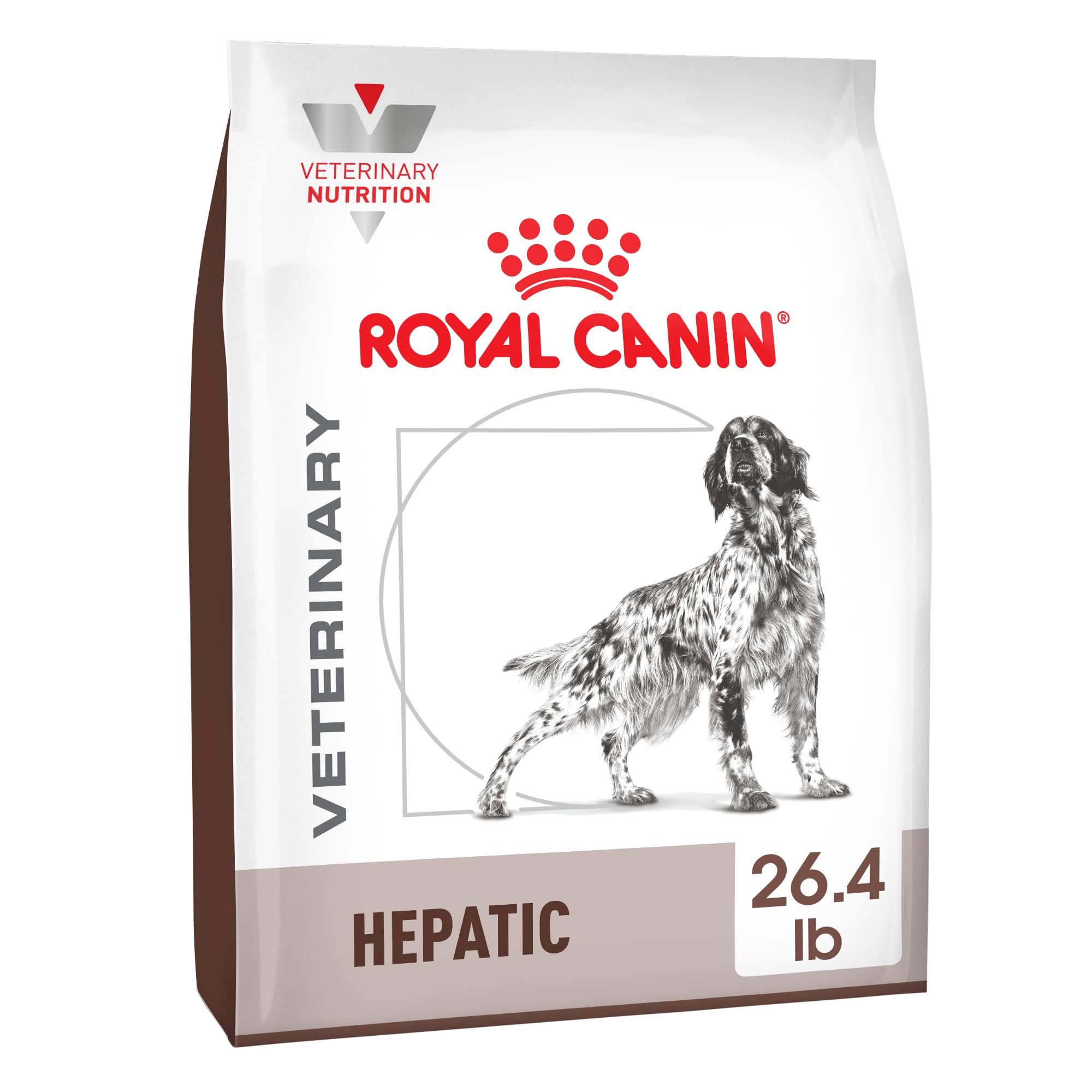
Royal Canin Hepatic stands apart because of its exceptionally low copper concentration. Several owner reviews explicitly state that this food was chosen after discovering that other veterinary liver diets contained higher copper levels than their dog could tolerate. The formula relies on highly digestible vegetable proteins (soy protein isolate) rather than animal protein, which further reduces metabolic byproducts that strain the liver.
The adapted energy content is a hidden advantage — it allows for smaller meal volumes while maintaining caloric intake, which decreases intestinal load in dogs whose digestive efficiency is already compromised. Prebiotics support the gastrointestinal microbiome, a factor often overlooked in liver disease where gut health directly affects hepatic ammonia processing. The bag produces roughly 131 cups of food, making it the highest-volume option in this lineup.
The major practical drawback is kibble size. At roughly 10–12 mm diameter, the pebbles are noticeably large for small-breed dogs. Owners of Chihuahuas and Yorkies report needing to crush the kibble. The price point is premium-grade even among veterinary diets, though bulk purchasing from Amazon reduces per-serving cost compared to buying multiple smaller bags from local retailers.
Why we love it
- Lowest copper content available for copper storage disease management
- Vegetable protein source reduces hepatic ammonia processing load
- High-volume bag (26.4 lb) provides long-term feeding economy
Good to know
- Kibble diameter is large and may require crushing for small dogs
- Premium price tier even among prescription diets
3. Blue Buffalo Natural Veterinary Diet KS Kidney Support Dry Dog Food

Blue Buffalo KS is positioned as a kidney support formula, but its controlled phosphorus and sodium, paired with moderate-quality chicken protein, make it relevant for dogs whose liver disease has secondary renal implications. The formula excludes corn, wheat, soy, poultry by-product meals, and artificial preservatives — making it a fit for dogs with concurrent food sensitivities.
Owner feedback consistently notes high palatability. Several reviewers report that their dogs refused competing kidney diets but ate Blue Buffalo KS eagerly, a crucial factor when a sick dog’s appetite is already suppressed. The kibble shape is standard and poses no size issues for small or medium breeds. The 6 lb bag is compact, which is useful for trial-feeding before committing to a larger volume.
The limitation is that this is a kidney-formulated diet, not a true hepatic diet. It does not explicitly address copper accumulation, and the protein quality, though adequate, does not match the hydrolyzed or vegetable-isolate precision of Royal Canin Hepatic or Hill’s l/d. Dogs with primary copper storage disease would need a lower-copper formula. For early-stage hepatic disease with kidney involvement, this mid-range option balances cost and nutritional adequacy.
Why we love it
- Excellent palatability and acceptance by picky dogs
- Free from corn, wheat, soy, and artificial additives
- Controlled phosphorus supports dual kidney-liver management
Good to know
- Not designed for primary liver disease — lacks targeted low-copper formulation
- Small 6 lb bag requires frequent repurchase
4. Pro Plan Veterinary Diets Purina NF Kidney Function Canine Dry Dog Food

Purina NF is an energy-dense dry food with restricted protein, phosphorus, and sodium designed for kidney function support, but its nutritional profile overlaps meaningfully with hepatic care needs. Each serving is calorie-dense, which helps counter the weight loss common in dogs with advanced liver disease. The formula includes antioxidants for immune support, a relevant feature given that hepatic compromise often depresses immune function.
Owner reviews highlight two extremes. Several owners report that their dogs’ kidney values normalized after months on this food combined with supplements, and that their dogs enjoy the taste. However, a critical subset of owners report that the kibble does not soften adequately even after extended soaking — one dog experienced digestive distress characterized by undigested pieces in stool within hours of eating. This suggests the formula’s digestibility may vary by individual dog’s GI sensitivity.
The kibble size in recent batches has reportedly increased, causing some previously reliable eaters to refuse the food. If your dog has a strong preference for small kibble, be prepared to transition slowly or crush the pieces. The 6 lb bag is small and serves primarily as a trial size. Purina NF is best considered as a secondary option for dogs that have already failed more targeted hepatic formulas.
Why we love it
- Energy-dense formula fights weight loss in sick dogs
- Antioxidant support for immune system
- Restricted phosphorus and sodium for combined organ support
Good to know
- Some dogs experience poor digestibility and loose stools
- Kibble size increase in recent batches caused picky eaters to refuse
5. Hill’s Prescription Diet i/d Digestive Care Wet Dog Food, Turkey, 13 oz. Cans (12-Pack)

Hill’s i/d is a digestive care formula, not a liver-targeted diet. It earns a place in this roundup because of its critical role in managing dogs whose liver disease is complicated by appetite refusal, vomiting, or diarrhea. The ActivBiome+ Digestion prebiotic blend rapidly activates the gut microbiome to support digestive health, which directly benefits hepatic function by reducing the gut’s ammonia production that the liver must process.
The wet pate texture makes this the most palatable option in this list. Owners of extremely picky eaters, senior dogs with dental issues, or dogs on multiple medications report using the turkey pate to hide pills and to stimulate appetite during flare-ups. The 13 oz cans are larger than standard wet-food cans, providing 3–4 meals per can depending on dog size. The formula’s S+OXSHIELD technology reduces the risk of urinary crystal formation, a useful secondary benefit for dogs already on restricted-protein diets.
The limitation is clear: this is not a complete liver care diet. Dogs with diagnosed hepatic disease should use this as a short-term appetite solution or transitional food while their system adjusts to a true hepatic dry food. The 12-pack offers good value, but the cost per feeding is higher than dry diets. Owners managing advanced liver disease should pair this with a primary hepatic formula like Hill’s l/d rather than relying on i/d alone.
Why we love it
- Extremely palatable wet pate for picky or sick dogs
- Prebiotic blend supports gut microbiome and reduces hepatic ammonia load
- Large 13 oz cans are cost-effective per feeding for wet food
Good to know
- Not formulated specifically for liver disease — use as supplement not sole diet
- Higher per-feeding cost compared to dry kibble options
FAQ
Can I feed a general maintenance diet instead of a prescription liver food?
How do I know if the kibble size is appropriate for my small breed dog?
What should I do if my dog refuses to eat the prescription food?
Final Thoughts: The Verdict
For most dogs with active liver disease, the food for dog with liver disease winner is the Hill’s Prescription Diet l/d because it combines targeted low-copper formulation, controlled highly digestible protein, and clinically proven antioxidant support in a package sizes that works for most breeds. If your dog specifically needs the lowest available copper level to manage copper storage disease, grab the Royal Canin Hepatic Dry. And for dogs whose liver disease has triggered severe appetite loss or GI upset, nothing beats the Hill’s Prescription Diet i/d Wet for immediate palatability and digestive support during the transition period.