
German Shepherd puppies grow fast — sometimes too fast. A growth rate that outpaces their developing skeleton can lead to hip dysplasia and elbow issues later. The single most important decision you make in their first year is matching the calcium-to-phosphorus ratio and calorie density to a large-breed puppy’s unique metabolic demands. Generic puppy kibble designed for a Chihuahua or Beagle simply won’t cut it for a prospective 70- to 90-pound GSD.
I’m Mo Mahin — the founder and writer behind Furric. I’ve spent years comparing ingredient panels, analyzing calcium and phosphorus ratios, studying AAFCO feeding trials for large-breed growth formulas, and filtering thousands of owner reviews to identify what actually supports sound structural development in German Shepherd puppies.
This guide walks through the top five contenders, what each formula does differently for a developing GSD, and how to match a bag to your pup’s specific growth curve. Whether you’re after joint support, clean protein sources, or a proven veterinary track record, this breakdown of the best food for gsd puppy will help you make an informed choice.
How To Choose The Best Food For GSD Puppy
The German Shepherd breed carries a genetic predisposition for hip and elbow dysplasia. A puppy food that accelerates growth with excessive calories or unbalanced minerals can exacerbate those problems. Focus on these four parameters when reading a bag label.
Calcium Level — The Non‑Negotiable Spec
For a large-breed puppy (projected adult weight over 70 pounds), calcium should fall between 0.8 and 1.2 percent on a dry‑matter basis. Levels above 1.5 percent have been linked to skeletal abnormalities in GSDs. Do not rely on grain‑free claims alone; check the guaranteed analysis for calcium percentage.
Caloric Density and Fat Content
A GSD puppy needs energy for play and training, but excessive fat (above 18 percent) can drive growth too fast. Look for formulas that keep fat in the 14–16 percent range and provide around 350–400 kcal per cup. This helps maintain a lean body condition during the rapid‑growth window between 4 and 10 months.
DHA and Omega‑3 Fatty Acids
Docosahexaenoic acid (DHA) from fish oil or marine sources supports retinal and brain development in puppies. GSD pups that receive adequate DHA during the first year tend to demonstrate better problem‑solving skills and trainability — a critical advantage for a working breed.
Protein Source and Digestibility
Chicken, chicken meal, fish meal, and lamb are common primary proteins in high‑quality large‑breed puppy foods. Avoid unnamed meat meals or by‑product meals. German Shepherds are prone to sensitive digestion, so a formula with prebiotics or probiotics can reduce loose stools during the transition period.
Quick Comparison
On smaller screens, swipe sideways to see the full table.
| Model | Category | Best For | Key Spec | Amazon |
|---|---|---|---|---|
| Wellness CORE Large Breed Puppy | Grain‑Free Dry | GSDs with grain sensitivities | 1.0% Calcium, 400 kcal/cup | Amazon |
| Hill’s Science Diet Large Breed Puppy | Veterinary Recommended Dry | Proven track record & reliable digestion | 0.95% Calcium, 354 kcal/cup | Amazon |
| Purina Pro Plan Sport 30/18 Large Breed | High Protein Dry | Active, athletic GSD puppies | 30% Protein, 18% Fat | Amazon |
| Royal Canin Large Breed Adult | Breed‑Specific Kibble | Maintenance after puppy growth phase | Unique kibble shape, 0.9% Calcium | Amazon |
| ORIJEN Amazing Grains Puppy Large | High‑Protein Grain‑Inclusive | Protein‑forward ancestral diet | 90% Poultry/Fish Ingredients | Amazon |
In‑Depth Reviews
1. Wellness CORE Large Breed Puppy Dry Dog Food
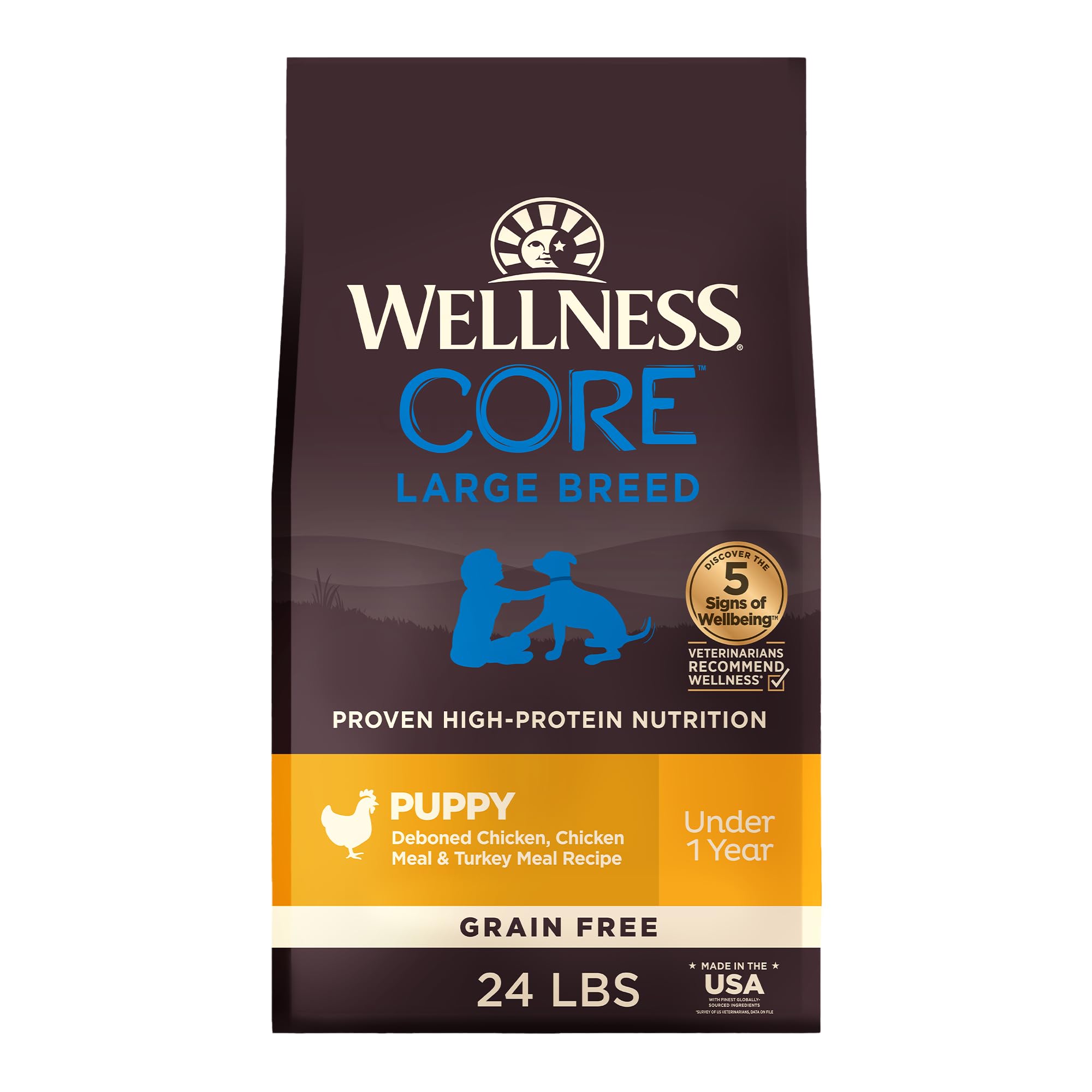
Wellness CORE Large Breed Puppy hits the critical calcium target at 1.0 percent — right in the safe zone for a growing GSD’s skeletal development. The formula delivers 400 kcal per cup, which is moderate enough to avoid explosive growth while still supporting lean muscle from the chicken and turkey protein base. DHA from salmon oil provides the omega‑3 fatty acids your puppy’s brain and vision need during the imprinting phase.
Grain‑free doesn’t mean low‑carb here; the recipe relies on peas and potatoes as carbohydrate sources, which most GSDs tolerate well. Owners of German Shepherds with environmental allergies often report fewer skin flare‑ups after switching to this formula. The 24‑pound bag size means you’ll restock more frequently with a large breed, but the ingredient transparency and absence of corn, wheat, or soy justify the mid‑range investment.
The only potential downside is the higher caloric density compared to some competing large‑breed puppy foods — monitor your pup’s body condition score closely, especially if they are less active. Transition gradually over 7 to 10 days to avoid digestive upset from the protein concentration.
Why we love it
- Calcium level precisely calibrated for large‑breed bone growth
- Includes guaranteed DHA for cognitive development
- No corn, wheat, soy, or artificial preservatives
Good to know
- Higher kcal density requires portion monitoring for less active pups
- Grain‑free formula may not suit all GSD digestive systems
2. Hill’s Science Diet Large Breed Puppy Chicken & Brown Rice
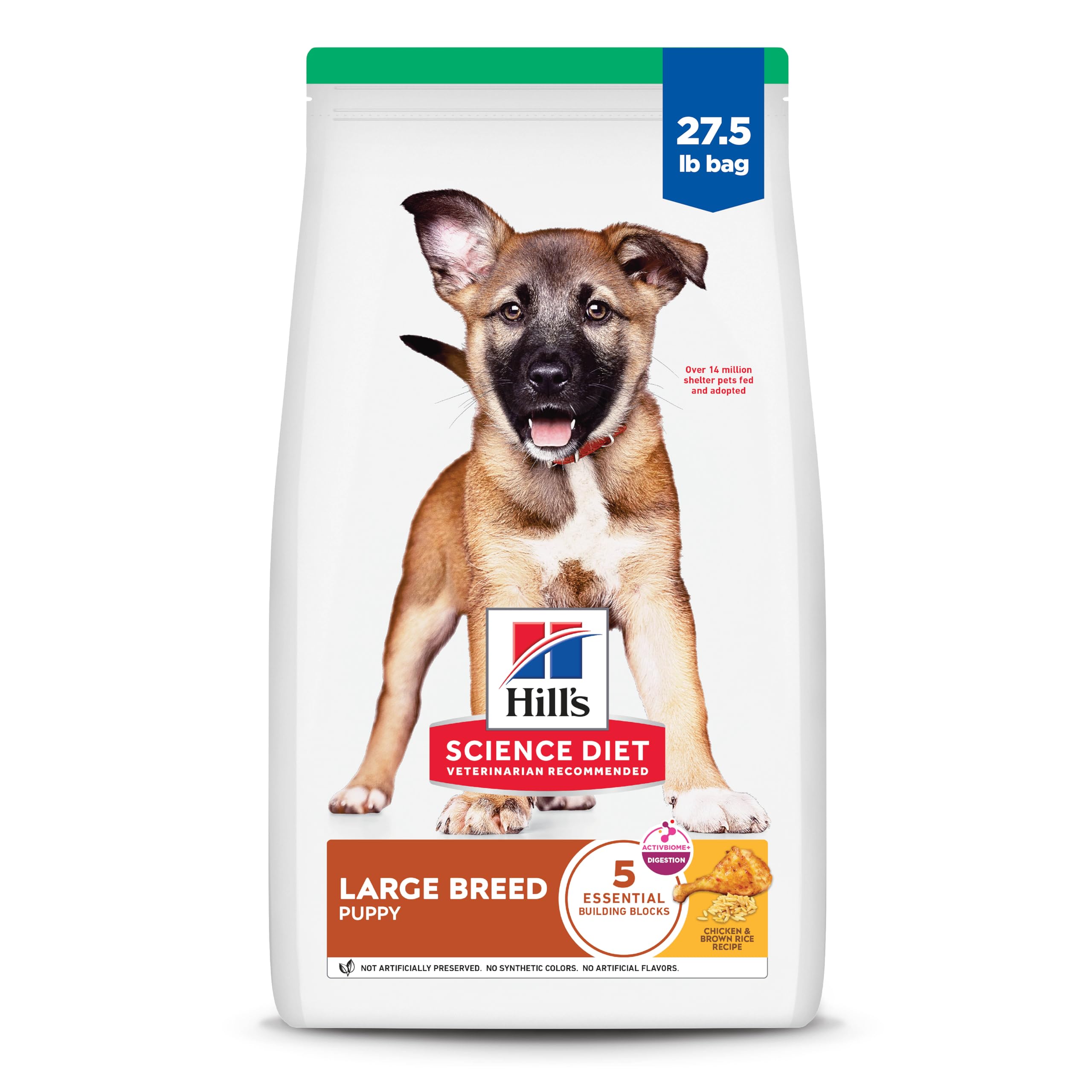
Hill’s Science Diet is the number‑1 brand recommended by U.S. veterinarians for a reason: the Large Breed Puppy formula has a calcium level of 0.95 percent and a calorie count of 354 per cup — a conservative energy density that naturally slows the growth rate. This is the ideal choice for a GSD puppy whose parents had hip or elbow issues, because it minimizes mechanical stress on developing joints.
The Chicken & Brown Rice recipe uses digestible carbohydrates and a moderate protein level that rarely triggers loose stools in sensitive German Shepherd puppies. DHA from fish oil supports retinal and brain development, while the antioxidant blend bolsters the immune system during the vaccination and socialization period. Many owners report that their GSD maintains a steady, lean body condition throughout the rapid‑growth months.
The kibble size is suited for a medium‑to‑large puppy jaw, encouraging chewing rather than gulping. Because this is a grain‑inclusive formula, it provides steady energy release without the blood‑sugar spikes that can occur with high‑starch grain‑free alternatives. Transition slowly over a week if switching from a different brand.
Why we love it
- Conservative calorie and calcium levels reduce growth rate risk
- Veterinarian‑recommended with decades of clinical feeding trials
- Gentle on GSD digestive systems
Good to know
- Lower protein content may not satisfy working‑line GSD breeders
- Some owners find the kibble size small for giant breeds
3. Purina Pro Plan Sport Development 30/18 Large Breed Puppy
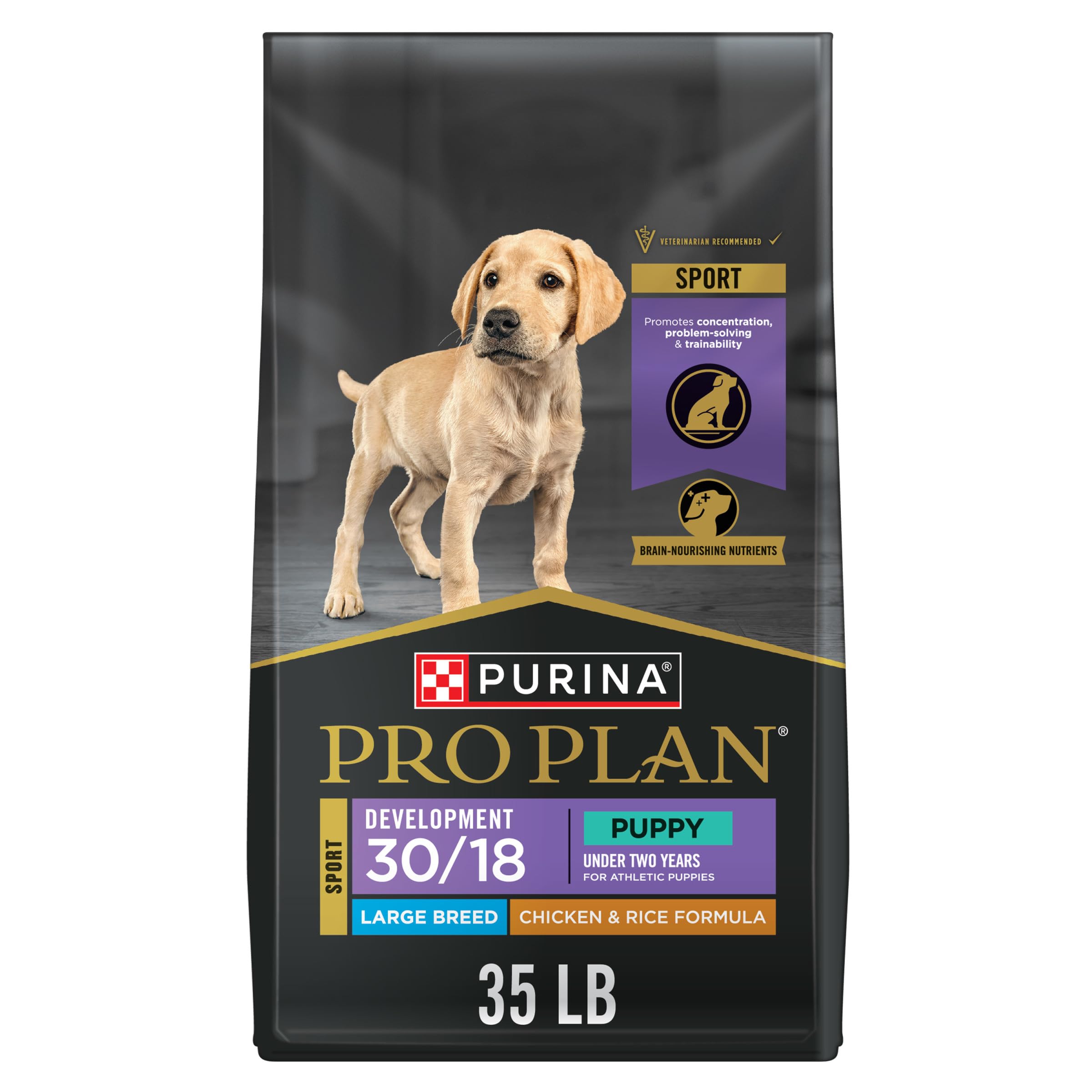
Purina Pro Plan Sport Development 30/18 is designed for athletic large‑breed puppies that need higher protein and fat to fuel intense activity. If your GSD puppy comes from working lines and you plan to engage in protection sports, agility, or long daily runs, this formula delivers 30 percent protein and 18 percent fat — a ratio that supports muscle development and sustained energy output.
The inclusion of glucosamine is a forward‑looking feature for German Shepherds, given their predisposition to joint deterioration. Real chicken is the first ingredient, and the kibble is coated with probiotics to aid digestion. Owners of Great Danes and GSD mixes report that puppies maintain steady growth without the loose stool issues that sometimes accompany ultra‑high‑protein formulas, thanks to the rice and barley carbohydrate matrix.
The trade‑off is clear: this is a calorie‑dense food. GSD puppies that are naturally sedentary or recovering from an injury may gain weight too quickly on the 30/18 formula. Monitor the ribs and waistline weekly, and consider the 18 percent fat content a red flag if your pup’s parents had orthopedic issues.
Why we love it
- High protein content supports athletic and working‑line GSDs
- Glucosamine for proactive joint support
- Probiotic coating aids digestion despite high protein
Good to know
- Higher fat content can accelerate growth rate in less active pups
- Not suitable for GSDs prone to pancreatitis or overweight tendencies
4. Royal Canin Size Health Nutrition Large Adult Dry Dog Food

Royal Canin Large Adult is not a puppy formula, but it earns a spot in this guide because many GSD guardians ask, “When do I transition my pup off large‑breed puppy food?” This product is the natural next step once your German Shepherd reaches skeletal maturity — typically around 18 to 24 months for males. It provides 0.9 percent calcium and a moderate calorie level that prevents the weight creep that often follows the growth phase.
The oversized kibble shape is specifically contoured for the jaw and teeth of large dogs, encouraging chewing and reducing plaque buildup. The formula contains glucosamine and chondroitin for ongoing joint support, and the highly digestible proteins minimize stool volume — a practical benefit for anyone dealing with a massive, fully‑grown GSD at cleanup time. Antioxidants from vitamins C and E support immune function as your dog enters adulthood.
If you are currently raising a GSD puppy, bookmark this product for the transition window. Continue feeding a large‑breed puppy formula (like the Wellness CORE or Hill’s Science Diet above) until your veterinarian confirms that growth plates have closed.
Why we love it
- Unique kibble shape promotes chewing and dental health
- Joint support glucosamine and chondroitin for mature GSDs
- Highly digestible formula reduces stool volume
Good to know
- Adult formula — not appropriate for puppies under 18 months
- Premium pricing for a grain‑inclusive kibble
5. ORIJEN Amazing Grains Puppy Large Breed Recipe
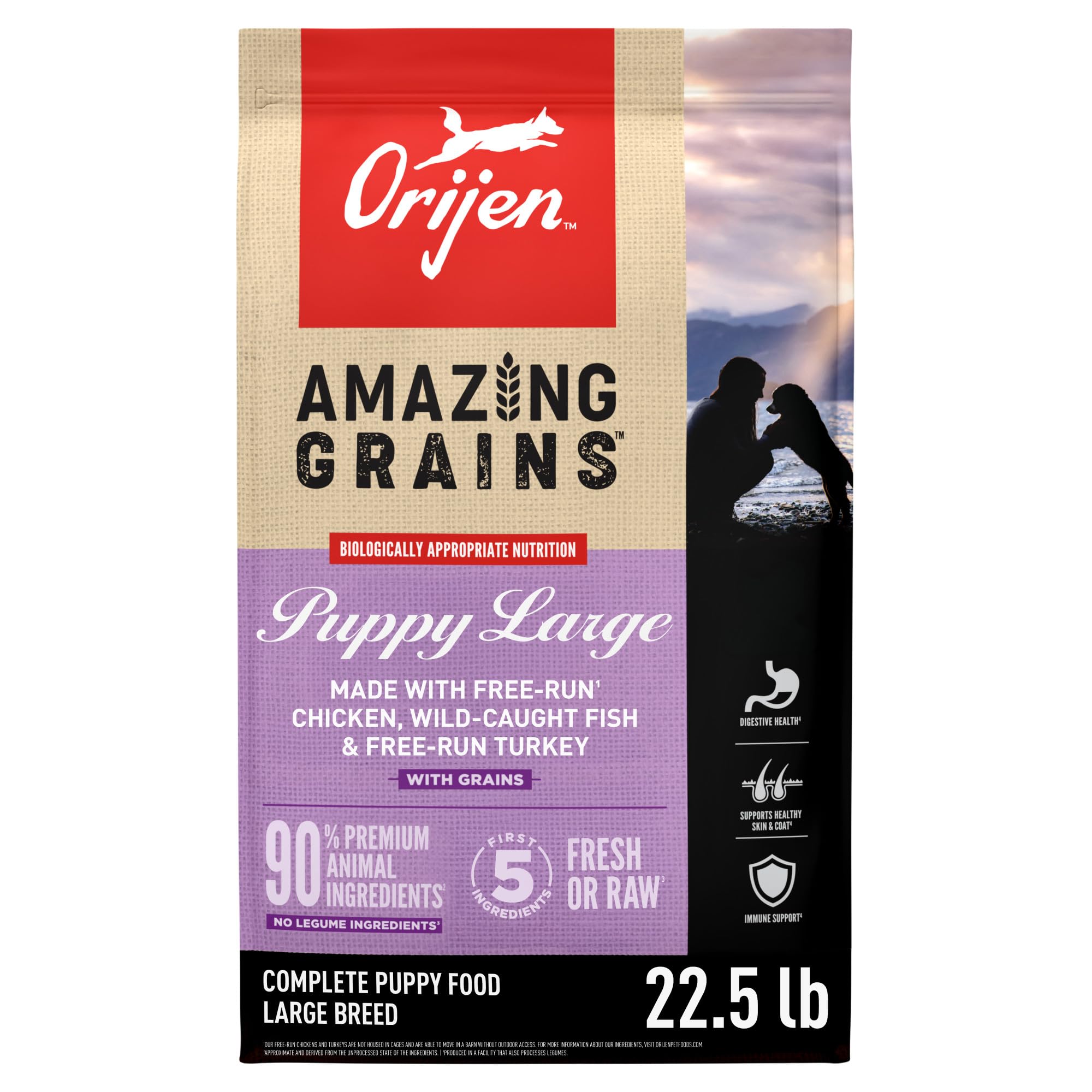
ORIJEN Amazing Grains Puppy Large Breed contains 90 percent poultry and fish ingredients, including chicken, herring, whiting, chicken liver, and salmon — mirroring the WholePrey ratios that wild canids consume. This is the highest animal‑protein concentration in this roundup, and it comes paired with non‑GMO grains (oats, millet, and sorghum) that provide steady carbohydrate energy.
The freeze‑dried raw coating on each piece of kibble adds an intense aroma and flavor that even picky GSD puppies find irresistible. DHA from pollock oil supports brain development, while the natural glucosamine from cartilage and bone ingredients theoretically supports long‑term joint health. For owners who believe the German Shepherd’s evolutionary history favors a high‑protein, low‑carb diet, this formula comes closest to that ideal among large‑breed puppy options.
Because this is an ultra‑high‑protein formula (approximately 38 percent protein on a dry‑matter basis), it is best reserved for GSD puppies with excellent digestive tolerance. Some owners report looser stools during the transition. Introduce this food incrementally over 10 to 14 days, and consult your veterinarian if your puppy shows signs of rapid weight gain or excessive thirst.
Why we love it
- Highest animal‑protein percentage for biologically appropriate nutrition
- Freeze‑dried raw coating for superior palatability
- Includes non‑GMO grains for steady energy release
Good to know
- Very high protein may cause digestive upset in sensitive pups
- Higher caloric density requires careful portion control
FAQ
When should I switch my GSD puppy from puppy food to adult food?
Is grain‑free food safe for my German Shepherd puppy?
How much calcium does a GSD puppy need per day?
Why does my GSD puppy have loose stools after switching food?
Final Thoughts: The Verdict
For most GSD owners, the best food for gsd puppy is the Wellness CORE Large Breed Puppy because it delivers a precise 1.0 percent calcium level and moderate 400 kcal/cup calorie density that supports steady skeletal development without excessive growth acceleration. If you prefer a formula with decades of veterinary feeding trials and the most conservative growth curve, grab the Hill’s Science Diet Large Breed Puppy. And for a high‑energy GSD from working lines that needs the extra protein to sustain athletic performance, nothing beats the Purina Pro Plan Sport 30/18.