
Hairless cats have a unique metabolic reality: their lack of fur means they burn more calories to maintain body temperature, and their exposed skin is a direct mirror of their internal health. The wrong food shows up quickly — as greasy skin, digestive upset, or a dull coat (or lack thereof). Selecting the right protein source and fat profile isn’t a luxury; it’s essential for their systemic well-being.
I’m Mo Mahin — the founder and writer behind Furric. I’ve spent years analyzing ingredient panels, cross-referencing veterinary nutritional guidelines, and tracking owner-reported outcomes across hundreds of cat food formulas to understand what truly works for sensitive, high-metabolism breeds and hairless cats.
My research narrows the field down to formulas that prioritize digestible proteins, gut-supporting prebiotics, and balanced omega fatty acids, which is precisely what you’ll find in this guide to the best food for hairless cats.
How To Choose The Best Food For Hairless Cats
Feeding a hairless cat isn’t the same as feeding a standard domestic shorthair. Their higher basal metabolic rate, sensitive skin, and predisposition to digestive issues demand a strategic approach to macronutrients, ingredient sourcing, and food form. Below are the four critical filters to apply before making a purchase.
Prioritize Animal-Based Protein Content
Hairless cats are obligate carnivores with a higher caloric need due to thermoregulation. Look for a minimum of 40% crude protein on a dry matter basis, with a named animal protein (chicken, duck, salmon, trout) as the first ingredient. Avoid generic “meat meal” or “poultry by-product” — these lack the specific amino acid profile a hairless cat’s skin and muscles require.
Match Fat Levels to Skin Condition
A hairless cat’s skin produces sebum naturally, but a diet too high in certain fats can make it greasy, while too little leaves it dry and flaky. Aim for a moderate fat content around 18–22% on a dry matter basis, with omega-3 and omega-6 fatty acids coming from named sources like salmon oil or flaxseed. This balance supports a supple, non-oily skin texture.
Choose Digestive-Friendly Carbohydrates
Hairless cats often have sensitive stomachs. Select foods that use digestible carb sources like pumpkin, sweet potato, or lentils rather than corn, wheat, or soy. Prebiotic fibers (inulin, chicory root) and probiotics (e.g., dried Bacillus coagulans fermentation product) help stabilize stool quality and reduce vomiting frequency.
Consider Food Form: Wet vs. Dry
Wet food provides hydration critical for skin elasticity and kidney health, but dry kibble can help reduce plaque buildup. A mixed feeding approach works best for many owners: a high-quality wet pate for moisture and a small-kibble dry formula for dental maintenance. Avoid oversized kibble shapes that can be difficult for smaller mouths to chew thoroughly.
Quick Comparison
On smaller screens, swipe sideways to see the full table.
| Model | Category | Best For | Key Spec | Amazon |
|---|---|---|---|---|
| Tiki Cat Indoor Health (Chicken & Turkey) | Dry Kibble | High-protein indoor maintenance | 12 lbs bag, real chicken #1 | Amazon |
| Wellness CORE+ Digestive Health Pate | Wet Pate | Sensitive stomach hydration | 3 oz cans, prebiotic fiber | Amazon |
| Royal Canin Digestive Care Dry | Dry Kibble | Stool quality & slow eating | 3 lb bag, ring-shaped kibble | Amazon |
| Stella & Chewy’s Raw Coated Chicken | Dry Kibble | Picky eaters & dental support | 10 lb bag, 65-70% animal protein | Amazon |
| Tiki Cat Indoor Health (Trout & Menhaden) | Dry Kibble | Fish-based novel protein | 6 lb bag, trout as #1 ingredient | Amazon |
| Blue Buffalo Basics Duck & Potato Wet | Wet Pate | Limited ingredient allergy relief | 3 oz cans, single novel protein | Amazon |
| Purina Pro Plan Sensitive Skin Duck | Wet Pate | Chronic diarrhea & skin sensitivity | 3 oz cans, prebiotic fiber | Amazon |
In‑Depth Reviews
1. Tiki Cat Born Carnivore Indoor Health Dry Cat Food, Chicken & Turkey Meal, 12 lbs

This 12-pound bag delivers a protein-dense, minimally processed kibble with real chicken as the first ingredient — essential for a hairless cat’s elevated calorie burn. The formula skips potatoes, corn, wheat, and soy, relying instead on pumpkin for gentle fiber, which helps maintain firm stools in cats prone to loose movements.
The omega-6 fatty acid profile supports skin barrier function without making it overly greasy, a common issue with lower-quality high-fat foods. Owners report noticeable improvements in coat (or skin) texture within two weeks, and the crunchy texture helps scrape away plaque during chewing.
Non-GMO ingredients and a complete nutrient profile for all life stages make this a versatile staple. The 12-pound size offers strong per-pound value for multi-cat households or owners who prefer to buy in bulk for consistency.
Why we love it
- Real chicken as the first ingredient supports lean muscle mass.
- Pumpkin fiber promotes steady digestion without loose stools.
- Large bag size reduces per-serving cost for long-term feeding.
Good to know
- Some cats may need a slow transition due to the high protein content.
- Kibble size may be too large for very young kittens.
2. Wellness CORE+ Digestive Health Pate Variety Pack

Hairless cats often struggle with dehydration, which directly impacts skin elasticity. This 12-can variety pack of 3-ounce pates provides a moisture-rich alternative to dry kibble, with salmon and whitefish as the primary proteins. The smooth pate texture is easy to mash for cats with dental sensitivities or those recovering from digestive upset.
The formula includes prebiotic fiber specifically engineered to support gut health, along with omega-3 fatty acids from fish sources. Owners of cats with intermittent vomiting or soft stool report noticeable stabilization within a week of switching to this wet food regimen.
Being grain-free and free of carrageenan, corn, wheat, and soy, this food eliminates many common triggers for skin inflammation. The variety format also helps prevent flavor fatigue in picky eaters who turn their nose up at repeated meals.
Why we love it
- High moisture content supports skin hydration and kidney health.
- Prebiotic fiber stabilizes digestion for cats with sensitive stomachs.
- Two seafood flavors reduce boredom for picky eaters.
Good to know
- Small 3-oz cans may require multiple cans per day for adult cats.
- Fish-based diet may cause fishy breath in some cats.
3. Royal Canin Digestive Care Adult Dry Cat Food, 3 lb Bag

This formula uses a specialized ring-shaped kibble that physically slows down eating — a critical feature for hairless cats who scarf food and regurgitate. The blend of prebiotics and dietary fiber is backed by an internal study showing over 95% healthy stool quality after 10 days, which directly addresses the loose-stool pattern common in this breed type.
The highly digestible protein source reduces the workload on the gastrointestinal tract, making this a suitable option for cats with chronic vomiting or diarrhea. Many owners of senior hairless cats report this food stops “throw-up” incidents that other brands could not resolve.
While this is a veterinary diet formula, it’s available without a prescription. The 3-pound bag is ideal for trial runs before committing to a larger size, though larger households may find the bag size runs out quickly.
Why we love it
- Unique ring shape encourages slower eating to reduce regurgitation.
- Clinically proven to improve stool quality in sensitive cats.
- Highly digestible protein eases digestive workload.
Good to know
- Smaller bag size may require frequent repurchasing.
- Kibble holes can occasionally trap teeth in some cats.
4. Stella & Chewy’s Raw Coated Cat Food, Cage-Free Chicken, 10 lb Bag

This bag features a freeze-dried raw coating on a small kibble base, delivering 65–70% animal protein from cage-free chicken. The high protein density matches the elevated caloric needs of hairless cats, while the small kibble size makes it accessible for kittens, seniors, and cats with dental issues.
The formula includes probiotics for digestive support and omega fatty acids from salmon oil and fenugreek seeds — ingredients that visibly improve skin suppleness and reduce flakiness. Owners of the most selective eaters report that the raw coating triggers an immediate feeding response even after weeks of food refusal.
This is a grain-free recipe with zero fillers, artificial additives, or unnamed meat sources. The 10-pound bag represents a premium-tier cost, but the ingredient density means smaller serving sizes may satisfy a cat’s nutritional requirements compared to lower-protein foods.
Why we love it
- Raw coating appeals strongly to picky and finicky eaters.
- Small kibble size suitable for cats with dental sensitivities.
- High animal protein content matches hairless cat metabolic needs.
Good to know
- Premium price point may not suit all budgets long-term.
- Some cats may need gradual transition due to rich protein level.
5. Tiki Cat Born Carnivore Indoor Health Dry Cat Food, Trout & Menhaden Fish Meal, 6 lb Bag

For hairless cats who develop allergies to chicken or turkey, this trout and menhaden fish meal formula offers a novel protein source. Real trout is the first ingredient, providing a complete amino acid profile without relying on poultry proteins that can trigger skin reactions in sensitive individuals.
The formula includes pumpkin as a gentle fiber source and essential vitamins A and E for immune function. Owners report that cats with chronic itching or over-grooming behaviors show reduced symptoms within two weeks of switching to this fish-based diet.
Non-GMO, grain-free, and free of potatoes, corn, wheat, and soy, this food covers all the exclusionary bases for allergy management. The 6-pound bag is a manageable size for a single-cat household to test before committing to larger volumes.
Why we love it
- Novel fish protein helps diagnose and manage poultry allergies.
- Pumpkin fiber supports gentle, consistent digestion.
- Non-GMO ingredients provide peace of mind for quality-focused owners.
Good to know
- Fish-based diet may not suit cats with a history of urinary crystals.
- 6-pound bag is small for multi-cat households.
6. Blue Buffalo Basics Grain-Free Wet Cat Food, Duck & Potato Entrée, 24 Cans

This 24-count pack of limited-ingredient wet food uses duck as a single novel protein and potato as the carbohydrate source, minimizing the chance of allergic reactions. The pate texture is easy to digest, and the exclusion of chicken by-product meals, corn, wheat, and soy makes it a safe restart for cats recovering from food-triggered skin inflammation.
The formula includes omega-3 and omega-6 fatty acids to nourish skin and coat, plus antioxidant-rich LifeSource Bits for immune support. Multiple verified owner reports note that this food resolved chronic diarrhea and smelly stool issues that persisted through other brands.
One caveat: the duck flavor can be noticeably rich, and some cats may reject it initially. The gelatinous pate texture also differs from standard pates, so a slow introduction is recommended for finicky eaters.
Why we love it
- Single novel protein (duck) helps isolate food allergens.
- Omega fatty acids visibly improve skin condition in sensitive cats.
- Large 24-can pack provides good value for an elimination diet trial.
Good to know
- Rich duck flavor may not appeal to all cats on first offering.
- Pate has a firmer, gelatinous consistency different from typical wet food.
7. Purina Pro Plan Sensitive Skin and Stomach Wet Cat Food, Duck Entree, 24 Pack
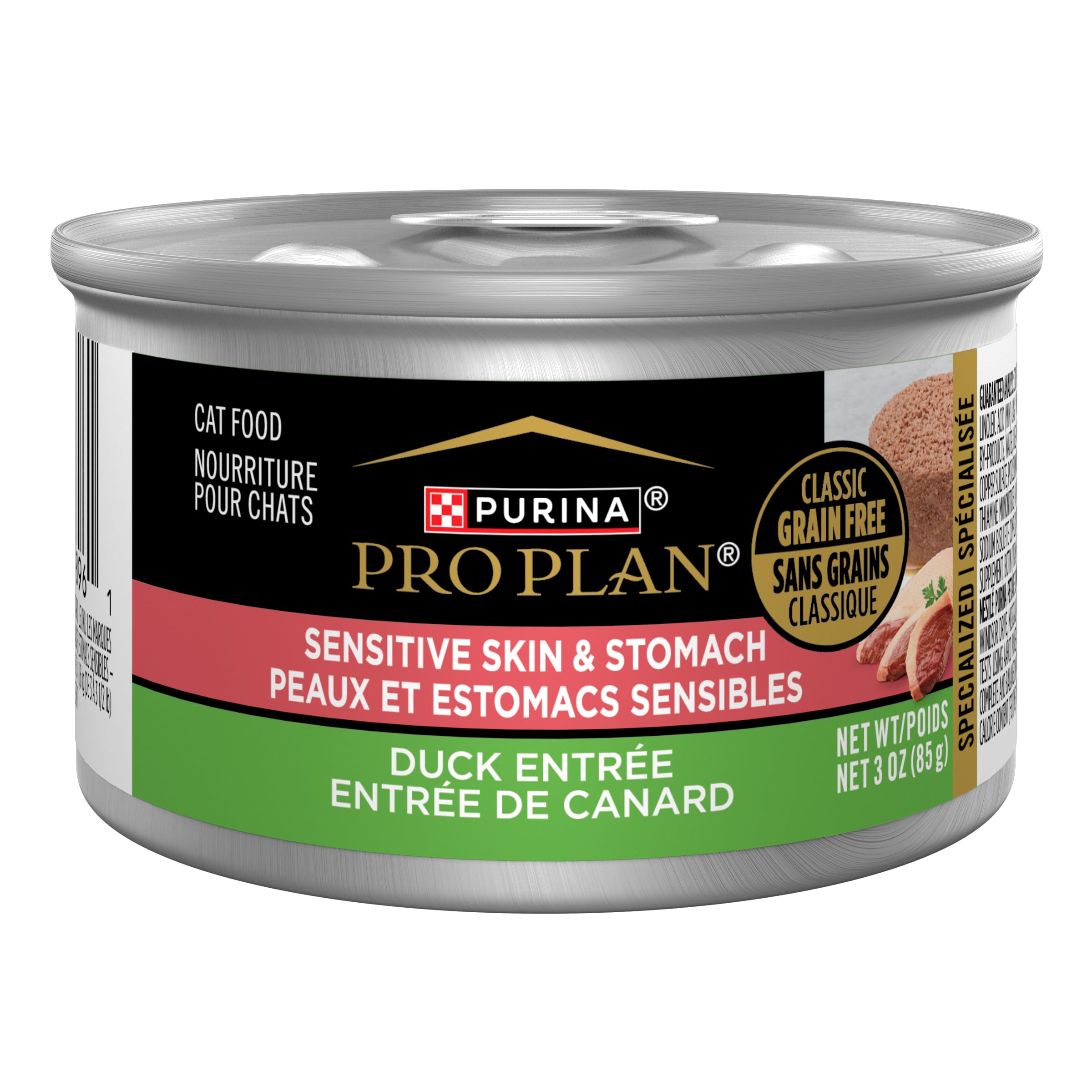
Formulated specifically for dual-problem cats — those with both skin sensitivity and digestive issues — this duck entree pate uses a novel protein to bypass common allergens. The highly digestible formula includes natural prebiotic fiber to support gut health, and antioxidants plus taurine for immune and vision support.
Owners of cats with chronic diarrhea lasting months report that this food produced solid stools within days. The texture is a soft puree that mashes easily, making it suitable for senior cats or those recovering from illness. Duck is less commonly used in cat foods, which makes it an effective novel protein for cats who have developed sensitivities to chicken, turkey, or fish.
The 24-pack of 3-ounce pull-top cans offers convenience for portion control and storage. While this is the highest-priced option per ounce in this lineup, the targeted results for sensitive systems often justify the investment for owners who have tried everything else.
Why we love it
- Duck as a novel protein effectively manages food allergies.
- Prebiotic fiber rapidly stabilizes chronic diarrhea and loose stool.
- Soft pate texture is ideal for senior cats or those with dental pain.
Good to know
- Premium price point requires budget planning for long-term use.
- Duck flavor may not be accepted by all cats initially.
FAQ
Why do hairless cats need higher protein than furry cats?
Can a hairless cat eat the same food as a domestic shorthair?
How do I know if my hairless cat has a food allergy?
Is wet food or dry food better for a hairless cat’s skin?
Final Thoughts: The Verdict
For most owners, the best food for hairless cats winner is the Tiki Cat Born Carnivore Indoor Health Chicken & Turkey (12 lb) because it combines high animal protein with pumpkin fiber and non-GMO ingredients in a versatile kibble that supports skin, digestion, and energy needs. If your cat has chronic diarrhea or known poultry allergies, grab the Purina Pro Plan Sensitive Skin Duck Entree (24 Pack). And for picky eaters who need a high-protein boost, nothing beats the Stella & Chewy’s Raw Coated Chicken (10 lb Bag).