
Indian Ringneck Parrots are notorious for their selective eating habits — one day they devour a bowl of mixed seeds, the next they toss every pellet onto the cage floor. Their long-term health hinges on a nutritionally complete diet that mimics their natural foraging instincts, not a bowl of empty calories. Choosing the right combination of pellets, seeds, and supplemental nutrients is the single most impactful decision you will make for your bird’s plumage, energy levels, and lifespan.
I’m Mo Mahin — the founder and writer behind Furric. I have spent years analyzing avian nutritional research, comparing ingredient labels down to the specific protein and fat ratios, and sifting through owner-reported feeding behaviors to identify which formulations actually work for this intelligent and sensitive species.
This guide ranks the five most reliable commercial options on the market, helping you find the perfect food for indian ringneck parrot that supports feather condition, digestive health, and mental enrichment without relying on artificial fillers or sugary fruit pieces.
How To Choose The Best Food For Indian Ringneck Parrot
Indian Ringnecks fall into the small-to-medium parrot category, with a naturally active metabolism that demands a higher protein content than many companion birds. Their diet must also encourage foraging behavior to prevent boredom and feather-destructive habits. Here are the critical factors to evaluate before buying.
Pellet Size and Shape
Ringnecks have a relatively small beak compared to an African Grey or Amazon. Oversized pellets often get ignored or broken into wasteful crumbs. Look for a mini or small pellet diameter — 3/32” to 1/4” is the sweet spot. Multi-sized particles can also trigger natural foraging instincts as your bird sorts through the bowl.
Protein and Fat Profile
A high-protein diet (18-22% crude protein) supports feather growth during molts and provides sustained energy. Ringnecks prone to obesity or fatty liver disease need moderate fat levels (around 6-10%). Avoid mixes heavy in sunflower seeds or peanuts, which are cheap fillers that drive selective eating and weight gain.
Ingredient Purity
The best formulations avoid artificial colors, flavors, and preservatives like BHA, BHT, or ethoxyquin. Organic and non-GMO certifications add a layer of confidence. Cold-pressed manufacturing preserves natural vitamins and enzymes that heat-extruded pellets destroy. Always check for added probiotics and omega-3 sources for digestive and feather health.
Quick Comparison
On smaller screens, swipe sideways to see the full table.
| Model | Category | Best For | Key Spec | Amazon |
|---|---|---|---|---|
| Psittacus High Protein | Premium Pellet | Ringnecks needing high protein | 0.8kg, 100% non-GMO | Amazon |
| TOP’s Mini Pellets | Organic Pellet | Corn/soy-free diet | USDA Organic, 3/32″ pellet | Amazon |
| Higgins Vita Seed | Seed Mix | Foraging enrichment | 5lb, probiotics added | Amazon |
| Mazuri Small Bird | Veterinary Diet | Transitioning seed addicts | Mixed particle sizes, 2.5lb | Amazon |
| Kaytee Fiesta Big Bites | Blended Mix | Variety and enrichment | 4lb, fruit and veggie pieces | Amazon |
In‑Depth Reviews
1. Psittacus High Protein 1.8 lb

Psittacus specifically lists Indian Ringneck Parakeet as a target species for this High Protein formula, making it the most directly applicable option on the market. The extruded pellet is 100% non-GMO with no artificial coloring or synthetic antioxidants — a standard European manufacturers enforce more strictly than many domestic brands. The 800g carton contains a uniformly shaped granule that ringnecks recognize as food, not a toy.
Owner reports consistently mention that picky ringnecks beg for this pellet and eat it immediately, which is rare for a species that typically rejects unfamiliar textures. The protein content supports energy levels during active hours and helps maintain feather quality through molting cycles. Several reviewers noted the pellet has a pleasant smell and that their birds consumed it as a complete diet without needing seed supplementation.
One minor drawback is the slightly oily surface residue reported by some buyers, which can transfer to perches and bowls. The fat content is moderate enough to avoid obesity issues in ringnecks, but birds transitioning from a seed-heavy diet may need a slow introduction over 10-14 days to avoid digestive upset.
Why we love it
- Species-specific formulation for ringnecks
- 100% non-GMO, no artificial colorings
- High protein supports molting and energy
- European manufacturing quality standards
Good to know
- 800g bag is relatively small for multiple birds
- Slightly oily texture on surface
- Transition period needed for seed-addicted birds
2. TOP’s Parrot Food Mini Pellets 1 lb
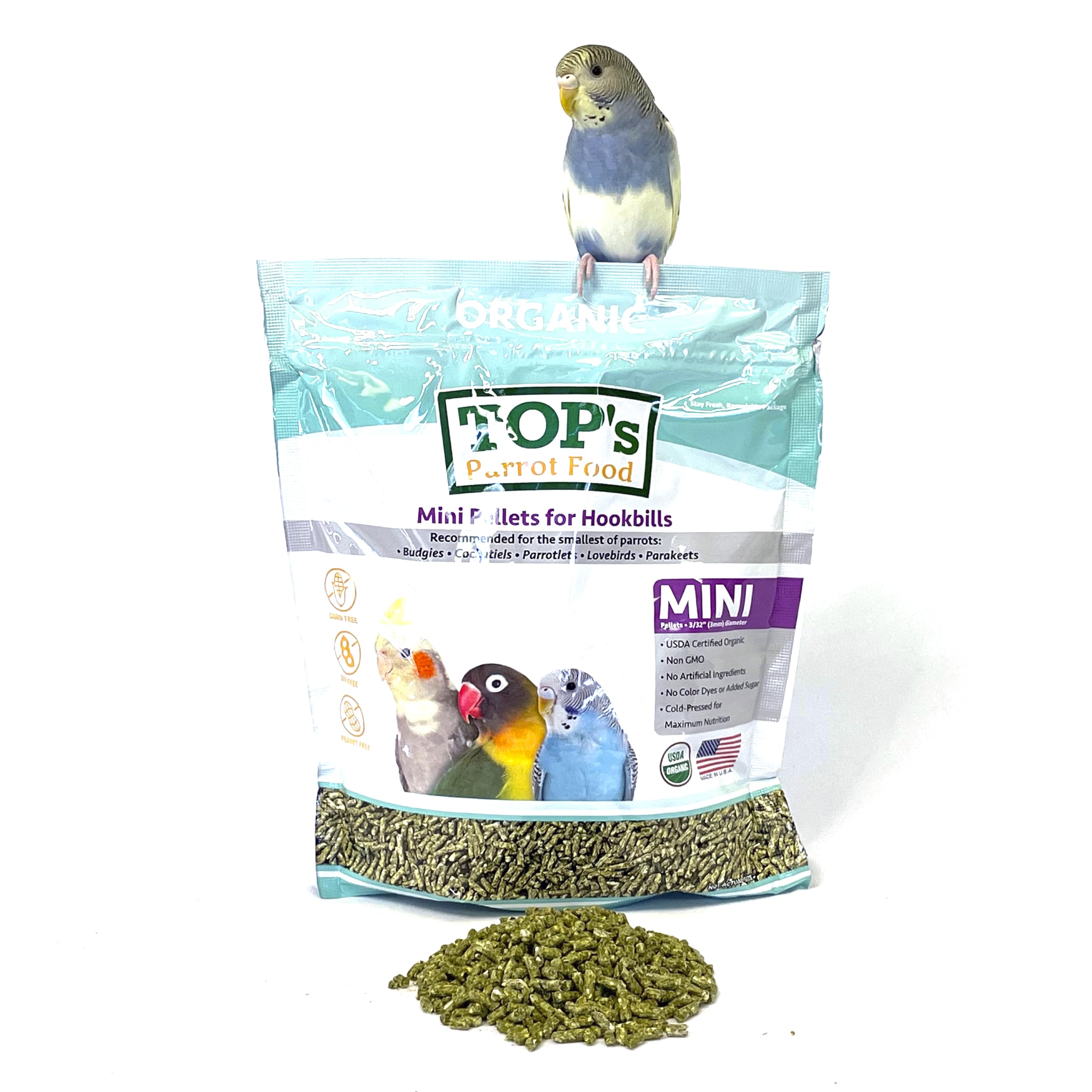
TOP’s is the only non-corn based USDA Organic certified complete diet bird food on the market — a critical distinction because most competing brands rely on GMO corn as their primary filler ingredient. The mini pellets measure 3/32” in diameter, which is ideal for a ringneck’s smaller beak and reduces the waste that occurs with oversized pellets. The cold-pressed manufacturing process preserves natural vitamins and enzymes that high-heat extrusion destroys.
Owner feedback reveals that birds who rejected other pellets consistently accepted TOP’s, likely due to the natural green-vegetable aroma and crumbly texture that mimics freshly sprouted seeds. A single 4-pound bag can last a solitary ringneck up to four months when used as the primary diet. The absence of soy, peanuts, and corn eliminates the main allergens and fat sources that contribute to obesity in companion parrots.
The main concern is that some parakeet owners found even the mini size too large for very small birds — ringnecks are fine with this size, but birds with smaller beaks than average may need the pieces broken in half. The price point is higher per pound than conventional pellets, but the longer feeding duration and higher nutrient density offset the upfront cost.
Why we love it
- USDA Organic and non-GMO verified
- Zero corn, soy, or peanut fillers
- Cold-pressed retains natural nutrition
- Excellent shelf life; sturdy bag packaging
Good to know
- Higher cost per pound than standard pellets
- Mini size may need breaking for smaller birds
- Natural smell can be off-putting to some owners
3. Higgins Vita Seed Natural Parrot 5 lb

Higgins Vita Seed bridges the gap between a pure seed mix and a nutritionally fortified diet, adding encapsulated probiotics and balanced Omega-3 fatty acids that support digestive health and feather quality. The 5-pound bag is the largest volume option in this lineup, making it a practical choice for multi-bird households or owners who prefer buying in bulk. The mix contains natural extruded morsels alongside seeds, providing textural variety that encourages natural foraging behavior.
African Grey and Cockatoo owners in the reviews consistently rate this as the only seed mix their birds will eat consistently, which speaks to the freshness and absence of dusty fillers that plague cheaper seed blends. The added DHA from the Omega-3 source supports cognitive function and inflammatory response — particularly relevant for ringnecks prone to feather plucking triggered by skin irritation.
The primary criticism is the heavy sunflower seed content, which some owners suspect is used as a cheap filler. Ringnecks allowed to pick through the bag selectively may consume too many sunflower seeds and ignore the balanced extruded pieces. This mix is best used as part of a varied diet that includes at least 70-80% quality pellets, not as a standalone food source.
Why we love it
- Large 5lb bag for multi-bird households
- Encapsulated probiotics survive storage
- Omega-3s from flaxseed source
- No artificial coloring in the mix
Good to know
- High sunflower seed content encourages selective eating
- Not a complete diet; needs pellet base
- Some bags arrive with more seed than extruded pieces
4. Mazuri Nutritionally Complete for Small Birds 2.5 lb

Mazuri’s Small Bird formula uses a mixed-particle-size approach specifically designed to trigger natural foraging instincts — the varying shapes and dimensions mean your ringneck has to sort, taste, and decide, which slows down eating and reduces boredom. The inclusion of ground flaxseed provides a direct source of essential omega fatty acids, and the absence of artificial colors or flavors makes this a clean option for birds with sensitive digestive systems.
One standout story from the review pool involves a 25-year-old cockatiel that stopped eating due to illness and revived its appetite on this uniform-colored pellet — a testament to the palatability that ringnecks also respond to. The vitamin E antioxidant content supports immune function, which is particularly important for birds transitioning from a seed-only diet and facing nutritional deficiencies.
The mixed particle size can be a double-edged sword: some ringnecks will eat only the smaller pellets and leave the larger ones untouched, creating waste. Owners of particularly selective birds may need to crush the larger pieces manually. The 2.5-pound bag is a reasonable trial size before committing to a larger volume.
Why we love it
- Multi-sized particles mimic natural foraging
- Ground flaxseed for omega-3s
- No artificial colors or flavors
- Proven to revive appetite in picky birds
Good to know
- Larger pellets may be ignored by selective eaters
- Some shells from larger pieces create dust
- Not specifically formulated for ringnecks
5. Kaytee Fiesta Big Bites Small Parrot & Conure Food 4 lb

Kaytee Fiesta Big Bites offers the widest variety of shapes and textures in this lineup, including dried pineapple pieces, coconut flakes, carrot granules, and whole grains that stimulate a ringneck’s natural curiosity. The 4-pound bag represents the best volume-to-price ratio among the five products, making it an accessible entry point for owners on a budget. The added probiotics and prebiotics support digestive health, and the omega-3 fatty acids contribute to skin and feather condition.
Sun Conure and African Grey owners in the review pool report that their birds eat this mix as a staple without getting bored, and many use it as a base that they supplement with fresh vegetables and nuts. The larger ingredient size is deliberately chosen for medium parrots, which means ringnecks will have to work a bit to break pieces down — a minor foraging challenge that reduces gulping.
The main downside is the inclusion of dried fruit pieces, which add sugar content that ringnecks do not need in large quantities. Birds allowed to pick through the bowl selectively may leave the pellet pieces and eat only the sweet fruit chunks, defeating the nutritional balance. This blend works best when offered as a portion-controlled enrichment mix rather than a free-feed complete diet.
Why we love it
- Largest volume for the price point
- Wide variety of textures fights boredom
- Probiotic and prebiotic support digestion
- Trusted brand with 150+ years of history
Good to know
- Dried fruit adds unnecessary sugar
- Birds may selectively eat fruit and ignore pellets
- Not a complete diet; best used as part of varied plan
FAQ
Can I feed my Indian Ringneck only seed mix?
How much food should a Ringneck eat daily?
Are organic pellets worth the extra cost for ringnecks?
Should I avoid pellets with dried fruit pieces?
Final Thoughts: The Verdict
For most ringneck owners, the food for indian ringneck parrot winner is the Psittacus High Protein because it was specifically formulated for this species and delivers the higher protein content ringneeds need without artificial additives. If you want a certified organic, corn-free pellet with superior shelf life, grab the TOP’s Mini Pellets. And for enriching mealtime with texture variety at a budget-friendly volume, nothing beats the Kaytee Fiesta Big Bites.