
The difference between a thriving shrimp colony and one that slowly fades often comes down to what hits the substrate. In a closed aquarium system, every micronutrient matters — low-quality food clouds water, spikes nitrates, and leaves molting failures in its wake. Serious aquarists know that shell health and breeding rates are directly tied to the mineral and protein profile of their chosen sinking diet.
I’m Mo Mahin — the founder and writer behind Furric. I have spent years analyzing ingredient lists, cross-referencing owner-reported nitrate impacts, and studying the specific nutritional needs of dwarf shrimp across Neocaridina and Caridina lines to understand what actually drives colony stability.
This guide breaks down the five most reliable sinking formulas on the market, covering everything from water-stable wafers to immune-boosting powders. Whether you are raising your first cherry shrimp or managing a sensitive Taiwan Bee tank, the best food for shrimp must balance protein, calcium, and digestibility without destroying your water parameters.
How To Choose The Best Food For Shrimp
Shrimp are not bottom-feeding fish. Their digestive systems are shorter and more sensitive, which means ingredients that plecos or cichlids handle easily can cause water-quality crashes in a shrimp-only tank. Selecting the right sinking formula requires understanding three core factors.
Protein Content and Source
Neocaridina shrimp thrive on a moderate-protein diet around 30–40%, while Caridina species prefer slightly lower levels. High-protein sinking wafers designed for omnivorous fish often cause molting issues and ammonia spikes in shrimp tanks. Look for plant-based primary proteins like spirulina, soy, or kelp rather than fish meal or shrimp meal which can foul water quickly.
Water Stability and Decomposition Rate
The best shrimp food holds its shape long enough for a single feeding session but breaks into edible fragments upon contact. Pellets that remain rock-hard for hours encourage overfeeding and rot in the substrate. Conversely, wafers that disintegrate instantly create a dust storm. Premium formulations strike a balance — sinking intact yet softening progressively so shrimp can graze without polluting the tank.
Calcium and Mineral Supplementation
Molting is the most vulnerable phase in a shrimp’s life cycle. Food fortified with calcium, magnesium, and trace minerals directly supports exoskeleton regeneration. Formulas that include mycelia or yeast derivatives also provide prebiotic benefits, improving nutrient absorption and reducing loss rates during molting.
Quick Comparison
On smaller screens, swipe sideways to see the full table.
| Model | Category | Best For | Key Spec | Amazon |
|---|---|---|---|---|
| GlasGarten Shrimp Fit | Powder / Immune Support | Breeding colonies & sensitive Caridina | Fine powder, 35g per bag | Amazon |
| API Bottom Feeder Shrimp Pellet | Sinking Pellet | Mixed community tanks with shrimp & fish | Sinking pellet, 15.8 oz twin pack | Amazon |
| Tetra TetraVeggie Algae Wafers | Sinking Wafer | Plecos & large community bottom feeders | High-fiber wafer, 6 oz | Amazon |
| Aquatic Arts Shrimp Food Pellets | Snowflake Pellet | Neocaridina & nano shrimp | Snowflake-disintegrating pellet, 2 oz | Amazon |
| Brine Shrimp Direct PhytoDisc Plus | Sinking Disc | Plecos & large herbivorous bottom feeders | Thick spirulina wafer, 16 oz | Amazon |
In‑Depth Reviews
1. GlasGarten Shrimp Fit

GlasGarten has built a reputation in the Caridina community for a reason. Shrimp Fit is a finely milled powder designed to strengthen the immune system and reduce loss rates during infections. The 35-gram bag is small, but a single 1/64 teaspoon dose goes a long way — owners have reported growing colonies from a handful of cherries to over seventy shrimp in under a year when rotating this with other GlasGarten supplements.
What sets this formula apart is its targeted pathogen defense mechanism. The powder inactivates toxins and pathogens in the water column, which is especially valuable for sensitive Taiwan Bee or Crystal Red shrimp that often succumb to bacterial issues. Users note that shrimp swim actively and graze immediately after dosing, with visible “snowfall” effect and rapid defecation indicating digestion is taking place.
The only real learning curve is dosage. Most reviewers agree that the recommended serving is too high for a standard nano tank, and halving it delivers better results without overloading the biological filter. The powder form also makes this an excellent option for fish fry, though its primary purpose remains colony-wide immune support rather than daily staple feeding.
Why we love it
- Dramatically improves survival rates during molting and illness
- Fine powder suitable for even the tiniest shrimplets
- Low nitrate impact when dosed correctly
Good to know
- Recommended dose should be cut in half for most tanks
- 35-gram bag is small — not a bulk option for large colonies
2. API Bottom Feeder Shrimp Pellet 7.9 Ounce (2 Pack)

API has been a staple in freshwater aquatics for decades, and their bottom feeder pellet holds up well in mixed community tanks. The twin-pack delivers over 15 ounces of sinking pellets supplemented with seaweed and squid, offering a protein profile that satisfies both shrimp and bottom-dwelling fish. Corydoras catfish, koi, goldfish, and crayfish all actively seek this formula out.
The pellet sinks rapidly and remains intact long enough for slower feeders like Amano shrimp to grab a portion, yet it softens without turning into a muddy paste. Owners consistently note that it does not cloud the water the way many alternative sinking foods do, which is a major plus for those running established planted tanks where water clarity directly affects light penetration.
That said, this is a generalist bottom feeder pellet rather than a shrimp-specific diet. The protein level is moderate, but the inclusion of squid means it is better suited for Neocaridina in a community context rather than pure Caridina setups. Shrimp will eat it readily, but serious breeders may find that the protein source is too rich for daily feeding without supplemental plant matter.
Why we love it
- Excellent value for the volume — over 15 oz total
- Does not cloud water like cheaper alternatives
- Accepted by a wide range of tank inhabitants
Good to know
- Not species-specific for shrimp — higher protein than ideal for sensitive Caridina
- Pellets may be too large for tiny Neocaridina shrimplets
3. Aquatic Arts Shrimp Food Pellets
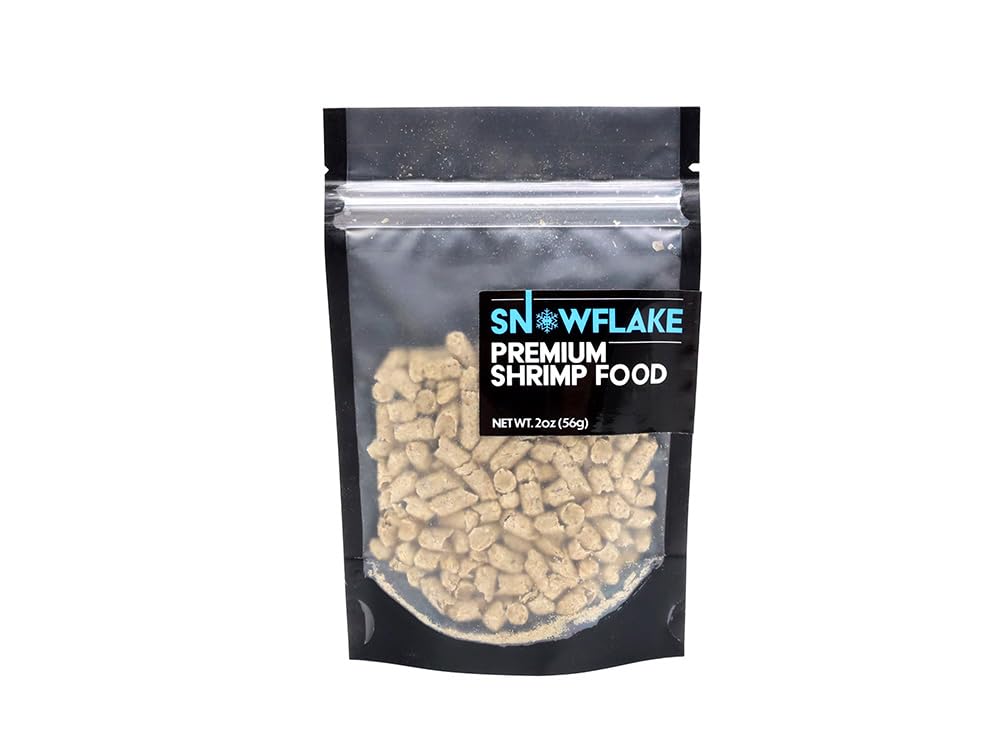
Aquatic Arts designed these snowflake pellets specifically for nano shrimp, and the engineering shows. The pellet disintegrates upon contact with water into delicate, flake-like pieces that shrimp can graze continuously without damaging their mouthparts. This is particularly useful for baby shrimp and small Neocaridina that cannot handle hard wafers.
The ingredient base is plant-based and non-GMO, with mycelia providing prebiotic properties. Owners report low nitrate impact — one user fed this to a recovering Neocaridina colony post-crash and saw a dozen shrimplets within weeks. The food also supports snails, freshwater crabs, and Corydoras catfish, making it a versatile option for mixed invertebrate tanks.
There is a notable packaging concern. The product images show a glass jar, but the actual delivery is a plastic bag that can crush the fragile snowflake pellets into dust over time. Transferring the contents into a sealed container upon arrival solves this issue, but it is an unnecessary friction point for a product priced in the mid-range tier.
Why we love it
- Snowflake texture is ideal for nano shrimp and shrimplets
- Plant-based, non-GMO with prebiotic mycelia
- Low nitrate footprint supports stable water parameters
Good to know
- Packaging is a plastic bag, not the pictured glass jar — bag can crush pellets
- Expensive per ounce compared to larger bulk options
4. Brine Shrimp Direct PhytoDisc Plus Spirulina Algae Wafers

Brine Shrimp Direct sources these wafers entirely from the USA, and the ingredient list reflects that control. The PhytoDisc Plus includes spirulina, kelp, krill meal, and yeast-derived beta-glucans for digestive health. The 16-ounce container offers substantial volume for the price point, and the PET resealable container keeps the wafers fresh between feedings.
These are thick, dense wafers — about the size of a nickel — that sink fast and stay water-stable for extended feeding sessions. Clown loaches, plecos, and catfish love them, and crumbled pieces are readily accepted by tetras and cichlids. The high spirulina content makes this a strong plant-based option for herbivorous bottom feeders in a community tank.
The expansion factor demands caution. These wafers expand significantly after absorbing water, and small fish that swallow pieces dry risk bloating or worse. Soaking the wafers for a few minutes before dropping them into the tank eliminates this hazard. For shrimp-only tanks, the wafer size is too large for nano species without manual crumbling.
Why we love it
- Large 16-oz container with resealable packaging
- Made in the USA with clean spirulina and kelp ingredients
- Highly water-stable — ideal for slow feeders
Good to know
- Wafers expand significantly — must soak before feeding to small fish
- Not designed specifically for nano shrimp; better suited for plecos and catfish
5. Tetra 77016 TetraVeggie Algae Wafers
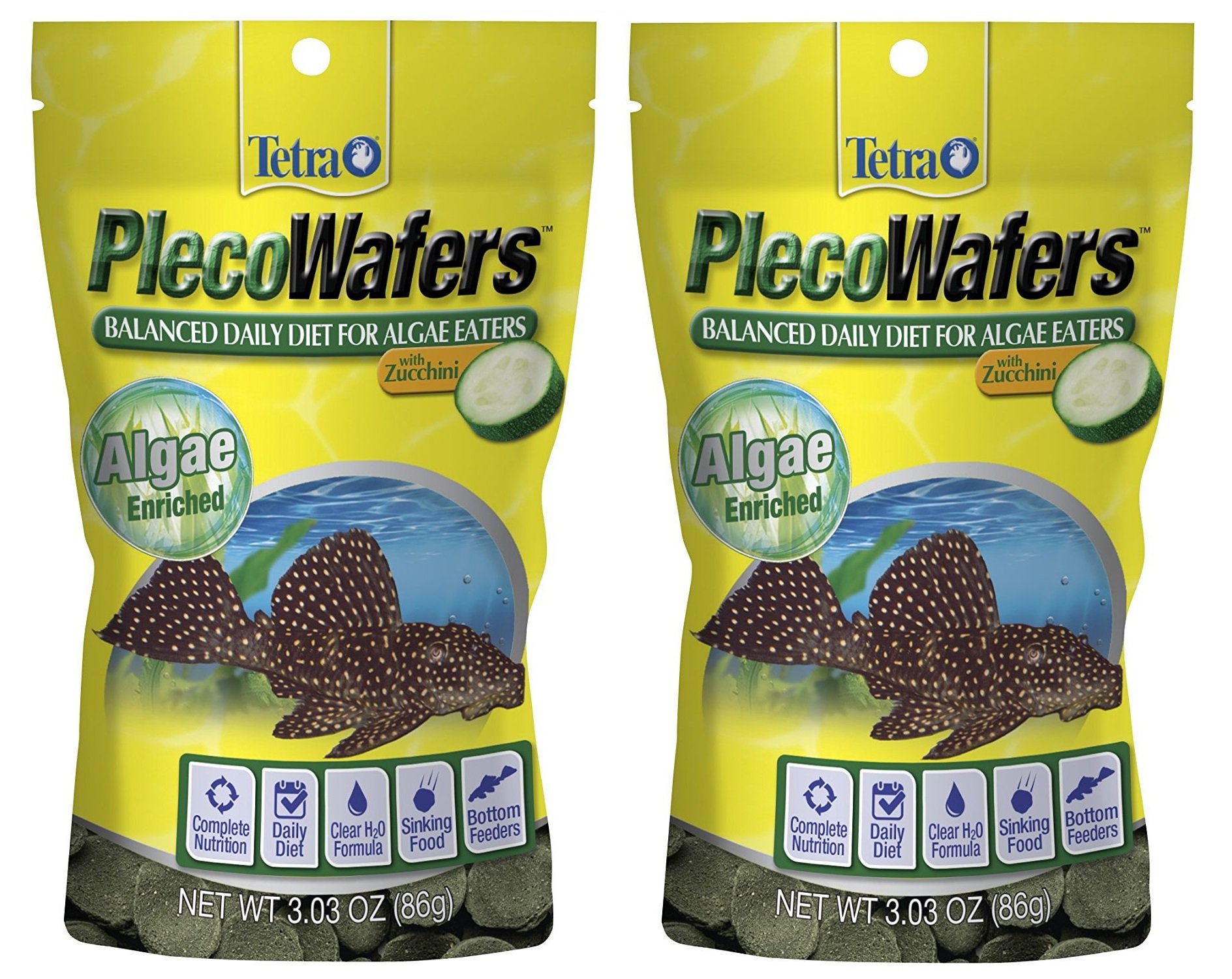
TetraVeggie is a household name in the aquarium hobby for good reason — it is widely available, consistent in quality, and accessible at a price point that makes it a safe entry-level choice. The 6-ounce bottle delivers high-fiber sinking wafers formulated for plecostomus and other herbivorous bottom feeders, with a vegetarian diet that includes wild-caught plant ingredients.
The wafers sink quickly and hold their shape for several minutes, giving bottom dwellers access without dissolving into a cloud. Owners with large plecos report dramatic growth — one user watched a one-inch pleco grow to over ten inches on a steady diet of these wafers. The flip side is that the high fiber content means these are not nutritionally optimized for shrimp. Neocaridina will nibble, but the wafer is hard and takes time to soften.
Water quality can be an issue if overfed. Multiple reviewers caution that feeding more than one or two wafers per day leads to murky tank conditions, especially in smaller setups without robust filtration. For dedicated shrimp keepers, this is best treated as a supplementary treat rather than a primary food source.
Why we love it
- Extremely affordable — best price per ounce in this lineup
- Proven results for large pleco growth
- High fiber content supports digestive health for herbivores
Good to know
- Hard wafers are difficult for nano shrimp to eat
- Overfeeding quickly fouls water — strict portion control required
FAQ
How much food should I give my shrimp colony daily?
Can I use algae wafers designed for plecos as a primary shrimp food?
What is the ideal protein percentage in shrimp food?
Why do my shrimp ignore the sinking pellets I bought?
Final Thoughts: The Verdict
For most shrimp keepers, the best food for shrimp winner is the GlasGarten Shrimp Fit because its immune-boosting powder formula reduces loss rates and directly supports colony expansion. If you want a versatile sinking pellet that works in a mixed community tank with shrimp and fish, grab the API Bottom Feeder Shrimp Pellet. And for breeding-focused nano shrimp setups where water stability is paramount, nothing beats the Aquatic Arts Snowflake Pellets.