
Toy breed dogs—Chihuahuas, Yorkies, Maltese, and Papillons—have mouths built for delicate work, not for wrestling with oversized kibble. Feeding a standard-size pellet to a 4-pound dog isn’t just inefficient; it can discourage eating entirely, leading to missed meals and nutrient gaps.
I’m Mo Mahin — the founder and writer behind Furric. I’ve spent years analyzing pet nutrition formulations, decoding ingredient labels, and cross-referencing owner feedback to separate marketing hype from genuinely better diets for small dogs.
The right food for toy breeds prioritizes small kibble geometry, high-quality animal proteins, and calorie density suited to a fast metabolism, all while avoiding fillers that offer no nutritional value.
How To Choose The Best Food For Toy Breeds
Selecting a diet for a toy breed isn’t just about grabbing a bag labeled “small breed.” The unique physiology of dogs under 15 pounds demands attention to three specific areas that mainstream formulations often overlook.
Kibble Geometry and Texture
A toy breed’s dental arch is roughly half the width of a Labrador’s. Kibble that exceeds 8–10 mm in diameter forces the dog to either gulp whole or give up. The ideal pellet is not only small (6–9 mm) but also has a structure that breaks apart under light pressure. Some premium lines—like Bil-Jac—use a slow-cook process that produces a porous, softer pellet that crumbles rather than shatters, reducing the risk of cracked teeth or gagging.
Macronutrient Ratios for Metabolic Rate
Toy breeds have a surface-area-to-body-mass ratio that causes them to burn energy faster than larger dogs. A maintenance diet should deliver 30–40% crude protein (from named animal sources) and 15–20% crude fat to sustain energy without promoting rapid weight gain. Avoid formulations where the first ingredient is a grain or a generic “meat meal”—the protein source should be identifiable and human-grade.
Caloric Density and Portion Control
Because a 5-pound dog needs only a quarter to half a cup of food per day, even small caloric miscalculations lead to obesity. Look for formulas with around 375–420 kcal per cup, which allows you to measure accurate portions without needing a gram scale. Brands that list feeding guidelines by exact body weight (not just “small breeds”) demonstrate a deeper understanding of toy-breed metabolism.
Quick Comparison
On smaller screens, swipe sideways to see the full table.
| Model | Category | Best For | Key Spec | Amazon |
|---|---|---|---|---|
| Bil-Jac Small Breed Select | Kibble | Picky toy breeds with dental sensitivity | 6 lb bag; soft, porous pellet texture | Amazon |
| Blue Buffalo Wilderness Small Breed | Kibble | Active small dogs needing high protein | 36% protein; 4.5 lb bag | Amazon |
| Hill’s Science Diet Adult 7+ Small Bites | Kibble | Senior toy breeds (7+ years) | 5 lb bag; balanced minerals for kidneys | Amazon |
| Wellness CORE+ Small Breed | Kibble + Freeze-Dried | Owners wanting whole-food inclusions | 4 lb bag; freeze-dried turkey pieces | Amazon |
| Royal Canin X-Small Aging 12+ | Kibble | Extra-small senior dogs over 12 years | 2.5 lb bag; rehydratable kibble | Amazon |
In‑Depth Reviews
1. Bil-Jac Small Breed Select Dry Dog Food
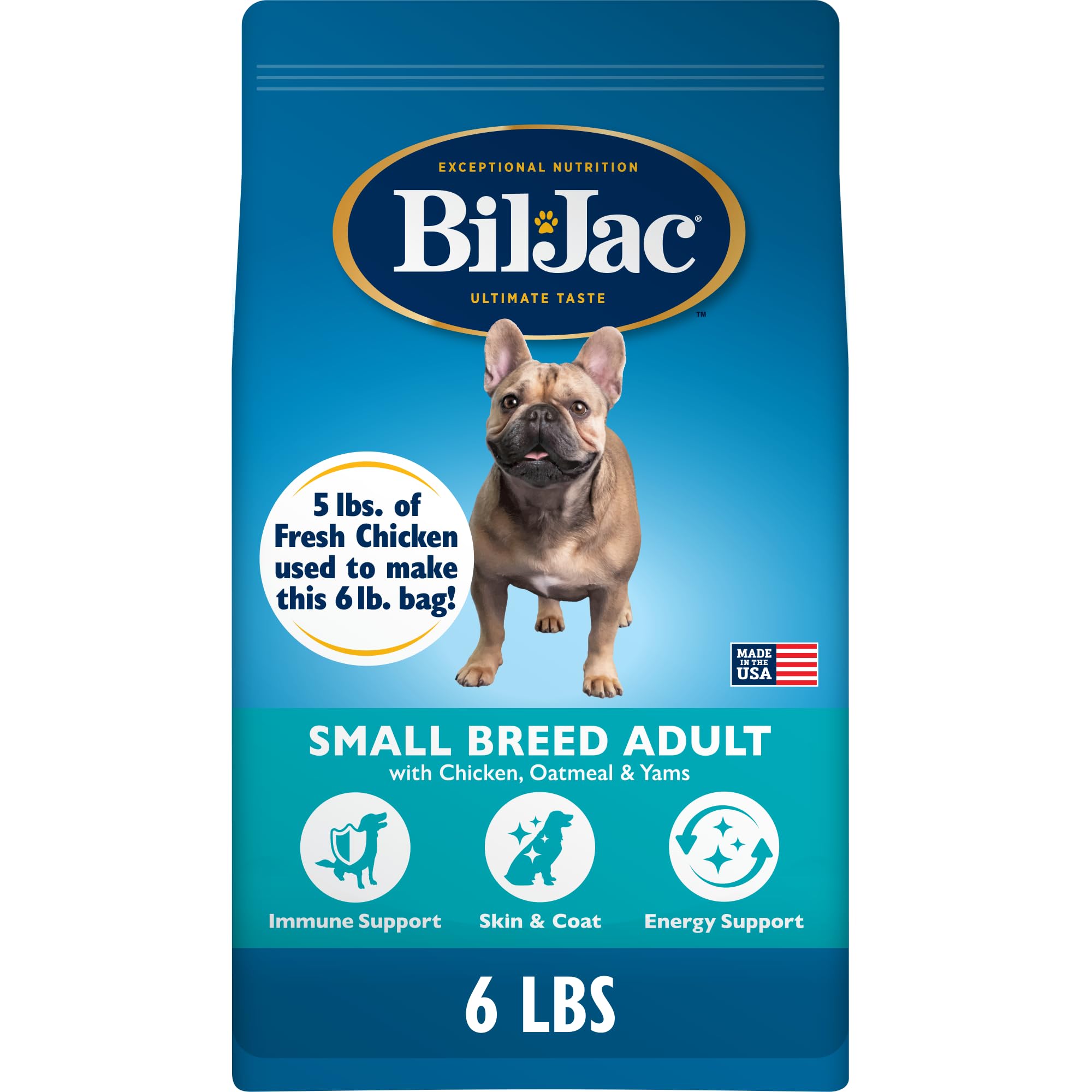
The defining advantage of Bil-Jac’s Small Breed Select is its proprietary slow-cook process that yields a pellet with a porous, almost crumbly structure—a far cry from the rock-hard kibble that can chip a Yorkie’s premolar. At roughly 7 mm in diameter, each piece requires minimal chewing force, making it the go-to option for toy breeds with missing teeth or sensitive gums.
Fresh chicken appears as the first ingredient, not a rendered meal, and the protein content sits at a solid 30%—adequate for most adult toy breeds without overshooting into levels that can strain the kidneys of sedentary seniors. The inclusion of oatmeal and yams provides slow-release carbohydrates that align with the high metabolic turnover of a 5-pound Chihuahua.
Owner reports consistently highlight that even notoriously picky Maltese and Shih Tzus clean their bowls with this formula, and the 6-pound bag size offers a practical entry point without committing to a massive volume that might go stale. The only minor drawback is the bag’s seal strength; some buyers recommend transferring the kibble to an airtight container after opening.
Why we love it
- Soft, porous kibble that reduces dental stress
- Fresh chicken listed first with no sprayed-on fats
- Slow-release carbs suited to toy-breed metabolism
Good to know
- Bag seal can weaken during shipping; store in a canister
- Not formulated for senior-specific kidney support
2. Blue Buffalo Wilderness Small Breed Adult Dry Dog Food

Blue Buffalo’s Wilderness line pushes protein to 36%, making it the highest-protein option in this comparison—an important factor for toy breeds that are perpetually in motion and burn through amino acids quickly. The chicken-based recipe excludes corn, wheat, and soy, three common fillers that offer no metabolic benefit to a 4-pound Dachshund.
The kibble is tailored for smaller jaws at roughly 9 mm, though owners of dogs under 6 pounds may still find it slightly larger than ideal. The inclusion of LifeSource Bits—antioxidant-rich pellets cold-formed to preserve potency—provides immune support that is especially valuable for toy breeds prone to patellar luxation and dental disease.
Feedback from owners of active toy breeds (Jack Russells, Rat Terriers) indicates sustained energy levels without the glycemic spikes associated with grain-heavy diets. The 4.5-pound bag is compact enough to maintain freshness, but the higher protein content means you should transition gradually over 7–10 days to avoid loose stools.
Why we love it
- Highest protein density for active small dogs
- No corn, wheat, or soy fillers
- LifeSource Bits for targeted immune support
Good to know
- Kibble may be slightly large for sub-6-pound dogs
- Higher cost per pound than some mid-range options
3. Wellness CORE+ Small Breed Adult Dry Dog Food

Wellness CORE+ bridges the gap between standard kibble and raw-feeding trends by incorporating real freeze-dried turkey pieces into the bag. This gives the 4-pound formula a texture and aroma variety that appeals to toy breeds who turn their noses up at uniform pellets. The protein content hovers near 34%, derived primarily from turkey and chicken without by-product meals.
The kibble itself measures approximately 8 mm, with a notably dense structure that holds up well against crumbling during shipping. Owners should note that a few reviewers with 7-pound Morkies and Maltipoos reported the pieces still felt slightly large for their dogs’ preferences, though none reported refusal to eat. The inclusion of guaranteed glucosamine levels supports the joint health of toy breeds prone to luxating patellas.
A standout feature is the probiotic blend (six strains) designed to stabilize the delicate gut flora of small dogs—a frequent pain point for toy breeds that develop diarrhea from sudden diet changes. The 4-pound bag costs slightly more per pound than the other options, but the freeze-dried inclusions add a layer of palatability that often eliminates the need for toppers.
Why we love it
- Freeze-dried turkey pieces boost appeal for picky eaters
- Six-strain probiotic blend supports sensitive digestion
- Glucosamine for joint maintenance in small, active joints
Good to know
- Kibble may still feel large for ultra-small breeds
- Higher price point per pound than most competitors
4. Hill’s Science Diet Adult 7+ Small Bites Dry Dog Food

Hill’s Science Diet Adult 7+ Small Bites represents the safest entry point for senior toy breeds—it is the only formula in this lineup explicitly designed for dogs aged seven and older, with balanced mineral levels (calcium, phosphorus, magnesium) that reduce the risk of bladder stones and kidney strain common in aging Chihuahuas and Pomeranians.
The kibble diameter is approximately 8 mm, small enough for senior mouths that may be missing several teeth. The protein content of 25% is lower than the adult-maintenance options on this list, which is appropriate for less active seniors whose metabolic demand has declined. Antioxidants (vitamin E and beta-carotene) support cognitive function—an underappreciated concern for toy breeds living well into their teens.
Owner reviews consistently cite the brand’s veterinarian-recommended status as the primary reason for purchase, and multiple long-term users report their dogs maintaining stable weight and coat quality well past age 12. The 5-pound bag provides a low-risk trial size, though the ingredient list is less adventurous (chicken meal, barley, rice) compared to the premium options.
Why we love it
- Balanced minerals for senior kidney and bladder health
- Vet-recommended with decades of clinical testing
- Small kibble suitable for aging, sensitive mouths
Good to know
- Lower protein may not suit still-active senior toy breeds
- Ingredient list leans on grains rather than meat variety
5. Royal Canin X-Small Aging 12+ Dry Dog Food

Royal Canin’s X-Small Aging 12+ formula sets itself apart with a kibble diameter of just 4–5 mm—roughly half the size of standard small-breed pellets—and a unique rehydratable texture that softens when moistened. This makes it the most accessible option for toy-breed seniors (under 8 pounds, over 12 years) who have lost multiple teeth or suffer from periodontal disease that makes chewing painful.
The nutrient profile targets three aging-specific concerns: EPA and DHA from fish oil support cognitive function in geriatric dogs, taurine promotes heart muscle integrity, and the antioxidant blend (vitamin C, vitamin E, lutein) helps combat cellular oxidative stress. The 2.5-pound bag is small by design, ensuring the kibble doesn’t lose its rehydratable property through extended storage.
Owner reports from Toy Fox Terrier and Papillon guardians with ultra-picky seniors show near-universal acceptance—the tiny size and soft texture eliminate the “spit it out” behavior common with larger kibble. The primary objection is the price-per-pound, which has climbed significantly post-pandemic; however, for a 5-pound dog eating less than half a cup daily, a single bag still stretches over a month.
Why we love it
- Smallest kibble diameter (4–5 mm) for compromised teeth
- Rehydratable texture reduces chewing force needed
- Targeted DHA/EPA for geriatric brain and heart health
Good to know
- High cost per pound; budget-conscious buyers may balk
- Only suitable for dogs over 12 years or with specific senior needs
FAQ
How do I know if my toy breed’s kibble is too big?
Can I feed grain-free food to my Chihuahua or Yorkie?
What is the average daily calorie intake for a 5-pound toy breed?
How often should I change my toy breed’s food as they age?
Why do toy breeds need a different calcium-to-phosphorus ratio than large breeds?
Final Thoughts: The Verdict
For most owners seeking a versatile everyday food for toy breeds, the winner is the Bil-Jac Small Breed Select because its soft, porous kibble solves the dental-access problem that makes so many toy breeds refuse meals. If you want a high-protein option for an exceptionally active small dog, grab the Blue Buffalo Wilderness Small Breed. And for a geriatric toy breed over 12 years old with tooth loss, nothing beats the Royal Canin X-Small Aging 12+ for its true miniature kibble and rehydratable texture.